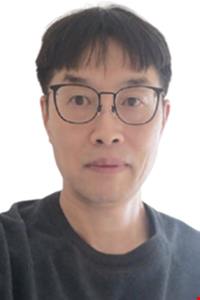
Stéphane Lathuilière is currently a postdoctoral researcher at the University of Trento, having completed his PhD at INRIA under the supervision of Dr. Radu Horaud within the PERCEPTION team. His educational background includes: Engineering degree in Applied Mathematics and Computer Science from Ensimag, Institut polytechnique de Grenoble, France (2014) Master thesis conducted at the International Research Institute MICA, Hanoi, Vietnam His research spans machine learning for activity recognition and tracking, deep regression models, and reinforcement learning for audio-visual fusion in robotics, with primary applications in human-robot interaction and computer vision systems. Analysis of his 2014-2017 publications reveals consistent focus on multimodal machine learning approaches across computer vision domains, including head-pose estimation, group activity recognition, UAV imagery analysis, and mental health assessment through depression severity estimation. No scientific awards were documented in the source material. Information regarding student supervision or research grants is not provided in the available text. During his doctoral studies, he contributed to the PERCEPTION team at INRIA, specializing in perception systems for robotics and computer vision.
Markus H. Flierl is an Associate Professor at the School of Electrical Engineering and Computer Science, KTH Royal Institute of Technology in Stockholm. He holds a PhD in Engineering from Friedrich Alexander University (2003). His career includes senior research roles at École Polytechnique Fédérale de Lausanne (2003-2005), leadership of the Max Planck Center for Visual Computing and Communication (2005-2008), and a Visiting Assistant Professorship at Stanford University (2000-2002). He has served as Program Director of the EIT Digital Master School’s 'Visual Computing and Communication' program and as Associate Editor for the IEEE Transactions on Circuits and Systems for Video Technology. Education: PhD in Engineering, Friedrich Alexander University, 2003 Studies at Friedrich Alexander University (1999-2002), EPF Lausanne (2003-2005), and Stanford University (2005-2008) Research Interests: Focused on visual computing, machine learning, and information theory. Key areas include distributed coding of dynamic scenes, multiview video coding, motion-compensated transforms, and applications in video compression and multimedia systems. His work explores efficient signal processing techniques for video and 3D visual search, with recent contributions in drone-based environmental monitoring and adversarial training methods. Awards: SPIE VCIP Young Investigator Award (2007) Teaching & Grants: Teaches courses on image/video processing, information theory, and multimedia systems. His research is supported by Ericsson, the Swedish Research Council, the European Commission, and KTH’s Digitalization Platform. He advises PhD and master’s students in visual computing and communication. Labs & Teams: Leads the Visual Computing and Communication research group at KTH, collaborating with industry partners like Ericsson and Qamcom. Former members include researchers now at Tobii AB and the University of Iceland.
Helmut Hlavacs is a Professor at the Faculty of Computer Science, leading the Research Group on Education, Didactics, and Entertainment Computing. His expertise spans serious games, game design, virtual reality, and health informatics. He has contributed to over 218 publications since 2005, focusing on topics like hedonic experiences in gaming, VR applications in therapy, and AI-driven behavior trees. His work intersects technology, education, and healthcare, with notable projects such as Conquer Catharsis (VR anxiety treatment) and PhyLab (VR physics experiments). Hlavacs has secured research funding for initiatives like Programmieren lernen durch Computerspielentwicklung and Dig-Equality FF , emphasizing digital equity and education. In 2019, he won the Best Poster Award at IFIP for his work on health data from serious games. Research Interests: Serious Games for health and education Virtual Reality applications in therapy and learning Game design methodologies and AI-driven NPC behavior Psychological impacts of gaming and digital consumption Procedural content generation for games Key Projects: Programmieren lernen durch Computerspielentwicklung (2008): Game-based learning for programming skills Dig-Equality FF (2020-2021): Digital competence promotion for equity TP1 PRECIOUS (2013-2016): VR conferencing and stress management Grants and Advising: Hlavacs has advised on projects involving AI in military command systems, VR therapy for anxiety disorders, and participatory design of social media literacy tools. He collaborates internationally on topics like gamification for behavior change and multicultural health interventions. Labs/Teams: His research group focuses on Serious Storytelling and Entertainment Computing , developing tools like the Prototypical game framework and InvisibleSound for blind musicians. Current work includes FiGHT (a web-based tool for eating disorder communication) and OutSmart! (a serious game for social media literacy).
Dr Zizhou Peng is an Assistant Professor in Marketing at the University of Birmingham's Birmingham Business School, joining in September 2024. He previously served as a Lecturer in Marketing at Greenwich Business School. He holds a PhD in Business & Management, an MSc in Business Analytics from Warwick Business School, and a BSc in Geophysics from the University of Edinburgh. PhD in Business & Management, Warwick Business School, 2019–2024 MSc in Business Analytics, Warwick Business School, 2018–2019 BSc in Geophysics, University of Edinburgh, 2013–2018 His research centers on consumer digital engagement, content marketing, and Human-AI interactions, with a strong focus on analyzing unstructured data such as text, image, and video using empirical quantitative methods. He explores how creative elements in brand-generated social media content influence consumer decision-making, the role of Generative AI in enhancing content creativity, and how brand logo design affects consumer perceptions of brand competency and luxury. His work aligns with the research themes of Marketing Analytics and Behavioural Science, and Analytical Marketing Insights. Dr Peng has presented his research at major academic conferences including the Association for Consumer Research (ACR), the Society for Consumer Psychology (SCP), and the Midlands Graduate School Conference (MGS), reflecting his active engagement in the marketing and consumer behavior research community. There are no listed scientific awards or publications in the provided text. Dr Peng advises no named students in the available information and there is no mention of grant funding or specific research projects beyond his thematic interests. He is not noted as part of any formal lab or research team, though his work contributes to analytical marketing research initiatives within the department.
Overview Prof. Gudrun Klinker is a Professor at Technische Universität München (TUM), leading the Chair of Computer Science Applications in Medicine & Augmented Reality. She holds a PhD from Carnegie-Mellon University and has extensive experience in academia and industry, including roles at Digital Equipment Corporation and Fraunhofer Institute. Affiliations Professor (C3/W2) since 2000 Head of the FAR (Augmented Reality) research group Member of the CAMP (Computer Aided Medical Procedures) interdisciplinary team Research Dr. Klinker specializes in augmented reality (AR) with focuses on industrial applications, sensor fusion, 3D interaction, and healthcare integration. Her work bridges computer science with medical and industrial challenges, emphasizing user-centric design and real-world deployment. Key projects include: AR-based maintenance systems for complex machinery Healthcare applications like serious games for nutrition education VR/AR training environments for medical and aerospace domains Awards and Recognition Robert Sauer Prize (2010) for contributions to Bavarian science ISMAR Lasting Impact Award (2014) for influential AR research Teaching and Mentorship Prof. Klinker teaches courses on 3D user interfaces, AR fundamentals, and game design. She advises students in thesis projects, focusing on AR applications, HCI, and medical computing. Labs and Collaborations Her research is supported by partnerships with industry and institutions, leveraging TUM's interdisciplinary environment to advance AR/VR systems for real-world impact.
Prof. Laura Leal-Taixé is an Associate Professor at the Technical University of Munich (TUM) leading the Dynamic Vision and Learning group. She holds the Rudolf Mößbauer Tenure Track Chair, promoted from a 2017 Tenure Track Assistant Professorship. Her work focuses on advancing computer vision and machine learning, particularly in video analysis, multi-object tracking, and autonomous systems. She received a Sofja Kovalevskaja Award (2017) for her project socialMaps, which integrates dynamic social data into traffic modeling. Education: B.Sc./M.Sc. in Telecommunications Engineering, Technical University of Catalonia (UPC), Barcelona Ph.D. in Information Processing, Leibniz University Hannover (2014) Postdoc at ETH Zurich (2014–2016), and Senior Researcher at TUM’s Computer Vision Group (2016–2019) Research Interests: Multi-object tracking and segmentation in videos Motion analysis and semantic segmentation for autonomous driving Deep learning for video understanding Social dynamics modeling in urban environments Awards & Grants: €1.65M Sofja Kovalevskaja Award (Humboldt Foundation, 2017) DAAD Australia-German Joint Research Scheme (2017) Multiple travel grants from CVPR and Women in Computer Vision Labs & Collaborations: Dynamic Vision and Learning Group at TUM Collaborations with ETH Zurich, Northeastern University, and NVIDIA
Pedro M. Cruz is an Associate Professor in the Art + Design Department at Northeastern University, where he co-directs the Co-Lab for Data Impact and serves as a core faculty member of the Center for Design. His work bridges information design, data visualization, and computational art, featuring nature-inspired metaphors to convey complex data through visual narratives. Education includes a PhD in Information Science and Technology from the University of Coimbra (Portugal), with visiting research at MIT’s Senseable City Lab and the Singapore-MIT Alliance for Research and Technology. His research focuses on bio-inspired visualization, generative design, and the intersection of art and science. Awards include the 2018 Gold Award at the Information is Beautiful Awards, the 2017 CAMD Excellence in Teaching Award, and recognition as one of the top 10 global information designers (2013). His work has been showcased at MoMA, the London Design Biennale, and featured in WIRED, National Geographic, and Fast Company. Key projects include 'Visualizing Empires Decline' (2009), an animated visualization of maritime empire dissolution, and collaborations on exhibits at the Museum of Science and the Museum of Fine Arts in Boston. His teaching spans courses like Information Design Studio and Visualization Technologies.
Dr. Charles Bostater is an Associate Professor at Florida Institute of Technology's College of Engineering and Science, Department of Ocean Engineering and Marine Sciences. He directs the Marine & Environmental Optics & Remote Sensing Lab and the university's Remote Sensing Center. His expertise includes airborne hyperspectral imaging, radiative transfer modeling, and data fusion with photogrammetric engineering imagery. Research Interests Mult-angle hyperspectral imaging systems Monte Carlo and analytical radiative transfer models Water surface and subsurface target detection Vegetation stress detection via remote sensing Coastal water quality assessment Robotic sensing technologies (STARS) Notable Achievements Elected SPIE Fellow (2019) IEEE Senior Member (2022) 2019 & 2020 SPIE Community Champion 4 international patents for remote sensing probes Laboratory & Projects Director of Marine & Environmental Optics Lab BP Oil Spill airborne remote sensing research Fluid Mud Flux and SONDES projects SEBASTIAN FIND project for coastal monitoring Indian River Lagoon hyperspectral signature analysis Developed patented noncontact remote sensing tools
Paweł Tarnowski is a researcher at the Institute of the Theory of Electrical Engineering, Measurement and Information Systems , Faculty of Electrical Engineering, Warsaw University of Technology. His work focuses on biomedical signal processing, emotion recognition, and machine learning applications in affective computing and human-computer interaction. Research areas include Information and Communication Technology (ICT) Electrical and Electronic Engineering Artificial Intelligence Neuroscience Human Factors His recent publications highlight trends in emotion recognition using multimodal physiological signals (EEG, EOG, GSR), driver fatigue detection, and deep learning techniques like 1D-CNN for medical diagnostics. Articles also address urban traffic monitoring and neuromarketing research via EEG analysis. At Warsaw University of Technology, he supervises thesis projects and contributes to interdisciplinary research in biomedical engineering and signal processing. Labs/Teams: Institute of the Theory of Electrical Engineering, Measurement and Information Systems .
Professor Yongmin Li is a Senior Member of the IEEE and Senior Fellow of the Higher Education Academy at the Department of Computer Science , Brunel University London , within the College of Engineering, Design and Physical Sciences . His work spans multiple domains including data science, artificial intelligence, medical imaging, and foveated rendering. He has consistently been ranked in the world's top 2% scientists by Elsevier's Standardized Citation Indicators since 2020. Research Interests include Data Science Medical Imaging Computer Vision Biomedical Engineering Natural Language Processing Set-Membership Filtering Scientific Awards include 1st Place, RETOUCH Challenge (Online), MICCAI 2023 2nd Place, FeTA Challenge, MICCAI 2022 Most Influential Paper over the Decade Award, MVA 2019 Best Paper Award, Bioimaging 2018 VC Prize, Brunel University 2015
Miguel Sales Dias is affiliated with ISCTE - Instituto Universitário de Lisboa, specifically the Iscte Business School. His research spans multiple domains, including Machine Learning , Immersive Technologies , and Urban Mobility . His work focuses on: Developing AI-driven systems for energy consumption optimization in public buildings Creating co-design interfaces for housing customization Exploring mHealth applications for cardiac diagnostics Advancing virtual reality for education and visitor experiences Recent publications demonstrate expertise in smart city solutions , bioinformatics , and human-computer interaction . While specific awards or educational background weren't explicitly mentioned, his extensive publication record indicates significant contributions to interdisciplinary research.
Saul Anton is an Adjunct Associate Professor in the Humanities and Media Studies Department at Pratt Institute's School of Liberal Arts & Sciences. His academic career bridges critical theory, aesthetics, and contemporary art practice with deep engagement in European Enlightenment thought and continental philosophy. His research interests span critical theory, aesthetics, visual arts, modern and contemporary art and culture, European Enlightenment, and continental philosophy. Anton has published scholarly work on Diderot, Rousseau, Kant, Winckelmann, Agamben, and Nancy, demonstrating his expertise across historical periods from the 18th century to contemporary philosophy. Anton's publications reveal consistent engagement with the intersection of visual culture, philosophy, and historical context. His work shows particular strength in connecting historical philosophical frameworks with contemporary art practices, especially in examining how Enlightenment thinking continues to shape modern visual culture and critical approaches to art. Grants from the National Endowment for the Humanities Grants from the Getty Center in Los Angeles At Pratt, Anton teaches diverse courses including Horror and Monstrosity, World Literature, Intensive Film Theory, and Contemporary Media Theory. He previously served as Coordinator of the Architecture Degree Projects Writing Program. His cultural journalism appears in prominent venues including Artforum, frieze, Bookforum, Afterall, and Bomb, and he serves as a contributing editor of Cabinet magazine.
Catherine Laporte is a Professor at the Department of Electrical Engineering, École de Technologie Supérieure (ÉTS), Montreal, Canada. She leads research at the LATIS – Health Information Processing Laboratory, focusing on integrating medical images and physiological signals for healthcare innovation. Department: Electrical Engineering Research Lab: LATIS – Health Information Processing Laboratory Her research spans Medical Imaging , Computer Vision , and Speech Sciences , specializing in ultrasound applications for health technologies and intelligent systems. Key areas include: Medical image analysis and segmentation Ultrasound probe navigation and deformation correction 3D anatomical modeling (spine, tongue) Biomechanical studies of bone growth and tissue response Computer vision for healthcare applications Recent publications emphasize robust AI-driven ultrasound analysis for spinal deformities, tongue movement in speech therapy, and biomechanical modeling of bone growth. Her work combines deep learning , real-time segmentation , and multi-modal imaging (MRI, CT, 3D ultrasound). Students under her supervision have completed theses on topics like smart ultrasound systems , 3D vocal tract analysis , and biofeedback for language learners , often co-directed with experts in biomedical engineering and speech sciences. Laporte’s lab, LATIS, collaborates with institutions like the Center for Advanced Studies in Sleep Medicine (Montreal) and McGill University’s interdisciplinary programs, advancing health technologies and intelligent systems for clinical applications.
Dr. Ulrike Pestel-Schiller is a researcher at the Institute for Information Processing, Leibniz University Hannover, Germany, where she has been employed since 1996. Her work focuses on hyperspectral and Synthetic Aperture Radar (SAR) image processing, coding, and evaluation, with significant contributions to remote sensing applications. She actively supervises bachelor's and master's theses in these fields. Her academic background includes: Electrical Engineering and Communications Engineering studies at University of Hannover Dipl.-Ing. (Master's equivalent) awarded in 1989 Dr.-Ing. (Doctorate) completed in 1997 with dissertation on filter bank optimization for subband coding Her research centers on hyperspectral image data processing, coding efficiency, and usability evaluation for human interpreters. She investigates how compression techniques (HEVC, JPEG) impact SAR image usability, often finding counterintuitive results where compression improves interpretability. Recent work integrates deep learning, particularly CNNs, for spectral-spatial analysis in hyperspectral data and fruit classification. Her early career focused on HDTV video coding standards development. Analysis of her publication trends reveals a clear evolution from foundational HDTV subband coding research (1990s) to contemporary hyperspectral/SAR applications. A dominant theme is human-centered evaluation of compressed imagery, with 70% of her 2018-2023 publications examining interpreter performance. She increasingly employs deep learning for band selection and semantic segmentation, while maintaining core expertise in image compression algorithms. No scientific awards were documented in the source material. Dr. Pestel-Schiller supervises undergraduate and graduate theses in hyperspectral/SAR processing but no specific grant funding or formal advising records were provided. Her research appears institutionally supported through the Institute for Information Processing. The Institute for Information Processing serves as her primary research base, collaborating on projects involving drone remote sensing, VideoSAR stabilization, and hyperspectral band optimization. Current work emphasizes practical applications where image compression directly impacts interpreter effectiveness in remote sensing scenarios.
Katie T. Anderson, M.D. is an Assistant Professor of Urology at Mayo Clinic in Rochester, Minnesota, serving as a Consultant in the Department of Urology. She holds leadership roles as Associate Program Director for the Trauma and Genitourinary Reconstructive Surgery Fellowship (2023-present) and Director of Simulation Education for the Department of Urology (2022-present). Dr. Anderson specializes in genitourinary trauma and reconstruction, with clinical expertise in neurogenic bladder, urethral stricture disease, and acquired buried penis. Fellowship - Genitourinary Reconstructive Surgery, University of Minnesota Medical Center (2020) Residency - Urologic Surgery, University of Pittsburgh Medical Center (2019) Internship - General Surgery, University of Pittsburgh Medical Center (2015) Doctorate of Medicine, University of Minnesota Medical School (2013) BS, University of St. Thomas (2009) Dr. Anderson's research program focuses on advancing quality of life for patients with neurogenic bladder, developing strategies to prevent soft tissue damage following pelvic radiation, and understanding imposter phenomenon's impact on urologist burnout. Her work includes evaluating frailty's relationship to bladder augmentation outcomes, standardizing surgical approaches for acquired buried penis, and establishing long-term quality-of-life data following urinary diversions. She leads multi-institutional studies examining radiation cystitis treatments and quality-of-life outcomes. Her recent publications demonstrate a cohesive research trajectory centered on surgical outcomes, quality improvement, and physician wellness. Analysis of her 15 most recent articles reveals strong emphasis on technical innovations in urethroplasty, urinary diversion standardization, and the critical intersection of mental health and surgical practice. A distinctive contribution is her investigation into imposter phenomenon among urologists, addressing a previously underexplored factor in physician burnout and career longevity. 2023 Hall of Fame Inductee, University of Saint Thomas 2023 Best Podium Presentation: 'Variability in surgical codes in the treatment of adult acquired buried penis,' Genitourinary Reconstructive Surgeons 2022 Best Video Abstract Award, North Central Section of American Urologic Association 2021 NCS Traveling Fellowship Award, North Central Section - American Urological Association 2020 Best Poster Award: 'Frequent of patient-reported UTIs predicts quality of life after SCI,' AUA Annual Meeting As Director of Simulation Education, Dr. Anderson oversees advanced training programs for urology residents and fellows. Her leadership in the Trauma and Genitourinary Reconstructive Surgery Fellowship program demonstrates commitment to developing the next generation of specialists. She has secured research support through professional society mechanisms including the Genitourinary Reconstructive Surgeons Traveling Fellow Scholarship, enabling her multi-institutional studies on quality-of-life outcomes and radiation cystitis treatments. Her work on opioid-free surgical pathways reflects innovative approaches to patient care in the context of the national opioid crisis.