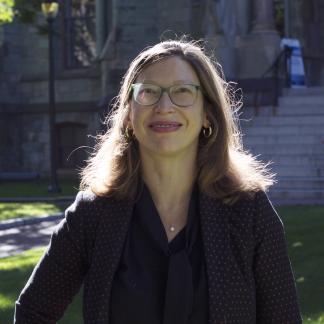
Maria Neimark Geffen is a Professor at the Perelman School of Medicine , University of Pennsylvania , with appointments in the Department of Otorhinolaryngology, Neuroscience, and Neurology . She directs the Lab for Auditory Coding since 2010, focusing on how the brain encodes auditory information and how perception is shaped by experience and emotion. Her work combines two-photon imaging , optogenetics , electrophysiology , and behavioral experiments . Dr. Geffen earned her A.B. in Molecular Biology from Princeton University and a Ph.D. in Biophysics from Harvard, where she discovered a novel retinal circuit. After a postdoc at Rockefeller University, she joined UPenn, uncovering mechanisms like inhibitory neuron roles in sensory acuity and emotional learning links to auditory perception . Her recent publications highlight computational models of auditory cortex circuits , inhibitory neuron subtypes in adaptation , and cross-modal integration , reflecting her interdisciplinary approach. Scientific awards include the Burroughs Wellcome Career Award and Klingenstein Fellowship . Burroughs Wellcome Career Award at the Scientific Interface Klingenstein Foundation Award in Neurosciences Human Frontiers Young Investigator Award Auditory Neurophysiology Spotlight Award Kaufman Foundation New Initiative Grant Dr. Geffen mentors extensively, with trainees winning NIH Ruth L. Kirschstein NRSA and Brain Research Foundation Awards . Her lab collaborates across Computational Neuroscience Initiative , Hearing Sciences Center , and international institutions.
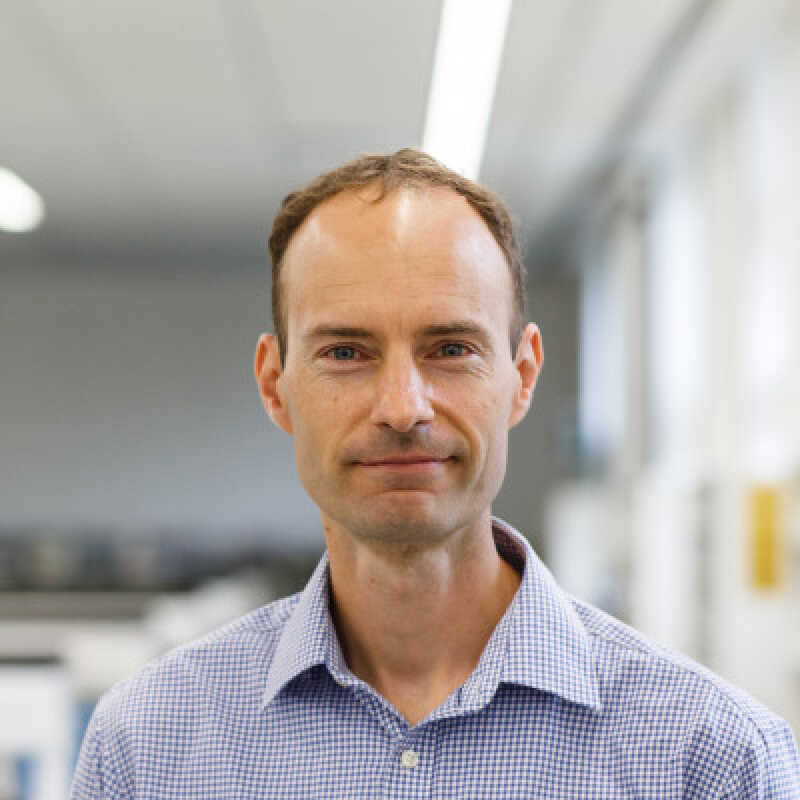
Roeland Prak is a Research Fellow at the University of Groningen's Faculty of Medical Sciences, affiliated with Translational Immunology Groningen (TRIGR). His work bridges neuroscience, immunology, and neurotrauma, focusing on fatigue mechanisms in chronic diseases and injuries. University: University of Groningen School: Faculty of Medical Sciences Rank: Research Fellow His research explores fatigue , fatigability , and motor performance in contexts like primary Sjögren's syndrome , spinal cord injury , and mild traumatic brain injury . Key methodologies include functional MRI and central nervous system drive analysis . Recent outputs examine neuroinflammatory fatigue , neuroimaging biomarkers , and effort perception in post-traumatic conditions. Collaborations span neurology, rheumatology, and biomedical imaging disciplines. He has presented at international conferences like the International MotoNeuron Society (2016) and contributes to translational immunology research in Groningen.
Stephen Adamo is an Assistant Professor in the Department of Psychology at the University of Arizona and directs the Attention Detection And Medical Observation (ADAMO) Lab. He holds a joint appointment in Radiology and Imaging Sciences and is a member of the UA Cancer Center. Education: B.S. in Psychology from the University of Arizona, M.A./Ph.D. in Psychology and Neuroscience from Duke University. His research focuses on visual perception, attention, and medical image perception, utilizing behavioral studies, eye-tracking, and EEG to explore topics like satisfaction of search in virtual mammograms, the impact of AI on diagnostic imaging, and differences between 2D and 3D visual search. He investigates attentional limitations such as "subsequent search misses" and "self-induced attentional blink" in radiology and cognitive science contexts. His recent publications examine the intersection of AI, 3D imaging, and cognitive errors in diagnostic workflows, emphasizing human-AI collaboration in visual search tasks. Scientific Awards: NIH National Cancer Institute Grant 5K99CA267163-02. He collaborates with radiologists and cognitive scientists, integrating interdisciplinary methods to improve medical diagnostics through human factors research.
Dr. Stuart Gibson is a Senior Lecturer in Physics and Astronomy at the School of Physics and Astronomy, University of Kent. He is the co-inventor of the EFIT-V facial composite system, widely adopted by UK police constabularies and international agencies. His academic contributions span interdisciplinary research bridging forensic science, computational methods, and machine learning. Research Interests: Forensic applications of digital image processing Machine learning in natural sciences Facial composites for criminal investigations Medical image analysis Computer vision with security applications Teaching: Stuart teaches numerical and computational methods, mathematical techniques for physical sciences, and digital forensics. His pedagogical focus integrates theoretical frameworks with practical forensic and computational tools. Publications & Collaborations: Over his career, Dr. Gibson has published extensively in journals such as Pattern Recognition Letters , ACS Nano , and Utilities Policy . His work includes innovations in evolutionary algorithms, facial composite systems, and applications of machine learning to muon spectroscopy and Raman spectroscopy.
Jinsoo Hwang is a Professor in the Department of Foodservice Management at Sejong University's College of Hospitality & Tourism Management, where he has served since 2016 with progressive promotion to full Professor in 2022. He concurrently holds leadership roles including Head of the Graduate Program of Foodservice Management (2024) and previously led Sejong University's Graduate School of Tourism (2019-2022). Education: Ph.D. in Hospitality Management, Kansas State University (2011) M.S. in Hospitality Management, Florida International University (2007) M.B.A. in Hospitality and Tourism Management, Sejong University (2005) B.L. in Law, Cheongju University (2003) His research centers on service marketing dynamics and technology adoption in hospitality contexts, with particular expertise in consumer innovativeness, brand loyalty, and rapport building. Recent work examines emerging technologies including robot food delivery, facial recognition payments, and smart farm restaurant systems through cross-cultural lenses. His studies frequently apply theoretical frameworks like UTAUT, TAM, and social penetration theory to analyze consumer behavior in airline, restaurant, and golf resort settings. Publication trends reveal consistent high-impact output with 192 SSCI-indexed papers through 2025, averaging 20+ annual publications since 2019. His work predominantly appears in Q1 hospitality journals like International Journal of Hospitality Management (IF=11.7), focusing on technology-service intersections and cross-national consumer behavior comparisons. Key awards: 2024 Highly Cited Researcher (Web of Science) Sejong University Distinguished Professor (2023-2025) Research.com Top 4 Business Scientist in Korea (2024) SciVal Top 3 Author in Korean Business Research (2018-2023) Albert Nelson Marquis Lifetime Achievement Award (2018) Hwang directs the Gwang603 Laboratory and serves as Head of Sejong University's Smart FM Track under the LINC+ industry-university cooperation program. His leadership extends to editorial roles in major hospitality journals where he frequently reviews submissions on technology adoption and consumer behavior. Current research initiatives focus on human-robot service interactions and sustainable foodservice innovations.
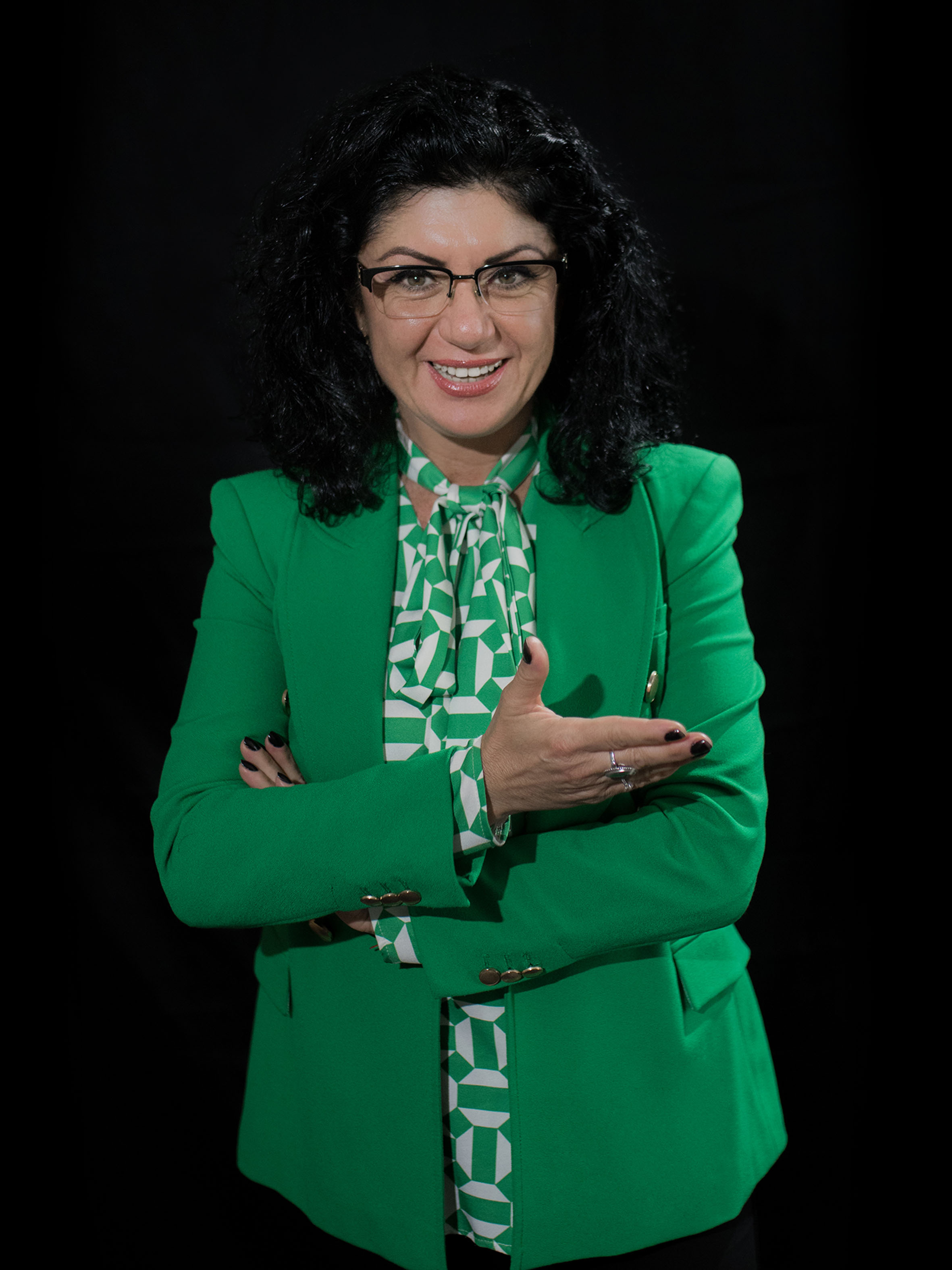
Daria Dzyabura is a Professor at the New Economic School (Russia) and Skolkovo Moscow School of Management. She holds a PhD in Management from MIT (2012) and serves as Director of the Economics and Data Science Program and Associate Vice Provost for Academic Affairs. Previously, she was an Associate Professor at NYU Stern School of Business (2018–2020) and a Full Professor at NES since 2020. Research Interests : Artificial intelligence methods in marketing, consumer preference modeling, recommender systems, and visual data analysis. Her work on consumer visual associations in Marketing Science and Journal of Marketing was recognized with INFORMS Society of Marketing Science awards. She contributed to Image Analytics in Marketing (2021) and Machine Learning (2018) book chapters. Recent Publications (2021–2023) focus on visual data in brand perception, product returns, and consumer search behavior. Her studies leverage machine learning for social media analytics and retail strategy, with applications to omnichannel retail and AI-driven marketing. Awards include the John D.C. Little Award Finalist (2021) Frank M. Bass Award Finalist (2021) MSI Young Scholars Award (2019) She serves as Associate Editor for Management Science and Marketing Science , and on editorial boards of Journal of Marketing and Journal of Marketing Research . Recent presentations include the 2022 MSI conference and IDLab seminar.
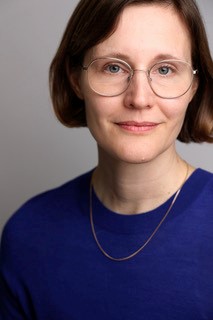
Hui Luan Tran is a Junior Professor (Assistant Professor) at the Institute of Art History and Musicology, Department of Art History, at Johannes Gutenberg University Mainz since May 2022. Previously, they served as Research Assistant at the University of Bonn (2020-2022), Central Institute for Art History Munich (2019-2022), and Ludwig Maximilian University of Munich (2014-2016). Holding a PhD in Art History from LMU Munich (2018), their dissertation focused on 'Pre-Ideological Dying: The Death of Cleopatra as a Motif in Image Theory' under Prof. Dr. Ulrich Pfisterer. Their research explores early modern art theory, visual arts (Italy 16th-17th centuries, France 17th-18th centuries), image theory, ecological and economic dimensions of artistic creation, and the history of optics and visual perception. They are co-leader of the working group 'Ecology of Premodern Art' and involved in research networks like the Postdoc Forum for French Studies. Publications include a monograph on Cleopatra's death motif (2020), chapters on military art, Aby Warburg's education, and interdisciplinary studies in journals like Zeitschrift für Kunstgeschichte. Their work bridges art history, historiography, and scientific visualization. Current projects examine printing press logos at the Gutenberg Museum, funded by Tavolozza-Stiftung and Ernst von Siemens Kunststiftung. Scientific Awards: DAAD-funded Research Stay (Florence, 2017-2018) Postdoc Fellowship at Central Institute for Art History Munich (2018-2020) Gielen-Leyendecker-Stiftung Funding for Warburg Research Grants: Gefördert u.a. von der Tavolozza-Stiftung und der Ernst von Siemens Kunststiftung
Associate Professor Zhidong Li is a prominent researcher at the Data Science Institute within the Faculty of Engineering and Information Technology at University of Technology Sydney (UTS), Australia. With over a decade of experience in data science and machine learning, he leads impactful research bridging theoretical advancements with practical applications across multiple critical infrastructure domains. Dr. Li earned his PhD from the University of New South Wales, Sydney, Australia, and previously served as a senior engineer at Data61, CSIRO (Commonwealth Scientific and Industrial Research Organisation), Australia's federal government agency for scientific research. His research spans machine learning, data mining, pattern recognition, image processing, and human-computer interaction with applications in water, gas, traffic, urbanization, visitor economy, agriculture, environment, finance, property market, railway, law, electric and health sectors. His work particularly focuses on developing interpretable AI models, temporal point processes, and practical applications for smart infrastructure management. His extensive publication record reveals strong thematic consistency in applying advanced machine learning techniques to infrastructure management problems, with particular emphasis on water systems. His research demonstrates progression from fundamental algorithm development toward increasingly sophisticated applications with real-world impact, especially in temporal modeling, graph neural networks, and fairness in AI systems. Scientific Awards 2022 R&D Excellence Award NSW Water Award 2021 UTS Medal for Research Impact for the Vice-Chancellor's Awards for Research Excellence 2018 Australian Museum Eureka Prize for Excellence in Data Science 2019 Victorian iAwards - Industrial & Primary Industries Merit for 'Predictive Analytics for Water Pipe Maintenance' Multiple AWA research innovation awards (NSW, National, QLD) Dr. Li actively supervises Masters and PhD students and leads numerous funded research projects across diverse sectors. His collaborative approach is evident through partnerships with water utilities, transport agencies, and various CRC projects focusing on Food Agility, Digital Finance, and Smartcrete. His work on the world's first independently-audited ethical talent AI in partnership with Reejig demonstrates his commitment to translating research into real-world solutions that address societal challenges while maintaining ethical standards.
Dr. Saidi Siuhi serves as an Associate Professor of Civil Engineering at South Carolina State University, where he teaches undergraduate and graduate courses while conducting research and providing institutional service across departmental and university levels. His academic credentials include: Ph.D. in Civil Engineering from the University of Nevada, Las Vegas (2009) M.Sc. in Civil Engineering from Florida State University (2006) B.Sc. in Civil Engineering from the University of Dar-es-Salaam (2003) Specializing in transportation engineering, Dr. Siuhi's research focuses on traffic safety, transportation planning, and microscopic traffic simulation. His work addresses critical transportation challenges including distracted driving/walking behaviors, traffic management during special events (notably the 2017 solar eclipse), and the application of advanced computational methods to transportation networks. He integrates emerging technologies like virtual reality, machine learning, and deep learning to develop innovative safety solutions for complex transportation systems. Analysis of his recent publications (2021-2025) reveals a strong trajectory toward computational transportation safety, with increasing emphasis on AI-driven solutions for pedestrian safety, driver behavior analysis, and infrastructure monitoring. His work consistently bridges theoretical transportation models with practical safety applications, particularly in distracted behavior analysis and event-based traffic management. Dr. Siuhi actively mentors students through senior design projects (CE 459/460) and graduate coursework, though specific advisee names aren't documented. His service contributions span departmental, college, and university committees, supporting academic operations and strategic initiatives within the engineering program.
Danijel Skočaj is Full Professor at the University of Ljubljana, Faculty of Computer and Information Science , and serves as Head of the Visual Cognitive Systems Laboratory . He is an internationally recognized researcher in computer vision, machine learning, and cognitive robotics , with a strong focus on deep-learning solutions for real-world visual perception tasks and their ethical implications. Education: While specific degrees are not listed in the text, Professor Skočaj’s 2002 “Best PhD paper award” confirms he holds a PhD in the relevant field. Research Interests: His work spans Computer Vision & Pattern Recognition Deep Learning & Neural Networks Cognitive Robotics & Autonomous Navigation Visual Anomaly & Surface-Defect Detection AI Ethics & Societal Impact of AI These interests manifest in both theoretical advances and practical systems deployed in industry and public infrastructure. Publication Trends: Recent papers (2020-2024) emphasize deep-learning architectures for defect detection, robotic grasping, autonomous navigation, traffic-sign recognition, and 3-D anomaly detection , demonstrating a clear trajectory toward robust, real-time, and data-efficient visual intelligence. Awards & Honors: Prometheus of Science Award 2021 (Slovenian Science Foundation) Golden Plaque, University of Ljubljana 2020 ARRS National Award for Exceptional Scientific Achievement 2011 & 2022 Multiple Best-Paper awards at ERK conferences (2013, 2017, 2019) Top-downloaded paper recognition, Journal of Intelligent Manufacturing 2020 Grants & Projects: He currently leads or co-leads five major 2025-2028 national and EU projects (RTFM, SMASH, COMET, RoDEO, MUXAD) totaling several million Euros, focusing on advanced computer vision, machine learning for science & humanities, autonomous systems, and explainable AI. Past leadership includes EU FP7 CogX, GOSTOP, ViLLarD, and many ARRS programmes. Laboratory & Team: The Visual Cognitive Systems Laboratory hosts a dynamic group of doctoral and master’s students working on cutting-edge perception systems. The lab’s open-source low-cost robotic platform and datasets are widely adopted for education and research.
Daniela Margareta Chiorean serves as University Professor in the Graphics Department at the University of Art and Design Cluj-Napoca, where she has held academic positions since 2000 and currently serves as Prorector responsible for quality assurance (2023-2024). She previously served as Dean of the Faculty of Plastic Arts (2012-2015) and Department Director for Graphics (2015-2023). Concurrently, she maintains an active legal practice as an attorney specializing in civil law and intellectual property at the Cluj Bar Association since 2007. Her educational background includes a PhD in Visual Arts (2007) from UAD Cluj-Napoca with thesis 'Man - Media. Traditional and new media in graphics,' a Master's in Civil Law (2005-2007), Law degree (2001-2005), and dual Master's degrees in Visual Arts (2001-2003). She completed specialized training in intellectual property at WIPO (2002) and cultural management/multimedia in Germany (2002-2003). Chiorean's research bridges graphic design, digital media, and intellectual property law, examining how traditional media interacts with contemporary digital environments. Her work explores symbolic dynamics in advertising, the evolution of typography from Gutenberg to virtual publications, and the legal frameworks governing creative works in digital spaces. She investigates how new technologies transform artistic practices while maintaining connections to historical techniques, with particular focus on remix culture and copyright issues in visual communication. Her publication trends reveal consistent exploration of media transitions, with recent work analyzing digital image processing, urban-nature representations in artificial environments, and comparative studies of display versus print media. These publications demonstrate her interdisciplinary approach connecting artistic practice with scholarly inquiry into media evolution. Premiul UAP România pentru grafică - tineret (2002) Premiul Vespasian Lungu pentru grafică (1997) As a researcher, she has led multiple nationally-funded projects including 'Vector – Design and Book Illustration' (2012) through the National Cultural Fund and 'Center for Promoting Entrepreneurship in Sustainable Development' (2010-2013). She coordinates international collaborations through Erasmus+ and Leonardo da Vinci programs, organizing workshops on infographics, bookbinding, and digital media. Her professional activities span academic leadership, legal practice in intellectual property, and active participation in national and international artistic communities as both creator and evaluator. She coordinates specialized workshops in infographics and bookbinding techniques, and participates annually in the Brâncuși International Workshops for sculpture, painting, and graphics. Her collaborative network extends across European institutions through multiple international partnerships, with recent involvement in Korea's 'O întâlnire și o altă călătorie începe' exhibition (2024).
Nina Franz is a Researcher at the Institute of Media Studies, Braunschweig University of Fine Arts, specializing in the Theory and History of Technology. She holds a doctorate in Cultural Studies from Humboldt University of Berlin and has held research positions at Bauhaus University Weimar and Humboldt University Berlin. Her research spans military imaging technologies from early modern period to computer age, climate catastrophe narratives in humanities and contemporary art, history of automation, and critical analysis of technological destruction narratives. She examines how imaging systems mediate power relations in warfare, medicine, and colonial contexts, with particular focus on ultrasound, drone warfare, and military surveillance systems. Her recent publications reveal strong interdisciplinary trends across Media Studies, Cultural History, and Critical Military Studies, with recurring themes of visual epistemology, technological mediation, and the weaponization of perception. Key subfields include drone warfare protocols, medical imaging interfaces, algorithmic control systems, and climate catastrophe representations. Doctoral Scholarship, Gerda Henkel Foundation (2015-2018) As a curator and educator, Franz has organized international conferences including 'Remote Control. Scales of Mediated Intervention' (2017) and co-curated exhibitions like 'A Better Version of You' (2016-2018) with Goethe-Institut Seoul. Her current teaching includes courses on military imaging and rearmament discourses, with mandatory participation in the 'Fascism and Mediality' workshop (2025). She regularly presents at academic conferences on military imaging technologies, including upcoming lectures at Staatliche Hochschule für Gestaltung Karlsruhe and Johannes Gutenberg-Universität Mainz. Her work bridges academic research with contemporary art curation, examining how military technologies permeate civilian perception through screen media and imaging systems.
Saptarashmi Bandyopadhyay is a Tenure-Track Assistant Professor of Computer Science at the City College of New York and the Graduate Center at the City University of New York (CUNY). Her research focuses on Artificial Intelligence Agents and Autonomous Decision Making, with special emphasis on Multi-Agent Reinforcement Learning, Multi-Agent Imitation Learning, and related paradigms. She has established significant collaborations with leading institutions including Google DeepMind, Carnegie Mellon University, Oxford University, and MIT. Dr. Bandyopadhyay received her PhD from the University of Maryland, College Park, where she was advised by Professor John Dickerson and Professor Tom Goldstein. Prior to that, she graduated from Penn State in 2020 with a thesis on Multimodal Computer Vision in Medical Domain advised by Prof. William Evan Higgins. Her research expertise spans multiple domains of AI including Multi-Agent Systems, Reinforcement Learning, Imitation Learning, and Multimodal Perception. She specializes in developing AI agents for applications in climate conservation, economic systems, and AI safety. Her work integrates techniques from computer vision, natural language processing, and robotics to create more robust and explainable AI systems that can operate effectively in complex, real-world scenarios. Current work includes improving explainable AI, developing Multimodal LLM/VLM/Robotic Agents, and creating libraries to speed up Multi-Agent evolutionary training with JAXMARL. Analysis of Dr. Bandyopadhyay's publication record reveals a clear progression from foundational work in medical imaging and natural language processing toward increasingly sophisticated multi-agent AI systems. Her recent publications demonstrate a strong focus on Multi-Agent Reinforcement Learning frameworks like JAXMARL, with applications spanning from supply chain orchestration to climate conservation. The interdisciplinary nature of her work is evident in publications spanning computer vision, NLP, and multi-agent systems conferences including AAAI, NeurIPS, AAMAS, EMNLP, and ACL. DoGood Fellow (2022) UMD Dean's Summer Fellow (2021) Dr. Bandyopadhyay has been actively involved in securing research funding from major agencies including NSF, NIH, DoD, and ARL. She served as the lead PhD student RA in a DoD project for Multi-Agent Explainable AI to improve AI trustworthiness. Her service to the academic community includes membership on program committees for major conferences including IJCAI 2024, KDD 2024, ACL 2024, and AAMAS 2023-2024. She has also created the AI Agents Seminar Series at UMD in 2022 with over 1,000 participants from six continents. Currently, Dr. Bandyopadhyay leads research on improving explainable AI, developing Multimodal LLM/VLM/Robotic Agents, and creating libraries to speed up Multi-Agent evolutionary training with JAXMARL. Her lab collaborates prominently with researchers from Google DeepMind, Carnegie Mellon University, Oxford University, University of Sheffield, Waymo, Meta AI, and MIT, with special focus on Dr. Jakob Foerster's and Dr. Robert Loftin's groups.
Victoria Clarke is an Associate Professor in the Health and Social Sciences school at the University of the West of England, Bristol, where she has been employed since 2003. She holds a PhD and is widely recognized for her work in qualitative research methods, particularly thematic analysis, which she has developed collaboratively with Professor Virginia Braun. Her research focuses on gender and sexuality, appearance and embodiment, family and relationships. Her educational background includes: Postgraduate Certificate of Education (Higher Education) from University of the West of England, Bristol (2003-2004) PhD in Women's Studies/Psychology from Loughborough University (1997-2002) BSc in Psychology from Brunel University London (1993-1997) Professor Clarke's research interests center on qualitative methodologies, particularly thematic analysis which she has helped shape through her award-winning publications. She has made significant contributions to gender studies, with a focus on LGBTQ+ experiences, body image, and family dynamics. Her work often employs innovative qualitative methods such as story completion to explore sensitive topics around sexuality, embodiment, and social relationships. She is particularly known for her collaborative work with Virginia Braun on thematic analysis methodology. Her recent publications demonstrate a continued focus on advancing qualitative research methods while applying these approaches to important social issues. There's a clear trend toward methodological refinement, with numerous publications addressing best practices in thematic analysis and qualitative research reporting. Simultaneously, she maintains strong engagement with substantive research areas including LGBTQ+ experiences, mental health, embodiment, and gender studies. Her work increasingly examines the intersection of methodology and substantive topics, particularly in health contexts. Professor Clarke has received several prestigious awards for her scholarly contributions: British Psychological Society 2022 President's Award British Psychological Society 2022 Book Award Association of Women in Psychology Distinguished Publication Award (2014) British Psychological Society Book Award (Textbook) (2013) American Psychological Association Division 44 Award for Best Book in Lesbian, Gay, and/or Bisexual Psychology (2007) Throughout her career at UWE Bristol, Professor Clarke has provided extensive supervision for undergraduate, master's, and doctoral students. Her research has been supported by various funding sources, including a Lord Chancellor's Department funded project on money management and marital commitment in new couples during her time at the University of Exeter. She has developed and led numerous research projects exploring gender, sexuality, and qualitative methodologies, often collaborating with interdisciplinary teams across psychology, health sciences, and social work. Professor Clarke leads a productive research laboratory focused on qualitative methodologies and their application to social and health psychology questions. Her lab collaborates with researchers across the UK and internationally, particularly with Virginia Braun at the University of Auckland. The lab is known for advancing story completion methodologies and reflexive thematic analysis, with active projects examining LGBTQ+ experiences, mental health, embodiment, and methodological innovation in qualitative research.
Prof. Hermann Hellwagner is a Full Professor at the Department of Information Technology, University of Klagenfurt. He has held roles such as Vice President (Natural and Technical Sciences) at the Austrian Science Fund (FWF) and Vice Dean of the Faculty of Technical Sciences. His research focuses on multimedia communication, network engineering, and future internet architectures. Notable projects include work on adaptive streaming, edge computing, and drone networks. He holds a Ph.D. in Systolic Architectures from the University of Linz (1988). Research interests span distributed multimedia systems, information-centric networking (ICN), and optimizing video streaming quality-of-experience (QoE). Recent work emphasizes edge computing solutions for low-latency streaming and dynamic codec adaptation. His contributions include frameworks like ALPHAS and MEDUSA for bitrate optimization, and studies on point cloud streaming in augmented reality. Publications (2021–2025) highlight advancements in edge-assisted streaming, hybrid P2P-CDN architectures, and transcoding techniques. His work often bridges theoretical models with real-world implementations, addressing challenges in latency, cost, and device adaptability. Current projects involve 6DoF video streaming and multi-robot system optimization. Labs/Teams: Part of the Institute of Information Technology (ITEC), Klagenfurt. Collaborates on EU-funded projects and industry partnerships in 5G edge computing and drone networks. Active in standards groups for HTTP adaptive streaming protocols.