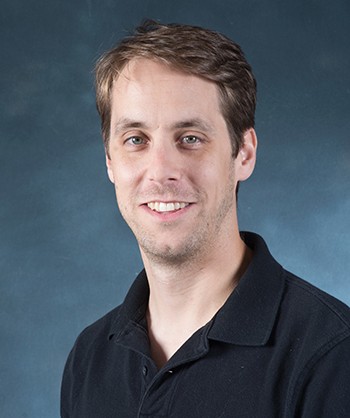
Varyl Thorndycraft is Senior Lecturer in Geography at Royal Holloway, University of London, and a member of the Centre for Quaternary Research. His research reconstructs Late Quaternary environmental changes in Patagonia through geomorphological mapping, sediment analysis, and GIS-based terrain modeling. Key projects investigate glacial lake evolution, catastrophic outburst floods, and varve records to understand ice sheet dynamics and early human settlement patterns. Thorndycraft collaborates with Chilean institutions (CIEP) on interdisciplinary studies of palaeoclimate and archaeological sites. His fieldwork integrates LiDAR, hydraulic modeling, and stratigraphy to decode landscape responses to deglaciation.
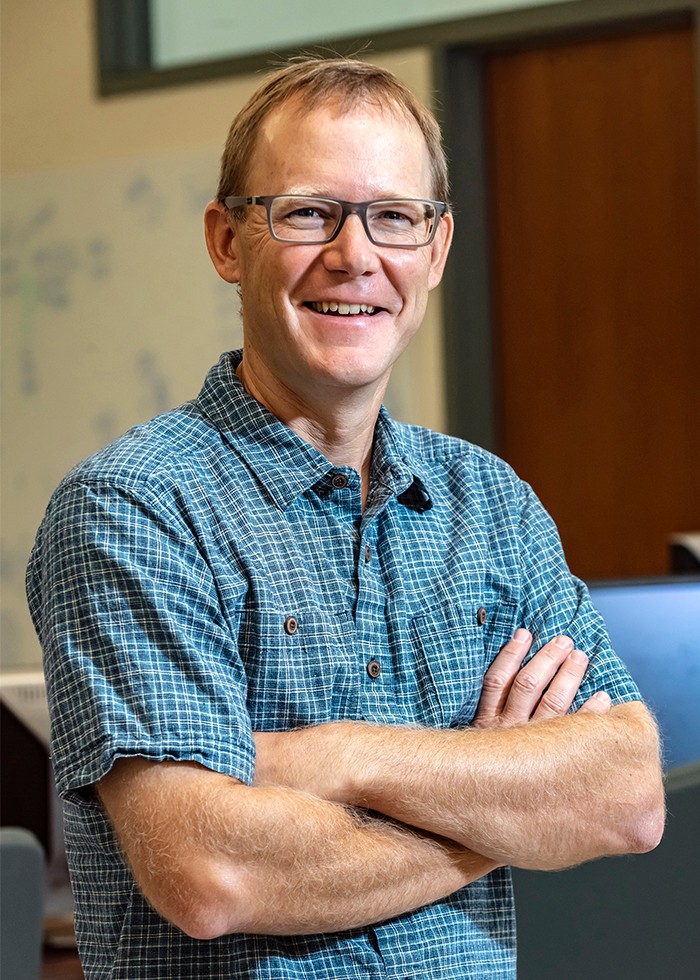
Roles & Affiliations: Duanne WHITE is an Associate Professor in the Systems Ecology department at the University of Canberra, affiliated with the Centre for Applied Water Science. His expertise spans quantitative geomorphology and geochemistry, focusing on catchment and Earth Systems dynamics. Research Interests: Dr. WHITE investigates links between landscapes, climate, and biodiversity during the Quaternary period. Key areas include: Polar ice sheet behavior in East Antarctica and its impacts on sea-level rise projections. Landscape evolution in Australia, leveraging cosmogenic nuclides and borehole paleothermometry. Genetic diversity patterns in Australian and Antarctic riverine species influenced by paleo-landscape changes. Projects & Collaborations: He leads/co-investigates projects such as the Australian Centre for Excellence in Antarctic Science (2021–2025) and ANSTO proposals analyzing Antarctic sediments. Collaborations span institutions globally, focusing on ice dynamics, isotope tracing, and sediment geochemistry. Labs & Teams: Active in the Centre for Applied Water Science, integrating interdisciplinary approaches to address Antarctic and Australian environmental challenges.
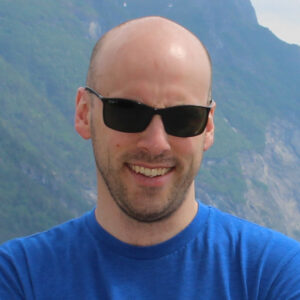
Dr. Kenneth R. Demarest is a Professor in the Department of Electrical Engineering and Computer Science at the University of Kansas , where he teaches courses such as EECS 202 – Circuits I , EECS 220 – Electromagnetics I , and EECS 611 – Electromagnetic Compatibility . Research Interests : Computational Electromagnetics Antennas Fiber Optic Components Communication Systems His publications span topics in antenna design , optical communication , RFID technology , and electromagnetic modeling . Recent work includes books on Electromagnetic Compatibility and Four-Wave Mixing in optical fibers, as well as articles on RFID tag performance and glacial ice radar imaging . Laboratory Affiliations : Lightwave Communication Systems (LCS) Laboratory Center for Remote Sensing of Ice Sheets
John Bradford serves as Professor of Geophysics and Vice President for Global Initiatives at the Colorado School of Mines, where he bridges academic leadership with institutional strategic vision in geophysical sciences. His academic foundation includes: PhD in Geophysics from Rice University BS in Engineering Physics from the University of Kansas BS in Physics from the University of Kansas Bradford's research program centers on advanced geophysical methodologies, with core expertise in ground-penetrating radar systems, seismic wave propagation analysis, and subsurface imaging techniques. His work integrates computational modeling with field applications to solve complex problems in near-surface characterization, emphasizing material property estimation and dynamic process monitoring across environmental and resource exploration contexts. Analysis of his recent publications reveals a cohesive research trajectory focused on multi-parameter inversion frameworks, particularly the synergistic integration of ground-penetrating radar with electrical resistivity methods. His publications demonstrate methodological innovations in joint inversion algorithms, surface wave analysis for shear-wave velocity profiling, and time-lapse GPR applications for hydrological monitoring, with significant extensions into glaciological studies using multi-offset radar systems for historical climate reconstruction.
Weisen Shen is an Associate Professor in the Department of Geosciences at Stony Brook University, where he has been a faculty member since 2018. He holds a B.S. from the University of Science and Technology of China (2008), a Ph.D. from the University of Colorado Boulder (2014), and completed postdoctoral research at Washington University in St. Louis (2015–2017). His research focuses on seismic tomography, lithosphere structure, and geothermal studies. Key interests include improving seismic imaging techniques, quantifying uncertainties in Earth's interior models, and linking seismic data to tectonic and thermal processes. He uses surface waves, receiver functions, and Bayesian methods to study crustal and upper mantle composition, temperature, and deformation. Recent work emphasizes Antarctica, Alaska, and U.S. continental regions. Selected articles highlight advancements in 3D crustal modeling, Antarctic geothermal heat flow, and seismic anisotropy analysis. His group actively seeks students and postdocs for projects on global seismic imaging and subglacial geology.
Dr. Daniel Imrecke is an Associate Professor of Geology and Environmental Science at the University of Houston-Clear Lake (UHCL), part of the College of Science and Engineering. He holds a B.S. in Geology from Stephen F. Austin State University and a M.S. and Ph.D. in Geology from the University of Houston, completed in 2013. Prior to joining UHCL in 2014, he served as an adjunct instructor at Lone Star College, the University of Houston, and Stephen F. Austin State University. His research focuses on structural geology, petrography, geochronology, and geochemistry, with a particular emphasis on tectonic evolution in regions like the Pamir Mountains and Texas. Active research projects include the Mesozoic evolution of the Pamir, coastal hazards in Louisiana, and characterization of Shergottite meteorites. He teaches courses such as Physical Geology, Historical Geology, Mineralogy, and Structural Geology. Dr. Imrecke’s work has contributed to understanding tectonic processes in high-altitude basins, Quaternary glaciation dynamics, and fault kinematics. His publications span topics ranging from magmatic evolution in the Pamir to deformation patterns in extensional basins. Though no specific awards are noted, his interdisciplinary approach integrates fieldwork, laboratory analysis, and computational modeling. His advising includes undergraduate projects on coastal hazards and graduate work on meteorite characterization. While no grants are explicitly mentioned, his active projects reflect ongoing collaborations in tectonic and environmental geoscience research. Dr. Imrecke’s academic contributions extend to field methods instruction and natural disaster studies, reflecting a commitment to both research and education in geology and environmental science.
Associate Professor Victoria Emma Taylor researches paleoclimatology and ocean temperature evolution at the University of Bergen's Department of Earth Science, affiliated with the Quaternary geology and Paleoclimate research group. Her work focuses on reconstructing deep ocean temperatures using clumped isotope thermometry across major climate transitions, particularly during the Cenozoic era. Her research examines deep ocean temperature variations during key climate shifts like the Eocene-Oligocene Transition and Middle Miocene Climate Transition. Current projects investigate coccolith-based temperature proxies, inter-basin deep ocean temperature comparisons, and temperature reconstructions from the Alboran Sea. Recent publications demonstrate methodological advances in clumped isotope applications for paleotemperature reconstruction. Her work contributes to understanding deep ocean circulation changes, calcite compensation depth fluctuations, and orbital-scale climate pacing mechanisms during major climate reorganizations. Professor Taylor collaborates extensively on international projects like DOTpaleo (Deep Ocean Temperatures in the Paleogene) funded by the Research Council of Norway. Her research combines laboratory analysis of marine sediments with paleoclimate modeling to reconstruct past ocean conditions. She regularly presents findings at major geoscience conferences including EGU General Assembly and Goldschmidt Conference. Current work examines temperature evolution across climate transitions using novel geochemical proxies to refine our understanding of past climate dynamics.
Jeremy Shakun is an Associate Professor in the Department of Earth and Environmental Sciences at Boston College. He serves as Director of Undergraduate Studies and leads a research group focused on paleoclimatology, glaciers, and geochemistry. His work integrates field studies, geochemical analyses, and climate modeling to understand past climate changes and ice sheet dynamics. Shakun holds a B.A. from Middlebury College, an M.S. from the University of Massachusetts Amherst, and a Ph.D. from Oregon State University. His research addresses fundamental questions about climate sensitivity, ice sheet-climate linkages, and model validation through paleo-data. Projects span Arctic to tropical regions, using cosmogenic nuclide dating, speleothem records, and sediment analysis. Current graduate students include Calen Rubin (Ph.D. candidate on North American ice sheet history) and Lauren Gustafson (M.S. on Laurentide Ice Sheet meltwater dynamics). Past students have explored topics like Laurentide Ice Sheet history via cosmogenic nuclides (Danielle LeBlanc, Ph.D.), tropical Andes glacier retreat (Drew Gorin, M.S.), and Arctic speleothem chronology (Celeste Gambino, M.S.). Shakun's recent publications emphasize unprecedented tropical glacier retreat, interglacial climate patterns in subarctic Canada, and global temperature reconstructions over millions of years. His work bridges geological records with modern climate science to inform understanding of today's environmental changes.
Mark D. Behn is Professor of Earth and Environmental Sciences at Boston College, with additional appointments at Woods Hole Oceanographic Institution. He holds a BS from Bates College and PhD from MIT/WHOI. His research program integrates: Geodynamic modeling of tectonic and magmatic processes Ice sheet-ocean interactions Mantle melting and melt migration mechanisms Seafloor spreading dynamics Recent publications examine feedbacks between geological processes and climate change, particularly how deglaciation affects volcanic CO2 emissions, and magmatic controls on seafloor topography. Current PhD students include Evan Saltman (Gofar Transform Fault mapping) and Victoria Richardson (Southwest Indian Ridge mantle processes).
Katleen Robert is an Assistant Professor and Canada Research Chair in Ocean Mapping at the School of Ocean Technology, part of the Fisheries and Marine Institute at Memorial University of Newfoundland. Her research focuses on advanced seafloor mapping techniques, deep-sea ecology, and the application of technologies like AUVs, photogrammetry, and sonar to understand marine habitats. Education: Ph.D. Ocean and Earth Science, University of Southampton (2014) M.Sc. Biology, University of Victoria (2011) B.Sc. Natural Resource Science, McGill University (2008) Research Interests: Dr. Robert’s work addresses spatial complexity in marine ecosystems, including benthic community dynamics, habitat responses to stressors, and high-resolution mapping for resource management. She emphasizes interdisciplinary approaches to bridge geospatial statistics, technology, and conservation planning. Publications: Her recent work explores submarine canyons, cold-water corals, and the integration of AI in benthic habitat mapping, reflecting a focus on technological innovation in marine sciences. Labs/Teams: Leads a research group advancing marine spatial analysis and collaborates internationally on projects like the Charlie-Gibbs Fracture Zone and Cap de Creus Canyon studies.
Dr. Andy Breckenridge is a Professor in the Natural Sciences Department at the University of Wisconsin-Superior. His research focuses on sedimentology, stratigraphy, glacial geology, and climate change, with a particular emphasis on reconstructing past environmental changes through lake sediments. He holds a Ph.D. (2006) from the University of Minnesota, preceded by an M.S. (1999) and B.S. (1994) from Purdue University. Education: Ph.D. in Geology, University of Minnesota (2006) M.S. in Geology, University of Minnesota (1999) B.S. in Geology, Purdue University (1994) Research Interests: Glacial Lake Agassiz and its impact on climate Lake Superior’s sedimentary history Landslide dynamics and geomorphic responses to extreme events Reconstructing caribou populations via lake sediments Maya lowlands environmental history His articles highlight studies on glacial lake drainage, landslide susceptibility, and paleoclimate reconstruction. Current projects include NSF-funded research on ice-sheet response to climate change and sediment analysis in the St. Louis River Estuary. Dr. Breckenridge collaborates widely, integrating fieldwork, geochronology, and remote sensing to address interdisciplinary questions in Earth sciences. Labs/Teams: Active in the University of Wisconsin-Superior Geology Program, collaborating with institutions like the University of Minnesota and ResearchGate.
Ken Ferrier is an Associate Professor in the Department of Geoscience at the University of Wisconsin-Madison . His research integrates surface processes and sea-level change , addressing how climate and tectonics shape Earth’s topography and geochemistry. He holds a PhD in Earth and Planetary Science from UC Berkeley (2009) and an AB in Physics from Cornell University (2000). His work spans: Quantifying chemical weathering in steep, cold mountain ranges Modeling sea-level responses to sediment redistribution Analyzing landscape evolution via cosmogenic isotopes and numerical models Recent publications focus on volcanic terrain dynamics , ice sheet interactions , and sediment transport across diverse settings, from Hawaii’s rainfall gradients to Mars’ valley networks . Awards include the AGU Editor’s Citation (2016) and Kavli Frontiers of Science Fellowship (2012) . He has taught courses like Quantitative Geomorphology and Introduction to Geophysics , and mentors PhD students Rachel Breunig and Miles Reed . His lab engages in fieldwork, lab experiments, and global collaborations.
Dr. Alia Khan is an Associate Professor in the Department of Environmental Sciences at Western Washington University. Her research focuses on the impacts of light-absorbing particles (e.g., black carbon, snow algae) on cryospheric albedo and melt processes. She employs remote sensing (UAVs, satellites) and field-based biogeochemical analysis to study polar and high-mountain regions. Dr. Khan leads the Western Washington Cryospheric Sciences Remote Sensing and Aquatic Biogeochemistry Lab and manages over $2.5 million in federal grants (NSF, NASA). Education: B.S.P.H. in Environmental Health Science, University of North Carolina at Chapel Hill (2009) M.S. in Environmental Studies (Biogeoscience), University of Colorado Boulder (2012) Ph.D. in Civil and Environmental Engineering, University of Colorado Boulder (2016) Research Interests: Light-absorbing particles in snow/ice Snow algae dynamics and remote sensing Cryospheric hydrology and biogeochemistry Climate impacts of cryospheric changes Funding & Projects: NSF-CAREER Award: Antarctic snow algae and light-absorbing particles NSF-EAGER: Arctic sea ice robotics and sampling NSF-RAPID: Greenland ice sheet smoke deposition NASA: SmallSat detection of snow algae Awards: NSF CAREER Grant (2022) US Fulbright Scholar (2019) Antarctic Service Medal (2012) Teaching: Courses include Watershed Biogeochemistry Capstone and Global Change in the Cryosphere , integrating fieldwork and geospatial analysis. Lab Opportunities: Seeks motivated M.S. students and research associates for fieldwork, lab analysis, and remote sensing projects.
Jacky Austermann is an Associate Professor in the Department of Earth and Environmental Sciences at Columbia University and works at the Lamont-Doherty Earth Observatory. Her research focuses on understanding sea level and ice sheet changes over various timescales to better understand ice sheet stability and sea level rise in response to warming temperatures. Dr. Austermann earned her B.Sc. in Physics from the University of Darmstadt and M.Sc. in Geophysics from LMU Munich. She received her Ph.D. in Earth Sciences from Harvard University in 2016 and conducted a postdoc at Cambridge University before joining Columbia in 2018. B.Sc. in Physics, University of Darmstadt M.Sc. in Geophysics, LMU Munich Ph.D. in Earth Sciences, Harvard University (2016) Postdoc, Cambridge University Dr. Austermann's research centers on sea level changes ranging from glacial cycles to millions of years ago to infer ice mass changes and ice sheet stability as well as constrain the Earth's rheology. Her work also addresses modern and future sea level change. She studies how sea level records can be used to interpret changes in ice volume during glacial cycles, considering effects like glacial isostatic adjustment and dynamic topography. She conducts fieldwork in locations like the Bahamas and Barbados to understand past sea level changes during warm periods and is an investigator on the NSF-funded Greenland Rising project. Her recent publications demonstrate a strong focus on sea level reconstruction, glacial isostatic adjustment, and dynamic topography across various timescales from the Holocene to the Pliocene. Her work integrates field observations with numerical modeling to understand Earth system processes. A significant portion of her research examines how gravitational effects and Earth's viscoelastic response influence local sea level records, and how these can be reconciled to estimate global ice volume changes. Dr. Austermann is actively involved in mentoring students and postdocs. Her research group includes current graduate students Casey Brayton, Lauren Lewright, and Sam Chester, as well as postdoc Ben Stoker. Former group members include PhD students Roger Creel and Andrew Hollyday, and several postdocs who have moved on to positions at institutions like ANU, Durham University, WHOI, Stanford University, and others. She is also involved in science communication and education initiatives, including the GeoContext project which creates teaching modules that incorporate social and political context into geoscience education. She has participated in public talks and created educational materials on sea level change.
Roger Buck is a Lamont Research Professor at Columbia University's Lamont-Doherty Earth Observatory (LDEO) and an Adjunct Professor of Earth and Environmental Sciences. He serves as Associate Director of LDEO, overseeing research initiatives in geophysics, climate science, and planetary tectonics. His work focuses on ice shelf dynamics, mid-ocean ridge tectonics, and Venusian geology, with a strong emphasis on integrating observational data with numerical modeling. Research interests include the mechanical behavior of ice shelves under climate stress, magmatic processes at mid-ocean ridges, and the tectonic evolution of Venusian highland systems. His recent studies highlight buoyancy-driven crevassing mechanisms, slab window geodynamics, and the role of freshwater in ice shelf destabilization. Publications span over two decades, with recent work exploring ice shelf rheology, mantle dynamics beneath subduction zones, and rift system morphology on Venus. His lab at LDEO collaborates globally on Earth Observation missions and planetary science initiatives.