معرفی
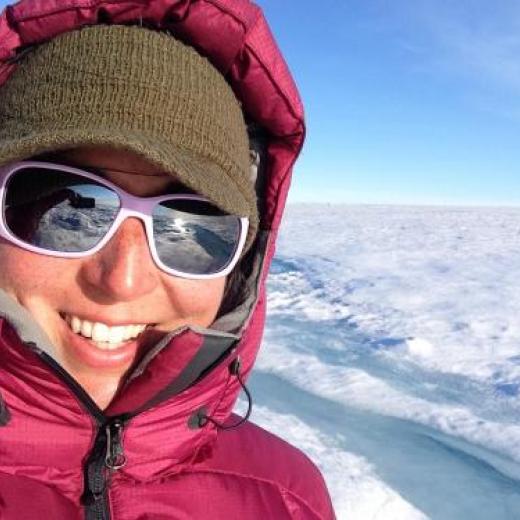
Dr. Alia Khan is an Associate Professor in the Department of Environmental Sciences at Western Washington University. Her research focuses on the impacts of light-absorbing particles (e.g., black carbon, snow algae) on cryospheric albedo and melt processes. She employs remote sensing (UAVs, satellites) and field-based biogeochemical analysis to study polar and high-mountain regions. Dr. Khan leads the Western Washington Cryospheric Sciences Remote Sensing and Aquatic Biogeochemistry Lab and manages over $2.5 million in federal grants (NSF, NASA).
Education:
- B.S.P.H. in Environmental Health Science, University of North Carolina at Chapel Hill (2009)
- M.S. in Environmental Studies (Biogeoscience), University of Colorado Boulder (2012)
- Ph.D. in Civil and Environmental Engineering, University of Colorado Boulder (2016)
Research Interests:
- Light-absorbing particles in snow/ice
- Snow algae dynamics and remote sensing
- Cryospheric hydrology and biogeochemistry
- Climate impacts of cryospheric changes
Funding & Projects:
- NSF-CAREER Award: Antarctic snow algae and light-absorbing particles
- NSF-EAGER: Arctic sea ice robotics and sampling
- NSF-RAPID: Greenland ice sheet smoke deposition
- NASA: SmallSat detection of snow algae
Awards:
- NSF CAREER Grant (2022)
- US Fulbright Scholar (2019)
- Antarctic Service Medal (2012)
Teaching: Courses include Watershed Biogeochemistry Capstone and Global Change in the Cryosphere, integrating fieldwork and geospatial analysis.
Lab Opportunities: Seeks motivated M.S. students and research associates for fieldwork, lab analysis, and remote sensing projects.