Rehan Syed is a Professor at Queensland University of Technology's School of Information Systems within the Faculty of Science and Engineering. His research focuses on Business Process Management (BPM), Robotic Process Automation (RPA), and Process Mining, with significant contributions to understanding digital transformation challenges in public and healthcare sectors. He has authored/co-authored over 35 peer-reviewed publications in top journals and conferences like BPM, HICSS, and ECIS. Key areas of expertise include leadership in IT initiatives, healthcare data quality, and low-code adoption strategies. Recent work emphasizes RPA's impact on organizational processes and knowledge retention. His research bridges academic theory with practical implementation, often collaborating with institutions like UN agencies and healthcare organizations. Publications span case studies in developing countries, systematic reviews, and curriculum development frameworks for BPM education. His work is cited across disciplines, reflecting its relevance to both academia and industry.
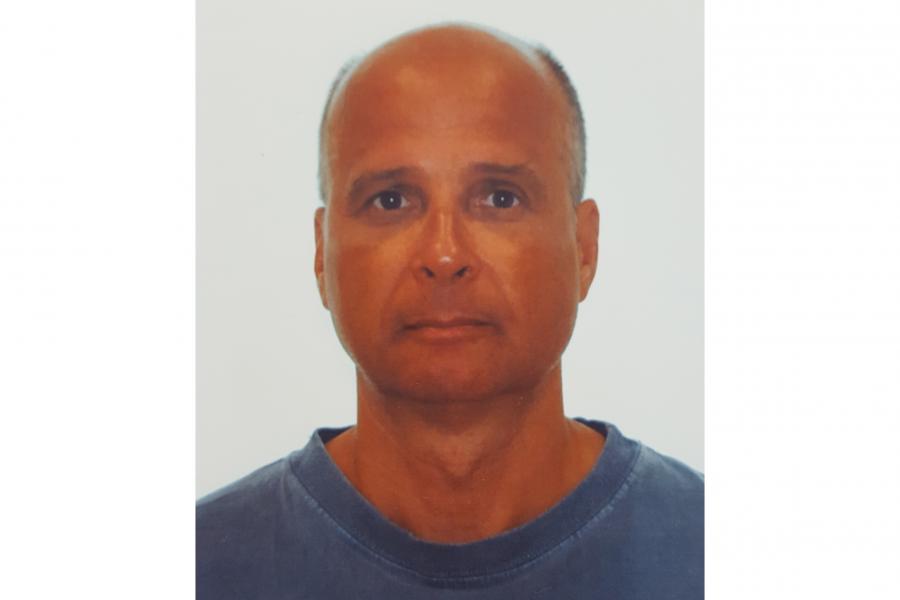
Dr. Ken Ferens is an Assistant Professor in the Department of Electrical and Computer Engineering at the Price Faculty of Engineering, University of Manitoba. He serves as the Computer Engineering Champion in the Centre for Engineering Professional Practice and Engineering Education and directs the Applied Cognitive Intelligence (ACI) Research Group. Dr. Ferens is a senior member of the Institute of Electrical & Electronics Engineers (IEEE), Chair of the EduManCom Chapter of the IEEE, Vice-Chair of the Computer and Computational Intelligence Chapter of the IEEE, and Chair of the Industry, Teaching Assistants, and Student Forums for Engineering Curriculum Review and Improvement. Ph.D. (Computer Engineering), University of Manitoba, 1996 M.Sc. (Computer Engineering), University of Manitoba, 1991 B.Sc. (Electrical Engineering), University of Manitoba, 1989 Dr. Ferens has over 33 years of research experience in computational intelligence, focusing on cognitive machine learning, artificial intelligence, cognitive computational intelligence, chaos theory applications, agent-based models, and various optimization algorithms including simulated annealing, genetic algorithms, artificial neural networks, and particle swarm optimization. His research applies these techniques to develop software and hardware intrusion detection systems for cybersecurity applications. He teaches graduate-level courses on Computer Network Security and Applied Computational Intelligence, providing students with theoretical background and hands-on experience in state-of-the-art security methods. Analysis of Dr. Ferens' recent publications reveals a strong focus on applying cognitive and chaotic computational techniques to cybersecurity challenges, particularly malware detection and network intrusion detection. His work increasingly integrates complexity theory, fractal analysis, and hybrid optimization approaches to enhance security systems' effectiveness. There's a clear progression toward more sophisticated machine learning architectures applied to increasingly complex security scenarios, with growing emphasis on real-world IoT and network security applications. Best Paper Award at IEEE International Conference on Cognitive Informatics and Cognitive Computing (ICCI*CC 2022) Best Paper Award at IEEE International Conference on Cognitive Informatics and Cognitive Computing (ICCI*CC 2015) Best Journal Paper Award for 2013 (Journal of ICT Research and Applications) Best Poster Award at 12th International Conference on e-Health Networking, Application & Services (2010) Best Paper Award at IASTED International Conference on Computer, Electronics, Control, and Communication (1991) Dr. Ferens collaborates with national and international industry partners including the Department of Advanced Information Management, Content Technology Canadian Tire Corporation (CTC), and Magellan Aerospace. His research group has received funding supporting the Cyber-security Research Program, developing practical applications of computational intelligence for security systems. He has supervised numerous graduate students in the Electrical and Computer Engineering department, focusing on research at the intersection of machine learning and cybersecurity. Dr. Ferens leads the Applied Cognitive Intelligence (ACI) Research Group within the Department of Electrical and Computer Engineering, which focuses on applying cognitive, chaotic, and computationally intelligent algorithms to build intrusion detection systems. The group collaborates with industry partners to develop practical security solutions while providing students with hands-on research experience in cutting-edge security technologies. Their work spans both theoretical algorithm development and practical hardware implementation for real-world security applications.
Professor Emma Murphy is a leading scholar in the School of Government and International Affairs at Durham University , holding the Chair of Political Economy . She is also a Senior Fellow in the Global Policy Institute and a member of the Institute for Middle Eastern and Islamic Studies . Her research focuses on the political economy of the Middle East and North Africa , with particular emphasis on ICTs, youth policy, food security, economic liberalization, and Arab-Israeli relations . Recent work explores youth exclusion and inclusion in the MENA region, Africa, and Europe, and gendered transport systems in African cities. Her publications (2025-2009) span gendered mobility practices , ICTs and democratization , economic reforms in Tunisia, and youth activism across the Mediterranean. She co-edits the journal Mediterranean Politics (IF 0.722) and has served on the HEFCE Research Excellence Framework Sub-Panel . Honors : Fellow of the Royal Society of Arts and Manufacturing (FRSA) Academician of the Academy of Social Sciences (ACSS) International Election Observer, Tunisia (2011) Doctoral students supervised include Abdullah Al-Maani and Saleh Albulayhi. Her work intersects with social policy, gender studies, and urban mobility , with recent projects analyzing COVID-19 impacts on youth .
Stephen Alstrup is a Professor in the Algorithms and Complexity section at the Department of Computer Science (DIKU), University of Copenhagen, Faculty of Science. His research bridges theoretical computer science with practical applications in modern computational challenges. His primary research interests include: Algorithm design and analysis Graph algorithms and data structures Big Data processing techniques Streaming algorithms and Internet distribution Theoretical foundations with practical implementations Alstrup's work demonstrates how theoretical algorithm research can lead to real-world applications, as evidenced by his development of Octoshape technology for large-scale Internet streaming. His research spans from fundamental theoretical problems to applications in Big Data, cloud computing, and information retrieval systems. He has published extensively with 93 research outputs including journal articles, conference proceedings, and books. His recent work focuses on graph spanners, semantic hashing, recommendation systems, and universal graph structures, showing continued productivity in theoretical computer science. Alstrup actively engages with industry and media, contributing to discussions about Big Data applications, technology innovation, and how businesses can collaborate with universities to access cutting-edge knowledge and funding opportunities. His work has been featured in 10 media contributions discussing practical applications of algorithms in education, municipal IT projects, and business innovation.
Pardis Pishdad is an Associate Professor and Graduate Program Director in the School of Building Construction at Georgia Institute of Technology’s College of Design. She directs the Smart Built Environment Eco-System (Smart Bees) Laboratory, focusing on integrating cyber-physical systems, digital twins, and innovative project delivery methods (e.g., IPD, Flash Tracking) for sustainable built environments. Her research bridges technology adoption, trust-building in construction contracts, and supply chain optimization. Education: PhD, Environmental Design and Planning (Virginia Tech) Master’s Degrees: Civil Engineering (Virginia Tech), Design Studies in Project Management (Harvard), Architecture (University of Tehran) Bachelor’s in Architectural Engineering (Azad University of Shiraz) Research Interests: Her work emphasizes sustainable construction practices using IoT, BIM, and blockchain. Key areas include lifecycle cost analysis, lean construction, and smart building technologies. She explores trust dynamics and collaboration in construction projects through game theory and process optimization. Recognition: 2018 ENR Top 20 Under 40 Professionals 2016 CII National Outstanding Researcher Award 2020-2022 Georgia Tech Provost Teaching Learning Fellow Advisory Roles: Academic Advisor for CII’s Supply Chain Management Community, Vice Chair of BuildingSMART’s BIM Forum 5D Taskforce. Formerly advised the Construction Management Association of America’s Board (2016–2018). Industry Collaboration: Partnerships with Turner Construction, GDOT, and VDOT. Research on Flash Tracking and blockchain has been integrated into industry practices. Labs & Teams: The Smart Bees Lab pioneers cyber-physical systems for smart buildings, exploring AI-driven solutions and sustainable construction frameworks.
Hyung Min Kim is an Associate Professor in Urban Planning at the University of Melbourne's Melbourne School of Design. His research focuses on globalisation's urban impacts, including FDI spatial dynamics, smart cities, liveability, and Asia-Pacific urbanisation. Before joining Melbourne in 2016, he worked at RMIT University (Australia), Xian Jiaotong-Liverpool University (China), and Korea Appraisal Board. He holds a PhD from the University of Melbourne, supported by an Endeavour Postgraduate Award. His work examines global cities' economic and spatial transformations, emphasizing FDI, international real estate investments, and urban policy in Korea, China, and Vietnam. Key themes include urban renewal strategies, land value capture mechanisms, and the interplay between ICT and urban development. Notable research areas include: Global urban governance and expertise export Spatial mismatch in FDI distribution Pedestrian-centric city design Smart city frameworks for productivity and sustainability Historical urban trajectories in North Korea His publications span 20+ countries, analyzing urban phenomena from Hanoi to Suzhou. Current projects explore FDI-urban growth linkages in Southeast Asia and the role of land readjustment in creating walkable cities. He advises on international urban development strategies and has collaborated with governments on smart city implementation frameworks.
Eric Masanet is a Professor and Mellichamp Chair in Sustainability Science for Emerging Technologies at the University of California, Santa Barbara (UCSB), holding a courtesy appointment in the Department of Mechanical Engineering. He leads the Bren School's Industrial Sustainability Analysis Laboratory, focusing on decarbonizing industrial and IT sectors while advancing equity and sustainability. His research spans energy system analysis, climate mitigation, and sustainable manufacturing. Education: Ph.D. in Mechanical Engineering from UC Berkeley, with M.S. and B.S. degrees from Northwestern University and the University of Wisconsin-Madison, respectively. Research interests include data center sustainability, industrial decarbonization, and the intersection of technology and climate policy. He has contributed to the IPCC's Sixth Assessment Report, advised the U.S. White House, and serves on the DOE's Industrial Technology Innovation Advisory Committee. Notable achievements include authoring the U.S. Data Center Energy Usage Report and leading the Resources, Conservation, and Recycling journal as former Editor-in-Chief. His work bridges academia with policy, influencing international energy and climate strategies. Advising and grants: Supervises PhD students (e.g., Jaxon Stuhr) and postdocs (Antoine Merlo, Jason Ye) in decarbonization research. Collaborates with Lawrence Berkeley National Laboratory and international organizations like the IEA. Labs/Teams: Directs the Industrial Sustainability Analysis Laboratory, advancing models for low-carbon industrial and IT systems.
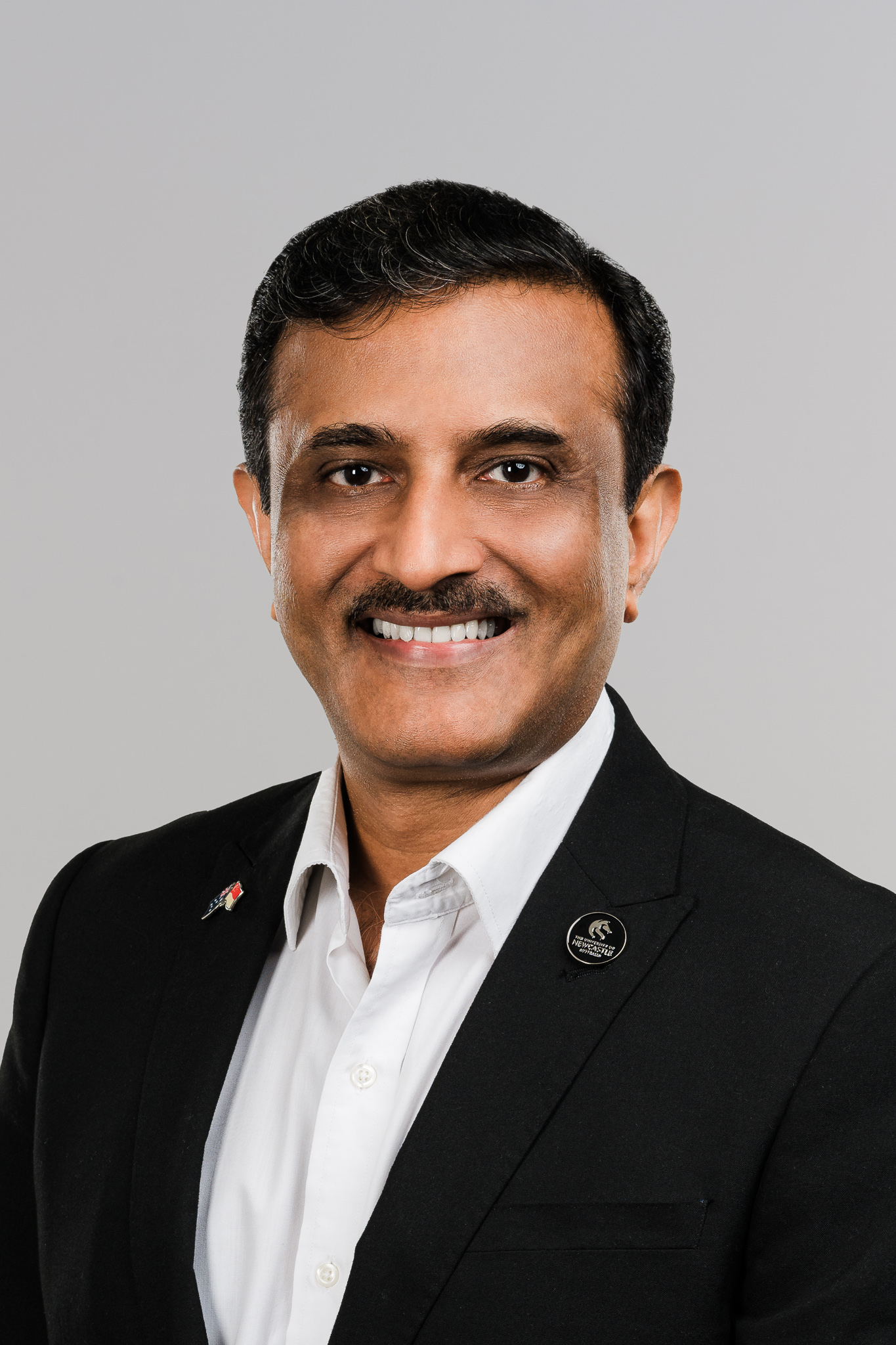
Professor Abhishek Singh Bhati is the Pro Vice-Chancellor and CEO at the Newcastle Australia Institute of Higher Education. He is a distinguished academic and administrator with a focus on tourism management and scholarship of learning and teaching. His research explores technology-driven tourism transformations, low-carbon tourism, and the alignment of tourism with United Nations Sustainable Development Goals (SDGs). Bhati’s work also emphasizes tourist behavior, resilience planning, and vandalism management in tourism settings. PhD (Tourism Management), James Cook University, Australia MBA (Marketing Management), Maastricht School of Management, Netherlands Bachelor of Arts (Economics), Bombay University, India Diploma in Adult and Continuous Education, Institute of Adult Learning, Singapore Graduate Certificate in Education (Tertiary Teaching), James Cook University, Singapore His research spans technology’s role in tourism, sustainable development, and educational innovation. Recent publications address energy-economic synergies, AI in tourism, and post-pandemic travel behavior. Bhati has secured grants from organizations like the World Wide Fund for Nature (WWF) and the Australian Government’s Office of Learning and Teaching (OLT). Scientific Honors: Fellow of the Higher Education Academy (FHEA)
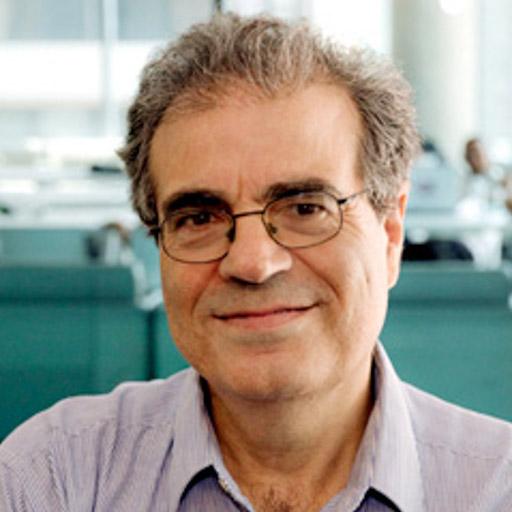
Michel Laroche serves as Professor of Marketing and holds the Royal Bank Distinguished Professorship at Concordia University's John Molson School of Business. He maintains active research leadership through editorship of the Canadian Journal of Administrative Sciences and extensive scholarly contributions across global marketing domains. His educational background includes a Diplôme d'ingénieur from École Centrale de Paris, M.S.E. from Johns Hopkins, and M.Ph./Ph.D. from Columbia University, complemented by an honorary Doctor of Science from the University of Guelph. This multidisciplinary foundation underpins his research approach. Consumer behavior modeling Social media/digital marketing analytics Cross-cultural retailing dynamics Advertising effectiveness in global contexts Internet of Things consumer adoption Artificial intelligence in marketing systems His publication portfolio demonstrates consistent innovation in digital consumer behavior, with recent work examining social commerce cultural dynamics, TikTok authenticity metrics, and pandemic-driven media consumption patterns. Articles consistently integrate technological advancement with deep cultural analysis. Fellow of the Royal Society of Canada Recipient of the Jacques-Rousseau Medal for multidisciplinary research Living Legend of Marketing Award (HEC-Montreal) Hans B. Thorelli Award for international marketing research JBR Outstanding Associate Editor Award (namesake) Laroche has supervised 64 M.Sc. and 27 Ph.D. theses while securing major funding from SSHRC and FQRSC. His editorial leadership spans 16 years as Managing Editor of the Journal of Business Research and current Editor-in-Chief role at CJAS , establishing significant infrastructure for marketing scholarship. Professional service includes presidential roles in ASAC and AMS, plus extensive journal editorial board participation.
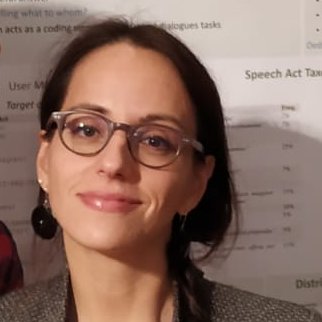
Nicole Novielli, Ph.D., is Associate Professor at the University of Bari “A. Moro” , Italy, where she conducts research on affective computing applied to software engineering and human-computer interaction. She leads the Collaborative Development Group and coordinates national projects investigating emotions in software teams, AI quality and IoT ecosystems. Education: Ph.D. in Computer Science, University of Bari, 2010 – thesis on “Lexical Semantics of Dialogue Acts” M.Sc. in Computer Science (Knowledge & Software Engineering), University of Bari, 2006 – summa cum laude B.Sc. in Computer Science, University of Bari, 2004 – summa cum laude Visiting researcher at USC-ICT, University of Aberdeen, FBK-irst (Trento) Research interests revolve around recognizing and exploiting affective and cognitive states in computer-mediated cooperative work. She studies sentiment and emotion mining in developers’ textual communication, multimodal emotion recognition via low-cost biometric sensors, and natural-language dialogue simulation for intelligent interfaces. Her work couples software engineering with natural language processing , social media analytics and human-computer interaction . Recent articles (2021-2025) reveal a clear trend: integrating deep learning and large language models into software engineering tasks—automated issue labelling, sentiment classification, technical-debt detection—while validating these techniques through rigorous empirical studies and biometric experiments . A parallel stream explores developer experience , measuring how emotions and cognitive load influence productivity, code quality and collaboration. Scientific awards include the 2020 Apex Award for Publication Excellence , multiple Distinguished Reviewer Awards at flagship venues (ESEC/FSE, ICSME, MSR), the Best Paper Award SANER 2019 and the Best Student Paper Award ACII 2009 . She currently teaches “Sentiment Analysis” in the Data-Science MSc and “Computer Networks” in the ITPS programme. She has advised numerous B.Sc., M.Sc. and PhD projects and is PI or Co-PI of four ongoing grants: EmoQuest (SIR), EMPATHY (PRIN), FAIR-Spoke 6 (PnRR), and QualAI (PRIN 2022). Dr. Novielli serves on the editorial boards of Empirical Software Engineering and Journal of Systems and Software , has guest-edited special issues on affect awareness in SE, and has chaired tracks at ICSE, SANER, MSR, ICSME and SSBSE. She co-leads the Collaborative Development Group and actively releases datasets and open-source tools for the community.
Dr. Sylvie Albert is a Professor of Strategy and Leadership at the University of Winnipeg, former Dean of the Faculty of Business and Economics, and past Associate Dean of Laurentian University's Faculty of Management. With 15 years in academia, she has extensive experience in municipal/provincial governance, management consulting, and economic development. A leading expert in smart cities and digital urban innovation, her work bridges academia, policy, and practice through roles like Senior Advisor to Infrastructure Canada's Smart Cities Challenge and lead jurist for the Intelligent Community Forum. Her research focuses on sustainable urban development, digital governance, and community telecommunication networks, informed by activism on local-to-international boards and think tanks. She is authoring her fourth book on smart cities and has led projects nationwide through her consultancy, Planned Approach Inc. Education & Experience: 12 years in government roles 10 years in management consulting Founder/owner of Planned Approach Inc. (economic development consulting) Leadership roles in Northern Ontario economic development corporations Research Interests: Her interdisciplinary work examines strategy development , entrepreneurship , innovation ecosystems , and the intersection of digitalization with urban policy. Key themes include: Smart/intelligent/sustainable city frameworks Community wireless networks and ICT adoption Online learning pedagogy in business education Labour market barriers for immigrant professionals Grants & Advising: Her advisory contributions include: Global Forum on Digitalization in Europe (yearly participation) Infrastructure Canada's Smart Cities Challenge (Senior Advisor) UN Voluntary Local Reviews methodology development Her consultancy work emphasizes economic development projects and smart community planning across Canada. Labs & Collaborations: Engaged with global networks like the Intelligent Community Forum and cross-sectoral partnerships to advance urban innovation, digital equity, and participatory governance models.
Rubén Lluc Comas Forgas is a Full Professor at the University of the Balearic Islands (UIB) in the Department of Applied Pedagogy and Educational Psychology . He holds a European PhD in Educational Sciences from UIB (2009) and has served as a visiting researcher at institutions including the University of East Anglia, Liverpool John Moores University, Panteion University, Autonomous University of Yucatán, and Stockholm University. Current research focuses on Academic Integrity , Research Integrity , Scientific Communication , Educational Uses of ICT , and Environmental Education . He leads multiple EU-funded projects (e.g., AI-UpskillED , CHARLIE ) and national initiatives like Academic Integrity in Initial Teacher Training (MCI-AEI-ERDF). His recent publications analyze the impact of generative AI on academic writing, predatory journals in education sciences, and plagiarism trends among Spanish students. He collaborates with the Research Group on Academic Integrity (GRIAC) and Education for Sustainability (GREAS) .
Parminder Jeet Singh is a Lecturer and serves as Executive Director of IT for Change, an organization focusing on digital equity and policy. His work bridges technology and societal development in areas like internet governance, e-governance, and the digital economy. Global roles: Special Advisor to the UN's Internet Governance Forum (IGF) and UN Global Alliance for ICTD. Contributions: Co-coordinated the Internet Governance Caucus, a key civil society group, and participated in UN working groups on IGF improvements and internet policy cooperation. Advocacy: Founded the Just Net Coalition and Internet Rights and Principles Coalition, and contributed to drafting India’s e-commerce policy. No formal academic publications or awards are explicitly listed in the provided text.
Dr. Carol Tan is a Senior Lecturer and Program Manager of the Master of Fashion Entrepreneurship at RMIT University's School of Fashion and Textiles. Her research focuses on fast-growth small-to-medium enterprises (SMEs), sustainable fashion practices, consumer behavior, and luxury fashion. She has been actively researching since 2003 and has contributed to peer-reviewed journals, media commentary, and industry reports. Dr. Tan holds six teaching awards, including the RMIT University Program Award for Innovation in Curricula (2013) and the 2011 Three-Minute Presentation Award. She currently supervises five PhD students. Research Highlights: Circular economy in fashion, virtual fashion consumption, blockchain in supply chains, and SME resilience. Media Engagement: Featured in ABC National Radio, The Age, Sydney Morning Herald, and industry reports on Australian fashion industry challenges. Committees: Member of RMIT's Learning and Teaching Committee (2024).
Rui Pedro Figueiredo Marques is a Professor at the Higher Institute of Accounting and Administration, University of Aveiro, where he teaches Information Systems across technical, bachelor's, master's, and doctoral programs. He serves as course director for the Professional Higher Technical Course in Organizational Informatics and Communication and holds a board position at the Institute of Accounting and Administration, University of Aveiro. As a Full Researcher at GOVCOPP's Competitiveness, Innovation and Sustainability (CIS) group, his work focuses on Information Systems for Business, with recent emphasis on AI, Blockchain, and Business Intelligence applications in auditing and accounting contexts. Marques' academic credentials include a Ph.D. in Computer Science (2014, Universities of Minho/Aveiro/Porto), a Master's degree (2008), and a Bachelor's in Electronics and Telecommunications Engineering (2005, University of Aveiro). He has authored/co-authored over 50 publications, including journal articles, conference papers, and book chapters on topics ranging from ERP systems in auditing to digital transformation in low-density territories. He is editor-in-chief of the International Journal of Business Innovation and actively participates in funded research projects addressing governance, competitiveness, and public policies. His research explores intersections between technology and business practices, with notable contributions to AI in auditing, blockchain's role in financial transparency, and sustainable development frameworks for social economy entities. Notable projects include evaluations of ERP systems' impact on internal audit maturity and frameworks promoting accountability in private social solidarity institutions. Marques' work frequently emphasizes practical applications of technology in audit processes, education, and public sector modernization. He collaborates with institutions like the Portuguese Social Solidarity Sector and has advised on digital transformation strategies for tourism and hospitality industries.