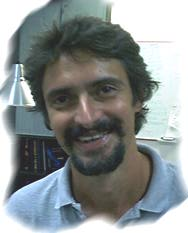
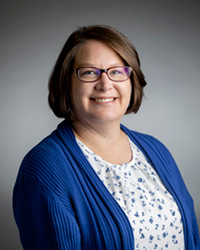
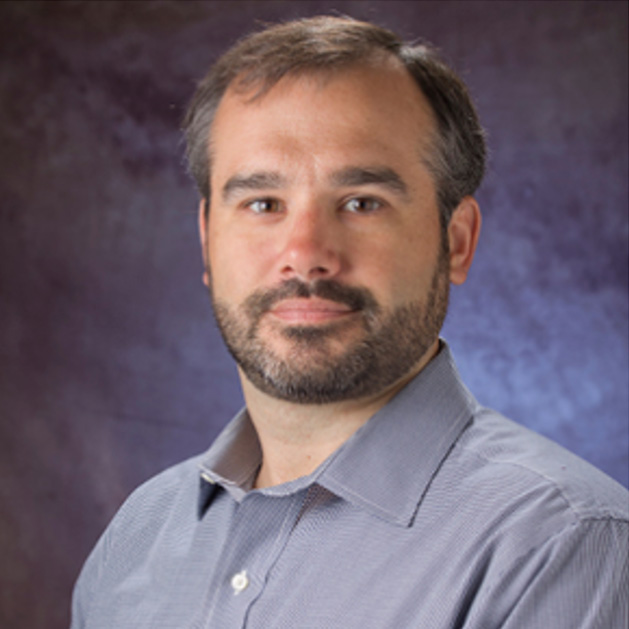
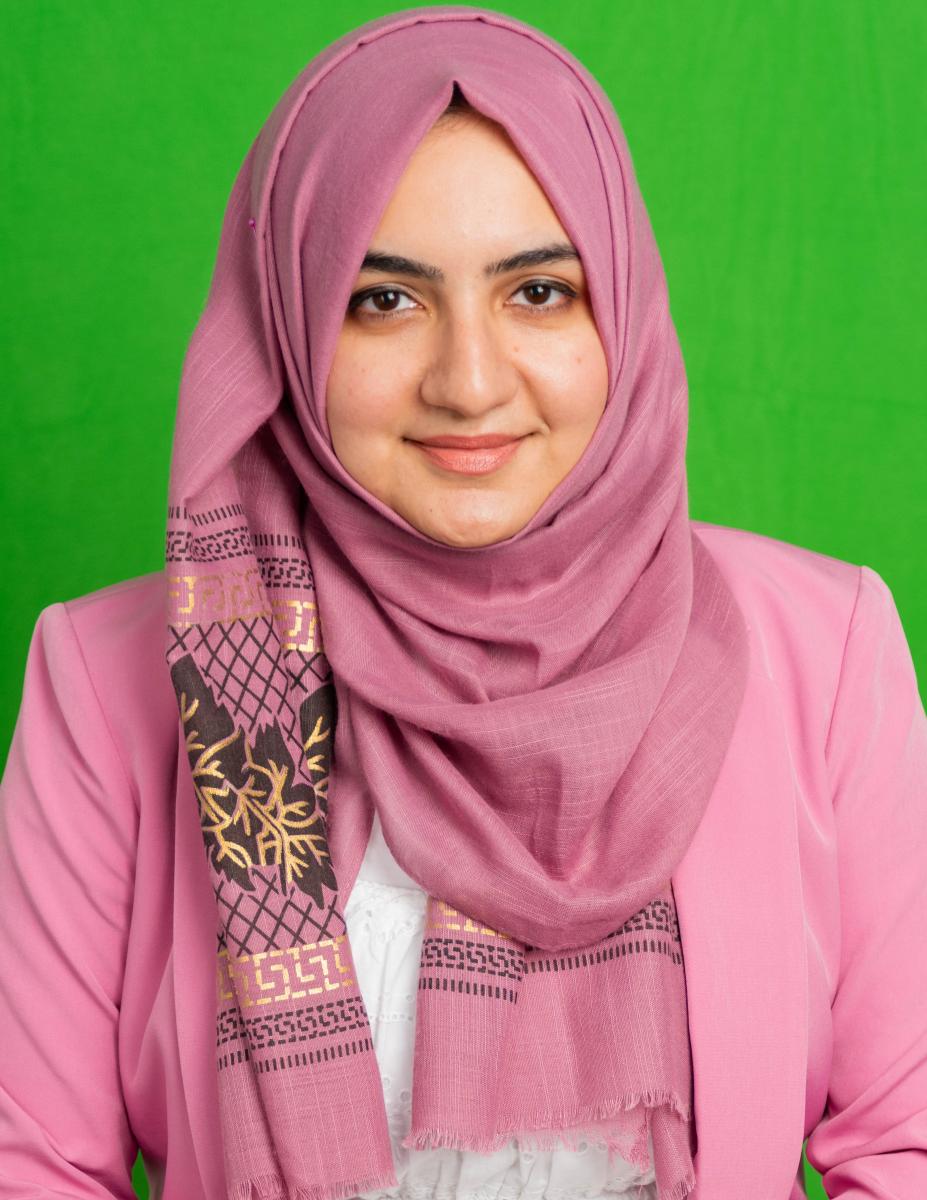
Dr. Johanna Kerch is a Lecturer and Postdoctoral Researcher at the University of Göttingen's Faculty of Geoscience and Geography, Department of Structural Geology and Geothermics. Her research focuses on computational structural glaciology, particularly statistical analysis of glacier ice properties, crystal anisotropy effects on ice flow, and geophysical methods for ice body structure analysis. She advocates for open-source software, digital literacy, and FAIR data practices in academia, while supporting gender equality and work-life balance initiatives in STEM. Education & Teaching: Offers 5 bachelor and 2 master's research project opportunities in glaciology and structural geology. Active in curriculum development emphasizing computational tools and ethical data management. Collaborations & Funding: Engaged in projects like the East Greenland Ice Stream (NEGIS) studies and EGRIP ice core research. Collaborates with institutions such as the Alfred Wegener Institute and international glaciology networks. Publications: Over 50 peer-reviewed articles and datasets on ice microstructure, isotopic records, and glacial dynamics. Key contributions include studies on shear margin dynamics in Greenland and Alpine glacier stratigraphy.
William Stanchina is a Professor in the Department of Electrical and Computer Engineering at the University of Pittsburgh’s Swanson School of Engineering. His research focuses on semiconductor devices, including compound semiconductors, high-frequency electronics, and power electronics. He has developed novel heterojunction devices and transitioned R&D into production for government and commercial applications. His work includes wide bandgap semiconductors for smart grid and biomedical instrumentation, as well as nanowire growth for device implementation. Dr. Stanchina holds a PhD and MSEE in Electrical Engineering from the University of Southern California (1973–1978) and a BS in Electrical Engineering from the University of Notre Dame (1971). His research emphasizes semiconductor materials growth, IC fabrication processes, and device characterization. He has established an electronic device measurement capability at Pitt to extract equivalent circuit models for semiconductor devices. His publications span GaN-based power converters, nanofabrication techniques, and optoelectronic pathogen detection systems. Recent work explores high-power-density modular converters and linear models for wide bandgap semiconductor circuits.
Dr. Estefania Lopez-Quiroga is an Associate Professor at the University of Birmingham's School of Chemical Engineering, specializing in Model-Driven Formulation Engineering. She leads the Centre for Doctoral Training in Formulation Engineering for Net Zero and coordinates Industry 4.0 modules for MSc programs. Her work integrates computational tools with process engineering to advance sustainable manufacturing in food, pharma, and FMCG sectors. Education: MEng in Mining Engineering, MSc in Mathematical Engineering, PhD in Applied Mathematics. She holds Fellow of the Higher Education Academy (FHEA) credentials. Research focuses on digital manufacturing, Industry 4.0 applications, and sustainable production. Key areas include model-based approaches for crystallization, freeze-drying, and production-scale optimization. Her work bridges soft matter physics with engineering solutions for product performance and process efficiency. Publications highlight sustainability assessments across production scales, energy-efficient processes, and computational modeling innovations. Awarded the IChemE Hutchison Medal 2020 for groundbreaking work on decentralized food manufacturing. Teaching responsibilities include undergraduate plant optimization and postgraduate Industry 4.0 modules. Supervises PhD/EngD students in formulation engineering, emphasizing real-world industrial collaboration. Labs/Teams: Active in the EPSRC Centre for Doctoral Training in Formulation Engineering, collaborating with industry partners on scalable and sustainable manufacturing solutions.
Dr. Lars Boehme is a Professor in the School of Biology at the University of St Andrews, with affiliations to the Sea Mammal Research Unit and the Scottish Oceans Institute. His research focuses on ocean overturning circulation, frontal systems, and animal-borne technology, particularly deploying sensors on seals to monitor climate variability. He holds a Ph.D. from the University of St Andrews and a Diploma in Physical Oceanography from the University of Kiel. Education: Ph.D., University of St Andrews, UK Diploma in Physical Oceanography, University of Kiel, Germany His research integrates interdisciplinary programs like the International Thwaites Glacier Collaboration and Arctic PrIZE, emphasizing polar regions. Key areas include glacial meltwater dynamics, ocean circulation patterns, and the impact of climate change on marine ecosystems. He has contributed over 80 publications and led major projects funded by NERC. Awards: IPY Oslo Science Conference Stipend (2010) Shortlisted for the Teaching Award Dissertation/Project Supervisor (Science/Medicine) (2014) Advising & Grants: PhD supervision: Mia Hurst Principal Investigator on projects like Drivers of Ocean Change in the Amundsen Sea (DeCAdeS) and Accelerating Thwaites Ecosystem Impacts (ARTEMIS), funded by NERC. Labs & Teams: Sea Mammal Research Unit Scottish Oceans Institute Marine Alliance for Science & Technology Scotland (MASTS)
Lorenzo Colace is an Associate Professor in the Department of Engineering at the University of Rome "Roma Tre", where he has been a faculty member since 2012. He received his MS in Electronic Engineering from "La Sapienza" in 1992 and his PhD from Roma Tre in 1997. He began as a researcher in 2005 and advanced to Associate Professor in December 2012. He teaches core courses including Electronics I and Photovoltaic Devices and Systems, and has also taught Solid State Electronics, Precision Analog Electronics, and Optoelectronics. His research spans optoelectronic devices compatible with silicon technology, with applications in optical communications, sensing, imaging, and photovoltaics. He specializes in Germanium-on-Silicon photodetectors, PbS colloidal quantum dots, CIGS solar cells, and near-infrared imaging systems. His work integrates materials synthesis, device fabrication, and characterization, aiming at high-performance, CMOS-compatible solutions. The recent publications highlight a strong trend in near-infrared optoelectronics, particularly using Ge/Si and colloidal quantum dots for photodetection in safety, security, and energy applications. There is also a significant focus on photovoltaic device modeling and fire detection systems, reflecting interdisciplinary innovation bridging materials science, electronics, and environmental monitoring. Institute of Electrical and Electronics Engineers (IEEE) European Technology Platform for Photonics (Photonics21) Materials Research Society (MRS) Istituto Nazionale di Fisica Nucleare (INFN) Consorzio Nazionale Interuniversitario per le Telecomunicazioni (CNIT) Prof. Colace has supervised numerous research projects and established key collaborations with institutions such as MIT, the University of Central Florida, CNR-IMM, CNR-IMEM, and companies like Agilent Technologies and Pirelli Labs. He serves on scientific and organizing committees for major conferences and acts as a referee for several international journals. He has authored over 200 publications, including 81 journal articles, 4 international patents, 10 book chapters, and numerous conference papers, with an h-index of 21 and over 1,500 citations (Scopus, 2017). His lab focuses on integrated optoelectronic systems, particularly for sensing and energy applications, and he leads a research team advancing silicon-compatible infrared technologies.
Pavlos Fafalios is an Assistant Professor of Information Systems at the School of Production Engineering and Management, Technical University of Crete, and an Affiliated Researcher at the Centre for Cultural Informatics (CCI) and Information Systems Laboratory (ISL), Institute of Computer Science, Foundation for Research and Technology - Hellas (FORTH). He holds a PhD and MSc in Information Systems from the University of Crete and an Engineer's Diploma from the University of the Aegean. His academic journey includes postdoctoral research at L3S Research Center, Leibniz University of Hanover, and FORTH-ICS, as well as teaching roles at Hellenic Mediterranean University and the University of Crete. His research interests span Information Systems , Data and Knowledge Management , and Linked Data , with a strong interdisciplinary focus on applications in Cultural Heritage and the Humanities . He develops semantic technologies, knowledge graphs, and information management systems for complex, real-world domains. The recent publications highlight a strong trend in applying semantic technologies to cultural and historical data, including earthquake data modeling, feminism history documentation, and museum data integration. His work consistently focuses on knowledge representation, ontology development, and data interoperability, particularly using CIDOC CRM and Linked Data principles. Individual postdoctoral research fellowship 'Marie Skłodowska-Curie' (H2020-MSCA-IF-2019) Finalist for the '2019 ERCIM Cor Baayen Young Researcher Award' Fellowship from legacy 'Maria Michael Manasaki' (2014-2015) 1st prize in Hack4Med 2014 1st prize in Blue Hackathon 2013 PhD and MSc scholarships by FORTH Pavlos Fafalios has been involved in significant research projects such as PortADa (MSCA Staff Exchange), RICONTRANS (ERC Consolidator Grant), FE.P.I.B., ReKnow (Marie Curie project), SeaLiT (ERC Starting Grant), and ALEXANDRIA (ERC Advanced Grant), where he served as principal investigator, scientific responsible, or lead researcher. He has supervised student projects that led to award-winning software tools. He is active in scientific committees and regularly publishes in international venues. He leads and contributes to research in the Centre for Cultural Informatics (CCI) and Information Systems Laboratory (ISL) at FORTH-ICS, collaborating on interdisciplinary projects that bridge computer science with humanities and cultural heritage. His lab work emphasizes practical tools for semantic data integration, exploration, and analysis.
Manolis G.H. Katevenis is a Professor at the Department of Computer Science, University of Crete, and the founder and Head of the Computer Architecture and VLSI Systems (CARV) Laboratory at the Institute of Computer Science (ICS), Foundation for Research and Technology – Hellas (FORTH) in Heraklion, Crete, Greece. He has held academic positions since 1986 and played a pivotal role in establishing the Computer Science Department at the University of Crete. His research spans computer architecture, interconnection networks, VLSI systems, and high-performance computing, with a strong focus on scalable, low-power, manycore systems and RISC-V. He has led numerous European R&D initiatives, including serving as Coordinator of the ExaNeSt project. PhD in Computer Science, University of California, Berkeley (1983) MSc in Electrical Engineering and Computer Science, University of California, Berkeley (1980) Diploma of Electrical Engineering, National Technical University of Athens (1978) Manolis Katevenis's research focuses on advancing scalable system architectures for high-performance and big data computing. His work in computer architecture includes RISC-V, exascale computing, and manycore systems. He has made foundational contributions to interprocessor communication, particularly through remote-write, remote-DMA, and remote-enqueue mechanisms, and has pioneered innovations in interconnection networks and low-latency network interfaces. His research integrates hardware and software co-design to optimize performance, energy efficiency, and scalability in large-scale computing systems. The recent publications highlight a strong trend in exascale computing, interconnection networks, and FPGA-based prototyping of manycore systems. His work emphasizes scalable, low-power architectures, with recurring themes in congestion management, fair scheduling, crossbar design, and hardware-software integration for HPC. The articles span high-impact journals such as IEEE/ACM Transactions on Networking, IEEE Micro, and Computer Networks, reflecting sustained contributions to computer architecture and networking. ACM Doctoral Dissertation Award (1984) David J. Sakrison Memorial Prize (1983) IBM PhD Fellowship (1981–1983) Greek State Fellowship (1973–1978) Stelios Pichoridis Award for Outstanding University Teaching (2015) Member of Academia Europaea (elected 2012) Award by the Secretary General of the Region of Crete (2003) IEEE Milestone recognition for the RISC Project (2015) Manolis Katevenis has supervised over 50 graduate theses and mentored many prominent Greek computer architects, including recipients of the ACM Maurice Wilkes Award. He has served as Principal Investigator or co-PI in over 30 R&D projects with a total budget exceeding 18 million euros, including major European initiatives such as ExaNeSt (which he coordinated), EuroEXA, EcoScale, SARC, ENCORE, and multiple HiPEAC Network of Excellence projects. His leadership extends to project coordination, architectural design, FPGA prototyping, and systems software development. Katevenis founded and leads the CARV Laboratory at FORTH-ICS, a major research team with 80–100 members focused on computer architecture and VLSI systems. The lab has spun off the Distributed Computing Systems (DCS) Laboratory and is central to European exascale computing efforts, including participation in the European Processor Initiative. CARV has developed large-scale prototypes such as the 768-core ExaNeSt system and the Formic FPGA platform for manycore research.
James H. Barrett is a Professor of Medieval and Environmental Archaeology at NTNU's Department of Archaeology and Cultural History. He specializes in ecological globalization, medieval archaeology, and the historical ecology of marine resources. His research integrates archaeological science, history, and zooarchaeology to explore trade networks involving fish, furs, and ivory, particularly focusing on the intersections between Indigenous producers and urban consumers. Notably, he leads the ERC Synergy Project 4-OCEANS, investigating global historical ecology through marine taxa analysis, and coordinates the Northern Seas Synthesis project analyzing archaeological fish bone records. Prior to NTNU, Barrett held positions at the Universities of Toronto (1996–1998), York (1999–2007), and Cambridge (2007–2021), where he remains a Senior Research Fellow at the McDonald Institute for Archaeological Research. His work emphasizes sustainability and oceanic studies, aligning with NTNU's strategic research priorities. He has led collaborative projects like the Demise of the Atlantic Grey Whale and the SeaChanges Innovative Training Network, and co-authored exhibitions like 'Havets elfenbein/Sea Ivories.' Research interests include the socio-economic impacts of resource depletion, historical ecology of marine species (walrus, cod, herring), and glacial archaeology in Jotunheimen. His recent articles address ancient DNA applications, historical fish populations, and interdisciplinary methods in archaeology. Barrett’s contributions bridge scientific and humanistic approaches, offering critical insights into humanity’s ecological past.
Associate Professor Murat Karakus holds a position in the School of Chemical Engineering at the University of Adelaide, specifically within the Mining and Petroleum Engineering department. His academic role involves teaching and research in advanced geomechanical topics. He is eligible to supervise Master's and PhD students in disciplines related to rock mechanics, mining engineering, and computational modeling. Research interests focus on computational rock mechanics , fracture process zone modeling , rock burst analysis , and 3D printed construction materials . His work integrates experimental techniques (e.g., AUSBIT testing, hydraulic fracturing analysis) with numerical methods (e.g., SPH modeling, machine learning). Recent publications emphasize dynamic rock failure mechanisms, energy-based failure criteria, and material behavior under cyclic loading. Key applications include improving mine safety through strain burst prediction and optimizing cemented paste backfill systems in underground operations. No awards are explicitly listed, though his active research contributions suggest potential recognition in geomechanics fields. Advising and grants: While no specific grants are documented, his eligibility to supervise indicates ongoing research projects. No lab or team affiliations are explicitly mentioned.
Daria Kluver is a Professor in the Department of Earth and Atmospheric Sciences at the University of Houston, within the College of Science and Engineering. Her work bridges climate science, hydrology, and geoscience education, with a strong focus on snowfall dynamics and regional climate modeling. Education: Ph.D. in Climatology, University of Delaware, 2011 M.S. in Geography, University of Delaware, 2007 B.S. in Meteorology, Saint Cloud State University, 2003 Her research centers on climatological processes, particularly snowfall patterns, seasonal climate prediction, and the influence of large-scale atmospheric systems on regional climate. She employs spatial data analysis and climate datasets to understand hydroclimatic variability across North America. Her work spans observational climatology, dataset development, and climate education innovations. The recent publications reflect a consistent trajectory in climate science, with emphasis on snowfall modeling, climate projections, and interdisciplinary applications involving hydrology and education. Her articles span journals in climatology, atmospheric technology, and geoscience pedagogy, indicating a well-rounded research program that integrates science and teaching. Scientific Awards: No awards listed in the provided text. Daria Kluver has not advised any students listed in the available data. There is no mention of grants, laboratories, or research teams in the provided information. Her scholarly contributions are primarily evident through her publications and curriculum development in climate science education.
Bogdan P. Onac is a Professor of Karst Geology and Paleoclimatology at the University of South Florida's School of Geosciences (College of Arts and Sciences). His research focuses on reconstructing past climates and sea-level changes using cave deposits, with a strong emphasis on speleothem geochemistry, isotope analyses, and karst hydrology. He has held postdoctoral fellowships at the University of Lund (Sweden) and Penn State University, and earned his Ph.D. from Babeș-Bolyai University (Romania). Education: Ph.D. Geology, Babeș-Bolyai University, 1996 B.Sc. Geology, Babeș-Bolyai University, 1987 Postdoctoral Fellowships: University of Lund (1999), Penn State (1998) Research Interests: His work integrates mineralogical and geochemical techniques to study: Paleoclimate reconstruction via speleothems, ice cores, and guano Sea-level changes using littoral cave deposits Hypogene cave formation mechanisms Climate-vegetation interactions in Europe and the Mediterranean Grants & Collaborations: NSF P2C2 grant ($5M) for Mediterranean sea-level studies (2016–2019) Key collaborations include Mallorca sea-level projects, Romania's Scarisoara Ice Cave, and Grand Canyon speleothem studies Labs & Teams: Directs the University of South Florida's Stable Isotope Lab and leads international research groups on karst systems and paleoclimate networks.
C. Brock Woodson is a Professor of Civil Engineering at the University of Georgia’s College of Engineering, with a focus on environmental fluid mechanics and sustainable marine ecosystems. He holds roles such as Review Editor for the ICES Journal of Marine Science and has earned the UGA Creative Teaching Award. His research integrates coastal engineering, climate resilience, and ecological processes, addressing challenges like marine heatwaves, coastal infrastructure design, and biodiversity conservation. Woodson’s work spans numerical modeling of hydrodynamic processes, oceanographic data analysis, and transboundary management strategies for marine protected areas. He emphasizes interdisciplinary approaches, combining engineering, ecology, and policy to enhance environmental sustainability. His recent studies explore topics such as kelp forest dynamics, tidal asymmetries in salt marshes, and the resilience of coastal wetlands to storm surges. Education: Ph.D. in Civil Engineering from Georgia Institute of Technology. Research interests include mixing and transport processes in marine systems, sustainable resource use, and the impact of climate change on coastal ecosystems. Woodson collaborates with international teams to model ecological responses to environmental stressors and advocate for nature-based solutions in engineering practices. His publications reflect a commitment to bridging theoretical models with real-world applications, particularly in coastal hazard mitigation and fisheries management.
Sahara Ali is an Assistant Professor at the University of North Texas (UNT), focusing on interdisciplinary research at the intersection of artificial intelligence and Earth sciences. Her work emphasizes causal inference, spatiotemporal data mining, and big data analytics applied to environmental challenges like Arctic sea ice prediction and climate modeling. Education: Ph.D., University of Maryland M.S., University of Maryland B.Sc., University of Engineering & Technology Lahore Research Interests: Her research bridges machine learning and environmental science, with a focus on developing causal inference frameworks for spatiotemporal data. Key areas include: Climate modeling and Arctic amplification Deep learning for sea ice forecasting Spatiotemporal causal analysis in Earth systems Publications Trends: Her recent articles (2022–2024) reflect a strong emphasis on causal inference applications in climate science. Notable themes include: Developing causality-driven models for Arctic sea ice dynamics Integrating Fourier transforms and residual learning for environmental prediction Comparative analysis of climate prediction models Grants & Advising: No specific grants or advisees are listed in the provided text. Her work likely involves collaborative projects with climate research groups and machine learning labs. Labs/Teams: Details about specific affiliated research groups or labs are not explicitly mentioned.
Giovanna Maria Dimitri is an Assistant Professor Tenure Track in Artificial Intelligence at Universitá degli Studi di Milano (Statale), with additional affiliations at the ICE, University of Cambridge, and the Dipartimento di Ingegneria dell'Informazione e Scienze Matematiche (DIISM) at the University of Siena. She earned her PhD in Artificial Intelligence from the University of Cambridge under Prof. Pietro Liò, focusing on multilayer network methodologies for brain data analysis. She holds an MPhil in Advanced Computer Science from Cambridge with distinction and completed her Master’s and Bachelor’s in Computer and Automation Engineering at the University of Siena, both with top honors. PhD in Artificial Intelligence – University of Cambridge, UK MPhil in Advanced Computer Science – University of Cambridge, UK (Distinction) Master’s & Bachelor’s in Computer and Automation Engineering – University of Siena, Italy (110/110 cum laude) Her research spans a broad spectrum of artificial intelligence, including foundational models, deep learning, brain data modeling, and applications in healthcare, environmental science, and sustainability. She is particularly known for her work on GAN detection, emotional image datasets, climate change impact modeling, and AI for Sustainable Development Goals. Her interdisciplinary approach integrates computer science with neuroscience, public health, and social impact. Her recent publications reflect a strong trend in applying AI to real-world problems such as healthcare diagnostics (e.g., Brugada Syndrome detection), environmental monitoring (air quality, climate change on agriculture), and ethical AI (CO2 emissions of ML models). She also contributes to digital humanities and science communication, indicating a commitment to societal engagement and interdisciplinary collaboration. She has received the competitive Ai-Net Fellows Scholarship from DAAD in 2023, enabling collaboration with Prof. Gemma Roig’s lab. She is an Associate Editor for Neurocomputing (Elsevier) and was elected Associate Editor of IEEE Transactions on Technology and Society in May 2024. Dimitri has extensive teaching experience, lecturing Business Intelligence at the University of Siena and serving as a Guest Lecturer in Data Science at the University of Cambridge’s Institute of Continuing Education. She has supervised numerous students and has a publication record of nearly 60 peer-reviewed papers. She is also active in science communication, having been interviewed by Italian media and appearing on Rai Radio 1. She is a life member of Clare Hall College, University of Cambridge, and continues to contribute to academic and public discourse on AI through seminars, workshops, and editorial leadership.
Karina Nielsen serves as a Senior Researcher in the Department of Space Research and Technology at the Technical University of Denmark (DTU), specializing in Geodesy and Earth Observation. Her work leverages satellite remote sensing to address critical hydrological challenges across global water systems and cryospheric environments, contributing directly to UN Sustainable Development Goals for clean water and climate action. She earned her PhD in Geodesy from DTU (2008-2012) with doctoral research focused on viscoelastic crustal deformation dynamics in Greenland caused by ice mass variations. Her academic foundation integrates geophysical modeling with satellite observation techniques. Her research program centers on advanced satellite altimetry for monitoring inland water bodies and cryosphere dynamics. Key methodologies include Synthetic Aperture Radar processing , waveform retracking algorithms , and multi-sensor data fusion from missions like CryoSat, Sentinel-1, and ICESat-2. She pioneers applications of deep learning for high-resolution surface water mapping and develops validation frameworks using both professional and citizen science observations. Recent publications demonstrate converging trends in satellite hydrology: integration of ICESat-2 elevation data with hydraulic models for floodplains, machine learning approaches for small-scale water body detection, and robust validation protocols for altimeter measurements across diverse lake environments. These advances enhance global water resource monitoring capabilities. Scientific Recognition: No specific awards or fellowships documented in current profile Research Leadership: Dr. Nielsen actively supervises four PhD candidates across DTU's satellite hydrology initiatives. Her current grants include the Data-driven River Modeling project (2025-2028), GNSS-R from UAS development (2024-2027), Autonomous River Monitoring systems (2023-2026), and Arctic River Remote Sensing (2022-2026), totaling five active research programs with international collaborations across 12 countries. Collaborative Infrastructure: She operates within DTU Space's Geodesy and Earth Observation group, utilizing specialized facilities for satellite data processing and validation. Her work connects with global networks including the European Space Agency's hydrology initiatives and international cryosphere monitoring consortia, with research outputs supporting operational water management systems in Thailand and Denmark.