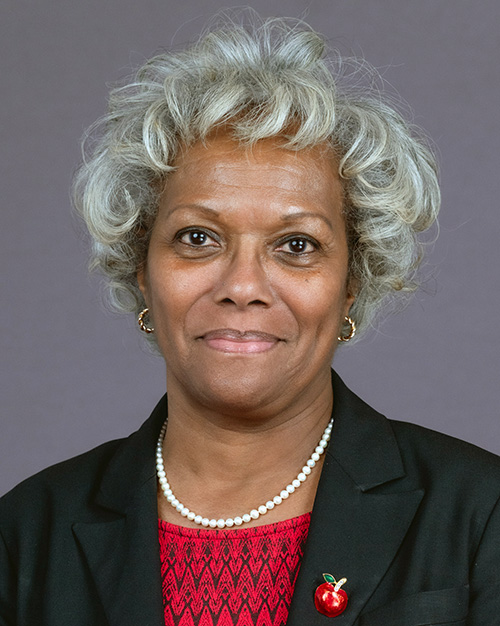
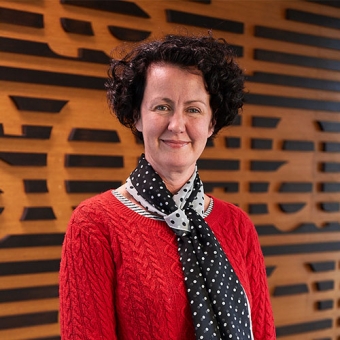
Jean-Marie Venturini serves as the Senior Director of Learning Centers, Instructional Designer/Technologist, and Lecturer at Otis College of Art and Design in Los Angeles. Her multifaceted roles span academic leadership, instructional technology, and teaching within the Liberal Arts and Sciences department. Education: M.S. in Instructional Design & Technology from California State University, Fullerton (2016) M.F.A. in Creative Writing from Otis College of Art and Design (2006) B.F.A. in Classics and Classical Civilizations from Loyola Marymount University (2004) Research and Professional Focus: Instructional Design & Technology integration in art and design education Innovative writing pedagogy through courses like "Writing As Discovery" and "Time Travel Storytelling" HyFlex and online learning frameworks Sustainable jewelry design via "DecoratedEar" project Academic Affiliations: Teaching since 2006 at Otis College of Art and Design Leadership in Learning Centers (2012–present)
Dr. Kristi Bockorny serves as the Dacotah Bank Dean of the School of Business and Professor of Management at Northern State University. She joined the faculty in 2010 and became Honors Program director in 2020. Her leadership spans academic administration, curriculum development, and student mentorship. Education: Ph.D., Human Capital Management, Bellevue University Master's, Management, Bellevue University Bachelor's, Finance & Business Education, Northern State University Research Focus: Explores psychological foundations of organizational effectiveness, including employee motivation, leadership dynamics, and workforce development. Key investigations address gratitude's role in productivity, ethical hiring practices, and psychological capital in entrepreneurial success. Awards & Leadership: Recognized for teaching innovation and academic leadership with honors including the 2021 Foundation Faculty Excellence Award, 2022 HyFlex Teaching Certification, and 2019 Nora Staael Evert Award. Directs interdisciplinary initiatives through the Honors Program and secured grants for pedagogical advancement.
Dr. Marla Lohmann is an Associate Professor and Program Director in the Graduate Special Education & Alternative Licensing Programs at Colorado Christian University, within the College of Adult and Graduate Studies - School of Education Professions. She has taught over 120 courses since 2015 and received the 2018 Outstanding Faculty Member Award. Her academic leadership spans teacher education, special education, and online program development. Educational Background: Ph.D. in Special Education, University of North Texas M.Ed. in Special Education, University of Houston B.S. in Family Studies and Human Development, Kansas State University Dr. Lohmann's research centers on Special Education , Universal Design for Learning (UDL) , classroom management , assistive technology , and innovations in online teacher preparation . She is particularly focused on inclusive early childhood education and supporting learners in hybrid and remote environments. Her work bridges Christian education values with evidence-based pedagogical practices. Her recent publications reflect a strong emphasis on online engagement , asynchronous learning strategies , and teacher development in rural and alternative certification contexts . Themes include UDL implementation, behavior support in early grades, and the use of digital tools to enhance accessibility and inclusion. Scientific Awards: 2018 Outstanding Faculty Member Award, Division of Curriculum & Instruction (now School of Education Professions) Dr. Lohmann serves as principal investigator for the Scholarships and Collaboration Offering Opportunities for Reforming Education (SCOORE) project, which aims to strengthen the teacher pipeline for Christian and charter schools in Colorado. She advises on program development and is actively involved in professional service, including editorial board membership for seven journals and leadership roles in CEC-TED and Colorado TED. She has presented over four dozen times at international conferences. She is actively engaged in professional communities such as CO-PEEL and serves on multiple journal editorial review boards, reflecting her influence in the field of special and teacher education.
Dr. Melanie Reaves is an Associate Professor in Literacy Education at the College of Education, Montana State University Billings . She was honored with the 2022 Faculty Excellence Award for her contributions to academic programs, innovative teaching, and collaborative scholarship. Specializes in cognition, sociality, culture, and affect in language/literacy contexts Developed HyFlex courses and online pedagogies during the pandemic Active presenter at professional conferences across multiple geographic scales She currently serves as President of the Northern Rocky Mountain Educational Research Association and leads a Faculty Learning Community on campus. Her work emphasizes global learning initiatives and program revitalization through community partnerships.
Annette Miles, Ph.D., is an Assistant Professor at the University of the District of Columbia's College of Arts and Sciences, specializing in the Division of Education, Health, and Social Work. She has served since 2013, focusing on adult learning, transitional special education, and human development through inclusive, student-centered pedagogy. Doctor of Philosophy in Human Development: Adult Learning, Virginia Polytechnic Institute and State University Education Specialist in Transitional Special Education (Serious Emotional Disturbance), George Washington University Master of Arts in Transitional Special Education (Learning Disabilities), George Washington University Bachelor of Science in Special Education, University of the District of Columbia Her research integrates clinical expertise and Quality Matters-certified instruction to address educational equity and inclusive practices. Recent projects include HyFlex course design, Blackboard ultra certification, and BrainPOP animation education. Dr. Miles has received the Humanitarian Award (2018) and serves as a Myrtilla Miner Fellow (2023). She contributes to national conferences on social justice and equity in education. Quality Matters Roundtable Discussion (2023) Social Justice and Equity in Education Roundtable (2021) National and International Perspectives in Education (2021) Her work emphasizes partnerships in urban communities and policy development in early childhood education.
Laura N. Sarchet is an Assistant Professor of Special Education at Niagara University's College of Education in Lewiston, NY. An autistic self-advocate, she integrates neurodivergent experiences into research and practice to advance disability awareness and accessible education through critical analysis of teaching methodologies and institutional structures. Her educational qualifications include: Ph.D. in Teaching and Curriculum from University of Rochester, Warner Graduate School of Education and Human Development M.S.Ed. in Inclusive Adolescent Education (Teaching Students with Disabilities 7-12) from Nazareth College B.S. in Early Childhood Education and Teaching Students with Disabilities (Birth-2) from Roberts Wesleyan College Research centers on teacher preparation , Universal Design for Learning , critical disability frameworks , and neurodiversity in academic spaces , with emphasis on dismantling ableist structures in education through crip theory and self-advocacy principles. Her work bridges theoretical disability studies with practical classroom applications across K-12 and higher education contexts. Recent publications demonstrate consistent focus on inclusive pedagogy in postsecondary settings, examining UDL implementation in hybrid learning environments, peer mentorship models for disability inclusion, and systemic barriers faced by neurodivergent faculty. These studies collectively advance understanding of accessibility as an evolving process requiring institutional commitment beyond compliance. Teaching portfolio includes Autism: Theory and Practice, Consultation and Collaboration in Special Education, and Curriculum & Instruction in Inclusive Early Childhood Classrooms, reflecting her dedication to translating research into transformative educational practices that center disability justice.
Lisa Gilanyi is a Lecturer in language and literacy at the School of Education, Faculty of Arts, Design and Architecture, University of New South Wales (UNSW). She specializes in TESOL teacher education and Communication skills development, with a strong commitment to preparing teachers at all levels to implement sound, evidence-based pedagogy and communicate effectively with students, colleagues and families. Dr. Gilanyi holds a Bachelor of Business - Finance and Accounting from the University of Technology, Sydney; a Bachelor of Arts - German and Linguistics with First Class Honors from the University of NSW; a Master of Education - TESOL from the University of NSW; and a PhD in Education from the University of NSW. Her doctoral thesis, which won the Michael Clyne prize, was titled 'Transnational sojourners' investment in learning English: a multi-case study of partners of international students.' Her research focuses on a range of pedagogical contexts including English as a Medium of Instruction (EMI), Content Language Integrated Learning (CLIL), Hyflex and online learning, and integrating AI into second language teaching. She is particularly passionate about equity in education, with research addressing support for students from Culturally and Linguistically Diverse backgrounds or with disabilities, and engaging with parents and carers to improve learning outcomes for vulnerable students. Dr. Gilanyi is highly experienced in qualitative research methods, including narrative enquiry and interview techniques, having conducted hundreds of individual and focus group interviews throughout her career, including interviewing using interpreters. Dr. Gilanyi has received multiple teaching awards, including the UNSW Faculty of Arts, Design and Architecture Award for Teaching Excellence (Sessional Staff) in 2023, the UNSW School of Education Casual Teaching Staff Award in 2023, and the UNSW School of Education Award for Teaching Excellence in 2021. She is actively involved in research supervision in areas related to TESOL, Second Language Acquisition, investment in Second Language Learning, EMI/CLIL pedagogy and practice, international student experiences in Higher Education, supporting CALD students, and qualitative research methods. Her current research activities include the Early Career Teacher Mentoring Project, Centennial Park School Pathways program, Parent Partnerships Learning Ecosystems, CLIL teachers' professional development in Vietnam, and research on Hyflex delivery modes in special education courses.
Dr. Nadia Naffi is an Assistant Professor in the Department of Educational Studies and Learning at the Faculty of Education Sciences of Laval University, where she holds the Chair in Educational Leadership (CLE) on Innovative Pedagogical Practices in Digital Contexts – National Bank. She previously co-led the Education and Empowerment axis at the International Observatory on the Societal Impacts of AI and Digital Technologies (OBVIA) until June 2023 and chaired Laval University's Institutional Committee on Pedagogical Innovation (CIE) during its inaugural year. Her academic journey includes positions at Concordia University and the University of Ontario Institute of Technology. Her educational background includes: Ph.D. in Educational Technology from Concordia University (2018) M.A. in Educational Technology from Concordia University (2012) Bachelor's degree in Interior Design from the Lebanese American University Dr. Naffi's research explores critical, responsible, ethical, sustainable, and equitable approaches to digital and AI-based lifelong learning. She is particularly interested in equipping future experts in educational technology to meet the training needs of the future workforce, fostering a multidisciplinary, interdisciplinary, intersectoral, multigenerational, and global workforce in the digital and AI era. She also investigates digital agency as an essential skill for lifelong learning, collaboration in the digital age, and countering disinformation in the form of malicious deepfakes. Her work spans educational technology, AI ethics, digital literacy, and innovative pedagogical practices, with particular attention to post-pandemic educational challenges and solutions. Her recent publications reveal a strong focus on deepfake education, digital agency, post-pandemic educational transformation, and ethical AI implementation in educational contexts. Her research increasingly emphasizes the intersection of digital technologies with social issues like refugee integration, disinformation, and mental health in educational settings. The trend shows a progression from foundational educational technology research to more complex societal challenges involving AI ethics and digital citizenship. Dr. Naffi's scientific recognition includes: Governor General of Canada's Gold Medal – People and Society 2018 SALTISE Award for Excellence and Pedagogical Innovation 2019 John F. Lemieux Young Alumni Medal Concordia Public Scholar (2017) Winner of SSHRC Storyteller Competition (2017) She has secured significant research funding, including SSHRC Insight Grants focused on high-quality pedagogical practices in post-COVID higher education and youth's potential to counterbalance disinformation through deepfake awareness. As Principal Investigator, she leads projects on training professionals responsible for education to develop future skills in health contexts using AI. Her advisory role extends to media commentary, with numerous opinion pieces in high-impact newspapers and media appearances discussing digital literacy, AI ethics, and educational innovation. Dr. Naffi is actively affiliated with multiple research centers including the International Observatory on the Societal Impacts of AI and Digital Technology (OBVIA), the Institute Intelligence and Data (IID), the Center for Research and Intervention on Academic Success (CRIRES), the Interuniversity Research Center on Training and the Teaching Profession (CRIFPE), the Center for Research and Intervention on Education and Work Life (CRIEVAT), and the Interuniversity Research Group on the Pedagogical Integration of Information and Communication Technologies (GRIIPTIC). She contributes to the Educational Informatics Lab (EILAB) and EducationMakers of the Milieux Institute for Arts, Culture and Technology.
Dr. Julie Smart serves as Associate Dean of Graduate Studies and Associate Professor of Graduate Studies in the College of Education at Anderson University, where she has taught since 2020. Known for interactive, student-centered Hyflex courses that bridge digital divides, she integrates faith with pedagogy to foster deep student connections. Her educational background includes: BS in Psychology from Furman University MA in Teaching: Elementary Education from Converse College Ph.D. in Curriculum and Instruction from Clemson University Specializing in Research Methodology , Dr. Smart focuses on Quantitative, Qualitative, and Mixed Methods approaches alongside STEM education and online learning. Her work develops assessment tools like the Pre-Service Teacher Online Teaching Motivation Scale (PST-OTMS) and Elementary Mathematics Motivation Inventory (EMMI), emphasizing practical applications for K-12 and higher education contexts. With over 100 conference presentations and two authored books, she actively advances educational science. Recent publications (2024-2011) reveal three dominant trends: (1) Instrument development for measuring teacher motivation and classroom practices, (2) Analysis of inquiry-based instruction dynamics in science/mathematics, and (3) Strategies for effective Hyflex teaching. Her research spans teacher-student interactions, measurement error reduction, and domain-specific motivation, consistently prioritizing real-world educator applicability. Scientific awards: No scientific awards were documented in the provided materials. Dr. Smart advises doctoral students in research courses using modeling techniques and real-world applications. She chairs the American Heart Association Upstate Board and formerly led Public Education Partners, demonstrating community leadership. While specific grants aren't detailed, her prolific publication record indicates sustained research activity. She contributes to Anderson University's mission through close faculty collaboration and faith-integrated teaching, inspiring students to 'change the world.'
John Pannell serves as a Lecturer in Computer Systems Technology at Montana State University Billings, recognized for his leadership in integrating Artificial Intelligence into higher education pedagogy. His active engagement with the Center for Teaching and Learning, Academic Senate, and institutional initiatives like Payday Friday underscores his commitment to professional development and university service. His research and professional focus centers on AI-driven educational innovation, evidenced by three faculty development sessions on AI implementation and the complete re-engineering of the Computer Programming and Application Development program using HyFlex modalities. This approach blends in-person and online instruction to enhance course flexibility and adaptability in evolving academic landscapes. John has received significant recognition for his contributions: City College Faculty Leadership Award (2024) for outstanding teaching and professional development leadership While his program leadership and faculty training initiatives are well-documented, the source material does not specify details regarding student advising, research grants, laboratory affiliations, or team collaborations.
Shigeto Ozawa is a Professor at Waseda University's Faculty of Human Sciences, specializing in educational technology, learning sciences, and computer-supported collaborative learning (CSCL). He has been at Waseda University since 2010, with previous positions at Oita University and Yasuda Women's College. Ozawa holds a Ph.D. from Japan Advanced Institute of Science and Technology (2004) and completed his undergraduate education at Keio University. His research focuses on understanding student learning processes in collaborative and technology-enhanced environments. He has published extensively on educational technology, collaborative learning, reflection processes, and workplace learning. Recent work includes studies on how high school inquiry learning affects university research activities, self-exploration in interdisciplinary education, and the reflection processes of mid-level employees. His research spans both educational and workplace contexts, with particular attention to how technology can support learning and reflection. Ozawa's recent publications demonstrate a clear progression in his research interests, moving from foundational work in collaborative learning environments to more specialized investigations of reflection processes, inquiry-based learning, and interdisciplinary thinking. His work increasingly integrates quantitative and qualitative methods to understand learning processes in both educational and workplace settings. Notably, his research on mid-level employees' reflection processes represents a significant expansion of his work into the domain of workplace learning and human resource development. Liberal and General Education Society of Japan Japanese Cognitive Science Society Japan Society for Educational Technology Ozawa leads multiple research projects focused on understanding and improving student learning processes, particularly in hybrid and online learning environments. Current projects include developing systems to prevent social isolation among learners, measuring students' foot movements in HyFlex classrooms to estimate learning status, and studying students' in-class behavior during remote learning. His work has been supported by multiple Grants-in-Aid for Scientific Research from the Japan Society for the Promotion of Science. Ozawa teaches courses related to learning environment design, learning sciences, and human behavior at both undergraduate and graduate levels. His teaching emphasizes practical application of learning science principles, with courses focusing on inquiry-based cross-disciplinary study, design of learning environments, and introduction to learning sciences.
Benjamin Luke Moorhouse is an academic at Hong Kong Baptist University specializing in language education and the integration of technology in teaching. His research focuses on how artificial intelligence, particularly chatbots like ChatGPT, can be effectively used in language learning environments. Dr. Moorhouse's research interests span several interconnected areas: Artificial intelligence applications in language education Emergency remote teaching during the pandemic Teacher competencies for online language instruction Student motivation in technology-mediated learning environments Ethical considerations in AI-assisted language learning His recent publications show a strong focus on generative AI's role in language education, with particular attention to how teachers can effectively integrate these tools while maintaining educational quality and addressing ethical concerns. Moorhouse's work bridges theoretical frameworks with practical classroom applications, offering concrete strategies for language educators navigating the rapidly changing technological landscape. Among his notable contributions are studies examining teacher support systems for AI-based language learning and guidelines for implementing AI tools in academic assessment. Dr. Moorhouse is an active researcher who frequently collaborates with colleagues, particularly Lucas Kohnke, to produce impactful scholarship that addresses current challenges in language education.
Stephanie M. Madison, Ph.D., is a Visiting Lecturer in the Department of Languages at Clemson University's College of Arts and Humanities. She specializes in Spanish language education and has contributed to research on immigrant detention literacies, HyFlex pedagogy, and sociopolitical impacts on education. Her work bridges education theory with real-world challenges, including teacher recruitment and retention in rural settings. Research Interests: Immigration policy and detention center communications Teacher leadership and school-university partnerships Hybrid learning strategies for language education Sociopolitical dynamics in classroom environments Notable works include analyses of immigrant detention narratives and studies on the impact of leadership in educational partnerships. She received the NFMLTA/MLJ Award in 2021, recognizing her contributions to language teaching methodologies. Teaching: She currently instructs SPANISH 1020 at Clemson University.
Tim Haats is Assistant Professor at Carleton University's School of Industrial Design and practicing entrepreneur. His research bridges academic and professional practice, examining design entrepreneurship and emerging technologies' role in innovation processes. Current projects include HyFlex Teaching/Learning design solutions, Extended Reality (XR) applications for industrial design, and entrepreneurial intentions among designers. Maintains active consulting practice assisting startups and small businesses in product development. Research methodologies integrate strategic design approaches with business model innovation. Professional experience includes product development leadership and service industry management.
Katie Moisse is an Associate Professor in Interdisciplinary Science at McMaster University . Her work bridges neuroscience research and science communication , with a focus on ALS pathology , neuroinflammation , and inclusive educational practices . Teaches courses like Science Communication in Life Sciences and Foundations in Science Communication Research interests span TDP-43 proteinopathies , microglial activation , and neuroimmune interactions in neurodegenerative diseases Recent publications highlight innovative science communication pedagogy , including hybrid teaching models and accessibility in STEM education Co-author network includes collaborators like Symons, Sarah and Hall, Alexander