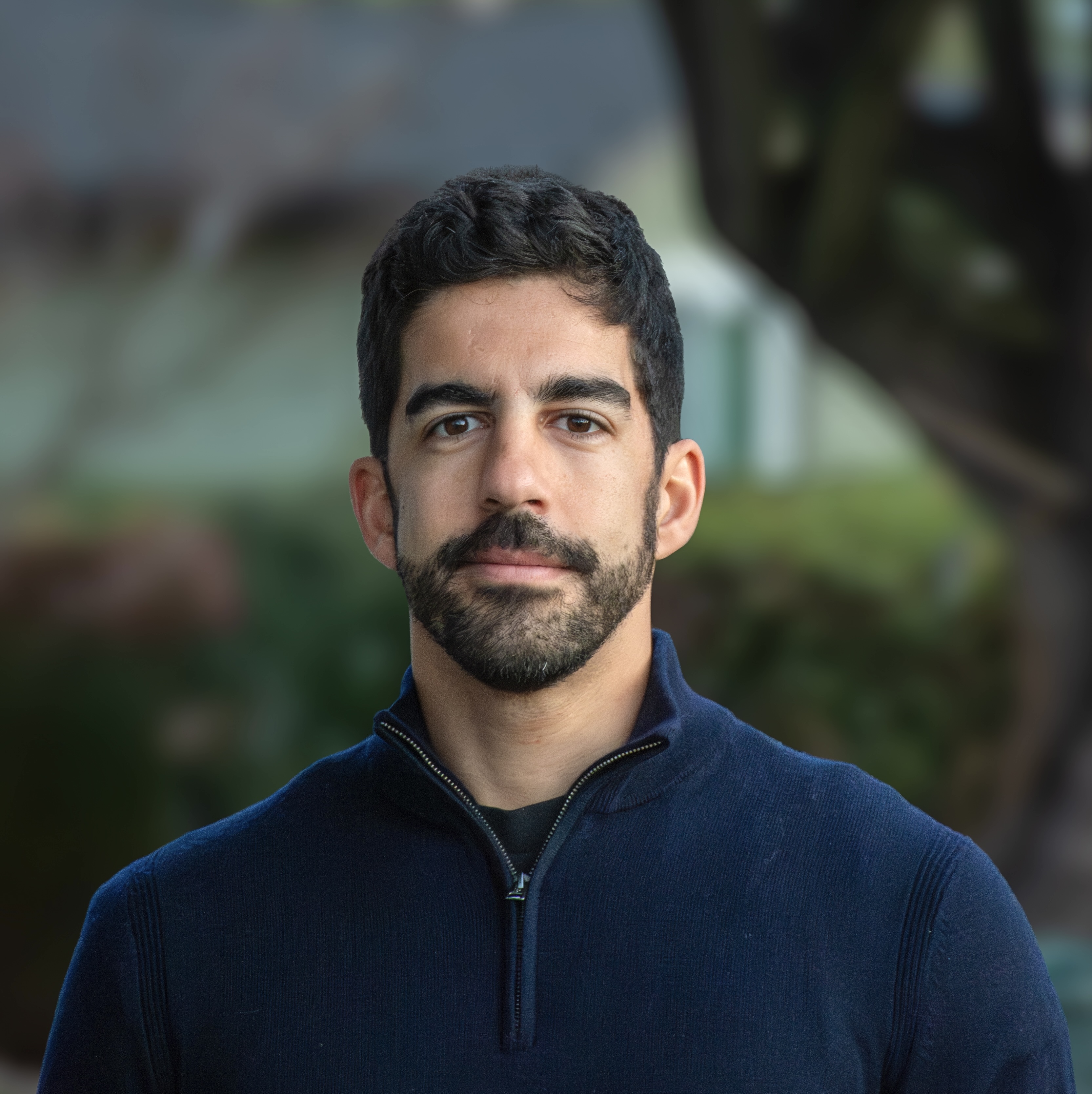
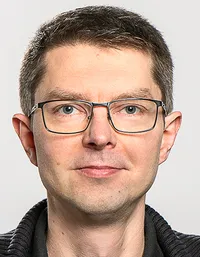
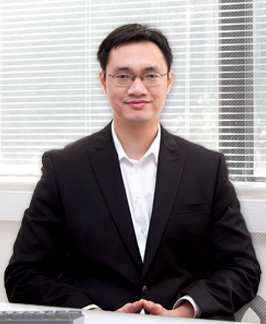
Professor Ihab Ilyas is a leading figure in data management and machine learning at the Cheriton School of Computer Science , University of Waterloo , where he holds the Thomson Reuters Research Chair in Data Quality . He is currently on leave from the university, serving as a Distinguished Engineer, Proactive Intelligence at Apple Inc . His research focuses on data cleaning , large-scale data integration , knowledge graphs , and machine learning applications in data quality . He has pioneered systems like HoloClean and Saga , with commercial impacts through co-founded startups Inductiv (acquired by Apple) and Tamr . PhD in Computer Science from Purdue University Co-founder of Inductiv (acquired by Apple) Co-founder of Tamr Research Interests include: Probabilistic and uncertain data management Machine learning for data quality and enrichment Big data systems and information extraction Knowledge graph construction and optimization Scientific Awards and Recognitions include: Fellow of the Royal Society of Canada (2024) C.C. Gotlieb Computer Award (2024) IEEE Fellow (2021) ACM Fellow (2020) Cheriton Faculty Fellowship (2013-2016) Ontario Early Researcher Award
Andy Pavlo is an Associate Professor with Indefinite Tenure in the Computer Science Department at Carnegie Mellon University's School of Computer Science. He is an active member of the CMU Database Group and the Parallel Data Laboratory, where he leads research in database management systems with a focus on self-driving architectures, transaction processing, and large-scale analytics. His work bridges academic research and industry applications through projects like NoisePage, OtterTune (which he co-founded and served as CEO before it ceased operations), and Peloton. Dr. Pavlo's research interests span database management systems with particular emphasis on autonomous database architectures that can self-tune and optimize without human intervention. His work explores transaction processing systems that can handle high-throughput workloads while maintaining consistency, and large-scale data analytics techniques that efficiently process massive datasets. He has made significant contributions to query optimization, database extensibility, and automatic database tuning using machine learning techniques. His recent work on database extensibility revealed critical issues in PostgreSQL's extension ecosystem, showing that approximately 16% of extensions are incompatible with at least one other extension due to API violations and memory errors. His research output demonstrates a consistent focus on practical database systems challenges, with recent publications examining database extensibility, user-defined function optimization, and the cyclical nature of database research. The articles show a strong trend toward making database systems more autonomous, with increasing integration of machine learning techniques for automatic tuning and optimization. His work often combines deep theoretical analysis with practical implementation in open-source systems. Dijkstra Award 2024 for contributions to database systems research Dr. Pavlo actively mentors graduate students, with current advisees including Wan Shen Lim, William Zhang, and Sam Arch (co-advised with Todd Mowry). His former students have gone on to successful careers in both industry and academia. He has secured significant research funding through CMU's affiliate program with major database companies including ClickHouse, DataStax, dbt, Firebolt, MotherDuck, RelationalAI, SingleStore, Spiral, PingCAP/TiDB, Yellowbrick, and Yugabyte. His research is supported by these industry partnerships and likely includes NSF funding given his active participation in the database research community. At CMU, Dr. Pavlo leads the Database Group and organizes several seminar series including "SQL or Death," "Database Building Blocks," and "ML⇄DB Technical Talks." These seminars bring together researchers and practitioners to discuss cutting-edge developments in database systems. He also runs a summer research internship program that has attracted students for multiple consecutive years, indicating a strong research group with ongoing projects and funding.
Yannis Chronis is an incoming Assistant Professor at the Department of Computer Science , ETH Zurich (starting August 2025), where he will join the ETH Systems Group . Prior to this, he spent 3 years as a Systems Researcher at Google's Systems Research Group in Sunnyvale, USA. He holds a Ph.D. in Computer Science from the University of Wisconsin-Madison (advised by Prof. Jignesh Patel) and a Bachelor's/Master's from the University of Athens, Greece (advised by Prof. Yannis Ioannidis). His research focuses on optimizing databases and data processing for modern hardware through software-hardware co-design. Key areas include database efficiency in memory-centric architectures, learned query optimizers, and cloud resource management. His work is supported by a Facebook Fellowship and has been recognized with the EDBT 2016 Medal for best paper. Teaching: Taught CS 564 - Database Management Systems at UW-Madison (Spring 2022). Service: Served on program committees for SIGMOD, VLDB, CIDR, and others, and chairs the CIDR Proceedings Committee. Key Publications: His recent work includes studies on memory-centric computing for databases, cardinality estimation benchmarks, and adaptive query processing techniques.
Anastasia Ailamaki is a Professor at the Swiss Federal Institute of Technology in Lausanne (EPFL), renowned for her work in database systems and data management . Her research focuses on optimizing query processing for modern hardware, particularly GPUs and heterogeneous systems, and advancing cloud data analytics with serverless architectures like PixelDB . She has co-authored influential frameworks for adaptive query optimization , hardware-conscious database engines , and model-relational data management . Key research areas: GPU acceleration , HTAP , query approximation , spatial data processing , and cloud-native databases . Recent work emphasizes cross-task optimizations in distributed environments, efficient sampling , and context-aware joins integrating vector embeddings. In 2023, she contributed to adaptive recursive query optimization and speculative K-means clustering, while 2024 publications addressed proportional caching (HPCache) and model-relational systems . Her collaborations span institutions such as MIT, Microsoft, and ETH Zurich, with publications in top venues like SIGMOD , VLDB , and ICDE .
Prof. Dr. Viktor Leis is a Professor in the Department of Computer Science at the Technical University of Munich (TUM), leading the Chair for Decentralized Information Systems and Data Management. His research focuses on cost-efficient data systems, particularly in cloud environments, with expertise in core database topics like query processing, transaction management, and storage optimization. He earned his PhD from TUM in 2016 and previously held professorships at Friedrich Schiller University Jena and Friedrich-Alexander-Universität Erlangen-Nürnberg before returning to TUM in 2022. His work has been recognized with prestigious awards, including the ACM SIGMOD Dissertation Award, VLDB Early Career Research Contribution Award, and an ERC Starting Grant. Research Interests: Cloud computing, database systems, query optimization, storage engines, transaction processing, and NVMe-optimized systems. Key Projects: Developed the LeanStore storage engine and contributed to the Hyper database system. His recent publications emphasize cloud-native architectures, high-performance storage solutions, and hybrid transactional/analytical processing. He actively teaches courses on distributed systems, cloud databases, and blockchain technologies.
Sandhya Dwarkadas is the Walter N. Munster Professor and Chair of the Department of Computer Science at the University of Virginia. Her research focuses on the intersection of computer hardware and software, particularly in parallel computing, computer architecture, and compiler/runtime-architecture interaction. She holds dual roles as department chair and active researcher, balancing leadership with contributions to energy-efficient and reconfigurable computing systems. Education: B.Tech. in Electrical Engineering, Indian Institute of Technology (1986) M.S. and Ph.D. in Electrical and Computer Engineering, Rice University (1989, 1993) Research interests emphasize parallel and distributed computing architectures, with a focus on energy efficiency, cache coherence, and security in multicore systems. Recent work explores mitigating side-channel attacks via innovations like TimeCache and RollingCache. Her publications span 30+ years, addressing both foundational and applied challenges in computer systems. Awards highlight her impact: ACM and IEEE Fellowships (2018/2017), University of Rochester’s Hajim Award (2020), and AAAS Fellowship (2024). She actively mentors students through courses like CS 6190 and leads interdisciplinary projects like TriForce. Labs/Teams: Her work is anchored in the University of Virginia’s Computer Science Department, collaborating across academia and industry to advance next-generation computing systems.
Matthias Uflacker is a Professor at the Hasso Plattner Institute (HPI), University of Potsdam, Germany, where he conducts research in database systems, in-memory computing, and data-driven enterprise applications. His work bridges systems research and practical applications in Industry 4.0, education, and bioinformatics. University: University of Potsdam School: Hasso Plattner Institute Department: Department of Digital Engineering Research Focus: In-Memory Databases, Stream Processing, Causal AI, and Database Education His research interests span in-memory database systems , real-time data stream processing , GPU-accelerated analytics , and causal structure learning . He also contributes to computer science education , particularly in agile software engineering and interactive learning tools for K-12. The recent publications reflect a strong trend in enterprise data management , with a focus on benchmarking (e.g., ESPBench), performance optimization (e.g., Kafka, Hyrise), and intelligent decision support using causal models in industrial contexts. His work increasingly integrates AI for monitoring and automation in manufacturing and e-commerce. He has co-authored numerous publications in top-tier venues such as VLDB, ICDE, EDBT, and KDD, often in collaboration with Hasso Plattner and other HPI researchers. Matthias Uflacker leads and contributes to research projects on autonomous database systems , dynamic pricing simulations , and educational technology platforms for programming exercises. His team develops tools for real-time data integration, causal analysis, and classroom software engineering assessment.
Walid G. Aref is a Professor at Purdue University, West Lafayette, USA, specializing in database systems, spatial data processing, and big data technologies. His work focuses on adaptive indexing, LSM trees, and graph data systems. 2025: Research on skiplists, GTX graph systems, and BMTree indexing 2024: Contributions to trajectory indexing and HTAP-optimized data systems 2023: Editorial roles in ACM Transactions on Spatial Algorithms and Systems His research spans scalable spatial-keyword query processing, distributed streaming systems, and hardware-aware database optimization. Notable collaborations include Ahmed R. Mahmood and Mourad Ouzzani. Recent publications highlight trends in machine learning for indexing , NUMA-aware optimization , and multi-dimensional data structures . He has no listed scientific awards in this dataset. Walid actively contributes to transactional graph systems , load balancing , and spatiotemporal data management , with a 2021 IEEE Transactions paper on attack-resilient load balancing.
Dr. Heming Cui is an Associate Professor at the Department of Computer Science, University of Hong Kong, affiliated with the School of Computing and Data Science. He joined HKU in 2015 after completing his PhD at Columbia University, following bachelor's and master's degrees from Tsinghua University. His research focuses on distributed systems, operating systems, and high-performance computing, with a strong emphasis on reliability and security. Dr. Cui leads projects in distributed AI training systems, blockchain frameworks, and secure execution environments, collaborating closely with industries like Huawei. He has received notable awards including the Croucher Innovation Award (2016), HK$5 million RGC Research Impact Fund (2023), and best paper awards at ICSE and ACSAC. His work has led to commercialized systems such as Huawei's MindSpore integration of Fold3D and TICS' UTEE component derived from his secure systems research. Dr. Cui actively recruits PhD students specializing in systems security and database systems, prioritizing candidates with strong systems-building backgrounds. Key grants include leadership in projects totaling HK$30 million, including flagship collaborations with Huawei and RGC grants targeting transaction/analytical processing in edge computing and cloud security. His research spans over 50 publications in top venues like SOSP, NSDI, and IEEE journals, emphasizing reproducibility and industrial impact.
Ihab Francis Ilyas is a Professor at the University of Waterloo , affiliated with the Cheriton School of Computer Science . He currently holds the Thomson Reuters Research Chair in Data Quality and is on leave while serving as a Distinguished Engineer, Proactive Intelligence at Apple Inc. . He has co-founded two successful startups— Inductiv (acquired by Apple) and Tamr —and is a Fellow of the Royal Society of Canada , IEEE Fellow , and ACM Fellow . Research Interests : AI for Data Quality and Curation Knowledge Graphs Large-Scale Data Integration Information Extraction Managing Uncertain Data Data Cleaning Error Detection and Repair Probabilistic and Uncertain Data Management Scientific Awards and Recognitions : C.C. Gotlieb Computer Award, 2024 IEEE Fellow, 2021 ACM Fellow, 2020 NSERC-Thomson Reuters Industrial Research Chair, 2018 Google Faculty Award, 2014 Ontario Early Researcher Award, 2008 IBM CAS Faculty Fellow, 2006–2010 Taha Hussein Medal (Egyptian Ministry of Education), 1990 Leadership and Service : Board of Trustees, VLDB Endowment (2016–2021) Vice Chair, ACM SIGMOD (2016–2021) Co-founder, Inductiv (acquired by Apple) and Tamr Co-author of the leading text Data Cleaning (ACM Books) Lead developer of the HoloClean open-source data repair system Contributor to Saga , a next-generation knowledge construction platform at Apple Publications and Trends : His recent research focuses on AI-driven data cleaning, knowledge graph construction, and scalable data integration systems. Collaborative works span probabilistic inference, differentially private data synthesis, error detection, and HTAP workloads. His publications appear in top venues like SIGMOD , VLDB , and ICDE .