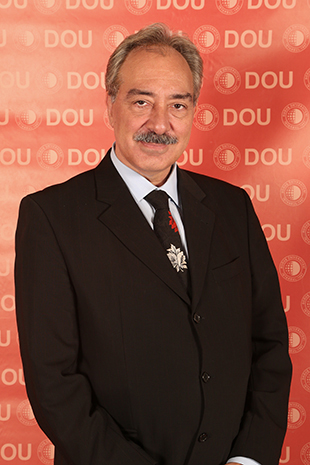
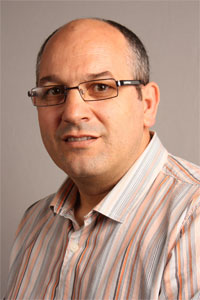
Prof. Dr. Ahmet Zafer ŞENALP is a Professor at the Department of Mechanical Engineering (English Program) at Doğuş Üniversitesi. He holds a PhD in Mechanical Engineering from ODTÜ (1998) and has extensive experience in CAD/CAM Robotics and metal forming processes. His academic career includes roles at Gebze Yüksek Teknoloji Enstitüsü (1999–2012 as Assistant Professor, promoted to Associate Professor by 2012) and Gebze Teknik Üniversitesi (until his retirement as an Associate Professor in 2019). His research focuses on finite element analysis, metal forming, plasticity theory, and ergonomic design. Education: BSc (1989), MSc (1991), and PhD (1998) in Mechanical Engineering from ODTÜ. He worked at ODTÜ CAD/CAM Robotics Center (1989–1998) and served in the military on the Panter Obüs project (1998–1999). Research Interests: Finite Element Analysis (FEA) applied to biomechanics, pressure vessels, prosthetics, and manufacturing processes. He also explores metal forming techniques, CAD/CAM integration, and material deformation mechanics. Publications span FEA-based studies on human joint forces, pressure vessel buckling, prosthetic design, and manufacturing optimization. His work often bridges computational methods with practical engineering challenges. Teaching includes courses on FEA fundamentals, mechanical vibrations, and design methodologies in both Turkish and English.
Dr. Elena Gheorghiu is an Associate Professor in the Department of Psychology at the University of Stirling, within the Faculty of Natural Sciences. She holds a PhD from Utrecht University (Netherlands) and has held post-doctoral positions at McGill University (Canada) and KU Leuven (Belgium). Her research focuses on human visual perception, specifically contour-shape processing, texture analysis, binocular vision, and visual illusions. She has received the prestigious 1st Prize at the Best Visual Illusion of the Year Contest (2007) for the 'Leaning Tower Illusion.' Education: PhD in Psychology, Utrecht University (Netherlands) Postdoctoral Fellowships: McGill University (Canada) and University of Leuven (Belgium) Research Interests: Contour/Texture Processing Stereopsis and Binocular Vision Symmetry and Regularity Perception EEG/ERP and Computational Modelling Her grants include funding from EPSRC (2024-2027), MOD-Dstl (2023), and Wellcome Trust (2015-2019). She has advised numerous postdoctoral researchers and students, including Dr. Rebecca Sharman (now at Abertay University) and Dr. Damien Wright (University of Edinburgh). Her lab explores topics such as mirror symmetry detection, contextual modulation effects, and temporal dynamics of visual perception. Key achievements include over 60 peer-reviewed articles and advancements in understanding visual perception mechanisms through psychophysical and neurophysiological methods.
Dr Sean Tomlinson is an ARC Grant-Funded Researcher (A) in the Department of Ecology and Evolutionary Biology at the University of Adelaide. His work focuses on integrating physiological and ecological principles to address challenges in conservation biology, restoration ecology, and biodiversity management. Key research areas include seed germination dynamics, animal metabolic responses to environmental stressors, and the application of physiological tools to inform conservation strategies. His research employs interdisciplinary approaches, combining field studies, experimental laboratory work, and computational modeling to understand ecological processes at multiple scales. Notable contributions include studies on the impacts of climate change on plant and animal physiology, the reconstruction of historical ecological dynamics, and the development of frameworks for effective ecological restoration. Recent work emphasizes the importance of physiological data in guiding translocation programs for threatened species, optimizing seed-banking strategies for degraded landscapes, and bridging gaps between theoretical models and applied conservation practices. Dr Tomlinson collaborates extensively with government agencies, NGOs, and international research networks to ensure his work informs policy and on-ground management decisions. His publications highlight innovative methodologies such as LiDAR-based habitat analysis for endangered species, high-resolution niche modeling informed by edaphic factors, and quasi-mechanistic spatial models for insect energetics. Ongoing projects explore the interplay of temperature, moisture, and bioclimatic factors in shaping species' distributions and resilience to anthropogenic pressures.
Nancy Reagin is a Professor in the Department of Women's and Gender Studies at Pace University’s Dyson College of Arts and Sciences. She holds a PhD from Johns Hopkins University and has established herself as a leading scholar in European history, particularly in German gender history, consumer culture, and the cultural politics of fandom. Her interdisciplinary work bridges history, gender studies, and popular culture. PhD, Johns Hopkins University, 1990 MA, Johns Hopkins University, 1985 BA, University of California at Berkeley, 1983 Her research focuses on the intersections of gender, national identity, and domestic life in modern Germany, with significant contributions to understanding how consumer culture and household practices shaped national ideologies from the 19th century through the Nazi era. She has also pioneered scholarly exploration of fan communities, historical reenactment, and the use of science fiction and fantasy literature as sites of historical imagination and political analogy. Her work often examines how popular media reinterprets and refracts historical narratives. Her recent publications reveal a strong trend toward analyzing fandom as a form of historical engagement, particularly in transatlantic contexts. She investigates how Western reenactment, Star Wars , and Harry Potter serve as vehicles for processing historical trauma, constructing identity, and negotiating political ideologies. These works span cultural history, media studies, and reception theory, demonstrating her interdisciplinary reach. LGBTQ Educator of the Year Award, Pace University, 2015 Kenan Award for Teaching Excellence, Pace University, 2014 Undergraduate Research Initiative Award, Pace University, 2011 Distinguished Faculty Research Award, Dyson College, 2010 Special Service Award, Pace Student Government Association, 2001 Nancy Reagin has been deeply involved in academic leadership and mentoring, having chaired the Department of Women's and Gender Studies, the Faculty Council, and served as interim Academic Associate Provost. She has secured significant research funding from the National Endowment for the Humanities, Fulbright, and Verizon, supporting projects on educational resources and historical research. While specific advisees are not listed, her leadership in undergraduate research and teaching excellence underscores her commitment to student mentorship. Her work on educational initiatives, including the 'Reacting to the Past' pedagogical model, reflects her engagement with innovative teaching methods that immerse students in historical role-playing. She has also contributed to public-facing scholarship through edited companions to fantasy and science fiction literature, expanding the reach of historical analysis beyond academia.
Professor Francisco Chiclana is a leading academic in Computational Intelligence and Decision Making at the School of Computer Science and Informatics, De Montfort University (UK). As founder of DIGITS (De Montfort University Interdisciplinary Group in Intelligent Transport Systems), he pioneered research in trust-driven decision frameworks and fuzzy systems. PhD and BSc in Mathematics from University of Granada Coordinated DMU's REF 2014 submission in Computer Science and Informatics Co-developed DMU's Doctoral Training Programme in Intelligent Systems His research focuses on fuzzy preference modelling , consensus reaching processes , and social network analysis for decision support systems. Recent work explores AI applications in trust propagation, power-asymmetric conflict resolution, and large-scale group decision frameworks. Key publications include 15+ peer-reviewed articles in journals like IEEE Transactions on Fuzzy Systems and Information Sciences , covering topics from type-2 fuzzy logic to Nash bargaining compensation mechanisms . His Greenfield-Chiclana Collapsing Defuzzifier won third prize at DMU's Creative Thinking Awards 2010. Outstanding PhD Award (University of Granada, 2000) Finalist in DMU-THE OSCAR AWARDS for Research Excellence (2012) As supervisor of 8+ current and completed PhD students, including Sarah Greenfield and Sergio Alonso Burgos, he has shaped next-generation researchers. His £145K EPSRC-funded project (2006-2009) extended fuzzy logic applications in consensus modelling.
Mubashir Sultan is a Predoctoral Fellow at the Max Planck Institute for Human Development in the Adaptive Rationality Research Team , where he focuses on the psychology of misinformation, social media behavior, and decision-making mechanisms. He combines computational modeling with empirical studies to analyze how individuals process and propagate information online. Education: PhD (ongoing), Max Planck Institute for Human Development (2021–present) M.Sc. in Brain and Cognitive Sciences, University of Amsterdam (2019–2021) M.Sc. in Cultural Psychology, University of Amsterdam (2017–2019) B.A. in Psychology and English Literature, Trinity College Dublin (2012–2016) His research bridges social psychology and computational behavioral science , examining how demographic factors , partisan biases , and cognitive limitations shape misinformation susceptibility. Recent work demonstrates that time pressure impairs misinformation detection while highlighting the role of myside bias in social media sharing. Current publications reveal trends in online misinformation interventions , digital trace data analysis , and social information processing . His methodological toolkit spans experimental designs , meta-analyses , and computational modeling of decision-making under uncertainty. As part of the Adaptive Rationality team, Sultan contributes to interdisciplinary projects exploring adaptive behavior in digital environments , collaborating with researchers in psychology, computer science, and behavioral economics.
Michal Piovarci is a Researcher (Postdoc) at ETH Zurich's Computational Design Lab led by Bernd Bickel. He holds a Ph.D. from USI Lugano (2020) under Piotr Didyk, receiving the Eurographics PhD Award for his thesis on Perception-Aware Computational Fabrication. His research focuses on computer graphics, computational fabrication, and haptic/appearance reproduction, emphasizing perception-driven solutions. Education: Ph.D., USI Lugano (2020) Previous postdoc at ISTA's Visual Computing Group Research interests include 3D Printing Innovations Haptic Feedback Systems Material Perception Modeling Directional Surface Design Professional Activities: Area chair at ACM Symposium on Computational Fabrication (2024), program committee roles at SIGGRAPH, SAP, and Eurographics. Organized Computational Fabrication Seminars (2021-2022). Grants: SNSF Project Funding (CHF 1M, 2025-2029) and FWF Lise Meitner Grant (2022-2023). Teaching: Taught Scientific Machine Learning for Design (ETH Zurich, 2024) Computational Fabrication (TU Wien, 2022)
James Gibert is an Associate Professor of Mechanical Engineering at Purdue University's West Lafayette School of Mechanical Engineering. His research focuses on vibrations and nonlinear dynamics, smart material systems, non-pneumatic tires, optimization of mechanical systems, and additive manufacturing. He holds a B.S., M.S., and Ph.D. from Clemson University (2002-2009). His work spans fundamental dynamics, material behavior, and applications in transportation and energy harvesting. Key research contributions include studies on ultrasonic additive manufacturing dynamics, viscoelastic materials for cushioning, and nonlinear energy harvesting systems. His awards include the Emerald Engineering Outstanding Doctoral Award (2012) and NSF fellowships. Recent publications explore bistable systems, metamaterials, and advanced robotics. Awards highlight his academic and research excellence, including recognition for doctoral work and impactful papers on ultrasonic consolidation dynamics. His advising and grants focus on mechanical systems optimization and advanced manufacturing technologies. Ongoing efforts involve collaborative projects on energy-efficient materials and smart systems integration.
Julia A. Palacios is an Associate Professor of Statistics and Biomedical Data Science at Stanford University, with a courtesy appointment in Biology. She leads the Palacios Lab, focusing on developing statistical methods for evolutionary genomics, infectious diseases, and stochastic processes impacting public health. Her work integrates Bayesian nonparametric techniques, probabilistic AI, and computational statistics to address challenges in genetics, health, and cancer research. Her educational background includes a PhD in Statistics and postdoctoral research in computational biology. Current lab members include postdocs Bingjing Tang and Isaac Goldstein, PhD students Yi-Ting Tsai, Ivan Specht, Julie Zhang, and Leda Liang, and undergraduate researcher Shinnosuke Yagi. Former postdocs like Airam Blancas and Jaehee Kim have moved to faculty positions at ITAM and Cornell, respectively. Research funding includes NIH, NSF, Sloan Foundation grants, and the Terman Fellowship. Key contributions span phylodynamic modeling, coalescent theory, and real-time pathogen surveillance. Her lab's software tools include phylodyn (R package for phylodynamic inference) and adaPop (Bayesian population dynamics inference). Awards include the Sloan Research Fellowship and Gabilan Fellowship. Teaching roles include courses like Stats 376 and Stats 305A . Her lab actively recruits students and postdocs for research in evolutionary stochastic processes and biomedical data science. Labs/Teams: Palacios Lab at Stanford's Department of Statistics, collaborating with institutions globally on pandemic tracking and genomic studies. Current projects focus on multifurcating trees in infectious diseases, Bayesian nonparametric coalescent models, and computational tools for public health.
Randy Bruno is Professor of Neuroscience at the University of Oxford, where he serves as a Tutorial Fellow at St Peter's College. He leads the Bruno Group within the Department of Physiology, Anatomy and Genetics (DPAG) in the Medical Sciences Division. His research focuses on understanding cortical microcircuitry and computation, particularly how different layers of the neocortex contribute to sensory perception, learning, and decision making. Bruno's lab primarily uses the rodent whisker-barrel system as a model to investigate these questions, as rodents rely predominantly on whisker-mediated touch to explore their world. The lab employs a multidisciplinary approach combining intracellular physiology, cellular imaging, optogenetics, computational modeling, and behavioral experiments. Recent publications (2021-2024) demonstrate a strong focus on dendritic computation, attentional mechanisms, cross-sensory integration, and the roles of different cortical layers in sensory processing and learning. His work spans from basic neural mechanisms to potential implications for understanding mental disorders that affect cortical circuits. The Bruno Group includes multiple postdoctoral researchers, research assistants, and graduate students working collaboratively. Current team members include Madison Bartley, Dahee Jang, Candice Lee, Ziyue Liu, Katy Willard, Hadas Sloin, Isabella Febbo, and Soumen Jana. His publications have received significant attention across academic and social media platforms, with multiple papers highlighted by news outlets and shared widely among researchers.
Alina Maria Dulipovici is an Associate Professor in the Department of Information Technology at HEC Montréal. She also serves as Deputy Director of Training at the Multidisciplinary Institute for Cybersecurity and Cyberresilience (IMC 2 ) and is a member of the Information Systems Research Group (GReSI). Additionally, she works as an associate researcher at the French-speaking Center for the Computerization of Organizations (CEFRIO). Her educational background includes: M. Sc. (Management) from HEC Montréal PhD in Computer Information Systems from Georgia State University Professor Dulipovici's research focuses on cybersecurity and information security, with particular emphasis on employee safety behaviors, organizational culture related to information asset protection, and data protection risk management. Her work also explores knowledge sharing in organizations, ethics and privacy considerations, knowledge management systems, and strategic IT alignment. She employs qualitative research methods to investigate how organizations can better protect their information assets through understanding employee behaviors and organizational culture. Her recent publications demonstrate a strong focus on the intersection of human behavior and cybersecurity. She examines how values shape knowledge sharing practices and how age affects innovation with IT. Her work bridges theoretical frameworks with practical applications in organizational settings, particularly in the Canadian context where privacy laws like Quebec's Law 25 are shaping organizational practices. Professor Dulipovici actively supervises graduate students, having directed 3 master's theses and 17 supervised project management activities in the past five years. Her students' work covers cybersecurity governance, security posture visualization, privacy-enhancing technologies, conversion funnel development, and various aspects of cybersecurity implementation in organizational contexts. She is currently involved in a major cybersecurity research project called the "Insider Threat Alliance," which received nearly $5.4 million in funding from the Natural Sciences and Engineering Research Council of Canada and MITACS. Through the IMC 2 , she collaborates with research teams from Université de Montréal and Polytechnique Montréal on developing the Insider Threat Sentinel tool, which combines proactive access control with reactive malicious behavior detection using AI techniques. Her contribution focuses on the economic and sociotechnical dimensions of insider threat management.
Krist Vaesen is an Associate Professor in the Philosophy of Innovation at Eindhoven University of Technology (TU/e), within the Department of Philosophy & Ethics in the School of Industrial Engineering and Innovation Sciences. He is a founding member of the Eindhoven Meta-Science Center (META/e) and maintains an external position as a Research Fellow at Leiden University's Human Origins Group, Faculty of Archaeology. Dr. Vaesen earned his degrees in Applied Biology (1998) and Philosophy (2003) from the University of Leuven, Belgium, and completed his PhD at TU/e in 2008 with a dissertation on artifacts and norms. His academic career progressed from post-doctoral researcher (2008-2012) in the NWO program 'Things that make us smart' to Assistant Professor (2012), and eventually to his current Associate Professor position. He received a prestigious NWO Vidi grant in 2014 for his research on cultural evolutionary theory. Vaesen's research spans multiple interconnected domains including the philosophy of innovation, meta-science, cultural evolution, and the philosophy of scientific models. His current work focuses extensively on meta-scientific questions examining science funding practices, interdisciplinary research challenges, PhD attrition causes, academic research values, and research integrity. He is preparing a book titled 'Neophilia--why our obsession with innovation leads to bad science' addressing replication crises in science. His publication record shows consistent scholarly output, with 49 research outputs documented through 2025, appearing in high-impact journals across multiple disciplines including Proceedings of the National Academy of Sciences, Behavioral and Brain Sciences, PLoS ONE, and various philosophy and anthropology journals. His work demonstrates a clear trajectory toward increasingly meta-scientific concerns, with recent publications focusing on research values, PhD attrition, and science funding ethics. NWO Vidi Award (2013) for 'The Darwinisation of culture' Excellence grant from TU/e's Executive Board for work on the 'Things that make us smart' program Elected member of the Eindhoven Young Academy of Engineering (2018) Vaesen has supervised multiple graduate students (with 4 supervised works documented) and secured significant research funding, including his Vidi grant for the 'Darwinizing culture' project (2014-2019). He has been actively involved in science policy discussions, particularly regarding research funding reform and interdisciplinary research assessment. His work has generated substantial media attention, with 127 press/media mentions including coverage by Times Higher Education, Volkskrant, and various radio outlets. As co-founder of the Eindhoven Meta-Science Center, Vaesen plays a key role in advancing meta-scientific research at TU/e. His external position at Leiden University's Human Origins Group demonstrates his interdisciplinary reach across philosophy, anthropology, and evolutionary studies. He teaches courses including 'Metascience' (since 2024), 'Philosophy of science and technology,' and 'Research methodology for the innovation sciences,' shaping the next generation of scholars in these critical areas.
Belen Masia is a tenured Associate Professor in the Computer Science Department at Universidad de Zaragoza , Spain. She is affiliated with the Graphics & Imaging Lab (part of the I3A Institute ) and the Vision, Image and Neurodevelopment Group (within the IIS Aragon Institute ). Her research bridges computational imaging , applied perception , and virtual reality , focusing on modeling human visual behavior and improving graphics/vision algorithms through perceptual insights. Education : Ph.D. in Computer Science (Eurographics PhD Award 2015), postdoctoral work at Max Planck Institute for Informatics . Research Highlights : Virtual Reality : Studying user behavior, saliency prediction, multimodal perception, and cinematography in VR. Appearance Modeling : Developing intuitive material representations and metrics for editing. Applied Perception : Leveraging human vision insights to diagnose defects in non-verbal patients. Computational Displays : Exploring HDR imaging and display optimization. Scientific Awards : Eurographics Young Researcher Award 2017 Eurographics PhD Award 2015 MIT Technology Review Top Ten Innovators Below 35 in Spain 2014 NVIDIA Graduate Fellowship 2012 Leonardo Fellowship from BBVA Foundation 2020 Leadership & Editorial Roles : Co-chair of Full Papers track at Eurographics 2026 Associate Editor for ACM Transactions on Graphics, Computers and Graphics, and ACM Transactions on Applied Perception Co-founder of DIVE Medical , a startup for automated visual function diagnosis PhD Students : Dario Lanza (2025, Modeling, Perception and Editing of Volumetric Materials ) Daniel Martin (2024, Computational Models of Visual Attention in VR , Best PhD Thesis Award EGSE) Julia Guerrero-Viu (2023, WiGRAPH Rising Star) Sandra Malpica (2023, VR Gaze Behavior ) Manuel Lagunas (2021, BBVA/SCIE Young Researcher Award) Ana Serrano (2019, Eurographics PhD Award & Unizar Outstanding Thesis) Collaborations & Grants : Involved in the EU-funded PRIME Innovative Training Network (predictive rendering and appearance reproduction) and leading projects on deep learning for pediatric visual diagnosis.
Philip Armour is a Professor and Senior Economist at the RAND Corporation , where he also serves as Director of the Ph.D. Program and the RAND Center for Disability Research. His work integrates labor economics, public policy, and health economics to analyze intersections between government programs and workforce behavior. Research Interests: Focuses on disability policy , retirement decision-making , financial security , and military healthcare systems . Employs empirical analysis of Social Security, Workers' Compensation, and DoD/Veterans Administration programs to understand how policy incentives shape individual choices. Key Contributions: Recent publications examine Social Security appeals barriers for homeless populations, military eye examination policies, and pension crisis reform frameworks. Research funded by SSA, DoD, NIOSH, and CFPB. Education: Ph.D. in Economics, Cornell University M.Sc. in Econometrics, London School of Economics
Seamus Ross is a Professor at the Faculty of Information, University of Toronto, where he served as Dean from 2009 to 2015 and currently directs the Bachelor of Information Program. He is also a Senior Fellow at Massey College and a Fellow at St Michael’s College. Previously, he was Professor of Humanities Informatics and Founding Director of HATII at the University of Glasgow (1997–2009), where he is now Professor Emeritus. He has held visiting roles at institutions such as IMIS-Athena Research Centre and has been active in numerous international research initiatives. His educational background includes a DPhil from the University of Oxford, an MA from the University of Pennsylvania, and a BA from Vassar College. Seamus Ross’s research centers on digital preservation, curation, digital humanities, and cultural heritage informatics. His work explores semantic extraction, genre classification, emulation, digital archaeology, and knowledge representation. He has contributed significantly to the development of digital curation frameworks and post-custodial models for archives and libraries. His recent publications reflect a sustained engagement with FAIR principles, open access, and the ethical dimensions of digital cultural heritage. The trends in his scholarly output highlight a strong focus on the intersection of technology and cultural memory, with an emphasis on practical frameworks for long-term access, digital stewardship, and interdisciplinary collaboration in digital humanities. Elected Corresponding Fellow, Royal Society of Edinburgh (2016) He has supervised multiple graduate students, including Cassandra D’Amico-Mazza and Hassan Asif, and has led numerous funded research projects, such as BlogForever, PLANETS, SHAMAN, and DL.ORG, supported by the European Commission, JISC, EPSRC, and others. He has also developed academic programs including the MSc in eDiscovery and Computer Forensics and the MA in Arts and Media Informatics. Ross has been actively involved in leadership and service, chairing committees such as the BI Admissions and Curriculum Committees, and serving on the Scientific Committee for international symposia and editorial boards including IFLA Journal , KULA , and Studies in Digital Heritage . He has organized key events like the Semantic Digital Archives workshops and the ALISE/ASIST accreditation panel, shaping discourse in LIS education and digital curation.