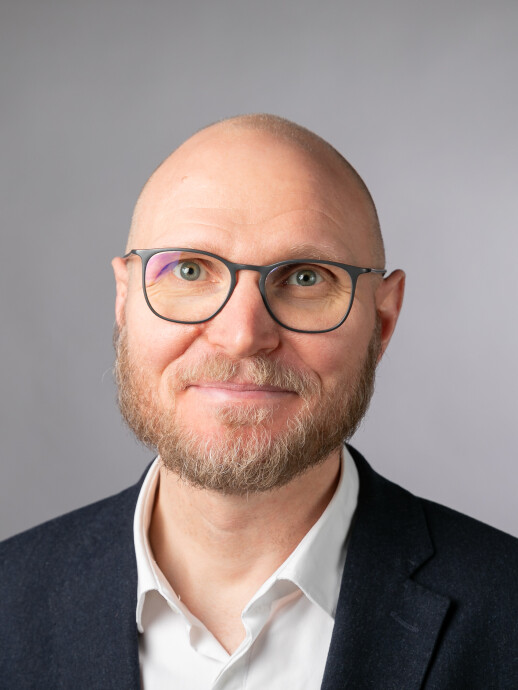
Sakari Melander is a Professor at the Faculty of Law , University of Helsinki, specializing in Criminal Law , with a focus on constitutionalization, Europeanization, and sentencing policies. His work bridges theoretical criminal law with practical legislative and policy challenges. Key research areas include EU criminal law, constitutional constraints on criminal legislation, and general doctrines of criminal law. He has extensive experience in parliamentary legal consultation, providing expert opinions to Finland’s Legislative Committees (e.g., on immigration control, anti-corruption directives, and digital evidence handling). Recent publications address topics like EU corporate sanction policies, constitutionalization of criminal law, and reforms in Finnish sentencing systems. His 2025 article in the New Journal of European Criminal Law explores balancing administrative and criminal sanctions in the EU. Scientific awards include: Hilkka ja Otto Brusiin Foundation Thesis Prize (2001) Magister Bonus – Good Teacher Award (2014) Primustohtori Award (2010) Year’s Teacher (2010) Year’s Opponent (2008) He leads research projects such as Criminal Law Under Pressure: Differentiation and Harmonization (2012-2015) and Assessment of Human Trafficking Sanction Practices (2021-2022), and supervises doctoral theses on criminal law topics.
Kati Kulovesi is Professor of Law at the University of Eastern Finland , specializing in International Environmental Law , EU Climate Law, and the intersection of climate change law with international economic law. She works closely with the 3E Center at the Brussels School of Governance, Vrije Universiteit Brussels , and Earth Negotiations Bulletin , with multidisciplinary collaborations in the Atmospheric and Climate Competence Center . Education: LL.M. from University of Helsinki and London School of Economics; PhD from LSE Research Focus: EU Climate Policy, Legitimacy in Climate Governance, Arctic Environmental Regulation, Carbon Market Mechanisms Professional Experience: Legal adviser for Finnish Government, World Bank, UN FAO, European Commission, Nordic Council of Ministers, IUCN, and World Resources Institute Publications span EU Climate Law, WTO-Environmental Disputes, Arctic Governance, and Short-Lived Climate Pollutants, with recent work on the European Green Deal and Fit for 55 Package . Her scholarship integrates legal theory with empirical analysis of climate policy implementation.
Professor Ida Koivisto from the Faculty of Law at the University of Helsinki specializes in administrative law, constitutional law, and global administrative law. Her research focuses on transparency in digital governance, automated decision-making in public administration, and the intersection of law with digital technology. Key research themes: Digital transparency, legal automation, EU administrative law Active in multidisciplinary projects like DARE (Digital Administration Redesigned for Everyone) and AlgoT (Algorithmic Transparency) Recent publications explore ethical dimensions of AI in governance, legal personhood in digital systems, and paradoxes of transparency. Her work appears in journals like Artificial Intelligence, Humans and the Law and Critical Analysis of Law . International collaborations include academic visits to the University of Toronto, University of Hong Kong, and European University Institute. She contributes to policy through expert statements for Finland's Constitutional Law Committee and other public institutions.
Mika Viljanen is a Professor of Private Law at the Faculty of Law , University of Turku . His work intersects legal theory , socio-legal studies , and doctrinal law , with a focus on artificial intelligence , financial regulation , and private law (torts and contracts). He teaches core private law modules and leads the Faculty Willem C. Vis Moot Court team. Key Affiliations : University of Turku (Faculty of Law), ETAROS Project, FLAIG Project Research Trajectory : From his 2008 dissertation on quantifying tort damages to contemporary studies on AI regulation and global value chain liability , his scholarship bridges traditional private law with emerging technologies and economic systems. Recent projects include ETAROS (AI and Law) and FLAIG (Financial Regulation). Publications Spotlight : His 2023-2025 works explore AI governance , robot safety regulation , and human rights in EU AI frameworks , reflecting his commitment to interdisciplinary analysis.
Pertti Ahonen is a Professor in the Department of History and Ethnology at the University of Jyväskylä. He completed his PhD at Yale University in 1999 and held teaching positions at the University of Sheffield and the University of Edinburgh for fifteen years before joining Jyväskylä in 2014. His research focuses on modern and contemporary European history, particularly post-1945 Germany and Central Europe, with emphasis on forced migrations, transnational history, and ethno-national categorizations. Notable publications include After the Expulsion (Oxford UP, 2003) and Death at the Berlin Wall (Oxford UP, 2010). Current research projects include Expellees and Ethno-National Categorizations in Europe , funded by the Research Council of Finland (2021-2025) Collaboration on Rethinking the Politics of Environment (2020-2022). His academic contributions span book reviews, journal articles, and conference organization, reflecting engagement with postwar European political discourse, Germany's Cold War dynamics, and migration studies.
Turkka Keinonen is a Professor of Industrial Design at Aalto University School of Arts, Design and Architecture, serving as Vice Dean of Research and Head of Doctoral Education. His career spans academic leadership, industry roles in Finnish technology sectors (shipbuilding, medical equipment), and a visiting associate professorship at National University of Singapore. He specializes in human-centered design, product concept design, and ethical considerations in design. Keinonen’s research emphasizes public sector innovation, digital service development, and the intersection of technology with societal needs. His work bridges theory and practice, focusing on how design can foster equity, civic engagement, and sustainability. Recent projects explore libraries as digital innovation hubs, smart home technologies’ ethical implications, and volunteer-based IT services. He has authored influential books including Mobile Usability (2003), Product Concept Design (2006), and Designers, Users and Justice (2017), alongside over 100 publications. Keinonen’s research trends reflect a shift toward relational design in public sectors, emphasizing stakeholder collaboration and systemic change. His articles analyze digital literacy initiatives, quasi-public service models, and design’s role in mediating technological control. He advocates for ethical frameworks that prioritize user autonomy and societal justice in design processes. Labs/Teams: Active in Aalto’s design innovation networks, particularly in public service design and human-centered design methodologies. Collaborates with industry partners (e.g., Nokia Research Center) and Nordic institutions on applied design research.
Riikka Koulu is an Associate Professor of Social and Legal Implications of AI at the University of Helsinki, holding joint appointments at the Faculty of Law and Faculty of Social Sciences. She serves as Director of the University of Helsinki Legal Tech Lab, an interdisciplinary research hub focused on law, technology, and society, and is an affiliated researcher at the Alexander von Humboldt Institute for Internet and Society in Berlin. In 2025, she will be an academic visitor at Oxford University. Education: Doctor of Law (OTT), University of Helsinki (awarded November 17, 2016) Title of Docent (digitalisation of law), University of Lapland (2020-present) Riikka Koulu is a socio-legal scholar specializing in the interconnections between law, technology, and society. Her research focuses on understanding law's role in shaping and being shaped by digitalized societies. She combines doctrinal and theoretical legal analysis with empirical research from a public law perspective. Her current work examines digital public administration, AI policy and regulation, European technology regulation, and the impact of digital technologies on legal decision-making. She is particularly interested in human oversight mechanisms and interface design in automated systems. Her recent publications reveal a strong focus on the legal implications of digital transformation, with particular attention to automated decision-making in public administration, algorithmic governance, and the changing nature of legal procedures in digital environments. Her work spans theoretical explorations of legal concepts in digital contexts and practical analyses of how technology is reshaping justice systems and public administration. Scientific Recognition: Title of Docent (digitalisation of law), University of Lapland (2020) Affiliated researcher, Alexander von Humboldt Institute for Internet and Society, Berlin (2019-present) Riikka Koulu actively supervises doctoral researchers through the Doctoral Programme in Law and has secured significant research funding for multiple projects. Her current research portfolio includes the ADM-Gov project (2022-2026) on automated administration governance, the REPAIR project (2022-2025) on algorithmic system maintenance, and the DARE project (2021-2026) on inclusive digital administration design. These projects involve collaboration with international partners and interdisciplinary teams. As Director of the University of Helsinki Legal Tech Lab, Koulu leads an interdisciplinary research hub that is part of the Network of Centers (NoC). The lab serves as a focal point for research on the intersection of law, technology, and society, bringing together scholars from legal studies, computer science, social sciences, and design disciplines to address pressing challenges in digital governance.
Pamela Slotte Russo is Professor of Religion and Law at Åbo Akademi University's Theology and Religious Studies department, Faculty of Humanities, Psychology and Theology. She leads the ÅAU Strategic Profiling Area in Minority Research and serves as Vice-director of the Center of Excellence in Law, Identity and the European Narratives (University of Helsinki). She holds the McDonald Distinguished Senior Fellow of Law and Religion at Emory University School of Law and is an affiliated senior research fellow at the Erik Castrén Institute of International Law and Human Rights (University of Helsinki). Her research spans systematic theology, law and religion, political theology, and human rights from historical and contemporary perspectives. Expertise intersects with UN Sustainable Development Goals (SDGs) related to justice, equality, and health. Key projects include Protestant Legacies in Nordic Law and Vaccine Attitudes research. Recent publications analyze vaccine hesitancy (2022), juridification of religion (2017), and Nordic legal secularism (2022). Trends show interdisciplinary focus on religious complexity, legal norms, and public health ethics. Scientific awards: Statsrådet Mauritz Hallbergs pris (2008) Harry Elvings legat (2006) She supervises doctoral students and collaborates internationally, including roles in the Finnish Academy of Science and Letters (2022–) and Blanquerna Observatory on Media, Religion and Culture (2022–). Current projects run until 2025.
Timo Koivurova is a Research Professor at the Arctic Centre, University of Lapland. He holds visiting and adjunct professor roles at Kobe University (Japan), Riga Graduate School of Law, University of Eastern Finland, and University of Turku. His research focuses on Arctic law, international environmental law, and geopolitical dynamics in the Arctic region. He has authored over 465 publications and led 43 research projects, including major initiatives like the ICEBERG project on Arctic Ocean governance and the Co-CREATE project on solar radiation management. Key research interests include legal frameworks for indigenous peoples, climate change regulations, Arctic geopolitics, and China’s Arctic engagement. He has received awards such as the 2015 Honorable Mention for environmental policy analysis and the 2008 Nordenskiöld Stipend for Arctic legal research. Over 100 media contributions discussing Arctic policy and geopolitics. Active in 552 professional activities, including editorial roles and conference presentations. Principal Investigator for EU-funded projects like Arctic PASSION and MARCS. His work bridges legal scholarship with policy practice, addressing contemporary challenges like Arctic Council functionality post-2022 Ukraine invasion and sustainable development goals in the region.
Mikko Joronen is an Associate Professor of Regional Studies at Tampere University, affiliated with the Faculty of Management and Business and the Department of Environmental Policy and Regional Studies. His research focuses on political geography, particularly examining everyday violence, coloniality, and materiality in Palestine and the Middle East. He holds a doctoral degree from the University of Turku (2011) and has held prestigious fellowships including the Academy of Finland Research Fellowship (2017–2022) and the Tampere Institute for Advanced Study Senior Fellowship (2022–2024). Joronen leads the Geographies of Coloniality and Everyday Violence Research Group (GOCEP) and co-leads the Palestine Research Group with Newcastle University. His research explores themes such as atmospheric violence, politics of vulnerability, and temporalities of colonialism. Notable projects include the ERC-funded 'Dwelling with Crisis: Home at Spaces of Chronic Violence' (2023–2028) and the Academy of Finland-funded 'Present-Futures in/of Palestine' (2019–2023). He has published extensively on topics like weaponized breathing, olfactory durations, and decolonial geographies in Palestine. Educations: PhD in Human Geography (University of Turku, 2011) Grants: ERC Consolidator Grant (2023–2028), RELATE Center of Excellence (2014–2019) Joronen’s work bridges theory and practice, analyzing the intersections of ontology, politics, and space. His recent publications emphasize atmospheric materialities and colonial rhythms in Palestinian territories, reflecting his commitment to critical spatial analysis and decolonial thought. Awards: Docent in Political Geography (2017) Academy of Finland Research Fellowship (2017–2022) ERC Consolidator Grant (2023–2028) Research Groups: Leads GOCEP and co-leads the Palestine Research Group. Previously part of SPARG (Space and Political Agency Research Group) and RELATE Center of Excellence.
Kamrul Faisal serves as a Doctoral Researcher and Grant-funded researcher within the Faculty of Law at the University of Helsinki. His scholarly work focuses on the dynamic interplay between technology, law, and policy, with expertise in digital rights, cybersecurity, telecommunications legislation, and data privacy. Faisal is committed to advancing equitable legal frameworks for the digital era through rigorous research and ethical analysis. Research Interests Faisal's research centers on data protection law, particularly the General Data Protection Regulation (GDPR), and its application to vulnerable groups including children. He investigates the tensions between privacy rights and freedom of expression in criminal data contexts, and critically assesses national data protection measures such as Finland's biometric data proposals. His work also explores vulnerability theory within data protection frameworks and the intersection of human rights with digital technologies. Publication Trends His recent scholarly output (2024-2025) reveals a concentrated effort on GDPR-related challenges, with publications addressing children's data rights, biometric surveillance risks, and the reconciliation of privacy with other fundamental rights. Faisal's work demonstrates a methodical approach to identifying gaps in current regulations and proposing nuanced solutions for complex digital society issues. Scientific Awards Eino Jutikkala Grant awarded by the Finnish Academy of Science and Letters (2022) Research Projects and Activities Faisal contributes to major research initiatives including GenAI: Generation AI (funded by the Research Council of Finland) and Korpisaari 2785/31/2019 Neutral Host Pil (funded by Business Finland). He is an active participant in academic discourse, having engaged in 39 activities such as conference organization, peer review for journals like Digital Policy, Regulation and Governance, and invited talks on data protection. His role as a Certified Peer Reviewer by Elsevier underscores his commitment to scholarly rigor.
Katri Havu is an Associate Professor at the University of Helsinki's Faculty of Law and a key member of the Helsinki Institute of Sustainability Science (HELSUS). She specializes in EU law, competition law, and technology-related legal challenges. Current projects: Green and Tempting? (combating greenwashing) and Private Enforcement, Sustainability & Technology Research themes: AI liability, EU damages directives, and sustainable regulatory frameworks Her publications focus on algorithmic accountability, competition law enforcement, and non-material harm compensation in EU courts. Recent work examines AI-induced damages and greenwashing in consumer marketing. Scientific recognition includes: Nordic Prize for Young Private Law Scholars (2021) Lakimies journal's best article award (2019) European Journal of Risk Regulation Reviewer Award (2023) Havu actively supervises doctoral researchers and participates in EU regulatory policy development. She serves as editor for Lakimies journal and contributes to EU soft law implementation analysis.
Professor Henning Grosse Ruse Khan is a leading academic in International and European Intellectual Property (IP) Law at the University of Cambridge, where he serves as Professor of Law, Co-Director of the Centre for Intellectual Property and Information Law (CIPIL), and Fellow of King’s College. He also holds affiliations with the Lauterpacht Centre for International Law and has been a Global Hauser Visiting Professor at New York University (2024). Education: Dr iur (University of Münster, Germany) Research Focus: His work bridges IP law with trade, investment, and technology, emphasizing sustainable development, environmental law, and the ethical implications of automation. Recent projects explore AI regulation, data access, and the legal dimensions of the Anthropocene. Key Article Trends: His publications analyze TRIPS-Plus agreements, investor-state disputes, and the intersection of IP with environmental and human rights frameworks. Themes include platform governance, data law, and historical justice. Scientific Honors: Distinguished Fellow, Hanken School of Economics (2016-2017) Global Hauser Visiting Professor, NYU (2024) Senior Fellow, Max Planck Institute (2013-2022) Co-Founder, Society of International Economic Law (SIEL) IP Network Advising & Grants: He advises the World Intellectual Property Organization (WIPO) and contributes to policy reports, including the UN ESCAP Handbook on Negotiating Development-Oriented Provisions in Trade and Investment Agreements (2017). His research has been funded by the 6th EU Framework Programme and other international bodies. Labs & Teams: As Co-Director of CIPIL, he leads research on global IP governance. He is affiliated with the Centre for Law, Medicine and Life Sciences (LML) and the Society of International Economic Law (SIEL).
Partow Izadi is a University Lecturer at the Faculty of Education, University of Lapland. His research focuses on culturally-sensitive educational strategies and democratic education frameworks, with a regional emphasis on Lapland's unique socio-cultural context. Research Projects: Cultural-Sensitive Learning Path in Lapland (2018-2020, ESF-funded): Developed inclusive education models addressing Lapland's multicultural student population Demokratia ja ihmisoikeuskasvatus opetta (2016, Gov't-funded): Created human rights education materials for schools Research Interests: Integrating cultural responsiveness into educational practices, democracy education, and supporting youth decision-making through innovative pedagogical approaches. Grants & Funding: Successfully obtained €450k+ in project funding from EU Structural Funds and Finnish Ministry of Education since 2016. Labs/Teams: Collaborates with multidisciplinary teams including Lapland regional education authorities and Sami cultural organizations.
Eija Vinnari is a Professor at the Faculty of Management and Business , Tampere University. Her work bridges Accounting , Financial Management , and Sustainability , with a unique focus on non-human animals in corporate and public contexts. Research Interests: Critical accounting, sustainability, corporate social responsibility, actor-network theory applications, and animal ethics in accounting systems. Key Collaborations: EU Horizon 2020 projects, Agenda2030 implementation in Finland, and Nordic CSR research networks. Article Trends span nonprofit accountability , cultural sustainability , animal inclusion in CSR , Finnish public sector performance , and critical theory in accounting . Her work often integrates ORCID profiles with interdisciplinary approaches. Grants & Projects include contributions to the EU Horizon 2020 MULTI-ACT initiative and Agenda2030 sustainability frameworks. She co-leads the Research Group on Sustainability and Critical Accounting and the Research Group on Public Financial Management .