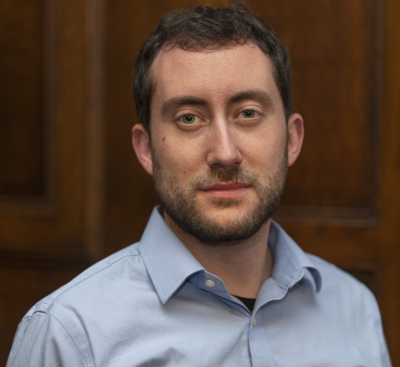
Amy McDonnell is a Post-Doctoral Research Fellow at the University of Utah's Department of Cognition and Neural Science (CNS), advised by David Strayer. Her work focuses on neural correlates of attention in real-world contexts, including the effects of nature immersion and vehicle automation on cognition. She employs methods like EEG, VR, and driving simulators to study driver workload, stress recovery, and reward processing. Key areas of research include transportation safety, human-automation interaction, and the neurobiological impacts of natural environments. Her research bridges laboratory and applied settings, with implications for urban design, public health, and engineering psychology. Notable methodologies include intracranial EEG, behavioral metrics, and on-road studies. She explores how nature exposure modulates attention and stress, as well as the cognitive demands of operating automated vehicles. No scientific awards are explicitly listed, but her work has been disseminated across peer-reviewed journals. Her advising focuses include the CNS lab, with a focus on interdisciplinary collaboration. She is affiliated with the University of Utah's Psychology department and contributes to initiatives like the Advocacy, Community, and Engagement (A.C.E.) group.
Ozlem Keskin is a Professor in the Department of Chemical and Biological Engineering at Koc University, where she also serves as Associate Dean of the College of Engineering and Director of the Graduate School of Sciences & Engineering. Her research focuses on bioinformatics and computational biology, particularly protein-protein interactions and the human interactome. She leads a TUBITAK-funded project constructing the human interactome and develops algorithms for 3D modeling of cellular interactions. Her laboratory (Cosbi Lab) specializes in computational approaches to protein interactions, structural bioinformatics, and drug discovery. Research interests include protein interaction networks, structural coverage of the human interactome, conformational diversity in signaling pathways, and applications in neurodegenerative and cardiovascular diseases. She applies machine learning techniques to problems in protein interface prediction and validation. Recent publications (2023-2025) demonstrate extensive work on protein-protein interfaces, viral-host interactions, cancer signaling pathways, and microbiome alterations. Her team develops computational resources like PPInterface and DiPPI datasets and creates methods such as DeepAllo for allosteric site prediction. She maintains collaborations with clinical researchers on immunodeficiencies, neurodegenerative disorders, and women's health.
Dr. Nikhil Bandodkar is an Assistant Professor of Management (Information Systems) at South Carolina State University, located within the College of Business and Information Systems. His research focuses on IT-driven organizational value creation, particularly through technology adoption, governance mechanisms, and acquisitive innovation. He has contributed to prestigious journals like the Journal of the Association for Information Systems and Communications of the Association for Information Systems. Education: Ph.D. in Business Administration (IS) from Clemson University (2017), M.S. in Computer and Information Science from Florida State University (2004), and B.E. in Chemical Engineering from the University of Mumbai (2000). Teaches courses including Management Information Systems, E-Commerce, and MBA-level IS modules. His research explores IT leadership roles (e.g., CIO board influence), startup IT firm acquisitions, and digital strategy. He has secured research grants as Principal Investigator and mentored students. Notable publications address topics like board-level IT executive impact and acquisition strategies in tech firms. Grants: Served as PI on multiple research grants. Advising: Mentored students in academic and research settings. His work bridges theory and practice, addressing how IT governance structures and digital innovation strategies drive organizational success in competitive markets.
Shiya Cao is the MassMutual Assistant Professor of Statistical and Data Sciences at Smith College . Her work focuses on disability inclusion and broader social inclusion through quantitative, qualitative, and design science methods. She holds a Ph.D. and M.S. from Worcester Polytechnic Institute and a B.A. from North China Electric Power University. Research interests span disability inclusion analytics , intersectional IT accommodations , and accessible data visualization . She leads the Disability Inclusion Analytics Lab , exploring how information systems can promote equity in workplaces and digital spaces. Publications emphasize workplace accommodation frameworks, web accessibility perceptions, and systemic barriers faced by marginalized groups. Recent work includes analyzing power dynamics in legal compliance technologies and designing inclusive systems from a social model perspective. No scientific awards are explicitly listed, though her research contributes significantly to emerging fields of ethical data science and inclusive technology. Advising and grant details are not provided in available texts.
April Yi Wang is a tenure-track Assistant Professor at the Department of Computer Science, ETH Zürich, leading the PEACH Lab. She holds core faculty roles at the Institute for Intelligent Interactive Systems and the ETH AI Center. Her research focuses on human-centered approaches in programming, education technology, and data science collaboration. She earned her PhD from the University of Michigan (2023) and MSc from Simon Fraser University (2018), advised by Steve Oney and Christopher Brooks. Education: PhD in Information Science, University of Michigan (2018–2023) MSc in Computer Science, Simon Fraser University (2016–2018) B.Eng in Computer Science, Zhejiang University (2013–2016) Research Interests: Human-Computer Interaction (HCI) Programming Support Systems Collaborative Data Science AI-Enhanced Education Literate Programming Accessibility in Technology Recent Work Trends: Her 2025 publications emphasize AI-driven educational tools (e.g., Math2Visual for math pedagogy, datAR for data literacy), emotion-aware moderation systems, and studies on workplace multitasking. Her work bridges HCI with computational education, focusing on intuitive programming interfaces and inclusive design. Awards: Gary M. Olson Award (2023), ACM CHI Honorable Mentions (2023/2020/2018), Rising Stars in EECS (2022). Grants: Innovedum funding for Coducate project (2025). Lab Focus: Designing expressive systems for programming and data literacy through visual/tangible interfaces, AI co-decomposition tools, and interdisciplinary metaphors. Teaching: Courses on Human-Computer Interaction, Educational Technology, and Mixed Reality at ETH Zürich.
Dr. Julia Irwin is an Honorary Senior Lecturer at the School of Psychological Sciences, Macquarie University. Her research focuses on transportation safety, driver behavior, and cognitive psychology with particular emphasis on technology's impact on driving performance and dyslexia's effects on situational awareness. Key projects include analyzing anti-speeding advertisement efficacy (2017-2019) and exploring sustainable transport solutions in urban areas (2013-2014). Her work has been cited over 238 times, demonstrating significant academic influence. Research Highlights: Mobile phone distraction, youth speeding behaviors, Facebook's classroom impact Publications: 27 peer-reviewed articles including 5 flagship studies in Accident Analysis and Prevention and Transportation Research Her research has been featured in 4 news outlets and referenced in 2 Wikipedia pages, indicating real-world policy relevance.
Berfu Ünal is an Associate Professor in Social and Environmental Psychology at the University of Groningen's Faculty of Behavioural and Social Sciences, based at Campus Fryslân. She holds a joint appointment in the Sustainable Entrepreneurship in a Circular Economy group. Her research focuses on behavioral change, environmental psychology, traffic psychology, and sustainable development. Key interests include emission-free mobility, recycling interventions, and the acceptability of technological innovations. Education details are not explicitly listed, though her doctoral work on driving and music (2013) suggests advanced academic training in psychology. Research activities include interdisciplinary projects on automated vehicles, circular economy logistics, and sustainable entrepreneurship leadership. She contributes to the De Gruyter Handbook of Sustainable Entrepreneurship Research and collaborates internationally on transport psychology and environmental policy. Her work addresses UN Sustainable Development Goals, particularly climate action and responsible consumption. Recent publications (2024) explore automated vehicle adoption norms and digital transformation in supply chains. She leads initiatives like the Living Lab for sustainable entrepreneurship and engages in public discourse on topics like music's role in driving safety. Labs/Teams: Center for Sustainable Entrepreneurship, Campus Fryslân's Sustainable Entrepreneurship in Circular Economy group. Supervision details are not explicitly stated.
Siew Ann Cheong is an Associate Professor in the Division of Physics and Applied Physics at the School of Physical & Mathematical Sciences, Nanyang Technological University (NTU), Singapore. He is also an External Faculty member at the Complexity Science Hub (CSH) since 2019. Associate Professor, NTU (2016–present) Assistant Professor, NTU (2007–2016) Postdoctoral Associate, Cornell Theory Center (2006–2007) External Faculty, Complexity Science Hub (2019–present) Educational Background: B.Sc. (Hons) in Physics, National University of Singapore (1997) M.Sc., National University of Singapore (2000) M.Sc., Cornell University (2002) Ph.D. in Theoretical Condensed Matter Physics, Cornell University (2006) Siew Ann Cheong’s research centers on understanding the dynamics of complex systems with many degrees of freedom, such as financial markets, earthquakes, infectious diseases, biological sequences, and social systems. He employs both modeling and data-driven approaches to explore fundamental questions: What makes a system complex? How does complexity emerge? His goal is to develop a computational theory of complex systems by treating their dynamics as information processing. He applies methods from statistical physics, network science, time series analysis, and agent-based modeling to uncover universal principles across disciplines. His recent publications reveal a strong trend toward interdisciplinary research, particularly in econophysics, urban science, and computational history. He frequently uses topological data analysis (TDA), persistent homology, and network-based methods to study financial market crashes, urban gentrification, and knowledge evolution. His work bridges physics with social sciences, ecology, and digital humanities, demonstrating a consistent focus on identifying critical transitions and structural changes in complex systems. Scientific Awards: SPMS Excellence in Teaching Award (2008, 2010, 2011) Nanyang Award for Excellence in Teaching (2010) Science Mentorship Programme Outstanding Mentor Award (2010) Best Paper Award, International Conference on Culture and Computing (2013) Siew Ann Cheong has supervised numerous PhD, undergraduate, and high school research students, contributing significantly to academic mentoring. He has received multiple teaching awards, reflecting his commitment to education. His research is supported by interdisciplinary collaborations and grants, particularly in complex systems and data science. He has also contributed to computational history and heritage impact modeling through projects like SHIFT (Sustainable Heritage Impact Factor Theory). He leads a research group focused on complex systems, with former fellows and students now in academic and research positions worldwide. Labs and Research Groups: While no formal lab name is mentioned, his research is conducted within the Division of Physics and Applied Physics at NTU, involving a team of former and current students and fellows working on complex systems, econophysics, and network science. He collaborates with institutions such as the Complexity Science Hub, National University of Singapore, and international universities.
Przemysław Kazienko is a Full Professor at the Department of Artificial Intelligence , within the Faculty of Information and Communication Technology at Wrocław University of Science and Technology , Poland. His research spans data science , social and complex networks , machine learning , and human-centered AI , with a focus on emotional analysis via wearables , LLM ethics , and information overload in social systems. Research Interests: Data science applications in social networks, temporal network epistemology, affective computing with wearables, NLP for LLMs, and ethical considerations in AI. Leadership: Founder of ImpactAI (2024), Emognition (2019), and HumaNLP (2020). Previously led Social Network Group and Data Science Group. Education: Pioneered Poland’s first data science master’s program (2018), later converted to an AI master’s program with plans for an AI undergraduate program (2025). Publication Trends: Kazienko’s recent work addresses LLM manipulation , emotion detection via ECG , and ethical AI frameworks . His 2025 article on Pulse Rate Variability integrates adaptive filtering for health monitoring, while 2024 studies explore LLM self-training , wearable-based emotion systems , and responsible AI . Scientific Awards: Best Paper Award at WristSense 2022 Collaboration & Grants: He actively collaborates on projects involving multi-label NLP , temporal network analysis , and wearable health systems . His grants focus on evaluating research funding effectiveness through bibliometrics. Labs & Teams: Leads ImpactAI , Emognition , and HumaNLP , fostering interdisciplinary research on AI’s societal impact, emotion recognition, and human-centric NLP. His teams have developed systems like Emognition for real-life emotion detection and PALS for personalized active learning in NLP.
Sid Fels is a Professor in the Department of Electrical and Computer Engineering at the University of British Columbia (UBC), affiliated with the Faculty of Applied Science. He leads the Human Communication Technologies Laboratory and was the director of the Media and Graphics Interdisciplinary Centre (MAGIC) from 2001 to 2012. His academic rank is Professor, and he is actively involved in faculty roles without any indication of retirement or former status. Education: BASc in Electrical Engineering (University of Waterloo, 1988), MSc and PhD in Computer Science (University of Toronto, 1990 and 1994 respectively). He has been at UBC since 1998 and was recognized as a Distinguished University Scholar in 2004. Research Interests: Focuses on human-computer interaction, biomechanical modeling, neural networks, medical applications, speech synthesis, and interactive arts. His lab explores topics like 3D displays, surgical simulation, and vocal tract modeling. Key projects include mandibular reconstruction simulations and biomechanical modeling for speech production. Publications: Over 150 articles, including recent works on mandibular reconstruction efficacy, AI in education, and vocal tract acoustics. Notable articles from 2025 include studies on surgical planning and chatbot-mediated critical thinking. Awards: Distinguished University Scholar (UBC, 2004). His work bridges computer science, engineering, and biomedical applications, with a strong focus on interdisciplinary projects. Students: Supervised over 20 graduate students, including those in biomechanical modeling, medical imaging, and human-computer interaction. Notable advisees include authors of theses on video-based learning tools and surgical simulation systems. Labs/Teams: Leads the Human Communication Technologies Lab and co-founded MAGIC. Collaborates with clinical partners on projects like mandibular reconstruction and sleep apnea modeling.
Luke Strickland is an Honorary Research Fellow at the School of Psychological Science, The University of Western Australia, with 30 research outputs and an h-index of 12. His work bridges cognitive psychology and human factors, focusing on real-world applications in high-stakes environments like submarine operations and automation systems. His research expertise spans: Prospective Memory (100% fingerprint match) Executive Function (36%) Cognitive Processes (26%) Automation Failure (15%) Human Decision Making (11%) Traffic Control (11%) Recent publications (2024-2025) reveal a cohesive trend: investigating cognitive control mechanisms during multitasking under time pressure, human learning of automation reliability, and team communication dynamics in simulated control rooms. His work combines experimental paradigms with computational modeling to address gaps in human-automation teaming. Dr. Strickland maintains active international collaborations across eight similar-profile researchers, contributing to UN Sustainable Development Goals for health and well-being through applied cognitive science. He has supervised at least one student, as indicated by institutional records.
James Cummings is an Associate Professor in the Department of Emerging Media Studies at Boston University’s College of Communication. He holds affiliate roles as a Visiting Scholar at Stanford University’s Human Screenome Project and a former co-director of BU’s Communication Research Center. His interdisciplinary research focuses on human-computer interaction, media psychology, and the psychological impacts of immersive technologies like VR/AR. He holds a Ph.D. in Communication from Stanford University, with a minor in Psychology, and completed his M.A. in Telecommunications at Indiana University and B.A. in Psychology at the University of North Carolina at Chapel Hill. Dr. Cummings’ work bridges technological design and human behavior, examining how media environments influence multitasking, emotional responses, and social presence. His studies explore topics such as task-switching in digital spaces, the ethical implications of AI and robotics, and the persuasive potential of immersive media. He has contributed to projects at the Hariri Institute for Computing and the Institute for Health System Innovation & Policy, leveraging computational methods to address societal challenges. His research trends reflect a focus on immersive media effects , AI ethics , and health communication , with recent publications analyzing misinformation dynamics, robotic humanization, and VR-based empathy mechanisms. He has advised on UX research at Google X and consults on behavioral interventions using media technologies. His work emphasizes the interplay between technological affordances and human psychological states, aiming to inform responsible innovation in digital ecosystems. Current affiliations include leadership roles in media research hubs and collaborations across computer science and health policy fields. No specific scientific awards are listed, but his contributions reflect impactful interdisciplinary scholarship. His advisory activities focus on graduate-level research mentoring within computational communication studies.
Courtney Lyles is a Professor in the School of Medicine at the University of California, Davis , where she serves as the Director of the Center for Healthcare Research and Policy (CHPR) and the Arline Miller Rolkin Endowed Professor in Informatics . With over 15 years in academia, her work focuses on health equity, digital health, and implementation science, particularly through the co-design and evaluation of digital platforms for chronic disease management, patient-clinician communication, and community-based care. Over 15 years in academia Director of UC Davis CHPR Endowed professorship in Informatics Her research emphasizes participant- and community-engaged methods to enhance digital health equity, including projects on telemedicine implementation, patient portals, and adaptive mobile health interventions. She co-founded S.O.L.V.E. Health Tech , a consultation service for digital health companies, and has led multiple NIH-funded studies on hypertension remote monitoring, diabetes-depression comorbidity, and social determinants of health. Recent publications highlight her work on telehealth disparities, digital device access, caregiver engagement, and policy analyses in safety-net systems. She has contributed to frameworks for equitable digital health implementation and has collaborated with institutions like Google Health Equity Team and UCSF prior to her current role. Scientific Awards Arline Miller Rolkin Endowed Professorship Her grants include NIH R01HL159372 (hypertension remote monitoring), NIH R01LM013045 (personalized health maps), and PCORI HM-2022C2-28339 (telehealth equity). She engages with interdisciplinary teams at CHPR and beyond, focusing on systematic reviews, cost-effectiveness analyses, and quasi-experimental designs to advance healthcare policy.
Michael Dinerstein is an Associate Professor in the Department of Economics at Duke University, with a focus on applying industrial organization concepts to labor, public, and development economics. He collaborates with the University of Chicago as a Research Collaborator and has published extensively on education markets and student loan policies. His research examines: Economic impacts of student loan forgiveness and debt moratoriums Teacher labor market dynamics and tenure reforms Human capital depreciation and skill retention Online pricing frictions and platform design Recent work includes analysis of pandemic-driven student loan debt relief effects (2023) and a 2025 study on the largest student loan forgiveness event using administrative credit data. His publications leverage detailed datasets to address policy-relevant economic questions. Contact: michael.dinerstein@duke.edu | mdinerstein@uchicago.edu
Dr Maxine Sherman is a Lecturer in Computer Science & AI (Informatics) at the School of Engineering and Informatics, University of Sussex, where she has been a faculty member since 2022. She previously served as a Postdoctoral Research Fellow in Cognitive Neuroscience and Computational Psychiatry at the University of Sussex and Brighton and Sussex Medical School. Her educational background includes a PhD in Psychology (2012–2016), an MSc in Experimental Psychology (2011–2012), and a BSc in Mathematics (2007–2010), all from UK universities. Her research focuses on human metacognition—particularly how individuals evaluate their decisions, estimate confidence, develop self-efficacy, and mentalize—and whether these processes share underlying mechanisms. She employs behavioral experiments, neuroimaging (fMRI, EEG), computational modeling, and physiological recordings (e.g., eye-tracking) in her work. Her recent publications explore topics such as metacognitive control, confidence heuristics, subjective time perception, and interoception. She is actively involved in open science and metascience, serving as a recommender for Peer Community In Registered Reports (PCI-RR). She contributes to high-impact collaborative projects like 'The Confidence Database' and has developed methodological tools such as the Cardiac Timing Toolbox (CaTT). Scientific awards and honors are not explicitly listed in the provided text. Dr Sherman supervises students across multiple programs, including BSc and MSc degrees in Computer Science, AI, Data Science, and Neuroscience. She is the module convenor for 'MSc Intelligence in Animals and Machines' and 'Decision Processes in Human Cognition,' and co-convenes the MSc Artificial Intelligence and Adaptive Systems program. She maintains active research labs and collaborations centered on cognitive neuroscience, AI, and consciousness science, with ongoing work in metacognition and decision-making.