Aneeqa Suhail is an Assistant Professor in the Department of Human Resource Studies at Tilburg University, Netherlands, affiliated with the Tilburg School of Social and Behavioral Sciences. She holds a Ph.D. in Social Sciences from KU Leuven, Belgium. Her research focuses on strategic HRM, employee outcomes, leadership, and public sector HR reforms, with a regional emphasis on Pakistan and South Asia. Her work explores topics such as HRM autonomy in public hospitals, ethical challenges in disaster management, and the role of Sufi shrines in governance. She has published in journals like Journal of Organizational Effectiveness and contributed to edited volumes on public sector reforms. Her research bridges organizational theory and practical policy implementation, particularly in healthcare and public institutions. Key themes in her publications include the interplay between HR practices and leadership, multi-level employee dynamics, and institutional logics influencing HR adoption in public organizations. She has conducted case studies on work-life balance for public sector employees and analyzed decentralization reforms in Pakistan's health sector.
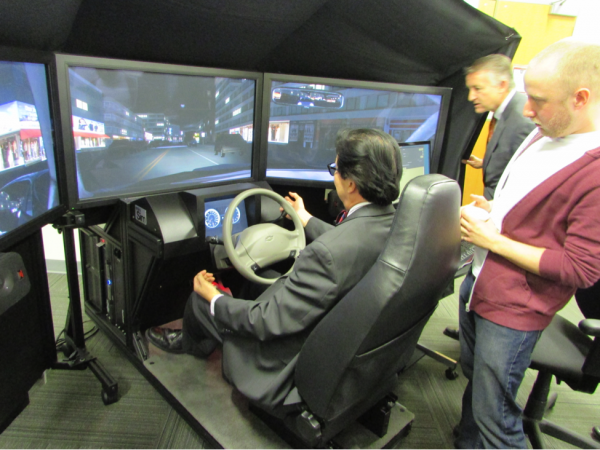
Professor Chris Lee is a faculty member in the Department of Transportation Science and Engineering at the University of Windsor's Faculty of Engineering. His research focuses on advancing transportation safety through the analysis of driver behavior, traffic flow dynamics, and the integration of emerging technologies like autonomous vehicles and machine learning. Key areas include collision risk prediction, driver vigilance assessment, and the development of advanced car-following models. He has contributed to initiatives such as the Transportation Science and Engineering scholarship program, supporting student research in innovative technologies like driving simulators for lane change behavior studies. His work bridges engineering and human factors, addressing challenges such as driver response to autonomous systems, heavy vehicle traffic management, and cross-cultural automotive design. Lee's interdisciplinary approach leverages data analytics, physiological signals, and machine learning to solve real-world transportation problems. His research has implications for policy-making, infrastructure design, and vehicle safety standards. Lee has collaborated extensively on projects analyzing crash precursors, variable speed limits, and the impact of ITS (Intelligent Transportation Systems) on safety. His publications span over two decades, demonstrating a commitment to both academic rigor and practical applications in transportation engineering. Notable contributions include refining car-following models, studying driver aggression, and evaluating the effectiveness of traffic management strategies.
Dr. James F. O'Brien is a Professor of Computer Science at the University of California, Berkeley, affiliated with research centers including the Berkeley Artificial Intelligence Research Lab (BAIR) and the Visual Computing Lab (VCL). His research focuses on computer graphics, animation, physical simulation, and image forensics, with applications in film, gaming, and virtual reality. O'Brien pioneered destruction modeling techniques used in over 200 films and games, earning an Academy Award in 2015. He holds leadership roles in tech companies like Juice Labs and Get Klothed, and has advised on patent litigation cases. Education: PhD in Computer Science (Georgia Tech, 2000), MS (Georgia Tech, 1997), BS (Florida International University, 1992). Research Interests: Computer Animation & Simulation Image/Video Forensics Human Perception of Motion VR/AR Privacy & Motion Data Machine Learning Applications Awards: Recipient of the 2015 Academy Award for Technical Achievement, ACM Distinguished Scientist (2009), and MIT TR-35 Innovator (2004). His work spans over 50,000+ VR user studies and groundbreaking contributions to cloth simulation and destruction modeling. Current Projects: Exploring ethical implications of extended reality (XR) motion data, developing privacy-preserving VR systems, and advancing AI-driven animation techniques.
Prof. Katarzyna Piwowar-Sulej is a Professor of Economics in Management and Quality Sciences at Wrocław University of Economics, holding a position in the Department of Labor, Capital and Innovation. She actively contributes to academic governance as a member of the Doctoral School Council and various strategic committees. Her research focuses on sustainable human resource management, leadership, and project management, with a strong emphasis on integrating sustainability into organizational practices. Expertise: Sustainable HR Development, Green HRM, Organizational Innovation Leadership Roles: Director of 'Psychology in Management' postgraduate studies Her academic contributions span over 200 publications in top journals such as Human Resource Management and Journal of Business Ethics . She has secured EU grants and led projects addressing HR challenges in Industry 5.0 and digitalization. Notable achievements include recognition in the World's TOP 2% Scientists 2023 and second place in the 2025 Science Personality of the Year award. Awards: Medal of the National Education Commission, Emerald's Outstanding Paper Award Research trends in her work highlight the intersection of leadership, sustainability, and innovation. Recent studies explore sustainability-focused leadership, green behaviors in SMEs, and neurodiversity management. She bridges academic and business worlds through HR consulting and project management expertise in sectors like finance and manufacturing. Key Projects: Digital HR process optimization, compensation system design, post-merger integration Her teaching legacy includes pioneering postgraduate programs for business trainers and integrating design thinking into academic curricula. She advocates for sustainable HR practices, emphasizing employee development and environmental responsibility.
Jeffrey R. Gruen is Professor of Pediatrics (Neonatology) and of Genetics at Yale School of Medicine, and a faculty member in the Investigative Medicine Program at Yale Graduate School of Arts and Sciences. His research is affiliated with multiple centers including the Yale Center for Genomic Health, Wu Tsai Institute, and the Yale Child Health Research Center. Professor of Pediatrics (Neonatology), Yale School of Medicine Professor of Genetics, Yale School of Medicine Member, Investigative Medicine Program, Yale Graduate School Principal Investigator, Gruen Lab Education: MD, Tulane University, 1981 BS in Chemistry, Tulane University, 1977 Residency in Pediatrics, Yale-New Haven Hospital, 1984 Internship in Pediatrics, Yale-New Haven Hospital, 1982 Dr. Gruen's research centers on the genetic and molecular basis of dyslexia and language impairments. His lab pioneered the mapping of the DYX2 locus on chromosome 6 and discovered the DCDC2 gene, a major contributor to reading disability. His team identified READ1, a transcriptional control element that modulates risk for dyslexia, and demonstrated synergistic interactions between genetic variants in DCDC2 and KIAA0319 . His work integrates human genetics, molecular biology, and neuroimaging to understand the biological mechanisms underlying learning disabilities. He leads the Yale Genes, Reading and Dyslexia (GRaD) Study and the New Haven Lexinome Project, aiming to enable early diagnosis and personalized educational interventions. The recent publications reflect a strong trend in integrating genetic data with cognitive, behavioral, and educational assessments. Key themes include genome-wide association studies of dyslexia, gene-environment interactions (particularly involving phonological awareness and home environment), phenotype harmonization across cohorts, and the application of genetic findings to educational policy and practice. Imaging genetics and the study of comorbid conditions like Sluggish Cognitive Tempo are also prominent. Scientific Awards: Innovative Research Award, Kavli Institute, 2022 Dr. Gruen has served as Principal Investigator on numerous NIH-funded studies, including the GRaD Study, the Pediatric Imaging NeuroGenetics (PING) Study at Yale, and the New Haven Lexinome Project. He mentors a broad network of collaborators across institutions such as the University of Colorado, University of Bristol, and Johns Hopkins. His lab trains researchers in human genetics, molecular techniques, and cognitive phenotyping. He leads the Gruen Lab, which focuses on human genetic studies, molecular genetic mechanisms, imaging genetics, and longitudinal intervention studies. The lab collaborates extensively with national and international research centers and utilizes advanced techniques including GWAS, sequencing, chromatin immunoprecipitation, and MRI-based phenotyping.
Eirin Olaussen Ryeng is a Professor at the Department of Civil and Environmental Engineering, Norwegian University of Science and Technology (NTNU). Her work focuses on transportation engineering, road safety, and human behavior in urban and rural mobility contexts. Key research themes: winter road conditions, autonomous vehicles, cyclist/pedestrian safety, route familiarity, and sustainable transport infrastructure Active in transnational studies and multidisciplinary collaborations Recent publications analyze pedestrian gait in winter, cargo bike efficiency, driver risk perception, and geometric road design impacts. She employs advanced methodologies like sensor technology, survey analysis, and crash-based modeling. Teaching includes courses on road engineering, traffic safety, and transport infrastructure. She has presented at major European Transport Conferences and Nordic Traffic Safety Academy seminars.
Kentaro Inui is a distinguished researcher at Tohoku University , specializing in Natural Language Processing , Computational Linguistics , and Machine Learning . His work focuses on advancing language model behavior through rigorous empirical analysis, including mechanisms for detokenization , entity identification , and numerical reasoning . Inui has pioneered methods to rectify spurious beliefs in LLMs via unlearning techniques and explored the dynamics of reasoning strategies in neural models. His research addresses chat translation quality through metrics like MQM-Chat and investigates repetition neurons responsible for text generation patterns. Inui also contributes to argumentation analysis with annotation frameworks like LPAttack and develops resources such as COPA-SSE for commonsense reasoning. His work on universal graph-based relation extraction and cross-stitching architectures has established new benchmarks in NLP task performance. Inui's publications span top-tier conferences including ACL , EMNLP , and LREC , often involving collaborations with researchers like Benjamin Heinzerling and Jun Suzuki. His methodological innovations in semi-structured explanation generation , position embedding (e.g., SHAPE), and zero pronoun resolution demonstrate his focus on both theoretical and practical NLP challenges. While no direct awards or student mentorship data appear in the provided corpus, his extensive publication record (over 20 papers between 2021-2025) underscores significant contributions to NLP education tools , knowledge base integration , and dialogue system consistency . Current projects like ReCall mechanisms and numerical property encoding directions highlight his ongoing impact on model interpretability and reasoning accuracy.
Daphna Motro is an Associate Professor in the Department of Management and Entrepreneurship at Hofstra University's School of Business. She holds a PhD in Management & Organizations from the University of Arizona and a BA in Cognitive Science with highest distinction from the University of Virginia. Her academic work bridges behavioral science, organizational behavior, and ethics. PhD, Management & Organizations – University of Arizona BA, Cognitive Science (Highest Distinction) – University of Virginia Dr. Motro’s research centers on emotions in organizational contexts, particularly how emotional experiences and expressions affect motivation, leadership, ethical behavior, and performance evaluations. She investigates how demographic factors such as gender and race shape emotional dynamics in the workplace. Her methodological approach incorporates modern technologies like eye-tracking and facial recognition software to capture subtle emotional responses. Her recent publications span top journals including the Journal of Applied Psychology , Journal of Business Ethics , and Journal of Experimental Social Psychology . The themes across her work reveal a strong focus on behavioral ethics, emotional regulation, bias in evaluation, and affective influences on decision-making. Her research has been featured in high-impact outlets such as Harvard Business Review and MIT Sloan Management Review , indicating broad relevance beyond academia. Dr. Motro teaches graduate and undergraduate courses such as Organizational Behavior and Compliance, Ethics, and Sustainability. She emphasizes interactive, research-informed pedagogy to engage students in contemporary organizational challenges. While no specific scientific awards or student advisees are listed in the profile, her publication record and media presence reflect a growing influence in the field of organizational behavior and behavioral ethics. She is actively involved in research and teaching, with no indication of retirement or emeritus status. Her office is located in Leo A. Guthart Hall, and she can be contacted via the university’s email system.
Sean Robson is a Professor of Policy Analysis at the RAND School of Public Policy and a Senior Behavioral/Social Scientist at the RAND Corporation. He serves as Associate Director of the Workforce, Development, and Health Program within RAND Project AIR FORCE, where he leads research on manpower, personnel, training, and readiness issues for the U.S. military. Robson holds a Ph.D. in industrial-organizational psychology from the University of Tulsa and a B.S. from James Madison University. His research expertise lies in the scientific validation of assessment and selection systems, physical and psychological fitness standards, and workforce development in military contexts. His research interests span military education and training, operational readiness, gender integration in the military, workforce diversity, enlisted personnel management, leadership, and competency modeling. He has led numerous projects to establish evidence-based physical fitness tests for Air Force Special Warfare and combat specialties in the Army, and has contributed to reforms in recruiting, classification, and resilience programs. Recent publications highlight a strong trend in applying data science, machine learning, and policy analysis to improve human resource management in the Air Force and Department of Defense. His work increasingly integrates artificial intelligence and optimization models to modernize workforce systems, while maintaining a core focus on human performance, resilience, and readiness. Assessment and selection for special operations Physical and behavioral fitness standards Military workforce development Machine learning in HR STEM talent in defense Robson has made significant contributions through RAND’s research portfolio, with over 37 research publications and multiple expert insights. His scientific work informs high-level defense policy and operational practices, particularly in the U.S. Air Force and Army. He has also advised on diversity initiatives, abuse prevention in training, and energy-sector workforce development. He is actively involved in current defense research, with recent and forthcoming publications in 2024 and 2025, indicating ongoing leadership and scholarly impact. He is based at RAND and can be contacted at Sean_Robson@rand.org.
Professor Helena Cooper-Thomas is a faculty member at Auckland University of Technology (AUT), holding the position of Professor of Organizational Behavior in the AUT Business School. She also holds honorary positions at the University of Auckland and the University of Waikato, reflecting her broad academic influence in Aotearoa New Zealand. Her research and teaching focus on organizational behavior, with an emphasis on employee development and workplace relationships. Her research interests include: New employee adjustment and organizational socialization Proactive behavior and work engagement Workplace wellbeing and quality of working life Workplace friendships and person-organisation fit Quantitative and qualitative research methods Professor Cooper-Thomas's recent publications explore themes such as workplace gossip, psychological contracts, job crafting, and sustainability in organizations. Her work often investigates the social dynamics of onboarding, the role of leadership in psychological safety, and the impact of environmental practices on employee wellbeing. She employs both empirical and methodological approaches, contributing to both theoretical and practical understanding in organizational psychology. She has received scientific recognition including: Best Paper Award, Group & Organization Management (2024) Best Paper selected by the Careers Division of the Academy of Management (2023) Professor Cooper-Thomas is actively involved in mentoring and supervising graduate students at both Master’s and PhD levels, with recent projects covering topics such as broken psychological contracts, psychological safety for racial minorities, and menopause in the workplace. She contributes significantly to academic service as a Representative-at-Large for the Academy of Management’s Organizational Behavior Division (2022–2025) and as a member of the Royal Society Te Apārangi Marsden Panel for Economics and Human Behaviour (2022–2024). She also serves on editorial boards for the Journal of Business and Psychology and Journal of Managerial Psychology, and regularly reviews for top journals and grant agencies. Her outreach includes public engagement through articles in The Conversation and NZ Management magazine, translating research into practical leadership insights. She has collaborated with institutions across Europe, North America, and Asia, and has been a visiting scholar at the University of Toronto, Cass Business School, Tilburg University, and Exeter Business School. She co-organizes the annual Aotearoa New Zealand Organisational Psychology and Organisational Behaviour Conference, fostering scholarly exchange nationally.
Olenka Kacperczyk is a Professor of Strategy and Entrepreneurship at London Business School. She earned her PhD from the Ross School of Business at the University of Michigan and previously held a faculty position at MIT's Sloan School of Management. PhD - Ross School of Business, University of Michigan BA - Mount Holyoke College Her research focuses on entrepreneurship, particularly examining inequality in startup ecosystems, labor market dynamics, and institutional impacts on innovation. Key themes include gender disparities in entrepreneurial funding, the role of institutional protections for minority employees, and the paradoxical effects of corporate social responsibility on firm value. Recent publications highlight her work on gender homophily in venture hiring, wage dispersion mechanisms, and the racial entrepreneurship gap. Her articles span journals like Strategic Management Journal , Organization Science , and Administrative Science Quarterly . Kauffman Junior Faculty Scholarship for Entrepreneurship Research William F. Glueck Award at the Academy of Management Olenka serves as Associate Editor for Management Science , Organization Science , and Administrative Science Quarterly . She has also held editorial roles at Strategic Management Journal and Management Science . Her teaching portfolio includes entrepreneurship strategy and strategic management courses.
Julien Cloarec is a Full Professor of Quantitative Marketing at iaelyon School of Management, Université Jean Moulin Lyon 3, where he also serves as Vice-President for Digital Strategy and Artificial Intelligence. He is an internationally recognized expert in artificial intelligence, with a focus on responsible AI development that balances innovation with privacy protection. His research interests center on Artificial Intelligence , Privacy in AI , Consumer Behavior , and Digital Marketing . He investigates how users perceive and adopt AI technologies, particularly in domains like autonomous vehicles, brain–machine interfaces, and eHealth, emphasizing the psychological and ethical dimensions of trust and privacy. His recent publications (2022–2025) reflect a strong thematic focus on the personalization-privacy paradox , algorithmic aversion , and transparency in AI systems . These works appear in leading journals across marketing, technology, and transportation research, demonstrating interdisciplinary impact. Scientific Awards: Prix AFM - Association Française du Marketing pour la meilleure communication (2022) Julien Cloarec actively collaborates with regulatory bodies, professional associations, and academic institutions to influence public policy and promote responsible AI. He leads research at the Magellan Laboratory @iaelyon and manages educational initiatives such as the Certificate in Artificial Intelligence for Marketing . He advises on doctoral research and has contributed to publications on the doctoral experience in management. Laboratory Affiliation: Magellan Laboratory @iaelyon - Research in Organizational Management
Elizabeth Richey serves as a Teaching Assistant Professor in the Department of Psychology at the University of Pittsburgh's Dietrich School, where she teaches undergraduate courses including Introduction to Psychology, Cognitive Psychology, Research Methods Lab, and specialized topics in Learning and Motivation. Holding a PhD in Cognitive Psychology from the same institution, she bridges theoretical knowledge with practical educational applications through her dual roles as educator and learning sciences researcher. Education PhD in Cognitive Psychology, University of Pittsburgh Research Focus Dr. Richey's research program investigates how cognitive, metacognitive, and motivational factors influence mathematics and science learning across educational stages from middle school to college. Her work emphasizes educational technology applications, particularly digital learning games and intelligent tutoring systems, with concentrated examination of gender dynamics, self-explanation mechanisms, and belonging interventions. Through controlled laboratory experiments and classroom-based studies, she explores how technological implementations can enhance learning equity and engagement while mitigating factors like math anxiety. Publication Trends Analysis of her 2022-2025 publications reveals a cohesive research trajectory centered on game-based mathematics education, with 80% of recent work addressing gender effects in digital learning environments. Key methodological approaches include randomized controlled trials examining mindfulness interventions, latent variable modeling of student behavior, and multi-dimensional gender frameworks that move beyond binary classifications. Her findings consistently demonstrate how contextual factors—such as narrative design in learning games and AI-human collaboration models—significantly impact learning outcomes, particularly for female students in mathematics contexts.
Professor Ross Cameron is a faculty member at the School of Architecture and Landscape, University of Sheffield, specializing in Environmental Horticulture . His research focuses on the intersection of urban green infrastructure, climate change adaptation, and human well-being through plant selection. PhD in Horticulture BSc in Biological Sciences Research interests include: Green infrastructure for climate mitigation (city cooling, flood tolerance) Plant-ecosystem interactions (thermal insulation, biodiversity enhancement) Sustainable resource use (water, soil amendments, energy) Human-plant relationships (well-being, therapeutic landscapes) Recent publications highlight trends in: Phylogenetic approaches to urban tree survival Thermal regulation via green walls and roofs Floral color psychology and mental health Mediterranean species adaptation to urban stress Microbial implications in green infrastructure Scientific awards include: National Horticultural Fellowship (2011) DEFRA LINK project with top rating (9/10) Teaching excellence awards He leads research on plant-people dynamics, advises UK policymakers, and supervises PhD projects in urban ecosystem services. His work bridges applied horticulture with interdisciplinary collaborations across ecology, architecture, and public health.
Mario Bourgault is a Full Professor in the Department of Mathematics and Industrial Engineering at École Polytechnique de Montréal. He serves as Head of Graduate Programs in Technology Project Management and holds the Pomerleau Industrial Research Chair in Innovation and Construction Project Governance. His research excellence spans Environment, Economy, and Society, with secondary focus on Industry of the Future and Digital Society, and Sustainable Transport and Infrastructures. Department of Mathematics and Industrial Engineering, École Polytechnique de Montréal Pomerleau Industrial Research Chair in Innovation and Construction Project Governance (Chairholder) Member, The Michael D. Penner Institute on ESG issues Member, Interdisciplinary Research Center for the Operationalization of Sustainable Development (CIRODD) Member, Poly-Industries 4.0 Laboratory Member, Research Group on Globalization and Management of Technology (GMT) Member, Risk & Performance Center (CRP) Bourgault's research centers on technological projects management, construction and infrastructure, innovation management, interorganizational collaborations, and epistemology of professional practice. His work bridges industrial engineering with management science and technology, focusing on practical applications in construction innovation and sustainable development. Recent research emphasizes eco-responsible behaviors in construction, wood construction for decarbonization, and occupational safety with emerging technologies like exoskeletons. His publication trends reveal a strong trajectory toward sustainable construction practices, digital transformation in construction (Construction 4.0), project resilience frameworks, and international technology adoption challenges. He has published extensively on integrated project delivery systems, interorganizational collaboration models, and earned value management implementation. His research increasingly addresses environmental sustainability and decarbonization in the construction sector, with multiple 2024-2025 publications on wood construction and eco-responsible behaviors. Mario Bourgault has supervised an extensive number of graduate students throughout his career, including 9 completed PhD theses, 28 completed Master's theses, and currently supervising 2 PhD students, 2 Master's thesis students, and 20 professional Master's students. His teaching portfolio includes courses on technology project processes and configuration, systems engineering management, resource acquisition, integrated project management, multi-project management, major projects and consulting engineering, and international project management. He actively contributes to multiple research teams and laboratories, particularly the Poly-Industries 4.0 Laboratory where he explores digital transformation in construction, and the Risk & Performance Center where he develops project resilience frameworks. His work with the Pomerleau Industrial Research Chair focuses on innovation and governance in construction projects, addressing industry challenges like productivity improvement and housing crisis solutions through industrialization and prefabrication.