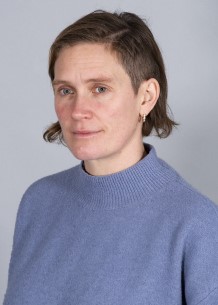
Lisa Servon is the Kevin and Erica Penn Presidential Professor at the Stuart Weitzman School of Design, University of Pennsylvania. She specializes in City & Regional Planning with a focus on urban poverty, financial justice, and economic insecurity. Currently on leave for the 2024-2025 academic year. Education: BA in Political Science (Bryn Mawr College), MA in History of Art (University of Pennsylvania), PhD in Urban Planning (UC Berkeley). Research interests include the carceral state, community engagement strategies, and financial services accessibility. She has taught courses such as CPLN 7200 (Housing & Economic Development Practicum) and CPLN 6230 (The Carceral State). Awardee of the prestigious Presidential Professorship at the University of Pennsylvania. Her work bridges urban policy, economic inequality, and systemic issues affecting marginalized communities.
Amy Foerster is a Professor and Department Co-Chairperson in the Department of Sociology and Anthropology at Dyson College of Arts and Sciences, Pace University, New York City. She is actively engaged in research, teaching, and academic leadership, with a focus on urban sociology, immigration, race and ethnicity, and popular culture. Education: PhD, Cornell University MA, Cornell University BS, University of California, Riverside Her research explores the intersections of migration, urban life, and social justice, with a comparative focus on the United States and Europe. She investigates how marginalized communities, particularly immigrants, assert their rights to the city amid increasing surveillance, criminalization, and housing insecurity. Her work critically engages with themes of sanctuary cities, mutual aid, pandemic politics, and transnational solidarity movements. The recent articles demonstrate a strong trend in urban social justice, particularly centered on housing rights, migrant mobilizations, and the impact of crises on civic inclusion. Her scholarship bridges sociology, urban studies, and human rights, often employing comparative and transnational frameworks. Scientific Awards and Honors: Fulbright U.S. Scholar Award to Belgium (2021) Visiting Research Fellow, Brussels Centre for Urban Studies (2019) Population Studies Center workshop participation, Michigan Institute for Social Research (2015) Fulbright German Studies Seminar, German Fulbright Commission (2011) Innovation in Teaching Award, Pforzheimer Center for Faculty Development (2008) Amy Foerster has been recognized for both her scholarly contributions and teaching excellence. She has received competitive research fellowships and grants that support international collaboration and fieldwork. While no formal advising list is provided, her leadership as Department Co-Chair and extensive course offerings suggest active mentorship of students. She has taught foundational and advanced courses in sociology, including Urban Sociology, Race and Ethnicity, Social Research Methods, and topics on popular culture and social change. Her research is closely tied to urban activism and civil society engagement, particularly in New York City and Brussels. She collaborates with urban studies centers and participates in international research networks such as IMISCOE and the Urban Affairs Association, reflecting a strong commitment to public sociology and community-based scholarship.
Professor Andrew Lymer holds the Chair in Taxation and Personal Finance at Aston University , where he also serves as Head of the Department of Accounting and Finance and Director of the Centre for Personal Financial Wellbeing (CPFW) . With visiting appointments at the University of South Africa and Massey University , he chairs the Tax Research Network and has led projects across 15 countries. Research Focus: Intersections of UK/international taxation policy, personal financial capability, poverty alleviation strategies, and health-finance linkages Key Collaborations: Aviva Foundation, Money and Pensions Service, Birmingham City Council, NEST Insight, CREME Recent Projects: EMPOWER (ethnic minority entrepreneurship), Real Accounts (long-term financial diaries), Harmful Gambling interventions Academic Contributions: Co-author of the UK's leading tax textbook Taxation: Policy & Practice and the 2023 Taxation and Social Policy primer. His work has influenced national policy frameworks through the UK Government's 2030 financial wellbeing strategy.
Nicole Kalms is a Professor in the Department of Design at Monash University’s Faculty of Art, Design and Architecture, where she also serves as Associate Dean of Research. She is the founding director of the XYX Lab, a pioneering research group focused on Gender and Place, leading national and international projects on gender equity in urban environments. PhD in Architecture, Monash University (2017) Masters in Landscape Architecture, RMIT University (2006) Bachelor of Architecture (Honours), RMIT University (1998) Nicole Kalms’ research lies at the intersection of urbanism, feminism, spatial practice, and media. Her work critically examines how gender, sexuality, and power shape urban spaces, advocating for design as a tool for social justice. She emphasizes interdisciplinary and co-design approaches to address systemic inequities in cities, particularly for women and marginalized communities. Her recent publications and projects reveal a strong thematic focus on gender-sensitive urban design, digital interventions for public engagement, and inclusive mobility. The 15 most recent works include books, chapters, and research outputs centered on feminist urbanism, crowd-sourced safety mapping, visual communication of gender inequality, and participatory design. These contributions reflect a consistent commitment to translating academic research into public discourse and policy impact. Dean's Award for Research Impact (2018) Premier's Design Awards Finalist – 'SHEcity' (2019) Good Design Award Gold Winner – 'Yours, Mine, Ours' (2020) AGDA Award Distinction – 'HyperSext City' (2021) Designers Australia Award Winner – 'HyperSext City' (2021) Nicole Kalms actively supervises research and leads externally funded projects such as the Safer Cities Crowd Mapping Project and PETAL: Pedalling Towards Active Living. She has secured grants from government bodies and international partners, and her work informs public policy on urban safety, transport, and inclusivity. She regularly serves on advisory boards and contributes to public discourse through media and lectures. She leads the XYX Lab, a dynamic research team dedicated to gender and place, which produces innovative design-led research, public exhibitions, and policy recommendations. The lab fosters collaboration across disciplines and with community stakeholders to co-create equitable urban futures.
Dr. Amber Dumford is a Professor at the University of South Florida in the College of Education , specializing in Higher Education and College Student Affairs . She holds a Ph.D. in Higher Education (with a cognate in Sociology) from Pennsylvania State University , a M.P.A. from Indiana University Bloomington , and a B.S. in Mathematics from the same institution. Teaches courses in Student Affairs Assessment, College Teaching, and Globalization in Higher Education Currently serves on doctoral dissertation committees Active in research on student engagement, gender issues, and data quality in higher education Reviews for 20+ peer-reviewed journals and serves on editorial boards of top journals Consultant for National Center for Educational Statistics and institutions in US/Canada Research Interests include: Factors influencing student engagement and learning Gender disparities in higher education Arts and engineering education outcomes Creativity in academic settings Quantitative reasoning and assessment Data quality in educational research Food insecurity among diverse college students Publications reflect trends in student engagement , career readiness , data-driven educational practices , and equity in higher education . Her recent works focus on socioecological factors affecting food pantry usage and validity of survey instruments in measuring student behaviors. Service Contributions : Active member of university committees and councils Board member of Research in Higher Education and Journal of College Student Development Statistical modeling consultant for National Center for Educational Statistics Teaching Experience spans traditional mathematics instruction (2002-2014) to higher education seminars and globalization studies at USF. She plans to develop data analytics and institutional research courses.
Donna J. Biederman is a Clinical Professor in the School of Nursing at Duke University, with a joint appointment as Professor in Family Medicine and Community Health since 2024. Her career bridges clinical practice, education, and research in public health nursing. Education: DrPH (2012) from University of North Carolina Greensboro, MN and BSN from University of Washington Tacoma Credentials: RN license (#216747) in North Carolina since 2007 Research focuses on social determinants of health , health disparities , and housing policy , particularly for marginalized populations like people experiencing homelessness. Her work explores: Transitional care models for homeless individuals Tenancy support services funded through Medicaid Stigma reduction in healthcare settings Medical respite programs Substance use treatment integration Health outcomes post-eviction Recent publications (2024-2025) highlight her leadership in: Smoke-free addiction treatment protocols Student-run housing initiatives like WellNest Policy analysis of Medicaid-funded housing support Qualitative studies on effective tenancy practices Major grants include: Nurse LEADS (2024-2029) - National Institute of Nursing Research NEPQR-MHTP (2022-2026) - Health Resources and Services Administration Back@Home Evaluation (2021-2023) - North Carolina Department of Health and Human Services Awards & Recognition: Multiple Outstanding Clinical Instructor Awards (Duke School of Nursing: 2013, 2014) "Extraordinary Nurse" nominee (NC Nurses Association, 2016) Nursing Distinguished Alumni Award (University of Washington Tacoma, 2015) She teaches courses addressing social drivers of health in rural and underserved communities (NURSING 540-543B) and oversees DNP projects since 2022.
Professor Ruth Patrick is a Professor of Social Policy at the University of York, currently holding a part-time role in the School for Business and Society. She joined York in 2018 and previously served as a Postdoctoral Researcher at the University of Liverpool. Her doctoral work at the University of Leeds explored the lived experiences of welfare reform. Beyond academia, she has extensive experience in practice-oriented roles, including work with Shelter and Foundation (housing support for offenders) and think tanks like the Fabian Society and IPPR. Her academic background includes a BA, MA, and PhD from Leeds. Her research focuses on bridging the gap between political narratives on poverty and the lived realities of those relying on social security. Key areas include welfare conditionality, participatory methodologies, and the impact of austerity policies on larger families. She leads major projects like Covid Realities and its successor Changing Realities , which engage low-income families in participatory research to drive policy change. Another project, largerfamilies.study , investigates the effects of the two-child limit and benefit cap. Publications highlight her critical analysis of welfare systems, devolution, and family policies. Recent works emphasize participatory research’s role in policy advocacy, particularly during the cost-of-living crisis. She advocates for inclusive policy-making that prioritizes lived experiences. Professor Patrick combines academic leadership with grants from ESRC and the British Academy. She supervises PhD students in areas like poverty representations, co-produced methodologies, and social citizenship. She serves on Oxfam’s UK Poverty Policy Advisory Group and editorial boards of prominent journals. Her collaborative work includes partnerships with groups such as the Dole Animators and ATD Fourth World, emphasizing participatory solutions to poverty. She actively contributes to public discourse through media articles and blogs, challenging stigmatizing narratives and advocating for systemic reforms.
Dr. Matthew Hickey is an Assistant Professor of Medicine in the Division of HIV, ID, & Global Medicine at the University of California, San Francisco (UCSF) School of Medicine. He serves as a primary care physician and research lead for the POP-UP clinic, a low-barrier HIV care program for people experiencing homelessness in San Francisco. Dr. Hickey also holds editorial positions as Implementation Science Section Editor for Current HIV/AIDS Reports and Associate Editor for Implementation Science Communications. Dr. Hickey's educational background includes: Master of Advanced Studies (MAS) in Clinical Research, Implementation Science from UCSF (2024) Fellowship in HIV Medicine from UCSF (2022) Chief Residency in Internal Medicine from UCSF (2019) Residency in Internal Medicine, San Francisco General Primary Care Track from UCSF (2018) MD from UCSF (2015) BS in Biochemistry from Texas A&M University (2009) Dr. Hickey's research focuses on implementation strategies to improve delivery of hypertension and cardiovascular disease prevention in rural East Africa, and on developing low-barrier models of HIV care for people experiencing homelessness in urban U.S. settings. His work spans implementation science, HIV care, hypertension management, and community health worker programs. He examines differentiated service delivery models for patients with barriers to usual care engagement, particularly those experiencing homelessness or living in resource-limited settings. His research integrates clinical care with innovative implementation approaches to address health disparities in both domestic and global contexts. Dr. Hickey's recent publications demonstrate a strong focus on implementation science approaches to address HIV care and comorbid conditions. His work spans both domestic settings (particularly San Francisco) and international contexts (Kenya and Uganda). A significant theme across his publications is the development and evaluation of innovative care models for vulnerable populations, including people experiencing homelessness and those in resource-limited settings. His research frequently examines the integration of services (particularly HIV and hypertension care), the use of community health workers, and novel approaches to medication delivery including long-acting injectables and polypills. Dr. Hickey has received numerous awards and honors: Alpha Omega Alpha Honor Medical Society (2014) UCSF Deans Prize for Outstanding Medical Student Research & Scholarship (2015) NIH LRP Award from the National Institute of Allergy & Infectious Disease (2020) CROI Young Investigator Award (2020) Early Career Award for Excellence in Clinical Research from UCSF-Gladstone Center for AIDS Research (2021) Clinical Fellowship Program award from the AIDS Research Institute (2021) CROI Young Investigator Award (2022) Dr. Hickey is actively involved in research funding and mentorship. He serves as Principal Investigator on multiple grants including an NIH K23 award focused on hypertension treatment in Kenya, a Benioff Homelessness and Housing Initiative grant developing mobile outreach for people experiencing homelessness who have fallen out of HIV care, and NIH-funded research on weight gain and metabolic effects following antiretroviral therapy changes in Western Kenya. He is available to mentor UCSF students, residents, and fellows on research projects and is affiliated with the UCSF Institute for Global Health Sciences. His work with the POP-UP clinic represents a significant contribution to low-barrier HIV care models for vulnerable populations. Dr. Hickey's research is closely tied to the POP-UP clinic program in San Francisco and various research initiatives in Kenya and Uganda. His work with community health workers in East Africa represents a significant team-based approach to addressing hypertension and HIV care in resource-limited settings. These international collaborations involve multiple institutions in Kenya and Uganda, creating a robust research network focused on implementation science in global health contexts.
Anna Angelin is an Associate Professor and Senior Lecturer at Lund University's School of Social Work, specializing in social vulnerability and inequality. With over 20 years of experience at the university, she has established herself as a leading researcher in poverty studies, social policy, and welfare systems. Her current research focuses on activation programs for the unemployed, food poverty, and social exclusion. Her research interests span multiple dimensions of poverty and social exclusion, with particular emphasis on food poverty, welfare benefit recipients, and activation policies. She has developed innovative approaches to studying how civil society organizations distribute food aid to economically vulnerable citizens and examines how employers perceive and interact with welfare clients. Her work bridges academic research with practical policy implementation through her leadership of AKTIV, a collaboration network for researchers focusing on activation and social welfare. Analysis of her recent publications reveals a clear trend toward examining food poverty systems and the changing role of civil society in welfare provision. Her work increasingly focuses on comparative international studies, particularly examining Swedish and Australian approaches to welfare clients and employer attitudes. She has also expanded her research to include climate crisis intersections with food poverty and distribution systems. Anna Angelin actively supervises multiple PhD students working on poverty-related topics, including Elinn Leo Sandberg (food aid from civil society), Ana Karina Pastrana Polo (food poverty among youths), and Amanda Börjeson-Hedman (labor market activation related to housing and homelessness). She has received significant research funding, including an EU FP7 grant for the COPE project and World Bank commissions. She leads the AKTIV collaboration network and has established strong connections between academic research and practical welfare implementation. Her work with civil society organizations, including Save the Children and Majblomman foundation, demonstrates her commitment to translating research into practical social interventions.
Maxim Bolt is an Associate Professor of Development Studies at the University of Oxford's Department of International Development (ODID). He also holds positions as a Research Associate at the Wits Institute of Social and Economic Research, University of the Witwatersrand, and a Senior Honorary Research Fellow in the Department of African Studies and Anthropology at the University of Birmingham. Previously, he worked at the University of Birmingham and the British Museum, where he conducted fieldwork for the 'Money in Africa' project. Bolt's research focuses on economic anthropology in southern Africa, particularly examining labor, migration, borders, money, property inheritance, class, and the state. His early work investigated South Africa's border with Zimbabwe, focusing on commercial agriculture, black workforces, and white landowners during Zimbabwe's economic and political crisis. His current research explores property inheritance, state institutions, and class reproduction in Johannesburg, analyzing how inheritance processes connect to kinship, property, and legal systems in post-apartheid South Africa. Bolt's publication record reveals a consistent focus on economic anthropology with growing emphasis on legal anthropology and urban studies. His earlier works centered on border studies, farm labor, and migration patterns, while recent publications increasingly address property law, inheritance systems, and urban governance in South Africa. His research shows a clear trajectory from examining labor relations in rural border contexts to analyzing how legal frameworks shape urban property relations and class formation. Scientific Awards Recipient of the 2016 British Sociological Association / BBC Thinking Allowed Ethnography Award for 'Zimbabwe's Migrants and South Africa's Border Farms: The Roots of Impermanence' Shortlisted for the 2016 Herskovits Prize (African Studies Association, USA) Shortlisted for the 2016 biennial Fage and Oliver Prize (African Studies Association of the UK) Delivered the prestigious Malinowski Memorial Lecture in 2018 Bolt serves as a doctoral supervisor for DPhil projects taking ethnographic approaches to economic life, state institutions, and formal/informal institutions, primarily focused on African contexts. His research has been funded by the Economic and Social Research Council of the UK. He has previously held editorial positions as Editor of AFRICA: Journal of the International African Institute and the Journal of Southern African Studies , and currently serves on the editorial boards of these journals plus African Studies Review . Bolt's scholarly work demonstrates strong institutional connections across British and South African academic networks, with particular emphasis on how legal frameworks intersect with everyday economic practices in urban South Africa, especially regarding property inheritance and class reproduction in the post-apartheid context.
Dr. Margaret Reynolds serves as a Senior Research Fellow at Swinburne University of Technology's School of Social Sciences, Media, Film and Education. With ORCID identifier 0000-0003-2988-4279, she maintains an active research profile focused on critical housing issues affecting Australian communities, particularly older populations. Her work bridges academic research with practical policy applications through collaborations with government bodies and non-profit organizations. Reynolds' research interests center on urban and regional planning , housing policy , and human geography , with specific expertise in older people's housing security, homelessness dynamics, and sustainable urban development. Her work examines how housing precariousness affects vulnerable populations, particularly aging Australians navigating complex eligibility gaps in housing assistance programs. Through rigorous spatial analysis and longitudinal studies, she investigates the changing geography of homelessness and the structural drivers behind housing insecurity across Australian states and territories. Her recent publications reveal a strong focus on state-by-state analyses of older people's housing precariousness , examining regional variations in housing challenges from Queensland to Tasmania. Reynolds' work consistently connects housing issues with broader sustainable development goals, particularly SDG 11 (Sustainable Cities and Communities). Her research employs mixed methods including spatial analysis, policy evaluation, and demographic studies to understand housing market dynamics and their social impacts. Reynolds actively secures competitive research funding, currently leading multiple projects including Measuring Climate Change Vulnerability in Australia's Housing System (2025-2027) and Housing futures: ideal models for private rental systems beyond 2025 (2025-2026). Her grant portfolio demonstrates sustained funding from the Australian Housing and Urban Research Institute and Housing for the Aged Action Group, reflecting the policy relevance of her work. Though currently unavailable for supervision, her collaborative approach is evident through numerous co-authored publications with researchers like Wendy Stone, Phillipa Veeroja, and Shaun Parkinson.
Charles Furlotte is an Assistant Professor in the School of Social Work at St. Thomas University, where he has taught since 2019. Originally from Bathurst, New Brunswick, he is a registered social worker (RSW) in both Ontario (since 2009) and New Brunswick (since 2018), with over a decade of clinical experience in healthcare settings. He is currently completing his PhD in Social Work at McMaster University while maintaining his academic position. Dr. Furlotte earned his Bachelor of Arts (Honours Psychology and English Literature) from Mount Allison University in 2006 and his Master of Social Work from Carleton University in 2009. Prior to joining St. Thomas University, he taught at Carleton's School of Social Work and McMaster University's Department of Health, Aging and Society, and served as a Social Worker with a focus on mental health and psychotherapy. He also held an Assistant Clinical Professor (Adjunct) position at McMaster's Department of Family Medicine. His research focuses on critical approaches to the social study of aging, particularly examining the experiences of lesbian, gay, bisexual, and transgender (LGBT) people aging with HIV and other complex chronic health conditions. His work explores aging-related services for older LGBT individuals, mindfulness applications in social justice approaches to social work practice, and resilience strategies among long-term HIV survivors. His research employs qualitative methodologies, often using community-based participatory approaches. An analysis of his recent publications reveals consistent themes across gerontology, HIV research, and social work practice, with particular emphasis on successful aging frameworks from the perspective of HIV-positive older adults. His research demonstrates strong methodological rigor using qualitative approaches, particularly modified grounded theory and narrative analysis, to explore the lived experiences of vulnerable aging populations. Professor Furlotte has taught across multiple levels of social work education, including Post-degree BSW courses (Theory for Social Work Practice II, Generalist Social Work Practice Skills, Field Instruction), 4-Year BSW courses (Social Work Practice and Human Development, Field Instruction I), and MSW courses (Social Work in Health Care, Research and Evaluation, Advanced Placement). His teaching integrates his clinical expertise with his research interests in aging, HIV, and mindfulness-based interventions. His professional activities extend to community engagement, having presented at numerous forums including The AIDS Network, Hamilton; The AIDS Committee of Toronto; and various academic conferences on HIV and aging. He has contributed to environmental scans of HIV and aging services in Canada and participated in national initiatives addressing the needs of older adults living with HIV.
Constance Gordon is an Assistant Professor of Communication Studies at San Francisco State University (SFSU), affiliated with the College of Liberal and Creative Arts. She serves as core faculty and advisor in Climate HQ, supporting the Climate Change Certificate Program and Climate Justice Leaders Initiative. As Art Director of Cultural Studies and Editorial Board member for Environmental Communication, her interdisciplinary work bridges communication studies with environmental and food justice movements. Her research focuses on intersectional critiques of land, labor, and housing dispossession through mutual aid networks and power mapping. Gordon holds a Ph.D. and M.A. in Communication (Rhetoric & Culture) from the University of Colorado Boulder, with certificates in Development Studies and Comparative Ethnic Studies, alongside a B.A. in International Relations from SFSU. Her research explores creative public pedagogy in organizing spaces, published in journals like Environmental Communication, Cultural Studies, and the Quarterly Journal of Speech. She co-authored the 2024 textbook Rhetorical Histories of Social Movements in the U.S. . Teaching includes courses on environmental justice, critical organizational communication, and climate leadership practicums. Gordon actively participates in the California Faculty Association and advocates for equitable food systems through collaborative research projects. Her work emphasizes transdisciplinary approaches to climate justice, integrating grassroots organizing strategies with academic scholarship. Recent publications analyze abolition ecology, mutual aid networks, and food systems governance, reflecting her commitment to praxis-oriented research addressing systemic inequities. Gordon’s academic service includes editorial roles and graduate mentorship, reinforcing her role as a thought leader in environmental communication studies.
Dr. Sharrelle Barber is an Associate Professor of Epidemiology at Drexel University's Dornsife School of Public Health and Director of the Ubuntu Center on Racism, Global Movements, and Population Health Equity. Her research focuses on structural racism's impact on Black communities' health in the U.S. and Brazil, emphasizing how systemic inequities are embedded in urban environments. She holds a ScD from Harvard T.H. Chan School of Public Health and an MPH from UNC-Chapel Hill. Affiliations: Ubuntu Center, Dornsife School of Public Health Key Roles: Principal Investigator (JHS Neighborhood Change Study), Co-Investigator (PAN-DIASPORA) Expertise: Racial health inequities, spatial analysis, transnational health disparities Her work bridges academia and activism, including advising the Poor People’s Campaign during the pandemic and contributing to Lancet antiracism initiatives. Recent publications address historical redlining's health impacts, income segregation in Brazilian cities, and spatial inequities in pandemic response. Awards: 2023 Sherman A. James Award, Diverse Emerging Scholar Grants: NIH-funded Jackson Heart Study research Labs/Teams: Leads Ubuntu Center collaborations across Brazil, Colombia, Canada, and the U.S., emphasizing evidence-based antiracism solutions.
Professor KK Tang is a faculty member in the School of Economics at The University of Queensland (UQ), holding the rank of Professor. His research focuses on Health Economics, Development Economics, and International Economics, with an emphasis on mental health, health inequality, income insecurity, and trade liberalization. He holds a PhD from the Australian National University, complemented by prior degrees including a Bachelor (Honours) of Science (Advanced) from the University of Hong Kong. His research projects include studies on inequality of opportunity in Australia, the use of public hospitals by private patients, and lifelong education’s impact on health and policy. He has authored over 60 journal articles, contributing to leading journals such as Economics and Human Biology and Journal of Economic Behavior & Organization . Professor Tang is available for student supervision and actively engages in collaborative research initiatives. His work frequently intersects with policy analysis, addressing issues like housing insecurity, financial hardship, and global economic dynamics. He has contributed to interdisciplinary studies on topics ranging from university rankings to supercomputing impacts on high-tech industries.