- Microbial Ecology
- Genetics
- Evolutionary Biology
- +۳ مورد دیگر
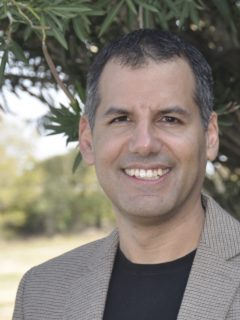
Richard Lenski is a University Distinguished Professor in the Department of Plant, Soil and Microbial Sciences at Michigan State University (MSU), within the College of Agriculture & Natural Resources. His work spans multiple departments at MSU, reflecting his interdisciplinary contributions to evolutionary biology. Dr. Lenski holds a Ph.D. in Microbiology from the University of North Carolina at Chapel Hill and an A.B. in Biology from Oberlin College. His research focuses on microbial ecology, genetics, and evolution, particularly examining the genetic mechanisms and ecological processes driving evolutionary change. Key areas include the evolution of pathogen virulence, coevolution of bacteria and viruses, and experiments with digital organisms to study evolutionary dynamics. He is renowned for his long-term E. coli evolution experiment, which has tracked populations over 75,000 generations, offering insights into adaptation, genome evolution, and the origin of new functions. Dr. Lenski’s recent work explores evolutionary risks of synthetic biology (e.g., mirror life), genomic mechanisms of antibiotic resistance, and evolutionary dynamics in microbial coexistence. These studies underscore his integration of experimental and computational approaches. Friend of Darwin Award (2017) Member of the US National Academy of Sciences Fellow of the American Academy of Microbiology Fellow of the American Academy of Arts and Sciences Fellow of the American Philosophical Society He has mentored many graduate students and postdoctoral researchers, many of whom are now faculty globally. As co-founder of the NSF-funded BEACON Center, he fostered collaborations between biologists, computer scientists, engineers, and philosophers to advance evolutionary research. His lab, the Lenski Lab, is part of MSU’s PSM department and BEACON Center. The lab specializes in long-term experimental evolution, coevolution studies, and digital organism simulations to dissect evolutionary principles.