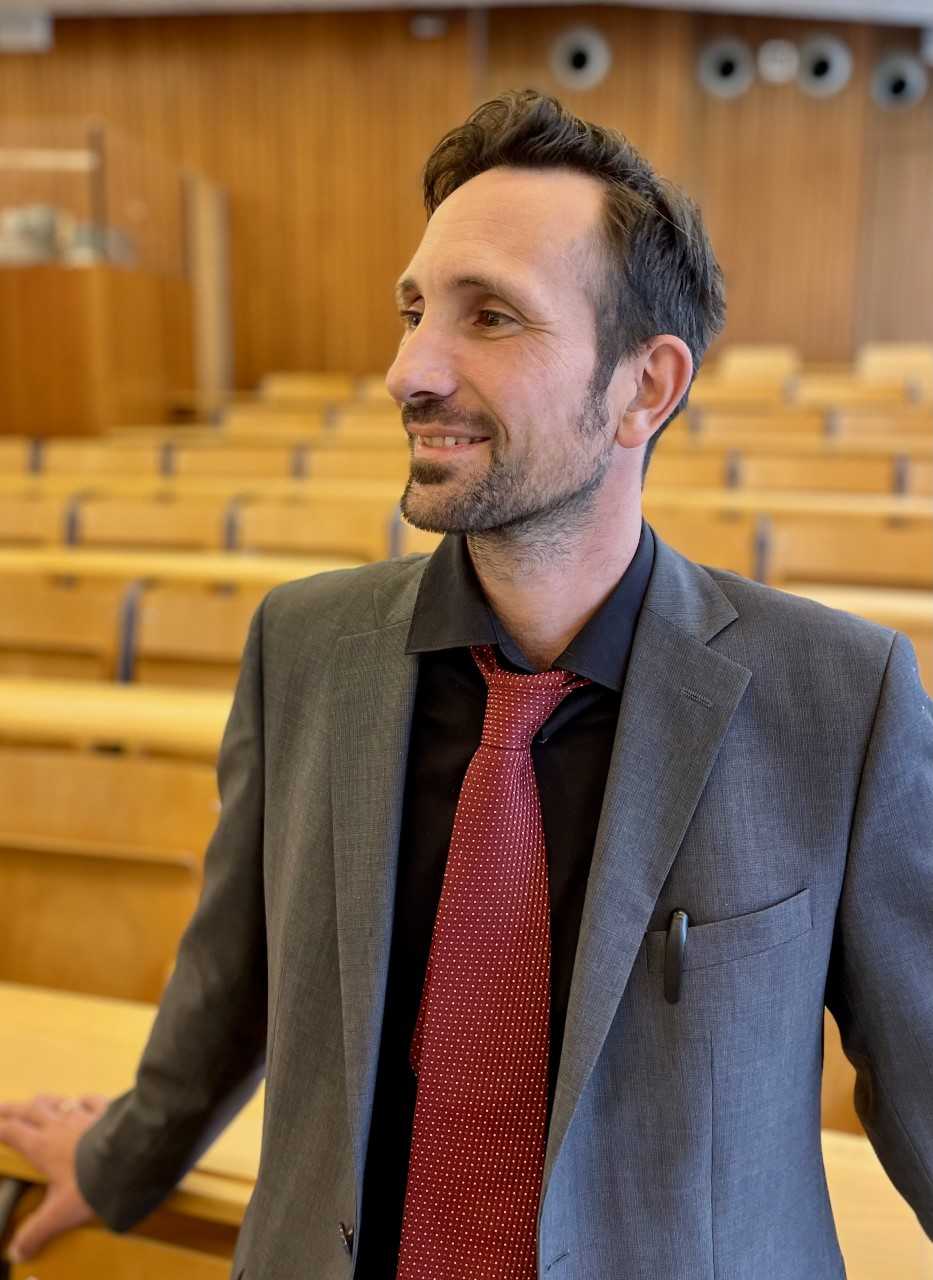
Konstantin Voigt, Professor of Musicology II , serves at the University of Würzburg within the Faculty of Philosophy and Institute of Music Research. His research spans medieval Latin song traditions, music theory, notation systems, and digital humanities applications. He also explores 20th-century composers like Arnold Schoenberg and the reception of medieval music in popular culture. Current: Chair of Musicology II, University of Würzburg (2024–) Previous: Tenure-track Professor, University of Freiburg (2020–2024) Education: PhD (Würzburg), MA (Erlangen-Nürnberg), Musicology & Art History Voigt's research bridges premodern music history with digital methodologies, focusing on: Medieval Latin song structures (9th–13th centuries) Development of musical notation and visualization Digital editions as tools for manuscript analysis Intermedial relationships in postmodern composition Stefan George’s poetry in Schoenberg’s works His recent publications analyze scribal practices in Paris 1139 manuscripts and digital approaches to monophonic music. He co-leads the Weave Lead project on French music reception in Central Europe before 1350 and contributes to the Corpus monodicum digital edition. Collaborations include PD Dr. Hana Vlhova-Wörner (Prague) and institutions like the Schola Cantorum Basiliensis.
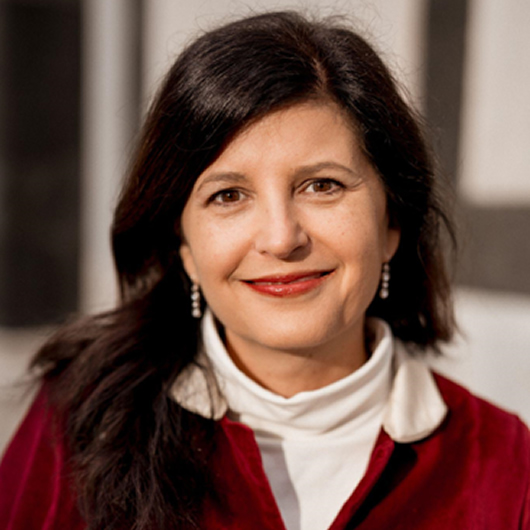
Susan Scott is an Associate Professor in the Information Systems and Innovation Group at the Department of Management of The London School of Economics and Political Science. Her research focuses on the intersection of digital innovation and organizational change, particularly examining how information systems reshape work practices and risk management in financial services, travel, and publishing sectors. Education : PhD in Management Studies (University of Cambridge, 1993-1998), MSc in Analysis, Design and Management of Information Systems (LSE, 1991-1992), BA in History and Politics (SOAS, 1987-1990) Research Interests Digital Innovation Work Practices and Organizational Structuring Organizational Technologies Strategy, Structures, and Information Infrastructures Managing Change Materiality and Practice Research Her recent publications analyze the materiality of digital systems through case studies in book publishing and travel , while historical studies trace the evolution of financial infrastructure like SWIFT . She explores how metadata, software standards, and social media reshape organizational accountability and risk practices. Scientific Awards ICIS Best Paper in Field Award (2007) Nordic Exchange Scholarship (2000-2001) ESRC PhD Scholarship (1993-1996) Best Paper Nominations (Academy of Management, ECIS, ICIS) Selected for European Research Paper of the Year (2014, 2015) Grants and Professional Roles Recipient of grants from SWIFT , British Academy , and HEFCE . She has served on editorial boards of Information and Organization and Organization Science , and co-chaired conferences like IFIP 8.2 and ICIS .
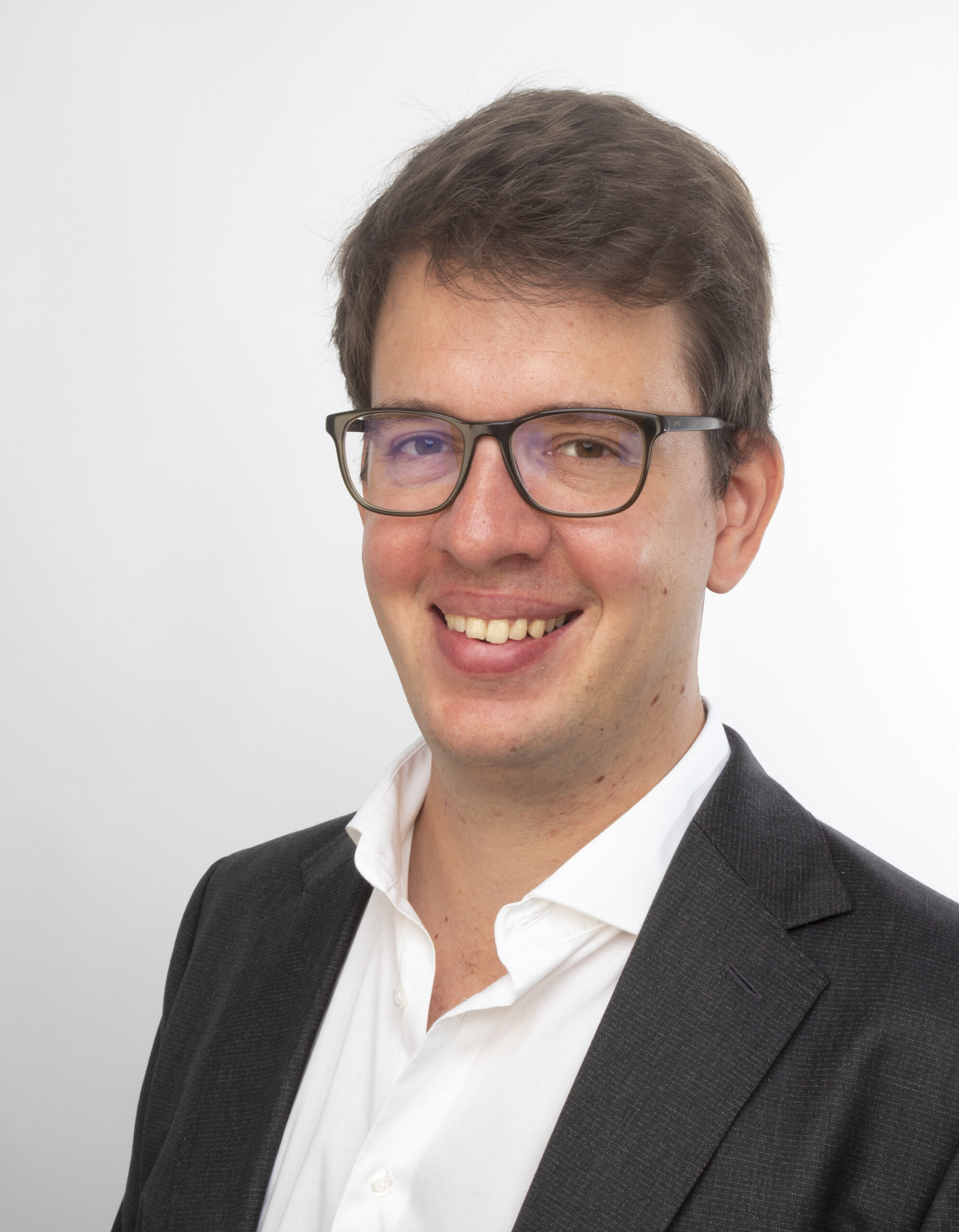
Karen Barad is Distinguished Professor of History of Consciousness at the University of California, Santa Cruz, with joint appointments in Philosophy and Feminist Studies. She holds a Ph.D. in theoretical particle physics from SUNY Stony Brook and previously held a tenured position in a physics department before transitioning to interdisciplinary work. At UCSC, she is affiliated with the Humanities Division and serves as faculty in the History of Consciousness Department and Philosophy Department. Barad earned her Ph.D. in Physics from SUNY Stony Brook, building a foundation in theoretical particle physics before moving toward more interdisciplinary work. Her unique trajectory from physics to philosophy and feminist studies has shaped her distinctive approach to questions of matter, meaning, and ethics. Barad's research spans multiple disciplines including science studies, multispecies studies, physics, nuclear studies, continental philosophy, epistemology, ontology, ethics, politics, and philosophy of physics. Her theoretical framework of "agential realism" has significantly influenced feminist theory, science studies, and philosophy. She approaches questions of matter, meaning, and ethics through the lens of quantum physics, developing concepts like intra-action, diffraction, and entanglement as philosophical tools. Her work challenges traditional boundaries between subject/object, nature/culture, and human/non-human. Her publications over the last two decades reveal a consistent engagement with the intersections of science, philosophy, and ethics, particularly focusing on how material-discursive practices shape reality. Barad's work increasingly addresses ecological concerns, nuclear legacies, and questions of justice, demonstrating how scientific concepts can inform ethical and political thought. Her writing moves fluidly between theoretical physics, feminist theory, and philosophical inquiry, creating new pathways for understanding the entanglement of matter and meaning. honorary doctorate from Gothenburg University Fulbright fellowship Kresge College Teaching Award Barad has received significant recognition for her scholarship and her research has been generously supported by major funding organizations including the National Science Foundation, the Ford Foundation, the Hughes Foundation, the Irvine Foundation, the Mellon Foundation, and the National Endowment for the Humanities. As Co-Director of the Science & Justice Graduate Training Program at UCSC, Barad has mentored numerous graduate students and shaped interdisciplinary research connecting scientific inquiry with questions of social justice. Her collaborative work with scholars like Jenny Reardon has helped establish science & justice as a vital field of inquiry. Barad's approach to mentoring emphasizes the ethical responsibilities inherent in scientific and philosophical practices. Through her leadership in the Science & Justice Research Center, which she helped found, Barad has fostered innovative collaborations across disciplines, creating spaces where scientists, humanists, and social scientists can work together on pressing contemporary issues. Her work continues to influence multiple fields, with ongoing projects exploring nuclear colonialism, ecological ethics, and the material consequences of scientific practices.
Serge Belongie is a Professor at the Department of Computer Science (DIKU) at the University of Copenhagen, where he holds dual affiliations with the Pioneer AI research section and the Image Analysis, Computational Modelling, and Geometry section. His academic position places him at the forefront of interdisciplinary research connecting computer vision with language models, geospatial analysis, and cultural understanding. Professor Belongie's research program encompasses several critical domains in modern artificial intelligence: Advanced computer vision and image analysis techniques Vision-language model integration and multimodal systems 3D point cloud processing and semantic segmentation Geospatial representation learning for environmental applications Fine-grained object recognition and detection Cultural context understanding in AI systems His recent publication record reveals a sophisticated trajectory toward developing precise control mechanisms for vision-language models, with applications spanning forensic analysis, cultural heritage preservation, and social media understanding. The research demonstrates increasing sophistication in handling cultural context and enabling fine-grained manipulation of visual content through natural language interfaces. Professor Belongie maintains an active research group producing significant scholarly output, with over 280 research publications documented in his academic profile. His work is supported by research funding that enables cutting-edge exploration in multimodal AI systems with practical societal impact. He plays a key role in the Pioneer AI center at the University of Copenhagen, which focuses on advancing artificial intelligence through interdisciplinary collaboration and innovative research approaches that bridge theoretical computer science with real-world applications.
Associate Professor Aditi Dey holds a conjoint appointment at the Sydney Medical School within the University of Sydney , and serves as Manager of Surveillance at the National Centre for Immunisation Research and Surveillance (NCIRS) . Her work focuses on immunization program evaluation, vaccine coverage analysis, and surveillance of vaccine-preventable diseases and adverse events. She has extensive experience in public health research, spanning roles in Thailand and India prior to her current positions in Australia. Dr Dey completed an MBBS, followed by postgraduate qualifications including a DTM&H (Tropical Medicine & Hygiene), Grad Dip Applied Science (Health Information Management), MPH, and a PhD from the University of Sydney. Her research integrates epidemiological analysis with public health policy implementation, particularly addressing health disparities in vaccination access and outcomes among Indigenous populations and other underserved groups. Her research interests prominently feature vaccine safety , epidemiological trends of infectious diseases, and the impact of vaccination policies such as Australia’s “No Jab, No Pay” initiative. She also investigates the effectiveness of vaccination programs for diseases like rotavirus, HPV, and varicella-zoster virus, often analyzing large-scale national health datasets. Notable contributions include evaluations of Australia’s HPV vaccination program, analysis of rotavirus vaccine efficacy, and assessments of adverse events following immunization. Her work emphasizes improving immunization coverage through better data systems and healthcare provider education, particularly for at-risk populations. Dr Dey actively contributes to public health efforts through teaching and course coordination at the University of Sydney, and collaborates with institutions like the Sydney Infectious Diseases Institute . Her expertise bridges clinical practice, research, and policy, driving evidence-based improvements in Australia’s immunization landscape.
Patrick J. Murphy is a full Professor and the Goodrich Entrepreneurship Chair at the University of Alabama at Birmingham (UAB), serving as Founding Director of the highly acclaimed Barefield Entrepreneurship Program (BEP). He holds editorial leadership roles as Editor-in-Chief of the Journal of Small Business and Enterprise Development and former Editor-in-Chief of Management Decision . Dr. Murphy’s academic journey includes a PhD in Business Administration from the University of Illinois at Chicago (2004), complemented by extensive international experience, including Mandarin fluency and prior work in Beijing. His research focuses on entrepreneurship theory, social enterprise, and historical case studies, with notable contributions like the Heptalogical Model of Entrepreneurship and analyses of Antebellum social ventures. Awards include Techstars’ 'All Star Mentor' (2024) and recognition as Illinois’ 'Entrepreneurship Professor of the Year' (2017). The BEP, under his leadership, has achieved 378% enrollment growth (2020–2024) and secured over $7M in funding. Dr. Murphy’s professional activities span academic service (e.g., Academy of Management Historian), community engagement (former Chicago Cultural Alliance Board President), and entrepreneurial ventures in racehorse breeding. His work bridges historical insights with modern challenges, emphasizing institutional forces, ethical leadership, and cross-cultural entrepreneurship.
Professor Mohamed Naim is a distinguished academic at Cardiff Business School, Cardiff University, where he holds the position of Professor in Logistics and Operations Management. He has served in several leadership roles, including former Head of the Logistics and Operations Management Section and former Deputy Dean at the Business School. He was also the founding director of the Centre for Advanced Manufacturing Systems at Cardiff (CAMSAC). He is actively engaged in high-impact research and industrial collaboration, currently leading a Knowledge Transfer Partnership (KTP) with Tower Cold Chain Solutions Ltd. and contributing to major research programs such as ASTUTE, ASTUTE2020, and AFAIR. His research interests center on the development of business systems engineering approaches to resilient supply chains, with a focus on sustainability, circularity, and flexibility in lean and agile systems. He has made significant contributions to supply chain dynamics, particularly in engineer-to-order (ETO) sectors such as construction and shipbuilding. His recent work explores digital transformation in logistics, including 5G-enabled smart ports, building information modelling (BIM), and AI-driven decision-making. The analysis of his recent publications reveals a strong trend toward interdisciplinary research, integrating operations management with healthcare (trauma systems), digital technologies, and sustainable industrial practices. His work frequently employs system dynamics, simulation, and empirical case studies to address complex supply chain challenges. Scientific Awards: Institution of Electrical Engineers' Manufacturing Division Premium (1996) Royal Academy of Engineering Global Research Award (2003) Professor Naim is actively involved in research supervision and has contributed to two Research Excellence Framework (REF2021) impact cases on innovative procurement and financially sustainable supply chains. He is a founding member of the Logistics Systems Dynamics Group (LSDG) and has led and co-directed multiple large-scale research initiatives. His work is characterized by strong industry engagement, particularly through Knowledge Transfer Partnerships and collaborations with public sector bodies like the Welsh European Funding Office (WEFO). Research Centers and Teams: Logistics and Operations Management Section, Cardiff Business School Centre for Advanced Manufacturing Systems at Cardiff (CAMSAC) Logistics Systems Dynamics Group (LSDG) ASTUTE / ASTUTE2020 / ASTUTE East programmes AFAIR project (Expert Advisor)
Théodora PSYCHOYOU is Professor at the Department of Music and Musicology of Sorbonne University and a permanent member of the Institute for Research in Musicology (IReMus – UMR 8223), which she directed from 2022 to 2024. She currently serves as Director of the Collegium Musicæ institute of the Sorbonne University alliance and is responsible for two Master's programs: Interpretation of Early Music - Baroque Music track, and the Franco-Italian Master's in Musicology Research in partnership with the University of Palermo. Her research focuses on the history and mechanisms of discourse on music in 17th and early 18th century France, the economy and status of musical and theoretical sources, and religious music in the 17th century, particularly the works of Marc-Antoine Charpentier (1643-1704). Her specialty areas include early music (Baroque), historically informed practice, history of musical theory, music and science in the 17th and 18th centuries, religious music in the modern era, study of sources, musical ecdotics, reception of antiquity and Hellenism, and the Ancients and Moderns debate. She has organized numerous research seminars and conferences on these topics, including the Hellenism seminar and the ANR Agon project. Her recent publications demonstrate a strong focus on the intersection of music with science, philosophy, and cultural history from the 17th century to contemporary times. She has made significant contributions to understanding the reception of ancient musical thought in modern contexts, the relationship between music and scientific developments, and the cultural significance of musical practices across different historical periods and geographical contexts. Her work spans historical musicology, theoretical approaches, and contemporary applications. Mention spéciale du Prix des Muses 2010 Prix des Muses 2007 dans la catégorie ouvrage collectif As an academic leader, she has directed major research initiatives including the Hellenism seminar, ANR Agon project, and Baroque XXI Praxis. She serves as Vice President of the International Musicological Society (2022-2027) and has held significant administrative roles including Director of IReMus (2022-2024) and Director of Collegium Musicæ (2023-present). Her collaborative work extends to international partnerships, particularly with Greek institutions, reflecting her interest in Hellenism and Mediterranean musical cultures. Her laboratory work focuses on critical musical editions, performance practices, history of musical theories, historiography, gender studies in music, music and religion, iconography, organology, and aesthetics. She leads research teams investigating the intersection of music with other disciplines, particularly through the Collegium Musicæ which connects music with sciences.
Professor Helen Mitchell is a multidisciplinary scholar in music performance and perception at the University of Sydney's Sydney Conservatorium of Music. Her research explores the intersection of music practice with scientific discovery, focusing on vocal pedagogy, listener perception, and multisensory performance analysis. She holds a BA (Hons) from Oxford and a PhD from the Sydney Conservatorium. Previously, she served as Dean of Students at the University of Sydney's Women’s College (2004–2005). Research Interests: Mitchell’s work investigates listeners’ sound quality perception, vocal identity recognition, and the cognitive effects of verbal descriptions on musical memory. Notable projects include longitudinal studies on music training outcomes and current investigations into audio-visual integration in performer identification. Her ARC-funded research emphasizes practical applications in pedagogy and performance valuation. Grants & Collaborations: Key grants include the 2022 ARC Discovery Project on bel canto sound rediscovery (with Neal Peres Da Costa) and a 2014 OLT grant for perceptually-aware music leadership training. She collaborates with institutions like Sydney Living Museums via projects such as The Dowling Songbook Project, blending historical performance practice with educational innovation. Teaching & Supervision: Mitchell convenes postgraduate research methods courses and supervises Honours, Masters, DMA, and PhD students in music performance studies. She coordinates Honours research at the Conservatorium and integrates empirical approaches into ethics and methodology training. Affiliations: Member of the Charles Perkins Centre, contributing to interdisciplinary health and performance research.
Leslie A. DeChurch is a Professor and Department Chair at Northwestern University's School of Communication. She holds courtesy appointments in Management & Organizations at the Kellogg School of Management and Psychology at Weinberg College of Arts & Sciences. Her research focuses on organizational leadership, teamwork, multiteam systems, and human-AI collaboration, with applications in space exploration, Renaissance leadership, and virtual teams. PhD in Organizational Psychology, Florida International University MS in Organizational Psychology, Florida International University BS in Communication, University of Miami DeChurch established the ATLAS lab (Advancing Teams, Leaders, and Systems) to study leadership and teamwork through experiments, meta-analyses, and field studies. Her work spans space missions (NASA), virtual organizational effectiveness (NSF CAREER award), and historical leadership in Renaissance Florence. Recent publications highlight team diversity, communication networks in extreme environments, and human-AI collaboration. Awards include Fellowships from APA, APS, and SIOP. She served as President of INGRoup and co-edited *Multiteam Systems: An Organization Form for Dynamic and Complex Environments*. 2024/2023 Sage Publishing Awards for leadership research NSF CAREER Grant (2011-2017) Editorial leadership and National Research Council committee roles Her courses include organizational leadership, team decision-making, and managing AI. She directs the immersive Leading a Renaissance program in Florence, Italy.
Felix Gille is a researcher at the University of Zurich , affiliated with the Institute for Implementation Science in Health Care under the Faculty of Medicine. He leads the DSI-funded project "Data handling, security and protection: reaching conceptual equivalence for the concept of public trust in national electronic health records in Switzerland and neighboring countries," collaborating with Prof. von Wyl (IfIS/DSI, UZH) and Prof. Thouvenin (Faculty of Law, UZH). His work bridges health system and policy research, digital health, data law, and data security. Education: BSc in European Public Health, Maastricht University MMedSc in Health Economics, Policy and Management, Karolinska Institute PhD in Public Trust in Healthcare Systems, London School of Hygiene and Tropical Medicine Research Focus: Gille specializes in public trust dynamics within healthcare systems, particularly examining data governance, health policy, and ethical dimensions of digital health innovations. His projects analyze cross-national trust frameworks, biobanking ethics, AI in healthcare, and pandemic data sharing mechanisms. Scientific Contributions: His publications address critical issues such as GDPR impacts on research, trustworthiness of mHealth apps, and interdisciplinary approaches to health data policy. Articles span 2015–2025, emphasizing conceptual trust models, policy harmonization, and stakeholder engagement in health data systems. Awards & Roles: Fellow of the Swiss School of Public Health Associate Editor for Public Health Reviews
Irving Chan Johnson is an Associate Professor in Southeast Asian Studies at the National University of Singapore. A graduate of the Southeast Asian Studies Programme (now Department) in 1996, he earned his PhD from Harvard University in 2004. His academic journey has focused on cultural dynamics of borderland communities, particularly Thai Buddhist communities in Malaysia's Kelantan state, examining how they navigate identity at the intersection of Buddhist and Muslim traditions. Dr. Johnson's research spans social anthropology, visual arts, and cultural studies with particular focus on: Social anthropology of Southeast Asia Visual arts and traditional performance Buddhist communities in borderland regions Cultural identity and marginality Traditional dance and mask traditions in Bali Thai mural painting traditions His scholarly work reveals a consistent thread examining how cultural communities maintain identity through artistic expression, religious practice, and historical narrative. Early publications focused on Malaysian-Thai borderlands, while recent work has expanded to Balinese performance traditions, particularly mask-related arts. His 2013 book The Buddha on Mecca's Verandah represents a significant contribution to understanding cultural identity formation in border regions. As an active cultural practitioner, Dr. Johnson founded Eka Suwara Santhi, Singapore's only Balinese dance group, and volunteers painting Buddhist murals at Wat Uttamayanmuni, a Thai temple in Singapore. His teaching philosophy emphasizes experiential learning, incorporating field trips to Thailand and Bali where students engage directly with cultural contexts through his specialist classes on Thai traditional art (SE3224) and traditional dance in Southeast Asia (SE2224).
Clemencia Rodríguez is a Professor in the Department of Media Studies and Production at Temple University's Lew Klein College of Media and Communication. Her work bridges Colombian and Philadelphia-based research on citizens' media, focusing on environmental communication in post-conflict Colombia and local community media initiatives in the U.S. She co-founded OURMedia/NUESTROSMedios and serves on the Independence Public Media Foundation's board. Education: BA in Communication, Universidad Javeriana (Colombia) MA in Communication and Development, Ohio University PhD in International Telecommunications, Ohio University Research Focus: Community/alternative media theory War, peace, and media interactions Environmental communication in grassroots movements Media representations of gender, class, and race Teaching: Media studies Communication and social change Latin American media systems
Isidora Miranda serves as an Assistant Professor of the Practice in Musicology and Ethnomusicology at Vanderbilt University's Blair School of Music. Her scholarly work centers on the history of music and theater in the Philippines during the early twentieth century, with particular attention to cultural nationalism and the construction of racial and gendered identities through performance under U.S. colonial rule. Her academic credentials include a Bachelor of Music from the University of the Philippines, a Master of Music in violin performance and musicology from Western Illinois University, and a Ph.D. in Musicology from the University of Wisconsin-Madison. Dr. Miranda's research interests are deeply rooted in Musicology and Ethnomusicology , with specialized focus on Philippine music history , colonial-era theater , and gender studies . She examines how performance practices, especially the Tagalog zarzuela, became sites of cultural resistance and identity formation. Her interdisciplinary approach bridges historical musicology, postcolonial theory, and Southeast Asian studies. Analysis of her recent publications reveals a consistent trajectory in Southeast Asian music scholarship, particularly Philippine theater and opera of the early 1900s. Her work on figures like Atang de la Rama and the zarzuela genre has significantly contributed to understanding the interplay of art, politics, and identity in colonial contexts. Her distinguished record of scholarly recognition includes: American Musicological Society's resident fellowship at the Newberry Library Mellon Research Fellowship on Original Sources by the Council for Library and Information Resources 2022 American Council of Learned Societies Fellowship Dr. Miranda has secured substantial research funding through these competitive fellowships, which have enabled her archival work and book project on Tagalog zarzuela. Beyond academia, she maintains an active performance career as a violinist with ensembles spanning classical, klezmer, and Brazilian forró traditions, reflecting her commitment to embodied musical knowledge. Though not leading a formal research laboratory, her collaborative projects with musical groups and her integration of performance practice into scholarship exemplify a holistic approach to music studies.
Dr. Yolande E. Chan is the Dean and James McGill Professor at McGill University's Desautels Faculty of Management. She previously served as Associate Dean of Research and held the E. Marie Shantz Chair at Queen’s University’s Smith School of Business. Her academic career spans roles in research leadership, including Associate Vice-Principal (Research) at Queen’s and directorships in innovation centers. Chan’s expertise lies in digital strategy, business-IT alignment, and knowledge-driven innovation. She holds a PhD from Western University’s Ivey Business School, an M.Phil. from Oxford (as a Rhodes Scholar), and degrees in Electrical Engineering from MIT. Education: Ph.D. in Business Administration (MIS), Ivey Business School, Western University (1992) M.Phil. in Management Studies, University of Oxford (1984) S.M. & S.B. in Electrical Engineering & Computer Science, MIT (1982) Her research focuses on digital innovation, IT alignment, and strategic improvisation. Over 100 peer-reviewed articles appear in top journals like Journal of Strategic Information Systems and MIS Quarterly . Awards include the AIS LEO Award, Distinguished Cum Laude membership, and the James McGill Professorship. Chan’s work bridges theory and practice, emphasizing technology’s role in fostering agility and societal impact. Her leadership spans grants totaling millions, including SSHRC-funded projects on inclusive innovation and rural economic development. She co-edits the Journal of Strategic Information Systems and advocates for diversity and equity in academia. Chan’s career reflects a commitment to advancing both scholarly rigor and real-world business challenges.