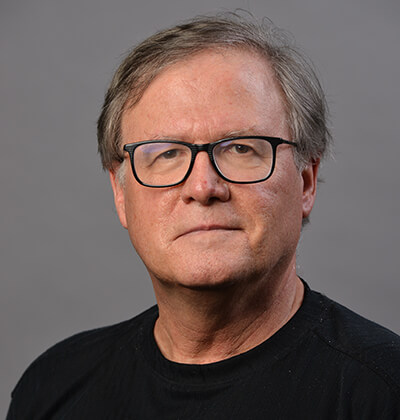
David Crouch is an Associate Lecturer at the University of Derby's College of Arts, Humanities and Education. His research focuses on spatial theory, cultural geography, and social anarchy, particularly examining the works of Colin Ward and exploring themes of urban planning, landscape identity, and creative practices. His interdisciplinary approach bridges philosophy, sociology, and environmental studies. Research interests include spatial justice, affective geographies, and the interplay between creativity and place-making. His work spans academic publications on anarchy in urban contexts, tourism geographies, and interdisciplinary spatial analyses. Notable outputs include explorations of Colin Ward's anarchist urban theories (2017-2018), spatial methodologies in humanities (2017), and the intersection of leisure and landscape identity (2015). His earlier work addressed artistic interpretations of ecology and performative landscape studies (2012-2014). No formal academic awards or grant information is listed, though his research outputs have garnered 754 total views and 32 downloads as of 2020.
Lina Hakim is a Senior Lecturer in Visual and Material Culture at Kingston University's School of Creative and Cultural Industries, Department of Critical and Historical Studies. She joined Kingston University in October 2015, teaching Critical and Historical Studies primarily to Graphic Design students. She also serves as a Sessional Lecturer at Imperial College London, where she teaches 'Science, Art & Design' to undergraduate STEM students and supervises an independent study module on 'Science Culture and Society'. Previously, she was an Andrew Mellon Post-Doctoral Research Fellow at the Victoria and Albert Museum, where she coordinated the V&A Research Institute Pilot Project exploring models of object-led inquiry and developing opportunities for cross-disciplinary collaborative research. Her educational background includes: PhD in Humanities & Cultural Studies from the London Consortium, Birkbeck, University of London (2013) MRes in Humanities & Cultural Studies from the London Consortium, Birkbeck, University of London MA in Book Arts from Camberwell College of Arts, University of the Arts London BA in Graphic Design from the American University of Beirut Lina Hakim's research focuses on the intersections between visual and material cultures of science, technology, craft, and play. Her work examines how objects facilitate thinking and understanding at multiple levels including encounter, production, use, and re-appropriation. Her doctoral project, 'Scientific Playthings: Artefacts, Affordance, History', investigated how 19th-century scientific instruments like the string surface model, Crookes radiometer, and gyroscope transitioned into toys. Her research is deeply informed by her artistic and design practice, emphasizing attentiveness to skill and craftsmanship, phenomenological experiences of objects, and the political dimensions of material assemblages. Her scholarly publications reveal a consistent methodology centered on object-oriented inquiry, with particular attention to how material encounters mediate knowledge production across historical and contemporary contexts. Her work spans historical analysis of scientific instruments, critical examinations of design activism, and theoretical explorations of material phenomenology, demonstrating a distinctive approach that bridges academic research with creative practice. Among her notable recognitions is the Andrew Mellon Post-Doctoral Research Fellowship at the Victoria and Albert Museum, where she coordinated the V&A Research Institute Pilot Project exploring models of object-led inquiry and developing opportunities for cross-disciplinary collaborative research. Hakim has taught across multiple programs including Graphic Design BA (Hons) and Illustration Animation BA (Hons) at Kingston University. At the V&A, she taught 'Key Concepts' on the V&A/RCA History of Design MA programme, examining the latest theories and methodologies in the field, and ran a 'Thinking Things' reading group for V&A staff. Her teaching philosophy emphasizes experiential learning through material engagement, connecting theoretical frameworks with hands-on object analysis. Her work bridges academic research with creative practice, reflecting her background as both a scholar and an artist. Through her various roles at Kingston University, Imperial College London, and the Victoria and Albert Museum, she has developed a distinctive approach to material culture studies that connects historical analysis with contemporary concerns about the political and epistemological dimensions of objects.
Ioanna Sappho Pepelasis is a Professor of Economic History at the Department of Economics, Athens University of Economics and Business (AUEB). Holding a BA in Economics (1974) and an MSc in Economic History (1976) from Harvard University and London School of Economics respectively, she earned her PhD in Economic History from LSE in 1993. Her research focuses on Economic History , Entrepreneurship , Diaspora Networks , and Corporate Sector Development , particularly examining: Historical patterns of Greek entrepreneurship Diaspora banking contributions (e.g., Constantinople Greek bankers) Joint stock company evolution in Greece (1830-1929) Maritime and transport history Financial crises and industrialization dynamics Key article trends reveal deep engagement with: Historical corporate governance structures Diaspora-driven economic networks Long-term industrialization patterns Financial system evolution in crisis periods Geographic determinants of business formation Entrepreneurial typologies in nation-building contexts Awarded for her 2002 article 'Ethnic Minority Groups in International Banking' by the Ottoman Bank Archive, she has edited major volumes including Diaspora Entrepreneurial Networks (2005) and Country Studies in Entrepreneurship (2005). Currently directing AUEB's 'History of Greek entrepreneurship and the corporate sector' program since 2001, she serves on boards of the European Society for Evolutionary Political Economy and KSOT.
Dr. Paul R. Kelly is a Lecturer in Organisation Studies at the University of Essex Business School , specializing in the intersection of socio-digital systems, power dynamics, and knowledge management within global development and higher education contexts. His work critically examines how digital transformations reshape organizational practices, particularly focusing on ICT4D (Information and Communication Technologies for Development), KM4D (Knowledge Management for Development), and the politics of impact evaluation. PhD, Lancaster University (2019) - Digital Innovation MRes, Lancaster University (2013) - Digital Innovation MSc, University College London (2002) - ICT in Education His research integrates activity theory and actor-network theory to analyze the entanglement of social practices, digital technologies, and power structures in globally distributed development initiatives. Key themes include "development 2.0" , data circulations, and the " impact iceberg " metaphor for hidden evaluation processes. Recent publications analyze power as performative action in IS, digital supply chains in post-truth contexts, and critical frameworks for inclusive organizational change. His work bridges academic rigor with practical engagement, evidenced by collaborations with the United Nations Development Program , Institute for Human Security and Social Change (La Trobe University), and NGOs across Southeast Asia, Sub-Saharan Africa, and the Pacific. Grants like the Research England ODA-funded Decolonising Aid projects highlight his commitment to equitable Global South-North partnerships. He teaches modules on Leadership in Organizations , Sustainability and CSR , and Digital Change Management , while advising PhD students in HRM and organizational studies.
Aaron Williamson is Research Fellow at Oxford Brookes University's School of Arts. His artistic practice engages with public interventions, archival research, and experimental performance methodologies. Research explores intersections of performance, disability culture, and artistic process through public interventions and archival investigations. Recent projects examine documentation practices and lived experiences in artistic creation. Creative works include public performance interventions and explorations of artistic archives. Productions demonstrate consistent engagement with experimental methodologies and public space. Presented public lectures and performances at institutions including School of the Arts Institute of Chicago. No information regarding student advising or laboratory affiliations.
Jean Danton is a distinguished soprano and Equity Actor currently serving on the Voice Faculty at Boston College, Salem State University, and New England Conservatory (SCE & PREP). At New England Conservatory, she also co-directs both the Opera Workshop and Musical Theatre Workshop Courses. With a career spanning performances throughout the United States and Europe, Ms. Danton has established herself as a versatile artist in oratorio, opera, recitals, musicals, and concert stages, earning praise as 'A stunning soprano' (Providence Journal). Ms. Danton received her formal musical education with a B.M./B.F.A. from S.U.N.Y. at Fredonia and an M.M. from the Hartt School of Music, building a strong foundation for her diverse performance career. These qualifications have supported her extensive work across multiple musical genres and performance contexts. Renowned for her vocal versatility, Ms. Danton's performance repertoire spans classical, contemporary, chamber music, pops, and musical theatre. She has premiered works by contemporary composers including Delvyn Case, Carson Cooman, Thomas Oboe Lee, and Aleksandra Vrebalov. Her artistic range extends to jazz performances with ensembles like the Rusty Scott Quartet and the Orchestra at Indian Hill. A strong advocate for new music, she has demonstrated remarkable adaptability across multiple musical genres and performance contexts, from Carnegie Hall debuts to intimate cabaret settings. Ms. Danton's extensive recording catalog reflects her diverse musical interests, with recent projects exploring inspirational music, holiday classics, bilingual education through song, and contemporary interpretations of traditional repertoire. Her work demonstrates a consistent commitment to both preserving classical traditions and exploring innovative musical expressions across the full spectrum of vocal performance. Featured artist on Pandora Premium Film credits include vocals for PBS, Lifetime, and Oregon Public Broadcasting Performed under renowned conductors: Keith Lockhart, Christopher Hogwood, Helmuth Rilling, Martin Pearlman, Bruce Hangen, John Finney, and Julian Wachner Appeared with major ensembles including Boston Pops Orchestra and Boston Lyric Opera As an educator, Ms. Danton brings her extensive performance experience to her teaching, mentoring the next generation of vocal artists at multiple institutions. Her workshops at New England Conservatory provide students with practical experience in both opera and musical theatre performance, bridging the gap between academic training and professional practice. Ms. Danton maintains an active performance schedule, regularly appearing at chamber music festivals including the Rockport Chamber Music Festival, Martha's Vineyard Chamber Music Festival, and Meeting House Chamber Music Festival, demonstrating her ongoing commitment to artistic excellence and professional engagement across multiple performance venues and contexts.
Daniel Long is an Assistant Professor of Music and Director of Choral Activities at St. Mary's University. He holds a Ph.D. in Musicology from the University of South Africa, an M.A. in Orchestral Conducting from the University of Texas at Austin, and a B.A. in Sacred Music from Drake University. His research focuses on early music, historically informed performance practices, baseball music, and the rediscovery of American colonial and Mexican Nueva Espana music. He has led choral ensembles, conducted international performances, and served as Artistic Director of Antigua Tejas, an early music ensemble. Long is also a contributor to the National Baseball Hall of Fame's Research Library and a founding member of Early Music America. His professional achievements include the 2008-09 Distinguished Faculty Award, leadership in the London Studies Abroad program, and contributions to music education through competitions and masterclasses. His scholarly work spans articles on early music, CD reviews, and projects like a chronology of baseball music and annotations of Bach's sacred cantatas. Long's creative work bridges historical and American music traditions, with notable projects in Baroque performance, Shaker music transcription, and the spiritual symbolism in Handel’s Messiah. He maintains active roles in musicology through radio appearances (KPAC's 'Musica Antiqua') and international collaborations with early music ensembles.
Dr. Devin Pettigrew is an Assistant Professor in the Department of Behavioral and Social Sciences at Sul Ross State University, where he also affiliates with the Center for Big Bend Studies. His research focuses on experimental archaeology of ancient hunting technologies, particularly the atlatl, bow-and-arrow, and straight-flying boomerang. He explores how these weapons' ballistic properties and archaeological signatures inform understanding of prehistoric hunting practices. Dr. Pettigrew holds an M.A. from the University of Arkansas (2015) and a Ph.D. from the University of Colorado Boulder (2021). His work integrates ecology, experimental replication, and archaeological fieldwork across Arkansas, Wyoming, Colorado, and New Mexico. He investigates hunter success factors and links ancient hunting strategies to modern wildlife conservation policies. His recent publications (2023) analyze terminal ballistics of ancient projectile points, scalability of experimental target media, and Iron Age battlefield dynamics. He emphasizes methodological rigor in controlled experiments to bridge gaps between ancient weapon performance and archaeological evidence. Teaching interests include the Anthropology of Hunting, and he actively engages in archaeological surveys and excavations of prehistoric to historic sites. His research bridges anthropology, ecology, and conservation, offering interdisciplinary insights into human-environment interactions.
Professor David Trippett is a musicologist and cultural historian at the University of Cambridge's Faculty of Music, where he holds the academic rank of Professor and serves as Chair of the Faculty Board. He also acts as Director of Studies in Music at Christ's College, Cambridge. His work bridges musicology with intellectual history, technology studies, and the humanities, focusing particularly on 19th-century German thought, Richard Wagner, Franz Liszt, and digital musical creativity. His research has been supported by a European Research Council (ERC) Starting Grant (2015–2021) exploring 'Sound and Materialism in the 19th Century.' This project investigated the intersection of scientific materialism and romantic idealism, producing over 40 publications and fostering collaborations with postdoctoral researchers including Edward Gillin, Melle Kromhout, Melissa van Drie, and Stephanie Probst. He also completed a critical edition of Franz Liszt's opera Sardanapalo , which premiered in 2018 and was recorded in 2019 to critical acclaim. Professor Trippett’s research interests span interdisciplinary domains: 19th-century intellectual & scientific thought Wagner’s compositional philosophy Liszt’s operatic fragments Posthumanism and digital creativity Music’s role in transhumanist discourse Material culture in operatic production His awards include the Lewis Lockwood Award, Alfred Einstein Award, Bruno Nettl Prize, Donald Tovey Memorial Prize, Deems Taylor Award, and Philip Leverhulme Prize in History. These honors reflect his contributions to musicology, interdisciplinary research, and scholarly editions. His grant-funded projects and advising activities have produced significant outputs: ERC project generated 6 books, 23 chapters, 20 articles Hosted international conferences on music and science Guided postdoctoral teams in materialist musicology Encourages PhD applications in his research areas Current research includes a book on 'Sound and Virtuality,' examining 360-degree audio environments and posthumanist listening concepts. He also explores digital inequalities affecting global music access and the philosophical implications of prosthetic hearing technologies.
Associate Professor Rob Pensalfini holds dual appointments in the School of Communication and Arts and School of Languages and Cultures at the University of Queensland. He is an Affiliate of the Centre for Critical and Creative Writing. His academic career began with a PhD in Theoretical Linguistics from MIT (1997), followed by Visiting Assistant Professorship at the University of Chicago before joining UQ in 1999. Promoted to Senior Lecturer in 2003 and Associate Professor in 2016, his work bridges linguistics and drama, particularly focusing on Indigenous Australian languages (Jingulu/Mudburra) and innovative prison-based Shakespeare performances. Education: PhD in Theoretical Linguistics, MIT, 1997 Fieldwork-based research in Northern Territory's Barkly Tableland Research interests: Documentation of endangered Indigenous languages Language contact phenomena between Jingulu/Mudburra Shakespearean performance in correctional facilities Phonological typology and morphosyntactic theory Interdisciplinary links between linguistics and theatre Leadership roles: Founder of Australia's longest-running Prison Shakespeare program Artistic Director of Queensland Shakespeare Ensemble Co-lead on biocultural knowledge projects with Indigenous communities Labs/Initiatives: Queensland Shakespeare Ensemble Prison Shakespeare Project (since 2008) Collaborations with Batchelor Institute on Indigenous language preservation
Dr. Ann Cleare is an Assistant Professor of Music and Media Technologies at Trinity College Dublin. She holds a PhD from Harvard University and an Honorary Doctorate from the National University of Ireland, recognizing her contributions to contemporary music. Her work spans concert music, opera, experimental sound installations, and hybrid instrument design, focusing on timbre, texture, and the psychological impact of sound. She is an artist-in-residence with the Crash Ensemble and a member of Young Academy Ireland. Her research explores intersections between sound and visual dimensions, exemplified by projects like rinn (a time-travel chamber opera) and TERRARIUM (a multimedia collaboration with Crash Ensemble). Key collaborations include works with Ensemble SurPlus, BBC Scottish Symphony Orchestra, and the National Symphony Orchestra of Ireland. Awards include the 2019 Ernst von Siemens Composer Prize and fellowships at Villa Concordia (2024) and Civitella Ranieri (2023). Her recent projects include MIDHE , a large-scale work commissioned by RTÉ for Ireland’s National Concert Hall, and The Little Lives , an opera addressing propaganda’s societal impact. Educational affiliations include Trinity College Dublin, IRCAM, and University College Cork. Education: PhD Harvard University, Studies at IRCAM, University College Cork Affiliations: Young Academy Ireland, Artist-in-Residence (Crash Ensemble) Notable Works: eyam series, eöl , Meridians , gravity dreams
Maria Hodermarska is a Clinical Associate Professor at the Steinhardt School of Culture, Education, and Human Development, New York University, where she has taught Drama Therapy since 1995. She coordinates creative arts therapies for Project Common Bond, an international initiative supporting youth affected by violence, and leads the Theater and Health Lab's As Performance Series. Her clinical work spans substance abuse treatment for individuals with developmental disabilities and traumatic brain injury, with extensive consulting roles in mental health programs across New York City and China. Her research focuses on how theater-based interventions impact well-being, particularly in marginalized communities. Key areas include trauma recovery, autism spectrum disorder, and community-building through performance. She has presented at global institutions like Roehampton University, Yale, and the Mount Sinai School of Medicine, and holds certifications in drama therapy, substance abuse counseling, and creative arts therapy. Her publications explore drama therapy's historical evolution, ethical considerations in therapeutic performance, and the interplay between body awareness and psychosomatic health. She has led workshops on disability advocacy, violence prevention, and culturally responsive care, emphasizing interdisciplinary collaboration between arts and mental health fields.
Sara E. Johnson is a Professor of Literature at the University of California, San Diego. She specializes in the literature and cultural studies of the Hispanophone, Francophone, and Anglophone Caribbean and its diasporas, with a focus on hemispheric American studies and the Age of Revolution. Her research also explores music and dance of the African Diaspora, informed by extensive fieldwork in Senegal, Cuba, Haiti, and Martinique. Johnson holds a Ph.D. in Comparative Literature from Stanford University and a B.A. in Comparative Literature and African American Studies from Yale University. She has held prestigious fellowships from the Ford Foundation, UC President’s Postdoctoral Program, and others. Her major publications include The Fear of French Negroes (2012) and Encyclopédie Noire (2023), which examine transcolonial intellectual networks and revolutionary politics. She co-edited Kaiso! Writings By and About Katherine Dunham (2006), recognized as a top arts book, and Una ventana a Cuba y los Estudios cubanos (2010). Johnson mentors students through programs like McNair and the Undergraduate Faculty Mentorship initiative, having advised over 45 doctoral and MFA committees. Her former students hold academic positions at institutions including Brown, Yale, and UCSD. Johnson serves as Co-Director of UCSD’s Black Studies Project and is affiliated with Black Diaspora & African American Studies, Center for Iberian & Latin American Studies, Ethnic Studies, and Critical Gender Studies. Her courses span Caribbean discourse, transcolonial American studies, and interdisciplinary topics like 'Salsa Music: Style and Substance.'
Marianne W. Lewis is Dean and Professor of Management at the Carl H. Lindner College of Business, University of Cincinnati. She previously served as Dean of Bayes Business School at City, University of London, and is a leading scholar in organizational paradoxes, leadership, and innovation. Her work is widely published and cited across top management journals. Her research focuses on organizational paradoxes, leadership, innovation, and change . She explores how organizations and leaders navigate tensions between competing demands—such as stability and change, exploitation and exploration—through paradoxical thinking. Her framework of Both/And Thinking , detailed in her Harvard Business School Press book, offers a transformative approach to managing complexity and fostering innovation. The analysis of her recent publications reveals a consistent focus on paradox as a meta-theory in organizational studies. Her work spans leadership, innovation, supply chain dynamics, and research methodology, all unified by a central theme of embracing contradictions. She contributes to both theoretical development and practical application, with publications in journals like Academy of Management Review , Organization Studies , and Harvard Business Review . Scientific Awards and Honors: Thinkers50 Breakthrough Idea Award (2023) Academy of Management Review Decade Award (2021) Academy of Management Journal Article of the Year (2000) Academy of Management Review Best Paper Award (2000) University of Cincinnati Professor of the Year (2013) INFORMS Best Technology Paper Runner-up (2009) CoB Research Fellow (2000) Lewis has been actively involved in academic advising and research leadership. She has secured multiple grants including the College Faculty Development Grant and Globalization Grant from the University of Cincinnati. While specific PhD student names are not listed, her role as a professor and PhD seminar instructor indicates active mentorship. She has also led university-wide initiatives such as the UC 21 Experiential Learning program. Service and Leadership: Dean, Lindner College of Business (current) Dean, Bayes Business School (former) Editorial Review Board, Academy of Management Journal (2003–2007) Reviewer for Academy of Management Review and Human Relations Member of AACSB and AMBA advisory boards Task Force Member for MBA revision and General Education
Niels Joseph Lennon is an Associate Professor at Aalborg University Business School within the Faculty of Social Sciences and Humanities. His work focuses on how accounting information shapes organizational performance measurement, decision-making processes, and managerial justification in both public and private sectors. He serves as academic coordinator for the Graduate Diploma in Financial and Management Accounting. Performance Measurement Decision-Making Processes Organizational Infrastructure Public Sector Accounting Management Innovation Lennon's research examines accounting's role in creating organizational narratives and justifying managerial actions through selective performance visualization. His work connects financial practices with broader organizational dynamics. Key trends in his publications include analyzing accounting's influence on innovation management, exploring cash flow control mechanisms, and investigating performance measurement paradoxes. Recent work focuses on energy sector accounting and talent management in professional services. He supervises graduate and undergraduate projects in Management Accounting and Financial Accounting, with particular emphasis on performance measurement systems and incentive structures. Lennon actively participates in interdisciplinary workshops and conferences related to accounting practices.