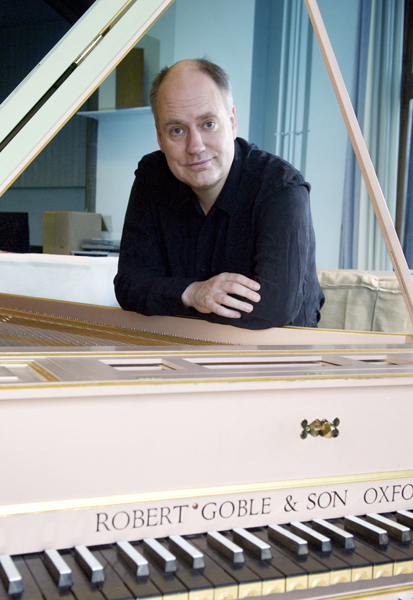
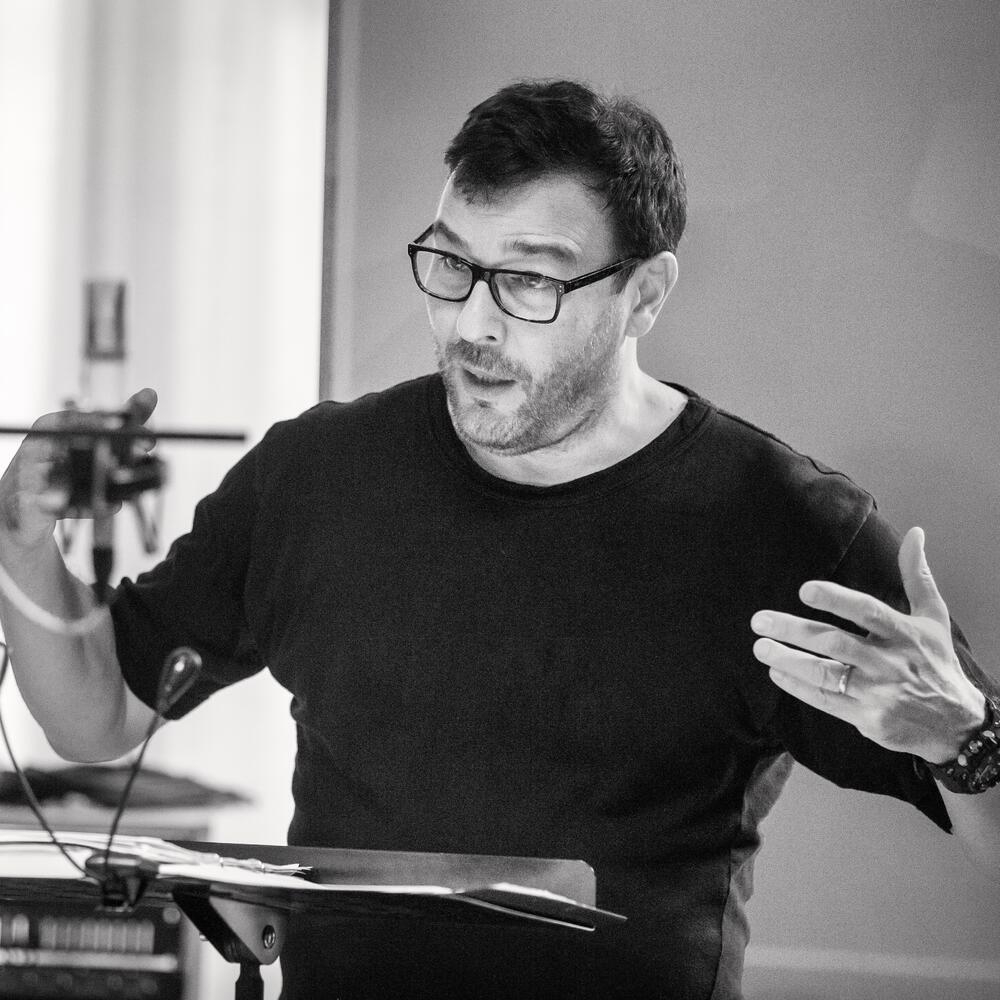
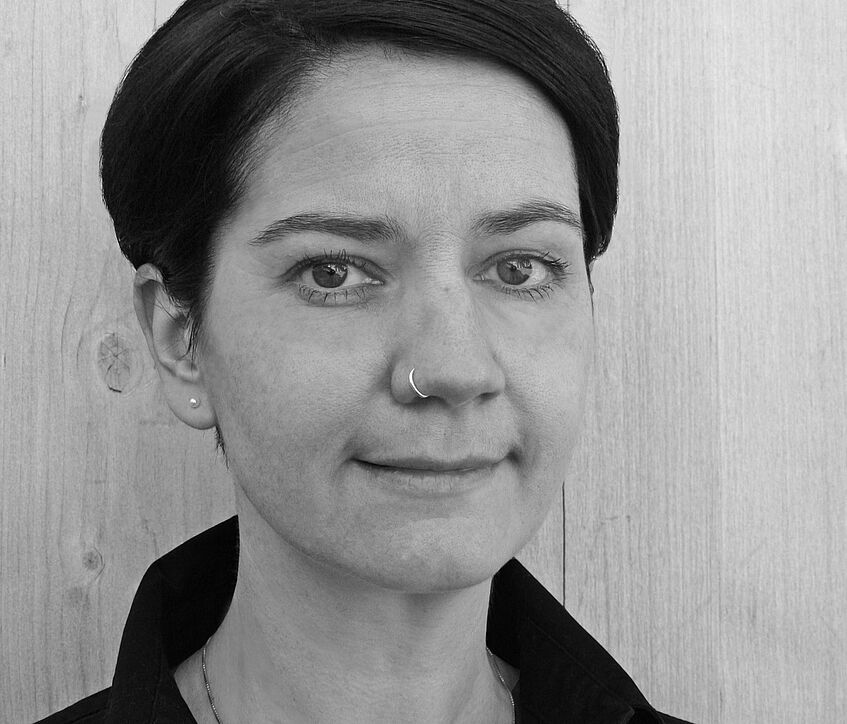
John Butt is a distinguished academic and performer, currently holding the Gardiner Chair of Music at the University of Glasgow and serving as Head of Department (2001-05). His career spans prestigious institutions including UC Berkeley, King’s College Cambridge, and Magdalene College Cambridge. He is renowned for integrating performance practice with scholarly research. Education : PhD in Bach studies, University of Cambridge Research Interests : Bach interpretation, Baroque music, historical performance practices, modernity in musicology, and the intersection of plainchant with Roman Catholic culture in Elgar's work. His research explores the ontology of 17th-century music and the cultural implications of historically informed performance. Articles and projects highlight his interdisciplinary approach, linking musicology with philosophy and cultural studies. He has received major awards including Gramophone, MIDEM, and Fellowships from the British Academy and Royal Society of Edinburgh. Scientific Awards : Royal Academy of Music/Kohn Foundation Bach Prize (2010) Gramophone Award (2007) MIDEM Award (2008) Fellow of the British Academy (2006) Dent Medal (2003) As a conductor and keyboardist, he leads the Dunedin Consort and has produced acclaimed recordings of Bach and Handel. His work bridges academic and performative realms, emphasizing the dialogue between historical and contemporary musical understanding.
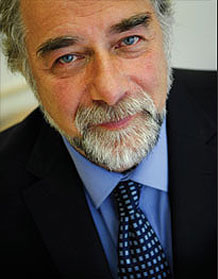
Bruce Brown is Pro-Vice-Chancellor for Research at the University of Brighton , overseeing research across life, physical, social sciences, and arts and humanities. He previously served as Dean of the Faculty of Arts and Architecture (1989–2006) and Head of the Department of Design (1984–1989). Administrative Leadership : REF2014/RAE2008 Chair, International Governor at Shenkar College, and advisor to academic bodies in Hong Kong, Portugal, and Italy. Research Interests : Visual memory, arts education, and research leadership, with publications spanning design history, spatial design, and cultural policy. Scientific Awards : 2007 WHO’s WHO (A&C Black) 2005 Honorary Fellow (University for the Creative Arts) 2004 Honorary Fellow (Royal College of Art) 1985 Elected Member (Designers and Art Directors Association) 1978 Sanderson and Herbert Read Awards (Royal College of Art) 1970 Elected Fellow (Royal Society of Arts) Articles focus on visual communication, design policy, and cultural memory, reflecting his expertise in design research and higher education leadership . He is currently an Editor of Design Issues: Research Journal (MIT Press).
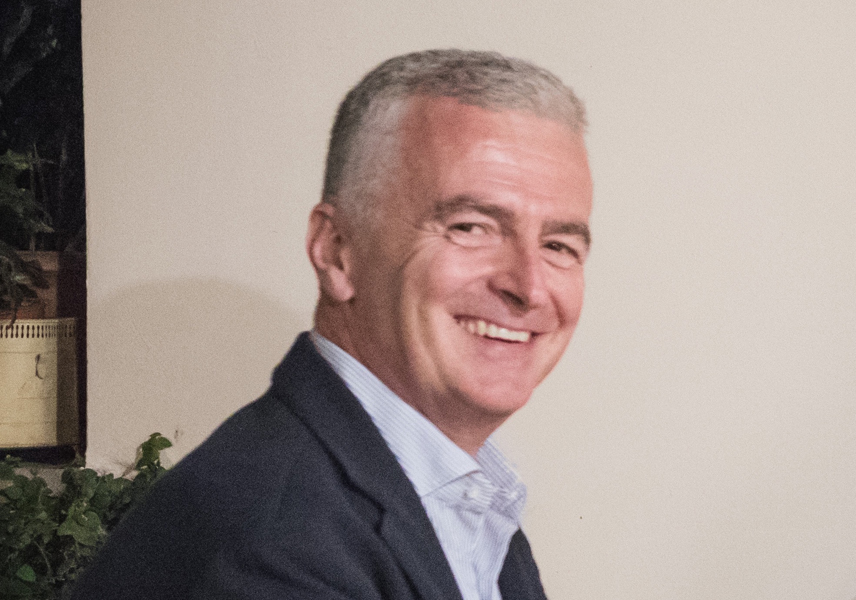
Thomas Gehrig is a Professor of Finance at the University of Vienna, affiliated with the Department of Finance within the Faculty of Business, Economics, and Statistics. He holds honorary doctorates and is a Research Fellow at prominent institutions like the Centre for Economic Policy Research (CEPR) and the Systemic Risk Centre (LSE). His research focuses on financial intermediation, banking regulation, market microstructure, and systemic risk, with notable contributions to understanding liquidity provision and ESG impacts on bank resilience. Education: Ph.D. in Economics, London School of Economics (1990) Habilitation, University of Basel (1995) Diplomvolkswirt, University of Bonn (1986) Exchange Programs: UC Berkeley (1984–85), UC Berkeley (1984–85) Research Interests: His work bridges theoretical finance and policy, emphasizing systemic risk, capital regulation, and ethical finance. Recent studies explore the interplay between ESG practices and bank stability, transatlantic banking differences, and historical financial crises like the Panic of 1907. Grants & Awards: FWF and OeNB grants for systemic risk research 2024 Doctor of Science honoris causa (Hanken School) Best Paper Awards in Atlantic Economic Journal and Journal of Financial Stability Professional Contributions: Editor-in-Chief of Schmalenbach Journal of Business Research , former Director of the Vienna Graduate School of Finance (VGSF), and advisor to central banks. He has supervised over 50 doctoral students, many placed in top academic and financial institutions globally. Labs/Initiatives: Leads the Resilience Research Network at the University of Vienna, focusing on geopolitical risks and financial stability. Co-organizes annual conferences on ethical finance and systemic risk.
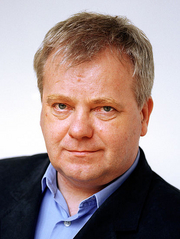
Prof. Dr. Werner Zorn is a renowned computer scientist and Professor of Communication Systems at the Hasso Plattner Institute (HPI) in Potsdam, Germany. With a foundational role in establishing Germany's early internet infrastructure and connecting China to the global internet, his work has been pivotal in shaping international network connectivity. His academic career spans from the University of Karlsruhe, where he was appointed Professor of Computer Science in 1979, to his current position at HPI since 2001. Education: He studied electrical engineering with a focus on communications at TH Karlsruhe (1962–1967) and earned his Dr.-Ing. with distinction in 1971. Research Focus: His research encompasses performance analysis of computing systems, computer networks, and the development of quantitative modeling methodologies such as FMC-QE (Fundamental Modeling Concepts for Quantitative Evaluation). His work bridges theoretical modeling with practical applications in network design and optimization. Publications & Articles: His publications reflect a deep engagement with internet history, network performance, and system modeling. Notable works include detailed accounts of China's first email connection and the evolution of the Chinese Academic Network (CANET), as well as innovative approaches to system performance modeling. Awards & Recognition: He has received numerous accolades, including the Order of Merit of the Federal Republic of Germany, induction into the Internet Hall of Fame, and the Chinese Government Friendship Award, underscoring his global impact. Current Projects: He leads projects like FMC-QE for hierarchical system modeling and the IT Services Atlas for implementing EU directives, alongside mentoring doctoral students in advanced network and system research.
Klaus Schönberger is a University Professor in Cultural Anthropology at the Institute for Cultural Analysis, Alpen-Adria-Universität Klagenfurt / Celovec. His work focuses on the Alps-Adriatic region, with interests spanning cultural studies, ethnography, cultural heritage, and digital communication. He has held leadership roles such as 1st Chairman of the Austrian Society for Empirical Cultural Studies and Folklore (2018–2024) and board member of the Institute for Cultural Analysis (2016–2023). Doctorate in Empirical Cultural Studies (1994), University of Tübingen Habilitation in Cultural Anthropology (2010), University of Hamburg His research explores societal aesthetics through audiovisual media, including amateur film practices, digital communication, and the interplay between art and ethnography. Recent publications examine memory politics, cultural heritages, and agonistic perspectives in the Carinthia/Koroška region. A 2008 scholarship from the Isa Lohmann Siems Foundation highlights his academic recognition. Key themes in his work include the societal implications of self-representation (e.g., selfie practices), the historical evolution of media (Super 8 to smartphone videos), and the cultural analysis of the Alps-Adriatic region. His interdisciplinary approach bridges cultural theory, digital communication, and ethnographic methodology. Scientific Awards: 2008 scholarship from the Isa Lohmann Siems Foundation, Hamburg Notable projects include the analysis of transversal practices in the Schillerverein in Trieste and the cultural implications of digital communication's persistence and recombination. He has contributed to understanding the aestheticization of work and the dissolution of traditional boundaries in labor and leisure.
Mag. phil. Mag. art. Dr. phil. Stephan Hametner is a Professor at PH-OÖ (University College of Teacher Education Upper Austria) since 2014, specializing in Subject Didactics for General Music Education across elementary and secondary levels. His expertise spans Systemic-constructivist didactics Empirical research in music education Curriculum development Academic supervision Organizational development Academic background highlights include: PhD in Music Education/Pedagogy (2004, magna cum laude ) Diploma in Music Education (University of Music and Performing Arts Vienna & University of Vienna, 2000 magna cum laude ) Diploma in Rhythmics (1996 magna cum laude ) Research focuses on systemic-constructivist music pedagogy , with key contributions in Didactic frameworks for music interpretation Empirical validation of teaching methods Integration of movement and music Subject-oriented educational theory His publications analyze music's role in cognitive development and pedagogical innovation, emphasizing experiential learning. He also contributes to media education through 50 ethnomusicological radio programs (Radio Orange 94.0, 2000-2005) Interactive educational CD-ROMs Academic case studies Active in international collaborations, he serves as expert for Bern University of the Arts and contributes to the Rhythmic Expositur Biel project. Current projects include reception-aesthetic film analysis for teacher training and music identity development in educational settings.
Thérèse Lindquist is an Adjunct Professor of Artsong and Oratorio at the Mozarteum University's Department of Vocal Studies within the School of Music & Art Education. A renowned collaborative pianist and educator, she specializes in German, French, and English-American Lied traditions, with particular focus on works by women composers and Jewish composers during WWII. She has performed internationally with artists like Wolfgang Holzmair and Dana McKay, releasing acclaimed recordings including Josephine Lang's songs (2003) and Anton Webern's Lieder (2006). Lindquist's work emphasizes historically informed performance practices and underrepresented repertoires. Her academic career includes masterclasses at institutions such as Florida International University and University of Miami Frost School of Music. Notable achievements include first prize at the Jenny Lind Competition and recognition for her CD recordings, described as 'small masterpieces' in scholarly literature. She has served as official accompanist in major competitions like the International Mozart Competition Salzburg and collaborated with ensembles like the countertenor Paul Esswood in early music studies.
Univ.-Prof. Dr. Pierre Sachse is a Professor of General Psychology at the University of Innsbruck, Austria, where he holds the Professorship for General Psychology within the Faculty of Psychology. His office is located at Universitätsstraße 5-7 (Grauer Bär), Room 2S20, with postal address at Universitätsstraße 15, A-6020 Innsbruck. His research spans multiple domains of cognitive and experimental psychology, with particular emphasis on visual perception, memory processes, and psychophysiological measures. Professor Sachse's research interests focus on eye movement patterns, attentional mechanisms, memory consolidation processes, and sensory processing sensitivity. His work employs sophisticated methodologies including eye tracking, psychophysiological measurements, and experimental cognitive paradigms to investigate fundamental cognitive processes. He has made significant contributions to understanding how post-learning activities affect memory retention, how gaze behavior influences social interactions, and the relationship between sensory processing sensitivity and cognitive performance. His research bridges theoretical cognitive psychology with practical applications in work psychology and human-computer interaction. Analysis of his recent publications reveals a strong trend toward interdisciplinary research combining cognitive psychology with social, business, and historical perspectives. His work increasingly integrates advanced data analysis techniques with traditional experimental methods, as evidenced by the development of tools like SPBView for eye movement analysis. There's a clear progression from basic cognitive processes to their application in real-world contexts including team performance, leadership, and interpersonal communication. His research maintains a consistent focus on individual differences, particularly how sensory processing sensitivity moderates cognitive and emotional responses. Professor Sachse has supervised numerous doctoral and postdoctoral researchers, with Martini, Maran, Furtner, Hoffmann, and Büsel appearing frequently as co-authors on his publications. His collaborative network extends across multiple institutions and disciplines, reflecting the interdisciplinary nature of his research. While specific grant information isn't detailed in the provided materials, his extensive publication record suggests successful funding for multiple research projects over his career. His research group appears to focus on experimental cognitive psychology with specialized equipment for eye tracking, psychophysiological measurements, and behavioral experiments. The group conducts both laboratory and naturalistic studies, including mobile eye tracking in real-world environments. Their work spans basic cognitive mechanisms to applied contexts in business, leadership, and social interactions.
Warner Marzocchi is Professor of Geophysics and Natural Hazard Forecasting at the University of Naples Federico II and Scuola Superiore Meridionale. He holds a PhD in Physics (1992) and a degree in Earth Sciences (1987) from the University of Bologna. Previously, he served as Chief Scientist at the Istituto Nazionale di Geofisica e Vulcanologia (2003-2018) and held visiting positions at the University of Southern California and the Institute of Statistical Mathematics in Tokyo. His research focuses on seismic/volcanic hazard analysis, earthquake forecasting, statistical seismology, and hazard model validation. He coordinates international projects in natural hazard assessment and serves on advisory panels including the International Atomic Energy Agency, US National Seismic Hazard Model, and Global Volcano Model. Marzocchi's recent publications demonstrate advances in probabilistic forecasting models, operational earthquake forecasting systems, and statistical validation methods. His work frequently applies machine learning and complex systems theory to seismic and volcanic processes across Italy, California, and New Zealand. Honors: Ranked among world's top 2% scientists (2019-present) Member of Academia Europaea (2018) Editorial awards from Geophysical Journal International (2010) and Geophysical Research Letters (2003) He teaches graduate courses in geophysics, statistics, and hazard forecasting, and has advised numerous PhD students. He leads research teams focused on seismic risk mitigation and volcanic unrest management.
Eva Pfanzelter is an Associate Professor at the Institute of Contemporary History, University of Innsbruck, where she also serves as Deputy Director. She is a leading scholar in digital humanities, Holocaust studies, migration history, and cultures of remembrance. Her international academic engagement includes visiting professorships at Leiden University and the University of New Orleans. She leads the Research Center for Digital Humanities at the University of Innsbruck and is actively involved in major interdisciplinary research projects such as NewsEye (H2020) and optionMUDI. Her research interests span contemporary European and regional history, with a focus on transcultural memory, digital history, and public history. She has made significant contributions to understanding Holocaust memory in digital spaces, migration narratives, and the politics of commemoration. Her work integrates historical scholarship with digital methodologies, emphasizing interdisciplinary collaboration. The most recent publications highlight a strong trend in digital humanities, particularly the analysis of Holocaust memory in online and social media environments, the use of digital newspaper archives, and methodological innovations in historical research. Her work bridges traditional historical inquiry with computational tools, exploring how digital platforms shape collective memory and historical discourse. Europa Nostra Heritage Award 2024 (NewsEye project) Lehreplus! Prize 2014 (University of Innsbruck) Global Ambassador Award 2012 (Eastern Illinois University) Funding commitment 2010 (University of Innsbruck) Research scholarship 1997–1999 (Association for South Tyrolean Scholars) Pfanzelter is deeply involved in academic service, including thesis supervision, editorial work (co-editor of historia.scribere ), and leadership roles in academic governance. She has led significant research projects on return migration, digital interfaces for historical newspapers, and the memory of the South Tyrol Option. She collaborates with institutions across Europe and North America and is a respected voice in digital history and Holocaust studies. She is a key figure in the digital humanities community at the University of Innsbruck, leading the DH@Innsbruck initiative and promoting digital literacy in historical research. Her work on public history and online commemoration has influenced how institutions and scholars engage with digital memory practices.
Milena Stavric is an Associate Professor at TU Graz's Institute for Architecture and Media. Her research focuses on architectural geometry, digital design, and sustainable materials. She integrates computational methods and digital fabrication techniques into architectural design, emphasizing eco-friendly materials like mycelium composites, alginate-based materials, and clay ceramics. Her work bridges theoretical research with practical applications, such as BIM integration for salvage materials and parametric modeling for freeform structures. She teaches courses in architectural geometry and digital design, contributing to advanced computational workflows from concept to fabrication. Her projects often explore the interplay between material properties and structural form, aiming to advance sustainable construction practices. Research interests include: sustainable building materials (e.g., mycelium-based insulation, alginate xerogels), parametric design strategies, and digital fabrication methods for lightweight ceramics. She explores novel fabrication techniques like coextrusion of clay composites and robotic fabrication of modular formwork. Her work frequently addresses environmental impacts through life cycle assessments and biogenic carbon analysis. Key projects involve material innovation (e.g., MyCera: clay-mycelium composites), digital tools development for early design phases, and educational initiatives like interactive math learning environments. Her contributions span academic publications and applied research, with a focus on integrating geometry, computation, and sustainability in architectural practice.
Andreas Scholl is a University Professor of Voice specializing in Early Music at Mozarteum University in Salzburg, where he teaches vocal studies in the Department of Vocal Studies. Born in Germany, Scholl began his musical training with the Kiedrich Chorbuben Choir and later studied at the Schola Cantorum Basiliensis with Richard Levitt and René Jacobs. His research interests focus on historical performance practice of Baroque and Renaissance vocal music, with special emphasis on countertenor repertoire, German Lied, and Handel's works. Scholl has pioneered approaches to interpreting early music that balance historical authenticity with contemporary vocal technique, particularly in the specialized field of countertenor performance where he has established new standards for tone production and expressive interpretation. His discography reveals a consistent focus on Baroque vocal repertoire, particularly Handel's works, with notable emphasis on oratorios and cantatas. Scholl's recordings demonstrate evolving expertise in historically informed performance while maintaining artistic innovation, with recent work expanding into digital media production through his "Room Service" VOD show that bridges historical music with contemporary presentation formats. ECHO Award for Deutsche Grammophon's audio-book of Hans Christian Andersen's The Emperor's New Clothes and The Nightingale BBC Music Magazine Award in 2012 for O Solitude Scholl maintains an active performance career while teaching at Mozarteum University. His students benefit from his extensive experience performing with major orchestras including the Berlin Philharmonic, New York Philharmonic, and Royal Concertgebouw Orchestra. He has been instrumental in developing online teaching methodologies, particularly during the pandemic, making his expertise accessible to singers worldwide regardless of geographical location. Scholl's "Room Service" production represents his innovative approach to music presentation, blending performance with educational content about historical context.
Birgid Michaela Steinberger is a renowned soprano and university professor at the University of Music and Performing Arts Vienna (since 2010) and the Music and Arts University of the City of Vienna (since 2001). She specializes in Lied (art song), oratorio, and operatic roles, with a focus on classical vocal performance and historical practices. Her career includes prominent roles at the Vienna State Opera, Volksoper Wien, and international opera houses. Education: Studied under Kammersängerin Wilma Lipp in Salzburg Further training with Charlotte Lehmann (Hannover) and Kurt Widmer (Basel) Completed studies in 1992 Research & Performance Interests: Steinberger’s work emphasizes interpretive depth in art song (e.g., Schubert, Wolf, Brahms), operatic roles (e.g., Mozart, Donizetti), and historically informed performance practices. She is celebrated for her interpretations of roles like Susanna (Figaro), Pamina (Magic Flute), and Marie (Zar und Zimmermann). Awards: Österreichische Kammersängerin (2009) Gianna Szel Foundation Scholarship (1986) International Hugo Wolf Competition Prize (1990) Teaching & Mentorship: As a professor of singing and lied interpretation, she leads masterclasses globally, including at the Guildhall School of Music & Drama (London, 2019). She supervises doctoral candidates in artistic-scholarly research at MUK. Performance Highlights: Extensive operatic engagements (Vienna State Opera, Berlin State Opera), acclaimed recordings (NAXOS, RSO Wien), and international recitals (Wigmore Hall, Paris Théâtre du Châtelet, Stuttgart).
Andrea Maria Schmuck is a Senior Scientist in Systematic Theology at Paris Lodron University of Salzburg, holding a doctorate in Catholic Theology completed in 2024. Her research centers on interreligious dialogue and theological responses to contemporary global challenges. Education: Doctorate in Catholic Theology, Paris Lodron University of Salzburg (2018-2024) Research Focus: Dr. Schmuck's work critically examines Fundamental Theology and Intercultural Theology through frameworks of Jewish-Christian dialogue, climate crisis theology, and cultural memory studies. She investigates how theological epistemology intersects with sociopolitical realities, church politics, and European identity construction, emphasizing dialogue as a methodological foundation for addressing religious and ecological crises. Publication Trends: Her 2020-2025 output reveals a sustained investigation into dialogue epistemology, using historical cases (e.g., Bologna Kidnapping) to analyze trust dynamics. Recent works increasingly connect climate crisis theology with religious practice while expanding into memory studies and European identity politics through trauma-informed cultural analysis. Scientific Recognition: Excellence Program "Cultures - Religions - Identities" (October 2015) Excellence Program "Cultures - Religions - Identities" (Doctoral College II) (2018) Performance Scholarship (2015) Performance Scholarship for Excellent Performance in First Study Section (2013) Audience Award of Salzburg University Weeks (2024) Research Leadership: As project staff for "Theology as Research on Hope?" (2024-2025), she contributes to interdisciplinary climate crisis research while co-organizing colloquia that bridge theological reflection and practical religious responses. Her external role as Complaints Management Specialist at Munich's Archbishop's Ordinariate demonstrates applied theological engagement. Academic Networks: Active in AGENDA Forum of Catholic Theologians and "Dialogue - Vision of the Future," she chairs theology working groups and presents at international colloquia, fostering collaborative approaches to religious pluralism and crisis theology.
Elisabeth (Li) Gerhalter is a senior scholar and lecturer at the University of Vienna’s Department of History, where she has curated the Sammlung Frauennachlässe (Women’s Personal Papers Collection) since 2000 and directs it academically. Since 2006 she also manages the research blog Salon 21 . Her work spans women’s and gender history, ego-document research, diary studies, and the politics of archiving. Education: Dr. phil. in History, University of Vienna 2017 (summa cum laude) Mag. phil. in History, Sociology & Gender Studies, University of Vienna 2004 Doctoral and international summer schools in Paris and Drosendorf Research & Teaching: Her research focuses on 19th- & 20th-century women’s and gender history, autobiographical writing, diary cultures, and feminist archival practices. She currently teaches courses on women’s/gender history, ego-document analysis and archival excursions at both the Institute of History and the Institute of European Ethnology, University of Vienna. Publications & Trends: Recent articles (2024-25) interrogate intersectional gaps in legacy collections, map women’s archive holdings across Central Europe, and integrate citizen-science collection trips. Earlier work analysed adolescent wartime diaries, material memory cultures in girls’ schools, and the 1919 suffrage moment as recorded by Viennese women. Awards & Memberships: Käthe Leichter Prize 2022 for outstanding achievements in women’s and gender studies Founding member, European Ego-Documents Archives & Collections Network (EDAC) Chair, frida – Austrian association of women’s information & documentation centres Grants & Projects: She has led or co-led projects on feminist archival policies, public history approaches to diary collections, and edition projects such as the illustrated diary of Rudolfine Gandlmayr (forthcoming 2025). Since 2021 she is principal investigator of the FWF-funded project “(Un-)Systematic Knowledge. Ordering and Finding in Women’s and Gender History Archives” at the University of Vienna. Labs & Teams: She heads the Sammlung Frauennachlässe team (currently Sophie Hopfner) and is active in several university and trans-European collection networks, including “Die Sammlungen an der Universität Wien” and the interdisciplinary Research Focus on Women’s and Gender History.