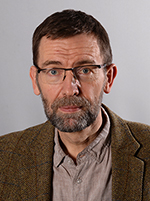
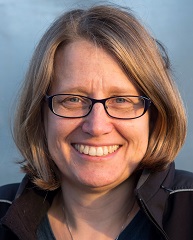
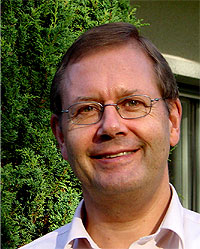
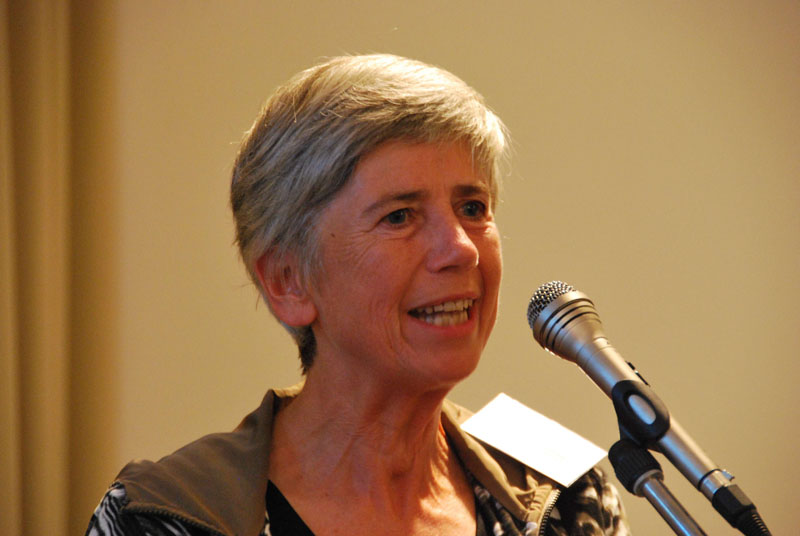
Gabriel Rei-Doval is an Associate Professor in the Linguistics Department at the University of Wisconsin-Milwaukee . His career spans sociolinguistics, bilingualism, and Galician language studies, with a focus on language contact, purism, and planning. He holds a PhD in Galician Linguistics (2001) and has published extensively on Galician, Hispanic, and Lusophone linguistics. Research Interests : Sociolinguistics and Language Contact Bilingualism in minority language contexts Language Purism and Standardization Galician, Hispanic, and Lusophone Studies Teaching Areas : Bilingualism, General Linguistics, Hispanic Sociolinguistics. Key Contributions : Co-editor of Lusophone, Galician, and Hispanic Linguistics: Bridging Frames and Traditions (2019) Author of Principios de lingüística hispánica (2025), a foundational textbook Founder of the Galician Studies Initiative at the Modern Language Association
Stephan Oepen is a Professor at the Department of Informatics, University of Oslo, specializing in Computational Linguistics and Natural Language Processing (NLP). He leads the Research Group for Language Technology and serves as Academic Chair in Artificial Intelligence for the Circle U European University Alliance. His research bridges formal linguistics with large-scale computation, focusing on semantic parsing, dependency structures, and multilingual language models. 2002–present: Researcher → Professor at UiO 2011–2017: Head of Language Technology Research Group 2019–20: Section Head for Machine Learning 2021–24: Department Head for Informatics Current projects include HPLT (High-Performance Language Technologies), Nordic Language Processing Laboratory (NLPL), and OpenEuroLLM . He co-directs the 2017 ACL Shared Task on Extrinsic Parser Evaluation and contributes to international NLP conferences like ACL, EMNLP, and CoNLL. Recent publications focus on: Uniform semantic graph representations Hybrid parsing architectures Continual training for small languages Diagnostic parser evaluation Copyright implications in LLMs Community language resource infrastructure He actively participates in editorial boards and technical coordination roles, including the LUMI Scientific Advisory Group and Horizon Europe's High-Performance Language Technologies project.
Hans-Olav Enger is a renowned Professor of Scandinavian Linguistics at the University of Oslo since 2008. He has held previous academic positions at the University of Stavanger (2003–2008) and Stockholm University (1992–1993, 1996–2000), and served as a part-time "Guest professor/Professor II" at the University of Zurich (2012–2019). His work focuses on the Department of Nordic Languages with expertise in morphology, grammatical gender, and diachronic linguistics. Current affiliation: University of Oslo, Nordic Languages Previous roles: Professor II (Zurich), Professor (Stavanger), Lecturer (Stockholm) Key projects: MultiGender (2019–2020), co-editor of Maal og Minne (2016–2024) Enger's research delves into grammatical gender systems , inflectional morphology , and grammaticalization processes in Scandinavian languages. His work explores the interplay between semantic rules and morphological structures, particularly in Norwegian dialects. Notable contributions include analyzing the Animacy Hierarchy , changes in plural inflection , and the autonomy of morphology in the context of sound laws. His publications reveal a focus on historical linguistics , morphosyntactic variation , and agreement patterns across Scandinavian languages. Enger has contributed to understanding gender assignment mechanisms , definiteness markers , and syntactic evolution in Norwegian dialects and beyond. Enger has supervised MA theses on topics like gender appropriation in Norwegian , linguistic features in multiethnic environments , and inflectional class changes . He actively participates in the Language Change research group and has co-edited the journal Maal og Minne since 2016.
apl. Prof. Dr. Thilo Rudnig is an extraordinary professor and Hebrew lecturer at the Faculty of Theology, University of Göttingen. His academic journey includes a doctorate from the University of Münster (1999), habilitation (2005), and extensive research on Old Testament texts. He coordinates the ludus linguarum at the Centrum Orbis Orientalis et Occidentalis and serves as the Faculty Representative for Good Scientific Practice and Chairman of the Equal Opportunities Commission. Rudnig's research focuses on Old Testament exegesis, Hebrew linguistics, prophetic literature, and ancient Near Eastern religions. Key areas include Ezekiel studies, Davidic historiography, temple theology, and Hebrew syntax. His work integrates philology, literary criticism, and comparative analysis of Ugaritic and biblical texts. His publications emphasize textual criticism, theological motifs in biblical narratives, and modern adaptations of scriptural themes. Recent works explore holiness concepts in Isaiah, Syriac Psalms, and cinematic reinterpretations of Job. His Luther Bible revisions reflect rigorous engagement with historical and linguistic contexts. Awards: Dissertation prize, WWU Münster (1999) Rudnig actively contributes to academic societies including the Scientific Society for Theology and the Hebraists Association. He examines Old Testament theology for the Evangelical Church of Hanover and participates in Christian-Jewish dialogue.
Professor Sam Hellmuth is a leading academic in phonology at the University of York's Department of Language and Linguistic Science within the Faculty of Arts and Humanities. She serves as Associate Dean for Teaching, Learning and Students while maintaining an active research program focused on Arabic prosody and second language phonology. Her educational background includes: BA (Hons) in Arabic and French, University of Leeds (1985-1989) MA in Linguistics (Arabic), SOAS University of London (2000-2001) PhD in Linguistics and Phonetics, SOAS University of London (2001-2006) Postdoctoral Researcher, University of Potsdam (2006-2007) Professor Hellmuth's research centers on suprasegmental phenomena in Arabic dialects, particularly intonation patterns across regional varieties. Her work bridges theoretical phonology with empirical corpus-based approaches, examining prosodic variation in both native Arabic speech and L2 English acquisition. She specializes in the syntax-phonology interface and has pioneered methodologies for documenting intonational variation through large-scale comparative projects. Her publication record reveals consistent focus on Arabic intonational typology, with recent work expanding to Northern England dialects and emergent bilinguals. The research demonstrates sophisticated integration of auditory transcription with statistical F0 modeling within the Autosegmental-Metrical framework. Professional recognition includes: Editorial Board, Al-'Arabiyya (Journal of the American Association of Teachers of Arabic) Editorial Board, Arabic Linguistics (John Benjamins) Economic and Social Research Council Peer Review College membership Professor Hellmuth actively supervises 25+ graduate students, primarily on Arabic phonology topics, and leads major funded projects including the ESRC-supported 'Generations of London English' (2023-2026). Her collaborative network spans institutions in Tunisia, Saudi Arabia, Lebanon, Pakistan, and across the UK. She directs the Phonetics and Phonology and Language Variation and Change research groups, with recent work focusing on corpus development for multidialectal Arabic teaching resources.
Dr. Aaron Griffith is an Assistant Professor at the Department of Languages, Literature and Communication within Utrecht University , specializing in Celtic and Classics . His research focuses on Historical Linguistics , Language Change , and the Celtic Languages and Culture , particularly during the Early and High Middle Ages . He is also involved in academic programs such as Ancient, Medieval and Renaissance Studies and Linguistics . Expertise Areas : Historical Linguistics, Celtic Languages and Culture, Language Change, Early and High Middle Ages Research Trends : Dr. Griffith's work spans Old Irish syntax, morphology, and manuscript analysis, with a focus on Celtic language evolution , textual criticism of the Milan Glosses and St. Gall Glosses , and diachronic typology . He has contributed to digital resources like glottothèque for Ancient Indo-European grammars. Secondary Activities : He serves as Secretary and Treasurer of the Societas Celtologica Europaea . His contact details include the email a.griffith@uu.nl and office Transcomplex Trans 10 , Room 3.01A, Utrecht.
Ian Hollenbaugh is an Assistant Professor in the Department of Classics at Washington University, cross-appointed in Linguistics. His research focuses on tense/aspect systems in Indo-European languages, combining diachronic and synchronic approaches. Current projects include digital corpora of the Rigveda and Iliad with morphological/semantic tags, as well as a monograph on the Indo-European verb. Education: PhD in Classics, UCLA Research interests span Indo-European linguistics, Homeric Greek, Old Latin, Vedic Sanskrit, and Germanic languages. Recent work examines Greek imperfect tense structures and Sanskrit prohibitive constructions, published in journals like Journal of Greek Linguistics and Journal of the American Oriental Society . Awards: 2024 CAS Early Career Excellence Award (Western Michigan University), 2024 Loeb Classical Library Foundation Fellowship His work bridges computational methods with traditional philology, emphasizing cross-linguistic comparisons. No grants or advising roles explicitly listed in available data.
Rudolf Wachter is an emeritus scholar with dual academic affiliations at the University of Basel and the University of Lausanne. He held the position of Professor Extraordinary of Greek, Latin, and Indo-European Linguistics at the University of Basel (1997–2020) and Professeur Associé (Associate Professor) of Indo-European Historical Linguistics at the University of Lausanne (2006–2020), both part-time roles. His research focuses on epigraphy, historical linguistics, and the history of writing systems, particularly Greek, Latin, and Indo-European languages. Doctorate (Dr. Phil., 1987): University of Zürich, thesis: Altlateinische Inschriften Second doctorate (D. Phil., 1991): University of Oxford, thesis: Non-Attic Greek Vase Inscriptions Research interests include the analysis of ancient inscriptions, historical linguistics, and the origins of alphabets. He has led projects such as the Attic Vase Inscriptions database. Awards include election to the Academy of Europe (2007) and a Swiss National Science Foundation fellowship. Teaching experience spans institutions like University of Fribourg, Zürich, Heidelberg, and guest professorships in Mainz and Paris. Post-retirement, he focuses on local historical projects in the Swiss Alps.
Ellen van Wolde is a Full Professor of Exegesis of the Old Testament/Source Texts of Judaism at Radboud University Nijmegen (since 2009) and Chair of the Department of Source Texts of Judaism and Christianity. Previously, she held a Full Professorship at the University of Tilburg (1992-2008) and visiting positions at the University of South Africa and the University of Sheffield. She is an Academy Board Member of the Royal Netherlands Academy of Arts and Sciences (KNAW). Education includes a PhD (cum laude) from the Catholic University of Nijmegen, an MA in Semiotics from the University of Bologna under Umberto Eco, and advanced studies in Biblical and Theological disciplines at institutions including the Pontificium Institutum Biblicum in Rome. Her research focuses on Hebrew Bible exegesis Cognitive linguistics applied to ancient texts Biblical Hebrew syntax and semantics Narratology and semiotics in religious literature Cultural and cognitive contextualization of biblical narratives Notable publications include her 2009 monograph Reframing Biblical Studies , which revolutionized methodological approaches, and groundbreaking work on the Hebrew verb bara in Genesis 1. Her research has sparked interdisciplinary dialogue and media attention, including a documentary in the KNAW series The Magic of Science . Awards include the Radboud Science Award (2010), NIAS Fellowship (2012), and knighthood in the Order of the Netherlands Lion (2011). She has secured grants for projects like The Jacob Case: Text and Cognition in Context and supervised numerous students in research programs rated among the best in Dutch academia. Her leadership has fostered collaborative conferences uniting biblical scholars and linguists.
Anne Storch is a Full Professor for African Linguistics at the Institute of African Studies, University of Cologne, Germany. She previously held positions as Senior Lecturer at the University of Frankfurt and conducted research at the German Research Society's interdisciplinary project on West African Savanna culture and language history. Her research focuses on linguistic description, language creativity, African and colonial linguistics, and linguistic anthropology. Storch earned her PhD in African Studies from Johann Wolfgang Goethe University of Frankfurt (1999). Her academic honors include the prestigious Gottfried Wilhelm Leibniz Prize (2017) and a fellowship from the Nordrhein-Westfälische Akademie (2018). Her work bridges linguistic theory with anthropological perspectives, emphasizing the interplay between language structure and cultural context. Her publications span monographs and peer-reviewed articles on topics like Luwo grammar, evidential systems in African languages, and the sociolinguistics of secret languages. Despite her extensive output, no advising relationships or email contacts are explicitly listed in available texts.
Salih Derşevi is an Associate Professor in the Department of Basic Islamic Sciences at Karabuk University's Faculty of Theology, where he has served as full-time academic staff since 2013. His scholarly work bridges classical Arabic rhetoric with contemporary linguistic analysis, focusing particularly on Quranic exegesis and Arabic literary traditions. He previously held the position of Department Vice Chair (2020-2022) and teaches courses ranging from Arabic syntax to advanced rhetorical analysis at undergraduate and graduate levels. His educational qualifications include: Bachelor's Degree from Damascus University, Syria (2001-2006) Master's Degree from Damascus University, Syria (2025-2025) PhD in Fundamental Islamic Sciences from Yalova University, Turkey (2014-2018) Derşevi's research centers on Arabic Language and Rhetoric with specialized expertise in Quranic stylistics, lexical semantics, and comparative translation studies. His work demonstrates particular innovation in analyzing rhetorical devices within Quranic narratives and classical Arabic poetry, while his Turkish language proficiency (YDS: 97/100) informs critical studies of Turkish Quran translations. He has developed methodological frameworks using Boozieman's scale for discourse analysis and statistical stylistics. Analysis of his 15 most recent publications reveals a concentrated research trajectory in Quranic rhetoric (60% of works), with significant contributions to Arabic poetic analysis (25%) and translation studies (15%). His 2022-2025 output shows increasing methodological sophistication through statistical analysis of lexical patterns and critical examination of rhetorical omissions in Quranic storytelling. Notable thematic progression includes moving from verse-specific analysis (2022) to comprehensive structural theories of Quranic composition (2024-2025). Derşevi actively mentors graduate researchers as primary advisor for 16 theses (8 doctoral, 8 master's) on topics including Quranic semantics, classical Arabic poetry analysis, and linguistic transfer in second-language acquisition. He currently leads a Higher Education Council-funded research project (2025-2026) cataloging Turkish scholarly manuscripts at Şam Ez-Zahiriyah Library, demonstrating sustained institutional research engagement. His collaborative network spans 8 international researchers including Zakaria Khalaf (2024), Ahmad Alyousef (2023), and Ahmed Najmaldin Aljabbari (2022-2023), with co-authored works examining Quranic narrative structures and Arabic linguistic nuances. The team maintains active research on Semitic language interfaces and cross-cultural rhetorical traditions.
Paul Rössler is Professor of German Linguistics at the University of Regensburg's Institute of German Studies within the Faculty of Languages, Literature and Cultural Studies. He has chaired the Department of German Linguistics since 2011 after serving as visiting professor (2009-2011) and holding academic positions at the University of Vienna, Janus Pannonius University in Pécs, and Charles University in Prague. PhD (1997) and Habilitation (2005) from University of Vienna FWF research projects on Austrian German written language development (1998-2001, 2002-2005) Numerous international research stays including MIT (2022), Tokyo (2017), and Bristol (2015) Rössler's research centers on historical aspects of German language structure with particular emphasis on grapholinguistics and punctuation systems. His work examines orthographic variation, standardization processes, and language change from the Early New High German period through contemporary usage. He investigates how writing systems reflect social, regional, and confessional identities while maintaining interest in morphological and syntactic developments across historical periods. His recent publications reveal consistent focus on diachronic punctuation studies, with particular attention to the 18th century as a critical period for orthographic standardization. The research demonstrates how typographic elements like the virgule evolved into modern comma usage, reflecting broader processes of linguistic codification and variation. His work bridges historical linguistics with sociolinguistic perspectives on language norms. Rössler actively supervises doctoral and master's students across diverse linguistic topics while teaching courses on historical linguistics, punctuation, and language variation. He leads the 'punctuation network' research consortium and participates in the FoMuR (Multilingualism and Regionality) forum.
Zsuzsanna Havasi is a Lecturer at the Institute of Hungarian Linguistics and Finno-Ugric Studies and the Department of Hungarian Historical Linguistics, Sociolinguistics and Dialectology within Eötvös Loránd University's Faculty of Humanities. Her institutional affiliation highlights a focus on Hungarian language studies across historical, sociolinguistic, and dialectological dimensions. Her research explores: Hungarian linguistics and Finno-Ugric studies with emphasis on historical evolution Metaphor identification methodologies and computational applications Legal language discourse in historical contexts, particularly witch trials and authority structures Sociolinguistic aspects of medieval Hungarian society and gender dynamics Recent publications (2018-2025) demonstrate consistent focus on metaphor analysis, historical text interpretation, and legal linguistics. Works frequently incorporate diachronic perspectives, methodological adaptations for Hungarian language processing, and interdisciplinary approaches combining linguistics with historical jurisprudence.
Stephan Elspaß serves as a University Professor of German Linguistics at the Faculty of Cultural Studies, University of Salzburg. He holds significant leadership roles including Chair of the Curricular Commission for Doctoral Studies and Member of the Doctoral Commission at the Faculty of Cultural Studies. Professor Elspaß is also Co-Speaker of the Collaborative Research Center F60 "German in Austria" (DiÖ), a major research initiative examining linguistic variation across Austria. His research focuses on German dialectology with particular emphasis on Austrian German variants, regional linguistic patterns, and language variation. Professor Elspaß leads several innovative projects including the "Atlas of everyday German language," the WEAVE project "Variant Pragmatics" (VariPrag), "Patterns and Structures of Regional Linguistic Reality" (MuSt), and the citizen science initiative "Wenker 2.0 – Citizens research their dialects," which was recognized as a Top Citizen Science Project. His methodological approach combines traditional dialectology with computational tools like GeoLing, a statistical software package he developed for geolinguistic data analysis. Professor Elspaß's scholarly output demonstrates consistent focus on linguistic variation across German-speaking regions, with particular attention to Austrian German. His recent work shows increasing integration of digital methods and citizen science approaches, reflecting broader trends in contemporary linguistics. The research spans theoretical linguistics, sociolinguistics, and practical applications of dialect documentation. As academic leadership, Professor Elspaß contributes significantly to doctoral education at the University of Salzburg through his role in the Curricular Commission. His collaborative projects span multiple institutions across German-speaking countries, particularly through the D-A-CH project "Variant Grammar" which connects researchers in Germany, Austria, and Switzerland.
Serenella Baggio is a Full Professor of Italian Language History at the Department of Literature and Philosophy of the University of Trento. She has been at the University of Trento since 2002, initially as Associate Professor and since 2021 as Full Professor. She coordinates the Italian Writing courses and has been a member of the doctoral school 'Le forme del testo' since 2002, while also supervising numerous master's and doctoral theses through double-degree programs with institutions like Technische Universität Dresden and University of Augsburg. Baggio earned her Bachelor's Degree from the University of Padua with a thesis on 'Color and Word between the Middle Ages and the Renaissance' (1978). She obtained her Postgraduate Diploma in Modern Philology (1987) and Doctorate in Romance and Italian Philology (1987), both from the University of Padua. Her academic journey included teaching Italian at the University of Würzburg (1979-1983) and in Italian high schools (1984-2001) before joining the University of Trento. Professor Baggio's research focuses on the language of non-literary texts and the comparison between literary and non-literary language from the origins to the 20th century. Her work spans multiple areas including: color terminology (cromonimia), artistic lexicon between Middle Ages and Renaissance, popular literature, popular writings (letters, diaries, memories from migration and WWI), medical vernacularizations, medieval lapidaries, Boccaccio's Decameron, medieval syntax, regional languages, linguistic atlases, language contact, and Trentino dialects. She has made significant contributions to the study of popular writing through archives like the Cinquetti Archive and psychiatric hospital archives in Trentino. Her research bridges historical linguistics with sociolinguistic perspectives, often focusing on marginalized voices and non-standard language varieties. Her recent publications (2019-2021) demonstrate continued engagement with historical linguistics, particularly focusing on WWI language documentation, Trentino's linguistic heritage, and the analysis of spoken language in historical texts. She has worked extensively with sound archives like the Phonogrammarchiv in Vienna, examining historical recordings of Italian dialects. Her publications show a consistent pattern of interdisciplinary work connecting linguistic analysis with historical, anthropological, and sociological perspectives. Baggio has coordinated significant research projects including an Erasmus program with UBO-Brest, France, and a DFG project with TU Dresden on Italian manuscript collections. Her work with IPRASE on monitoring linguistic competencies and with the Trentino Popular Writing Archive demonstrates her commitment to applied linguistics and community engagement. She has been actively involved in creating linguistic laboratories across Trentino through the 'Formare formatori' project and has contributed to the establishment of the Trentino Giscel group. Her collaboration with museums and cultural institutions, particularly on popular writings and historical archives, shows her dedication to making linguistic research accessible beyond academia. She has organized numerous conferences including 'Lingue naturali, lingue inventate' (2019) and 'Lingua franca, lingue franche' (2021), and has participated in academic radio programs like 'La lingua batte' (Radio3, 2017) and 'Zazà' (Radio3, 2020), demonstrating her commitment to public scholarship.