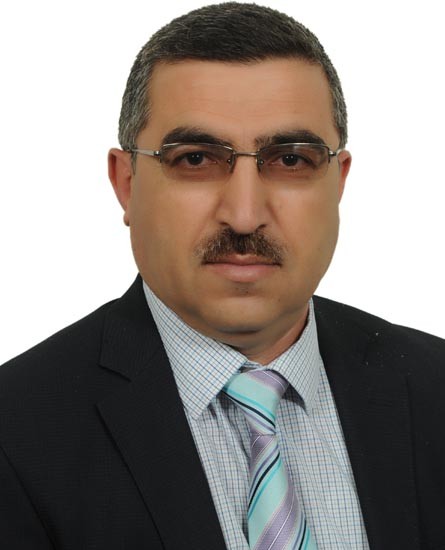
معرفی
Salih Derşevi is an Associate Professor in the Department of Basic Islamic Sciences at Karabuk University's Faculty of Theology, where he has served as full-time academic staff since 2013. His scholarly work bridges classical Arabic rhetoric with contemporary linguistic analysis, focusing particularly on Quranic exegesis and Arabic literary traditions. He previously held the position of Department Vice Chair (2020-2022) and teaches courses ranging from Arabic syntax to advanced rhetorical analysis at undergraduate and graduate levels.
His educational qualifications include:
- Bachelor's Degree from Damascus University, Syria (2001-2006)
- Master's Degree from Damascus University, Syria (2025-2025)
- PhD in Fundamental Islamic Sciences from Yalova University, Turkey (2014-2018)
Derşevi's research centers on Arabic Language and Rhetoric with specialized expertise in Quranic stylistics, lexical semantics, and comparative translation studies. His work demonstrates particular innovation in analyzing rhetorical devices within Quranic narratives and classical Arabic poetry, while his Turkish language proficiency (YDS: 97/100) informs critical studies of Turkish Quran translations. He has developed methodological frameworks using Boozieman's scale for discourse analysis and statistical stylistics.
Analysis of his 15 most recent publications reveals a concentrated research trajectory in Quranic rhetoric (60% of works), with significant contributions to Arabic poetic analysis (25%) and translation studies (15%). His 2022-2025 output shows increasing methodological sophistication through statistical analysis of lexical patterns and critical examination of rhetorical omissions in Quranic storytelling. Notable thematic progression includes moving from verse-specific analysis (2022) to comprehensive structural theories of Quranic composition (2024-2025).
Derşevi actively mentors graduate researchers as primary advisor for 16 theses (8 doctoral, 8 master's) on topics including Quranic semantics, classical Arabic poetry analysis, and linguistic transfer in second-language acquisition. He currently leads a Higher Education Council-funded research project (2025-2026) cataloging Turkish scholarly manuscripts at Şam Ez-Zahiriyah Library, demonstrating sustained institutional research engagement.
His collaborative network spans 8 international researchers including Zakaria Khalaf (2024), Ahmad Alyousef (2023), and Ahmed Najmaldin Aljabbari (2022-2023), with co-authored works examining Quranic narrative structures and Arabic linguistic nuances. The team maintains active research on Semitic language interfaces and cross-cultural rhetorical traditions.