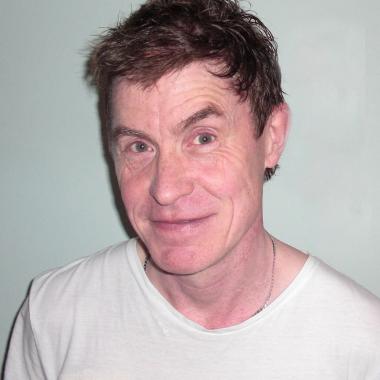
Alexander Key is an Associate Professor of Comparative Literature at Stanford University, specializing in Classical Arabic literature and the intellectual history of Arabic and Persian-speaking worlds from the 7th century onwards. His scholarship focuses on the philosophy of language, literary theory, and cross-cultural translation. Ph.D. in Arabic and Islamic Studies from Harvard University (2012) Current research: Arabo-Persian linguistic intersections, poetics in translation, and pre-modern theories of syntax and affect His articles span diverse eras and topics, including: Medieval Arabic language philosophy (5th–11th century) Modern Arabic political poetry analysis (20th–21st century) Comparative methodologies bridging Islamic and Western traditions A key editorial role includes: Board Member of Stanford University Press Advisory roles at Habib University and Stanford’s Markaz Resource Center His work bridges academic publication with public discourse through: Contributions to Arcade Colloquy Interviews on poetics, religion, and contemporary politics Podcasts and literary salon discussions
Professor Alberto Rigolio is a scholar of Classics and Ancient History at Durham University, specializing in the Eastern Mediterranean during the Roman and Late Antique periods. He focuses on Syriac literature, Greco-Roman intellectual traditions, and the reception of classical texts in early Christian and Islamic contexts. Rigolio holds a D.Phil. from Oxford University and has held prestigious fellowships at Harvard, Princeton, and All Souls College, Oxford. He serves as Chair of the Board of Examiners at Durham and is a Fellow of the Higher Education Academy. His research explores the transformation of classical dialogue forms in late antiquity, the transmission of Greek texts into Syriac and Arabic, and the cultural intersections between Greco-Roman, Christian, and Islamic traditions. Key works include Christians in Conversation (Oxford UP, 2019), which examines late antique dialogue literature, and a forthcoming book on the emergence of Syriac literature supported by British Academy and Princeton IAS fellowships. Education: BA/Milan, D.Phil./Oxford, Postdoctoral Fellowships at Harvard and Princeton Affiliations: Institute of Medieval and Early Modern Studies, Durham Rigolio's articles analyze Syriac translations of Aristotelian works, Plutarch, and Themistius, revealing how Greco-Roman thought was adapted to meet religious and cultural needs. His projects include studies on Syriac rhetoric, the Roman household in late antique conflicts, and para-biblical narratives. He supervises postdoctoral researchers and PhD students on topics ranging from Syriac literary culture to late antique religious identity. Awards: British Academy Mid-Career Fellowship (2024), All Souls College Visiting Fellowship (2024) Grants: Leverhulme Trust, British Academy, American Philosophical Society He directs research labs examining Syriac intellectual culture and co-ordinates interdisciplinary projects on late antique translation movements. Rigolio is actively involved in public outreach, offering talks on Roman religion, Palmyrene military identity, and the Graeco-Syro-Arabic textual tradition.
Professor Alberto Rigolio is a leading scholar of Classics and Ancient History at Durham University, specializing in the cultural and intellectual history of the Eastern Mediterranean during the Roman and late antique periods. He holds a D.Phil. from Oxford University and has held prestigious fellowships at Harvard Dumbarton Oaks, Princeton Society of Fellows, and All Souls College Oxford. His research focuses on Syriac literature, Greco-Syro-Arabic translation movements, and religious debates in late antiquity. Rigolio has published extensively, including his award-winning monograph Christians in Conversation (2019), and currently leads projects supported by the British Academy and the Institute for Advanced Study. He supervises PhD students across multiple institutions and mentors postdoctoral researchers like Dr. Karl Heiner Dahm and Dr. Mara Nicosia. His work bridges classical antiquity with early Christian and Islamic intellectual traditions, emphasizing literary and educational exchanges in late antique societies. Educations: D.Phil., University of Oxford (2014) MPhil/BA, University of Milan and Oxford Research Interests: Syriac literary emergence, Greek-Syriac-Arabic translation networks, late antique dialogues, early Christian theology, and the cultural history of the Roman Near East. Rigolio's current projects investigate how Syriac became a major literary language and its role in transmitting Graeco-Roman thought to early medieval cultures. Grants & Awards: British Academy Mid-Career Fellowship (2024) All Souls College Visiting Fellowship (2024) Princeton IAS Membership (2023) Advising & Mentoring: Supervised 9 PhD students, including Cédrik Michel (Lancaster University Lecturer) and Lila Knight (awarded 2024). Mentors postdoctoral scholars in areas like Syriac rhetoric and late antique religious conflict. Labs/Teams: Leads interdisciplinary research groups at Durham and collaborates with institutions like the Institute for Advanced Study, focusing on textual analysis and cultural history.
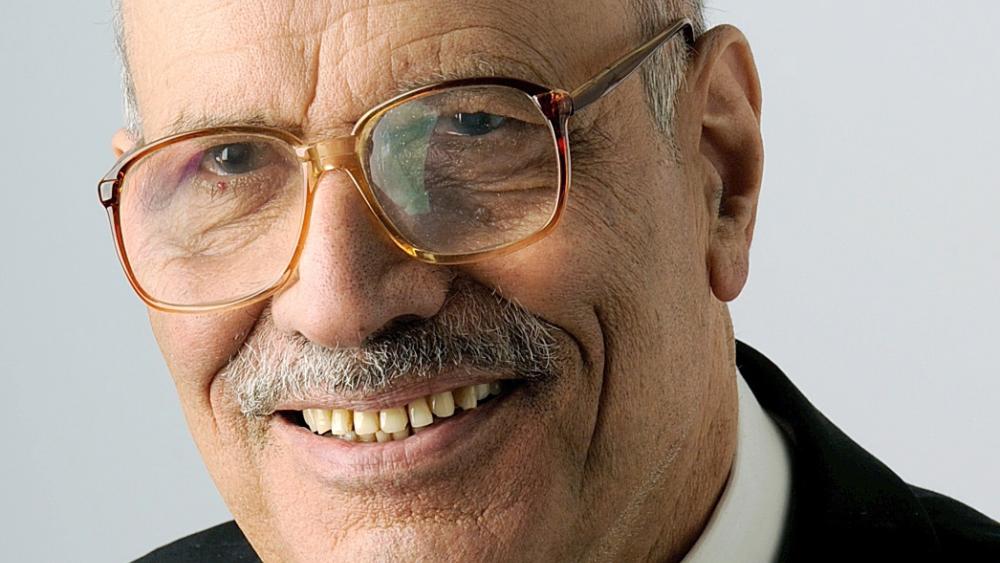
Professor Muhammad A S Abdel Haleem, OBE, is the King Fahd Professor of Islamic Studies at SOAS University of London, within the School of Languages, Cultures and Linguistics. He holds a BA from Cairo University and a PhD from the University of Cambridge (Cantab), with additional qualifications including FCIL (London). His research focuses on Quranic language, style, and translations, alongside Islamic family law and Arab society. Key interests include Qur’anic exegesis, comparative religious studies, and the intersection of scripture with contemporary issues like disability ethics and interfaith relations. Professor Haleem has supervised numerous PhD candidates exploring topics such as divine states in Sufism, gender relations in the Quran, and charitable work in multicultural societies. He has authored over 60 works, including translations of the Quran and influential studies on Quranic structure and theology. Awards: Order of the British Empire (OBE) Publications: Over 60 books and articles, including Understanding the Qur'an: Themes and Style and translations of the Quran. His work bridges academic theology with practical ethics, emphasizing contextual interpretation and intercultural dialogue. Current research continues to explore Quranic coherence, legal hermeneutics, and the Quran’s role in modern society.
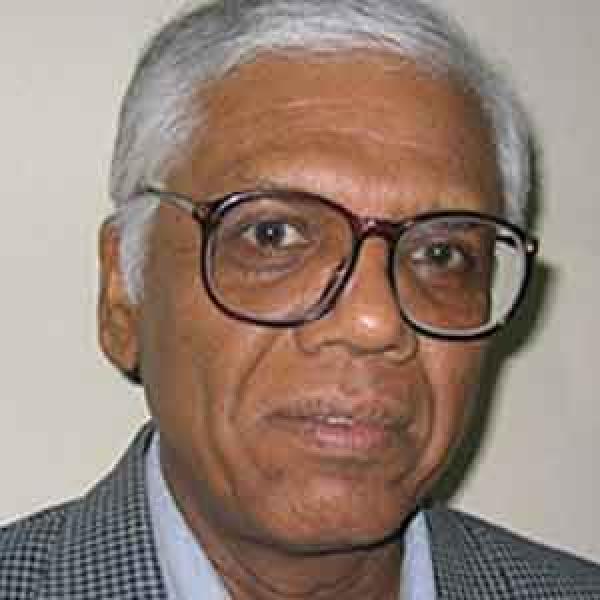
Muzaffar Alam is the George V. Bobrinsky Professor at the University of Chicago's South Asian Languages and Civilizations (SALC) , within the Division of the Arts & Humanities. He has taught at UChicago since 2001, following a three-decade tenure at Jawaharlal Nehru University (JNU). His expertise spans Mughal political history, Indo-Islamic culture, and pre-colonial South Asian religious and literary traditions. He is fluent in Persian, Arabic, Urdu, and Hindi, and actively supervises students in medieval South Asian studies. Education: Ph.D. in History, Jawaharlal Nehru University (1976) Studies at Jamia Millia Islamia and Aligarh Muslim University Research focuses on Mughal governance, Indo-Persian cultural exchange, and textual studies. He has held visiting positions at the Collège de France, Leiden University, and the EHESS (Paris). Courses taught include Mughal India, South Asian Islam, and advanced Urdu/Persian seminars. Publications include seminal works like The Mughal State 1526-1750 and Indo-Persian Travels in the Age of Discovery . His scholarship bridges history, philology, and comparative Islamic studies from an Indian perspective. Labs/Teams: Actively involved with SALC's research initiatives and textual analysis projects. Supervises advanced language studies and historical manuscript work.
Katrin Bromber is a German Researcher at the Centre for Modern Oriental Studies in Berlin, where she has led the research group "Progress and its Discontents: Ideas, Practices, Materiality" since 2014. Her career spans senior research roles at ZMO and academic teaching positions at the University of Vienna. Nationality: German. Language skills: Native German, fluent English/Swahili, moderate Amharic, good reading knowledge in French/Russian, basic Tigrinya. Habilitation (2009–): African Studies, University of Vienna PhD (1993): African Linguistics, University of Leipzig MA (1988): Swahili Studies, University of Leipzig Katrin Bromber's research interrogates intersections of body politics , sports history , Swahili linguistics , and Ethiopian modernity . Her work traces how physical culture, media representation, and colonial/imperial narratives shape national identities across Africa and Asia. Current focus: "Progress" as contested concept in Ethiopian and Gulf urbanism. Key article trends reflect her translocal methodology: 2017 studies on Ethiopian stadiums and fitness culture ; 2014-2013 publications analyzing East African military press , sports branding in the Gulf , and Swahili poetry ; 2007-2000 works on colonial linguistic politics , Indian Ocean slavery , and German colonial Swahili promotion . Recurring sub-fields: body as political text, translocal modernity, media historiography. Scientific Awards: Research Grant of the Berlin City Council (1999-2000): Gendered Slavery study Service to the Scientific Community: Chairwoman, Academic Association for Horn of Africa Studies (2012–) Editorial Advisory Board - Stichproben. Vienna Journal of African Studies (2015–) Editorial Advisory Board - Studies of Department of African Languages and Cultures (2015–) Teaching Experience: Textlinguistics, Mediacommunication, African Linguistics, Swahili (elementary/advanced), Swahili Literature, Swahili in Arabic Script at Leipzig, Humboldt-Berlin, Free Berlin, and Vienna universities Anthropology of the Body at Mekelle University Summer School Field Research: Tanzania (1993-2003): Swahili Poetry, Intellectual History Kenya (2005): Indian Ocean WW2 UAE/Bahrain (2009): Sports and Body Cultures Ethiopia (2009-2015): Sports, Body Politics
Dr. Salwa El-Awa is a Senior Lecturer in Arabic and Islamic Studies at Swansea University's School of Culture and Communication. She previously held positions at the University of Birmingham (2001-2010) and Ain Shams University in Cairo (2010-2015). Her academic roles include teaching Arabic linguistics, Qur’anic studies, and Hadith analysis, alongside supervising PhD students in translation and religious studies. Her research focuses on Qur’anic textuality, discourse markers, and Islamic movements. Key areas include textual coherence in the Qur’an, Arabic linguistic analysis, and the intersection of religion and counter-terrorism policy. Recent projects explore governance strategies engaging moderate Islamic groups to combat jihadism. El-Awa has published extensively on Qur’anic linguistics, including monographs like Textual Relations in the Qur'an (2005) and Al-Wujuh Wa al-Naza’ir (1998). Her work bridges religious studies, linguistics, and security studies, with notable contributions to Yale’s Dictionary of the Qur'an (2024) and interdisciplinary journals like International Journal of Law, Crime and Justice . She has secured £20,000 for the International Qur’anic Text Linguistics Conference (2020-2021) and served as an External Examiner for Westminster University’s Translation program (2019–2022). Her teaching includes advanced translation, healthcare interpreting, and world cinema studies.
Simon Swain is Professor of Classics and Greco-Arabic at the University of Warwick, concurrently serving as Vice-President (Engagement) at the university and Vice-President (Research and Higher Education Policy) at the British Academy. His leadership roles include former positions as Pro-Vice-Chancellor (International), Chair of the Faculty of Arts, and multiple terms as Head of the Department of Classics. His educational background includes: MA, Oxford (Pembroke College), 1980-1984 D.Phil., Oxford (Wolfson College), 1987 Swain's research centers on the reception of Greek thought in the Islamic Middle Ages and the social-cultural history of the Greek East during the Roman period. He investigates the transmission of ancient Greek science, medicine, and political thought into Islamic scholarship, employing interdisciplinary approaches that bridge Classics, History, and Islamic Studies. His work emphasizes textual transmission, cultural adaptation, and the socio-political contexts of knowledge transfer. Analysis of his publications reveals consistent engagement with Greco-Roman intellectual history and its Islamicate legacy. Key thematic trajectories include the evolution of medical knowledge from Galen to medieval Arabic texts, political theory in imperial contexts, and sociolinguistic dynamics of bilingualism. His editorial projects demonstrate increasing focus on cross-cultural transmission, particularly through critical editions of foundational texts like Ibn Abī Uṣaybiʿah's medical biographies. His honors include: Fellow of the British Academy (2015) Wellcome Trust Collaborative Investigator Award Swain supervises postgraduate research in Greek world studies, late antiquity, and Greco-Arabic scholarship. He has secured major funding from AHRC, Leverhulme, Wellcome, and EU bodies for collaborative projects examining ancient knowledge systems. Current initiatives like the "Streamlining Galen" project support early-career researchers while investigating how canonical medical texts were adapted for medieval Islamic pedagogy. He actively leads research collectives including the "Streamlining Galen" project team, which analyzes condensed medical texts that facilitated the teaching of Galenic medicine in medieval Islamic institutions. His collaborative approach extends to mentoring networks that connect Warwick with international scholars across Classics and Islamic Studies disciplines.
Yaşar Fatih AKBAŞ is an Associate Professor at Kafkas University, Faculty of Theology, Department of Basic Islamic Sciences. He specializes in Arabic Language and Rhetoric, focusing on grammatical structures, semantic analysis, and classical Arabic texts. Education: PhD in Fundamental Islamic Sciences, Atatürk University (2016-2020) Master's in Arabic Language and Rhetoric, Atatürk University (2014-2016) BA in Theology, Atatürk University (1997-2002) Research Interests: Arabic Grammar Rhetoric and Stylistics Semantics and Syntax Quranic Exegesis Historical Linguistics Scientific Contributions: He has published 11 articles, focusing on topics like particle analysis, syntactic flexibility, and stylistic features in classical Arabic texts. His work spans journals such as Şırnak University Theology Faculty Journal and Sakarya University Theology Faculty Journal. Awards: Aylıkla Ödüllendirme (2010) Academic Collaborations: He has co-authored works with Yakup Kızılkaya (2024) and advised Master's theses for Adem Ağbaba (2025) and Fırat Çeledir (2023).
Lucia Avallone is an Associate Professor at the University of Bergamo, teaching Arabic language and literature. She holds a PhD in 'Near Eastern and Maghreb Studies. Cultural Specificities and Intercultural Relations' from the University of Naples 'L'Orientale' (2011) and graduated from the University of Turin (1989). National Scientific Qualification for Full Professor in Cultures of the Ancient Near East, Middle East, and Africa (2024-2035) Member of AIMA (International Association for the Study of Middle and Mixed Arabic) Advisor for Master's Degree in Modern Languages for International Communication and Cooperation (LM-38) Member of PhD programs in Philological and Linguistic Studies (Bergamo) and Linguistic Sciences (Bergamo-Pavia) Her research focuses on modern and contemporary Arabic language and literature , especially linguistic variation , code switching between standard and vernacular Arabic , and Arabic-European language contact . She analyzes political discourse and develops methodologies for Arabic language teaching, with particular attention to dialect-standard dynamics in literary and pedagogical contexts. Recent publications examine: Linguistic creativity in contemporary Egyptian fiction Sociolinguistic aspects of modern Arabic narratives Translation challenges between Arabic dialects and Standard Arabic Historical connections between Arabic and Mediterranean cultures She supervises master's theses and participates in doctoral committees, emphasizing: Intercultural communication Postcolonial Arabic literature Language pedagogy innovations
Charles Denroche is Senior Lecturer in Linguistics and Applied Language Studies at the University of Westminster, based in the School of Humanities within the College of Liberal Arts and Sciences. His interdisciplinary career combines bioscience (Magdalen College, Oxford) with advanced linguistics (PhD UCL-IOE, PGDip Westminster, PGCE TESOL IOE), and extensive professional experience as translator, lexicographer and language educator. Education & Training MA in Bioscience – Magdalen College, University of Oxford PhD in Education (Linguistics) – UCL Institute of Education, University of London Post-Graduate Diploma in Linguistics – University of Westminster PGCE TESOL – UCL Institute of Education Certificate in English Phonology – International Phonetic Association Studies in Italian Language & Literature – University of Florence Studies in Germanistik & Anglistik – Heinrich Heine University of Düsseldorf Research Interests Denroche’s work centres on how meaning is made through language. His research integrates cognitive linguistics , semiotics and translation studies to explore the roles of metaphor and metonymy in discourse, multimodal communication and pedagogy. He is particularly interested in the cognitive processes that underlie figurative language, the interface between grammar and semantics, and how these insights can inform translator training and language education. Current projects extend his theory of metonymic processing to literary translation collaboration and the analysis of visual and multimodal texts, aiming to bridge theoretical linguistics with practical applications in education and professional practice. Recent Publications & Trends Over the past decade Denroche has produced a coherent body of work that moves from foundational theory-building—most notably the 2015 monograph Metonymy and Language —to innovative methodological applications such as using drawing as a research tool for metaphor-led discourse analysis. Across 15 key outputs (2011-2024), the research trajectory shows a consistent focus on metaphtonymy (the interplay of metaphor and metonymy) at text level and on developing practical frameworks for translators, educators and discourse analysts. Honours & Awards Award of Excellence in Teaching and Learning (2008) – Westminster Exchange, University of Westminster Doctoral Supervision & Grants Denroche currently supervises one active doctoral researcher (MPhil/PhD) investigating metaphor in Arabic urban literature. He welcomes applications from prospective postgraduate students in the areas of figurative language, semiotics/multimodality, discourse analysis and translation/interpreting studies. Professional Memberships & Service International Association for Cognitive Semiotics (IACS) Researching and Applying Metaphor (RaAM) External examiner for Birkbeck, University of Hertfordshire, UCL Institute of Education Reviewer for American Journal of Semiotics , Journal of Pragmatics , Language and Cognition , Cognitive Linguistics Studies , Metaphor and the Social World
Assoc. Prof. USAME İHTİYAR holds the position of Associate Professor at Bingöl Üniversitesi's Fen Edebiyat Fakültesi, specifically in the Arapça Mütercim ve Tercümanlık Anabilim Dalı. He previously held roles at Damascus University and Bilad Al Sham Üniversitesi, transitioning to Bingöl Üniversitesi in 2013. His academic journey includes a PhD from Damascus University (2004) focusing on Sicilian Arabic poetry and a career spanning over three decades in academic administration and editorial roles. Education: B.A. (1987-1991), M.A. (1998), and Ph.D. (2004) in Arabic Language and Literature from Damascus University. Academic titles include Doktor Öğretim Üyesi (2006-2011), Doçent (2006–present), and multiple international editorial board memberships. Research interests center on classical Arabic poetry, Islamic literary criticism, Andalusian literature, and Arabic language pedagogy. He has advised over 30 graduate students and authored/co-authored books on topics like Sicilian Arabic poetry, tasavvuf (Sufi) literature, and translation studies. His work appears in journals such as Şarkiyat Mecmuası and Fırat Üniversitesi İlahiyat Fakültesi Dergisi, with a focus on Quranic linguistics and medieval Arabic texts. Professional activities include editorial roles for Diyanet Arapça İlmi Dergisi (2019–2022) and membership in international academic committees like the Katar Üniversitesi's Postgraduate Academic Board. His contributions span editorial leadership, conference participations, and authoring textbooks on Arabic grammar and rhetoric. Notable works include Siciliya Şiirleri Antolojisi (2016) and Modern Tasavvuf Şiirinde Manevi Değerler (2022). His research bridges classical Arabic literary traditions with contemporary pedagogical challenges in teaching Arabic as a second language.
Professor El Mustapha Lahlali is a distinguished academic at the School of Languages, Cultures and Societies, University of Leeds, where he holds the position of Professor of Applied Linguistics and Media. His research and teaching focus on Arabic media discourse, critical discourse analysis, translation, ideology, and pedagogy. Education: BA in Applied Linguistics MA in Applied Linguistics PhD in Critical Discourse Analysis and Classroom Discourse His research interests span Arab media and society, discourse analysis in educational and political contexts, appraisal theory, translation and ideology, and teaching Arabic as a foreign language. He has published extensively on media discourse, political rhetoric, and translation practices in Arabic contexts, contributing significantly to the understanding of linguistic strategies in media and political communication. His recent publications reflect a strong focus on discourse in conflict, media framing, translation challenges, and pedagogical development. These works collectively emphasize critical analysis of Arabic media, political transitions, and intercultural communication, revealing trends in ideological representation and linguistic power dynamics. Scientific Awards: No specific awards listed in the text. Professor Lahlali has supervised 27 PhD students to completion and currently mentors several more on topics including media translation, ideology, discourse analysis, and pedagogy. He has served as internal and external examiner for over 100 PhD theses across the UK and internationally. He has secured and contributed to numerous research grants in Arabic, linguistics, and Middle Eastern studies. His leadership extends to organizing over 45 academic events, including conferences and workshops. He is actively involved in research groups and welcomes PhD applicants in areas related to Arabic media, discourse analysis, and translation. He is a key figure in professional associations such as BATA (Founder and President), BRISMES, UCML, and APETAU.
Professor Ahmed H. al-Rahim is an Associate Professor in the Department of Religious Studies at the University of Virginia, affiliated with the College of Arts & Sciences. He holds a Ph.D. from Yale University (2009) and previously served as Senior Research Analyst at the U.S. Department of State's Office of Analysis for Near East and South Asia. His research focuses on medieval Arabic intellectual and philosophical history, with special emphasis on Avicenna's reception, Islamic ethics, and the historiography of Arabic philosophy. He currently directs the Islamic Studies program and the Medieval Studies program at UVa. Education: Ph.D. in Near Eastern Languages and Civilizations from Yale University (2009). Research Interests include: Arabic philosophical historiography, medieval Islamic ethics, Qur'anic exegesis, and the role of biography in intellectual tradition. He leads the Einstein Stiftung Berlin-supported project Betwixt and Between: The Historiography of Medieval Arabic Philosophy , challenging Eurocentric periodizations of Islamic thought. Major Awards: Mellon Humanities Fellowship (2019–2020), Henry Luce Foundation Fellowship (2013), and Einstein Stiftung Berlin Fellowship (2022). His publications span monographs like The Creation of Philosophical Tradition (2018) and articles in New Literary History , Curiositas , and The Cambridge History of World Literature . Teaching: Undergraduate courses on Classical/Modern Islam and graduate seminars on Arabic theology, Qur'anic studies, and medieval literary biography. Advises on topics combining philosophy, ethics, and imperial culture.
MUSTAFA KESKİN serves as an Associate Professor in the Department of Arabic Language and Rhetoric within the Faculty of Theology at Gaziantep University, Turkey. Appointed to this position in 2021 after serving as a Doctor Lecturer since 2013, his academic career is deeply rooted in Islamic theological studies with specialized expertise in Arabic linguistics and rhetoric. His institutional affiliation spans both the Department of Fundamental Islamic Sciences and the specialized Department of Arabic Language and Rhetoric, reflecting his dual focus on theological scholarship and linguistic analysis. His educational trajectory includes: Doctorate (2013-2017): Gaziantep University, Institute of Social Sciences, Department of Basic Islamic Sciences Master's (2011-2013): Harran University, Institute of Social Sciences, Tafsir (Thesis) Licence (2008-2010): Ankara University, Faculty of Theology, Theology Undergraduation Completion (Distance Education) Associate Degree (2006-2008): Anadolu University, Faculty of Open Education, Department of Theology Licence (1995-2002): Anadolu University, Faculty of Business Administration Professor Keskin's research centers on the intersection of Arabic linguistic structures and Islamic theological texts, with particular emphasis on rhetorical devices in the Quran and Hadith literature. His work explores how classical Arabic grammatical frameworks inform Quranic exegesis, analyzes historical linguistic schools like the Baghdad tradition, and investigates poetic devices in early Islamic literature. This scholarship bridges philological precision with theological interpretation, revealing how linguistic choices shape religious meaning in foundational Islamic texts. His publications consistently demonstrate methodological rigor in applying classical Arabic linguistic theories to theological source materials. Analysis of his 15 most recent publications (2018-2024) reveals three dominant scholarly trajectories: systematic examination of rhetorical devices in Quranic surahs (particularly tibāq and metaphor), critical engagement with classical Arabic grammatical treatises (including works by Müberred and al-Fārisī), and historical studies of Islamic scholarly networks connecting Anatolia and Syria. His work demonstrates growing international collaboration, with increasing co-authorship in Arabic-language publications alongside Turkish and English outputs. The research consistently applies linguistic analysis to theological questions, creating a distinctive niche in Quranic stylistics and classical Arabic rhetoric. No scientific awards were documented in the source materials. Professor Keskin has supervised 15 graduate students across doctoral and master's programs, with thesis topics reflecting his core research interests. Doctoral work includes semantic analysis of Quranic roots (e.g., 'krm') and classical rhetorical poetry, while master's research spans prophetic traditions in poetry, Quranic command structures, and human values in early Arabic poetry. His editorial work on 6 academic volumes complements this mentoring role, particularly in publishing classical Arabic texts with contemporary commentary. Conference presentations (9 international venues) demonstrate active scholarly engagement, though specific research grants were not documented in the source materials. No dedicated research laboratories or formal research teams were mentioned in the institutional documentation.