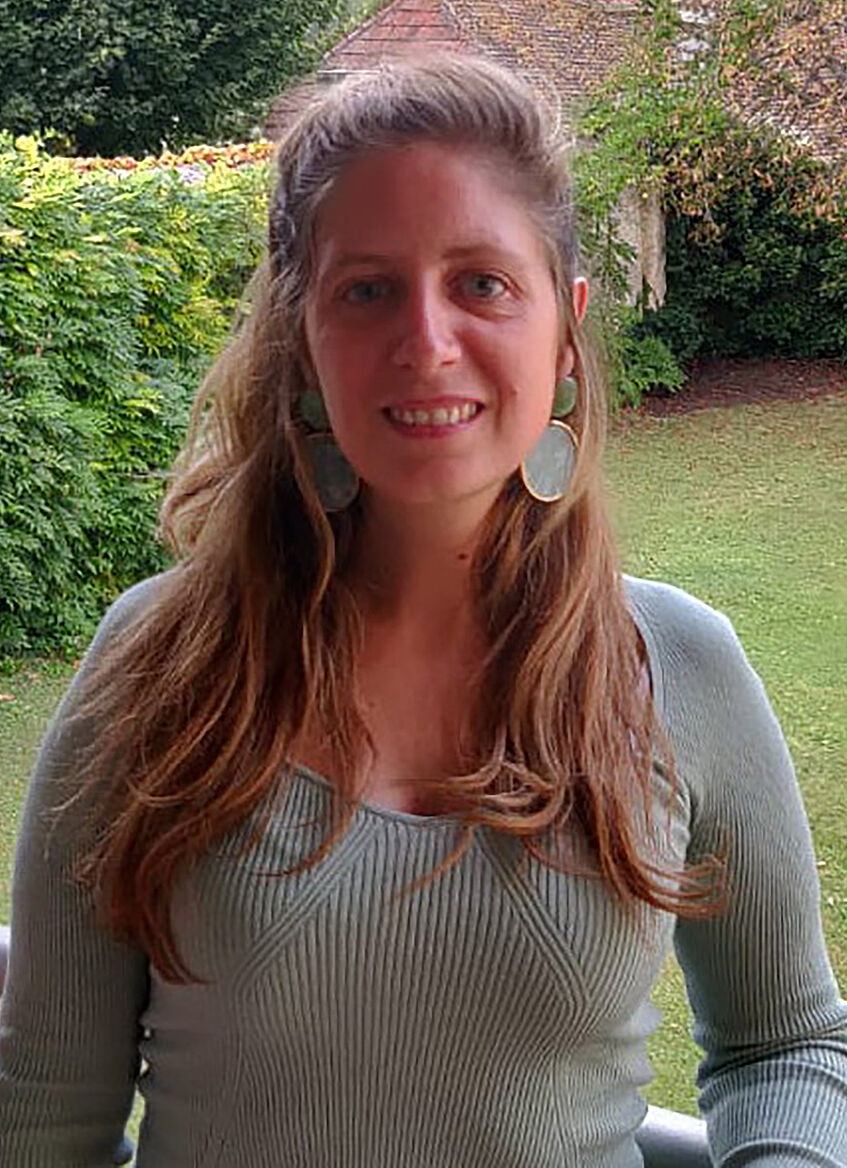
Graciela S. Cabana serves as Professor and Director of Graduate Studies in the Department of Anthropology within the College of Arts and Sciences at the University of Tennessee, Knoxville. She directs the Molecular Anthropology Laboratories (MAL-UTK), a specialized research facility dedicated to DNA analyses of humans with expertise in degraded DNA, ancient DNA, and archaeogenetics. Education: Ph.D. in Anthropology, University of Michigan, Ann Arbor M.A. in Anthropology, University of Michigan, Ann Arbor B.A. in Political Science, University of California, Berkeley As an anthropologist, Dr. Cabana studies the human genome within a biosocial context, drawing insights from history, archaeology, philosophy of science, science and technology studies, and human evolutionary studies. Her research focuses on human movements and their consequences for genome evolution and identity formation. She incorporates tools from ancient and modern DNA analysis, ethnography, and historical analysis in her work on paleogenomics, bioarchaeology, and science & technology studies. Her extensive publication record reveals consistent scholarly contributions in population genetics, migration studies, and interdisciplinary approaches to anthropological questions, with particular emphasis on ancient DNA analysis of historical populations in the Americas, community-engaged research with descendant communities, and the social dimensions of genetic research. Dr. Cabana actively mentors numerous graduate students across various research projects related to paleogenomics, bioarchaeology, and science & technology studies. She teaches courses including Theory in Biological Anthropology, Anthropology & the Genome, DNA Methods, and What is Science? Additionally, she serves as Co-Editor-in-Chief of the Yearbook of Biological Anthropology and Associate Editor for Human Biology and Bioarchaeology International. The Molecular Anthropology Laboratories (MAL-UTK), which she directs, consists of both Main Lab facilities for modern DNA studies and Clean Room Labs specifically designed for ancient/paleogenomic DNA studies of degraded samples. The laboratory complex is USDA certified to receive foreign soils and includes specialized facilities for DNA extraction, amplification, and library preparation.