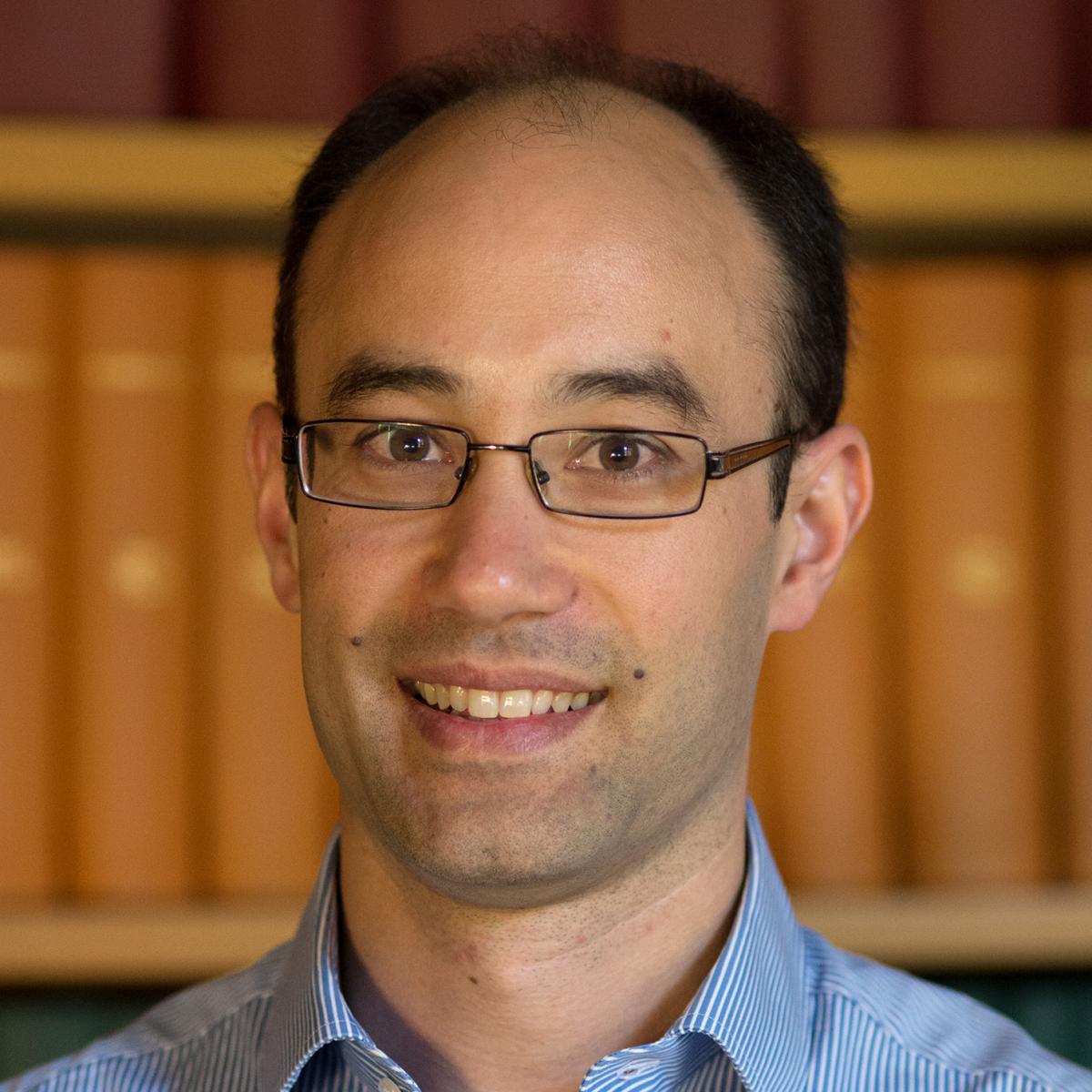
Rui Ponte Costa is an Associate Professor at the University of Oxford's Department of Physiology, Anatomy & Genetics (DPAG). He leads the Neural & Machine Learning group, focusing on computational models of learning in the brain by integrating AI principles. His research emphasizes cortical circuits, neuromodulation, and subcortical regions to understand credit assignment mechanisms. He holds a PhD in Computational Neuroscience and Machine Learning from the University of Edinburgh and has held postdoctoral positions at the University of Oxford, University of Bern, and McGill University. His group's work bridges theoretical and experimental neuroscience, collaborating with institutions like MILA and Google DeepMind. Education: Bachelor's in Computer Science, University of Coimbra (Portugal) PhD in Computational Neuroscience, University of Edinburgh (UK) Research Interests: Neural mechanisms of learning and plasticity Machine learning inspired by biological systems Cerebro-cerebellar interactions Neuromodulatory systems' role in reinforcement learning Collaborators include Christopher Summerfield, Timothy Behrens, and Yarin Gal. His lab's work has been published in Nature Communications , Cell Reports , and top machine learning venues. He co-organizes the Oxford NeuroTheory Forum and has pioneered models explaining cortical dynamics in task acquisition and consolidation. Advising and Grants: No specific grants listed, but active in collaborative research networks. Advising focuses on PhD students in computational neuroscience and AI. Labs/Teams: Neural & Machine Learning Group at DPAG, part of Oxford's broader neuroscience and AI ecosystem.
Andrea Meilán-Vila is an Assistant Professor in the Department of Statistics at Universidad Carlos III de Madrid since 2021, holding a Juan de la Cierva Fellowship since 2023. She earned her PhD in Statistics from Universidade da Coruña (2021) and previously served as a Postdoctoral Fellow at Universidade de Santiago de Compostela's Department of Statistics, Mathematical Analysis and Optimisation. Her research focuses on nonparametric methods for analyzing complex data types, including directional, spatial, and functional data. Key areas include kernel smoothing techniques, goodness-of-fit testing for regression models, and spatial trend estimation. She serves as an Associate Editor for the Journal of Nonparametric Statistics . Recent work emphasizes applications in climate science (temperature curve modeling), fluid dynamics (wake flow control), and biomedical imaging (hippocampus shape analysis). Her methodologies address challenges like sparse data estimation and spatial correlation in regression frameworks. Key Projects: STENED (Stein-based goodness-of-fit tests for non-Euclidean data) Awards: Juan de la Cierva Fellowship (2023) Publications span journals like Journal of Fluid Mechanics , Statistical Papers , and TEST , with a focus on methodological advancements in statistical modeling and computational validation.
Prof. Dr. Christian Leibold is a former faculty member of the Faculty of Biology at Ludwig-Maximilians-Universität München (LMU). His research focuses on theoretical and experimental neuroscience, particularly the hippocampal formation's role in spatial navigation and temporal coding. He investigated topics such as auditory processing, phase precession in hippocampal neurons, and the interaction between brain regions like the medial entorhinal cortex and hippocampus. Research Interests: Modeling hippocampal sequences and spatial navigation Temporal processing in auditory brainstem circuits Neuronal mechanisms of grid cells and place fields Data analysis of hippocampal activity patterns Collaborations: University of California San Diego (UCSD) Charité – Universitätsmedizin Berlin Bernstein Center for Computational Neuroscience (BCCN) Munich His work combines computational modeling with experimental approaches, addressing how neural circuits process spatial and temporal information. He contributed to understanding axonal myelination dynamics and the role of medial superior olive neurons in auditory localization.
Professor Maria Wimber is a faculty member in the School of Psychology & Neuroscience at the University of Glasgow. Her research focuses on understanding how the human brain reconstructs memories, with a particular emphasis on neural oscillations (e.g., theta rhythms) and the adaptive nature of memory. She employs techniques such as EEG, MEG, fMRI, and direct hippocampal recordings from epilepsy patients to study memory dynamics, interference, and reconsolidation. Key achievements include receiving an ERC Starting Grant and a British Academy Fellowship. Her work is funded by grants from the ESRC, BBSRC, and Stiftelsen Olle Enkvist. She supervises postgraduate students like Stratos Koukouvinis and Christopher Postzich, and collaborates with researchers on projects involving neuroimaging tools like the Brain Time Toolbox. Her research highlights how memory retrieval can both stabilize and disrupt competing memories, with findings published in journals like Nature Neuroscience and Current Biology. She explores mechanisms like theta phase separation, cortical pattern suppression, and the hippocampus's role as a 'switchboard' between perception and memory. Recent studies include reconstructing visual memory trajectories and investigating how theta oscillations coordinate memory reactivation. Her lab's work bridges cognitive psychology and neuroscience, with implications for understanding memory disorders and cognitive aging.
Chantal Stern is Professor and Department Chair at Boston University's College of Arts and Sciences, where she directs the Cognitive Neuroimaging Laboratory and Cognitive Neuroimaging Center. Her research uses fMRI to study memory formation, spatial navigation, and neurodegenerative conditions. Research examines neural mechanisms underlying visual/spatial information processing, memory encoding/retrieval dynamics, and cognitive changes in normal aging and dementia pathologies. Current projects investigate navigation systems, attentional networks, and computational models of reasoning. Publications demonstrate consistent methodological innovation in neuroimaging, particularly in mapping temporal aspects of navigation and developing predictive models integrating perceptual and abstract reasoning systems.
Kirstin N. Sterner is an Associate Professor in the Department of Anthropology at the University of Oregon, where she also serves as Associated Faculty in the Institute of Ecology and Evolution. She co-directs the Molecular Anthropology Lab and is a key member of the University of Oregon Molecular Anthropology Group, which serves as an intellectual home for research, training, and outreach in ecological, evolutionary, and functional genetics/genomics in humans and non-human primates. Dr. Sterner's educational background includes: B.A. from New York University (2001) M.A. from New York University (2005) Ph.D. in Anthropology from New York University (2009) Postdoctoral Fellowship at Wayne State University School of Medicine (2009-2011) As a molecular anthropologist, Dr. Sterner's research focuses on understanding the genetic basis of distinctive human and non-human primate traits. She employs both within and between species perspectives, using a combination of genomics (broadly defined to include transcriptomics and epigenomics) and molecular cell biology to connect primate genotypes and phenotypes to address larger questions about primate evolution, biology, health and disease. Her work spans several key areas: the evolution of primate immune responses, epigenetics of aging and age-related diseases, muscle fiber type and the evolution of bipedalism, and human brain development and evolution. She is particularly interested in the role regulatory variation plays in human traits and diseases and how evolution has shaped these regions of the genome. Dr. Sterner's recent publications demonstrate a strong focus on aging research using primate models, particularly examining epigenetic changes associated with aging. Her work also investigates the genetic basis of skeletal muscle adaptations related to human bipedal locomotion, immune responses to viral infections in primates, and the molecular underpinnings of human brain evolution. These studies often combine genomic approaches with experimental validation to connect genetic variants to phenotypic outcomes. Dr. Sterner's research has been supported by prestigious funding sources including the National Institutes of Health, National Science Foundation, Leakey Foundation, Wenner-Gren Foundation for Anthropological Research, and the American Association of University Women. In terms of advising, Dr. Sterner has mentored numerous graduate and undergraduate students. Her current PhD candidates include Samantha Queeno, who researches the genetic mechanisms underlying myofiber development and hominin endurance locomotion, and Tanner Anderson, who studies molecular signatures of aging in the primate brain. Former students include Elisabeth A. Goldman (PhD 2022), Noah D. Simons (PhD 2018), and several others who have gone on to successful careers in academia, healthcare, and industry. Dr. Sterner co-directs the Molecular Anthropology Lab located in Pacific Hall 10A. The lab is part of the University of Oregon Molecular Anthropology Group, which provides an intellectual home for research, training, and outreach in ecological, evolutionary, and functional genetics/genomics in humans and non-human primates. The lab actively pursues research in primate immunity, adaptation to viral infection, aging, and human brain evolution.
Steven Laviolette is a Professor in the Department of Anatomy and Cell Biology at the Schulich School of Medicine and Dentistry, University of Western Ontario. He holds a Ph.D. and B.Sc. from the University of Toronto. His laboratory investigates neuropsychiatric disorders (addiction, depression, schizophrenia, PTSD, anxiety) through neuropharmacology and neurodevelopment, focusing on cannabinoids, opioids, and nicotine. Key research areas include molecular signaling in prefrontal cortex-amygdala-hippocampus circuits, neurodevelopmental impacts of adolescent drug exposure, and therapeutic applications of phytocannabinoids like CBD. Research explores how THC and CBD modulate emotional processing, opioid/nicotine addiction mechanisms, and long-term neuroadaptations from developmental drug exposure. Articles reveal consistent themes: cannabinoid interactions with dopaminergic/serotonergic systems, fear/aversion memory pathways, and prefrontal cortical dysfunction in psychiatric disorders. Neurodevelopmental studies highlight persistent anxiety/depression phenotypes from adolescent nicotine or THC exposure. C.I.H.R. New Investigator Fellowship Early Researcher Award (Ontario) Young Investigator Award (N.A.R.S.A.D) New Investigator Award (Canadian Psychiatric Research Foundation) Leader’s Opportunity Fund (Canada Foundation for Innovation) Faculty Scholar's Award (Western Ontario) Laviolette mentors 25+ graduate students and 17 postdoctoral researchers, directing a lab with collaborations across Western Ontario departments (Psychiatry, Physiology, Chemistry). He serves on CIHR review panels and the Canadian Institute for Military/Veteran’s Health Research, previously chairing the Ontario Mental Health Foundation review committee.
Vikaas Sohal, MD, PhD is a Professor in the Department of Psychiatry at the University of California, San Francisco (UCSF) School of Medicine and a member of the UCSF Weill Institute for Neurosciences. He directs a neuroscience laboratory investigating the brain circuits underlying fundamental aspects of cognition and emotion, with particular focus on gamma oscillations in normal cognition and schizophrenia, as well as how rhythmic brain activity encodes emotional states. Dr. Sohal is also a board-certified psychiatrist who supervises residents in the Early Psychosis (PATH) clinic. Dr. Sohal earned his A.B. and S.M. in Applied Mathematics from Harvard University in 1997, followed by an M.A.St. in Mathematics from the University of Cambridge in 1998. He completed his M.D./Ph.D. in Neuroscience at Stanford University in 2005, where he also completed his residency in adult psychiatry. During his residency, he conducted postdoctoral research with Dr. Karl Deisseroth, performing some of the first experiments using optogenetics to study information processing in brain circuits. Dr. Sohal's research has focused on neural circuit mechanisms underlying cognitive and emotional processes, with particular emphasis on gamma oscillations, prefrontal-hippocampal interactions, and the role of specific interneuron subtypes in information processing. His laboratory has made significant contributions to understanding how parvalbumin interneurons generate gamma oscillations that organize prefrontal networks to promote behavioral adaptation. His recent work has explored the circuit basis of emotional states, pain-related aversion, and neuropsychiatric disorders. His publication record shows a consistent trajectory of high-impact research, with recent publications spanning topics from psilocybin effects to thalamocortical organoids for neuropsychiatric disorder modeling. His work demonstrates a progression from fundamental circuit mechanisms to translational applications for psychiatric disorders, particularly focusing on schizophrenia and emotional processing abnormalities. Dr. Sohal has secured continuous NIH funding as Principal Investigator since 2009, including multiple R01 grants, an R56, DP2, R00, and K99 awards, demonstrating sustained research productivity and significance. His research program represents a sophisticated integration of molecular, cellular, circuit, and behavioral approaches to understand and potentially treat neuropsychiatric disorders.
Daniel L. Schacter is the William R. Kenan, Jr. Professor of Psychology at Harvard University, where he has served since 1991 and chaired the Psychology Department from 1995–2005. He leads the Schacter Memory Lab, pioneering research on human memory's cognitive and neural foundations through behavioral experiments and neuroimaging. His educational trajectory includes a B.A. from the University of North Carolina at Chapel Hill (1974) and a Ph.D. from the University of Toronto (1981), followed by a professorship at the University of Arizona (1987–1991) before joining Harvard. Dr. Schacter's work centers on memory's constructive nature—exploring why memory is inherently fallible and how distortions reveal fundamental mechanisms. His seminal contributions include the theory of episodic simulation (memory's role in imagining future events), links between memory and creativity, aging effects on cognition, and the neural basis of memory errors. He integrates fMRI, cognitive paradigms, and neuropsychological approaches to dissect these processes. Recent publications (2023–2025) emphasize clinical applications in mental health (e.g., suicidal adolescents), AI-creativity interactions, and aging-related memory changes, consistently highlighting the adaptive value of memory distortions across diverse contexts. Major accolades include: Warren Medal from the Society of Experimental Psychologists American Psychological Association's Award for Distinguished Scientific Contributions Election to the American Academy of Arts and Sciences and National Academy of Sciences William James Book Awards for Searching for Memory (1996) and The Seven Sins of Memory (2001) His lab secures substantial grant funding to investigate memory's role in future thinking and creativity, producing over 400 publications. Mentoring spans generations of cognitive neuroscientists, though specific advisees aren't listed in source materials. The Schacter Memory Lab maintains a collaborative environment focused on memory's adaptive functions using cutting-edge neuroimaging and behavioral methods.
Jose Luis Cantero Lorente is a University Professor in the Department of Physiology, Anatomy and Cell Biology at Pablo de Olavide University, specializing in neuroscience with a primary focus on Alzheimer's disease and neurodegenerative disorders. His work bridges electrophysiology, neuroimaging, and biomarker discovery to understand cognitive decline in aging. Education: Doctorate from the University of Seville (1999) with thesis: "Electrophysiological characterization of alpha activity in three states of brain activation in human subjects: relaxed wakefulness, drowsiness and REM phase", supervised by Dr. Carlos María Gómez González. Research Interests: Dr. Cantero Lorente's research spans Alzheimer's Disease , Neuroscience , and Biomarkers , with emphasis on early detection mechanisms through salivary, blood, and CSF analysis. He investigates sleep-memory interactions , metabolic drivers of neurodegeneration (e.g., insulin resistance), and neuroinflammatory pathways using multimodal approaches including proteomics, lipidomics, and functional MRI. His pioneering work established salivary lactoferrin as a diagnostic tool for Alzheimer's. Publication Trends: His 2022-2025 publications reveal a strategic shift toward multimodal biomarker integration , combining amyloid-beta, tau, and metabolic markers for early Alzheimer's detection. Key themes include Parkinson's disease proteomics (e.g., candesartan neuroprotection), herpes virus-amyloid links in aging, and intracortical myelin alterations as precursors to cognitive decline. Recent work increasingly incorporates machine learning for database analysis and explores angiotensin-based neuroprotective strategies. Scientific Awards: No awards were specified in the source material. Advising and Grants: He supervises doctoral candidates in the Biotechnology, Biomedicine and Health Sciences program at Pablo de Olavide University, specifically guiding the "Early Detection of Alzheimer's Disease" track. His research is supported by Spain's PAIDI framework (Health Science and Techniques), with projects focusing on interdisciplinary audiological databases and neural network alterations in mild cognitive impairment. Labs and Teams: As leader of the LNF Functional Neuroscience research group, he directs studies on electrophysiological correlates of cognitive decline, utilizing EEG, MRI, and molecular techniques to map structural-functional brain changes in Alzheimer's progression. The group collaborates extensively on national initiatives for biomarker validation in neurodegenerative diseases.
Jan G. Bjaalie is Professor of Neuroinformatics and Dean of Research and Innovation at the University of Oslo Faculty of Medicine . Since 2023 he heads the faculty’s research and innovation strategy, while directing the Neural Systems and Graphics Computing Laboratory at the Institute of Basic Medical Sciences. Education: 1990 Ph.D. in Neuroanatomy, University of Oslo 1986 M.D., University of Oslo Research interests revolve around collaborative and open neuroscience, digital brain atlasing, and the cyber-infrastructures that enable data sharing. He leads efforts to build next-generation atlases that integrate multi-scale brain architecture and connectivity data, and to develop ontologies and FAIR-compliant platforms for global neuroscience. Recent work emphasizes in silico integration of rodent and human imaging datasets, leveraging machine-learning registration tools and cloud-based services such as EBRAINS. The goal is to transform how brain data are stored, visualised and reused across laboratories worldwide. Scientific output & impact: A scan of publications from 2023-2025 reveals a strong focus on digital atlas frameworks, automated image registration (DeepSlice, DeMBA), open data standards (AtOM ontology), and large-scale analyses of genetic influences on brain structure in Alzheimer’s models. These works collectively advance reproducible, high-throughput neuroanatomy and cross-species translation. Grants & leadership roles: Coordinator/Partner in EU Flagships EBRAINS 2.0, BRAIN Health, Human Brain Project (2013-2026) Infrastructure Director, Human Brain Project (2018-2023) Leader of Neuroinformatics Platform & EBRAINS Data Services (2017-2023) Head of Institute of Basic Medical Sciences (2009-2016) Executive Director, International Neuroinformatics Coordinating Facility (INCF) (2006-2008) Chair, International Brain Initiative (2021-) Editorial & governance service: Founding Chief Editor Frontiers in Neuroinformatics (2007-), Section Editor Brain Structure and Function (2002-2020), member of the INCF Governing Board and EBRAINS AISBL Management Board, and numerous international advisory panels on data governance and ethics. His laboratory hosts the Norwegian Neuroinformatics Node and collaborates closely with global consortia to deliver open-access atlases, software pipelines and FAIR data standards that underpin modern neuroscience.
Michael Dulas is an Assistant Professor in the Department of Psychology at Binghamton University, where he leads the Cognition, Aging and Memory Performance (CAMP) Lab established in Fall 2023. His research focuses on understanding how the hippocampus and prefrontal cortex (PFC) interact in relational memory processes, particularly in healthy aging and traumatic brain injury (TBI) contexts. He employs neuroimaging, eye-tracking, and neuropsychological methods to distinguish healthy aging patterns from pathological conditions. Notably, his work demonstrates that healthy aging involves reduced PFC recruitment during memory tasks, while hippocampal dysfunction may signal TBI or pathological aging. He collaborates with Melissa Duff (Vanderbilt) and Neal Cohen (UIUC) on TBI-related memory impairments. Education: Postdoctoral Fellowship: University of Illinois MS and PhD: Georgia Institute of Technology BS: University of Michigan Research Interests: Cognitive neuroscience of memory systems, aging-related neural changes, TBI effects on relational memory, and eye movement analysis in memory tasks. His work emphasizes the interplay between hippocampal and PFC systems, with recent findings showing TBI disrupts all domains of relational memory even at short delays. Teaching: Courses include Perception (PSYC 351), Prefrontal Cortex and Executive Function (PSYC 473A), and a graduate module on Memory (PSYC 511). Labs & Teams: Directs the CAMP Lab, focusing on cognitive aging and TBI recovery. Collaborations include projects funded by NIH grants investigating neural mechanisms of memory deficits.
David Dupret is Professor of Neuroscience at the University of Oxford and MRC Investigator at the MRC Brain Network Dynamics Unit within the Nuffield Department of Clinical Neurosciences, Faculty of Medical Sciences. He serves as Tutorial Fellow in Biomedical Sciences at St Edmund Hall College and maintains an ongoing appointment as Professeur Agrégé ès Sciences Naturelles with the French Ministry of Education since 2000. Ph.D. in Neuroscience, Institute INSERM Francois Magendie, University of Bordeaux (2007) MSc in Neuroscience, University of Bordeaux (2003) Agrégation de l'Université in Natural Sciences, France (2000) Undergraduate studies in Natural Sciences, University of Bordeaux (1996-1999) Professor Dupret's research focuses on the brain network physiology of memory, particularly investigating how neural circuits in the hippocampus and related structures encode, consolidate, and retrieve memories. His work integrates advanced electrophysiological techniques, optogenetics, and behavioral paradigms to understand the dynamic interactions within brain networks during memory processes. His laboratory examines both physiological and pathological aspects of memory function, with implications for understanding neurological disorders affecting cognition. The Dupret Group at the MRC Brain Network Dynamics Unit has established itself as a leading center for systems neuroscience research, employing cutting-edge methodologies to unravel the complex neural mechanisms underlying memory formation and recall. Boehringer Ingelheim FENS Research Prize (2018) Scholar of the FENS-Kavli Network of Excellence (2016) National Prize for Excellence in Ph.D. work, French Society for Neuroscience (2008) IBRO Research fellowship (2008) Institut de France Foundation Louis D. Research Fellowship (2007) Professor Dupret has successfully mentored over 25 graduate students and postdoctoral researchers who have gone on to prestigious positions in academia and industry. His research program is supported by substantial grant funding including multiple MRC programme grants (2011-2026), BBSRC grants, UK DRI Grand Challenges Programme, and international collaborations. He serves as Chair of the MRC BNDU Public Engagement and Communication committee and represents the Medical Science Division on the Oxford committee at the Maison Française d'Oxford. As an active scientific citizen, he reviews grants for over 10 funding bodies worldwide and serves as ad hoc reviewer for more than 15 international journals. The Dupret Group operates within the state-of-the-art facilities of the MRC Brain Network Dynamics Unit, collaborating closely with researchers across the Nuffield Department of Clinical Neurosciences and the wider Oxford neuroscience community. The laboratory maintains strong international partnerships, particularly with neuroscience centers in France, contributing to the vibrant research ecosystem at Oxford.
Elisa Ciaramelli is a Full Professor in the Department of Psychology 'Renzo Canestrari' at the University of Bologna. Her research focuses on neuropsychology, cognitive neuroscience, and memory disorders, particularly investigating the roles of the ventromedial prefrontal cortex (vmPFC) and hippocampus in episodic memory and mental time travel. She holds editorial roles in journals like Frontiers in Psychology and Experimental Brain Research , and has received prestigious awards including the Laird Cermak Award. Education: 2006: PhD in Psychology, University of Bologna 2005: Visiting PhD student, University of Toronto 2002: Degree in Experimental Psychology (Summa Cum Laude), University of Florence Research Interests: Elisa’s work explores how brain regions like the vmPFC and hippocampus underpin memory formation, retrieval, and future thinking. She investigates disruptions in these processes due to brain lesions, aging, and neurological disorders. Her lab (MEMORY Lab) focuses on translational research linking cognitive neuroscience to clinical applications. Grants & Awards: PRIN Grant (2022–2025) on neural mechanisms of future-oriented decision-making Marie Curie Fellowships (2007–2010) Elected Member of the Memory Disorders Research Society (2014) Academic Service: She coordinates the Master’s program in Neuroscience and Neuropsychological Rehabilitation, leads the Science of the Mind summer program (Bologna-UC Davis), and serves on departmental committees. Lab & Collaborations: The MEMORY Lab collaborates internationally, including with York University (Toronto) and UC Davis (USA). Ongoing projects include studies on temporal processing, decision-making under risk, and the neural basis of self-schema.
Dr. Paul Carney is a Professor of Pediatrics and Neurology at the University of Missouri School of Medicine, serving as Director of the Comprehensive Pediatric Epilepsy Program and Chief of the Pediatric Neurology Division. His work uniquely integrates engineering, neuroscience, and clinical medicine to develop innovative therapies for neurological disorders, with a primary focus on epilepsy affecting over 60 million people globally. His educational background includes a Medical Degree from Universidad de Valparaiso, residency in Pediatric Neurology at Case Western Reserve University School of Medicine, and dual fellowships in Clinical Neurophysiology and Pediatric Neurology at the University of Michigan Medical School. Dr. Carney's research centers on seizure detection and prediction using nonlinear dynamical system theory, functional and structural organization of brain circuitry, control of brain hyperexcitability, and sleep disorders. He is a leading expert in epilepsy surgery/neuromodulation and neurogenetics, driving the translation of novel research into cutting-edge patient care for children with neurological conditions. His recent publications demonstrate a strong interdisciplinary approach spanning epilepsy treatment in genetic models, global health initiatives for childhood epilepsy in resource-limited settings, gene therapy for seizure control, advanced neuroimaging techniques for brain tumors, and connectivity studies in temporal lobe epilepsy. Dr. Carney has received extensive recognition for his contributions: Fellow (elected), American Epilepsy Society (2019) Charter member, NIH Acute Neural Injury and Epilepsy Study Section (2017-2021) National Professional Advisory Board Member, Epilepsy Foundation of America (2014-2021) Castle Connolly Top Doctors in America (2008-2017) B.J. and Eve Wilder Endowed Professor in Epilepsy Research (2007-2016) American Pediatric Society ‘Most Outstanding’ New Member Award (2011) American Neurological Association Fellow (2010) Faculty Research Prize in Clinical Science, University of Florida (2009) As Division Chief and Program Director, Dr. Carney mentors medical students, residents, and fellows in pediatric neurology while leading significant NIH-funded research initiatives. His work bridges clinical practice with engineering innovation to address critical gaps in neurological care. He directs the Comprehensive Pediatric Epilepsy Program, a multidisciplinary hub providing advanced care in epilepsy, stroke, sleep disorders, and neuromuscular conditions. His team focuses on translating research findings into clinical applications while expanding services to improve outcomes for children and families across Missouri.