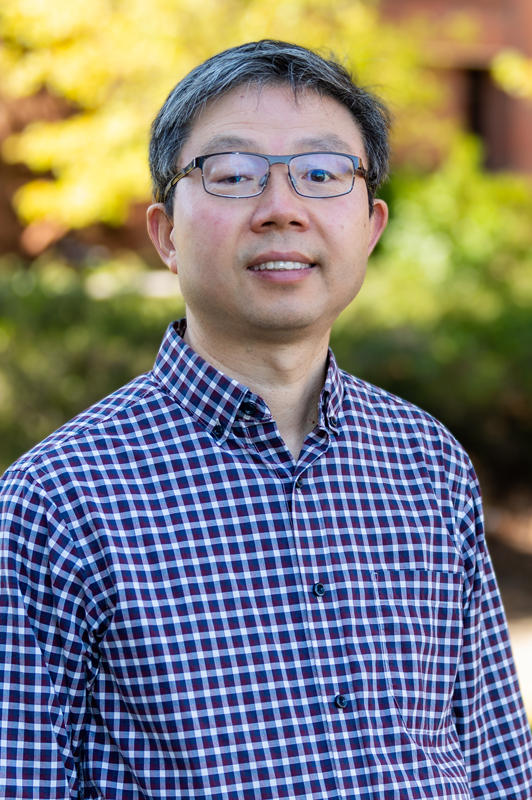
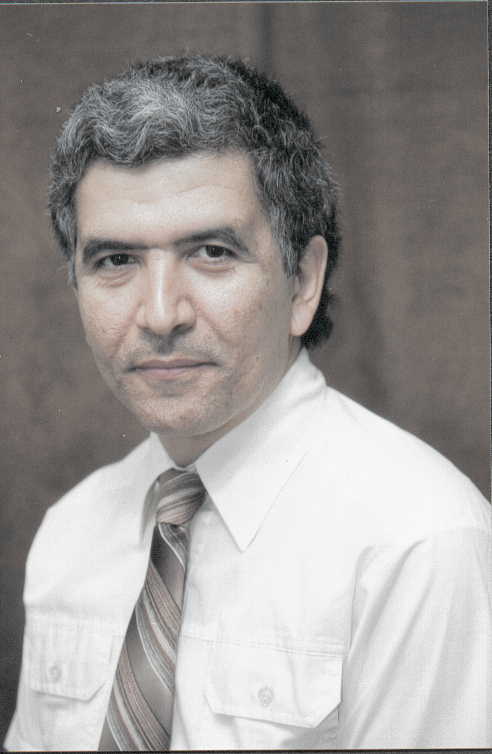
Dusan Milosevic is an Assistant Professor at Eindhoven University of Technology (TU/e) in the Electrical Engineering department. He is affiliated with the Mixed-Signal Microelectronics research group and the RF Sensing & Communication Lab. His research focuses on analog and RF electronics, particularly in power amplifiers, ultra-low-power RF systems, and energy harvesting. He holds an MSc from the University of Niš and a PhD from TU/e. Education: MSc in Electronics and Telecommunications Engineering (University of Niš, 2001) PhD in Electrical Engineering (TU/e, 2009) Research Interests: Design of RF power amplifiers and mm-wave circuits Ultra-low-power communication systems RF energy harvesting technologies High-efficiency analog circuit design His work emphasizes circuit techniques for wireless communication and integrates analog methods with digital control for improved performance. Teaching: Electronic Circuits 1 RF Transceivers 1: Fundamentals Electronics: Selected Topics Collaborations: Active in mm-wave communication, satellite links, and sensor networks. His recent work includes inter-satellite link front-ends and optoelectronic modulation systems. Labs/Teams: Leads the RF Sensing & Communication Lab, focusing on mm-wave systems and energy-efficient RF design.
Q. Jane Gu is a Professor at the School of Electrical and Computer Engineering at Georgia Tech since September 2024, holding the Ed and Pat Joy Professorship. Previously, she was at the University of California, Davis (2012–2024) and the University of Florida (2010–2012). She earned her Ph.D. in Electrical Engineering from UCLA in 2007. Her research focuses on high-efficiency, low-power interconnects, millimeter-wave, sub-mm-wave, and terahertz integrated circuits and systems for applications in communication, radar, and imaging. Notable contributions include sub-THz resonator-based sensors, dielectric waveguide interconnect channels, and energy-efficient transmitters. Recipient of NSF CAREER Award (2013) 2015 UC Davis Outstanding Junior Faculty Award 2017 and 2018 Qualcomm Faculty Awards 2019 UC Davis Chancellor’s Fellow 2022–2023 IEEE SSCS Distinguished Lecturer Her group has garnered nine best paper awards, including top honors at the 2016, 2017, and 2020 IEEE MTT-S International Microwave Symposia. Research interests span terahertz interconnects, millimeter-wave radar systems, and integrated circuits for high-speed communication. Publications reflect advancements in sensor design, high-frequency transceivers, and phased-array systems, emphasizing energy efficiency and signal integrity.
Professor David J. Thomson is a Professorial Fellow in the Optoelectronics Research Centre (ORC) at the University of Southampton, holding a prestigious Royal Society University Research Fellowship. He pioneers photonics research for computing applications and LIDAR systems, commanding over £10 million in research funding and leading a 12-member team focused on novel photonic device development and electronic integration. Thomson's research centers on silicon photonics and optical computing, with critical advancements in high-speed optical modulators, photonic integrated circuits, and LIDAR technologies. His work drives innovations in programmable photonics using phase-change materials and the co-integration of photonic and electronic systems, enabling breakthroughs in energy-efficient data communication and next-generation computing architectures. Recent publications (2024-2025) reveal a dominant focus on silicon photonics for ultra-high-speed optical interconnects, featuring programmable circuits with Sb2Se3 phase-change materials, 224 Gbaud transmitters, and MOSCAP ring modulators with sub-5nm insulators. These works collectively address bandwidth and energy challenges in data centers and high-performance computing through monolithic integration and novel material systems. Scientific Awards: Royal Society University Research Fellowship Thomson actively supervises eight PhD students across the ORC and Department of Electronics and Electrical Engineering, while managing substantial grants exceeding £10 million from the Royal Society, EPSRC, Horizon Europe, and Huawei Technologies. His projects include DOLORES (Digital Optical Computing Platform), Tunnel Epitaxy of III-V on Silicon, and PIXEurope, targeting revolutionary photonic integration for neural networks and communications. He leads a specialized research team within the ORC's state-of-the-art facilities, focusing on photonic device design, fabrication, and characterization. This group collaborates on major European initiatives like Horizon Europe's DOLORES and PIXEurope, advancing silicon photonic platforms for optical computing and LIDAR applications.
Songbin Gong is an Associate Professor in the Department of Electrical and Computer Engineering at the University of Illinois at Urbana Champaign, where he has been a faculty member since August 2013. He was promoted from Assistant Professor to Associate Professor in August 2019 and holds the Intel Alumni Fellowship. His research is centered at the Micro and Nanotechnology Lab, where he leads the Integrated RF Microsystems research group. Professor Gong's research focuses on RF and microwave photonics, microwave acoustics, and Micro-Electro-Mechanical Systems, with particular expertise in lithium niobate-based devices. His work spans the development of acoustic resonators, filters, and transducers operating from VHF to Sub-THz frequencies. Recent publications demonstrate significant advances in high-frequency acoustic devices, including GHz resonators with high electromechanical coupling and low loss characteristics. His research has direct applications in 5G communications, wireless sensing, and imaging systems. Gong has established himself as a leader in the field of RF MEMS and acoustic devices, with numerous high-impact publications in top journals including IEEE Transactions on Microwave Theory and Techniques, Journal of Microelectromechanical Systems, and Optics Express. His work shows a clear progression toward higher frequency operation, improved device performance, and novel integration approaches for next-generation communication systems. Among his notable achievements is the development of thin-film lithium niobate devices that overcome traditional frequency limitations of MEMS resonators, enabling operation beyond 10 GHz. This work addresses critical challenges in 5G and future wireless technologies where conventional approaches face scaling limitations. IEEE Ultrasonics Early Career Investigator Award DARPA Young Faculty Award 2014 NASA Early Career Faculty Award 2017 Intel Alumni Fellow 2017-present Multiple Best Paper Awards at major conferences including International Ultrasonic Symposium and International Microwave Symposium Professor Gong actively mentors graduate and undergraduate students, with several of his PhD students achieving notable success, including Ruochen Lu who joined UT Austin as a tenure-track assistant professor. His research group has secured significant funding from agencies including DARPA and NASA, supporting cutting-edge work in RF microsystems. The group maintains strong industry connections, particularly with Intel, reflecting the practical relevance of their research to commercial communication technologies. The Gong Research Group leverages micro/nano electro mechanical systems (N/MEMS), integrated photonic, and compound semiconductor technologies to develop chip-scale hybrid microsystems for RF communication, sensing, and imaging applications. Their current work focuses on pushing the boundaries of acoustic device performance while maintaining compatibility with standard semiconductor manufacturing processes.
Professor Frederic Gardes is a leading academic in the Department of Electronics and Computer Science within the Faculty of Engineering and Physical Sciences at the University of Southampton. He holds a PhD and serves as Principal Investigator on multiple high-impact photonics research projects funded by EPSRC and the European Union. His research spans critical areas of modern photonics: Silicon photonics for energy-efficient communications Integrated optical circuits using silicon nitride platforms Quantum dot systems for sensing and information processing High-speed electro-optic modulators Nonlinear optical phenomena in integrated waveguides Professor Gardes' recent publications (2024-2025) demonstrate a concentrated focus on advancing silicon nitride photonics, particularly in developing low-loss interfaces, high-speed modulators operating at 100 Gbit/s, and broadband wavelength conversion techniques. His work bridges fundamental nonlinear optics with practical applications in telecommunications and sensing, consistently emphasizing CMOS compatibility and manufacturing feasibility. He actively supervises seven PhD students pursuing cutting-edge research in photonic integration. His leadership extends to major collaborative projects including QUDOS, C-PIC, and Horizon Europe initiatives like DOLORES and PIXEurope, where he works alongside Professors Graham Reed, David Thomson, and Goran Mashanovich. Professor Gardes maintains active industry engagement through speaking roles such as his 2023 presentation on Advanced Silicon Nitride Integration for CMOS Photonic Circuits , demonstrating the translational impact of his research.
Gianluca Setti is a Full Professor at the Department of Electronics and Telecommunications (DET) at Polytechnic University of Turin, where he has been serving since 2017. He previously held positions at the University of Ferrara from 1997 to 2017. His institutional roles include being the Contact Person for the Research Quality Evaluation process, Member of the Interdepartmental Center SmartData@PoliTO - Big Data and Data Science Laboratory, and Member of the University Quality Assurance Committee. He serves as Editor-in-Chief of the Proceedings of the IEEE, the first non-US editor to hold this position. Dr. Setti's research spans multiple interdisciplinary fields including machine learning, artificial intelligence, big data analytics, Internet of Things, biomedical signal processing, power electronics, and electromagnetic compatibility. His work bridges theoretical foundations with practical applications, particularly focusing on compressed sensing, neural networks, and circuit design for specialized applications. His research has significant implications for healthcare, sustainable infrastructure, and next-generation electronics. His publication record reveals a consistent trajectory from foundational work in chaotic systems and neural networks to contemporary applications in AI, IoT, and edge computing. The most recent publications demonstrate his focus on anomaly detection at the edge, neural oracles for biosignal processing, and power electronics innovations. His work shows strong integration between theoretical signal processing and practical circuit implementation. 1998 Caianiello prize (best Italian Ph.D. thesis on Neural Networks) IEEE Fellow (2006) IEEE Circuits and Systems Society Distinguished Lecturer (2004, 2015) 2004 IEEE CAS Society Darlington Award 2013 IEEE CAS Society Meritorious Service Award 2013 IEEE CAS Society Guillemin-Cauer Award 2019 IEEE Transactions on Biomedical Circuits and Systems best paper award Multiple best paper awards at major conferences including ECCTD2005, EMCZurich2005, ISCAS2011, PRIME2019, and EMCCOMPO2019 Dr. Setti has supervised numerous PhD students across various research domains including electromagnetic compatibility, signal and power integrity, communication networks, mechatronics and robotics. His research is supported by significant funding including national PRIN projects, EU-funded JTI-ECSEL initiatives, and commercial contracts. He leads the VLSILAB Group at DET, focusing on circuit architectures, embedded systems, and AI applications. His current projects include DECORI (anomaly detection), StorAIge (embedded storage for AI), PROGRESSUS (energy infrastructure), CONNECT (smart grid), and CONVERGENCE (wearable healthcare applications).
Kirsten Moselund is a Professor at the Swiss Federal Institute of Technology in Lausanne (EPFL) and Head of the Laboratory for Nano and Quantum Technologies (LNQ) at the Paul Scherrer Institute (PSI) since 2022. She leads LNQ’s six research groups focused on nanotechnology and advanced nanomanufacturing quantum computing technologies with co-location of the ETHZ-PSI Quantum Computing Hub and affiliation to EPFL's Quantum Science and Engineering Center (QSE) . Her research spans semiconductor device physics and technology development, including III-V electronics nanophotonics topological devices cryogenic electronics with applications in quantum computing, optical communication, and integrated photonics. She received an ERC Starting Grant for hybrid photonic-plasmonic nanolasers. Recent publications focus on III-V photodetectors on silicon hybrid laser integration thermal management in nanocavities topological mode emission across Nature Communications , ACS Photonics , and Nature Electronics . Scientific awards include ERC Starting Grant and institutional roles such as Member of IHP Microelectronics Scientific Advisory Board Executive Board of Swiss Photonics Technical Program Committee member for IEDM conference At PSI, she oversees construction of the Park InnovAare cleanroom opening in 2024 and collaborates with international groups on theoretical foundations and simulations.
Dr. Jennifer Volk is an Assistant Professor at the College of Engineering, University of Wisconsin-Madison, specializing in Electrical & Computer Engineering. Her research focuses on leveraging novel technologies like superconductor electronics and photonics to create efficient systems for datacenters, neuromorphic computing, quantum computing, and space/sensing applications. She employs a holistic approach spanning circuit design, materials science, and computer microarchitecture. PhD (2024), University of California, Santa Barbara BS (2016), University of California, Santa Cruz Her research interests include superconducting logic , bio-based architectures , and novel computing mediums , emphasizing co-optimization of logic and circuit blocks. Her work develops design abstractions to simplify adoption of unconventional technologies. Dr. Volk's publications demonstrate expertise in superconducting circuit design, radiation-hardened CMOS for particle physics, and photonic materials. She has received numerous awards including the 2025 John D. Wiley Assistant Professorship and IEEE fellowships in applied superconductivity. 2025 John D. Wiley Assistant Professorship 2024 UC Santa Barbara President's Dissertation Year Fellowship 2023 IEEE CSC Graduate Study Fellowship in Applied Superconductivity 2022 IEEE Micro Top Picks Honorable Mention 2021 IEEE Micro Top Picks She teaches E C E 340 - Electronic Circuits I (Spring 2025). Her work bridges materials science, circuit design, and system architecture to enable next-generation computing platforms.
Dr. Kenneth Zick is a Research Professor at the University of Southern California's Information Sciences Institute (USC ISI), where he serves as Research Director of Transformational Computing. His work focuses on game-changing computer architectures, hardware, and systems for solving critical government problems, with expertise in unconventional computing, quantum computing, and bio-inspired systems. Ph.D. in Computer Science & Engineering, University of Michigan-Ann Arbor M.S. in Electrical Engineering, University of Texas at Dallas Bachelor's in Electrical Engineering, University of Michigan-Ann Arbor Dr. Zick's research interests span unconventional computing , bio-inspired systems , Ising machines , quantum annealing , FPGA-based solutions , and neuromorphic computing . His group develops hardware-centric algorithm discovery and Cosm, a heuristic algorithm for sparse Ising optimization. Current projects include superconducting digital architectures, analog-digital hybrid computing, and human-AI co-design for breakthrough hardware. His team leverages advanced facilities such as USC ISI's MOSIS 2.0 and the California DREAMS hub in the DoD Microelectronics Commons, with expertise in high-speed I/O, FPGA prototyping, and radiation-hardened systems. He has received a NASA Fellowship for his Ph.D. work and mentored students like Aditi, who won the USC ECE Outstanding Academic Achievement Award.
Ian Sellers is Professor in Electrical Engineering at University at Buffalo's School of Engineering and Applied Sciences. He specializes in next-generation solar cells and materials for space photovoltaics, with appointments including Marie Curie Fellow (2004-2006) and Visiting Academic Fellow at Oxford (2009-2012). His research examines: Novel photovoltaic materials and architectures Ultra-low power electronic systems MEMS-based sensors and energy harvesters Beyond-CMOS computing technologies Recent publications demonstrate advances in ultra-low power sensor design (MEMS accelerometers), energy-efficient computing (MESO technology), and miniaturized imaging systems. The work shows consistent focus on optimizing power efficiency through innovations in circuit design, materials integration, and system architecture. Before joining UB, Sellers held positions as Presidential Professor at University of Oklahoma and Senior Research Scientist at Sharp Labs of Europe. His international collaborations include extended research stays in France and the UK.
Guofu Niu is a Professor in the Department of Electrical and Computer Engineering at Auburn University, holding the Ed and Peggy Reynolds Family endowed chair. His research specializes in semiconductor device physics, compact modeling of SiGe heterojunction bipolar transistors (HBTs), FinFETs, and cryogenic electronics for RF and power applications. Key research areas include RF linearity characterization, avalanche effects, thermal noise, and low-temperature device performance. He has developed advanced models (e.g., Mextram) for circuit simulation tools, enhancing the accuracy of semiconductor design workflows. Publications focus on nano-scale device reliability, tunneling currents, and optimization of RF amplifiers, with applications in 5G technology and extreme-environment electronics. Collaborative projects span industry and academia to advance semiconductor modeling frameworks.
Professor Ahmet Bindal is a faculty member in the Department of Computer Engineering at San José State University . He earned his B.S. in Electrical Engineering from Bogazici University, Turkey, followed by M.S. and Ph.D. degrees from the University of California, Los Angeles. Industry Experience : 20 years at IBM, Intel, Philips, and Cadence Design Systems. Current Research : Nano-scale electron devices, silicon nanowire transistors, robotics, and VLSI architecture. Research Trends : His work focuses on silicon nanowire transistors for VLSI, FPGA, and robotics. Key themes include low-power/high-speed integrated circuits , dynamic logic design , neuromorphic engineering , and advanced semiconductor processing . Patents and Publications : He holds four U.S. patents (three with IBM, one with Intel). His 30+ journal and conference publications span nanowire transistors, FPGA architecture, robotics, and semiconductor process modeling. Teaching Contributions : Developed an undergraduate System-on-Chip (SoC) course and a MOSFET design laboratory at SJSU. Books Authored : Fundamentals of Computer Architecture and Design (Springer, 2017). Electronics for Embedded Systems (Springer, 2017). Silicon Nanowire Transistors (Springer, 2017).
David A. Johns is a Full Professor at the Department of Electrical and Computer Engineering within the University of Toronto . His career spans academic and industrial contributions to analog integrated circuits and high-speed communication systems. Co-founder of Snowbush Microelectronics (integrated circuit IP company) IEEE and Canadian Academy of Engineering Fellow Recipient of Darlington Best Paper Award and multiple teaching/design accolades Research Interests include analog integrated circuits for digital communication, data converters, phase-locked loops, and signal processing. His work bridges theoretical concepts with hardware implementation, focusing on full-duplex coax/twisted-pair systems, optical wireless links, and MEMS sensor interfaces. Teaching Contributions cover analog/digital electronics courses like ECE331, ECE354, ECE1371, and ECE1392. He emphasizes hands-on design and simulation tools like LTSpice. Awards & Recognitions : IEEE Fellow (2001) CAE Fellow (2012) Darlington Best Paper Award (1999) University of Toronto ECE Teaching Award (1999) CMC Design Award (1993) Advising involves 19 PhD/MASc theses on topics ranging from oversampling filters to low-power ADCs. His group has produced innovations in continuous-time modulators, MEMS accelerometers, and optical interconnects.
Mustapha C.E. Yagoub is a Full Professor at the School of Electrical Engineering and Computer Science, University of Ottawa, with over 500 publications in RF/microwave CAD, RFID systems, neural networks, and applied electromagnetics. He leads research in the ELEMENT Laboratory and RFM Research Group , focusing on wireless communication systems and nonlinear device modeling. PhD in Electronics (Institut National Polytechnique de Toulouse, 1994) Magister in Telecommunications (École Nationale Polytechnique d'Alger, 1987) Dipl.-Ing. in Electronics (École Nationale Polytechnique d'Alger, 1979) His research bridges Microwave Circuit Design with Artificial Intelligence , including applications in Energy Conservation and Telecommunication Systems . Key trends in his publications include hybrid modeling techniques combining Neural Networks with Computational Electromagnetics for optimizing Antenna Design and RF Components . He is a Senior Member of IEEE and licensed with the Professional Engineers of Ontario and Ordre des Ingénieurs du Québec . His lab teams focus on High-Tc Superconducting Devices and Directional Antenna Optimization for RFID networks.
Eric Barth is Professor of Mechanical Engineering and Professor of Neurological Surgery at Vanderbilt University's School of Engineering. He serves as Director of the C* Control laboratory (also known as the Laboratory for the Design and Control of Energetic Systems) and is affiliated with the Vanderbilt Institute for Surgery and Engineering (VISE), an interdisciplinary entity bringing engineers and physicians together to impact healthcare. His educational background includes: Ph.D. in Mechanical Engineering from Georgia Institute of Technology M.S. in Mechanical Engineering from Georgia Institute of Technology B.S. in Engineering Physics from University of California - Berkeley Professor Barth's research focuses on dynamic systems and control with applications spanning multiple domains. His primary interests include the design, modeling and control of mechatronic and fluid power systems, free-piston internal combustion and free-piston Stirling engines, energy storage and harvesting systems, and MRI compatible pneumatic robots for medical applications. His work applies a system dynamics and control perspective to problems involving the control and transduction of energy, encompassing multi-physics modeling, control methodologies formulation, and model-based design. His recent publications reveal a strong trajectory connecting mechanical engineering principles with medical applications, particularly in neurosurgery. The research spans energy systems (especially Stirling engines and novel energy storage approaches) and advanced medical robotics for MRI-guided interventions. This dual focus demonstrates his ability to bridge theoretical control systems with practical applications in both energy and healthcare domains. Professor Barth actively advises several doctoral students including David Comber, Joshua J Cummins, Alexander V. Pedchenko, and E. Bryn Pitt. His research is supported by significant funding, notably from the Center for Compact and Efficient Fluid Power, an NSF Engineering Research Center. The C* Control laboratory he directs occupies approximately 1000 square feet and contains specialized equipment including an 8-camera high-bandwidth optical tracking system, mechanical breadboard tables, pneumatic equipment with high-bandwidth servo-valves, specialized pressure sensors, a thermographic camera, high-speed video equipment, 3D printers, and a 2D laser cutter. Computational facilities include a network of approximately 20 machines running MATLAB/Simulink and SolidWorks, with access to additional CNC machining resources through the School of Engineering and the University.