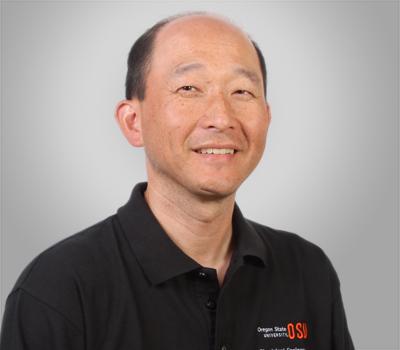
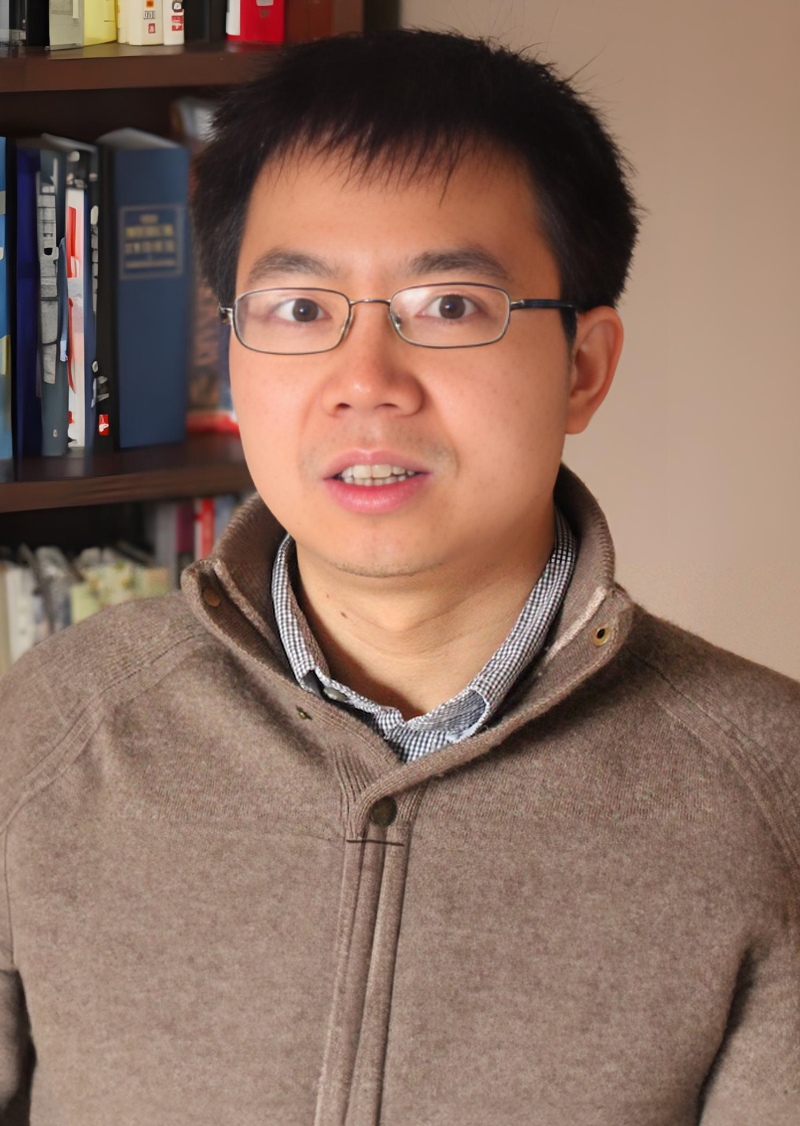
Un-Ku Moon is a Professor in the School of Electrical Engineering and Computer Science at Oregon State University. He earned his Ph.D. (1994), M.Eng. (1989), and B.S. (1987) in Electrical Engineering from the University of Illinois at Urbana-Champaign, Cornell University, and the University of Washington, respectively. Research Interests focus on Analog and Mixed-Signal Integrated Circuits High-Speed Analog-to-Digital Converters (ADCs) Switched-Capacitor and Switched-RC Circuits Low-Voltage/Low-Power Circuit Design Noise-Shaped and Stochastic ADCs His work addresses ADC efficiency in smartphones, medical devices, and communication systems, with trends including predictive level-shifting, ring amplifier optimization, and spread-spectrum clock generation. Scientific Awards include IEEE Fellow (2009) NSF CAREER Award (2002) OSU Graduate Mentoring Award (2007) OSU Alumni Professor Award (2011) Best Paper Awards at ICECS and NEWCAS Moon leads a research group of 8-15 graduate students, collaborating on chip design for analog-digital interfaces. He served as Editor-in-Chief for IEEE Journal of Solid-State Circuits and contributed to major conferences like ISSCC and VLSI.
Samuel Draycott is a Senior Lecturer in Civil Engineering and Management at the University of Edinburgh. His research focuses on ocean engineering, wave energy systems, hydrodynamics, and numerical modeling. He leads projects on wave-energy converter (WEC) mooring systems, tidal turbine dynamics, and extreme wave phenomena. Draycott has contributed to the Supergen ORE Impact Hub and TIGER projects, exploring renewable energy integration and tidal stream technologies. His work aligns with UN SDG goals related to clean energy and climate action. Research interests include mooring system design for WECs, fluid-structure interactions in tidal environments, and the impact of bathymetry on wave behavior. He has conducted experimental studies on wave breaking mechanisms, mooring forces, and turbine performance under varying conditions. Draycott has published extensively in journals like Physics of Fluids and Coastal Engineering, with over 60 peer-reviewed articles and 5 datasets. His recent work explores data-driven approaches for condition monitoring of mooring systems and machine learning applications in turbulence analysis. Collaborations span institutions like the University of Manchester and involve experimental facilities such as FloWave.
Prof. Dr. Michael Möller is a faculty member at Saarland University, where he leads the Chair of Electronics and Circuit Technology within the Faculty of Engineering. His work bridges advanced research in high-speed integrated circuits and practical teaching in electronics and circuit design. He is actively involved in both undergraduate instruction and cutting-edge research initiatives. His research focuses on pushing the boundaries of analog and mixed-signal integrated circuits, particularly in high-speed data conversion and transmission. Key areas include analog multiplexing , digital-to-analog converters (DACs) , and energy-efficient telecommunications infrastructure . His group contributes to the EU’s SHIFT project, aiming to advance sustainable telecom technologies for 5G/6G and beyond. The research aligns with innovations in semiconductor and packaging technologies, targeting applications in wireless access, backhaul, optical interconnects, and satellite communications. A major goal is developing an analog multiplexer with 8-bit resolution and a record 200 GS/s sampling rate, improving data throughput without replacing existing optical links. Prof. Möller is deeply engaged in teaching, offering courses such as Physical Foundations , Basic Electrical Engineering II , and Circuit Design , including associated labs and practicums. His educational philosophy emphasizes hands-on learning, as seen in student projects like mechatronic rehabilitation lighting systems and Tesla coil drivers. Active participant in the EU-funded SHIFT project Research on analog multiplexing for high-speed data transport Focus on sustainability and European semiconductor sovereignty Integration of research into teaching through practical demonstrators
Morten Nymand is a Professor at the Institute of Mechanical and Electrical Engineering, University of Southern Denmark (SDU), with dual affiliation to the Centre for Industrial Electronics. His research focuses on advanced power electronics, including wide bandgap semiconductor devices (GaN/SiC), high-frequency converters, and energy-efficient systems for renewable energy applications. Key affiliations: SDU, Centre for Industrial Electronics Academic focus: Power electronics, converter design, GaN/SiC devices Projects: HPC (Ultra-High Efficiency DC-DC Converters), PtXKonvertering (Power-to-X conversion) Nymand’s work emphasizes minimizing power losses, optimizing converter topologies (e.g., ANPC, NPC), and developing novel magnetic components (planar transformers/inductors). He has contributed to EMI noise reduction, predictive control algorithms, and photovoltaic system analysis. His publications highlight collaborations across Europe and applications in grid-connected systems, battery charging, and industrial electronics. Recent research trends include hybrid converter topologies, ultra-high efficiency (>99%), and high temporal resolution weather data platforms for renewable energy storage. He has supervised students like Amin Kouchaki in EMI studies and converter design projects. Scientific activities include organizing the 13th IEEE CPE-POWERENG conference (2019) and participation in EUDP-funded projects (2022–2023). His lab work centers on FPGA-based control platforms, digital modulation techniques, and compact converter prototypes.
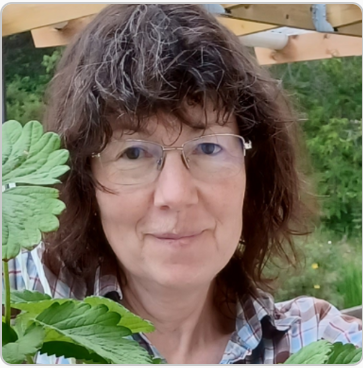
Yan Zhu is a faculty member at the University of Macau , affiliated with the Analog and Mixed Signal VLSI Laboratory within the Faculty of Science and Technology. She has a strong research focus on high-performance analog and mixed-signal integrated circuits, particularly in data conversion and low-power design. Her research interests include: Analog and Mixed-Signal VLSI Design High-Speed Data Converters (ADCs) Noise-Shaping and Time-Domain Circuits PVT-Robust and Low-Power Circuit Techniques Compute-in-Memory and AI Hardware Acceleration The recent publications of Yan Zhu demonstrate a clear trend toward advanced ADC architectures such as time-interleaved, pipelined-SAR, and time-domain converters, with a strong emphasis on calibration, linearity, and energy efficiency. Her work frequently appears in top-tier journals like IEEE JSSC and conferences like ISSCC and CICC, indicating leadership in the field of analog circuit design. There is also a growing focus on machine learning hardware, particularly analog compute-in-memory systems for edge AI applications. No scientific awards or honors are mentioned in the provided text. Yan Zhu has made significant contributions through collaborative research, particularly with Chi-Hang Chan and Rui Paulo Martins , and has been involved in numerous projects related to ADC calibration, metastability, and high-speed sampling. While specific grant details are not listed, the volume and quality of publications suggest active funding support. She has not listed any advisees in the provided data. She is a core contributor to the Analog and Mixed Signal VLSI Laboratory at the University of Macau, where her team focuses on cutting-edge IC design for communication, sensing, and artificial intelligence applications.
Dr. Sergey Pogodin is a researcher at the Institute of Chemical Research of Catalonia (ICIQ), where he contributed to the European Research Council (ERC) Starting Grant project titled Bio2chem-d: Biomass to chemicals: Catalysis design from first principles for a sustainable chemical industry . His work focuses on advancing catalytic processes for converting biomass into valuable chemicals using computational methods grounded in quantum mechanics and first-principles modeling. The research aligns with ICIQ's strategic focus on sustainable catalysis and renewable energy solutions. Dr. Pogodin’s expertise lies at the intersection of theoretical chemistry and industrial sustainability, aiming to design efficient and environmentally friendly catalytic systems. His work supports the development of a circular chemical industry by replacing fossil-based feedstocks with renewable biomass resources. His research trends reflect a strong emphasis on computational approaches to reaction mechanism elucidation, catalyst design, and process optimization for green chemistry applications. This includes quantum chemical modeling, electronic structure calculations, and thermodynamic analysis of catalytic pathways. Dr. Pogodin earned his Ph.D. from Universitat Rovira i Virgili in Tarragona, Spain, building a foundation in theoretical and computational chemistry. His doctoral training equipped him with advanced skills in molecular modeling and simulation, which he applies to complex catalytic transformations in his current role. He is actively involved in a high-impact research environment supported by competitive European funding. While no formal advisees are listed, his contributions support broader collaborative efforts within ICIQ’s Sustainable Catalysis program. The project is part of a larger initiative to innovate in clean chemical production through fundamental scientific insight. Dr. Pogodin works within ICIQ’s research ecosystem, which includes access to state-of-the-art scientific core facilities such as High Resolution Mass Spectrometry, Nuclear Magnetic Resonance, and Photophysics Spectroscopy laboratories. These resources complement his computational work by enabling validation against experimental data and fostering interdisciplinary collaboration across chemistry, materials science, and energy technologies.
Henry Zmuda is an Associate Professor in the Department of Electrical & Computer Engineering at the University of Florida. His primary research area is Electrophysics, with a focus on Photonics, Lasers, and Electromagnetics. He holds a Ph.D. and M.S. in Electrical Engineering from Cornell University (1984 and 1982), and a B.E. in Electrical Engineering from Stevens Institute of Technology (1979). His research interests span advanced optical materials, high-speed signal processing systems, and sensor technologies. He has contributed significantly to photonic-based analog-to-digital converters, phased array antennas, and thermal acoustic imaging. His work frequently integrates photonics with electronic systems to solve challenges in telecommunications, aerospace, and biomedical applications. Key research trends include investigations into surface plasmon polaritons in novel materials like lanthanum nickelate and barium titanate, as well as the development of high-resolution photonic ADC architectures. His publications also highlight innovations in beamforming systems, wireless sensors for fluid dynamics, and resonant thermal imaging methodologies. Zmuda’s advising and grants activities are not detailed in the provided text, though his extensive publication record suggests active participation in graduate research supervision. His laboratory work likely focuses on experimental photonics and sensor prototyping, though specific lab affiliations are not explicitly mentioned.
Ted Higman serves as an Associate Professor within the Department of Electrical and Computer Engineering at the University of Minnesota, Twin Cities. His academic appointment is based at the Minneapolis campus with office location in Keller Hall (6-125) at 200 Union Street SE, Minneapolis, MN 55455. His primary research interests include: Electron device fabrication with specialization in scanning tunneling microscope (STM) lithography High-field transport phenomena in semiconductors Hot carrier injection effects on insulator reliability Ultra-low voltage analog/mixed-signal circuit design for biomedical applications Analysis of his recent publications (2012-2013) reveals a concentrated research trajectory toward enabling portable medical instrumentation through innovative circuit techniques. His work demonstrates consistent focus on sub-1.2V operation constraints, with significant contributions in rail-to-rail amplifier topologies featuring constant transconductance, energy-efficient ADC architectures, and specialized comparator designs. These developments primarily target ECG monitoring systems, bridging semiconductor device physics with practical circuit implementation for healthcare technology under severe power limitations. No scientific awards or honors are documented in the available profile information. Professor Higman has secured external research funding as Principal Investigator for a National Science Foundation REU Site grant (2010-2013) supporting undergraduate research experiences in Electrical and Computer Engineering. While his publication record indicates supervision of student researchers (notably Lee B. and Hu C.L. as co-authors), specific graduate advisee relationships and laboratory structures are not detailed in the current dataset.
Arindam Sanyal is an Assistant Professor in the School of Electrical, Computer and Energy Engineering at Arizona State University . Prior to joining ASU, he served as an Assistant Professor at the University at Buffalo (SUNY) and worked as an Analog Design Engineer at Silicon Laboratories (2015-2016). He earned his PhD in Electrical and Computer Engineering from the University of Texas at Austin (2015), an M.Tech from IIT Kharagpur (2009), and a B.E. in Electrical Engineering from Jadavpur University (2007). Education : PhD (University of Texas at Austin), M.Tech (IIT Kharagpur), B.E. (Jadavpur University) Research Areas : Analog/Mixed Signal Circuits, Biomedical Sensors, Hardware Security, Neuromorphic Computing, Machine Learning in Circuits, Low-Power Electronics His recent work focuses on integrating machine learning with analog/mixed-signal circuits for real-time health monitoring, hardware security, and energy-efficient AI. Publications highlight trends in VCO ADCs , Reservoir Computing , and Stochastic Delta-Sigma Modulators . A notable NSF CRII Grant (2020) supports his research on analog AI for environmental monitoring. Teaching includes courses like Analog Integrated Circuits and Analog to Digital Converters . He leads the Mixed Signals Lab at ASU, developing flexible electronics and sensor fusion systems.
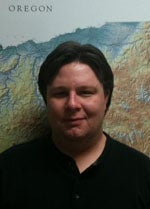
Mark Alan Fonstad is an Associate Professor of Geography at the University of Oregon in the College of Arts and Sciences. He specializes in the physical geography of rivers, the fusion of physical geography with geographic information science, geomorphology, hydrology, and remote sensing. His work focuses on riverscape and mountain environments, particularly in the western United States, examining how humans interact with their environments through lenses such as theory, management, hazards, sustainability, law, engineering, restoration, and habitat. University of Oregon, Department of Geography, College of Arts and Sciences Environmental Studies Program affiliate Environmental Sciences Institute affiliate Dr. Fonstad's educational background includes secondary education at Lourdes Academy (Oshkosh, WI), a B.S. in Geography at the University of Wisconsin (Madison, WI), a M.A. in Geography at Ohio University (Athens, OH), and a Ph.D. in Geography from Arizona State University (Tempe, AZ) in 2000. He was a postdoctoral fellow at Montana State University from 2000-2001, taught at Texas State University from 2001-2011, and has taught at the University of Oregon since 2011. He is the son of geographer Todd Fonstad and cartographer Karen Wynn Fonstad. Dr. Fonstad's research spans geomorphology, hydrology, remote sensing, and environmental simulation, with particular focus on rivers and mountain environments. His work integrates physical geography with geographic information science to understand river systems, water resources, and environmental change. He has made significant contributions through his development of the HAB Transform for converting river images into depth maps, measurement of spatial variations in mountain stream power, mapping and modeling of treeline ecotones, cellular automata models of instream hydrodynamics, and the critical riverbank conjecture for which he received the AAG's 2005 G.K. Gilbert Award. His recent work focuses on high-resolution remote sensing of river habitats, modeling river dynamics, and hydrological applications related to NASA's SWOT satellite mission. AAG's 2005 G.K. Gilbert Award (with W. Andrew Marcus) for the critical riverbank conjecture Environmental Sciences associate editor of the Annals of the Association of American Geographers (2010) Editor of the Annals's Special Issue on Water (2012) Dr. Fonstad has advised numerous graduate students on the fusion of physical geography, environmental geography, and GIScience, as well as intersections with sustainability and hazards. He coordinates the University of Oregon River Group and has secured research grants from NASA and other agencies for river systems, remote sensing, and environmental monitoring projects. His recent research demonstrates a clear shift toward innovative technological approaches including UAVs, autonomous surface watercraft, and deep learning for fluvial scene analysis, positioning him at the forefront of the river remote sensing revolution with emphasis on high-resolution, basin-wide observations and practical applications for river management and restoration.
Tetiana Malykhina serves as a University Teacher (Lecturer) in the Department of Computer Science at Aalto University, Espoo, Finland. Her work bridges computational methods and high-energy physics, focusing on particle-matter interaction simulations for nuclear applications. She maintains an active research profile with publications spanning 2025 to 2021. Her research centers on high-performance computing and computer simulation of particle passage in matter , particularly using Geant4 for modeling relativistic electron interactions, radiation damage in organic dyes, and calorimeter optimization. Key interests include Delta electron emission from thin foils Radiation effects in aqueous dye solutions Molière radius calculations for detector design Software development for nuclear material physics Her interdisciplinary approach combines physics principles with advanced computational techniques. Analysis of her 15 most recent publications (2021-2025) reveals consistent focus on simulating particle-beam interactions with materials, radiation damage mechanisms, and detector physics. Her work frequently employs Geant4 toolkit modifications and involves international collaborations in nuclear physics experiments. Publications appear primarily in Problems of Atomic Science and Technology and East European Journal of Physics , emphasizing applied computational physics. Scientific Awards: No awards or fellowships are mentioned in the provided information. Advising and Grants: No details regarding student supervision, research grants, or funded projects are available in the source material. Labs and Teams: The text does not specify laboratory affiliations, research groups, or collaborative teams beyond co-authorship in publications.
George N. Karystinos is a Professor at the School of Electrical and Computer Engineering , Technical University of Crete , where he has served since 2005. Since 2021, he also holds the position of Dean of the School. Previously, he was an Assistant Professor at Wright State University (2003–2005). Education: Ph.D. in Electrical Engineering, State University of New York at Buffalo , 2003 Diploma in Computer Engineering and Science, University of Patras , 1997 Additional studies in Piano, National Conservatory of Athens and State University of New York at Buffalo Research Interests: His research spans telecommunications theory and systems , coding theory , adaptive signal processing , wireless communications , MIMO systems , neural networks , and optimization with limited data . He is particularly known for contributions to L1-norm PCA , noncoherent detection , RFID systems , and code design for CDMA . Scientific Awards: IEEE Transactions on Neural Networks Outstanding Paper Award (2003) IEEE ICT Best Paper Award (2001) IEEE ISWCS Best Paper Award (2013) IEEE ICASSP Best Student Paper Award (2015) IEEE RFID-TA Second Best Student Paper Award (2011) IEEE MOCAST Best Student Paper Award (2018) Laboratory and Teaching: He leads research at the Telecommunications Laboratory and teaches courses such as Signals and Systems , Information and Code Theory , and Probability and Random Process Theory . Grants and Projects: While specific grant details are not listed, his extensive publication record and award history indicate active participation in funded research projects, particularly in wireless communications and signal processing.
Mark Halton serves as an Associate Professor in the Department of Electronic and Computer Engineering within the Faculty of Science and Engineering at the University of Limerick, Ireland. His office is located in room A2-010, and he can be contacted via email at mark.halton@ul.ie or by phone at +353-(0)61-202678. His research spans two primary domains: autonomous vehicle trajectory prediction and digital control of power converters. In autonomous systems, he develops multi-sensor, multi-agent trajectory prediction frameworks using bird's-eye-view representations, graph neural networks, and HD map integration for safety-critical applications. In power electronics, his work focuses on robust digital control of DC-DC converters, including digital pulse width modulation, phase alignment techniques, and structured singular value analysis for stability. Halton's publication trajectory demonstrates a clear shift from foundational power electronics research (2010-2015) to cutting-edge autonomous vehicle systems (2023-2025). His recent work integrates deep learning with classical control theory to address uncertainty in trajectory prediction, while maintaining strong contributions to efficiency optimization in power conversion systems through novel digital controller architectures.
Mircea Lazar is an Associate Professor in the Control Systems group at Eindhoven University of Technology. His research spans constrained control, model predictive control (MPC), and stability analysis of hybrid systems, with applications in power systems, smart grids, and precision mechatronics. Research highlights include: Development of data-driven predictive control methods Stability guarantees for nonlinear and hybrid systems Applications in water networks, power converters, and mechatronics He has received the EECI PhD Award and NWO VENI grant. Recent publications focus on real-time MPC implementations, physics-guided neural networks, and optimization for large-scale systems. Collaborations include ASML, DAF, Philips, and Ford. He chairs the IEEE CSS Technical Committee on Hybrid Systems and has supervised 9 PhD students.
Wen Li is a Professor in the Department of Chemistry at Wayne State University, affiliated with the College of Liberal Arts and Sciences. His research focuses on ultrafast molecular dynamics, high harmonic generation, and attosecond spectroscopy, utilizing attosecond pulses to study electron dynamics in physics, chemistry, and biology. He holds a B.S. from Peking University (2000) and a Ph.D. from Stony Brook University (2006), followed by a research role at JILA (2006-2009). His research projects include HHG probes for molecular dynamics, attosecond pulse generation, and electron correlation dynamics. Notable contributions include a Science -published study on electron rearrangement and a 2017 PNAS article on methyl azide dynamics. His work bridges experimental and theoretical methods, advancing understanding of multi-electron dynamics and nonadiabatic coupling. Recent publications (2017-2024) explore topics like 3D ion momentum imaging, carrier-envelope phase control, and Coulomb explosion dynamics. He teaches advanced courses such as CHM7430 (Chemical Kinetics) and CHM5550 (Physical Chemistry Laboratory). His lab develops innovative imaging techniques and collaborates on projects funded by grants, including a study on quantum tunneling kinetics. Li's experimental innovations include the 'time-to-brightness converter' and multi-mass 3D imaging systems, enabling unprecedented insights into femtosecond and attosecond phenomena. His work provides benchmarks for theoretical models in multi-electron systems and complex molecular processes.