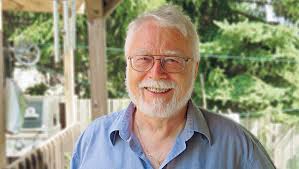
Sergey Eliseevمشاهده پروفایل
پژوهشگر
Sergey Eliseev is a leading researcher at the Max Planck Institute for Nuclear Physics (MPIK) in Heidelberg, Germany, where he serves as a group leader for the MATS and PENTATRAP projects. His research is centered on high-precision Penning-trap mass spectrometry, enabling groundbreaking studies in neutrino physics, nuclear structure, and searches for physics beyond the Standard Model. His research interests span precision mass measurements, neutrino mass determination via electron capture in 163 Ho, tests of fundamental symmetries, and the search for new bosons and dark forces. He plays a key role in interdisciplinary collaborations such as SFB 1227 DQ-mat and IsoQuant, which aim to push the limits of precision physics. His work involves both experimental innovation and theoretical interpretation, particularly in the context of highly charged ions and atomic metrology. The recent articles highlight a strong trend toward using nonlinearities in King plots to constrain new bosons, measuring neutrino-related Q-values with eV-level precision, and probing nuclear structure through mass spectrometry of exotic isotopes. His publications frequently appear in high-impact journals such as Nature , Physical Review Letters , and Reviews of Modern Physics , often in collaboration with Klaus Blaum and other leaders in the field. He has been involved in numerous scientific advancements, including the development of ultra-stable voltage sources, cryogenic stopping cells, and digital feedback systems for ion manipulation. These technical innovations support the extreme precision required in modern atomic and nuclear experiments. As a group leader at MPIK, he mentors and collaborates with a broad team of researchers and students. Although no direct students are named in the provided text, his leadership in large collaborations implies significant advisory and team coordination roles. He has also contributed to major review articles and white papers, including one on keV sterile neutrino dark matter, indicating leadership in shaping future research directions. His laboratory work is centered around the PENTATRAP and SHIPTRAP spectrometers, which are at the forefront of high-precision mass measurements for highly charged and rare isotopes. These facilities are critical for advancing tests of fundamental physics and exploring the limits of the Standard Model.