Håkan Hjalmarsson is a full Professor at the KTH Royal Institute of Technology , affiliated with the Division of Decision and Control Systems within the School of Electrical Engineering and Computer Science . He serves as examiner for advanced-level degree projects in Computer Science , Electrical Engineering , and Systems Engineering , while also contributing as assistant, course manager, and teacher for Control Engineering courses. Research focus on Control Theory , System Identification , and Data-Driven Control Expertise in Optimal Experiment Design , Sparse Estimation , and Bayesian Methods Active in Industrial Applications including bioprocess optimization and network control His recent publications (2024-2025) emphasize finite-time regret minimization , sparse system identification , dynamic programming exploration , and Bayesian approaches to control problems. Key subfields include linear quadratic control , Markov parameter estimation , Wiener-Hammerstein models , and metabolic network identification . He has no listed scientific awards in the provided data.
Joakim Andén-Pantera is an Associate Professor in the Division of Probability, Mathematical Physics and Statistics at the Department of Mathematics, KTH Royal Institute of Technology. His research spans signal processing, statistical data analysis, and machine learning with applications in cryo-electron microscopy, biomedical signal analysis, and audio classification. His educational background includes advanced training in mathematics and signal processing leading to his current academic position. Though specific degree details aren't provided in the text, his research profile indicates deep expertise in mathematical methods for signal representation. Professor Andén-Pantera's work focuses on developing mathematical frameworks that extract discriminative information from signals while remaining invariant to irrelevant variations like translation, frequency-shifting, and noise. His research bridges theoretical mathematics with practical applications across multiple domains: Developing wavelet scattering transforms for robust signal representation Applying these techniques to cryo-EM for molecular structure analysis Creating methods for audio and music classification through time-frequency analysis Designing algorithms for biomedical signal processing, particularly ECG analysis Contributing to computational methods for cosmological parameter estimation His publication record shows consistent contributions in both theoretical signal processing and practical implementations. The research trajectory demonstrates increasing sophistication in applying scattering transforms and deep learning to diverse signal processing challenges across biology, medicine, and acoustics. Notable scientific recognition includes: Best Paper Award (2nd Place) at IEEE International Workshop on Machine Learning for Signal Processing (2015) Best Paper Award (1st Place) at International Conference on Digital Audio Effects (2012) Best Paper Award at IPDPS for cuFINUFFT implementation Professor Andén-Pantera advises graduate students on degree projects in financial mathematics, mathematical statistics, and engineering mathematics. His research group develops computational tools including ASPIRE for cryo-EM and Kymatio for wavelet scattering transforms. He teaches courses in Applied Statistics, Probability Theory, and Statistical Learning at KTH. He leads the development of several influential open-source software projects that have become standard tools in their respective fields, with Kymatio particularly gaining widespread adoption across multiple research communities.
Kyi Thar serves as an Associate Senior Lecturer in the Department of Computer and Electrical Engineering (DET) at Mid Sweden University, Sundsvall, focusing on cutting-edge research at the intersection of artificial intelligence and industrial networking systems. His work directly addresses real-world challenges in secure and efficient IIoT deployments through innovative technical solutions. His research spans eXplainable AI (XAI), Internet-of-Things (IoT), industrial IoT (IIoT), network intelligence, information security, and distributed systems. He develops lightweight deep learning models for edge devices, trustworthy intrusion detection systems, and optimization frameworks for 5G/6G networks, emphasizing explainability and resource efficiency in constrained environments. His methodologies bridge theoretical AI advances with practical industrial applications, particularly in vehicular networks and smart infrastructure. Analysis of his 15 most recent publications (2023-2025) reveals dominant trends in edge AI for industrial systems, with 68% focusing on IIoT security and optimization. Key thematic clusters include XAI-driven intrusion detection (27%), cloud-edge collaboration efficiency (20%), and 5G/6G network enhancements (18%). His work consistently prioritizes lightweight model deployment on resource-constrained devices while maintaining explainability for trust-critical applications. Scientific Awards No awards listed in available documentation Advising and Grants No student advisees documented No specific grants mentioned in current materials Labs and Teams: Dr. Thar operates within Mid Sweden University's STC Research Centre, a hub for information and communication technology innovation. His work integrates with industrial partners through the centre's focus on practical IIoT implementations, particularly in network security and edge intelligence systems for manufacturing and transportation sectors.
Mattias Thorsell is a Visiting Researcher at Chalmers University of Technology's Electronics Material and Systems unit, focusing on gallium nitride (GaN) high-electron-mobility transistors (HEMTs) for microwave and cryogenic applications. His work spans thermal analysis, trapping effects, and device modeling for power amplifiers and low-noise systems. Research Focus: GaN HEMTs, thermal coupling, cryogenic electronics, trapping effects, microwave device reliability Collaborations: Partnerships with VINNOVA, Swedish Research Council, European Commission projects Recent publications analyze dynamic thermal coupling in GaN MMICs, cryogenic trapping effects, and buffer-free heterostructure design. His work addresses challenges in power amplifier efficiency, low-temperature performance, and electrothermal calibration.
Hao Chen is a researcher at KTH Royal Institute of Technology, affiliated with the School of Electrical Engineering and Computer Science (EECS), specifically within the Computer Science department focusing on Communication Systems and the Optical Network Laboratory (ON Lab). He also contributes to research in Intelligent systems and Information Science and Engineering. Chen completed his doctoral dissertation titled 'Reliable and Efficient Distributed Machine Learning' in 2022, establishing himself as an emerging expert in distributed machine learning systems. Chen's research interests center around distributed and federated machine learning architectures, with particular emphasis on optimizing communication efficiency in decentralized systems. His work addresses critical challenges in distributed learning including communication bottlenecks, straggler nodes (devices with slow responses), and privacy preservation. His research spans applications in wireless IoT networks, satellite communications, and edge computing environments. His publication record shows a clear trajectory of increasingly sophisticated approaches to distributed machine learning. Starting with foundational work on coded stochastic ADMM methods in 2021, he progressed to developing asynchronous parallel algorithms (2023) and exploring applications in specialized domains like speech fatigue recognition (2024). A consistent theme across his work is the optimization of communication resources while maintaining learning performance, with particular attention to real-world constraints in wireless and satellite networks. Chen has collaborated extensively with researchers including Ming Xiao, Mikael Skoglund, Yu Ye, and others across multiple publications. His research has been supported by funding sources including the EU Horizon 2020 program (grant 825272) and the Swedish Foundation for Strategic Research (APR20-0023). His work appears in high-impact journals including IEEE Transactions on Big Data, IEEE Internet of Things Journal, and IEEE Wireless Communications. As a researcher at KTH, Chen contributes to cutting-edge work at the intersection of machine learning and communication systems, developing techniques that enable efficient distributed intelligence across networked devices while addressing practical constraints of real-world deployment.
Morgan Ericsson is a professor at Linnaeus University's Faculty of Technology, Department of Computer Science and Media Technology. He has coordinated the Linnaeus University Centre for Data Intensive Sciences and Applications and leads the research group Data Intensive Software Technologies and Applications (DISTA). His work spans software engineering, quality assessment, and machine learning applications in system design. Research coordinator, DISA Faculty member, Linnaeus University His research focuses on defining and measuring software quality through data-driven approaches, including code metrics, documentation evaluation, and machine learning. He develops methods to balance performance, safety, and functionality in complex systems. Recent publications involve generative adversarial networks for log end identification, copula-based metrics aggregation, and graph convolution networks for code-architecture mapping. Key themes include automated classification, density analysis, and educational software tools. Ericsson has led projects like "HPC for SME" and "In-line Visual Inspection Using Unsupervised Learning," while contributing to software infrastructure for quality assessment and mobile learning frameworks.
Lars Kristensen serves as a Senior Lecturer in Media Arts, Aesthetics and Narration at the School of Informatics, University of Skövde. With academic credentials including an MA in European Civilization and an MPhil in Slavonic Languages from the University of Glasgow, and a PhD in Film Studies from the University of St. Andrews (2010), he brings extensive expertise to his position. After completing post-doctoral research at the University of Central Lancashire, he joined the University of Skövde, where he was promoted to Reader in Media Arts, Aesthetics and Narration in 2023. Kristensen's research focuses on the theory of moving images, with particular emphasis on Russian and Eastern European cinemas from Russia, Poland, Estonia, Latvia and Albania. His analytical and historical approach examines both visual representation and the industry that produces these images. He has developed significant expertise in postcommunism as reflected in cinema and serves as associate editor of the journal Studies in Eastern European Cinema. His research extends to game studies, where he explores the ideology of games conditioned by interaction with game machines, applying Marxist theory to understand the technological interaction between games and gamers. His scholarly output demonstrates consistent engagement with Eastern European cinema, particularly Russian film, and increasingly with game studies and media theory. Recent publications show a trend toward interdisciplinary work at the intersection of media, art, and technology, with collaborative projects involving artists and cultural institutions. His work bridges traditional film studies with emerging digital media forms. Kristensen is the co-founder of PlayLab in Skövde, a high-tech performance space dedicated to experimenting with games, game technology and performance art. Through PlayLab, he collaborates with cultural institutions including Skövde Art Museum, Riksteatern Väst, Folkteatern in Gothenburg and the Gothenburg Opera. He also works with contemporary artists Olle Essvik and Lina Persson to develop experimental platforms for cross-disciplinary work at the intersection of art and technology. In his teaching role, Kristensen teaches across various game development courses and serves as course convener for Dramaturgy, Worldbuilding and Academic Writing. He supervises and examines thesis dissertations at both graduate and postgraduate levels, contributing significantly to academic development within his field.
Rebecca Rouse is an Associate Professor in Media Arts, Aesthetics, and Narration at the School of Informatics, University of Skövde, Sweden. She serves as Co-Director of PlayLab, a high-tech performance space exploring the intersection of games, game technology, and performing arts. Her work bridges academic research with creative practice across multiple domains. Rouse holds a PhD in Digital Media from Georgia Institute of Technology, an MA in Communication & Culture from York University and Ryerson University (Toronto), and a BA in Theatre Studies and German Studies from Brown University. Her educational background reflects her interdisciplinary approach that combines technical, theoretical, and artistic perspectives. Her research focuses on theoretical, critical, and design production work with storytelling for new technologies, particularly augmented and mixed reality systems. She designs and develops projects across museums, cultural heritage sites, interactive installations, movable books, and theatrical performance. Her work consistently investigates and invents new modes of storytelling while exploring critical perspectives on technology and design. Analysis of her recent publications reveals a strong emphasis on feminist approaches to game design and pedagogy, critical examination of disciplinary formation in games studies, and innovative explorations of materiality in digital contexts. Her work spans multiple publication venues across game studies, media theory, performance studies, and education research, demonstrating remarkable interdisciplinary range. Rouse actively contributes to the academic community through editorial work, including special issues on doctoral supervision and feminist pedagogies in games. Her PlayLab initiative demonstrates commitment to practical implementation of her research through collaborative projects with researchers, artists, game students, and youths. Her creative and scholarly output spans artistic production, academic publications, and practical design work, creating a rich ecosystem where theory and practice inform each other. Current projects like PlayLab continue to push boundaries in interactive storytelling and performance technologies.
Yujing Liu is a Full Professor at Chalmers University of Technology's Department of Electrical Engineering, specifically in the Electric Power Engineering unit. With 17 years of prior industrial experience at ABB Corporate Research as a Senior Principal Scientist, he transitioned to academia in 2013. His research focuses on electrical machines, power electronics, and sustainable electrical systems, particularly for renewable energy conversion and transportation electrification. Current projects include high-sustainability electrical machines (up to 400 kW), SiC inverters (up to 500 kW), motor emulator development, heavy-duty vehicle electrification, and 500 kW inductive power transfer systems. Professor Liu serves as Head of Unit for Electrical Machines and Power Electronics since 2018 and leads Chalmers' contributions to 4 EU Horizon2020 and 2 Marie-Curie projects. He mentors 4 postdocs, 5 PhD students, and a dozen master's students, while teaching annual courses on electrical machine design and wide-bandgap power converters. His 88 publications (2013-2025) investigate advanced motor control algorithms, thermal management in traction systems, high-frequency excitation methods, and hybrid energy storage solutions. Research keywords include Electrical Engineering, Sustainable Energy, Transportation Electrification, and Industrial Electronics, with subfields addressing SiC inverters, electric vehicle drivetrains, and inductive charging systems. Key projects funded by Swedish Energy Agency and European Commission cover applications in marine propulsion, heavy-duty vehicles, and renewable energy integration, emphasizing high-efficiency powertrain development and reliability improvements in traction motor insulation systems.
Filipe Maia is an Associate Professor at the Department of Cell and Molecular Biology, Uppsala University, and serves as a LINXS Fellow within the Integrative Structural Biology Working Group and Biocomp initiative. His research pioneers advanced diffractive imaging methodologies, particularly femtosecond-scale techniques at the European XFEL facility. Central to his work is replacing experimental physical constraints through sophisticated computational data analysis, leveraging exponential growth in data acquisition rates and high-performance computing. He champions scientific reproducibility as evidenced by founding the Coherent X-ray Imaging Data Bank (CXIDB), which curates over 500 terabytes of experimental data from global coherent diffractive imaging studies. His contributions bridge structural biology with neutron and X-ray scattering sciences through LINXS' interdisciplinary framework.
Yingxin Feng is a Researcher at Chalmers University of Technology, specializing in catalysis and materials science. Their work focuses on computational modeling (e.g., DFT and microkinetic simulations) and experimental studies of catalytic processes, particularly Selective Catalytic Reduction (SCR) over Cu-based catalysts like Cu-CHA. Key interests include reaction mechanisms under extreme conditions (e.g., high water pressures) and catalyst design for environmental applications. Education: PhD in Chemical Engineering (Chalmers University of Technology, 2024) Research highlights include elucidating NH₃-SCR mechanisms, N₂O formation pathways, and catalyst stability. They have contributed to advancing computational tools for predicting catalytic behavior and optimizing catalyst performance. Publications span topics such as Cu-CHA catalyst kinetics, single-atom catalysis, and DFT-based material characterization. Notable contributions include a doctoral thesis on NH₃-SCR over Cu-CHA and studies on Pt/Al₂O₃ and Ga-doped Pt/CeO₂ systems.
David Gustafsson is an Adjunct Professor at Linköping University's Department of Management and Engineering (IEI). His research focuses on advanced materials science and mechanical engineering, particularly in the areas of thermomechanical fatigue, nickel-based superalloys, and crack growth analysis in extreme environments. Research interests include modeling crack behavior in gas turbine components, high-temperature material degradation, and machining processes for superalloys. His work combines experimental and computational methods to understand failure mechanisms in critical engineering materials. Publications span topics like single crystal alloy performance, thermomechanical fatigue testing methodologies, and residual stress analysis in machining processes. No specific awards or grants are listed in available records.
Magnus Wallén is a Senior Associate Professor in the Department of Management and Engineering (IEI) at Linköping University. His research focuses on industrial energy systems, emphasizing energy efficiency, policy instruments, and interdisciplinary approaches to address climate impacts. He holds a BSc in Energy Engineering from Mid Sweden University (1996) and a PhD from Linköping University (2002). As Director of the Graduate School in Energy Systems, he leads interdisciplinary education and research initiatives. His work integrates technical and societal factors to enhance industrial competitiveness and sustainability. Wallén's research projects include studying hydrogen's role in Sweden's energy system, promoting industrial symbiosis through collaboration, and advancing sustainable supply chain models. He teaches courses on energy systems analysis and modeling, and has supervised multiple PhD students. He serves as Vice CEO of Nordic Energy Audit AB and has contributed to high-impact projects like the 63-million SEK FoES initiative. His expertise spans excess heat utilization, energy audits, and policy design for decarbonization. Wallén's academic contributions include developing optimization tools for industrial energy systems and advancing frameworks for energy management practices in industries like pulp and paper. His work bridges technical innovation with societal needs, fostering cross-sector collaboration for sustainable energy transitions.
Mårten Ahlquist is Professor in Theoretical Chemistry and Biology at KTH Royal Institute of Technology, researching catalysts and materials for energy storage applications. His work develops computational models for catalytic processes including artificial photosynthesis. Research employs quantum mechanical simulations to understand catalytic reactions at molecular levels, examining how solvents, surfaces, and electric fields influence reaction pathways. Current projects focus on developing next-generation catalysts for CO2 reduction, water oxidation, and nitrogen fixation. Publications demonstrate advanced computational approaches to electrocatalysis (2023-2025), particularly CO2 reduction mechanisms, O-O bond formation in water oxidation, and catalyst design principles. Recent work reveals how secondary coordination environments and dynamic attachment affect catalytic performance.
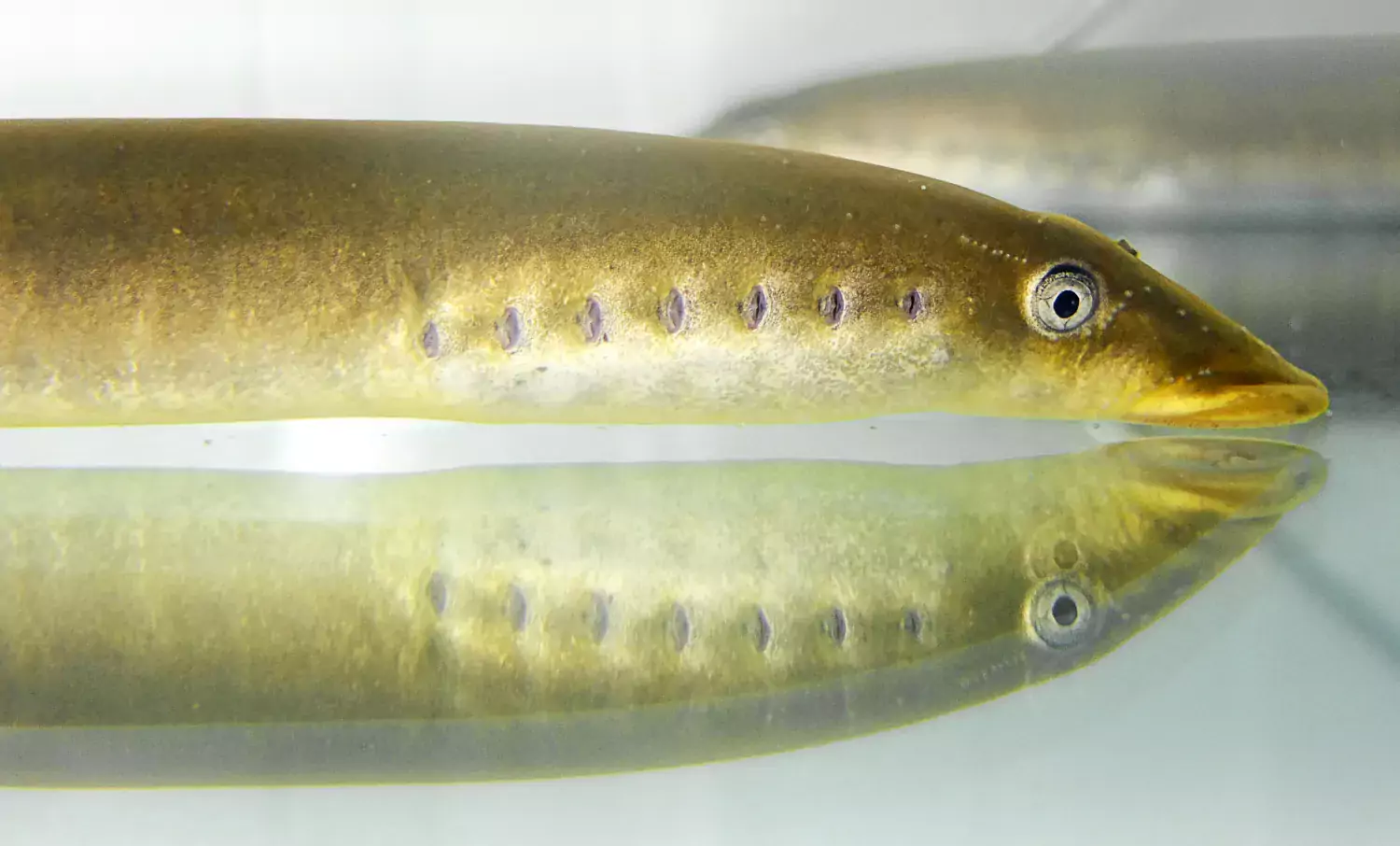
Sten Grillner is a Senior Professor at Karolinska Institutet's Department of Neuroscience, focusing on the cellular and evolutionary basis of motor behavior. His research integrates neurophysiology, computational modeling, and evolutionary biology to understand neural circuits controlling movement, with a focus on lamprey models and basal ganglia function. His work explores how motor systems evolved, including the role of pH-sensing neurons and the neural basis of action selection. Key research areas include: motor control mechanisms; evolution of vertebrate forebrain structures; modeling neural networks (e.g., striatum and spinal circuits); and the role of dopamine and other neuromodulators in behavior. His group's projects are funded by the Swedish Research Council, EU initiatives like the Human Brain Project, and Karolinska Institutet. Publications span over 50 years, with recent work on basal ganglia microcircuits, computational neuroscience frameworks, and evolutionary insights from lamprey models. His team's interdisciplinary approach bridges experimental and theoretical neuroscience, contributing to understanding both normal motor function and neurological disorders.