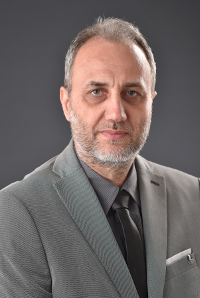
Sebastian U. Stich is a tenured Professor at CISPA Helmholtz Center for Information Security and a member of the European Lab for Learning and Intelligent Systems (ELLIS). His research focuses on optimization for machine learning, collaborative learning (distributed, federated, and decentralized methods), efficient optimization techniques, adaptive stochastic methods, and privacy/security in machine learning. Recent appointments include ERC Consolidator Grant 2024 for the CollectiveMinds project. Key contributions in federated/decentralized learning, uncertainty estimation, and communication-efficient optimization. Active in workshop organization, including the Optimization for Machine Learning workshop at NeurIPS 2024. Teaching modern optimization methods at Saarland University (2023-2025). His work has been recognized with awards such as the Google Research Scholar Award (2023) and Meta Privacy-Enhancing Technologies Award (2022) . His research group includes postdocs Dr. Anton Rodomanov and Dr. Rotem Mulayoff, and PhD students Xiaowen Jiang and Yuan Gao.
Aleksandar Mihajlovic is a researcher and Art Director at Singidunum University, Serbia. With a doctoral degree in Contemporary Business Decision-Making (2022), a master's in Business Economics (2014), and a bachelor's in Computer Graphics and Design (2008), he combines academic rigor with creative leadership in the university's marketing strategy. Doctoral studies: Contemporary Business Decision-Making, Singidunum University (2022) Master studies: Business Economics, Singidunum University (2008–2014) Undergraduate: Computer Graphics and Design, Faculty of Informatics and Management (2005–2008) High school: Robotics and Flexible Production Systems Technician, Polytechnic Academy (1995–1999) His research spans visual communication , digital marketing , and artificial intelligence applications in creative industries. Key contributions include Co-authoring 11 academic papers (2015–2025) on topics like Instagram ad effectiveness, techno-feudalism, and responsive logo design. Developing the scientific research portal 'Singipedia' and international magazine 'SingiLogos'. Participating in 7 global projects including Erasmus+ and TEMPUS initiatives. His scientific awards include the JISA Discobolos Special Award (2010), IT Globus Award (2010), and Grafima Fair Special Award (2025). He serves on the organizing committee for conferences like Sinteza and Sitcon , and has judged marketing competitions while volunteering for NGOs like the City Organization of the Deaf of Belgrade.
Miloš Racković serves as a full Professor in the Department of Mathematics and Informatics at the University of Novi Sad, Serbia. He maintains active academic engagement through the Laboratory for the development of information systems, with his office located in the Information technologies and systems office (DMI&DF) on the second floor, room 49. Contact is available via telephone (485)-2868 or email rackovic@dmi.uns.ac.rs, and his personal website (http://www.is.pmf.uns.ac.rs/rackovicm/) provides additional resources. His research spans foundational and applied computer science, with seminal contributions in fuzzy database systems including PFSQL query language development and prioritized fuzzy logic for relational databases and XML. He has pioneered deep learning methodologies through innovative classification techniques using negative and missing features in convolutional neural networks. Additional expertise includes high-performance computing implementations of Lattice Boltzmann methods using OpenCL, robotics (symbolic modeling and trajectory planning), and blockchain applications for Industry 4.0 production processes. His sports analytics work applies neural networks to basketball player and referee movement analysis. Analysis of his 2012-2025 publications reveals a strategic evolution toward interdisciplinary applications, particularly in industrial transformation (blockchain-enabled traceability) and sports analytics. His work consistently bridges theoretical computer science with practical implementations, demonstrating increasing focus on real-world problem solving while maintaining strong foundations in database theory and computational methods. Professor Racković leads the Laboratory for the development of information systems, which focuses on advancing information system methodologies through formal modeling extensions (including Petri net innovations) and practical implementations for uncertainty management. The laboratory's work spans from foundational research in fuzzy logic systems to applied projects in high-performance computing and blockchain integration, fostering innovation in information technology development.
Sandra M. Đosić is an Associate Professor at the Faculty of Electronics in Niš, University of Niš, Serbia, specializing in Electronics and Embedded Systems. She has been actively contributing to research in real-time systems, fault tolerance, wireless sensor networks, and indoor localization technologies. Research Interests: Her work spans fault-tolerant real-time systems, energy-efficient computing, UWB-based indoor localization, and communication protocols for wireless sensor networks. She explores techniques such as dynamic voltage and frequency scaling (DVFS), tone-based contention resolution, and deflection routing in networks-on-chip to enhance system reliability and efficiency. Publication Trends: Her recent publications (2009–2022) demonstrate a strong focus on improving robustness and performance in embedded and distributed systems. The research integrates signal processing, network optimization, and energy-aware design, primarily applied in industrial and indoor environments. Scientific Awards: No awards are mentioned in the provided text. Advising and Grants: While no specific students are listed, she is currently participating in two national research projects, indicating active involvement in funded research. Her collaborations with researchers such as Igor Stojanovic and Milica Jovanovic suggest a strong team-based research approach. Labs and Research Teams: Although no formal lab or team name is specified, her repeated co-authorship with colleagues from the Faculty of Electronics implies active participation in a research group focused on electronics, communications, and real-time systems.
Dr. Vladimir M. Ciric is a Full Professor at the Faculty of Electronics, University of Niš, leading the Department of Computer Science. He directs the Laboratory for Advanced Security Systems and specializes in network security, distributed systems, and high-performance computing. His research spans intrusion detection systems, cloud computing cost modeling, and parallel algorithm design. Notable contributions include Hadoop-based network intrusion detection techniques and tiered programming pedagogy. He received the Cisco Excellence Award (2015) for network technology education. Dr. Ciric teaches courses on network design, cloud computing, and security while maintaining research collaborations in cybersecurity and distributed architectures. His recent work focuses on extreme class imbalance in intrusion datasets and sparse matrix optimizations.
Jelena Dj. Trifkovic serves as Full Professor in the Department of Analytical Chemistry at the Faculty of Chemistry, University of Belgrade, where she was promoted from Assistant Trainee (2003) through Associate Professor (2019) to her current position (2024). She concurrently holds leadership roles as Vice-Dean for Teaching and Secretary of the Serbian Chemical Society since 2020. Her academic foundation includes undergraduate (1995-2001), Master's (2003-2006), and Doctoral studies (2011-2013) in Chemical Sciences, all completed at the University of Belgrade's Faculty of Chemistry. Trifkovic's research centers on chromatographic separation techniques and chemometrics for food authenticity verification, particularly focusing on bee products like honey and propolis. Her methodology integrates advanced analytical instrumentation with multivariate data analysis to establish quality control protocols and detect adulteration, significantly contributing to food safety standards in the Balkan region. Analysis of her publication record reveals consistent innovation in HPTLC image analysis and multi-technique approaches (GC, LC, electrochemical methods) for natural product authentication. Her work demonstrates increasing international collaboration, with recent publications emphasizing standardized protocols for regulatory compliance and health benefit validation of food components. She actively secures competitive research funding, including Horizon Europe's PFAStwin project (2022-2025) and UNDP-funded valorization initiatives (2023-2024), alongside leadership in bilateral projects on bee product authentication with Croatian and Slovenian institutions. Trifkovic maintains strong laboratory networks through her affiliation with Slovenia's National Chemical Institute Food Chemistry Laboratory and coordinates multiple university committees focused on curriculum development and quality assurance in chemical education.
Prof. Dr Dragan Tasić is a distinguished Professor at the Power Engineering Department of the Faculty of Electronic Engineering, University of Niš, Serbia. With decades of academic and research experience, he has established himself as a leading expert in power transmission, power system components, and electrical cable technology. His work spans theoretical research, practical applications, and educational contributions to the field of electrical engineering. Dr. Tasić's research interests focus on power transmission systems, electrical cable technology, relay protection, power system analysis, and grounding systems. His work particularly emphasizes thermal aspects of power cables, electrical energy losses in distribution networks, and innovative solutions for improving cable performance. He has pioneered research on thermal management of underground cables, including the use of hydronic asphalt pavements and cool pavements to eliminate hot spots and increase cable ampacity. His publication record demonstrates consistent productivity with numerous books, journal articles, and conference papers spanning over three decades. Recent research (2019-2023) shows continued innovation in areas such as thermal aging management of underground cables, photovoltaic system integration, and optimization of distribution networks with energy storage. His work frequently employs advanced computational methods including Finite Element Method (FEM) and hybrid optimization algorithms. Dr. Tasić has led and participated in numerous significant research projects funded by Serbian government agencies, focusing on energy efficiency, power system optimization, and technological improvements in electrical distribution networks. His work has practical applications in the Serbian power industry and contributes to international knowledge in electrical engineering. As an educator, Dr. Tasić has contributed to curriculum development and has authored multiple textbooks that are widely used in electrical engineering education in Serbia. His teaching focuses on core power engineering subjects including power transmission, electrical networks, and power cable technology.
Ivan Miletić is an Associate Professor at the Faculty of Engineering Sciences, University of Kragujevac, specializing in Machine Structures and Mechanization. His academic career at the university includes significant contributions to mechanical engineering research and education within the Department of mechanical structures and mechanization. His research interests span across several key areas in mechanical engineering, with a strong focus on machine design, structural analysis, and materials science. Professor Miletić has made substantial contributions to the understanding of cycloid reducers, gear design, and the mechanical properties of advanced materials. His work bridges theoretical analysis with practical applications in automotive, aerospace, and industrial machinery sectors. Professor Miletić's publication record demonstrates a strong focus on mechanical design optimization and structural analysis. His recent work has particularly emphasized the development and analysis of cycloid reducers, gear systems, and advanced composites. He has also contributed significantly to design automation methodologies and structural optimization techniques, applying advanced computational approaches to solve complex engineering problems across multiple disciplines. His scholarly contributions have practical applications in diverse fields including automotive engineering, aerospace technology, and industrial machinery design. Professor Miletić maintains an active research profile with publications spanning from 2020 to 2025, indicating ongoing scholarly productivity in mechanical engineering disciplines. As an educator, Professor Miletić has been instrumental in developing curriculum and mentoring students in mechanical engineering disciplines. His election to the position of Associate Professor in 2021 reflects his significant contributions to both research and teaching at the Faculty of Engineering Sciences.
Nenad N. Cvetkovic is a Full Professor at the Faculty of Electronics, University of Niš, specializing in Theoretical Electrical Engineering. He earned his PhD (2009), MSc (2002), and BSc (1995) from the same institution. His research focuses on electromagnetic field interactions with biological tissues, grounding system design, and numerical modeling of geoelectrical phenomena. Key areas include mobile phone radiation effects on human tissues, SAR distribution in anatomical models, and innovative approaches to multi-layered soil grounding analysis. He has contributed over 19 peer-reviewed articles in high-impact journals, addressing topics like dental implant EM interactions, orthodontic brace SAR profiles, and optimizations for grounding systems. His work bridges theoretical rigor with practical applications in electrical safety, biomedical engineering, and environmental geoelectrics. Prof. Cvetkovic is actively engaged in national/international research projects and speaks English and German fluently. His laboratory activities include finite element method (FEM) simulations, experimental validation of grounding models, and collaborations on standards for non-ionizing radiation exposure assessment.
Živko Bojović is affiliated with Singidunum University, holding a doctoral degree in Telecommunications and Signal Processing from the University of Novi Sad. His career includes roles as an engineer and manager in telecommunications companies like Telekom Srbija and PTT Serbia. He has extensive experience in academic publishing, with monographs on network technologies and textbooks on software-defined networking (SDN) and IoT applications. His research focuses on cybersecurity, machine learning applications in healthcare, smart government systems, and network virtualization. Education: PhD in Telecommunications (2011), Postgraduate studies in Telecommunications (2000-2001), Bachelor’s in Electronics with Telecommunications (1986-1992). He also completed high school in Peć with a mathematical focus. Research Interests: He explores advanced networking technologies including SDN, 5G/6G networks, IoT security, and educational technology innovations. His work bridges theoretical advancements with practical implementations in healthcare diagnostics and public sector digitization. Recent studies include applying machine learning to predict thrombosis and thyroid cancer metastasis, reflecting his interdisciplinary approach. His articles collectively highlight trends in smart systems (e.g., government services, energy grids) and network security, with frequent contributions to journals like Computer Applications in Engineering Education and Journal of Network and Systems Management . The Wiley Top Cited Article award (2020-2021) recognizes his impactful work on rapid transition to distance learning during crises. Prof. Bojović holds IEEE membership and sits on editorial boards for journals like Inventi Impact: Software Engineering . He actively participates in EU Horizon projects focusing on 6G privacy and smart city analytics.
Emilijan Mohora is affiliated with Singidunum University, where he holds the role of Researcher. His academic background includes a Bachelor's in Physics (1988-1994), Master's in Environmental Engineering (2000-2002), and a Doctorate in Chemistry/Biochemistry (2010-2013) from the University of Novi Sad. His research focuses on environmental engineering, particularly arsenic removal from groundwater and water treatment technologies using electrocoagulation and advanced materials. He has contributed to over a dozen peer-reviewed studies since 2003, addressing topics ranging from electrochemical processes to pollutant modeling in aquatic systems. Key research interests include: environmental sustainability, electrochemical technologies for water purification, and innovative sorbent materials. His work emphasizes practical solutions for contaminated water systems, particularly in regions with high arsenic or organic matter concentrations. Collaborative projects often involve interdisciplinary approaches combining engineering, chemistry, and environmental science. Publications since 2012 highlight advancements in continuous electrocoagulation systems and low-cost biosorbents for arsenic removal. Earlier contributions (2003-2004) explored statistical modeling of diffusion in materials and fire/explosion risk mitigation using D'Alambert's principle. Despite no explicitly listed awards or grants, his sustained publication record reflects active engagement in environmental research and technological innovation.
Miljana L. Milić is a Full Professor at the Faculty of Electronics, University of Niš, Serbia, Department of Electronics. She has been an integral part of this institution since earning her degrees and advancing through academic ranks, culminating in her appointment as full professor in 2024. Education: PhD in Electronics, Faculty of Electronics, University of Niš (2009) Master’s in Electronics, Faculty of Electronics, University of Niš (2005) Bachelor’s in Electronics, Faculty of Electronics, University of Niš (2001) Her research interests span a broad spectrum of electronics engineering, with emphasis on VLSI design, analog and digital circuit diagnosis, cryptographic hardware security, timing analysis under aging, and performance optimization in neural prediction systems. She applies simulation, statistical methods, and AI techniques to solve complex problems in electronic systems design and reliability. The analysis of her recent publications reveals a strong focus on hardware-level innovation, including secure cryptographic cells, fault diagnosis in analog circuits, performance modeling under fading and shadowing, and timing degradation in VLSI systems. Her work bridges theoretical analysis with practical implementation in electronic design and communication systems. She leads the Laboratory for Design of Electronic Processes, Circuits and Automatic Control Systems, and is currently involved in one national research project. Her contributions include over 10 journal publications in high-impact venues. Scientific Contributions: Head of Laboratory for Design of Electronic Processes, Circuits and Automatic Control Systems Active participant in national research projects Author/co-author of 10+ journal papers with impact factor She mentors students through research supervision and contributes to academic leadership within her department. Her work continues to influence both academic research and practical applications in electronic systems engineering.
Вељко Петровић is an Associate Professor at the Faculty of Technical Sciences (University of Novi Sad), affiliated with the Department of Applied Computer Science . He has been employed since October 2010, initially as a teaching assistant (2012–2018) and since February 2019 as a full Associate Professor. His teaching focuses on courses like Operating Systems, High-Performance Computing, Cloud Computing, and Cybersecurity. Education: PhD in Computer Science (2018) with a thesis titled Domain-Specific Language for Visualization Evaluated by Statistical Analysis of Small Datasets under Prof. Silvie Gilezan and Prof. Zarka Zivanov. MSc & BSc in Technical Sciences from the same faculty (2005–2010). Research interests include Artificial Intelligence applications , data analysis , and cybersecurity . He contributed to the Erasmus+ ISSUES project (2017) and reviewed for journals like Virtual Reality , Sensors , and Applied Sciences .
Igor Budak is a Full Professor at the Faculty of Technical Sciences, University of Novi Sad, where he leads the Chair of Metrology, Quality, Equipment, Tools, and Ecological-Engineering Aspects. He has held progressive academic positions since 2004, advancing from Assistant to Full Professor by 2020, and served as Head of Chair from 2009–2012 and 2012 onward. His educational background includes a Bachelor's (1998), Magister (2004), and PhD (2009) in Mechanical Engineering from the Faculty of Technical Sciences and Faculty of Mechanical Engineering at the University of Novi Sad. Professor Budak's research integrates environmental engineering, precision manufacturing, and sustainable design. Key focus areas include: Life cycle assessment methodologies for industrial and energy systems Advanced 3D digitization techniques for medical and manufacturing applications Optimization of fixtures, tooling, and clamping systems in mechanical engineering Multi-criteria decision frameworks for environmental impact reduction His work frequently intersects metrology with sustainability challenges. His publications demonstrate strong emphasis on environmental impact modeling (35% of articles), manufacturing precision (30%), and biomedical applications (20%), with consistent output in high-impact journals. Research collaborations frequently address industrial case studies, from cement mill failures to dental prosthetic digitization. Professor Budak has authored several academic books including Koordinatne merne mašine i CAD inspekcija (2009) and Ekodizajn i održivi razvoj u mašinskom inženjerstvu (2009), establishing expertise in eco-design and measurement systems. His laboratory work involves industrial collaborations on topics like burnishing tools, particle analysis, and alloy biocompatibility.
Maja Radović is an Assistant Professor in the Department of Information Technologies at the Faculty of Technical Sciences, University of Kragujevac, Serbia. She has been working at this institution since September 2008, specializing in the narrow scientific field of Information Technologies and Systems. Her academic journey began at the Faculty of Technology in Čačak, where she graduated in 2008 with high honors, and later earned her Doctor of Science in Electrical Engineering and Computer Science from the Faculty of Electronics in Niš after defending her doctoral thesis on "Ontology-guided student testing in e-learning" in 2024. Dr. Radović's research spans multiple areas within educational technology and computer science. Her primary interests include e-learning systems, ontology-based assessment methods, database technologies, and the application of virtual environments in education. She has made significant contributions to the development of innovative teaching methodologies, particularly in engineering education and medical informatics. Her work often focuses on the intersection of technology and pedagogy, exploring how modern tools can enhance learning experiences and assessment practices. Over the years, Dr. Radović has been actively involved in numerous national and international projects, including TEMPUS projects focused on e-learning curriculum development, UNDP initiatives for digital transformation, and research projects in biomedical engineering. Her publication record demonstrates consistent contributions to the fields of educational technology, virtual learning environments, and ontology-based assessment systems. Dr. Milivoje Urošević Foundation Award for the best graduate student in the 2007/2008 academic year Dr. Radović has contributed significantly to curriculum development and teaching methodologies at her institution. She has been instrumental in adapting information technology courses to modern educational standards and has explored innovative approaches to student assessment. Her work extends to medical education, where she has developed ontology-based assessment tools for medical training. She has also investigated the application of 3D printing and virtual reality technologies in engineering education to improve spatial visualization skills among students.