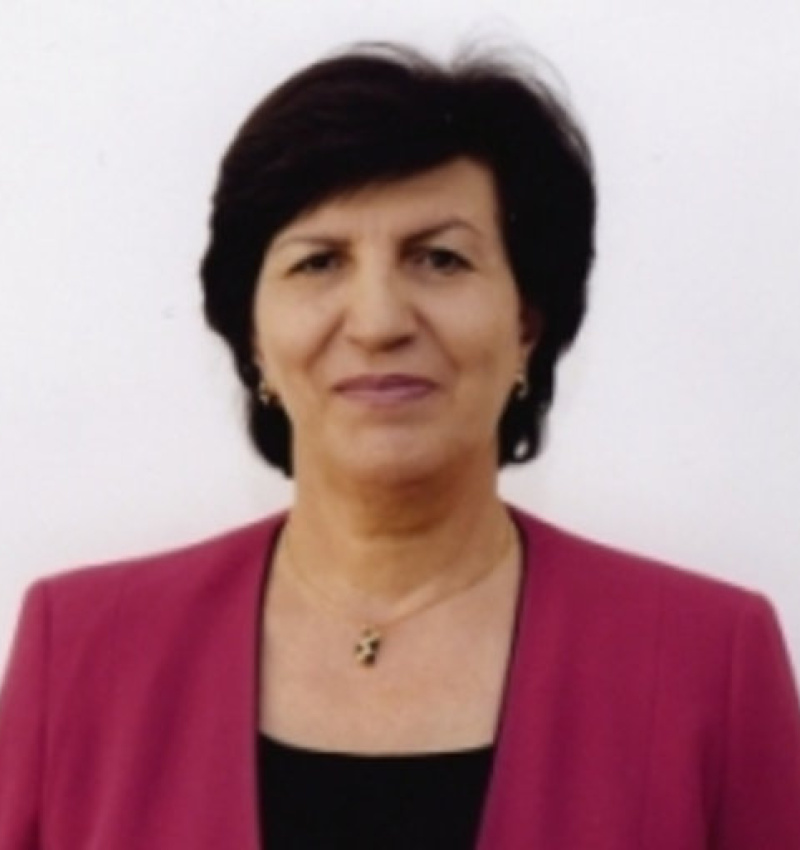
Seda Kerobi Gasparyan is a Professor at the Faculty of European Languages and Communication, Department of English Philology, Yerevan State University. She has led the Department since 2002, previously serving as Head of Department (1993-2002) and Associate Professor (1991-1993). Education: Bachelor's in Philology, Yerevan State University (1968) Doctor of Science in Philological Sciences, Moscow State University (1994) Postgraduate studies under Professor O.S. Akhmanova (Moscow State University, 1978-1982) Her research focuses on linguistic poetics, functional stylistics, cognitive linguistics, and anti-Armenian discourse analysis . She has presented at 25+ international conferences, including events in Italy, Spain, Russia, and Canada, often addressing intersectionality between language, politics, and cultural identity. Scientific awards include the 2009 Prime Minister's Medal , 2021 Ministry of Education Gold Medal , and recognition as 2013 Honored Scientist of Armenia . She serves on editorial boards of journals like Banber Armenian Studies and Professional Discourse and Communication .
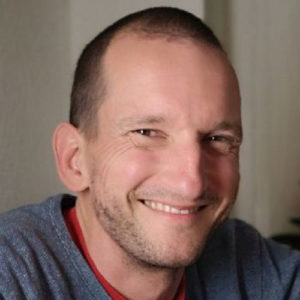
Felix Golcher is a researcher at Humboldt-Universität zu Berlin, affiliated with the Institut für deutsche Sprache und Linguistik. He holds a PhD in Linguistics and a background in Physics. His work focuses on statistical methods in linguistics, including stylometry, unsupervised text segmentation, and computational approaches to language analysis. He contributes to the SFB 1412 'Register' project, managing data and providing statistical support for subproject INF. His research spans syntactic processing, bilingualism, and corpus linguistics. Education: PhD in Linguistics (university unspecified), with postgraduate studies at the University of Munich (2005 thesis). Current role involves statistical advising and technical infrastructure support for linguistic projects. Contact: felix.golcher@hu-berlin.de, Room 433. Research highlights include studies on clitic dislocation in Greek, primate habitat analysis using statistical methods, and syntactic processing of split particle verbs. His work bridges computational methods with theoretical linguistics, emphasizing quantitative approaches to language structure and usage.
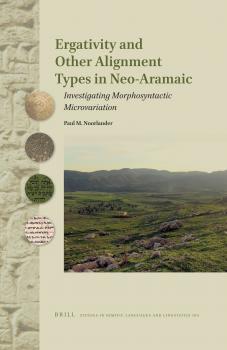
Dr. Paul M. Noorlander is a Researcher in Hebrew & Aramaic Studies at the University of Cambridge , affiliated with the Faculty of Asian and Middle Eastern Studies and a Fellow of St Edmund's College . He specializes in endangered Neo-Aramaic languages, focusing on their documentation, typology, and historical-sociocultural context. His research spans Areal Linguistics , Historical Syntax , and Language Contact , particularly in regions where Semitic and Iranian languages intersect. He leads projects like the North Eastern Neo-Aramaic Database and the ERC-funded Echoes of Vanishing Voices initiative, which reconstructs the linguistic history of Aramaic-speaking communities in contact with Iranian. He teaches courses including Comparative Semitic Linguistics , Biblical Hebrew , and Linguistic Typology , emphasizing interdisciplinary approaches. His publications explore word order typology, ergativity, and corpus-based analyses of Neo-Aramaic dialects, with recent works focusing on VO/OV alternations and contact-induced syntactic shifts.
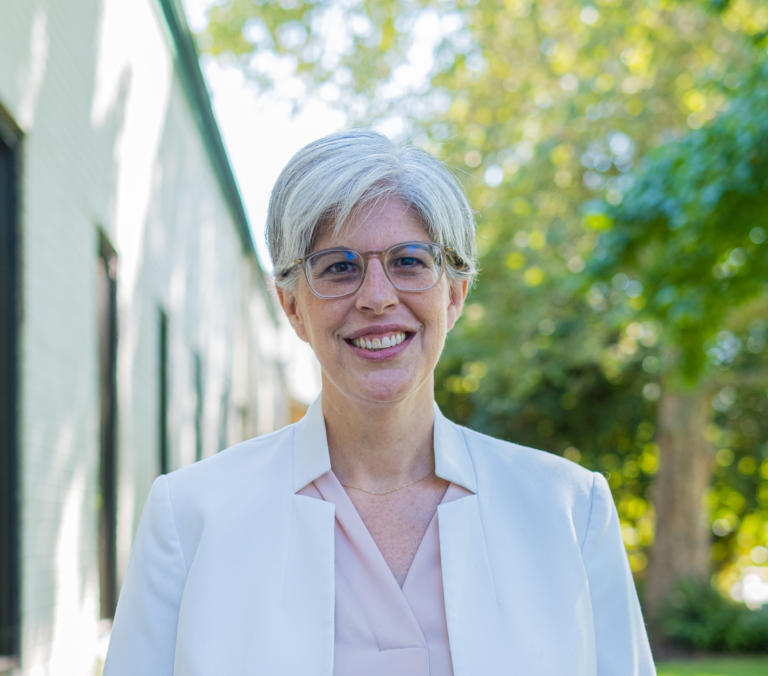
Rebekah Josberger is a Professor of Hebrew and Old Testament and Program Chair for the Master of Biblical Studies at Multnomah University. She specializes in Old Testament studies with a focus on Hebrew language education and Torah theology. Dr. Josberger holds a Ph.D. from The Southern Baptist Theological Seminary, an M.A. from Gordon-Conwell Theological Seminary (two degrees), and a B.A. from Taylor University. Her research explores the role of Torah as an invitation to imitate God's character, building on her doctoral work analyzing Deuteronomy's domestic ideology. She has developed a Hebrew program emphasizing practical ministry application, fostering a vibrant 'Hebrew family' among students. Her publications include academic biblical analysis and Hebrew language textbooks co-authored with Kevin Kutz. Dr. Josberger values Multnomah's community-driven environment that supports both scholarly pursuits and student mentorship. Her work bridges academic rigor with pastoral application, aiming to deepen personal and communal engagement with Scripture.
Brian J. Wright is an Adjunct Professor at Liberty Baptist College’s School of Bible & Ministry, specializing in New Testament studies, textual criticism, and early Christian practices. He holds a PhD from Ridley College (Melbourne, Australia) and a ThM from Dallas Theological Seminary. His research bridges ancient literacy practices with NT textual analysis, emphasizing communal reading traditions and manuscript studies. Wright’s scholarship spans over a dozen books and numerous peer-reviewed articles, including studies on first-century inscriptions, NT syntax, and early Christian literacy. He critiques methodological assumptions in NT studies and explores the intersection of faith and social justice, such as prison ministry and ethics. His pastoral work includes founding Redeemer Community Church in Pensacola, FL, and media contributions to Christianity Today, The Gospel Coalition, and Desiring God. His publications blend academic rigor with practical Christian living, addressing topics like small-group discipleship and theological education. Wright’s reviews cover a broad range of theological and historical texts, reflecting his expertise in biblical interpretation, early church history, and interfaith dialogue. Notable works include Communal Reading in the Time of Jesus (2017) and God’s Daring Dozen Box Set (2021–2024), which analyze prophetic literature and NT themes.
Tania Notarius is a faculty member in Hebrew Linguistics at the University of the Free State. Her research focuses on Northwest Semitic languages, particularly Ugaritic and Biblical Hebrew, with expertise in historical linguistics, syntax, and semantics. She has published extensively on topics such as passive voice constructions, stative verbs, and diachronic language development. Education: Ph.D. in Linguistics (2007) with a study on verbal tense semantics in Biblical poetic texts. Research Interests: Northwest Semitic languages (Ugaritic, Canaanite, Aramaic), diachronic syntax, language contact, and ancient inscriptions. Notable contributions include co-editing Brill's special issues on Biblical Hebrew Linguistics and analyzing Iron Age alphabetic inscriptions from Tell eṣ-Ṣâfi/Gath. Publications span peer-reviewed articles in journals like Journal of Semitic Studies and ZAW , as well as book chapters on ancient texts and linguistic theory. She actively participates in academic conferences, including presentations on Aramaic ostraca from Idumea and theoretical linguistics approaches to Biblical Hebrew. Affiliations: Involved with the Polis Institute of Languages and Humanities in Jerusalem, focusing on Coptic studies and ancient language pedagogy. Engaged in teaching Hebrew language methodologies and curriculum development for university-level instruction.
Jonathan Ginzburg is a Professor of Linguistics at the University of Paris, holding a position in the Faculty of Anglophone Studies and the Laboratoire Linguistique Formelle (LLF), a research laboratory under the French National Center for Scientific Research (CNRS). He has been at the University of Paris since 2010, achieving exceptional class professor status in 2020, which represents the highest academic rank in the French system. Prior to this, he served as a Senior Lecturer in the Department of Computer Science at King's College London from 2000 to 2010. His academic journey includes: Habilitation á diriger des recherches, University of Paris 7 (2003) Ph.D. in Linguistics, Stanford University (1987-1992) B.S. in Mathematics (Cum Laude), Hebrew University of Jerusalem, Israel (1985-1987) Ginzburg's research spans multiple interconnected domains within linguistics and cognitive science. His work fundamentally explores how language functions in interactive contexts, with particular emphasis on dialogue structures and pragmatic phenomena. He investigates how laughter and gestures function as linguistic elements within conversation, examining language acquisition processes with focus on question comprehension and development. His theoretical contributions to formal semantics and pragmatics have reshaped understanding of interrogatives and clarification sequences. Through computational linguistics approaches, he develops models that capture the dynamic nature of dialogue, bridging theoretical linguistics with practical applications in dialogue systems. His research integrates empirical data from cross-linguistic studies with formal theoretical frameworks to create comprehensive models of human interaction. Ginzburg's publication record demonstrates a consistent focus on dialogue and interactive language use, with recent work increasingly examining non-verbal elements like laughter as integral components of linguistic communication. His research shows strong continuity in investigating questions and clarification phenomena while expanding into multimodal communication analysis. The cross-linguistic dimension of his work has grown over time, incorporating data from diverse languages to build more universal models of dialogue. His notable recognitions include: Senior Member of the Institut Universitaire de France (2016-2021) Visiting Scholar at Laboratoire de Linguistique Formelle, CNRS Paris (2011-2012) Senior Visitor for EU FP6 Project on Dealing With Uncertainty in Dialogue (2006-2007) Allon Fellowship from the Israeli Inter-University Planning and Budget Committee (1996-1999) Ginzburg has supervised 10 PhD students (7 graduated, 4 in progress) and 4 postdoctoral researchers, with several advisees now holding prominent academic positions. His successful grant acquisition includes the €400,000 DUEL project on "Disfluencies, Exclamations and Laughter in Dialogue" funded by ANR and DFG (2014-2017), and his coordination of three projects within the Laboratory of Excellence LabEx-EFL since 2011. His editorial leadership as Associate Editor of Dialogue and Discourse and Co-Editor of Cambridge Elements in Semantics demonstrates his significant contribution to scholarly communication in his field. As a key figure in the Laboratoire Linguistique Formelle (LLF), Ginzburg leads research on interactive language use, directing projects that investigate dialogue modeling, non-sentential utterances across the lifespan, and laughter in communication. His work connects theoretical linguistics with practical applications through collaborations with researchers across Europe, particularly within the LabEx-EFL network and through international projects like DUEL with Bielefeld University.
Giorgos Markopoulos is an Assistant Professor at the Department of Mediterranean Studies, University of the Aegean. He has also taught at the Democritus University of Thrace, the University of Nicosia, and the interinstitutional MSc Program "Language Technology" (Department of Informatics and Telecommunications, National and Kapodistrian University of Athens, in collaboration with the Institute for Language and Speech Processing). Bachelor's Degree in Philology at Aristotle University of Thessaloniki Master's Degree in Philology at Aristotle University of Thessaloniki PhD in Linguistics at Aristotle University of Thessaloniki His research interests focus on the morphosyntax-phonology interface, with particular emphasis on the comparative study of grammatical structures and phenomena at a cross-linguistic level, especially in South-Eastern Mediterranean languages. His research spans various aspects of theoretical and comparative linguistics, including expressive suffixes, stem allomorphy, phonological constraints, and morphological evolution. His recent publications (2016-2025) demonstrate a consistent focus on morphosyntax-phonology interface issues across languages, particularly examining expressive suffixes (in Russian, German, Spanish, and Greek), root allomorphy (in Greek), phonological constraints (sonority levels, nasals), morphological evolution (fusion to agglutination), and artificial language learning. The broader fields represented by his publications include theoretical linguistics, comparative linguistics, morphosyntax, phonology, psycholinguistics, and language technology. Giorgos Markopoulos has been awarded scholarships from IKY (the State Scholarships Foundation) for his doctoral and post-doctoral research. While not explicitly listed in the bios, his involvement in international research projects and interinstitutional programs implies additional recognition and funding. He has participated in international research projects such as Cross-Linguistic Artificial Grammar Learning, Vocalect, and Education of Immigrant and Repatriate Students. His research career has taken him beyond Greece as he has been a visiting scholar at University College London and Humboldt-Universität zu Berlin.
Dr. Ofir Zussman is a Lecturer in the Judaic and Near Eastern Studies department at the University of Massachusetts Amherst, located in Herter Hall. His research focuses on Hebrew linguistics, with specialties in pragmatics, grammaticization, concession phenomena, discourse particles, and teaching Hebrew as a Second Language. He teaches courses ranging from elementary to intermediate Modern and Biblical Hebrew. Dr. Zussman’s academic work emphasizes the structural and functional analysis of Hebrew linguistic features. His publications investigate particles like davka and the evolutionary pathways of concessive constructions in Hebrew grammar. No scientific awards or grants are explicitly listed in the provided materials. His teaching portfolio includes foundational Hebrew language courses, reflecting his dual role as an educator and researcher in Hebrew linguistics. No lab affiliations or team collaborations are mentioned in the text.
Malka Rappaport Hovav is a Professor at The Hebrew University of Jerusalem, holding the Henya Sharef Chair in Humanities. Her academic career spans multiple institutions, including Bar Ilan University and MIT. She is affiliated with the Department of English/Linguistics under the Faculty of Humanities and has made significant contributions to theoretical linguistics. Education: PhD in Linguistics from MIT (1984), with a thesis on phonological and morphological aspects of Tiberian Hebrew. Her research focuses on lexical semantics, syntax, and the interplay between semantics and cognition. She has led major academic initiatives, including founding the School of Language Sciences and the Language, Logic and Cognition Center at Hebrew University. Key scientific awards include the 2022 Humboldt Research Award and a 2002-2003 fellowship at Stanford's Center for Advanced Study in the Behavioral Sciences. She also pioneered the establishment of the Israel Association for Theoretical Linguistics in 1985. Administrative Leadership: Chair of the Department of English (Hebrew University) Founder and Head of the School of Language Sciences Provost, Rothberg International School (2015-2017)
Dr. Mark Francois is an Assistant Professor of Old Testament and Semitic Languages in the School of Theology at the College of Undergraduate Studies. He holds a Ph.D. in Theology specializing in the Old Testament from the University of St. Michael’s College, along with an M.T.S. from Wycliffe College (University of Toronto), an M.Div. from Toronto Baptist Seminary, and a B.T.S. (Hons.) from the same institution. Ph.D., Theology (Old Testament), University of St. Michael’s College M.T.S., Wycliffe College, University of Toronto M.Div., Toronto Baptist Seminary B.T.S. (Hons.), Toronto Baptist Seminary Dr. Francois's research centers on Deuteronomy, Old Testament law, Old Testament theology, textual criticism, and Semitic languages, with a particular focus on Classical Syriac. He is currently writing an introductory grammar of Classical Syriac and has explored the linguistic parallels between the curses in Deuteronomy 28 and the Loyalty Oath of Esarhaddon in his dissertation. His scholarly work bridges ancient Near Eastern studies and biblical exegesis. The recent publications and forthcoming works reflect a strong engagement with Pentateuchal studies, covenant theology, and biblical interpretation. His articles and reviews, published in journals such as Themelios , JETS , and Gospel Witness , demonstrate consistent scholarly output in Old Testament hermeneutics, theological anthropology, and prophetic literature. The breadth of topics indicates a deep commitment to both academic rigor and pastoral application. Dr. Francois has been recognized through publication in reputable theological journals, though no formal scientific awards or fellowships are mentioned in the text. Before joining the faculty, Dr. Francois served twelve years as a pastor in Ontario, Canada, during which he taught at Tyndale Seminary, Toronto Baptist Seminary, and the One Hope Canada School of Discipleship. His teaching experience includes Hebrew Grammar, Hebrew Syntax, and Aramaic. As a mentor, he aims to strengthen students' faith, encourage confidence in Scripture, and cultivate a passion for the Old Testament. There is no mention of grant funding or research teams. There is no indication of lab affiliations or formal research teams; however, his work suggests independent scholarship with potential collaboration through journal publications and academic networks.
William Schniedewind is a Professor of Hebrew Bible and Northwest Semitic Languages at UCLA . His academic journey began with a Ph.D. in Near Eastern and Judaic Studies from Brandeis University (1992) , preceded by an M.A. in Historical Geography of Ancient Israel from Jerusalem University College and a B.A. in Religion from George Fox University . Research Focus : Social history of the Eastern Mediterranean, sociolinguistics of Hebrew, Dead Sea Scrolls, Second Temple Judaism, and inner-biblical interpretation. Key Publications : The Finger of the Scribe (2019) on scribal methods, A Social History of Hebrew (2013) tracking Hebrew's evolution, and How the Bible Became a Book (2004) on textualization processes. Awards : Kershaw Term Chair (2007-2017), Albright Institute Research Fellow and Trustee. His recent articles analyze Hebrew linguistic structures (e.g., transition particles like wʿt), prophetic titles in Persian-period scribes, and scripturalization trends in Judah. His work bridges archaeology (Kuntillet ʿAjrud inscriptions) and textual studies, emphasizing scribal education's role in biblical composition. Scientific Awards : Kershaw Term Chair of Ancient Eastern Mediterranean Studies (2007-2017) Research Fellow, Albright Institute of Archaeological Research Board of Trustees, Albright Institute of Archaeological Research
Cameron Hamm serves as an Instructor specializing in linguistic research and Bible translation, with over 20 years of field experience in Cameroon's North West Region. He is a member of Wycliffe Bible Translators and has taught at the Cameroon Baptist Theological Seminary and Institut pour le Développement des Langues et de la Traduction en Afrique. Currently, he instructs LING 460/560 Morphosyntax II. His academic credentials include: Certificate of Bible Translation (Jerusalem Center for Bible Translators and Hebrew University, 2017) Master of Applied Linguistics and Exegesis (Trinity Western Seminary, 2008) Bachelor of Arts in Intercultural Studies (Prairie Bible College, 1995) Hamm's research centers on the Chufie' (Bafanji) language, a Grassfields Bantu language of Cameroon. His work spans noun class systems , morphosyntax , discourse analysis , and orthography development , with significant contributions to language documentation and literacy materials. He employs both theoretical linguistic frameworks and community-based field methodologies. His 2021-2024 publications reveal sustained focus on grammatical description (verb phrases, clause structure) and practical resources (dictionaries, orthography guides) for Chufie', supporting language preservation in the Ndop cluster. This work bridges academic linguistics and community language development. Hamm actively engages with linguistic communities through workshops for mother tongue translators and literacy workers, facilitating the discovery of linguistic structures in local languages. His conference presentations at WOCAL and NASCAL demonstrate ongoing scholarly contribution to Bantoid language studies.
Dana M. Harris serves as Professor of New Testament and Chair of the New Testament Department at Trinity Evangelical Divinity School (TEDS), part of Trinity International University. She joined TEDS in 2001 as adjunct faculty, became Assistant Professor in 2010, Associate Professor in 2013, and Professor in 2021. Her educational qualifications are: BA in International Relations and French Studies from Stanford University MA from Trinity Evangelical Divinity School PhD from Trinity Evangelical Divinity School Dr. Harris's research encompasses the Epistle to the Hebrews , the Book of Revelation , Greek grammar and syntax , linguistics , hermeneutics , biblical theology , Second Temple Literature (with focus on apocalyptic literature), archaeology , and historical backgrounds of the New Testament . She is currently developing multiple projects on Revelation. Her scholarly output demonstrates expertise in New Testament exegesis and Greek language analysis. Recent works include a foundational text on Biblical Greek Grammar (2020) and an exegetical guide on Hebrews (2017), alongside contributions to the NIV Study Bible (2015). These publications highlight her dual focus on linguistic precision and theological depth in interpreting New Testament texts. Dr. Harris mentors graduate students in New Testament studies through thesis supervision and classroom instruction. The source material does not specify research grants. As Chair of the New Testament Department, she leads a team of faculty specializing in biblical languages, exegesis, and theology. This department is central to TEDS's mission of training ministry leaders through rigorous academic study of Scripture. Prior to her academic career at TEDS, Dr. Harris served as managing editor of the Hoover Digest at Stanford University (1990-1995), where she coordinated a diplomatic training program funded by the Pew Charitable Trusts for emerging leaders from former Soviet-bloc nations.
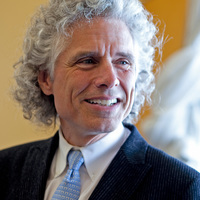
Steven Pinker is a cognitive scientist and Professor in the Department of Psychology at Harvard University. He is widely recognized for his work on language, mind, and human nature, with significant contributions to visual cognition, psycholinguistics, and the study of social behavior. His educational background, while not explicitly detailed in the provided text, has led him to become one of the most prominent cognitive scientists of our time. His academic journey has positioned him at the forefront of research bridging psychology, linguistics, and cognitive science. Cognitive Science - exploring the fundamental mechanisms of human thought and cognition Language and Mind - investigating how language reflects and shapes human thought processes Human Nature - examining evolutionary perspectives on human behavior and cognition Visual Cognition - studying imagery, attention, and shape recognition Psycholinguistics - researching syntax acquisition, morphology, and conceptual semantics Pinker's extensive publication record demonstrates consistent exploration of language as a window into human cognition. His work spans theoretical linguistics, empirical psychology, and broader philosophical questions about human nature. He has made significant contributions to understanding regular and irregular phenomena in language, the cognitive basis of grammar, and the evolutionary foundations of human thought. Pulitzer Prize finalist for "The Blank Slate" Extensive recognition for his influential books that have shaped public understanding of cognitive science Widespread academic influence across multiple disciplines including psychology, linguistics, and philosophy As an educator at Harvard University, Pinker has influenced countless students through his teaching and mentorship. His courses, such as "Language and Human Nature" and "Thinking about Taboo Subjects," reflect his commitment to exploring fundamental questions about the human mind. While specific grant information isn't provided in the text, his extensive publication record suggests significant research support throughout his career. Though specific laboratory information isn't detailed in the provided text, Pinker's research has clearly involved interdisciplinary collaboration across cognitive science, linguistics, and neuroscience, contributing to our understanding of the human mind from multiple perspectives.