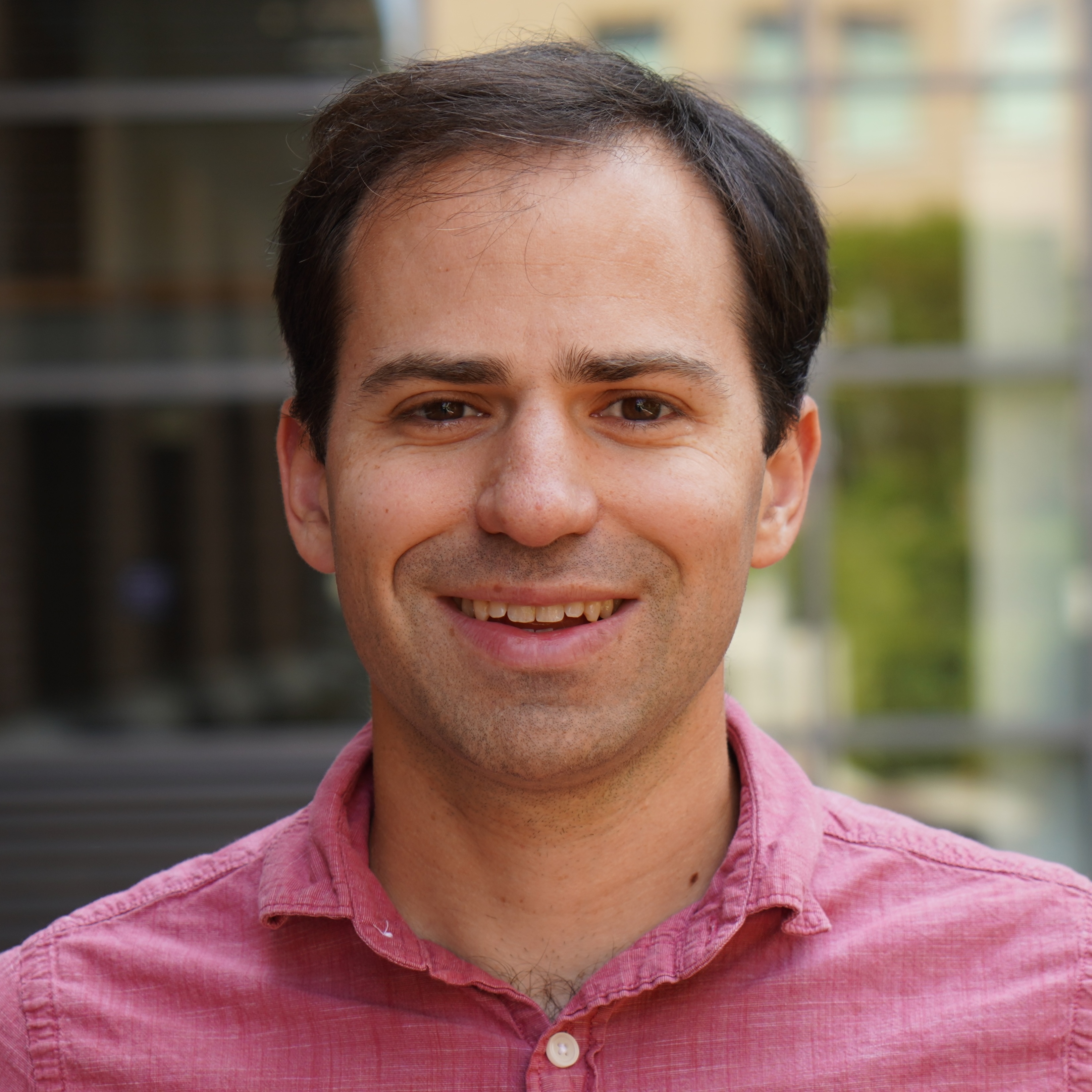
Matthew Louis Mauriello is an Assistant Professor in the Department of Computer and Information Sciences at the University of Delaware , where he directs the Sensify Lab . He holds a PhD in Computer Science from the University of Maryland (2018) and completed postdoctoral work at Stanford University (School of Medicine, 2020; School of Public Policy & Environmental Engineering Department, 2019). Research interests span Human-Computer Interaction (HCI), Ubiquitous Computing, and User-Centered Design with applications in: Sustainability Human-Building Interaction Wearable Technology Personal Informatics Educational Game Design Mental Health Interventions Recent publications highlight trends in stress monitoring (skin-like biosensors, workplace wellbeing), energy auditing (thermography systems), and educational technology (block-based programming tools for teachers). His work appears in ACM CHI, ACM Human-Computer Interaction, and Building and Environment. Scientific awards include: Best Paper Honorable Mention, CHI 2016 Best Paper Honorable Mention, CHI 2015 Best of WebSci'18 Teaching at University of Delaware encompasses courses like Educational Game Design Operating Systems Advanced Web Technologies Computing for Social Good with a focus on project-based learning and systems thinking.
Esther Duflo is the Abdul Latif Jameel Professor of Poverty Alleviation and Development Economics in the Department of Economics at the Massachusetts Institute of Technology (MIT). She is also co-founder and co-director of the Abdul Latif Jameel Poverty Action Lab (J-PAL), holds the Chaire, Pauvreté et politiques publiques at the Collège de France, and serves as President of the Paris School of Economics. Her research focuses on understanding the economic lives of people living in poverty to help design and evaluate social policies. Her work spans multiple domains including: Development Economics Poverty Alleviation strategies Health interventions Educational programs Financial inclusion initiatives Environmental policy Governance improvements Duflo revolutionized developmental economics by pioneering the use of randomized controlled trials to test poverty reduction measures. Her empirical approach has challenged conventional opinions about development and has helped improve the efficient use of resources in poverty alleviation programs worldwide. She co-authored the influential books "Poor Economics" and "Good Economics for Hard Times" with Abhijit Banerjee, demonstrating through field experiments how specific interventions (like providing lentils to mothers for child immunization) can dramatically improve social outcomes. Her notable scientific achievements include: Sveriges Riksbank Prize in Economic Sciences in Memory of Alfred Nobel (2019) Princess of Asturias Award for Social Sciences (2015) Infosys Prize (2014) John Bates Clark Medal (2010) MacArthur "Genius Grant" Fellowship (2009) A.SK Social Science Award (2015) Duflo has established J-PAL as a global network of over a hundred affiliated professors who use scientific evidence to inform policy decisions in the fight against poverty. J-PAL has offices across Africa, Europe, Latin America and the Caribbean, North America, and South and Southeast Asia. Her work has demonstrated the crucial importance of information in policymaking, with numerous field experiments showing how carefully designed interventions can have significant impacts on social outcomes across multiple domains including health, education, and economic opportunity.
Abhijit Banerjee is a Professor in the Department of Economics at the Massachusetts Institute of Technology (MIT). His research focuses on development economics, public health policy, and social protection programs, particularly addressing poverty and inequality in low- and middle-income countries. He has conducted large-scale experiments evaluating interventions such as conditional cash transfers, universal basic income, and healthcare policies. Key areas of interest include the design and implementation of anti-poverty programs, behavioral economics, and the long-term health impacts of infectious diseases like COVID-19. His work often integrates experimental methods to assess policy effectiveness, with contributions to global health studies and economic development strategies. Notably, his research on the RECOVERY trial evaluates treatments for hospitalized COVID-19 patients, while other studies explore financial spillover effects of electronic government transfers in Indonesia and savings behavior interventions in Chile. Banerjee has collaborated on projects analyzing post-COVID-19 health outcomes, labor market dynamics in India, and the role of trusted messengers in public health communication during crises. Despite the breadth of his contributions, specific details about his educational background, grants, or lab affiliations are not explicitly provided in the source text.
Polina Golland is a Professor in the Department of Electrical Engineering and Computer Science (EECS) at MIT and a Principal Investigator in the Computer Science and Artificial Intelligence Laboratory (CSAIL). Her research focuses on developing novel techniques for biomedical image analysis and understanding, particularly in medical vision, AI/ML, and health care applications. She leads the Medical Vision Group and collaborates with the Vision Group at CSAIL. Her work emphasizes statistical modeling of medical images, shape modeling, and predictive analytics for biological processes. Current projects include fetal MRI analysis, cardiac MRI segmentation, and quantitative assessment of pulmonary edema in chest X-rays. She has secured grants from NIH, MIT-IBM Watson AI Lab, and other institutions to support her research. Dr. Golland teaches courses on inference, probability, and probabilistic systems. She advises graduate students in MIT's EECS program and has mentored numerous postdocs and researchers. Her lab focuses on translating advanced imaging techniques into clinical workflows, with applications in neuroimaging, fetal health monitoring, and cardiovascular disease analysis. Notable collaborations include work with Harvard Medical School affiliates, Brigham and Women's Hospital, and the MIT Jameel Clinic. Her research aims to bridge computational methods with clinical needs, improving diagnostic tools and treatment planning through machine learning and medical imaging innovation.
Adrian Weller is a prominent researcher and academic at the University of Cambridge, serving as a Director of Research in Machine Learning within the Department of Engineering. He holds multiple significant leadership roles including Programme Director for Trust and Society at the Leverhulme Centre for the Future of Intelligence (CFI), and previously served as Programme Director for AI at The Alan Turing Institute, the UK national institute for data science and AI. His work bridges theoretical machine learning research with practical applications and societal implications of artificial intelligence. Weller's research interests span a broad spectrum of AI and machine learning topics with a particular focus on ensuring beneficial societal outcomes. His work encompasses explainability, fairness, robustness, scalability, privacy, safety, and ethics in AI systems. He has made significant contributions to trustworthy machine learning, including developing frameworks for AI governance, certification, and human-AI collaboration. His research group actively investigates neuro-symbolic approaches, privacy-preserving techniques, and methods for improving the reliability and interpretability of AI systems. His recent publications demonstrate a strong trend toward addressing the practical challenges of deploying AI systems in real-world contexts, particularly focusing on certification frameworks, governance mechanisms, and human-centered approaches. His work spans theoretical advances in machine learning architectures while maintaining a strong connection to societal impact, with publications appearing in top venues across AI, machine learning, and interdisciplinary applications. Scientific Awards: MBE for services to digital innovation (2022 Queen's Birthday Honours) Turing AI Fellowship for Trustworthy Machine Learning Weller actively supervises a large group of PhD students and postdocs, with current students including Juyeon Heo, Yanzhi Chen, Katie Collins, Isaac Reid, Yichao Liang, Herbie Bradley, and Shoaib Siddiqui. His former students have gone on to positions at leading institutions including Google DeepMind, ETH Zurich, NYU, and MPI-IS Tübingen. He has served on numerous advisory boards including the Centre for Data Ethics and Innovation, UNESCO's expert group on AI ethics, and the World Economic Forum's Global Future Council on AI. His research has been supported through his Turing AI Fellowship and various collaborative projects focused on safe and ethical AI development. Weller leads a vibrant research group focused on trustworthy machine learning, which actively organizes workshops and conferences including ICML 2024 (where he served as Program Chair), multiple workshops on responsible AI, and events through the ELLIS network. His group collaborates extensively across disciplines, working with researchers in computer science, social sciences, law, and policy to address the multifaceted challenges of developing beneficial AI systems.
Xin Guo is Professor and Department Chair of Industrial Engineering and Operations Research (IEOR) at UC Berkeley's College of Engineering, holding the Coleman Fung Chair in Financial Modeling. Her research bridges mathematical finance, stochastic control, and machine learning with applications in risk analytics and quantitative trading. Education: Ph.D. in Mathematics, Rutgers University (1999) Research Interests: Professor Guo's work centers on mathematical finance , stochastic games , and reinforcement learning . She develops theoretical frameworks for α-potential games and mean-field systems while applying signature methods and GANs to financial data. Her research addresses critical problems in portfolio optimization, fraud detection (e.g., Medicare analytics), and market forecasting, emphasizing the intersection of stochastic control with machine learning for real-world decision-making under uncertainty. Publication Trends: Recent work (2023-2025) shows increasing focus on multi-agent reinforcement learning through mean-field game theory, with applications spanning finance (corporate bonds, trading), healthcare (fraud detection), and transportation (rate forecasting). Key innovations include BSDE approaches for stochastic games, signature-based time series analysis, and theoretical guarantees for GAN training dynamics. Scientific Awards: Holds the prestigious Coleman Fung Chair in Financial Modeling, reflecting significant contributions to quantitative finance research. Advising and Grants: As IEOR Department Chair, Professor Guo mentors graduate students in stochastic modeling and financial engineering. Her research is supported by the Coleman Fung Endowment Fund, with collaborations spanning finance, healthcare, and transportation sectors through industry partnerships. Labs and Teams: Leads the Risk Analytics & Data Analysis Research (RADAResearch) Lab ( https://risklab.ieor.berkeley.edu/ ), which develops cutting-edge methodologies for risk assessment, data-driven decision-making, and game-theoretic solutions to complex systems. The lab fosters interdisciplinary work connecting mathematical theory with practical applications in FinTech and beyond.
Silvia Lindtner is an Associate Professor at the University of Michigan's School of Information and Director of the Center for Ethics, Society, and Computing (ESC). She holds courtesy appointments in the Penny W. Stamps School of Art and Design and the Digital Studies Institute. Her work focuses on the social and cultural study of technology in China and globally, with a focus on data-driven governance, AI ethics, and the intersection of technology and labor. Lindtner has conducted nearly two decades of fieldwork in China, examining innovation ecosystems, digital economies, and the affective dimensions of state control. She is the author of the award-winning *Prototype Nation: China and the Contested Promise of Innovation* (2020) and co-author of *Technoprecarious* (2020). Education: PhD in Information and Computer Sciences from University of California, Irvine; BS/MS in Media Technology and Design from University of Hagenberg, Austria. Research Interests: Science and Technology Studies (STS), China Studies, HCI, Critical Computing, AI Ethics, Data Governance, Labor Studies, and Transnational Digital Economies. She explores how technological systems shape governance, labor practices, and everyday life, particularly in contexts of global inequality and state surveillance. Awards: Joseph Levenson Prize (2021), Francis L.K. Hsu Book Prize (2021), ACM Distinguished Member (2022), and fellowships from the National Committee on US-China Relations (2021-2023) and China-US Scholars Program (2021-2022). Grants: Supported by NSF, IMLS, Intel Labs, Google Anita Borg, and Chinese National Natural Science Foundation. Leads interdisciplinary initiatives including Tech.Culture.Matters research group and Michigan Interactive and Social Computing (MISC) research group. Labs/Teams: Directs the Center for Ethics, Society, and Computing (ESC) and collaborates with the Lieberthal-Rogel Center for Chinese Studies. Current projects include studies on affective control in AI governance and transnational data practices in healthcare and labor.
Dr. Carolyn Emery is a Professor in the Faculty of Kinesiology at the University of Calgary, with joint appointments in Pediatrics and Community Health Sciences at the Cumming School of Medicine. She holds leadership roles as Chair of the Sport Injury Prevention Research Centre (an International Olympic Committee Research Centre) and the Alberta Children’s Hospital Research Institute. Her affiliations include the McCaig Institute for Bone and Joint Health, Hotchkiss Brain Institute, and O’Brien Institute for Public Health. Dr. Emery’s education includes a BScPT from Queen’s University (1988), MSc in Epidemiology from the University of Calgary (1999), and PhD in Epidemiology from the University of Alberta (2004). Her research focuses on injury prevention in youth sports, concussion, and pediatric rehabilitation, aiming to reduce long-term health consequences such as osteoarthritis and post-concussion syndrome. She leads major grants including CIHR’s “SHRed Injuries” and NFL-funded concussion surveillance programs. Her research interests emphasize practical interventions for injury prevention, including neuromuscular training and policy changes. Recent work explores concussion outcomes in adolescents, biomechanical injury mechanisms, and global sport safety initiatives. She has published extensively on topics like sport-related musculoskeletal injuries, concussion management, and the epidemiology of youth sports. Dr. Emery has received over 20 awards, including the Royal Society of Canada Fellowship, Killam Professorship, and CIHR Canada Research Chair. Her work bridges clinical practice, policy, and community engagement to enhance public health outcomes in sports and youth recreation. Her lab, the Sport Injury Prevention Research Centre, collaborates internationally to develop evidence-based strategies for injury prevention. Current projects include evaluating the impact of tackle laws in rugby, head acceleration in wrestling, and long-term consequences of pediatric concussions.
Huan Zhang serves as an Assistant Professor in the Department of Electrical and Computer Engineering at the University of Illinois Urbana-Champaign (UIUC), with affiliate appointments in the Department of Computer Science and the Coordinated Science Laboratory. His research focuses on building trustworthy AI systems with formal verification techniques to provide provable guarantees for safety-critical applications, particularly in machine learning and neural networks. Dr. Zhang received his Ph.D. in Computer Science from UCLA in 2020, advised by Professor Cho-Jui Hsieh. His academic journey includes an M.S. in Computer Engineering from UC Davis (2014) and a Bachelor of Engineering from Zhejiang University (2012). Prior to joining UIUC, he completed a postdoctoral fellowship at Carnegie Mellon University (2021-2023) with Professor Zico Kolter. Huan Zhang's research program centers on formal verification of machine learning systems, with particular emphasis on neural network verification, AI safety, robustness, and reliability. He pioneered the linear bound propagation-based verification framework that enables formal verification for networks with millions of neurons. His work spans five major research categories: formal verification of machine learning, training trustworthy ML models, machine learning safety and adversarial attacks, reinforcement learning safety, and optimization for scalable machine learning. His CROWN framework (NeurIPS 2018) established a foundational approach for neural network verification through efficient linear bound propagation. His recent publications demonstrate a strategic expansion from foundational verification techniques toward increasingly complex systems including large language models, vision-language models, and robotic control systems. The research trajectory shows a clear progression from theoretical frameworks to practical implementations with real-world applications, particularly in safety-critical domains. His work increasingly bridges formal methods with practical AI deployment requirements. Winner of International Verification of Neural Networks Competition (VNN-COMP) as team leader (2021-2024) Schmidt Futures AI2050 Early Career Fellowship ($300,000 research grant) Adversarial Machine Learning (AdvML) Rising Star Award (2021) IBM PhD Fellowship (2018) Dr. Zhang leads the development of α,β-CROWN, a neural network verifier that has won VNN-COMP 2021-2023, and auto_LiRPA, a PyTorch-based library for perturbation analysis on general computational graphs. He has mentored numerous graduate students from CMU, UCLA, UIUC, and Columbia University. His research is supported by significant funding including the Schmidt Futures fellowship and industry collaborations. He teaches courses including ECE 120, ECE 484, ECE 584, and ECE 598 HZ on topics ranging from computing fundamentals to safe autonomy and machine learning. Dr. Zhang maintains active research collaborations across multiple institutions and is affiliated with UIUC's Coordinated Science Laboratory. His work has significant implications for safety-critical AI applications in autonomous systems, healthcare, and other mission-critical domains where reliability guarantees are essential. He regularly gives guest lectures at institutions including Yale, Stony Brook, and the University of Nebraska Lincoln on formal verification techniques.
Professor Anna Korhonen is a leading academic at the University of Cambridge, holding positions as Professor of Natural Language Processing, Co-Director of the Language Technology Laboratory (LTL), Director of the Centre for Human-Inspired Artificial Intelligence (CHIA), and Fellow of Churchill College. Her work bridges computational linguistics, artificial intelligence, and interdisciplinary applications. Her research focuses on human-centric NLP with core interests in multilingual/low-resource systems, conversational AI, and responsible technology development. She emphasizes applications for social and global good, including healthcare, climate science, and equitable language technologies. Her methodology integrates cognitive modeling with machine learning to create interpretable, fair NLP systems. Key projects include ERC-funded initiatives like MultiConvAI (multilingual conversational AI) and Towards Globally Equitable Language Technologies , alongside Innovate UK's ESG RoboFactory and EPSRC's Modeling Idiomaticity project. Her work spans biomedical text mining ( PheneBank , LION ), educational technology ( EF Education First Research Lab ), and cross-lingual transfer learning. Fellow of the Association for Computational Linguistics (ACL) Fellow of ELLIS (European Laboratory for Learning and Intelligent Systems) Royal Society University Research Fellow (2005-2014) Google Faculty Award recipient EACL Chair Elect Korhonen actively supervises PhD/MPhil students in Computation, Cognition and Language programs and leads interdisciplinary collaborations across computer science, linguistics, and domain sciences. Her lab (LTL) develops foundational NLP techniques while addressing real-world challenges through partnerships with healthcare, environmental science, and education sectors. Current strategic initiatives include the Institute for Technology and Humanity and CHIA's human-inspired AI framework.
Daniel Epstein is an Associate Professor in the Department of Informatics at the University of California, Irvine (UCI), where he leads the Personal Informatics Everyday (PIE) Lab. He holds a courtesy appointment in the Department of Computer Science and is affiliated with the Connected Learning Lab, Institute for Future Health, and Accessibility Research Collective. Epstein earned his Ph.D. in Computer Science & Engineering from the University of Washington and a B.S. in Computer Science from the University of Virginia. His research focuses on how personal tracking technology can better serve diverse users' needs, emphasizing ethical design, health equity, and long-term user engagement. Notable areas include pregnancy tracking, wearable technology for children and ADHD management, and AI-driven health chatbots. Epstein has received grants from NSF, Snap Inc., and UCI programs, totaling over $650k in funding. Epstein's work bridges HCI and health informatics, with over 60 peer-reviewed publications. He advises six Ph.D. students and has mentored numerous undergraduates. Awards include the ACM Senior Member distinction (2025), CHI Best Paper (2023), and NSF CAREER Award (2023). Professional service includes program committees for CHI, CSCW, and UbiComp, plus leadership roles in workshops like the Workgroup on Interactive Systems in Healthcare (WISH). Beyond academia, Epstein enjoys hiking, collecting turtle figures, and advocating for accessible technology.
Tommi Jaakkola is the Thomas Siebel Professor of Electrical Engineering and Computer Science and the Institute for Data, Systems, and Society at the Massachusetts Institute of Technology. He received his MSc in theoretical physics from Helsinki University of Technology in 1992 and his PhD from MIT in computational neuroscience in 1997. After completing a postdoctoral position in computational molecular biology as a DOE/Sloan fellow at UCSC, he joined the MIT EECS faculty in 1998. His research advances how machines can learn, predict or control, and do so at scale in an efficient, principled, and interpretable manner. His work in machine learning extends from foundational theory to modern applications, focusing especially on statistical inference and estimation tasks that lie at the heart of complex learning problems. He designs new methods, theory and algorithms to automate the use and generation of semi-structured data such as natural language text, images, molecules, or strategies. Jaakkola applies and develops algorithms to solve multi-faceted recommender, retrieval, or inferential tasks (particularly in biomedical contexts), design and optimize molecules or reactions for drug design, and model strategic, game theoretic interactions. His recent work heavily focuses on diffusion models, protein structure prediction, molecular design, and generative AI, with significant publications in top conferences including ICML, NeurIPS, and ICLR. His scientific contributions span multiple disciplines with significant impact in both theoretical machine learning and practical applications in computational biology and chemistry, including notable work on antibiotic discovery published in Cell. Current advisees: Julia Balla, Bowen Jing, Hannes Stärk, Peter Holderrieth, Chenyu Wang Recent graduates: Gabriele Corso (Boltz PBC), Ezra Erives (DE Shaw), Jason Yim (Xaira) Jaakkola maintains an active research program through MIT's Computer Science and Artificial Intelligence Laboratory (CSAIL) and the Institute for Data, Systems, and Society (IDSS), with his office located in the Stata Center (32-G470). His work bridges theoretical machine learning with practical applications, making significant contributions to both the academic field and potential real-world impact in healthcare and drug discovery.
Hanjie Chen is an Assistant Professor in the Department of Computer Science at Rice University, affiliated with the Ken Kennedy Institute. She holds a Ph.D. from the University of Virginia and a Master's from the University of Science and Technology of China. Her research focuses on Natural Language Processing, Interpretable Machine Learning, and Trustworthy AI, emphasizing model explainability, alignment with human needs, and applications in healthcare, sports, and medicine. She has advised numerous students and led initiatives in AI ethics and education. Education: Ph.D. (Computer Science, UVA 2023), M.Sc. (USTC 2018), B.Sc. (Nanjing University of Aeronautics and Astronautics 2015). Awards include the Outstanding Doctoral Student Award (UVA 2023) and John A. Stankovic Research Award (UVA 2023). She has organized workshops like BlackboxNLP and served on program committees for ACL, NAACL, and EMNLP. Her recent work includes developing benchmarks like SPORTU for multimodal LLMs, evaluating medical question-answering systems, and advancing methods for robust rationale evaluation (RORA). She teaches courses on Natural Language Processing and Trustworthy NLP, emphasizing pedagogical innovation recognized by teaching awards at UVA. Research collaborations include internships at Microsoft Research, IBM, and the Allen Institute for AI. She mentors students in SURF programs and advocates for diversity in tech, serving as a mentor in UVA's CSGSG Council.
Maja J Matarić is the Chan Soon-Shiong Chaired and Distinguished Professor of Computer Science at the University of Southern California's Viterbi School of Engineering, with courtesy appointments in Neuroscience and Pediatrics. She serves as founding director of the USC Robotics and Autonomous Systems Center, co-director of the USC Robotics Research Lab, and Principal Scientist at Google DeepMind. Previously, she held leadership roles as USC's interim Vice President of Research (2020-2021) and Vice Dean for Research (2006-2019). Her educational background includes: PhD in Computer Science and Artificial Intelligence from MIT (1994) MS in Computer Science from MIT (1990) BS in Computer Science from University of Kansas (1987) Matarić pioneers Socially Assistive Robotics (SAR) , a field her lab named, focusing on human-robot interaction that provides assistance through social rather than physical support. Her research targets critical health and wellness challenges including post-stroke rehabilitation, autism spectrum disorder therapy, cognitive exercises for Alzheimer's patients, ADHD academic support, and mental health interventions. She develops systems modeling user engagement, personality, and motivation, with extensive real-world deployments in schools, rehabilitation centers, and homes. Analysis of her recent publications reveals dominant themes in cognitive health robotics (2025 CHI paper on LLM-powered elder care), pediatric assistive technology (2025 IDC speech therapy review), and adaptive preference modeling (2025 HRI contrastive learning work). Her research consistently bridges machine learning with human-centered design for vulnerable populations. Major scientific recognition includes: ACM Athena Lecturer Award (2024) ACM Eugene L. Lawler Humanitarian Award (2024) ACM Fellow (2020) Presidential Mentoring Award (2011) Multiple society fellowships (AAAS, IEEE, AAAI) As a dedicated mentor, Matarić has championed underrepresented groups through CRA-W, placing numerous women in faculty positions. She leads USC Viterbi's K-12 STEM Outreach Program serving low-income Los Angeles schools and authored The Robotics Prime for student education. Her research has secured significant funding enabling real-world technology transfer, with documented impact in rehabilitation centers and homes through deployable SAR systems. Her Robotics Research Lab at USC drives innovation in embodied AI, with current projects spanning LLM-integrated elder care robots, ADHD academic companions, and autism therapy systems. The lab emphasizes co-design with end-users and rigorous real-world validation across diverse populations.
Professor Maria Craig is a distinguished academic and researcher at the University of New South Wales, Faculty of Medicine & Health, specializing in childhood diabetes research. She holds a prominent position as a Professor with extensive contributions to the field of pediatric endocrinology and diabetes, particularly focusing on type 1 diabetes in children. Professor Craig's educational background includes: MB BS from the University of Melbourne MMedSc(ClinEpid) from the University of Newcastle PhD from the University of Sydney FRACP (Fellow of the Royal Australasian College of Physicians) Professor Craig's research primarily focuses on childhood diabetes, with special emphasis on prediction and prevention of type 1 diabetes. She has a significant interest in the association between viruses and type 1 diabetes, collaborating with the Virology Research Group at Prince of Wales Hospital (POWH). Together with Professor Bill Rawlinson, she leads the viral theme for the multicentre ENDIA study (endia.org.au). As principal investigator for the CoRD trial, she is conducting a world-first phase 1 study using autologous cord blood for prevention of type 1 diabetes in children with islet autoimmunity. Additionally, she serves as principal investigator for the Australasian Diabetes Data Network (ADDN). Her research portfolio also encompasses the epidemiology of various forms of childhood diabetes (type 1, type 2, cystic fibrosis related diabetes and monogenic diabetes) and diabetes complications, in collaboration with Professor Kim Donaghue at the Children's Hospital at Westmead. Professor Craig's extensive publication record, including over 361 journal articles, demonstrates her leadership in advancing our understanding of childhood diabetes. Her recent work shows increasing focus on early detection methods, risk prediction models, technological interventions for diabetes management, and the complex interplay between viral infections and autoimmune diabetes development. She has been instrumental in developing clinical practice guidelines through her role as co-editor of the International Society for Pediatric and Adolescent Diabetes (ISPAD) guidelines. Professor Craig has received numerous prestigious awards recognizing her contributions to pediatric endocrinology and diabetes research: Australian Paediatric Endocrine Group Young Investigator's Award (1997) Asia Pacific Paediatric Endocrine Society Clinical Teaching Award (2008) Lifetime Honorary Member, Caring and Living as Neighbours (2013) Australian Diabetes Society Jeff Flack Diabetes Data Award (2019) Australian Paediatric Endocrine Group Norman Wettenhall Award for Research and Innovation (2019) Throughout her career, Professor Craig has demonstrated exceptional leadership in professional societies, having served as former president/treasurer of the Australasian Paediatric Endocrine Group (APEG) and currently as Scientific Convenor of the Asia Pacific Paediatric Endocrine Society Fellows school. Her work with the ENDIA study and Australasian Diabetes Data Network represents significant collaborative research efforts involving multiple institutions across Australia and internationally. Her principal investigator roles for major studies indicate substantial research funding support. Professor Craig leads several important research initiatives including the ENDIA study, the CoRD trial, and the Australasian Diabetes Data Network. These programs involve multidisciplinary teams of researchers, clinicians, and support staff working collaboratively to advance understanding and treatment of childhood diabetes. Her work at the intersection of virology and diabetes represents a unique and innovative approach to understanding the environmental triggers of type 1 diabetes.