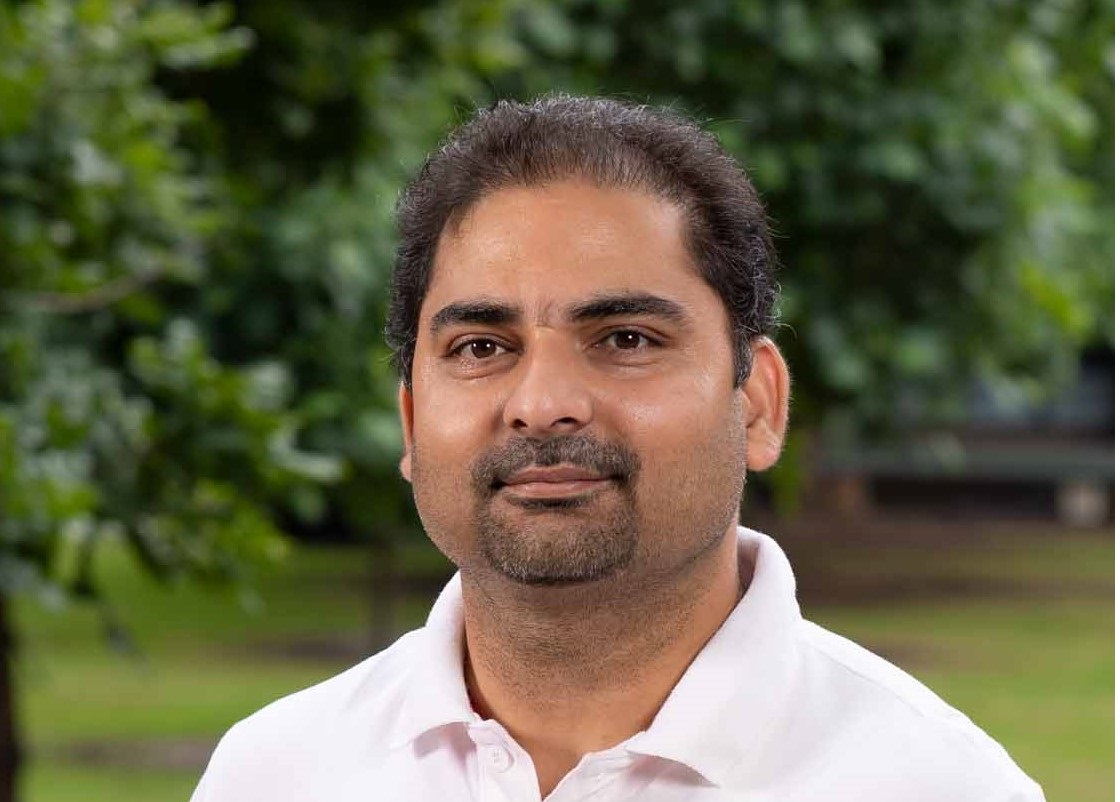
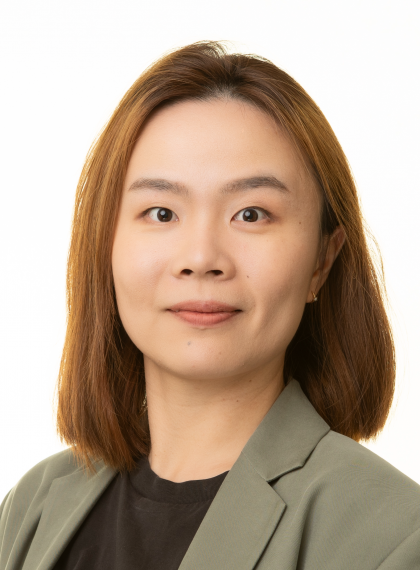
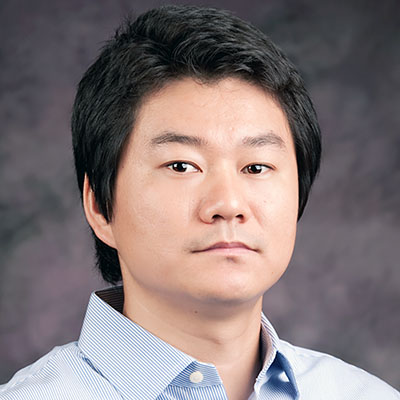
Dr. Sonit Singh is a Lecturer at the School of Computer Science and Engineering at the University of New South Wales (UNSW), Sydney, Australia. Prior to this role, he served as a Postdoctoral Research Fellow at the same institution. He holds a PhD from Macquarie University, completed in collaboration with Macquarie. His research focuses on artificial intelligence, computer vision, natural language processing, and their applications in healthcare, particularly in medical imaging and diagnostic systems. Dr. Singh's academic background includes a strong emphasis on biomedical imaging, intelligent robotics, and computing education. His work bridges machine learning advancements with real-world clinical challenges, such as tumor segmentation, radiology report generation, and disease detection through imaging modalities like CT scans and ultrasound. His recent publications highlight innovations in 3D medical image localization, robust tumor segmentation networks, and clinical context-aware radiology report systems. These contributions underscore his expertise in integrating deep learning techniques with healthcare workflows. Dr. Singh collaborates with multidisciplinary teams, including medical professionals, to develop solutions for challenges like placenta segmentation and dietary intake monitoring using AI. While no specific awards or grants are explicitly listed, his extensive publication record reflects sustained academic engagement in high-impact areas. His research often addresses practical clinical needs, such as improving diagnostic accuracy and patient care through advanced computational methods.
Dr. Julian Hough is an Associate Professor of Human-Computer Interaction at Swansea University, affiliated with the School of Mathematics and Computer Science under the Faculty of Science and Engineering. His research focuses on improving human-agent interaction through Natural Language Processing (NLP) and AI, emphasizing ethical and quality outcomes in human-robot collaboration. His work spans Human-Robot Interaction (HRI), dialogue systems, and cognitive applications of speech technology. Notable projects include the FLUIDITY initiative exploring virtual reality platforms for HRI and the ARCIDUCA project annotating dialogue using conversational agents in games. He has secured significant grants, including a £587,000 EPSRC New Investigator Award for FLUIDITY and a £1.09M EPSRC grant for ARCIDUCA. Research interests include multimodal communication, disfluency analysis in dialogue, and applying LLMs to word sense disambiguation. His work often bridges computational linguistics with practical robotics and health technology, such as analyzing wearable sleep-tracker subjectivity and detecting Alzheimer’s through speech patterns. Collaborations span institutions globally, with contributions to workshops and conferences on HRI and dialogue systems. He actively supervises postgraduate research in areas like incremental intention recognition and computational law semantics.
Zhao Zhao is an Assistant Professor at the School of Computer Science, University of Guelph. Her work focuses on wearable systems, human-robot interaction, and gamification for health and education. She holds a PhD from Carleton University (2019) and completed a postdoctoral fellowship at the University of Toronto (2019–2023) before roles at McMaster University and her current position. Education includes a BSc in Computer Science from University of Electronic Science and Technology of China (2011), MSc from Carleton University (2014), and PhD in Electrical and Computer Engineering (2019). Research interests span physiological computing, AI-assisted creativity tools, and adaptive systems leveraging wearable sensors. Key research areas include: 1) Wearable-based gamification for health and education, 2) Emotion sensing via physiological signals, and 3) Human-robot interaction enhanced by wearable data. Her lab uses Empatica EmbracePlus wristbands and Emotiv EEG headsets to analyze real-time physiological responses in diverse interaction scenarios. Recent publications (2020–2025) emphasize personalized exergame systems, child-robot interaction studies, and AI linguistic competency analysis. She actively seeks graduate students and industry partnerships in wearable technology, education tech, and HRI.
Prof. Keng Hock, Mark Goh is a Professor at the National University of Singapore (NUS) Business School, holding a joint appointment as Director (Industry Research) at The Logistics Institute-Asia Pacific (TLI-AP). He specializes in logistics, supply chain strategy, and operations research. He earned his PhD from the University of Adelaide on a fully funded scholarship and has held adjunct and visiting roles globally. His research focuses on supply chain risk management, healthcare logistics, and strategic decision-making, with over 400 publications in top journals. Notable contributions include work on multi-criteria supplier selection, supply chain resilience, and AI ethics in e-commerce. He has received the Supply Chain Educator Award and is recognized in global directories like *Who’s Who in Asia and the Pacific Nations*. Prof. Goh advises public and private sector organizations on logistics strategy and sits on industry committees such as the World Economic Forum’s Global Advisory Council on Logistics. His current projects emphasize syncretic value-driven logistics models and sustainable recycling frameworks. He leads collaborative research teams addressing global supply chain challenges through interdisciplinary approaches. His articles reflect cutting-edge advancements in AI-driven decision models, risk networks in construction, and data ownership strategies in digital platforms. These contributions underscore his role as a thought leader in logistics and operations research, blending academic rigor with real-world industry applications.
Inês Cláudia Rijo De Carvalho is a Lecturer at Universidade Europeia in Lisbon and serves as Research Coordinator at the Faculty of Social Sciences and Technology. She holds dual PhDs in Tourism (University of Aveiro) and Management (ISEG-Lisbon School of Economics), with a BSc in Modern Languages and Literatures (University of Coimbra) and an MSc in Tourism Management (University of Aveiro). She was a visiting scholar at Linköping University’s Gender Studies Unit in Sweden. Affiliated with CETRAD and GOVCOPP research centers, her work focuses on gender dynamics in tourism, cultural tourism, language tourism, and AI applications in the sector. She has conducted research on gender equality in tourism leadership and led projects funded by Portugal’s Foundation for Science and Technology. Her recent publications explore topics like chatbot applications in tourism, pandemic impacts on travel industries, and machine translation in traveler experiences. She has co-authored book chapters on women’s voices in tourism research and contributed to policy-oriented studies on tourism development. Education: BSc English/German Literature, MSc Tourism Management, PhD Tourism, PhD Management (ongoing) Key Research Themes: Gender & Tourism, Language Tourism, AI in Tourism, Cultural Heritage, Tourism Resilience Affiliations: CETRAD, GOVCOPP, Universidade Europeia Her research has been published in journals like Tourism Review, Anatolia, and Humanities and Social Sciences Communications. She actively participates in conferences such as the International Tourism Congress and THInC, addressing topics from emotional labor in hospitality to post-pandemic tourism strategies. Her work bridges academic rigor with practical insights for tourism policy and industry innovation.
Dr. Yu (Chelsea) Jin is an Assistant Professor in the Department of Industrial Engineering at the University at Buffalo, specializing in quality inspection, predictive modeling, and data analytics for advanced manufacturing systems. She holds a PhD in Industrial Engineering from the University of Arkansas, an ME from the University of Michigan, and dual BS degrees in Network Engineering and Finance from Jinan University. Her research focuses on integrating machine learning and physics-based models to optimize manufacturing processes, such as additive manufacturing, PCB assembly, and pharmaceutical distribution systems. She has developed frameworks like ReflowNet for reflow oven optimization and physics-informed neural networks for thermal profile prediction. Her work emphasizes both theoretical advancements and practical applications in smart manufacturing and healthcare logistics. Dr. Jin's recent publications highlight contributions to generative AI for knowledge retrieval, AGV system optimization, and multi-source transfer learning for pandemic modeling. She actively collaborates with industry partners to bridge academic research and real-world manufacturing challenges.
Rakotonirainy Andry is a Professor at Queensland University of Technology (QUT), affiliated with the Centre for Accident Research & Road Safety - Queensland (CARRS-Q). His research focuses on transportation safety, automated vehicles, human factors, and intelligent transportation systems (ITS). He leads interdisciplinary projects exploring driver behavior, connected vehicle technologies, and the societal impacts of automation. Key areas include accident prevention, human-vehicle interaction, and equity in transport systems. His work integrates machine learning, simulation studies, and behavioral analysis to address challenges in road safety. Notable contributions include studies on driver stress detection, automated vehicle acceptance, and the Australian Naturalistic Driving Study (ANDS). He collaborates with institutions globally, advancing innovations like connected vehicle pilots and multimodal AI for traffic safety. Research interests span automated driving systems, vulnerable road user protection, and policy implications of emerging technologies. His findings contribute to safer transportation policies and technologies, emphasizing both technical and human-centric perspectives.
Allan Hanbury is a Full Professor for Data Intelligence at the Faculty of Informatics, TU Wien, and a faculty member at the Complexity Science Hub Vienna. He leads the Data Science Research Unit and serves as the Faculty Representative for financial affairs and internationalization. He holds a PhD in Applied Mathematics from Mines ParisTech and a Habilitation in Practical Informatics from TU Wien. PhD in Applied Mathematics, Mines ParisTech, 2002 Habilitation in Practical Informatics, TU Wien, 2008 Bachelor’s and Master’s in Physics and Applied Mathematics, University of Cape Town His research focuses on information retrieval, data mining, natural language processing, and information extraction, with applications in healthcare, legal, and patent domains. He has coordinated major EU projects including Khresmoi, VISCERAL, KConnect, and DoSSIER, the latter training 15 PhD students. He is co-founder of contextflow, a spin-off commercializing radiology search technology. His recent publications (2024–2022) highlight a strong trend in systematic literature review automation, neural re-ranking, large language models, and domain-specific information extraction. Key themes include improving citation screening, patient-trial matching, evaluation metrics, and dataset creation for offensive language and legal text. His work combines technical innovation with real-world impact in medical, legal, and scientific communication contexts. Allan Hanbury has received no explicitly mentioned scientific awards in the provided text. He actively supervises numerous PhD and master’s students and leads large research projects such as DoSSIER, Transparent Automated Content Moderation, and PLFDoc, funded by FWF, WWTF, and EU. His group develops tools for evidence synthesis, clinical data extraction, and legal document analysis. He also contributes to AI and data strategy in Austria and Europe. He leads the Data Science Research Unit at TU Wien and is involved in multiple interdisciplinary projects including BRISE (building regulation analysis), CDL-RecSys, and TACo, focusing on legal and scientific document processing. His work bridges academia and industry through spin-offs like contextflow and collaborations with Deutsche Telekom, Siemens, and FMA.
Thomas Niederkrotenthaler is an Associate Professor and Head of the Unit for Suicide Research & Mental Health Promotion at the Medical University of Vienna, Austria. He is also an Associate Faculty member at the Complexity Science Hub (CSH) since September 2019. His research centers on suicide prevention, mental health promotion, and the epidemiological impact of media on suicidal behavior. He is best known for coining the Papageno effect , which describes how responsible media reporting can have protective effects against suicide. His work integrates public health, data science, and complex systems approaches. The recent publications reflect a strong trend in using data science and machine learning to analyze media content, evaluate public health campaigns, and understand mental health trajectories during crises such as the COVID-19 pandemic. His research spans refugee mental health, antidepressant use, and the societal impact of celebrity suicides. He is a board member of the International Association for Suicide Prevention and chairman of the Wiener Werkstaette for Suicide Research. He has received multiple research grants, including funding for COVID-19-related projects from WWTF. Board Member, International Association for Suicide Prevention Chairman, Wiener Werkstaette for Suicide Research Associate Faculty, Complexity Science Hub (CSH) Thomas Niederkrotenthaler has advised numerous research projects and secured competitive grants. His team leverages large datasets, including administrative and social media data, to inform suicide prevention strategies. He leads a multidisciplinary research unit focused on translating epidemiological findings into public health action. His lab collaborates closely with the Complexity Science Hub and engages in international research networks focused on mental health, media effects, and pandemic response. The team emphasizes open science and data sharing, as demonstrated by contributions to large-scale datasets like the CSH COVID-19 Control Strategies List.
Anantaa Kotal is an Assistant Professor of Computer Science at The University of Texas at El Paso (UTEP), commencing her position in Fall 2024. Previously, she completed her PhD at the University of Maryland, Baltimore County (UMBC) and gained industry experience at Amazon and IBM. Her academic credentials include: PhD in Computer Science, University of Maryland Baltimore County (UMBC), 2024 B.E. in Computer Science and Engineering, Jadavpur University, 2017 Dr. Kotal's research centers on Generative AI applications for privacy and security, with emphasis on privacy-preserving data sharing, synthetic data generation, and policy compliance verification. She integrates knowledge graphs, reinforcement learning, and neurosymbolic approaches to develop frameworks for secure data synthesis in healthcare, agriculture, and cybersecurity domains. Her work addresses critical challenges like policy ambiguity resolution and trustworthy AI code generation. Analysis of her 15 most recent publications (2021-2025) reveals a strong trajectory toward knowledge-infused generative models for privacy preservation, with increasing focus on large language models (LLMs) and real-world applications in distributed systems. Key thematic clusters include policy-aware data synthesis (12 publications), healthcare data security (7 publications), and knowledge-graph-enhanced cybersecurity (5 publications). Dr. Kotal is actively recruiting graduate students for her research lab at UTEP and currently teaches Data Mining (CS 5362/6362) in Fall 2024. She maintains active research collaborations with her doctoral advisor Dr. Anupam Joshi at UMBC and industry partners including IBM. She leads a research laboratory at UTEP focused on developing next-generation privacy-preserving AI systems, with current projects spanning healthcare data anonymization, agricultural data sharing frameworks, and policy-compliant synthetic data generation for cybersecurity applications.
Katharina Kaiser is affiliated with TU Wien's Fachbereich Software Services. She specializes in medical informatics with a focus on computerized clinical guidelines and healthcare system optimization. Her work bridges temporal data analysis, information extraction from clinical texts, and workflow modeling in medical contexts. Key areas: Clinical decision support systems, guideline implementation frameworks, temporal logic in healthcare processes Notable contributions: Development of TimeML-based clinical guideline modeling, heuristic methods for condition-action sentence identification Her research emphasizes semantic enrichment of medical documents and interactive visualization tools for therapy planning and patient data correlation. Collaborations include the PROTOCOL project and ReMINE deliverables in adverse risk management.
Hongxin Hu is a Professor and Associate Chair in the Department of Computer Science and Engineering at the University at Buffalo, State University of New York (SUNY). His research spans security, networking, and machine learning, with publications across top conferences including security (S&P, CCS, USENIX Security, and NDSS), networking (SIGCOMM and NSDI), machine learning (NeurIPS, ICML, and EMNLP), and human-computer interaction (CHI and CSCW). His work has been funded by NSF (SaTC, CNS, IIS, OAC, SOC), USDOT, VMware, Amazon, Google, and Dell. Dr. Hu earned his PhD in Computer Science and Engineering from Arizona State University in 2012. His academic journey has led him to become a prominent researcher in cybersecurity with a strong publication record and significant research impact. Dr. Hu's research interests encompass a wide range of topics at the intersection of security, networking, and artificial intelligence. His work focuses on Emerging Network Technologies and Security (5G/Future-G, NFV, SDN, Edge computing), Machine Learning for Security and Privacy , Security and Privacy in IoT and Cyber-Physical Systems , and AI for Social Good (addressing online abuse, unsafe children's games, and cyberbullying). His interdisciplinary approach has enabled him to tackle complex security challenges through innovative solutions that combine networking expertise with machine learning techniques. His recent publications demonstrate a strong trend toward applying large language models and advanced machine learning techniques to security challenges, particularly in content moderation, vulnerability detection, and privacy protection. The research spans multiple domains including voice assistant security, IoT security, network security, and social media safety, showing a consistent pattern of addressing real-world security problems with cutting-edge technical approaches. IEEE Big Data Security Senior Research Award (2025) ACM SACMAT Test-of-Time Award (2024) NSF CAREER Award (2019) Multiple Best Paper Awards from ACM ASIACCS (2022), ACSAC (2020), IEEE ICC (2020), and ACM SIGCSE (2018) Amazon Faculty Research Award (2022) First Place Award in ACM SIGCOMM 2018 Student Research Competition Dr. Hu has successfully advised multiple PhD students, including Nishant Vishwamitra who joined UT San Antonio as a tenure-track Assistant Professor. His research has been generously funded by major agencies and industry partners. As an active member of the academic community, he serves as Associate Editor for IEEE Transactions on Dependable and Secure Computing and Computers & Security, and has held numerous leadership roles in major security conferences including TPC Co-Chair for ASONAM 2025 and IWSPA 2024/2025. Dr. Hu leads a vibrant research group that has produced significant contributions in network security function virtualization, intrusion detection systems, and privacy-preserving technologies. Current projects include developing LLM-assisted vulnerability detection systems, defenses against jailbreak attacks on large language models, and security mechanisms for emerging networking technologies. His team's work on IoT security, voice assistant applications, and online content moderation has received wide recognition and press coverage.
Kun Chen is a Professor in the Department of Statistics at the University of Connecticut's College of Liberal Arts and Sciences. His research bridges advanced statistical methodology with critical applications in healthcare, environmental science, and mental health. His research focuses on large-scale statistical learning , machine learning optimization , and healthcare analytics , particularly in suicide risk prediction using electronic health records and health information exchanges. Recent work integrates natural language processing with social determinants of health for veteran suicide prediction and develops novel tensor regression methods for longitudinal data with missing observations. Analysis of his 15 most recent publications reveals a dominant trend in mental health data science (73% of articles), with significant contributions to statistical methodology (53%) including reduced-rank regression extensions and sparse factor modeling. His environmental statistics work (20%) focuses on nanomaterial applications in contaminated agriculture and microbiome-environment interactions. Scientific Recognition: Co-authored seminal 2023 Springer monograph Multivariate reduced-rank regression: theory, methods and applications (2nd Edition) Developed rrpack R package for reduced-rank regression (2019) His collaborative work spans UConn Health, Veterans Affairs, and multiple national consortia, with recent grants supporting data fusion techniques for suicide prevention and Parkinson's disease progression modeling. Current projects include transfer learning frameworks for hospital suicide risk prediction and gut microbiome analysis in neurological disorders. Dr. Chen maintains active leadership in statistical ecology applications and serves on editorial boards for biostatistics journals, with recent work on quantum dot analysis demonstrating methodological versatility across physical and health sciences.
Kotaro Hara is a Full-time Faculty Assistant Professor of Computer Science at Singapore Management University's School of Computing and Information Systems. His research focuses on Human-Computer Interaction, Human-Machine Collaborative Systems, and Accessibility Design, with applications in urban mobility, digital transformation, and aging population support. He holds a PhD from the University of Maryland (2016). Research Areas: Accessibility, Crowdsourcing, Future of Work, Urban Sustainability Recent publications explore Augmented Reality for low-vision runners, conversational agents for dementia care, and novel tactile data visualization methods. His work integrates natural language processing, multimodal interfaces, and AI ethics frameworks across diverse domains. Academic collaborations include advising PhD candidate Sheshadri Smitha. Contact: kotarohara@smu.edu.sg
Vladimir Filkov is a Professor in the Department of Computer Science at the University of California, Davis, College of Engineering. He leads two research labs: the DECAL Lab and the AI for Health Lab. He is actively engaged in research, teaching, and service, with a focus on open-source software sustainability, AI in healthcare, and data science. He has held leadership roles such as General Chair of ASE 2024 and inaugural Director of Translational Data Science at UCD DataLab. Professor, Department of Computer Science, UC Davis Director, DECAL Lab Director, AI for Health Lab General Chair, ASE 2024 Director of Translational Data Science, UCD DataLab (2020–2024) His research centers on the sustainability of open-source software, using socio-technical and governance data to forecast project success and evolution. He also investigates AI applications in health, particularly multimodal models for atrial fibrillation and NLP in medicine. His work bridges empirical software engineering, data science, and healthcare informatics, with strong community engagement through forums and podcasts. He has led major NSF, Google, and Sloan Foundation-funded projects on OSS sustainability and UC-wide OSPO initiatives. The recent publications highlight a strong trend in empirical software engineering, particularly around open-source governance, lifecycle analysis, and sustainability forecasting. There is also a growing emphasis on health-related AI, including multimodal models for cardiac conditions and natural language processing in clinical settings. The work combines data-driven modeling with real-world impact in both software ecosystems and healthcare. ACM Distinguished Member ACM SIGSOFT Distinguished Paper Award Vladimir Filkov has successfully secured competitive grants from the NSF (GCR, Phase I and II), Google, and the Sloan Foundation. He advises PhD students including Likang Yin, Raiyan Jahangir, and postdoc Stefan Stanciulescu. His mentoring spans topics in software engineering, AI, and computational biology. He has organized major research forums and collaborative initiatives across the UC system. He leads the DECAL Lab and the AI for Health Lab at UC Davis, fostering interdisciplinary research in software sustainability and healthcare AI. These labs support graduate students, postdocs, and collaborative projects with national and international partners.