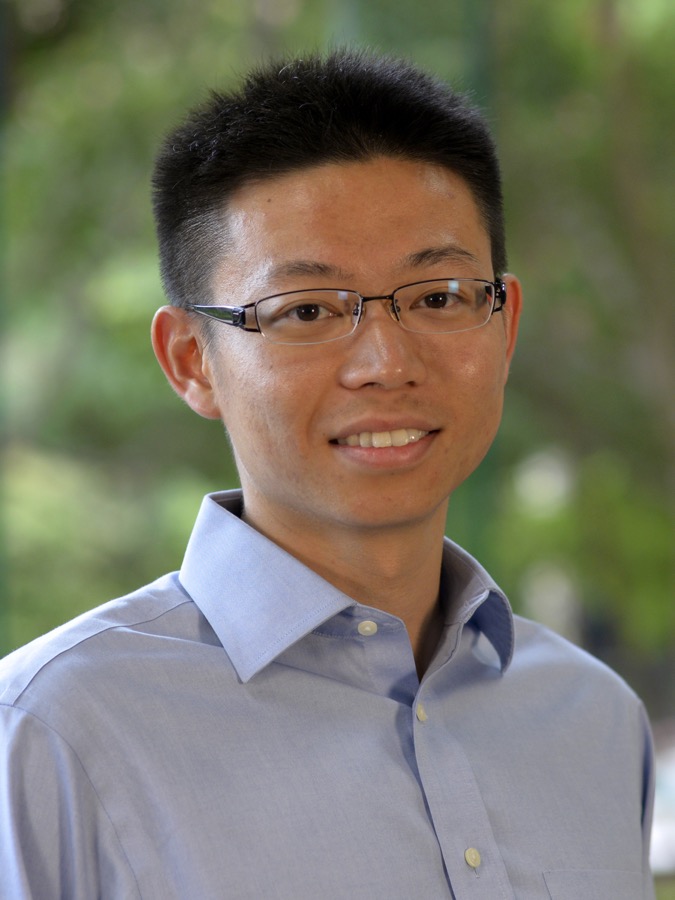
Michael Ohlrogge is a Professor of Law at New York University School of Law, joining in 2019. He holds a PhD in Management Science and Engineering (finance and economics) and a JD from Stanford University, alongside a BA from the University of Michigan. His research focuses on legal structures' impact on corporate risk and public welfare, particularly in bankruptcy, financial regulation, and corporate governance. His work bridges law and economics, emphasizing how legal frameworks influence corporate behavior and societal outcomes. Ohlrogge has advised the SEC on Dodd-Frank regulations and contributed to mortgage discrimination litigation. He teaches Bankruptcy Law, exploring how it shapes corporate debt management and social well-being. His scholarship has been featured in outlets like the Wall Street Journal and New York Times . Notable publications include analyses of deposit insurance dynamics, environmental liability in bankruptcy, and SPACs' regulatory implications. He advises corporations on regulatory compliance and has held roles in community organizing before academia.
Charlotte Lambert is a Part-Time Lecturer at the University of Namur's Faculty of Law, specializing in Social Law and Labor Law. She serves as a researcher at the Vulnerabilities and Societies Interdisciplinary Centre (V&S) and teaches Social Law courses within the Department of Law. Her academic affiliation spans multiple institutional units including the Law of Obligations Unit (UDO) and she participates in the Faculty Council. Bachelor of Laws, Notre Dame de la Paix Faculty (2010) Master of Laws, Catholic University of Louvain (2012) Master na Master in Social Law, Vrije Universiteit Brussel (2013) Her research centers on Social Law with emphases on Labor Law, Healthcare Ethics, and Social Protection systems. Lambert investigates workplace well-being, social security frameworks, and ethical dimensions of healthcare policies, particularly examining aging populations and end-of-life decisions. Her work bridges legal theory with practical applications in vulnerable societal contexts. Analysis of her 15 most recent publications (2008-2025) reveals consistent focus on social protection systems, evolving toward contemporary ethical challenges in healthcare and workplace diversity. Early works concentrated on social security and psychosocial risks, while recent scholarship addresses hospital law, family benefits, and bioethical dilemmas. A notable trend shows increasing integration of ethical frameworks with legal analysis, particularly in elderly care and end-of-life decisions. Member, Ethics Commission of the Superior Health Council (2024-present) Substitute Member, Belgian Bioethics Advisory Committee (2019-present) External Collaborator, KU Leuven Social Law Department (2017-present) Board Member, Bébé Libéré Nursery (2016-present; President since 2023) Lambert actively supervises research projects related to workplace diversity and social protection while maintaining external advisory roles. She participates in 46 documented professional activities including conferences on burnout prevention, bioethics training, and mental health service design. Her institutional service includes faculty delegate roles and child abuse support committee work. Current research projects focus on psychosocial risk management and cultural diversity in workplaces. She directs collaborative research initiatives across multiple institutions, notably the 'PRocessus de construction d'Outils pour les GRoupes et Entreprises Sans Souffrance' project investigating workplace suffering prevention. Her laboratory work centers on the Vulnerabilities and Societies Centre where she examines intersections between legal frameworks and social vulnerability.
Catalina Spataru is Professor of Global Energy and Resources and Director of UCL Energy Institute at University College London's Bartlett School of Environment, Energy and Resources. She founded and leads the Islands and Coastal Research (ICR) Lab, driving interdisciplinary research across 27 countries with funding from UKRI, NSF, and international bodies. Her research spans the energy-resource nexus with focus on decarbonization, climate resilience, and sustainable island/coastal systems. Key methodologies include the ISLA model (applied to 300+ islands), RADaR disaster allocation framework, and IDA3/5 resource trade-off analyzer. She explores interconnected energy-water-land-material systems through complex modeling and stakeholder co-design. Publications reveal strong focus on maritime decarbonization (SOFC/GT systems), island vulnerability (Mauritius, Greece), African climate adaptation (Ghana case studies), and sustainable business frameworks. Recent work emphasizes community-led governance, challenging vulnerability narratives while developing practical tools for energy transition. Award Trevithick from Institution of Civil Engineers Socrates-Erasmus Fellowship recipient Advisory roles: IGNITE Network+, WEC Scenarios Study Group As an active supervisor, she mentors students applying her models (DEAM, IDA3, ISLA) to energy systems worldwide. She directs major initiatives like the Mobile Education Hub for Climate Resilience and collaborates with institutions including MIT, Stanford, and Princeton through her Nexus Dialogues work.
Jing Ai is a Professor of Finance, Risk Management and Insurance at the Shidler College of Business, University of Hawaii at Manoa, where she holds the First Insurance Company Distinguished Professorship. She serves as Director of the Ph.D. Program and Faculty Advisor for the Insurance & Risk Management Track. Her academic credentials include a PhD in Risk Management and MS in Information, Risk, and Operations Management from the University of Texas at Austin (2008), and a BS in Finance from Tsinghua University (2003). Research Focus: Professor Ai's interdisciplinary research spans insurance markets, behavioral economics, regulatory frameworks, and quantitative risk modeling. Key areas include: Behavioral dynamics in insurance decision-making Enterprise risk management optimization techniques Advanced fraud detection methodologies Longevity risk and retirement solutions Cyber risk contagion modeling Efficiency in insurance operations Her work integrates actuarial science, finance, and behavioral economics to address contemporary challenges in risk transfer mechanisms. Publication Analysis: Her 15 most recent publications (2009-2022) demonstrate consistent focus on insurance market efficiency, behavioral anomalies in risk-taking, and innovative risk quantification methods. Dominant themes include fraud detection systems (healthcare, financial), behavioral contract design, enterprise risk interdependencies, and specialized risk transfer solutions (cyber, weather, longevity). Methodologies range from theoretical modeling to empirical data analysis using advanced statistical techniques. Awards & Honors: Most Outstanding Journal Article Award - Society of Actuaries (2016) Spencer L. Kimball Writing Award - NAIC (2015) Shidler Faculty Fellow (2012-2014) Shirley M. Lee Research Award (2011) Hagen Family Foundation Award (2009) Academic Leadership: As Ph.D. Program Director, she oversees graduate research development in finance and risk management. Advises students in the Insurance & Risk Management specialization, developing curriculum that bridges theoretical frameworks and industry applications. Teaches core courses including Principles of Insurance, Enterprise Risk Management, and Insurance/Risk Management graduate seminars.
Michel Amenah is a doctoral researcher and quantitative researcher at Lancaster University (Faculty of Health and Medicine). His work focuses on Health Economics and Policy , with particular emphasis on non-communicable disease (NCD) control, adolescent/youth health, and sustainable development in low- and middle-income countries. Education : BSc and MSc in Economics from the University of Ghana, providing expertise in economic theory, quantitative analysis, and policy evaluation. Research Interests : Evaluation of primary healthcare systems for NCDs and adolescent mental/sexual health Universal health coverage and innovative healthcare financing Intersection of climate change, health, and employment in Africa Technical efficiency and financial risk protection in health systems Scientific Awards : Royal Society of Tropical Medicine and Hygiene Early Career Research Grant Ghana National Petroleum Commission Scholarship Citizens’ Initiative Fellowship Collaborations : Partner with the Institute for Health Metrics and Evaluation (IHME) on the Global Burden of Disease Project, and lead for Research and Policy at Rewrite to Build Africa , a sustainability think-and-do tank.
Assistant Professor Yahya SÖNMEZ is affiliated with Kastamonu University , currently serving as Head of the Department of Finance Banking and Insurance at Daday Nafi and Ümit Çeri Vocational School. He holds a PhD in Business Administration from Erciyes University (2017-2022) and a Master's in Business Administration from Nevşehir Hacı Bektaş Veli University (2010-2014). Education: PhD (2022): Erciyes University, Institute of Social Sciences, Business Administration. Master's (2014): Nevşehir Hacı Bektaş Veli University, Business Administration. BA (2009): Erciyes University, Faculty of Economics and Administrative Sciences, Business Administration. BA (2021): Atatürk University, Open Education Faculty, Department of Property Protection and Security. His research focuses on Financial Markets and Institutions , Volatility Modeling , and Financial Literacy . Recent studies include volatility spillover between CDS premiums and BIST indices, performance analysis of BIST-listed insurance firms via CRITIC-WASPAS, and health tourism metrics in Turkey. Collaborations span institutions like Bingöl University and Nevşehir Hacı Bektaş Veli University. Key publications range from 2014 to 2024, emphasizing Turkey-specific financial dynamics. His work employs quantitative models like EDAS, MARCOS, and GARCH for empirical analysis in banking, insurance, and tourism sectors.
Prof. Peter Agyei-Baffour is a Professor and current Chair of the Department of Occupational and Environmental Health and Safety at the School of Public Health, College of Health Sciences, Kwame Nkrumah University of Science and Technology (KNUST), Kumasi, Ghana. Previously, he served as Foundation Chair of the Department of Health Policy, Management and Economics and was instrumental in establishing KNUST's School of Public Health. With over 25 years of academic experience since joining KNUST in 1999, he holds leadership roles in health systems research and policy development across Africa. His educational background includes a PhD in Community Health (Health Systems Financing and Policy) from the University of Copenhagen's DBL-Institute of Human Research and Development under supervision of Prof. Pascal Magnussen and Prof. Kristian Schultz of Aarhus University. Funded by DANIDA, he completed a Postgraduate Diploma in Health Systems Research Methodology and a postdoctoral program in Global Environmental Occupational Health at the University of Michigan in 2011. Prof. Agyei-Baffour's research spans Health Systems Policy, Health Financing, Environmental & Occupational Health Safety (GEOHealth), and Non-Communicable Diseases. His work emphasizes evidence-based policy formulation, resource mobilization in informal sectors, and strengthening health systems in low-resource settings through innovative financing mechanisms and technology integration. His 100+ publications reveal consistent focus on healthcare financing mechanisms, telemedicine implementation, and health equity. Recent work analyzes private insurance schemes, non-communicable disease management in primary care, and maternal health policy impacts - demonstrating how context-specific interventions can advance Universal Health Coverage in African health systems. He has mentored 12+ PhD students and 200+ postgraduates while serving as external examiner for multiple Ghanaian universities. Major grants include DANIDA-funded malaria research (1999-2003), EU-supported RODAM study on diabetes among African migrants (2011-2014), and German-funded capacity building initiatives that launched KNUST's MPhil/MPH programs in 2017. Prof. Agyei-Baffour leads international collaborations including the Partner I program on artisanal mining health impacts with Canadian/Michigan teams and contributes to Ghana's health policy framework through work on the Mental Health Bill and National Health Insurance Scheme reforms.
Domenico De Giovanni is an Associate Professor at the Department of Economics, Statistics and Finance 'Giovanni Anania' (DESF) at the University of Calabria. His research spans economics, finance, and actuarial science, focusing on quantitative methods and strategic decision-making. He teaches Computer Lab for Finance and Mathematical Methods for Economics in the university's graduate programs. Email: ddegiovanni@unical.it Research Groups: Quantitative Methods for Economics, Finance, and Management His work explores dynamic harvesting, capacity investment under uncertainty, tax evasion dynamics, and energy market modeling. Recent publications analyze mortality dependencies, spread options in commodity markets, and semi-Markov disability transitions.
Dr. Minal Patel is a tenured Professor at the University of Michigan School of Public Health, specializing in Health Behavior & Health Equity. Her research focuses on financial burden, healthcare affordability, and non-medical drivers of health outcomes, particularly for chronic disease populations. PhD and MPH in Health Behavior & Health Education from University of Michigan (2013, 2009) BA in Psychology from University of California, San Diego (2006) Research interests center on systemic barriers to chronic disease management, including: Cost-related medical nonadherence Transportation/housing/food insecurity Behavioral science applications Policy evaluation for financial protection Multi-site partnership models Her work spans diabetes, cancer, and respiratory disease populations, with methodological expertise in measurement development, epidemiological analysis, and randomized controlled trials. Current research trends include: Financial toxicity assessment tools AI-driven social need identification Medicaid expansion policy impacts Tobacco control policy analysis Care coordination interventions Scientific recognition includes: Member of National Academy of Medicine's Emerging Leaders program Awards from unspecified major professional organizations She mentors students and junior faculty while securing competitive federal and foundation grants. Her lab collaborates with healthcare systems, nonprofits, and policy groups to develop practical tools for reducing patient financial hardship.
Quan Zhang is an Assistant Professor in the Department of Accounting and Information Systems at the Broad College of Business, Michigan State University. With a Ph.D. in Information, Risk and Operations Management from the University of Texas at Austin (2020), an M.S. in Biostatistics from the University of Minnesota (2015), and a B.S. in Biological Science and Economics from Peking University (2012), his academic journey bridges diverse disciplines. Education Ph.D., Information, Risk and Operations Management - University of Texas at Austin (2020) M.S., Biostatistics (Ph.D. study) - University of Minnesota at Twin Cities (2015) B.S., Biological Science and Economics - Peking University (2012) His research focuses on interpretable machine learning , particularly balancing model interpretability and capacity using Bayesian and variational inference methods. Applications span telemedicine , quantitative marketing , medical data analysis , and online finance , with recent work on watermarking for copyright protection and robust representation learning. Selected publications include his 2025 paper on Beyond Invisibility: Learning Robust Visible Watermarks , 2023 work on Weibull Racing Survival Analysis , and foundational 2018 contributions to Nonparametric Bayesian Lomax Delegate Racing . His methodological innovations in Bayesian multinomial regression and survival modeling have been published in Advances in Neural Information Processing Systems and the Journal of Machine Learning Research . He contributes to software development with Python and R implementations for Bayesian models, available in his GitHub repository. His teaching includes graduate-level ITM885 Machine Learning and Optimization , emphasizing practical applications in business analytics.
Yoshimi Kikuchi is a Professor at Waseda University's Faculty of Law, specializing in Social Security Law. She holds a Doctor of Laws from Hokkaido University and has maintained continuous academic appointments since 1992, progressing from Research Fellow to her current professorship. Her professional memberships include the Japan Pension Society, Japan Labor Law Association, Japanese Society of Social Security Law, and Japan Adult Guardianship Law Association. Professor Kikuchi's research focuses on Social Security Law, Pension Systems, Healthcare Law, and Disability Law. Her scholarship examines the legal frameworks governing social welfare, with particular attention to sustainability, disaster response, and the evolving needs of Japan's aging population. She has extensively analyzed pension reform, medical insurance systems, and the intersection of law and social policy in contemporary Japan. Her recent publications demonstrate consistent scholarly output examining current issues in social security, including disaster victim support, pharmaceutical coverage, foreign residents' access to healthcare, and community-based approaches to social welfare. Her work bridges theoretical legal analysis with practical policy considerations, often providing commentary on contemporary social issues through regular contributions to professional journals. 1st Japan Social Security Law Association Encouragement Award (1999) 12th Yoshimura Award (1998) Professor Kikuchi teaches Social Security Law courses at both undergraduate and graduate levels, including specialized seminars. Her research projects address sustainable social security systems, with particular focus on post-disaster communities and population decline challenges. She has led interdisciplinary studies examining human rights indicators in social security and conducted comparative research on welfare systems internationally, including a study period at UCLA from 2003-2005.
Professor Satoshi Nakaide serves as Professor at Waseda University's Faculty of Commerce, where he also holds the position of Program Director for the Global Management Program. With a Doctor of Commerce from Waseda University (2015) and an LL.M from University of London (1993), his academic credentials are complemented by extensive industry experience having worked for Tokio Marine Insurance Company for 28 years. His research focuses on marine insurance, non-life insurance, insurance law, and protection of financial consumers. Professor Nakaide has made significant contributions to understanding insurance contract principles, particularly in non-mass risk scenarios, reinsurance mechanisms, and marine insurance law. His recent work examines the intersection of insurance with sustainable development goals and the evolution of flood insurance systems. Professor Nakaide maintains an active international presence as Vice-Chairman of the Marine Insurance Working Group of the International Association of Insurance Law (AIDA) and Executive Director of the International Academy of Financial Consumers (IAFICO). His research output demonstrates consistent engagement with contemporary insurance challenges across Japanese, European, and global contexts. Okuma Academic Encouragement Award (2018) Japanese Society of Insurance Science's Award (2016) Shoichi Sumita Maritime Technology Encouragement Award (2012) Yamagata Katsumi Award (Book Award) (2012) Professor Nakaide serves on numerous influential committees including the Agency Business Quality Council of the General Insurance Association of Japan, the Japan Loss Appraisal Association, and the Ministry of Health, Labor and Welfare's Seamen's Insurance Council. He has advised government bodies including the Financial Services Agency and Ministry of Finance on insurance regulation. His leadership extends to directing Waseda University's Research Institute of Business Administration, where he oversees significant research initiatives in commercial insurance law. His research projects examine cutting-edge topics including non-mass risk insurance theory, corporate insurance contract law in harmony with global standards, and insurance systems for natural disasters. Professor Nakaide has led international collaborative efforts such as the Principles of Reinsurance Contract Law (PRICL) project, contributing to global insurance law development.
Prof. Ali Cengiz Koseoglu is a distinguished academic serving as Professor at Ankara Yildirim Beyazit University's Faculty of Law, Department of Private Law, specializing in Labor Law and Social Security Law. He has held academic positions since 1994, progressing from Research Assistant to his current professorship, with previous appointments at Karadeniz Technical University where he served as Assistant Professor and held various administrative roles including Vice Dean and Head of Department. His educational background includes: Doctorate (2004) from Istanbul University, Institute of Social Sciences, Private Law Postgraduate degree (1997) from Gazi University, Faculty of Law, Department of Private Law Undergraduate degree (1992) from Ankara University, Faculty of Law Prof. Koseoglu's research focuses on critical aspects of labor law and social security, with particular expertise in employment contracts, termination procedures, collective labor relations, and workers' rights. His scholarly work addresses contemporary challenges in labor markets including work-life balance, gender equality in the workplace, occupational health and safety, and the legal implications of business restructuring on employee rights. His research bridges theoretical legal frameworks with practical applications in Turkish labor jurisprudence. An analysis of his recent publications reveals a consistent focus on evolving labor regulations in Turkey, particularly examining the implementation of Labor Law No. 4857. His work demonstrates expertise across multiple dimensions of labor law including working time regulations, termination procedures, protection of vulnerable workers, and the intersection of labor rights with social security systems. His research shows a progression from foundational studies on workplace closure and bankruptcy effects to more contemporary issues like flexible work arrangements and gender equality in the workforce. Prof. Koseoglu has served as thesis advisor for 10 graduate students, guiding research on diverse topics within labor law including death in labor relations, employment termination due to professional inadequacy, collective labor law authorization, and legal remedies in labor proceedings. His advisory work reflects his commitment to developing the next generation of labor law scholars and practitioners. His professional service extends beyond academia to significant public roles including membership on the High Arbitration Board of the Ministry of Labor and Social Security (2014-2016) and the Council of Judges and Prosecutors (2017-2021), demonstrating the practical impact of his expertise on Turkey's legal and labor systems.
Eugénie Petitprez is a Lecturer at the University of Picardy Jules Verne's Faculty of Law and Political Science since 2022, with prior academic roles at the same institution including Contractual Lecturer and Researcher (2020-2022), ATER (2018-2020), and Contractual Doctoral Student (2015-2018). Her academic credentials include: Doctorate in Private Law, University of Picardy (2019) Master 2 in Advanced Private Law, University of Picardy (2015) Dr. Petitprez's research spans civil law, private law, and digital law with particular expertise in suretyship, product liability, and insurance law. She investigates AI applications in health and media, e-sport regulations, and family law custody issues. Her interdisciplinary approach addresses critical legal challenges at technology-society intersections, evidenced by numerous publications in specialized journals. She is affiliated with the Amiens Center for Private Law and Criminal Sciences (Antoine Loisel Research Unit), contributing to advanced research in private law frameworks. While specific grant details aren't public, her active publication record indicates robust research activity. As a lecturer, she likely supervises graduate students in civil law and digital law specializations, providing mentorship in contemporary legal analysis and scholarly writing.
Professor Therese Wilson serves as Head and Dean of Griffith Law School at Griffith University, where she is also affiliated with the Law Futures Centre (2008-2024) and Arts Education and Law Group. Admitted as a solicitor of Queensland's Supreme Court, she combines academic leadership with practical legal expertise. Her research focuses on international commercial arbitration, consumer protection, and financial regulation, with particular emphasis on credit accessibility for vulnerable populations. She examines regulatory frameworks through empirical studies like her 2023 consumer survey on 'Treating Customers Fairly' regimes and policy analyses of Buy Now Pay Later services. Her work consistently bridges doctrinal law and real-world impact, addressing Sustainable Development Goals 1 (Poverty), 10 (Inequality), and 16 (Justice). Recent publication trends (2023-2025) reveal deepening engagement with fintech regulation and investor-state dispute settlement reform, while maintaining strong output in CISG case analysis. Her scholarship shows increasing policy relevance, with direct contributions to Australian regulatory debates. Professor Wilson actively supervises six doctoral students across topics including DeFi tokenisation, tax avoidance, and cross-jurisdictional data management. Her funded research includes: Consumer Policy Research Centre's $50,905 project on off-the-plan property disclosure (2019-2020) Findex consultancy on retirement village payment regulations (2020) Consumer Affairs Victoria's credit code evaluation for low-income consumers (2007-2009) While not leading a traditional laboratory, she shapes research through Griffith's Law Futures Centre and external leadership roles including Chair of the Australian Financial Inclusion Network and Foresters Community Finance Limited, demonstrating commitment to translating academic work into community impact.