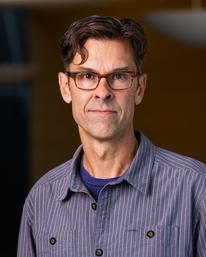
Gwenaël Kaminski is a Professor at the University of Toulouse - Jean Jaurès, affiliated with the Cognition, Languages, Ergonomics (CLLE) research laboratory within the Faculty of Arts, Letters, Languages, Human and Social Sciences. He holds the distinction of being a Junior Member of the University Institute of France, recognizing his scholarly contributions. His educational background includes a PhD from Université Paris-Nord - Paris XIII, where he completed his thesis titled 'Composante sociale des traits d'histoires de vie d'un ongulé forestier européen : cas du sanglier femelle' (Social component of life history traits of a European forest ungulate: case of the female wild boar) in 2005, demonstrating an interesting transition from zoological research to human cognitive psychology. Kaminski's research spans several interconnected domains of cognitive and evolutionary psychology. His primary focus areas include: Face recognition and processing, particularly examining how humans detect kinship through facial resemblance Evolutionary aspects of social cognition and mate preferences Tactile perception systems and accessibility technologies for visually impaired individuals Aesthetic responses to visual stimuli, particularly in art contexts The intersection of hormonal factors and social perception His work demonstrates a consistent trajectory from basic cognitive processes to applied research, particularly evident in his recent work on tactile pictograms for blind children. Kaminski frequently employs interdisciplinary approaches, combining methods from cognitive psychology, neuroscience, and human-computer interaction. Among his notable recognitions is his appointment as a Junior Member of the University Institute of France, highlighting his standing within the French academic community. His collaborative work on large-scale projects like the Psychological Science Accelerator demonstrates engagement with contemporary methodological reforms in psychological science. Kaminski maintains active research collaborations across multiple institutions, as evidenced by his co-authorship on international projects spanning numerous countries. His work on the cross-cultural applicability of social perception models represents one example of this global research perspective.