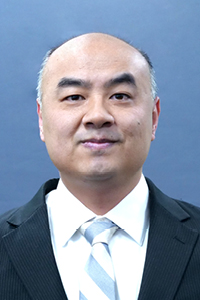
Helen L. Chen is a Researcher in the Designing Education Lab at Stanford University's Department of Mechanical Engineering. She holds a PhD in Communication with a minor in Psychology from Stanford and a BA in Communication from UCLA. Role : Research Scientist Affiliation : Stanford University, Department of Mechanical Engineering Education : PhD (Stanford, 1998), BA (UCLA, 1993) Her research focuses on engineering education , entrepreneurship pedagogy , and reimagining academic credentials through ePortfolio systems . She specializes in reflective practice , authentic assessment , and design thinking in educational environments. Recent publications analyze project-based learning mechanisms, entrepreneurial self-efficacy in engineers, and ePortfolio integration across disciplines. Her work explores innovation culture assessment and inclusive course design frameworks. Collaborative projects include consulting with the Association of American Colleges and Universities and co-editing the International Journal of ePortfolio . She contributes to general education redesign initiatives and digital learning tools development.
Stephanie A. Berger, PhD, serves as a Professor of Psychology in the Department of Psychology at the College of Mount Saint Vincent, where she is affiliated with the Undergraduate College. With a research program centered on autobiographical memory, Dr. Berger investigates the accuracy and distortion of personal memories, their role in maintaining self-coherence, and their influence on goal-directed behavior. Her work has demonstrated that memories threatening self-identity are often distorted, while those aligned with goals are recalled more accurately, suggesting a dynamic interplay between memory and self-regulation. Education: PhD, Adelphi University MA, Adelphi University BA, University of Dayton Dr. Berger's research delves into the functions and accuracy of autobiographical memory . Key findings include the role of autobiographical memories in building self-coherence and guiding behavior toward personal goals. Her lab has shown that memories inconsistent with self-image are prone to distortion, whereas goal-relevant memories are preserved with higher fidelity. Additionally, she examines how cognitive processes underpin unusual beliefs, fostering critical analysis of memory mechanisms in her students. This work bridges cognitive and social psychology, emphasizing real-world applications in education and mental health. Analysis of Dr. Berger's recent publications (2016-2023) reveals a sustained focus on autobiographical memory across diverse populations and contexts. Her research spans pandemic-related academic behaviors, deception in relationships, trauma in genocide survivors, and replication studies in social psychology. Common threads include memory accuracy, self-continuity, and goal pursuit. The work increasingly integrates real-world challenges, such as educational disruptions and interpersonal conflict, highlighting the adaptive and maladaptive roles of memory in daily life. Dr. Berger mentors undergraduate and graduate students, with several co-authored presentations at national conferences including the Eastern Psychological Association and Society for Applied Research in Memory and Cognition. Her laboratory at CMSV provides hands-on research experience in memory studies, focusing on experimental and survey methodologies. While specific grants are not detailed, her active publication record and professional affiliations indicate sustained research productivity. She also contributes to the academic community through memberships in Psi Chi and the Psychonomic Society.
Joseph Letourneau is an Instructor in the Division of Information Technology & Sciences at Champlain College. He holds expertise in Incident Response, Digital Forensics, and Cybersecurity, with a focus on enhancing student engagement through structured and interactive teaching methodologies. His professional background includes work in Managed Security Services, covering areas like Vulnerability Assessments, PCI Investigations, and Malware Analysis. Research Interests: His research spans cybersecurity practices, digital forensics techniques, and the application of clustering algorithms in big data analysis. He emphasizes practical, hands-on learning to prepare students for real-world challenges in IT security and networking. Articles Overview: His publications explore density-based clustering methods for big data, sentiment analysis frameworks, and cybersecurity threat detection. Notably, he has contributed to optimizing clustering algorithms using MapReduce and enhancing digital forensic methodologies. Advising & Grants: No specific advising or grant information is highlighted in the provided materials.
Dr. Alex Fegely is an Assistant Professor and Associate Chair in Education Studies at Coastal Carolina University’s Spadoni College of Education & Social Sciences. He specializes in integrating computer science , robotics , and extended reality (XR) into preservice teacher education . His work focuses on enhancing educational technology competencies and immersive learning in K-12 classrooms. B.S.Ed., Temple University (Secondary Education - Social Studies & History) M.Ed. & Ed.S., Coastal Carolina University (Instructional Technology) Ed.D., University of South Carolina (Curriculum & Instruction, Educational Technology) His research explores XR adoption in education , robotics for programming comprehension , and AI-powered platforms for public speaking training . He co-developed the EdTech Align instrument to measure standards-aligned teacher technology competencies. Notable awards include the 2023 Outstanding Scholarship Award and 2022 Professor of the Year in Education at Coastal Carolina University. Recent publications analyze 360-degree VR in engineering education , XR technology-to-practice gaps , and robotics-driven maker learning . He has presented at conferences like AERA, SITE, and AECT, emphasizing immersive pedagogies and technology integration in underserved schools. Co-chair, X Realities and Learning SIG (SITE) Coordinated robotics professional development programs improving middle school STEM achievement Scientific honors include: AERA Instructional Technology SIG Top 5 Best Paper (2021) AECT Early Career Symposium Participant (2022) Multiple institutional awards for scholarship and teaching excellence
Dr. John Crane is an Associate Professor and Chair of the Department of Business at Belmont Abbey College. With over three decades of business experience, he focuses on integrating practical insights into teaching and research. His expertise spans strategic marketing decisions, consumer behavior analysis, and market research. He holds a D.B.A. in Marketing from Anderson University, an M.B.A. from Clarkson University, and a B.S. in Management & Marketing from Gannon University. Dr. Crane’s research emphasizes marketing strategies in funeral services, ethics in business education, and innovative teaching methods. He has presented at conferences including the Marketing Management Association’s Educators’ Conferences and the Midwest Scholars Conference. His work bridges theoretical frameworks with real-world applications, such as analyzing FTC regulations impacting funeral providers and fostering ethical practices in curricula. He teaches courses like Marketing Strategy, Consumer Behavior, and International Marketing, emphasizing hands-on learning. His professional memberships include the American Marketing Association and the Marketing Management Association.
Dr. Jundong Chen is an Associate Professor of Computer Science at the School of Applied Sciences, Dickinson State University. He holds a Ph.D. in Computational Analysis and Modeling from Louisiana Tech University, alongside multiple master's degrees in Computer Science, Mathematics, and Engineering from Louisiana Tech and Qingdao University of Science and Technology. His research focuses on biometric systems, social network analysis, game theory, sentiment analysis, and privacy in online networks. He was promoted to IEEE Senior Member in 2022. Dr. Chen’s academic journey includes a B.S. and M.S. in Engineering from Qingdao University of Science and Technology, followed by advanced degrees at Louisiana Tech University. His work bridges theoretical computer science with practical applications, such as robotics competitions for STEM education and privacy-preserving mechanisms in social networks. His recent publications emphasize multi-stage biometric verification systems, evolutionary game theory modeling of social network dynamics, and sentiment analysis correlations in Twitter interactions. His contributions to continuous authentication via creative writing and enhanced multi-biometric fusion architectures highlight interdisciplinary innovation. Dr. Chen has been recognized for his IEEE Senior Member status, reflecting his scholarly impact. His research portfolio includes over 20 peer-reviewed articles since 2004, spanning cybersecurity, signal processing, and educational technology.
Wesley Bedrosian is an Associate Professor of Illustration at Massachusetts College of Art and Design (MassArt) in Boston. He is a distinguished freelance illustrator and former art director at The New York Times, known for his dual expertise in traditional pen-and-ink techniques and innovative 3D sculptural illustrations. His work has been featured in major publications like Newsweek, The New York Times, and Vanity Fair. Education: MFA in Illustration from School of Visual Arts (1996); BFA in Graphic Design/Illustration from Kent State University (1989). Research interests include bridging traditional and digital art practices, sketchbook-driven creativity, and the role of illustration in editorial and commercial contexts. His 3D style, showcased in exhibitions like the 2024 Chambers Gallery exhibit, explores sculptural forms and virtual clay techniques. Awards include recognition from Applied Arts, American Illustration, 3×3 Magazine, and the Society of Illustrators. He has contributed to authoritative books on illustration, including Motion Illustration (2024) and Becoming a Successful Illustrator (2013). Bedrosian teaches at MassArt and SVA, emphasizing hands-on learning and creative discipline. His workshops on bookbinding and 3D animation reflect his commitment to innovative art education.
Elena Cuffari is an Assistant Professor of Psychology & Scientific Philosophical Studies of Mind at Franklin and Marshall College. Her research integrates enactive, embodied, ecological, environmental, and ethical perspectives to study communication and cognition, particularly focusing on gesture, social interaction dynamics, and the relationship between bodily experience and language. She directs the E.C.C. Lab, part of the Cognitive Science Research Lab, investigating how participatory dynamics emerge in contexts like videoconferencing, human-primate training, and hopeful conversations among expectant parents. Educated at Swarthmore College (B.A. Philosophy and Linguistics, 2005) and the University of Oregon (Ph.D. Philosophy, 2011), her work bridges philosophy of mind, cognitive science, and social psychology. Her research interests include 4E cognition (embodied, embedded, enactive, extended), the role of gesture in meaning-making, and ethical dimensions of interactional practices. Recent articles explore topics like paradoxical interaction practices, epistemic asymmetries in psychotherapy, and the enactive analysis of language evolution. She teaches courses on embodied cognition, history/philosophy of psychology, and ethics of minds/machines. Her lab employs innovative methods combining phenomenological analysis with empirical studies of multimodal communication.
Dr. Khalique Ahmed is a Professor of Chemistry and Physics at Lynn University, where he has served since 2000. He previously held roles at Harvard University, the University of Manitoba, and other institutions. His research spans spectroscopy, environmental analysis, and neuroscientific approaches to learning stress. He holds editorial roles at the Journal of Spectroscopy and Spectroscopy Letters , and his commentaries appear in major media outlets like the Boston Globe and Palm Beach Post . Education: B.S. in Chemistry and Physics, University of the Punjab M.S. in Chemistry and Physics, Quaid-i-Azam University Ph.D. in Physical Chemistry, University of Manitoba Research Interests: Light-matter interactions and spectroscopic techniques Biomedical, forensic, and environmental analysis Physiochemical properties of blended fuels Science-based diplomacy and policy Neuroscientific foundations of learning stress reduction Recent Articles: Explores caffeine’s cognitive effects (2025) Examines psilocybin’s therapeutic potential (2024) Advocates for university investment in economic growth (2024) Awards: Outstanding Faculty Member of the Year, Lynn University (2014, 2009) Harvard Sabbatical Visiting Professor (2013) Board of Governors Nominee, University of Manitoba (2016) Leadership: Chair, Division of Natural & Applied Sciences (2013–2019) Interim Chair, Department of Mathematics (2006–2007)
Hedda Lausberg is a Professor at Duale Hochschule Köln, affiliated with the Institute for Movement Therapy and Movement-oriented Prevention and Rehabilitation. Her work bridges neurology, psychosomatic medicine, and psychiatry, with a focus on gesture analysis and neuroscientific methods. She leads projects like the Mind in Motion initiative and explores nonverbal communication in healthcare contexts. Education details are not explicitly provided in the text, but her academic career is centered at Duale Hochschule Köln. Research interests include gesture production neuroscience, prefrontal cortex dynamics during social interaction, and motor learning applications in sports and therapy. Recent studies investigate hemispherical specialization in gesture execution and pandemic-related neurophysiological changes in social touch. Her projects span from using horses in multiple sclerosis therapy to analyzing physician-patient communication. Over 120 publications highlight her collaborative work with institutions globally. No awards are listed, but her work garners significant academic engagement, including Mendeley readership and media features in outlets like 'Pferde sollen MS-Patienten helfen.' Advising and grants include funded projects on movement therapy innovation and interdisciplinary studies on athlete concussion symptoms. Her lab focuses on embodied cognition and neurorehabilitation techniques.
Suk Jin Lee is an Associate Professor of Information Technology at James Madison University's College of Integrated Science & Engineering. His expertise spans IoT, network protocols, computer vision, machine learning, signal processing, and target tracking. He teaches a wide range of undergraduate and graduate courses, including computer networks, IoT, and algorithms. Lee holds a Ph.D. in Electrical & Computer Engineering from Virginia Commonwealth University (2012), an M.E. and B.E. from Pukyong National University, South Korea. His research focuses on IoT security protocols, embedded vision systems, medical imaging, and biomedical applications. Notable projects include IoT authentication frameworks, MRI super-resolution methods, and automated insulin delivery systems. He has contributed to nanosensor networks and real-time streaming solutions using Raspberry Pi. His work integrates machine learning into medical diagnostics and tumor motion prediction. Lee's teaching innovations include hands-on learning designs for computer organization and curriculum development in IoT education. He has held academic positions at Columbus State University (2016-2023) and Texas A&M University-Texarkana (2013-2016), and conducted postdoctoral research at the University of Maryland Medical Center. His publications highlight interdisciplinary approaches, combining IoT, blockchain, and medical technologies. Current research trends emphasize energy-efficient protocols, AI-driven medical imaging, and IoT security for smart devices. Lee has advised numerous projects in senior design and independent studies, focusing on practical implementations of theoretical concepts. His lab work involves developing frameworks for IoT appliance control and embedded vision systems.
Julia Welberg is a researcher and doctoral candidate in physics education at the University of Münster’s Institute for Physics Education. She holds a Master of Education in physics and mathematics (2020) and a Bachelor of Science in the same fields (2017). Her research focuses on learners' cognitive styles (empathizing vs. systematizing thinking), digital tools in physics education, and curriculum development. She has contributed to federally funded teacher training initiatives like the WWU Quality Initiative and Creative Days program (since 2018). Employment Timeline: Doctoral Research Assistant (2020–2025) Substitute Physics Teacher (2019–2020) Current Traineeship for Grammar School Teaching (2025) Her work bridges pedagogical theory and practice, emphasizing empirical studies on student motivation, gender influences in STEM, and effective use of digital media. Recent projects include developing German-language empathy/systemizing measurement tools and analyzing factors influencing physics study choices. Publications span over 15 peer-reviewed articles since 2020, addressing topics like learning task design in e-courses, visualization techniques, and differentiated classroom strategies. She collaborates with institutions like Springer Spektrum and Waxmann Verlag on pedagogical publications.
Caballero García is a Research Fellow and Quality Coordinator at the UCJC Faculty of Education in Madrid. With a PhD in Philosophy and Educational Sciences from the University of Murcia and an accredited ACAP professor status, they specialize in teaching methodologies, emotional education, and educational innovation. Their career spans 33 years across preschool, primary, secondary, and higher education institutions in Murcia and Madrid. Education: PhD in Philosophy and Educational Sciences (University of Murcia), Master's in Family Counseling (Pontifical University of Salamanca), Graduate in Pedagogy. Research Interests: Focus on pedagogical innovations, emotional intelligence, entrepreneurship education, and inclusive teaching strategies. Key topics include learning styles, cooperative work, educational technology, and family-school collaboration. They have directed 9 completed doctoral theses and 3 in progress, alongside numerous publications in peer-reviewed journals and conference proceedings. Scientific Contributions: Over 36 articles, 50 book chapters, and 8 books. Notable awards include the UCJC Excellence in Teaching Prize (2009–2010) and multiple UCJC Research Grants (2013–2016). Their work emphasizes practical applications of research, such as maker spaces and CLIL (Content and Language Integrated Learning). Leadership Roles: Served as Dean of the Faculty of Social Sciences and Education, Director of the Master's in Secondary Education, and Director of Doctoral Studies at UCJC. Currently chairs the Quality Coordination Committee and participates in expert groups for Madrid's higher education initiatives. Grants & Projects: Led research groups on social-emotional learning and educational quality, including international collaborations with Latin American institutions. Finalist for the Ibero-American Award for Educational Quality (2018). Key Labs/Teams: Member of UCJC's MEDEA Research Group (Teaching Methodologies) and IMECA (Alcalá University's Inclusion Group). Founded the ASE (Social and Emotional Learning) research group in 2010.
Deborah Wilkinson is a Senior Lecturer in Primary Science Education at the University of Chichester. She coordinates the PGCE Primary Education Programme and teaches Core Science, Outdoor Learning, and specialist modules to undergraduate and postgraduate students. Her roles include Module Leadership for Year 1, 3, and PGCE courses, alongside designing and delivering professional development workshops for schools. Wilkinson holds a BSc (Hons), PGCE, MA (Ed), and EdD from the University of Southampton, where her doctoral research focused on questioning techniques in primary science classrooms. Her research emphasizes inquiry-based learning, outdoor education, and curriculum design. She has authored multiple books and book chapters on science education, including Mastery in Primary Science (2019) and Nurturing Primary Science (2022). Wilkinson is a Fellow of the Higher Education Academy and actively engages in outreach, including STEM festivals and consultancy for schools on curriculum development. She has secured funding for initiatives like the Growing STEM project (2018) and delivered keynotes at Sussex Science Leaders Conferences, focusing on cross-curricular links between science and mathematics. Her consultancy work includes supporting schools in science leadership and curriculum planning, alongside organizing workshops for the University of Chichester’s outreach programs. Wilkinson’s research outputs span peer-reviewed journals, conference presentations, and collaborative action research projects with primary schools.
Dr. Daniel Brateris is a University Lecturer at the Newark College of Engineering (NCE), part of the New Jersey Institute of Technology (NJIT), affiliated with the Office of the Dean. His work focuses on advancing engineering education through makerspaces, drone technology, and innovative sensor systems. He has contributed to integrating makerspaces into university curricula and adapting these spaces during the pandemic. His research interests include drone education, active learning methodologies, and the application of smartphone and iOS technologies to measurement systems. He has also explored automation in 3D printer management and manufacturing-oriented educational infrastructure. Recent work emphasizes competition-based learning for drones and pandemic resilience in makerspaces. Longer-term contributions include pioneering smartphone-enabled sensors and academic makerspaces' philosophical foundations. Brateris has secured federal grants, including a $1.3M award for engineering and manufacturing initiatives. He co-founded initiatives like the 'BYTE INTO HARDWARE' hackathon, fostering student innovation. His collaborations span NJIT faculty and external partners in educational technology and manufacturing.