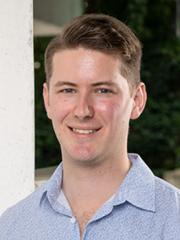
Kate Dooley is a Lecturer in Physiotherapy at Charles Sturt University's School of Allied Health, Exercise and Sports Sciences, Orange campus, specializing in musculoskeletal physiotherapy practice. She commenced her academic role in July 2021, teaching third-year students in courses PHS313 and PHS314 while maintaining active clinical research engagement. Her educational qualifications include a Bachelor of Physiotherapy with Honours (BPhysio(Hons)) and a Doctor of Philosophy (PhD) awarded on 15 February 2022. Her doctoral research quantified movement strategy differences in male athletes with historical groin pain during agility running tasks. Dr. Dooley's research centers on sports injury prevention mechanisms, particularly groin and hamstring pathologies in athletes, utilizing advanced biomechanical analysis and functional MRI techniques. She pioneers clinician-driven research translation through the Research In Practice Network (RIPN), addressing implementation barriers between evidence and clinical settings while advancing value-based care frameworks for musculoskeletal conditions. Analysis of her 15 most recent publications (2022-2025) reveals three dominant research trajectories: (1) biomechanical investigations of groin/hamstring injuries using motion capture and functional MRI; (2) development of high-value care consensus statements for musculoskeletal physiotherapy; and (3) methodological innovations in practice-based research networks that empower clinicians as co-researchers. Her work consistently bridges elite sports science with community clinical practice. Scientific recognition includes: Inaugural Change One Thing Award (2023) from Charles Sturt University for integrating LGBTQIA+ content into physiotherapy curricula As a research leader, she co-supervises Honours students and secured US$295k through the 'HAMI' grant (funded by GE Healthcare and NBA Orthopaedics), coordinating multi-site collaborations across six Australian universities. Her grant portfolio emphasizes methodological development in functional MRI and 3D motion capture biomechanics, with ongoing focus on athlete movement strategy analysis. She directs methodological development for the RIPN steering committee—a clinician-researcher partnership generating practice-relevant studies across regional Australia—and leads the 'HAMI' collaboration's functional MRI arm, solving technical challenges in scanning anteromedial thigh structures through industry partnerships with GE Healthcare.