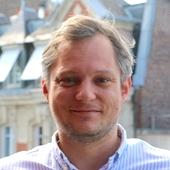
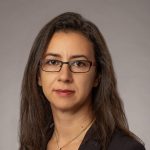
Wim VAN LENT is a Full Professor of Management at IÉSEG School of Management , France. He holds an HDR in Management from IAE Paris Sorbonne and a Ph.D. in Business Administration from ESSEC Business School. His academic career includes roles as Visiting Professor at Curtin University (Australia), Griffith University (Australia), and Researcher at the University of Paris I Panthéon-Sorbonne. He coordinates the 'Strategy and Sustainability' track and is a member of the LEM research group. His research focuses on Management Strategy , Business Ethics , Innovation and Entrepreneurship , and Historical Methodology . Notable areas include corporate archives' strategic use, temporal dynamics in organizations, and ethical repair mechanisms. His work often employs historical case studies, such as the Dutch East India Company (VOC) and colonial-era corporations, to analyze organizational adaptation and institutional contradictions. Van Lent's publications span top journals like Academy of Management Review , Small Business Economics , and Business Ethics Quarterly . His recent studies explore periodization practices in organizations, entrepreneurial time narratives, and moral repair frameworks. Teaching includes international strategy and corporate social responsibility at the MSc level. His research bridges historical analysis with contemporary management challenges, emphasizing how understanding past institutional dynamics informs modern organizational behavior and ethical decision-making.
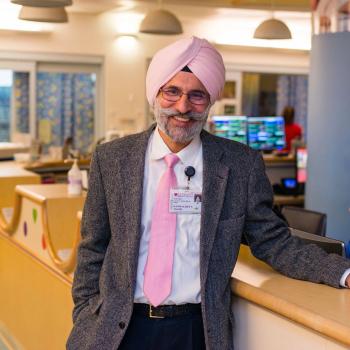
Dr. Kanwaljeet S. Anand is a dual-appointed Professor of Pediatrics (Pediatric Critical Care) and Anesthesiology, Perioperative & Pain Medicine at Stanford University School of Medicine. As director of the Pain/Stress Neurobiology Lab and Jackson Vaughan Critical Care Research Fund, he serves as Editor-in-Chief of Pediatric Research and maintains active membership in Bio-X, MCHRI, and Wu Tsai Neurosciences Institute. Rhodes Scholar with D.Phil from University of Oxford Harvard postdoctoral fellowship and Boston Children's Hospital residency Founded Harmony Health Clinic - Arkansas' largest charitable medical-dental facility A translational researcher with 30+ years of impact, Dr. Anand established the first scientific framework for infant pain perception and developed novel pain assessment methodologies. Current research focuses on: Hair biomarker analysis for stress and social affiliation (cortisol/oxytocin) Machine learning systems for objective pain detection in non-verbal infants Biopsychosocial interventions for stress reduction in disadvantaged youth Neurotoxicity mechanisms of sedatives in developing brains Global NICU opioid usage patterns through the NeoOpioid Consortium His work has yielded over 260 publications and significant advances in: Pediatric pain management protocols Neonatal stress biomarker development Critical care neurobiology insights Community health initiatives AI-driven clinical decision support systems Scientific Recognition 9th Annual 'In Praise of Medicine' Public Address, Erasmus University (2014) Nightingale Excellence Award (2016) Honorary Doctorate from University of Örebro (2019) NIH SBIB-H82 Study Section Chair (2018) Multiple IASP and American Pain Society awards Swedish Academy of Medicine's Nils Rosén von Rosenstein Award (2009) St. Jude Endowed Chairholder (2010) As mentor to Med Scholar Anjali Gupta and advisor to numerous professional bodies, Dr. Anand maintains active clinical leadership in Pediatric Intensive Care while advancing computational approaches to pain detection through collaborations with Stanford's AI researchers.
Dr Anita Hammer is a Reader in International Employment Relations at King’s Business School, King’s College London. She specializes in comparative and international work and employment relations, focusing on the Global South, informal/precarious work, and the impact of technology/climate change on labor markets. Her research addresses socio-economic inequalities, sustainability, and the future of work through interdisciplinary approaches combining history, political economy, and labor process theory. Education: PhD, MSc, PGCHE (University of London); MPhil in History (Jawaharlal Nehru University), MA Area Studies (SOAS), BA History (St Stephen’s College, Delhi University). She is a Senior Fellow of the Higher Education Academy (SFHEA). Research Interests: Automation’s impact on work in India, migrant labor in Saudi Arabia, just transitions for informal workers, and climate change’s labor implications. She collaborates with civil society, trade unions, and policy bodies like ACAS and the ILO. Her recent books include *Global Rupture* (2023) and *The Political Economy of Work in the Global South* (2020). Publications span peer-reviewed journals (*Work, Employment and Society*, *Journal of Labor and Society*) and edited volumes. She leads the CRIMT international research project on work improvement and is affiliated with King’s India Institute and Climate Research Hub. Editor roles include *Work Employment and Society* and *Journal of Industrial Relations*. Awards: 2019 Outstanding Doctoral Supervisor, Thomas Holloway Fellowship (2002). She supervises PhD students and examines theses at Cardiff Business School and SOAS. Labs/Teams: Part of the Critical Global Capitalism Studies Collective at King’s, fostering collaborations on global capitalism research and activism.
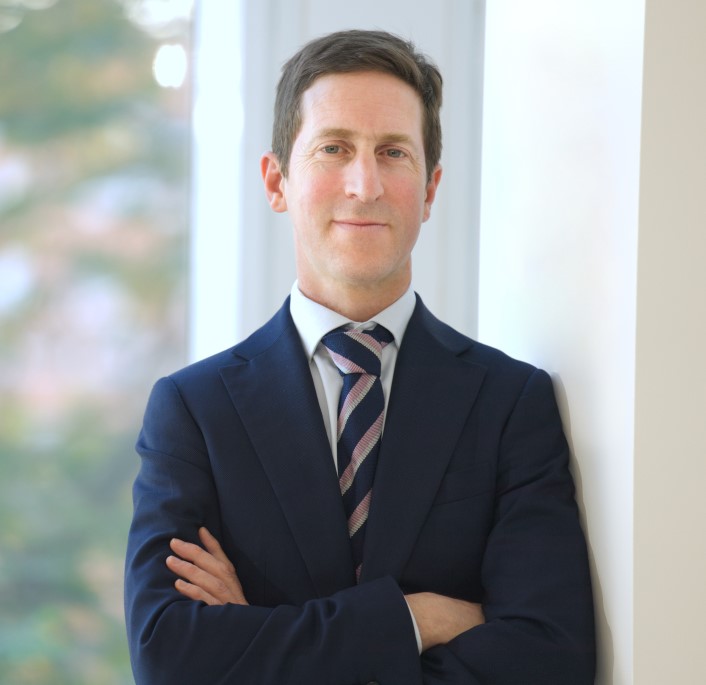
Gavin Schwarz is a Professor and Head of School at the School of Management and Governance within the UNSW Business School . He specializes in organizational change , organizational failure and inertia , and the dynamics of virtual teams , with a focus on how organizations fail during change processes and how to develop applied strategies for change management . His work spans diverse sectors including healthcare, technology, and education, with publications in leading journals such as Academy of Management Learning and Education and Administrative Science Quarterly . Education : PhD in Management (University of Queensland), MPhil (Hons) in Management (University of Auckland), BA in Management and English (University of Auckland). Grants : 2020 Brock University grant for "University communication in times of COVID-19" , 2020 UNSW Medicine grant for "Translation and change: Embedding effective change management in health" , and earlier Australian Research Council and Gordon J. Samuels Fellowship awards. His research explores the development of knowledge in organizational theories , with an emphasis on collective responses to change , HR management during crises , and technology strategy . He has contributed to understanding organizational communication , team innovation , and structural inertia . His 15 most recent publications cover topics from AI’s role in organizational change to pandemic-driven research adaptation, with keywords spanning management science , behavioral economics , and digital transformation . Scientific Awards 2021-2023 : Outstanding Reviewer Awards (Academy of Management Review) 2017-2020 : Best Reviewer Awards (Journal of Organizational Behavior) 2019, 2013, 2011 : Best Paper Finalist/Awardee (Academy of Management divisions) 2007, 2006 : Editorial Board Excellence (Academy of Management Journal) and Gordon J. Samuels Fellowship As an active supervisor in organizational change and HR development , his work supports healthcare innovation and digital transformation. He serves as Editor-in-Chief for the Journal of Applied Behavioral Science and is on the editorial boards of Academy of Management Review , Journal of Management , and Journal of Organizational Behavior . Contact: g.schwarz@unsw.edu.au
Didar Zowghi is a Senior Principal Research Scientist and Science Team Leader at CSIRO Data61, Australia's national science agency. His work focuses on advancing ethical AI systems, data quality frameworks, and requirements engineering methodologies. He leads research initiatives addressing challenges in AI governance, diversity/inclusion in technology, and human-centered AI development. Research interests include AI ethics, data completeness in healthcare systems, and the application of machine learning in requirements engineering. His contributions span theoretical frameworks for responsible AI patterns, empirical studies on user perceptions of AI tools like M365 Copilot, and analysis of AI's role in global diplomatic practices. Zowghi has published extensively on topics ranging from blockchain in supply chains to pedagogical innovations in software engineering education. His work often bridges technical systems and societal impacts, emphasizing real-world implementation challenges through collaborative industry-academia projects. Notable outputs include the Responsible AI Pattern Catalogue and studies examining barriers to data quality in IoT platforms. He has pioneered frameworks linking innovation initiatives to occupational skill requirements and developed tools like Elica for dynamic requirements knowledge extraction in agile teams.
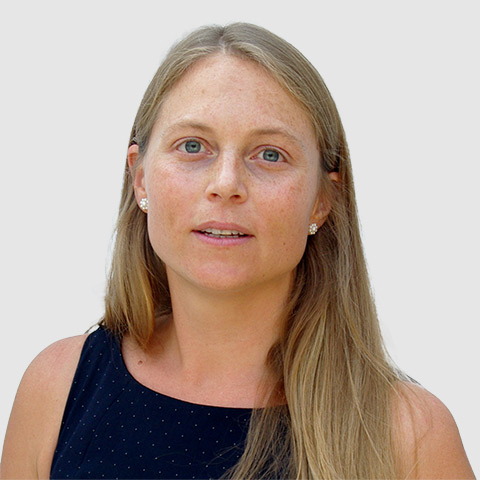
Dr. Isabel D. W. Rechberg is an Associate Professor of Management at the Anderson College of Business and Computing, Regis University. She holds a Ph.D. in Management from the University of Kent, UK, a Postgraduate Certificate in Higher Education, and advanced degrees in Labor Law and Business Management from institutions in Australia and Belgium. Her research focuses on Knowledge Management, Organizational Learning, Emotional Intelligence, and Employee Engagement, emphasizing individual-centric approaches. She has published extensively in journals like the Journal of Knowledge Management and European Management Review, and co-authored chapters in Palgrave and Kogan Page publications. Recognized with awards including the 2021 Easter Academy of Management Best Conceptual Paper, her work bridges theory and practice, addressing ethical dimensions and human elements in organizational dynamics. Education: Ph.D. in Management, University of Kent, UK (2014) Postgraduate Certificate in Higher Education, University of Kent (2011) M.A. in Labor Law and Relations, University of Sydney (2008) B.A. in Business and Human Resources Management, Vesalius College (2006) Research Interests: Dr. Rechberg’s scholarship explores how mindfulness, emotional intelligence, and ethical frameworks enhance workplace relationships and organizational learning. Her work critiques traditional knowledge management paradigms, advocating for individual agency and fairness in knowledge ownership. Recent studies include the role of self-determination theory in knowledge sharing and cross-cultural challenges in global initiatives like the Belt and Road. Teaching & Service: She teaches graduate and undergraduate courses in Management, Leadership, and Organizational Behavior. At Regis, she serves on the Academic Council and previously held roles at CUNY, including College Council membership and curriculum development. Her industry experience includes coaching accreditation and roles in recruitment and human resources. Awards: 2021 Easter Academy of Management Best Conceptual Paper Award 2021 PSC-CUNY Grant 2020 Top-Downloaded Paper Recognition in Knowledge and Process Management 2011 British Academy of Management Best Full Paper Award Advising & Grants: Supervised honor students on topics like ethical leadership, gender inequality in HR systems, and corporate social responsibility. Secured grants including the 2021 PSC-CUNY award. Active in peer review for leading management journals and conferences.
Professor Steve Simpson is a leading marine biologist and fish ecologist at the University of Exeter's Biosciences department. He serves as Professor of Marine Biology & Global Change and leads a dynamic research group focused on understanding marine ecosystems, particularly in the context of climate change and human impacts. His work has been prominently featured in Blue Planet II and he actively engages with industry, policy makers, and the public through media appearances and outreach activities. Education PhD, University of York, UK (2000-2004) MRes Marine & Coastal Ecology & Environmental Management, University of York, UK (1998-1999) BSc Marine Biology (Hons), University of Liverpool, UK (1995-1998) Professor Simpson's research centers on the behavior of coral reef fishes, bioacoustics, and the effects of climate change on marine ecosystems. His approach uniquely combines fieldwork in remote environments with laboratory experiments, data-mining, and computer modeling. He has pioneered new methods for listening to ocean soundscapes and understanding fish communication, revealing how anthropogenic noise disrupts natural behaviors and ecological processes. His work on climate change impacts examines shifting fish distributions and their implications for fisheries management and conservation. Analysis of Simpson's recent publications reveals two dominant research themes: the impacts of anthropogenic noise on marine life and climate change effects on fisheries. His work demonstrates how underwater noise from boats and industrial activities impairs fish hearing, disrupts predator-prey relationships, and affects reproductive success. Simultaneously, his climate change research tracks how warming seas are altering fish distributions, creating 'mackerel wars' and requiring fisheries adaptation. These research strands converge in his innovative work on developing solutions like bubble curtains to mitigate noise impacts. Scientific Awards FSBI Medal (2016) NERC Knowledge Exchange Fellowship (2011-2014) NERC Postdoctoral Research Fellowship (2004-2007) Royal Society International Fellow (2007-2008) EPHE Postdoctoral Fellow (2007-2008) Professor Simpson leads a thriving research group of approximately 10 postdocs, PhD, and Masters students. His grant portfolio includes major NERC funding for projects on marine noise impacts and climate change effects on fisheries. He has developed strong industry partnerships through a Knowledge Exchange Fellowship, working with Cefas, the Met Office, Sustainable Marine Energy Ltd, and HR Wallingford Ltd. His research has directly informed policy through contributions to Marine Climate Change Impacts Partnership reports and presentations to European Parliament. Simpson has also created innovative knowledge exchange initiatives including the 'Vision of Sustainable Fisheries in 2050' thinktank. Simpson has developed specialized research infrastructure including a mobile lab with Ecocean in Montpellier for assessing marine noise impacts, and has conducted large-scale acoustic experiments in dry docks. His work on underwater acoustics was prominently featured in Blue Planet II, and he maintains active engagement with media through TEDx talks, BBC appearances, and public lectures to schools and community groups. He serves on the International Quiet Ocean Experiment Science Committee, helping shape global research on ocean noise.
William A Pasmore is a Professor of Practice in the Social-Organizational Psychology Department at Teachers College, Columbia University. With a unique background spanning academia and consulting, he focuses on complex organizational change, digital transformation, and leadership development. His work bridges theoretical rigor with practical application through roles at the Center for Creative Leadership, Oliver Wyman Delta consulting, and his own firm, Pasmore Advisors. Education: Ph.D. in Administrative Sciences (Purdue University, 1976), B.S. in Aeronautical Engineering/Industrial Management (Purdue University, 1973) His research spans organizational change, digital transformation, and future organizational models, with recent publications emphasizing networked organizations and continuous change frameworks. Collaborative action research and board effectiveness are recurring themes in his work with global corporations. Scientific Awards: European HRM association's HR Influential Thinker recognition Academy of Management co-recipient of collaborative research award Pasmore co-founded STARLabs - a consortium with Google, Microsoft, Shell, and other Fortune 500 companies studying digital transformation. He previously served as tenured professor at Case Western Reserve University (1976-1997) and visiting professor at INSEAD and Stanford.
Professor Damian Grimshaw is Professor of Employment Studies at King's College London's King's Business School, where he serves as Associate Dean for Research Impact. He is also London & South Forum Co-Lead for the Productivity Institute. Previously, he was Director of the Research Department at the International Labour Organisation (Geneva, 2018-19) and Professor at the University of Manchester, where he served as Head of the HR and Employment Relations and Law group and Director of the European Work and Employment Research Centre. Professor Grimshaw's research spans multiple disciplines including labour market analysis, comparative employment relations, feminist economics, sociology of work, and management. His work focuses on international comparisons of low-wage labour markets, outsourcing and HRM, technology and the future of work, precarious work, collective bargaining, and gender inequality. His research has strong policy impact across UK, European and international arenas. Recent publications reveal a clear trend toward examining the future of work through multiple lenses: collective bargaining structures, digital labor platforms, gendered impacts of pandemic policies, and regional approaches to decent work. His work consistently addresses how institutional frameworks shape employment outcomes across different national contexts and sectors. Professor Grimshaw has received significant research funding from major organizations including the British Academy, ESRC, European Commission, International Labour Organisation, Leverhulme Trust, Low Pay Commission, OECD, and Russell Sage Foundation. He coordinates a major UKRI research programme on human capital and productivity and leads the Regional Productivity Forum for London and the South alongside Marcela Miozzo and Mario Gruber. His ongoing research projects include precarious work in Europe and the gender inequalities of the Covid-19 pandemic and recession. During 2021-22, he taught 'Globalisation and Employment' on the MSc in HRM and Employment Relations and 'International HRM' to undergraduates. His research team is actively engaged in projects examining automation in knowledge-intensive business services and artificial intelligence's impact on occupations, with particular focus on the UK and US contexts.
Michael Schwartz serves as an Adjunct Professor in the Department of Organizational Behavior at Case Western Reserve University's Weatherhead School of Management, focusing on organizational behavior with specialized expertise in transgender inclusion and diversity initiatives within management contexts. His research program centers on transgender experiences in organizations, intrinsic motivation through Self-Determination Theory, Social Identity Theory, bias mechanisms, and allyship development. This work bridges theoretical frameworks with practical applications for creating inclusive workplaces, particularly through innovative management education approaches that challenge traditional gender binaries and foster self-awareness. Analysis of his 2014-2023 publications reveals a cohesive trajectory examining transgender inclusion across multiple dimensions: from foundational workplace integration (2014) to pedagogical innovations for management education (2017-2020) and recent expansions into leadership development and emotional intelligence training (2021-2023). These works consistently integrate social identity perspectives with practical organizational interventions, demonstrating sustained scholarly contribution to diversity and inclusion research.
Gretchen Lester is a Professor in the School of Management at San José State University, part of the Lucas College and Graduate School of Business. Her research focuses on leadership identity, ethical leadership, global leadership, and organizational behavior. She holds a Ph.D. from the University of Nebraska-Lincoln and an MBA from DePaul University. Her work explores cross-domain leadership behaviors, the romance of leadership in crises, and multi-domain influences on leader identity. Recent studies examine how ethical leadership manifests across personal and professional spheres, and how transparency and behavioral integrity shape follower engagement. Her publications span topics like global mindset modeling, military-inspired workplace resilience, and the impact of employer-sponsored benefits. She emphasizes leadership development through identity-focused approaches and has contributed to understanding autocratic leadership dynamics and cross-cultural management strategies.
Nicola Ballhausen is an Assistant Professor in the Department of Developmental Psychology at the Tilburg School of Social and Behavioral Sciences, Tilburg University, Netherlands. Her research focuses on cognitive and psychological aspects of aging, particularly prospective memory, executive function, and social influences on cognitive health in older adults. Her research interests include prospective memory , cognitive aging , metacognition , problem-solving in older adults , social cognition , and longitudinal studies of aging . She investigates how factors such as intergenerational contact, sense of purpose, and technology use impact cognitive performance and well-being in later life. Her work integrates experimental, survey-based, and qualitative methods, often in cross-national datasets like the Health and Retirement Study (HRS) and the English Longitudinal Study of Ageing (ELSA). The most recent articles highlight a strong focus on prospective memory across the lifespan , the role of social engagement in cognitive functioning , and designing accessible cognitive interventions for older adults. Her publications span top journals in gerontology, psychology, and cognitive science, reflecting interdisciplinary collaboration and methodological rigor. Dr. Ballhausen contributes to research aligned with the UN Sustainable Development Goals, particularly those related to healthy aging and well-being. She collaborates extensively with researchers across Europe and has contributed to major reference works such as The Oxford Handbook of Human Memory . Her work includes both empirical studies and methodological advancements, such as exploratory structural equation modeling. While no formal students or awards are listed, her role in supervising research and contributing to academic training is implied through her position and course involvement. Dr. Ballhausen is involved in the design and evaluation of web-based cognitive tools, such as the Shared, Web-based, Intelligent Flexible Thinking Training (SWIFT), emphasizing user-centered design and ecological validity. Her work bridges fundamental cognitive research with practical applications for aging populations.
Andrew Soderberg serves as an Associate Professor in the Management and Human Resources Department at the College of Business, University of Wisconsin Oshkosh. He holds a Ph.D. from the University of Utah (2016) and a BS from Brigham Young University (2005), bringing over a decade of academic expertise to his role. His research spans critical domains in organizational behavior and business ethics, with particular emphasis on: Workplace ethics and moral decision-making processes Leadership dynamics and trust formation Political ideology's impact on organizational perceptions Artificial intelligence ethics in human resources Sexual harassment training effectiveness Work-life balance and parental status implications Soderberg's publication trajectory reveals a sophisticated evolution toward examining ethical tensions in modern workplaces. His recent work demonstrates increasing focus on AI ethics, political polarization in organizations, and psychological reactance to leadership failures. Methodologically, he employs mixed-methods approaches to dissect complex interactions between status perceptions, moral reasoning, and organizational outcomes, with notable contributions to understanding how e-training design influences harassment prevention and how political identity shapes workplace status hierarchies. His scientific recognition includes: Dean's Excellence Award, College of Business (2024) College of Business Outstanding Faculty Award (2023) Dean's Excellence Award (2022) Management Department Teaching Award (2022, 2019) As an educator, Soderberg has pioneered innovative classroom methodologies including the 'Court of Theories' debate exercise for motivation theory instruction and the 'FOG' framework for team communication training. His research collaborations span multiple institutions, addressing pressing organizational challenges from sexual harassment prevention to ethical AI implementation. While specific grant details aren't provided, his publication record indicates sustained funding for research on workplace ethics, leadership dynamics, and political ideology in organizations.
Dr. Salma Raheem is a Lecturer in Human Resource Management and Organisational Behaviour at the University of Liverpool Management School. She holds a PhD from the London School of Economics and Political Science (LSE) Department of Management. Previously, she served as an Academic Advisor for LSE's second-year BSc Management students, an LSE Fellow, and an elected member of the LSE Students' Union, earning the Outstanding Contribution Award. Her research focuses on multiculturalism, leadership in diverse teams, and inclusive organisational cultures, particularly in multinational corporations (MNCs) in emerging economies like the Middle East. She employs mixed-methods approaches and has published in journals such as the Journal of International Business Studies . Education: PhD in Management from LSE (Department of Management). Research interests span multicultural individuals' impact on team productivity, cross-cultural management, identity dynamics, and talent management strategies. Her work bridges academic theory with practical implications for international HRM and leadership development. Teaching includes modules like ULMS115: The New Professional and ULMS550: Human Resource Management: Academic and Practitioner Perspectives . She is a Fellow of The Higher Education Academy, UK, and has received multiple teaching awards. Awards: Class Teaching Excellence Award (2018-19) British Journal of Industrial Relations Teaching Fellowship (2014-15) Her research has explored the role of multicultural individuals in enhancing team cohesion and productivity, with implications for MNCs in regions like the Middle East. She collaborates with the Centre for Organisational and Employee Wellbeing, focusing on workplace dynamics and inclusion.
Merve Hickok is a Lecturer at the University of Michigan's School of Information, where she teaches data ethics. She also serves as the Responsible Data and AI Advisor at the Michigan Institute for Data Science (MIDAS) and is an affiliated faculty member at the Gerald R. Ford School of Public Policy. Additionally, she is the President and Research Director at the Center for AI and Digital Policy (CAIDP), advising governments and international organizations on AI policy and regulation. Her research focuses on AI policy, ethics, and governance, with particular emphasis on fundamental rights, democratic values, and social justice. She examines the impact of AI systems on individuals, society, and organizations, exploring issues like algorithmic bias, privacy concerns, and the societal implications of emerging AI technologies. Her work bridges technical understanding with social and ethical considerations to promote responsible AI development and deployment, with special attention to employment applications, government procurement, and international policy frameworks. 100 Brilliant Women in AI Ethics™ – 2021 Runner-up for Responsible AI Leader of the Year – 2022 (Women in AI) Lifetime Achievement Award - Women in AI of the Year - 2023 Top AI Leaders in Retail (Ethics & Compliance) - 2024 Hickok provides consultancy to C-suite leaders and training services to public and private organizations on Responsible AI development, due diligence, and governance. She has provided testimony to the US Congress, State of California Civil Rights Office, New York City Department of Consumer and Worker Protection, Detroit City Council, and numerous global organizations. She founded AIethicist.org to help professionals navigate the complex landscape of AI ethics and serves on the founding editorial board of Springer Nature's AI & Ethics journal.