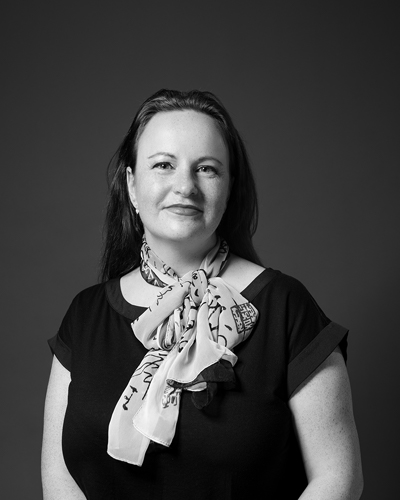
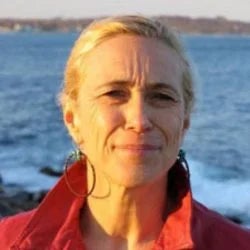
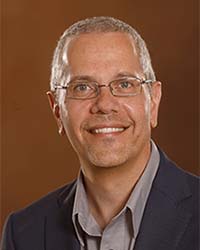
Dr. Jillianne Code is an Associate Professor at the University of British Columbia's Faculty of Education, Department of Curriculum & Pedagogy, directing the ALIVE Research Lab. Her work focuses on learner agency, educational technologies, and social media's impact on student success. Specializes in immersive virtual environments for assessment Researches self-regulated learning and formative feedback Investigates health education through digital interventions Her recent publications examine pandemic-era educational transitions, digital literacy in teacher training, and cognitive tools in virtual reality. She has received Outstanding Paper Awards for her work on immersive assessment. Dr. Code leads research projects on learning analytics, student engagement in digital spaces, and technology education sustainability. Her work bridges educational theory with practical interventions through digital badges, mobile health applications, and 3D learning environments.
Cathryn Mitchell is a Professor of Radio Science and Royal Society Industry Fellow at the University of Bath, specializing in ionospheric physics, position, navigation, and timing (PNT). She leads research in the Space & Telecoms Research Group (STAR), focusing on radio propagation, data assimilation, and space weather impacts on communication systems. Her work bridges theoretical, computational, and experimental approaches, with applications in satellite navigation, climate monitoring, and defense sectors. Her research interests include ionospheric tomography, HF communications, and the development of robust PNT systems. Mitchell collaborates extensively with industry partners like Spirent Communications on future navigation technologies and space weather resilience. She has held roles such as Academic Director of the Doctoral College and contributes to interdisciplinary projects like the DRIIVE initiative exploring ionospheric variability with EISCAT-3D radar. Recent work emphasizes ionospheric effects during geomagnetic storms (e.g., the 2024 Gannon Storm) and cooperative autonomous systems under communication constraints. Her projects are funded by the Royal Society, Natural Environment Research Council (NERC), and ESA, addressing challenges in space weather forecasting and PNT system reliability. Awards: Royal Society Industry Fellow (2022–present) Key Projects: Royal Society Industry Fellowship on Future PNT Technologies DRIVERS (DRIIVE): Ionospheric Variability Studies EISCAT-3D FINESSE: Ionospheric Structuring Analysis Mitchell’s lab, STAR, integrates academic and industrial partnerships to advance space weather applications and sustainable navigation systems, contributing to UN Sustainable Development Goals related to climate action and innovation.
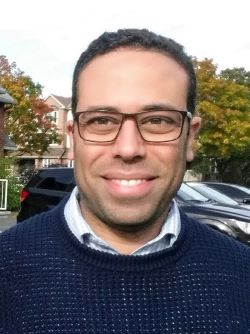
Ebrahim Bedeer Mohamed is an Assistant Professor in the Department of Electrical and Computer Engineering at the University of Saskatchewan. He joined in July 2019, following roles as an Assistant Professor (Lecturer) at Ulster University, UK, and postdoctoral fellowships at Carleton University and the University of British Columbia. He holds a Ph.D. (Distinction) from Memorial University of Newfoundland (2014), with expertise in signal processing and wireless communications. His research focuses on optimizing communication systems through advanced signal processing techniques, including faster-than-Nyquist signaling, IoT network design, AI integration, and energy-efficient protocols. Key areas include next-generation communication networks, non-orthogonal modulation, and MIMO systems. Notable contributions include work on channel estimation for FTN signaling, RIS-aided wireless systems, and LR-FHSS protocols in IoT. His publications span spectral efficiency, interference minimization, and energy management in 5G/6G contexts. He actively seeks Ph.D. students with strong backgrounds in signal processing fundamentals. Awards and grants are not explicitly listed in the provided texts. His work emphasizes practical applications, such as UAV trajectory optimization for IoT data collection and energy-efficient caching strategies in dynamic networks.
Jeffrey Krolik is a Professor of Electrical and Computer Engineering at Duke University's Pratt School of Engineering. He holds a Ph.D. in Electrical Engineering from the University of Toronto (1987) and previously served as an Assistant Professor at Concordia University and Assistant Research Scientist at Scripps Institution of Oceanography. Ph.D. University of Toronto (1987) M.A. University of Toronto (1983) B.A. University of Toronto (1980) His research focuses on physics-based and statistical signal processing with applications in radar, sonar, microwave remote sensing, and medical imaging. Key projects include adaptive beamforming for ocean acoustic waveguides, aircraft height finding via HF radar, and motion-robust fMRI algorithms. Recent publications cover multipath mitigation in sonar arrays, vibrational radar backscatter communication, and CNN implementations for radar signal processing. His work spans underwater acoustics, urban radar tracking, and distributed sensor networks. He teaches advanced courses in sensor array signal processing, digital audio systems, and radar applications. His research has been supported through collaborations with institutions like Scripps and consulting roles with ONR, DARPA, and Air Force Rome Laboratories. Key contributions include waveguide invariant processing, matched-field beamforming, and novel approaches to radar clutter suppression in urban and maritime environments. His work integrates statistical signal processing with physical propagation models across diverse domains.
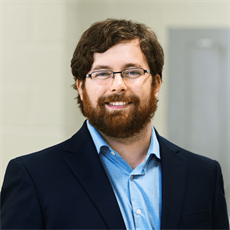
Agustín Zaballos Diego is an Assistant Professor in the Department of Computer Engineering at University Ramon Llull (URL), Barcelona, Spain, since 1999. He serves as Research Coordinator in the Department of Engineering at La Salle Campus Barcelona and leads the R&D Networking and Security Area since 2002. His academic background includes a PhD in Data Networks and Internet Technologies (2012), an International MBA (2014), and an M.S. in Electronic Engineering (2000). University: University Ramon Llull (URL) Department: Department of Computer Engineering Research Group: GRITS Research Focus: Real-time QoS-aware routing protocols in Smart Grids, Ubiquitous Sensor Networks, and IoT communications. His work bridges telecommunications, computer science, and energy systems through projects like OPERA (FP6), INTEGRIS (FP7), and FINESCE (FP7). Publication Trends: Recent articles highlight advancements in HF communications for Antarctic research, hybrid genetic algorithms for traffic engineering, IPv6 testing, and Industry 4.0-related networking solutions. Keywords span Smart Grids, IoT, Sensor Networks, and QoS optimization. Collaborative Projects: Key initiatives include the Antarctica Project , ATHIKA (ICT in healthcare), ENVISERA (environmental sensor networks), HOTSUP (online teaching innovation), PLANET4 (AI/ML in industry), and XIoT (IoT scalability challenges).
Dr. David R. Themens is an Associate Professor in Space Environment within the Space Environment and Radio Engineering (SERENE) group in the School of Engineering at the University of Birmingham. He specializes in modeling and mitigating the impacts of space weather on radio communications and navigation systems, with a particular focus on the ionosphere's effects on these technologies. Dr. Themens earned his academic credentials from Canadian institutions: BSc (Hons) in Physics from the University of New Brunswick (2011) MSc in Atmospheric and Oceanic Science from McGill University (2013) PhD in Physics from the University of New Brunswick (2018) His research primarily focuses on four interconnected areas: ionospheric modeling, ionospheric physics, measurement techniques, and radio propagation. Dr. Themens is particularly interested in the interaction between the ionosphere and the atmosphere, specifically how lower atmospheric forcing drives variability within the ionosphere and the interactions between the ionosphere and thermosphere. He is the principal developer of the Empirical Canadian High Arctic Ionospheric Model (E-CHAIM) , a high-latitude alternative to the International Reference Ionosphere (IRI) used for HF/UHF signal propagation modeling. His work includes exploring synergistic properties of different earth observation instruments, measurement technique development, data assimilation, and empirical modeling. Analysis of Dr. Themens' recent publication record reveals a strong emphasis on space weather phenomena, ionospheric modeling, and radio propagation. His work spans from fundamental ionospheric physics to practical applications in navigation and communication systems. Key themes include the development and validation of ionospheric models, analysis of space weather events (including the May 2024 geomagnetic superstorm), and the impact of solar phenomena on Earth's upper atmosphere. His research increasingly incorporates advanced data assimilation techniques and leverages multiple observational platforms including radar systems, GNSS networks, and satellite measurements. Dr. Themens holds significant leadership positions in the international space science community: Co-Chair of IAG-GGOS Joint Study Group on Understanding Ionospheric and Plasmaspheric Processes (2023-present) Chair of URSI Data Assimilation Working Group (2023-present) Co-Chair of IAGA Geospace Data Assimilation Working Group (2023-2027) URSI Commission G Early Career Representative (2023-2029) Chair of Canadian Association of Physicists Division of Atmospheric and Space Physics (2022-present) Dr. Themens actively mentors graduate students and is 'always looking for new Ph.D. students interested in the ionosphere, data assimilation, and radio propagation.' His research has been supported through contracts with Defence Research and Development Canada (DRDC) and various international collaborations. He leads the Canadian High Arctic Ionospheric Models (CHAIMs) project, which builds upon his doctoral work developing the E-CHAIM model. At the University of Birmingham, he teaches courses in Space System Engineering and Design, Space Mission Analysis and Design, and Space Environment.
Annette R. Grilli is a Research Professor in the Department of Ocean Engineering at the University of Rhode Island , focusing on ocean renewable energy and coastal hazard assessment. Her work integrates numerical modeling and statistical analysis to study extreme events like tsunamis and storms. Ph.D. in Climatology, University of Delaware (2000) M.S. in Oceanography, University of Liege (1984) B.S. in Geography & Education, University of Liege (1983) Her research spans offshore wind farm siting optimization , tsunami propagation modeling , and coastal erosion dynamics . Recent publications highlight applications of phase-resolving wave models and machine learning to coastal resilience and marine renewable energy systems. Grants include collaborations with NOAA , Department of Energy , and NSF , focusing on coastal hazard visualization , tsunami detection algorithms , and design elevation mapping under climate change scenarios. She contributes to digitalCommons@URI with over 100 publications in Ocean Engineering and Civil Engineering domains.
Johan Sidén is a Lecturer and Associate Professor at Mid Sweden University , employed in the Department of Computer and Electrical Engineering (DET) . His work focuses on RFID technology , antenna design , and printed/flexible electronics , with a particular emphasis on industrial IoT and welfare technology applications. Research Keywords : Radio Frequency Identification, Antenna Design, Flexible Electronics, Wireless Sensor Networks, Microwave Engineering, Electronic Design Key Projects : DRIVEN (data-driven industrial transformation), SmartArea (functional surfaces), Pressure (ulcer monitoring), MakeSense! (welfare technology) Publications : 15+ recent works on wearable antennas, smart packaging, UWB antenna design, and RFID sensor integration Collaborations include partnerships with industrial and academic institutions, focusing on sustainable electronics, sensor systems, and smart infrastructure. His technical expertise spans antenna optimization , printed circuits , and edge computing for harsh environments.
Bradley Fahlman is a Professor in the Department of Chemistry and Biochemistry at Central Michigan University (CMU), College of Science and Engineering. His research focuses on the synthesis and application of nanostructured materials for energy, electronics, and sensing technologies. He actively leads the Fahlman Lab, which develops novel precursors and deposition techniques for advanced materials. Education: Postdoctoral, University of California, Irvine (2000–2002) Ph.D. in Inorganic Chemistry, Rice University (2000) B.S. in Chemistry, University of Regina, Saskatchewan, Canada (1996) Dr. Fahlman's research interests center on materials chemistry, particularly in the design of 0-D, 1-D, and 2-D nanomaterials. Key areas include atomic layer deposition (ALD) of high-k dielectric films using novel hafnium complexes, development of graphene nanoribbons and carbon-based materials for Li-ion battery anodes, quantum dot sensitized solar cells, and silicon nanowire growth via solid-liquid-solid mechanisms. His work bridges synthetic chemistry with materials engineering and energy applications. The most recent publications reflect a strong focus on nanomaterials for energy storage (graphene, carbon nanotubes, MoS2), thin-film deposition precursors (Hf, Ge), luminescent materials, and porous silicon sensors. His research spans inorganic synthesis, materials characterization, and electrochemical applications, with consistent contributions to both fundamental chemistry and applied materials science. Scientific Awards: IUPAC Young Observer, Istanbul, Turkey (2013) National Textbook Excellence Award for Materials Chemistry (2008) CMU Provost’s Award for Research Excellence (2005) CMU Research Excellence Fund Award (2003) Dr. Fahlman has secured research funding from the National Science Foundation (NSF) and the Department of Defense (TARDEC) for projects on ALD precursors and Li-ion battery materials. He collaborates with physicists such as Veronica Barone on theoretical and experimental studies of carbon nanostructures. He advises graduate students and contributes to chemical education, investigating study habits and personality traits in chemistry students. He teaches General Chemistry, Inorganic Chemistry, and Materials Chemistry. His lab is equipped with an in-house ALD system featuring real-time thickness monitoring via a high-temperature quartz crystal microbalance. The Fahlman Lab emphasizes interdisciplinary research, combining synthetic chemistry, materials characterization, and device integration for next-generation technologies in energy and electronics.
Ane Johannessen serves as Professor at the Department of Global Health and Community Medicine, University of Bergen, and Researcher at the Occupational Medicine Department, Helse Bergen HF - Haukeland University Hospital. Her dual institutional roles bridge academic research with clinical practice in respiratory and environmental health. Her research focuses on environmental determinants of respiratory disease, specializing in air pollution impacts on asthma development, spirometry patterns in obstructive lung diseases, and social inequalities in mortality. She employs longitudinal population studies and advanced epidemiological methods to investigate how greenness exposure modifies pollution effects and how occupational class influences cardiovascular outcomes over decades. Recent publications reveal a cohesive research trajectory emphasizing environmental epidemiology, with 2025 studies on parental pollution exposure and offspring asthma alongside respiratory hospitalizations. Her 2024 work establishes clinical frameworks for pre-COPD identification and examines persistent socioeconomic mortality gradients, demonstrating methodological rigor in large-scale Nordic cohorts. Professor Johannessen actively leads the Bergen Lung Health Study and contributes to the Life-GAP project analyzing air pollution impacts. She participates in the IP-future initiative developing interprofessional healthcare education frameworks, reflecting her commitment to translating research into clinical practice and policy through multi-institutional collaborations across Norway.
Anne Vifladt is an Associate Professor at the Department of Health Sciences, NTNU in Gjøvik. She holds a master's degree in health informatics and a doctorate in patient safety culture. Her research focuses on patient safety, work environment, teamwork, and medication management. She leads the Ph.D. project 'Team-training to support medication administration in prehospital care' and supervises doctoral and master's students. Vifladt's work emphasizes interprofessional collaboration in healthcare settings, particularly in surgical wards and ambulance services. Her research interests span patient safety culture, medication administration processes, and the impact of team training on healthcare outcomes. Recent studies include qualitative analyses of ambulance professionals' teamwork and middle managers' perspectives on nursing competence in primary care. Vifladt has presented her findings at conferences such as the Nordic Conference on Research in Patient Safety and Quality in Healthcare (2024) and frequently collaborates with institutions like Akershus University Hospital and Sykehuset Innlandet HF. Her publications reflect a focus on longitudinal team training programs, structural changes in healthcare units, and the interplay between patient safety practices and professional well-being. Vifladt is part of the Patient Safety Research Group and contributes to courses like PAG2900 - Bacheloroppgave i paramedisin at NTNU.
Daniel J. Emmons is an Associate Professor of Physics and Senior Military Faculty at the Air Force Institute of Technology (AFIT), Department of Engineering Physics. His work bridges military applications with fundamental research in space weather and ionospheric physics. Education: Ph.D. in Applied Physics (2017), AFIT M.S. in Applied Physics (2012), AFIT B.S. in Physics (2007), San Diego State University Research Interests: Focus on laser kinetics , plasma chemistry , and ionospheric disturbances . Key areas include sporadic-E layer dynamics, solar flare impacts on radio propagation, and GNSS-based electron density modeling. Recent Publications highlight advancements in: Deep learning for sporadic-E prediction Magnetic field variability in solar flares GNSS radio occultation techniques for ionospheric analysis Solar eclipse effects on ionosphere-thermosphere systems Scientific Awards: 2023 Educator of the Year, Air Education and Training Command 2022 Outstanding Science and Engineering Educator, Department of the Air Force Multiple mentorship and teaching awards (2021) Advising and Collaborations: Co-authored studies with teams from New Mexico Tech, NASA, and the University of Alaska Fairbanks. Led invited talks on space weather impacts and ionospheric monitoring.
Paolo Pescetto is a Fixed-term tenure-track Assistant Professor in the Department of Energy (DENERG) at Politecnico di Torino, where he is also a member of the Interdepartmental Center PEIC (Power Electronics Innovation Center). He serves on multiple academic boards including the College of Electrical and Energy Engineering, College of Computer, Film and Mechatronics Engineering, and College of Mechanical, Aerospace, and Automotive Engineering. His research focuses on power electronics, electrical machines, and motor drives with particular emphasis on electric vehicle applications. His work spans motor control strategies, thermal management of high-power density motors, sensorless control techniques, and integrated power systems for e-mobility. He has developed advanced methodologies for flux mapping, torque ripple compensation, and fault protection in permanent magnet and synchronous reluctance machines. Analysis of his recent publications reveals a strong trend toward solving practical challenges in electric vehicle powertrains, with significant contributions in multi-phase motor drives, thermal management, and fault-tolerant control systems. His work bridges theoretical advances with practical automotive applications, particularly in third-generation electric vehicle technologies. Dr. Pescetto holds multiple patents in motor control technologies, including methods for MTPA tracking without HF injection, spatial harmonic flux-map identification, and isolated on-board battery chargers for electric vehicles. His intellectual property demonstrates practical innovation in the field of motor drives and power electronics. He actively supervises PhD students Andrei Bojoi and Chen Chen in the Electrical, Electronics, and Communications Engineering program, focusing on electric motor drives and sustainable traction electrification. His research projects include commercial contracts on sensorless control of synchronous reluctance machines, firmware implementation for motor control, and advanced sensorless control methodologies for brushless motors. As a member of the PEEMD Research Group within DENERG, Dr. Pescetto contributes to cutting-edge research in power electronics and motor drives, with a strong industry collaboration focus that translates academic research into practical automotive solutions.
Professor İsmail Serdar Özoğuz is a distinguished academic at Istanbul Technical University , affiliated with the Department of Electronics and Communication Engineering . Holding the title of Professor since 2009, he has contributed extensively to analog circuit design, neural network applications, and wireless communication systems. Ph.D. in Electronics and Communications Engineering (1995) Department Head (2020-present) Vice Dean (2017-2020) Research Interests: His work spans Electronics , Analog Design , Circuits and Systems Theory , with recent focus on: Neural network-based filter optimization Memristor emulator circuits Spintronic devices for wireless and memory applications Intelligent optimization in RF designs Article Trends: Recent publications highlight AI integration in engineering challenges, power efficiency in wireless systems, and hardware-software co-optimization . His work bridges theoretical models (e.g., fractional-order neural networks) with practical implementations (e.g., GaN amplifiers). Scientific Awards: GEBIP Award (TUBA), 2002 Mustafa Parlar Foundation Research Incentive, 2003 TUBITAK Incentive Award, 2004 Grants & Projects: As Principal Investigator, he has led initiatives on: Spintronic devices for wireless/memory/analog uses Passive combiners in HF transmitters High-power GaN amplifier development Fractional-order neural network models
Dr. Amandine Schaeffer is a Senior Lecturer at UNSW Sydney's School of Mathematics & Statistics, specializing in physical oceanography, marine heatwaves, and jellyfish trajectory modeling. Her research integrates mathematical tools with observational data to study coastal dynamics, boundary currents, and climate extremes. PhD in Physical Oceanography (2010), Mediterranean Institute of Oceanography MSc in Physical Oceanography (2006), University of Toulon Masters in Marine Engineering (2006), SeaTech, Toulon Her research focuses on the East Australian Current's influence on marine heatwaves, submesoscale eddies, and bluebottle drift dynamics. By analyzing HF radar data, Lagrangian drifters, and glider observations, she explores how ocean stratification, wind forcing, and boundary current variability shape coastal climate extremes and ecological processes. The 15 most recent publications reveal trends in marine heatwave drivers, biophysical interactions in boundary currents, and jellyfish transport mechanisms. Key keywords span physical oceanography, climate science, and marine ecology, with sub-fields like eddy dynamics, coastal upwelling, and ocean observing systems. She supervises PhD students Youstina Elzahaby (marine heatwaves), Daniel Lee (bluebottle drift), and Natacha Bourg (boundary current dispersion). Her teaching includes mathematics and statistics courses for life sciences, as well as specialized marine science topics. As leader of the BluebottleWatch project, she bridges academic research with public safety initiatives, leveraging UNSW's oceanographic expertise to address coastal hazards through interdisciplinary collaboration.