معرفی
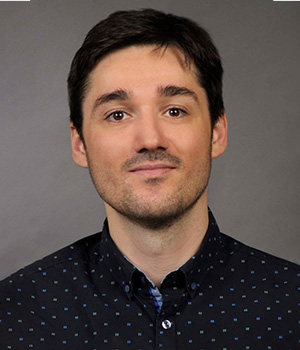
Bradley Fahlman is a Professor in the Department of Chemistry and Biochemistry at Central Michigan University (CMU), College of Science and Engineering. His research focuses on the synthesis and application of nanostructured materials for energy, electronics, and sensing technologies. He actively leads the Fahlman Lab, which develops novel precursors and deposition techniques for advanced materials.
Education:
- Postdoctoral, University of California, Irvine (2000–2002)
- Ph.D. in Inorganic Chemistry, Rice University (2000)
- B.S. in Chemistry, University of Regina, Saskatchewan, Canada (1996)
Dr. Fahlman's research interests center on materials chemistry, particularly in the design of 0-D, 1-D, and 2-D nanomaterials. Key areas include atomic layer deposition (ALD) of high-k dielectric films using novel hafnium complexes, development of graphene nanoribbons and carbon-based materials for Li-ion battery anodes, quantum dot sensitized solar cells, and silicon nanowire growth via solid-liquid-solid mechanisms. His work bridges synthetic chemistry with materials engineering and energy applications.
The most recent publications reflect a strong focus on nanomaterials for energy storage (graphene, carbon nanotubes, MoS2), thin-film deposition precursors (Hf, Ge), luminescent materials, and porous silicon sensors. His research spans inorganic synthesis, materials characterization, and electrochemical applications, with consistent contributions to both fundamental chemistry and applied materials science.
Scientific Awards:
- IUPAC Young Observer, Istanbul, Turkey (2013)
- National Textbook Excellence Award for Materials Chemistry (2008)
- CMU Provost’s Award for Research Excellence (2005)
- CMU Research Excellence Fund Award (2003)
Dr. Fahlman has secured research funding from the National Science Foundation (NSF) and the Department of Defense (TARDEC) for projects on ALD precursors and Li-ion battery materials. He collaborates with physicists such as Veronica Barone on theoretical and experimental studies of carbon nanostructures. He advises graduate students and contributes to chemical education, investigating study habits and personality traits in chemistry students. He teaches General Chemistry, Inorganic Chemistry, and Materials Chemistry.
His lab is equipped with an in-house ALD system featuring real-time thickness monitoring via a high-temperature quartz crystal microbalance. The Fahlman Lab emphasizes interdisciplinary research, combining synthetic chemistry, materials characterization, and device integration for next-generation technologies in energy and electronics.