Dr. Hassan Qudrat-Ullah is a Professor at the School of Administrative Studies, York University, and Coordinator of the Certificate in Logistics Management. He holds a PhD in Decision Sciences from NUS Business School and completed a post-doctoral fellowship at Carnegie Mellon University. His research focuses on dynamic decision making, system dynamics modeling, energy planning, and interactive learning environments. He teaches courses on quantitative methods, logistics, and decision analysis, informed by global industry experience across 20+ countries. Research interests include sustainability, climate change, systems thinking, and educational applications of decision sciences. He serves as Editor-in-Chief of the International Journal of Complexity in Applied Science and Technology and is a member of IEEE, DSI, and the International System Dynamics Society. His work has been published in Energy , Decision Support Systems , and others. Key projects include studies on 'structured-debriefing in dynamic decision making' and renewable energy policies in Africa. His recent articles (2023–2025) address AI integration in energy governance, system dynamics for supply chain resilience, and education for sustainability. Hassan advocates for systems thinking in K-12 education and enjoys traveling (visited 129 countries) and bird-watching.
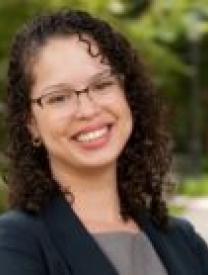
Rachel Arnett is an Assistant Professor of Management at the Wharton School of the University of Pennsylvania, specializing in diversity, identity, inclusion, intergroup relations, and intersectionality within the Organizational Behavior subgroup. She received her Ph.D. from Harvard University's interdisciplinary Organizational Behavior program and holds a B.A. from the University of Pennsylvania. Education: Ph.D., Harvard University (Organizational Behavior) B.A., University of Pennsylvania Her research explores pathways to develop diversity, equity, and inclusion (DEI) through identity-based interactions, including: Identity expression and concealment in workplace relationships Intergroup dynamics and social change Allyship behaviors and bias confrontation Intersectional influences of gender, race, and social class on leadership Psychological safety in DEI advancement Recent publications analyze cultural-identity expression as inclusion mechanisms, bias confrontation strategies, and longitudinal impacts of identity management. Her work combines lab experiments, surveys, and qualitative methods in collaboration with DEI-focused organizations. Key awards include the 2023-2024 Claude Marion Faculty Scholar designation, 2022 Poets & Quants Best 40-Under-40 MBA Professors, and four consecutive Wharton Teaching Excellence Awards (2018-2021).
Dina Verdín serves as Assistant Professor in Engineering Education Systems and Design at Arizona State University's Polytechnic School, where she leads research on broadening participation in engineering through critical analysis of access and persistence barriers for first-generation, minoritized, and women students at intersectional identity junctions. Her educational foundation includes: Ph.D. in Engineering Education from Purdue University M.S. in Industrial Engineering from Purdue University B.S. in Industrial & Systems Engineering from San José State University Verdín's research program employs asset-based frameworks to examine how funds of knowledge and identity development influence engineering pathways. Her access strand investigates high school exposure barriers through culturally responsive activities that foster engineering interest and agency, while her persistence strand analyzes undergraduate institutional structures affecting identity negotiation and degree completion. This work centers intersectional methodologies to redefine engineering identity beyond traditional norms. Analysis of her 15 most recent publications (2020-2024) reveals consistent focus on first-generation Latinx students, classroom belonging mechanisms, and funds of knowledge applications. Her work predominantly utilizes mixed-methods approaches within Hispanic Serving Institutions, with growing emphasis on migratory student populations and critical engineering agency development. Her accolades include: NSF Graduate Research Fellowship IEEE Frontiers in Education Best Diversity Paper Award College of Engineering Outstanding Graduate Student Research Award AGEP Distinguished Scholar Award AERA Division D Top 3 In-Progress Research Verdín currently directs multiple NSF-funded initiatives including SAFE Teams (Student Asset-based Approach to Equitable Teams) and Reconceptualizing Community Cultural Wealth in engineering design. Her grants portfolio exceeds $1.3 million as PI/Co-PI, focusing on mastery learning implementation, engineering discipline disparities, and migratory student empowerment through gamified curricula. She teaches core courses in engineering statistics and research methods while mentoring graduate researchers. Her work actively shapes engineering education through community-engaged scholarship that centers student assets and challenges deficit-oriented paradigms in STEM persistence research.
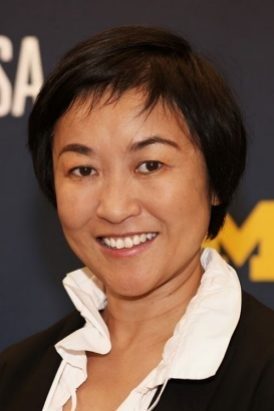
Fiona Lee is the Arthur F. Thurnau Professor of Psychology at the University of Michigan, with affiliations in Organizational Studies and the Advisory Committee. She holds a Ph.D. from Harvard University. Her research focuses on three core areas: Identity Integration (how individuals navigate multiple identities), Power Dynamics (effects of power on behavior), and Cultural Differences (impact of cultural contexts on organizations and individuals). She teaches courses on Organizational Psychology and Research Methods in Personality/Social Contexts. Lee’s work bridges social psychology and organizational behavior, emphasizing multicultural experiences and adaptation. Her recent studies explore refugee well-being, racial discrimination coping strategies, and the role of family in resettlement processes. Notably, she investigates how cultural identity integration influences creativity, decision-making, and social tolerance. Her publications span cross-cultural communication, biculturalism, and institutional barriers faced by minorities. Lee’s research often combines qualitative and quantitative methods to address real-world challenges in workplace dynamics and global mobility.
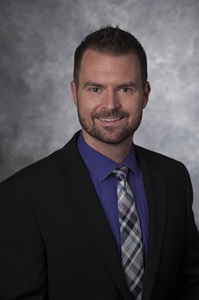
Nathan W. Hudson is an Associate Professor in the Department of Psychology at Southern Methodist University (SMU) in Dallas, Texas. Previously, he received his Ph.D. in Psychology from the University of Illinois at Urbana-Champaign in 2016. His research focuses on personality psychology, particularly how people's personalities change across time and how individuals function in romantic relationships. He leads the Δ Lab at SMU, which investigates individual differences in human personality. Education: 2016 – Ph.D., Psychology, University of Illinois at Urbana-Champaign 2011 – M.A., Psychology, University of Illinois at Urbana-Champaign 2009 – B.A., Purdue University Nathan Hudson's primary research area is volitional personality change—people's desires and attempts to change their own personality traits. His groundbreaking research has shown that approximately 90% of people want to change aspects of their personality traits, and moreover, they may be able to find some degree of success in doing so. He also studies adult attachment styles and how people function in close relationships. Hudson's work suggests that attachment anxiety is linked to false memories, and that people's attachment styles can change over time. His research integrates both theoretical and applied perspectives, with implications for therapeutic interventions and personal development. Hudson's recent publications demonstrate a clear trajectory toward understanding the mechanisms of personality change and developing effective interventions. His work spans across multiple domains of personality psychology, with a particular emphasis on the Big Five personality traits, attachment theory, and well-being. A consistent theme throughout his research is examining how people's desires for change translate into actual personality growth. His work has increasingly focused on the practical applications of personality science, including developing measures and interventions that can help people achieve their desired personality changes. Scientific Awards: Goss-Lucas Award for Excellence in Teaching James Davis Fellowship Foundation for Personality and Social Psychology Heritage Dissertation Award Hudson actively mentors students in the Δ Lab at SMU, where they conduct research on personality change, attachment, and well-being. He has secured multiple grants to support his research on volitional personality change and the development of personality assessment tools. His lab has developed several psychological measures, including the Change Goals Big Five Inventory (C-BFI2) and its variants, which are freely available for academic research. Hudson also engages with the public through his TEDx talk "You Can Change Your Personality" and has been featured in Olga Khazan's book "Me, But Better," which applies his research to real-life settings. The Δ Lab, led by Hudson, is dedicated to understanding individual differences in personality and how people can intentionally change aspects of themselves. The lab values all individual differences among humans, recognizing that variance in human thoughts, feelings, and behaviors is adaptive and makes humanity resilient. The lab wholeheartedly supports the LGBTQ+ community and emphasizes that individual differences between humans are what personality science is all about.
Jonathan Santo is a Professor of Psychology at the University of Nebraska at Omaha (UNO), where he serves as Director of the Graduate Developmental Psychology Program and as a faculty member in the Office of Latino/Latin-American Studies. His research explores peer relations, cultural differences in self-esteem, and classroom-level influences on child and adolescent development, with a focus on improving school environments and fostering positive social interactions. ORCA Faculty Fellow His research spans broad areas including Developmental Psychology , Social Support Systems , and Cross-Cultural Peer Dynamics , with specific attention to peer victimization , self-continuity , school climate , and developmental trajectories in Brazilian and Colombian youth . Recent publications analyze topics like hikikomori experiences , friendship security , and HPA axis dysregulation in adolescents. Scientific awards include the ORCA Faculty Fellow recognition. His work often involves longitudinal assessments of peer relationships cross-cultural comparisons (Brazil, Colombia, China, Nigeria, Singapore, U.S.) policy-focused blog posts on family separations and school interventions
Lisa B. Limeri is an Assistant Professor at the Department of Biological Sciences, Texas Tech University. Her work bridges social psychology, educational psychology, and STEM education to address retention and success in biology education. She leads the Limeri Lab, focusing on social-psychological factors affecting student persistence and instructor-student dynamics. Ph.D., Biological Sciences, University of Pittsburgh (2012–2017) Postdoctoral Research, Biology Education Research, University of Georgia (2017–2021) Her research examines how students' and instructors’ beliefs about abilities influence academic outcomes. She develops classroom interventions to reduce stressors and improve educational experiences. The lab’s recent work spans mindset measurement, community cultural wealth, disability frameworks, and mentoring surveys. Scientific awards include the STEP Program Fellow (2021–Present) and Scholar Certification from the Center for Integrated Research on Teaching and Learning (2017). She mentors doctoral students Anastasia Chouvalova and Mason Tedeschi and collaborates with postdoctoral researchers. The Limeri Lab has received recognition for its contributions to undergraduate research at Texas Tech symposia.
Yasmin Kafai is a Professor at the University of Pennsylvania's Graduate School of Education (GSE), Department of Learning Sciences. Her research focuses on computational thinking, AI education, and equitable K-12 computing pedagogy. She has pioneered work on integrating electronic textiles (e-textiles) and participatory design into STEM education to engage youth in critical perspectives of technology. Kafai's recent work emphasizes algorithmic literacy, youth-led auditing of machine learning systems, and bridging technical and societal dimensions of computing. Key research areas include: computational empowerment, AI ethics in education, youth agency in technology design, and culturally responsive computing curricula. Her projects often involve hands-on making activities, such as constructing generative AI models or debugging e-textile systems, to foster both technical and critical understandings. Publications from 2024-2025 highlight trends in youth engagement with generative AI, algorithm auditing frameworks, and the intersection of physical computing with growth mindset practices. She has also explored the role of storytelling methodologies in reimagining computing narratives for marginalized groups. Kafai collaborates extensively with teachers to develop scalable professional development programs addressing equity in CS education. Her work frequently appears in learning sciences and computing education journals, with a focus on practical classroom implementations and systemic educational reforms. Ongoing efforts include designing 'Hour of Code' activities that integrate critical AI literacy and fostering youth as co-designers of ethical technology solutions.
Kristen Cole serves as an Associate Professor in the Department of Communication Studies within San Jose State University's College of Social Sciences. Her academic work centers on critical interrogations of health communication systems, disability justice, and the socio-linguistic construction of personhood, with particular attention to marginalized communities navigating healthcare barriers and systemic inequities. Her research is anchored in two foundational inquiries: how individuals negotiate health/illness meanings under cultural constraints, and how communication assumptions shape human categorization. Methodologically grounded in critical/cultural studies, disability frameworks, feminist/queer theories, and autoethnography, her work examines pandemic-era health communication dynamics, citizenship language in immigration processes, and pedagogical innovations for inclusive classrooms. Personal experiences with chronic illness and ELL instruction directly inform her commitment to health justice and communicative equity. Analysis of her 15 most recent publications reveals persistent thematic engagement with disability studies and health communication, featuring methodologies like duoethnography and critical discourse analysis. Key trends include socio-emotional disablism during COVID-19, feminist disability pedagogy through participation menus, and neuroqueering communication theory. Her scholarship consistently exposes how communication practices reinforce or challenge power structures in healthcare, education, and political discourse. While specific grant details remain unlisted in available materials, her research directly addresses urgent contemporary issues: health inequality in pandemic response systems and language-based exclusion in citizenship processes. Her chronic illness narrative and ELL classroom experiences demonstrate profound personal investment in dismantling communication barriers, particularly regarding how vulnerability categorization affects healthcare access and how language determines political inclusion.
Eleanor O'Rourke is an Associate Professor at Northwestern University with joint appointments in the Department of Computer Science and the Learning Sciences, part of the McCormick School of Engineering. She co-directs the Delta Lab, focusing on interdisciplinary research in Human-Computer Interaction, Artificial Intelligence, and Learning Sciences. Her work examines how learning environments can foster motivation and effective practices in computer science education, supported by grants from NSF and Google. Educated at the University of Washington (PhD, MS in Computer Science & Engineering) and Colby College (BS in Computer Science and Spanish), her research employs mixed methods, including design-based research and grounded theory, to study student motivation, affective responses during programming, and AI-driven interventions. Notable contributions include tools like Ply and Isopleth , which support novice web developers, and studies on student self-assessment biases and growth mindset incentives. Her work has been recognized with multiple Best Paper Awards at ACM conferences, including ICER 2024 and SIGCSE 2022. She teaches courses such as Transformative AI and the Learning Sciences and Design of Learning Environments , and advises a diverse cohort of PhD students and undergraduates. The Delta Lab’s collaborative approach emphasizes innovation in educational technology and human-centered design.
Vernita Gordon is an Associate Professor in the Department of Physics at the University of Texas at Austin (since 2018), previously serving as an Assistant Professor there from 2010 to 2018. She holds a Ph.D. in Physics from Harvard University (2003) and a B.Sc. in Physics and Mathematics from Vanderbilt University (1997). Her research focuses on understanding how physical characteristics like mechanics and spatial structure influence bacterial biofilms, particularly their interactions with the immune system and resistance to antibiotics. She has pioneered techniques such as laser trapping to manipulate biofilm structures and studies radiation effects on bacteria like Deinococcus radiodurans . Education: Ph.D. in Physics, Harvard University (2003) B.Sc. in Physics and Mathematics, Vanderbilt University (1997) Research Interests: Dr. Gordon’s work integrates biophysics, microbiology, and materials science to explore biofilm mechanics, bacterial mechanosensing, and radiation biology. Key areas include: How biofilm mechanics resist immune clearance and antibiotic treatment Role of surface stiffness and shear stress in biofilm initiation Radiation resistance mechanisms in Deinococcus radiodurans Development of tools like laser trapping to study biofilm structure Key Achievements: Recipient of the Elizabeth B. Gleeson Professorship (2023) and Texas Mindset Initiative Fellowship (2023) Provost’s Teaching Fellow (2020–2024) and multiple teaching awards Funded by NSF, NIH, and Cystic Fibrosis Foundation Published over 60 peer-reviewed articles, including in Nature , PNAS , and Biophysical Journal Advising & Outreach: She mentors graduate students in Physics, Microbiology, and Biomedical Engineering, emphasizing interdisciplinary training. Her group actively recruits undergraduates and collaborates with industry partners like Solvay and the College of Pharmacy. Outreach includes lesson plans for high school STEM education and community science initiatives. Labs & Collaborations: Her lab uses advanced microscopy, microrheology, and computational modeling. Key collaborations include work with the Contreras Lab (UT Austin Chemical Engineering) on radiation-resistant bacteria and the Raizen Lab (UT Austin Physics) on self-sterilizing surfaces.
Prof. Dr. Mona Mensmann is an Associate Professor of Innovation Management and Entrepreneurship at the University of Cologne , School of Business and Social Sciences. Her research bridges entrepreneurship with psychology, focusing on entrepreneurial mindset, proactive behavior, and training curricula. Current: Associate Professor (W2), University of Cologne (2021–) Previous: Associate/Assistant Professor at Warwick Business School (2018–2021) Education: PhD in Psychology, Leuphana University (2013–2017); MSc in Psychology, University of Heidelberg (2011–2013) Mensmann’s research explores the psychological foundations of entrepreneurship, including the impact of cognitive traits (e.g., ADHD, need for cognition) on entrepreneurial intentions and outcomes. She emphasizes personal initiative training as a tool for poverty reduction and sustainable business development, particularly in West Africa and developing economies. Her publications span peer-reviewed journals like Entrepreneurship Theory and Practice and Science , focusing on topics such as sleep quality’s influence on founders, training program effectiveness, and lifespan entrepreneurship. She has also contributed to academic book chapters and conference proceedings.
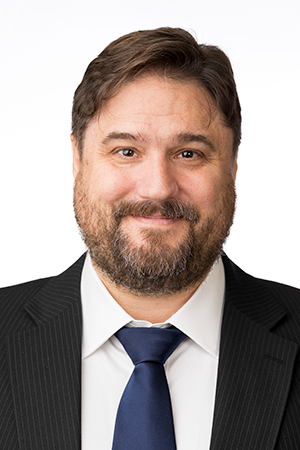
Gavin Schwarz is a Professor and Head of School at the School of Management and Governance within the UNSW Business School . He specializes in organizational change , organizational failure and inertia , and the dynamics of virtual teams , with a focus on how organizations fail during change processes and how to develop applied strategies for change management . His work spans diverse sectors including healthcare, technology, and education, with publications in leading journals such as Academy of Management Learning and Education and Administrative Science Quarterly . Education : PhD in Management (University of Queensland), MPhil (Hons) in Management (University of Auckland), BA in Management and English (University of Auckland). Grants : 2020 Brock University grant for "University communication in times of COVID-19" , 2020 UNSW Medicine grant for "Translation and change: Embedding effective change management in health" , and earlier Australian Research Council and Gordon J. Samuels Fellowship awards. His research explores the development of knowledge in organizational theories , with an emphasis on collective responses to change , HR management during crises , and technology strategy . He has contributed to understanding organizational communication , team innovation , and structural inertia . His 15 most recent publications cover topics from AI’s role in organizational change to pandemic-driven research adaptation, with keywords spanning management science , behavioral economics , and digital transformation . Scientific Awards 2021-2023 : Outstanding Reviewer Awards (Academy of Management Review) 2017-2020 : Best Reviewer Awards (Journal of Organizational Behavior) 2019, 2013, 2011 : Best Paper Finalist/Awardee (Academy of Management divisions) 2007, 2006 : Editorial Board Excellence (Academy of Management Journal) and Gordon J. Samuels Fellowship As an active supervisor in organizational change and HR development , his work supports healthcare innovation and digital transformation. He serves as Editor-in-Chief for the Journal of Applied Behavioral Science and is on the editorial boards of Academy of Management Review , Journal of Management , and Journal of Organizational Behavior . Contact: g.schwarz@unsw.edu.au
Lile Jia is an Associate Professor at the National University of Singapore (NUS) in the Department of Psychology. Their research focuses on goal pursuit, self-regulation, and social cognition, with applications to academic achievement and creativity. Jia holds a Ph.D. from Indiana University and a B.Soc.Sci. (Hons.) from NUS. They lead the Situated Goal Pursuit (SPUR) Lab, employing a multi-method approach that combines experimental designs, longitudinal studies, big data analysis, and interventions to explore goal dynamics. Key research topics include self-control, temptations, national identification, intergroup conflicts, and creativity. While their recent publications analyze growth mindsets, ego depletion, and gratitude's role in goal contagion, no scientific awards or student advisement details are mentioned in the provided text.
Ciarán Mac an Bhaird is an Associate Professor of Business and Management at Dublin City University (DCU), within the Fiontar & Scoil na Gaeilge department. He holds a PhD from Trinity College Dublin, a B.Comm and LL.B from NUI Galway, and an M.Sc. in Finance from DCU. His academic role includes teaching and supervising PhD students focusing on enterprise policy, high-growth firm financing, and entrepreneurship education. Research interests span resourcing small firms, capital structure, alternative finance, and public policy for SMEs. He authored Resourcing Small and Medium Sized Enterprises (Springer-Verlag, 2010), launched by the Irish Minister for Enterprise. His work has been published in journals like Small Business Economics and Venture Capital . He chairs the Entrepreneurial Finance track at the Institute of Small Business and Entrepreneurship Conference and serves as an associate editor for Research in International Business and Finance . Current PhD advisees include Simon Bridge, Nouf Alnasser, Batoul Batoulbanjar, and Sean O Reilly. Professional activities include contributions to policy reports for Enterprise Ireland and the Irish League of Credit Unions, and participation in the U.S. State Department’s International Visitor Leadership Programme.