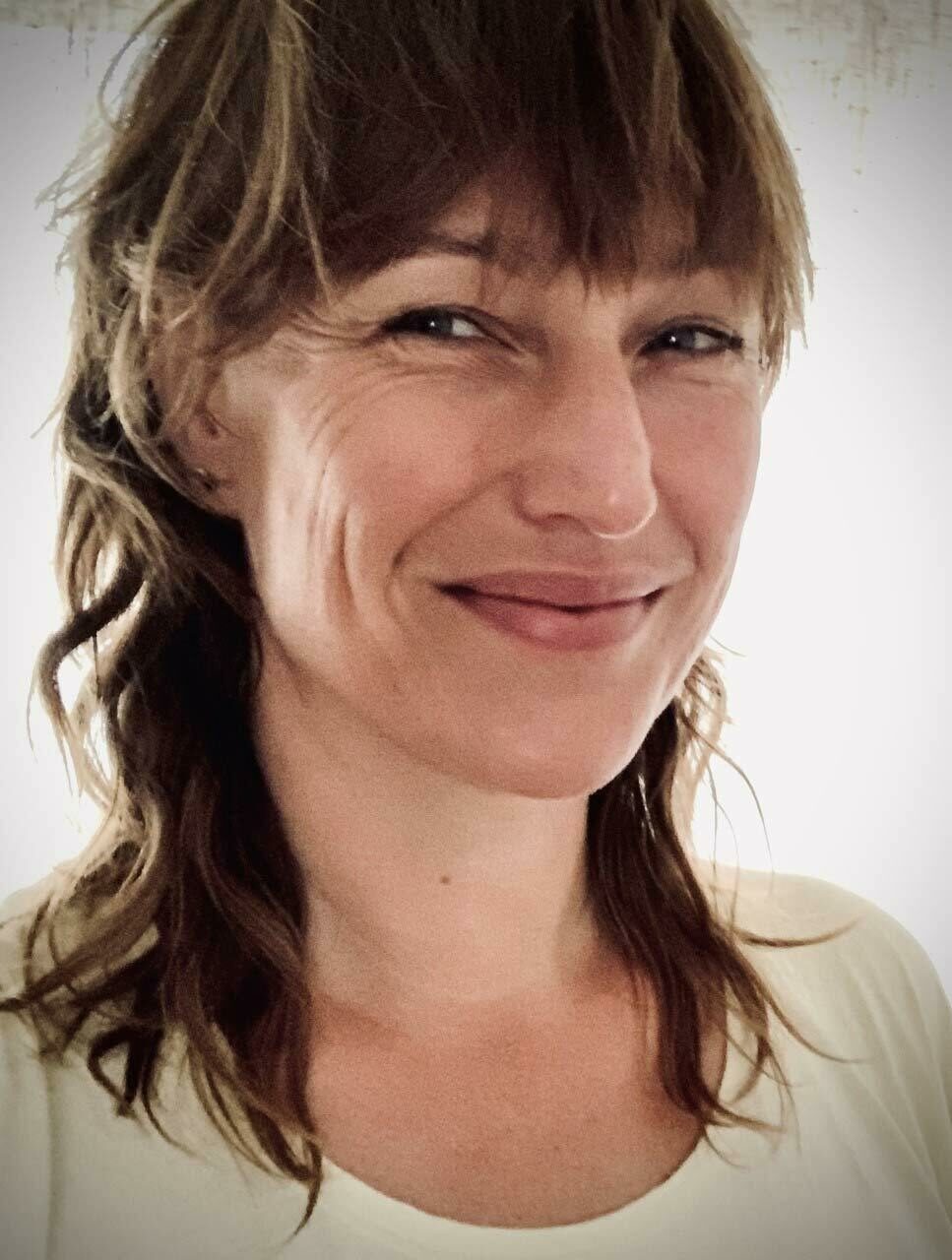
Corine Datema is a Media & Materials Tutor at the Royal Academy of Art (KABK) in The Hague, affiliated with the Bachelor's program in Interior Architecture & Furniture Design. Her work explores the intersection of spatial design, materials, and social interaction through experimental projects like De Embassy of the North Sea , where language and symbols connect humans with landscapes. The KABK program she contributes to, Interior Architecture & Furniture Design Cohabitation , functions as a research laboratory for spatial conditions, materials, and techniques. Corine balances her academic role with running a graphic design studio in Amsterdam focused on collaborative, interdisciplinary practices.
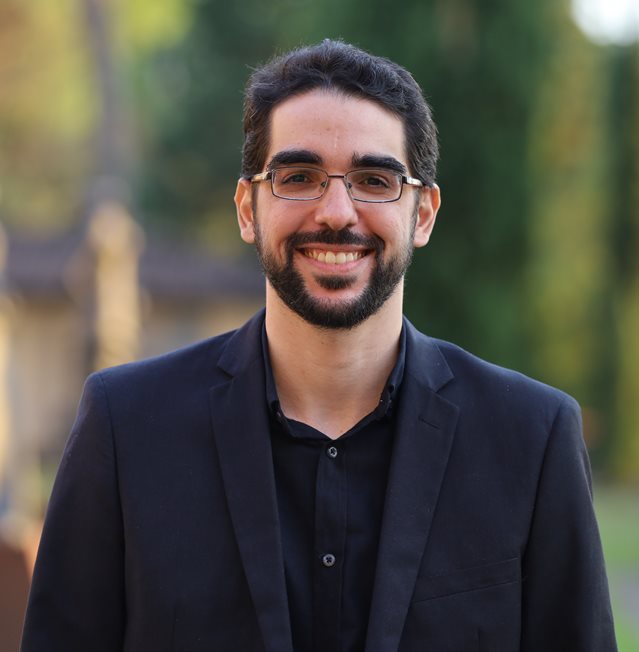
Prof. Marc van Kreveld is a Professor and Head of the Department of Computer Science at Utrecht University since February 2023. His research focuses on computational geometry, geometric algorithmics, and their applications in GIScience, cartography, and puzzle design. He leads the Geometric Computing group and has made significant contributions to algorithms for trajectory data, geometric similarity, and spatial data analysis. Education: PhD in Computer Science from Utrecht University (1992). Research Interests: Computational geometry, GIScience, graph drawing, LIDAR point cloud reconstruction, and geometric puzzle analysis. His work bridges theoretical foundations and real-world applications, such as route data analysis and environmental modeling. Publications: Over 290 peer-reviewed papers, including foundational work on Fréchet distance algorithms, geometric spanners, and trajectory grouping. Recent contributions include advancements in collision detection for modular robots and mobility data science. Awards & Editorial Roles: Editor-in-Chief of Computing in Geometry and Topology , and editorial board member of Journal of Computational Geometry . Active in program committees for conferences like GIScience and SoCG. Teaching: Specializes in computational geometry and its applications, with a focus on algorithm design and geometric computing. Labs & Teams: Leads the Geometric Computing group at Utrecht University, collaborating on projects like braided river network modeling and automated puzzle generation.
Jip Teegelbeckers is a Lecturer and researcher at the Faculty of Education (FE) at Amsterdam University of Applied Sciences , specializing in Citizenship Education . Their work focuses on democratic competence development, evidence-informed teaching practices, and enhancing youth political engagement through innovative pedagogical methods. Research interests include: Democratic education strategies Evidence-based teaching materials Competency assessment frameworks Remote and digital citizenship education Youth voting intention Curriculum mapping for civic competence Key trends in their 15 recent publications reveal collaborations with experts like Nieuwelink, H., Oostdam, R.J., and Rinnooy Kan, W., spanning topics such as democracy , citizenship education , evidence-informed learning , and political participation . Their work emphasizes practical classroom applications and large-scale educational policy analysis. Notable contributions include: Developing evidence-informed teaching materials for vocational education Systematic reviews on democratic pedagogy Studies on remote citizenship education during the pandemic Collaborative research on competency measurement
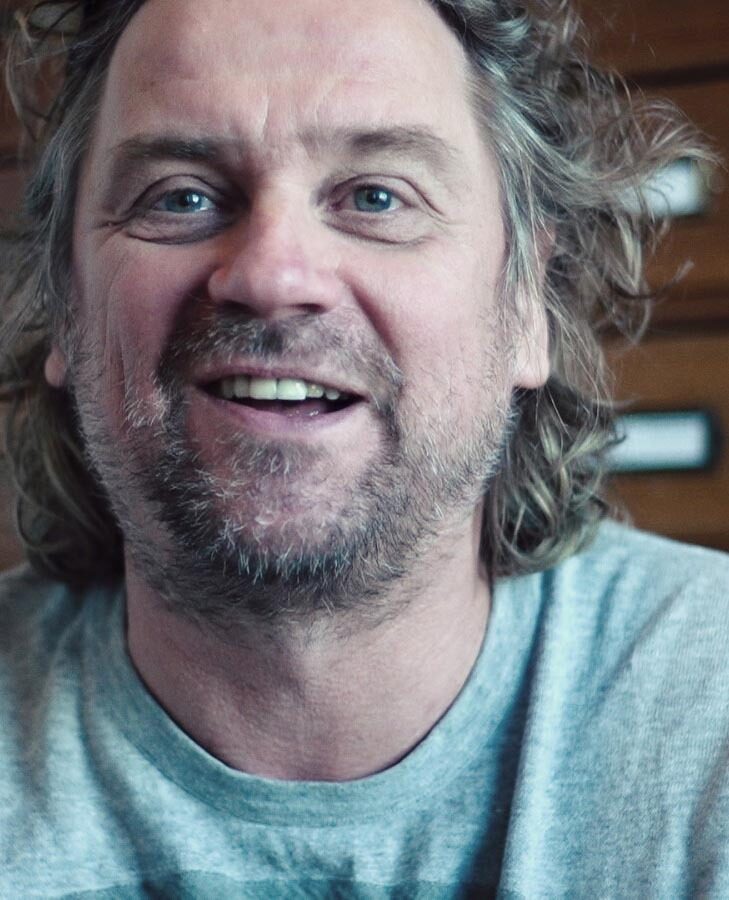
Pjotr de Jong is a lecturer at the Royal Academy of Art, The Hague, affiliated with the Bachelor Graphic Design program. With a background as founder of Vandejong agency, he transitioned to freelance creative work after 33 years. His practice emphasizes socially relevant projects where graphic design actively contributes to societal change. Notable initiatives include co-founding Foam Amsterdam and Foam Magazine, Unseen Photo Fair, Cineville, Water Republic, and Let it Grow. These projects demonstrate his commitment to leveraging design for public discourse and community development.
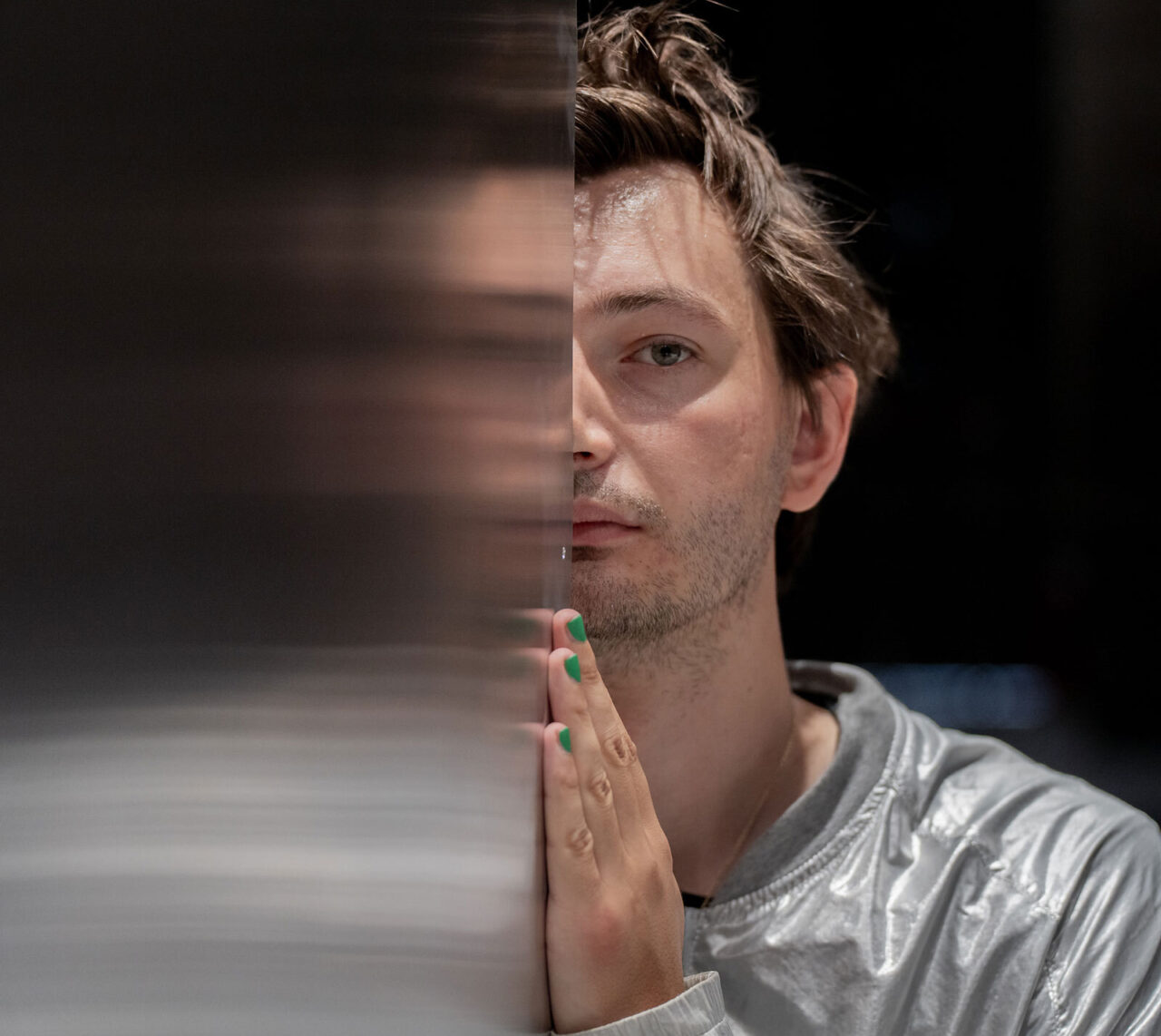
Jeroen Fokker is a Lecturer at the Faculty of Science , Utrecht University , affiliated with the Department of Information and Computing Sciences and the Software Technology group. He combines academic work with freelance software development for entomological field data processing using Klasse . His research interests focus on functional programming , compiler design , and game development , particularly in educational contexts. His recent articles (2019) emphasize game programming fundamentals, UI/UX design, and C# applications in game development, reflecting a strong pedagogical approach to teaching programming through games. He occasionally provides educational advice and web design services (2×2 days/year). His publications span functional programming tools, compiler architecture, and theoretical explorations of lambda calculus and Turing's work.
Dr. Will Hurst is an Associate Professor in Data Science and Extended Realities at Wageningen University & Research's Information Technology Group. He holds a PhD in Computer Science (focused on Critical Infrastructures) and has over 100 international publications across data science, creative technologies, and critical infrastructure security. His research emphasizes XR applications in education, healthcare, and sustainability, alongside smart meter analytics and cybersecurity. Education: PGCert (Distinction) in Higher Education, MSc Web Computing, BSc Product Design Grants: EPSRC-funded 'Data Analytics for Health-Care Profiling using Smart Meters' and InnovateUK's Productivity Accelerator Research interests include digital twins, immersive learning technologies, and interdisciplinary hackathon methodologies. Recent work explores AR/VR in medical training, NFTs in art, and sustainable consumer behavior. Awards include recognition as an award-winning Reader in Creative Technologies at Liverpool John Moores University (2016-2022). Teaching includes courses on data visualization, digital game development, and advanced multimedia systems. Engages in active aging initiatives through co-design hackathons and community-based projects.
Dr. Weverthon Barbosa Machado is a postdoctoral researcher in the Department of Sociology at Utrecht University, Netherlands. His work focuses on social stratification, family dynamics, and gender inequality. He holds a Ph.D. in Sociology from the Institute of Social and Political Studies of Rio de Janeiro State University and was a Max Weber Fellow at the European University Institute before joining Utrecht University. Research Interests: His research explores union formation, marriage markets, and the gendered division of labor. He examines how inequalities manifest within and between families, particularly through the lens of socioeconomic status and labor market dynamics. Recent work includes studies on parental earnings trajectories post-parenthood and the growth of evangelical institutions in Brazil. Teaching: He contributes to courses such as 'Measurement and Modeling with Social Data' and 'Methods and Statistics 1: Regression Analysis' at Utrecht University. His pedagogical innovations include developing the R package ggreveal , which facilitates incremental visualization of data plots for teaching and presentations. Recent Publications: Key contributions include analyses of educational assortative mating in Brazil, income inequality trends, and the role of gender in labor market behavior. His work bridges quantitative methods with sociological theory, addressing contemporary issues in family structures and social stratification.
Louis Braddock Clarke is a Senior Lecturer in the Bachelor Graphic Design program at the Royal Academy of Art, The Hague (KABK), specializing in Interactive Media Design Y3 and the Hack Lab (IST). He holds a dual role as an active Research Fellow at the Lectorate Design and the Deep Future. His research focuses on sonic ecologies, disrupted geographies, and climate change, blending art, physics, and philosophy through fieldwork and experimental methods. Key projects include 'Out of Focus' (2021), exploring Greenland's magnetic shifts, and 'Weather Gardens' (2022), investigating sonic signatures of environmental change. Clarke collaborates with indigenous communities in Kalaallit Nunaat, paleomagnetic scientists, and institutions like Sonic Acts. His work emphasizes accessibility in science and fosters interdisciplinary dialogue. He has been recognized with awards such as the Gouden Kalf (2022) and the Dutch Talent Award (2020). His teaching integrates research methodologies, encouraging students to engage critically with sites like the Port of Rotterdam through 'full-spectrum listening' practices. A 2019 KABK alumnus, Clarke also lectures at HfG Karlsruhe, Central Saint Martins, and Design Academy Eindhoven. His projects have been exhibited globally at venues like the Venice Biennale and reviewed in WIRE, DAMN, and La Stampa. He advocates for open dissemination of research, involving citizens through DIY instruments and social media engagement.
Teun van der Heijden is a Visiting Tutor at the Royal Academy of Art (KABK) in The Hague, teaching in the Master Photography and Society (MAPS) program. He holds academic roles as Professor of Visual Design and Hybrid Media at LUCA School of Arts (Genk, Belgium) and is a faculty member at the International Center of Photography (ICP, New York). His professional background includes co-founding the graphic design agency Heijdens Karwei, renowned for award-winning photography book design. He studied Graphic Design at St. Joost in Breda, followed by post-academic studies in Art-Direction at HKU Utrecht and Photography at ACF Amsterdam. Research interests focus on photobook editing and visual design, as evidenced by his published article in Trans Asia Photography . He collaborates globally through photo book workshops with partner Sandra van der Doelen. His work includes notable titles like Black Passport , Rape of a Nation , and Hard Times are Fighting Times .
Thijs W. van de Laar is an Assistant Professor at the Eindhoven University of Technology in the Department of Electrical Engineering , affiliated with the Bayesian Intelligent Autonomous Systems lab (BIASlab) and the EAISI Foundational and High Tech Systems groups. His research focuses on intelligent systems for decision-making under dynamic conditions, particularly through scalable probabilistic programming implementations of Active Inference. Academic Background : PhD (2019, TU/e) in automated Bayesian signal processing algorithm design; MSc in natural sciences (biophysics, science communication, Radboud University). Van de Laar's research integrates probabilistic programming with active inference to develop autonomous agents capable of real-time adaptation. Key methodologies include variational message passing , factor graph representations , and free energy minimization . His recent publications examine active inference formalisms, factor graph applications in AI, and uncertainty reduction strategies. Collaborative work spans hearing aid technology, autonomous navigation, and synthetic intelligence development.
Dirk Vis (born 1981) serves as Theory Tutor and Thesis Supervisor within the Bachelor Graphic Design program at the Royal Academy of Art, The Hague (KABK). Holding an MFA in Design from the Sandberg Institute and a degree in Writing from the Rietveld Academy, he bridges creative practice and academic inquiry through his multifaceted career. Education: MFA Design (Sandberg Institute), Writing (Rietveld Academy) Current Role: Lecturer of Art and Design Theory, Thesis Supervisor Editorial Work: Contributing Editor of De Gids, Founder of De Internet Gids His research explores the intersection of language, ecology, and creative practice, with particular focus on artistic research methodologies and the philosophical implications of human-plant relationships. Vis examines how language mediates our relationship with nature, challenging anthropocentric perspectives through literary and theoretical interventions. His work frequently engages with non-Western epistemologies and critiques modernity's relationship with ecological systems. Vis's publications demonstrate consistent engagement with artistic research as both subject and methodology, evolving from early experimental fiction toward more explicitly theoretical works. His recent writings increasingly incorporate Indigenous knowledge systems and ecological philosophy, reflecting a deepening commitment to decolonial approaches in artistic practice. As an educator, Vis develops resources for artistic researchers, notably the evolving manual Research For People Who (Think They) Would Rather Create , which challenges conventional academic frameworks through its 'anti-manual' approach and bootleg-inspired aesthetic. His creative practice spans poetry, prose, and digital formats, often exploring Rotterdam's urban landscape through speculative lenses that blend technological mediation with embodied experience. Vis's work consistently examines the porous boundaries between human and non-human, language and silence, theory and practice.
Dr. M.B. Eichler is an Associate Professor of Econometrics at the QE Econometrics Department within the School of Business and Economics at Maastricht University. His research focuses on advancing methodologies for causal inference in time series analysis, particularly addressing limitations in Granger causality and developing algorithms for multivariate time series with latent variables. He collaborates with institutions like Raytheon BBN Technologies on projects involving heterogeneous data sources for predicting rare events. His expertise spans econometrics, functional time series analysis, and dynamic factor models. Notable projects include electricity spot price modeling, semi-parametric approaches for non-stationary processes, and applications in neuroscience and energy economics. He advises PhD students such as Carlos A. Moreno, Dennis Tuerk, and Anne van Delft. Research Themes: Causal inference, Granger causality, time series econometrics, dynamic factor models Labs/Teams: QE Econometrics Research Group Grants: Open Source Indicator (OSI) Program funded by IARPA Publications highlight contributions to spectral analysis, graphical modeling of time series, and applications in energy markets. His work bridges theoretical advancements with practical challenges in economics, neuroscience, and engineering.
Prof. dr. ir. Marcel Boumans is a Professor of History of Economics at Utrecht School of Economics, Utrecht University, specializing in the intersection of the history, philosophy, and methodology of economics. He has held visiting positions at Duke University, UCLA, Université Paris 1, and the London School of Economics. His academic leadership includes heading the Applied Economics section and coordinating the double bachelor program in Mathematics and Economics. PhD in Economics (1992) and MSc in Mathematics (1988) from University of Amsterdam and Delft University of Technology, respectively. Teaching qualifications include Senior Qualification Education (2016) and Basic Education Qualification (2014) in science education. His research explores empirical practices in economics, focusing on measurement, modeling, and the role of mathematics in shaping economic knowledge. Key works include How Economists Model the World into Number and Science Outside the Laboratory . Current projects include a situational approach to misinformation and a book manuscript titled Shaping the Phenomena . Recent publications analyze statistical inference, visual epistemology, and the computerization of economics. His 15 most recent articles (2025-2019) span topics like data reliability, econometric controversies, and the cultural history of mathematical tools. These works reflect interdisciplinary engagement with philosophy, data science, and policy studies. Scientific honors include the KVS Professor of History of Economics (2024–present) and fellowships at Duke University’s Center for the History of Political Economy, NIAS, and Tinbergen Institute. He has served as co-editor of the Journal of the History of Economic Thought and on editorial boards of leading journals. As a supervisor, he co-promoted dissertations on macroeconomic modeling, identity-based inequality, and policy applications of economic theory. He actively participates in academic governance, including roles in the History of Economics Society and advisory boards for Data Science and the Society for Philosophy of Science in Practice.
H.M.W. (Eric) Verbeek is an ICT Developer in the Department of Mathematics and Computer Science at Eindhoven University of Technology, specializing in Process Analytics. His work focuses on advancing process mining techniques, standardization of event data (e.g., IEEE XES), and the development of tools like ProM and CPN IDE. He has contributed to over 160 publications since 1986, with recent research emphasizing process discovery algorithms, workflow net synthesis, and context-rich process modeling. Research Interests include Process Mining, Process Models, Process Discovery, Petri Net Analysis, and Workflow Management. He has actively participated in projects like the GDPR compliance toolkit and has been involved in defining standards for event data interoperability. Notable contributions include the IEEE XES standard for process mining, tools for event log generation and analysis, and methods for decomposed conformance checking. His work bridges theoretical advancements in process modeling with practical tool development, supporting both academia and industry applications. Collaborations span international academia, focusing on process mining workflows and compliance monitoring. His research trends highlight a balance between algorithmic innovation and real-world applicability in areas like healthcare, logistics, and service management.
Dr. Roel van den Oever is an Assistant Professor of English Literature at the Faculty of Humanities, Vrije Universiteit Amsterdam. His research focuses on gender studies, American culture, comics studies, and Judith Butler’s philosophical work. He holds a cum laude doctoral degree in American Studies from Radboud University Nijmegen (2001) and a PhD cum laude from Maastricht University’s Center for Gender and Diversity (2011). His notable works include Mama’s Boy: Momism and Homophobia in Postwar American Culture (2012) and co-editing Bodies That Still Matter: Resonances of the Work of Judith Butler (2021). Education: Doctoraal in American Studies, cum laude, Radboud University Nijmegen (1997–2001) Postgraduate Philosophy Program, Thomas More Scholarship, Radboud University (2001–2002) PhD in Gender and Diversity, cum laude, Maastricht University (2007–2011) His research interests explore themes like normativity, masculinity crises, and queer theory in cultural contexts. Recent work includes analyzing masculinity in historical perspectives and visual narratives in comics. He has received awards for academic excellence, including scholarships and cum laude distinctions. Awards: Cum Laude, Doctoraal in American Studies (2001) Thomas More Scholarship (2001–2002) Cum Laude PhD in Gender and Diversity (2011) He teaches courses on American film, British literature, and visual culture. His professional activities include editorial roles, conference organizing, and lectures on topics like comics narratology and gender discourse.