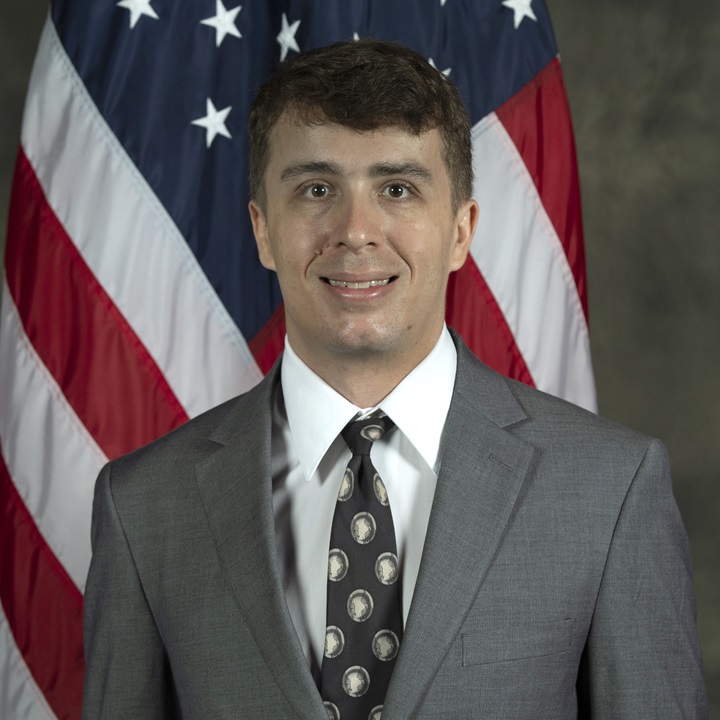
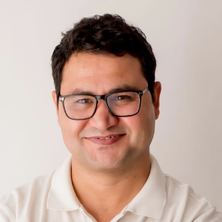
Johanna Geiß is a postdoctoral researcher at the Institute of Computer Science , Heidelberg University, specializing in Natural Language Processing , Information Extraction , and Event Detection . She contributes to projects like SCIDATOS (sepsis diagnosis) and EventAE (event-based Linked Data exploration). Education: PhD from University of Cambridge (2011), Magister Artium in Computational Linguistics (Heidelberg, 2006) Her research integrates Geoparsing , Social Network Analysis , and Graph Theory for tasks such as toponym disambiguation and entity resolution. Recent work includes frameworks like HeidelPlace and tools for semantic word clouds. Key awards include the 2010 Lundgren Research Award and multiple grants from the EPSRC and Cambridge European Trust. She has taught courses on Information Networks and Data Mining at Heidelberg University. As a postdoc , she advises on scientific computing applications in healthcare and contributes to open-source tools like NECKAr and EventAE .
Kshitij Jerath serves as Associate Professor in the Department of Mechanical and Industrial Engineering, Robotics at the Francis College of Engineering, University of Massachusetts Lowell. His research focuses on self-organized dynamics in complex systems, multi-agent control, and robotic swarms, with significant contributions to traffic flow theory and sensor characterization. He directs the Emergent Dynamics, Control and Analytics Labs (EXALABS), advancing bottom-up control algorithms for minimal-intervention system guidance. Dr. Jerath's academic background includes: Ph.D. in Mechanical Engineering from Pennsylvania State University (2014), dissertation: 'Influential subspaces in self-organizing multi-agent systems' M.S. in Electrical Engineering from Pennsylvania State University (2011), thesis: 'Sensor noise modeling, characterization and simulation: An Allan variance tutorial' M.S. in Mechanical Engineering from Pennsylvania State University (2010), thesis: 'Impact of adaptive cruise control on the formation of self-organized traffic jams on highways' Bachelor's equivalent in Mechanical and Automation Engineering from Amity School of Engineering and Technology, India His research spans self-organized dynamics , multi-agent systems , and robotic swarm control , applying statistical mechanics principles to model emergent behavior in transportation networks and complex systems. Current work focuses on influencing macro-scale dynamics through minimal intervention by small agent subsets, with extensions to social ensembles and neural systems. His methodologies integrate control theory, network science, and machine learning for real-world applications in autonomous vehicles and system reliability. Recent publications (2023-2025) reveal strong trends in relational network applications for multi-agent learning, adaptive data granulation techniques, and human-swarm interaction frameworks. Key developments include database-inspired algorithms for sensor characterization, renormalization group approaches to traffic modeling, and fault-tolerant recovery mechanisms for robotic teams. These works demonstrate increasing convergence of control theory, database systems, and reinforcement learning in addressing complex system challenges. Dr. Jerath has received notable recognition including: Two Best Presentation awards at American Control Conference (2014, 2012) Kulakowski Travel Award from Penn State (2014) National Merit-cum-Means Scholarship from Indian Government (2013) 2nd place in ITS America Student Essay Competition (2012) His research is supported by grants including the CPS: Medium project 'Automated Discovery of Data Validity for Safety-Critical Feedback Control in Connected Vehicles' (2019) and a Graduate Teaching Fellowship from Penn State (2013). EXALABS maintains active collaborations with transportation agencies and robotics researchers to translate theoretical advances into practical applications. The Emergent Dynamics, Control and Analytics Labs (EXALABS) develops frameworks for modeling, quantifying, and influencing collective behavior across scales. Current projects include human-guided swarm control in virtual reality, traffic flow optimization using connected vehicle networks, and adaptive granulation techniques for large-scale sensor data. The lab employs interdisciplinary approaches combining control theory, statistical mechanics, and machine learning to solve problems in robotics, transportation, and system reliability.
Eugen Ganea is an Assistant Professor at the University of Craiova , affiliated with the Faculty of Automatic Control, Computers and Electronics and the Department of Computer Science and Technology . He has been actively involved in teaching and research since 2003, with a focus on Object-oriented programming , Visual Programming Environments , Software Engineering , and Image Processing . His research spans multiple domains, including: Development of multimedia applications Image segmentation and annotation using hypergraph structures Object-oriented Petri nets for modeling intelligent manufacturing systems Neural networks for shape recognition Medical imaging database systems Notable projects include: CNCSIS TD grant (2007) on neural networks for manufacturing systems CNCSIS Idei grant (2007-2010) on object-oriented Petri nets SIBIM system for medical image querying FOOPN project on multimedia monitoring His work intersects computer science, digital technologies, and healthcare applications. He can be contacted at ganea_eugen@software.ucv.ro or eugen.ganea@ucv.ro .
Christopher Mark Overall is a Professor in the Department of Oral Biological & Medical Sciences within the Faculty of Dentistry at the University of British Columbia (UBC). His research spans proteomics, terminomics, and protease biology with significant contributions to the Human Proteome Project. He supervises graduate students in Bioinformatics, Craniofacial Science, and Genome Science and Technology programs. His research focuses on proteolytic mechanisms in viral infections, inflammation, and immunodeficiency. Key areas include viral protease functions (particularly SARS-CoV-2), host-pathogen interactions, and the development of proteomic methodologies like TAILS (Terminal Amine Isotopic Labeling of Substrates). His work integrates 'One Health' perspectives across human, animal, and environmental systems. Analysis of his recent publications reveals dominant themes in viral protease evolution (SARS-CoV-2), bacterial membrane proteases, and strategic AI applications in proteomics. His work frequently appears in high-impact journals and contributes to major international consortia like HUPO. Overall maintains active research collaborations through UBC's Centre for Blood Research, Life Sciences Institute, and Vancouver Prostate Centre. His laboratory develops cutting-edge proteomic technologies for substrate identification and has received continuous funding for protease-related research.
Dr. Darko Pavic is a researcher at the Department of Computer Science , RWTH Aachen University . His work focuses on computer graphics, image processing, and procedural modeling techniques.
Ryan E. Mills is a Professor of Computational Medicine and Bioinformatics and Human Genetics at the University of Michigan Medical School, where he also serves as the Program Director of DCMB Computing Infrastructure. He actively mentors trainees and contributes to precision health initiatives through his research. Education: PhD, Georgia Institute of Technology (2006) MS, Georgia Institute of Technology (2003) AB, Wabash College (2000) Ryan E. Mills' research focuses on structural genomic variation across human populations and somatic mosaicism in non-cancerous tissues. His work includes developing computational methods for identifying copy number variants , nuclear mitochondrial insertions , and mobile element dynamics using whole genome sequencing and cloud-based systems like AWS. He investigates the role of somatic mutations in brain aging and neurodevelopmental disorders, and explores HPV integration mechanisms in head and neck cancers. Recent publications highlight his contributions to resolving complex structural variants , characterizing somatic mosaicism across tissues, and advancing computational frameworks for genomic data integration. His lab collaborates extensively through consortia such as the Brain Somatic Mosaicism Network and the Somatic Mosaicism across Human Tissues Network .
Dr. Mukesh Mohania serves as an Adjunct Professor at UNSW Canberra within the School of Business. His extensive academic career spans over three decades with continuous scholarly contributions from 1994 through 2025. His research bridges theoretical database systems with practical applications across multiple domains including educational technology, blockchain, and business intelligence. Professor Mohania's research interests demonstrate remarkable breadth and evolution over time. Beginning with foundational work in data warehousing and database systems, his research trajectory expanded into information integration, privacy management, and more recently, educational technology and blockchain applications. His scholarly work shows a consistent pattern of addressing emerging technological challenges while maintaining connections to core database principles. A distinctive characteristic of his research is the practical application of theoretical concepts to solve real-world business and educational problems. The analysis of his recent publications reveals a strong focus on educational technology applications, with approximately 40% of his 2022-2025 publications addressing AI-driven educational systems, question categorization, and learning analytics. Another significant portion (around 30%) focuses on security, privacy, and blockchain applications. The remaining publications continue his longstanding interest in database systems, data mining, and information integration. This distribution indicates a strategic pivot toward educational technology while maintaining expertise in his foundational areas. Professor Mohania has established a prolific publication record with over 100 scholarly contributions including book chapters, journal articles, and conference papers. His work appears in prestigious venues such as IEEE Transactions on Knowledge and Data Engineering, ACM conferences, and Springer publications. While specific awards aren't documented in the available information, his sustained publication record across multiple decades demonstrates significant scholarly impact. His research collaborations span numerous institutions and researchers globally, with frequent co-authorship patterns suggesting established research teams focused on educational technology and database systems. The consistent output across decades indicates successful grant funding and sustained research activity, though specific grant details aren't provided in the available information. Professor Mohania's work shows particular strength in translating database research into practical business and educational applications.
Daniel Alabi is an Assistant Professor in the Department of Electrical and Computer Engineering at the University of Illinois at Urbana-Champaign. His research focuses on addressing privacy and security concerns while studying the tradeoffs in computational and statistical resources. Previously, he was a postdoctoral researcher at Columbia University and a junior fellow in the Simons Society of Fellows. Dr. Alabi received his Ph.D. in Computer Science from Harvard University. His educational journey has positioned him at the forefront of research at the intersection of theoretical computer science and practical security applications. His primary research interests include privacy & cryptography, information theory, data mining & databases, and machine learning. Dr. Alabi investigates how to identify and address privacy and security concerns in computational systems, examining tradeoffs in computational resources (such as communication, randomness, time, memory, and parallelism) and statistical resources (including samples drawn from unknown distributions). His work bridges theoretical foundations with practical implementations in secure data systems. Analysis of Dr. Alabi's recent publications reveals a strong focus on privacy-preserving technologies, with particular emphasis on differential privacy techniques applied to databases, machine learning models, and data markets. His research spans theoretical foundations of privacy, practical implementations of secure systems, and educational initiatives to broaden participation in computer science, particularly through his NaijaCoder organization. Dr. Alabi is the president and co-founder of NaijaCoder, Inc., which focuses on early algorithms education in the Global South. His GitHub profile shows active contributions to open-source projects, including the FlyLatex collaborative editing platform which has garnered significant attention in the academic community. His laboratory work centers around developing secure data systems, with connections to the Coordinated Science Lab at UIUC where he maintains his office in room 118. His research group explores the theoretical and practical aspects of privacy-preserving computation across multiple domains.
Bernhard Scholz is a Professor at the University of Sydney's School of Computer Science. His research focuses on programming languages, compilers, static analysis, and blockchain technologies, with significant contributions to Datalog optimization and smart contract security. He teaches COMP3109 Programming Languages and Paradigms and leads research in declarative programming frameworks. Scholz's primary research interests include: Development of Soufflé, a Datalog-based program analysis framework Ethereum smart contract security through tools like Ethainter and MadMax Parallel data structures for efficient Datalog evaluation Compiler optimizations for embedded systems and cloud environments His recent publications demonstrate a consistent focus on improving the efficiency and security of declarative programming systems, particularly through innovations in Datalog execution and smart contract analysis. This work bridges theoretical computer science with practical applications in blockchain and distributed systems. Scholz has secured research funding including an ARC Discovery Project on adaptive key-value stores and a Fantom Operations grant for smart contract toolchain development. He collaborates with international researchers on parallel computing and blockchain verification projects.
Dr. Ryan E. Dougherty is an Assistant Professor at Arizona State University's School of Computing, Informatics, and Decision Systems Engineering, specializing in Computer Science. His research focuses on theoretical computer science, combinatorial algorithms, and evolutionary algorithms applied to software testing and education. Education: Ph.D. in Computer Science (Arizona State University, 2019) B.S. in Computer Science (Arizona State University, 2015) His research interests include t-restrictions , hash families , and genetic algorithms for testing optimization. Recent publications demonstrate interdisciplinary applications from cybersecurity to theoretical mathematics. Scientific Awards: Best Paper Award at GI 2019 Workshop Publications span combinatorial design theory, software testing methodologies, and evolutionary computation applications. Research shows consistent focus on algorithmic optimization and formal testing frameworks.
Dr. Noorul Amin is a Postdoctoral Research Fellow at the School of Veterinary Science, The University of Queensland, affiliated with the SAAFE CRC's data analytics program. His research focuses on computational approaches to biological challenges, including omics data analysis, antimicrobial resistance, and machine learning applications in agribusiness and environmental systems. Education: Masters (Research) of Computer Engineering, Kyung Hee University Doctor of Philosophy of Computer Science, La Trobe University Research Focus: His work integrates machine learning, cloud computing, and big data analytics to address biological problems, with emphasis on antimicrobial resistance pathways, omics tool development, and computational genomics. Primary domains include bioinformatics, non-coding RNA classification, and single-cell sequencing methodologies. Publication Trends: Recent articles (2019-2025) predominantly explore machine learning in genomics and non-coding RNA analysis, with emerging focus on single-cell sequencing technologies and antimicrobial resistance mechanisms. Earlier work (2014-2017) centered on computational algorithms for graph theory and sensor networks. Student Advising & Projects: Actively seeking Honours and PhD candidates for projects including: AMR Digital Twin: Machine learning framework for antimicrobial risk assessment Semantic interoperability for OneHealth antimicrobial data integration AI-powered knowledge graphs for agricultural optimization Self-evolving ontology systems for cross-sectoral antimicrobial resistance analysis Collaborations: Contributes to the SAAFE CRC's mission through data analytics program initiatives, collaborating with interdisciplinary teams on food security and environmental health challenges.
Kevin Chen-Chuan Chang is a Professor in the Department of Computer Science at the University of Illinois at Urbana-Champaign. He received a BS from National Taiwan University and a PhD in Electrical Engineering from Stanford University (2001). Research Focus: Large-scale information access, knowledge acquisition, Web search/mining, social media analytics, and integration of structured/unstructured data. His research bridges structured and unstructured data through systems in natural language processing , data mining , and machine learning , with applications in semantic modeling and AI. Recent work includes knowledge graphs , language models , and graph analytics . Awards: ICDE 10-Year Test of Time Award (2022), NSF CAREER Award (2002), IBM Faculty Awards (2004, 2005), and multiple excellent teaching honors. Entrepreneurship: Co-founder of Cazoodle and developer of GrantForward.com, a vertical search engine for funding discovery.
Stéphane Baciocchi is a Researcher at the École des Hautes Études en Sciences Sociales (EHESS) , affiliated with the Centre for Historical Research (CRH) and its Laboratory of Demography and Social History (LaDéHiS) . He coordinates major projects including GeoHistoricalData , Structure and Dynamics of Forms , and the ANR TIME-US initiative on textile trade remuneration and time budgets in France (17th-20th centuries). His work bridges historical demography, religious sociology, and digital methodologies. Current Projects : GeoHistoricalData, Structure and Dynamics of Forms, ANR TIME-US Collectives : LaDéHiS, CRH Digital Collective, French Sociology Association Social Networks RT Committees : EHESS GIS Steering Committee, Labex HASTEC, Monitoring Unit against Sexual Harassment at EHESS His research interests focus on collective investigative practices , historical GIS, and relational data analysis across social sciences. He specializes in the sociology of the summer 1789 Grand'Peur , the history of social sciences (Le Play, Durkheim, Hertz), and digital editions of historical sources . Notably, he oversees the Prosopographic dictionary for students of the École Normale and the Cassini Roads and Cities Dataset . Baciocchi has taught seminars on relational data analysis (2003-2010), ethnography of religious facts (2005-2008), and history of investigative collectives (2007-present). He contributes to the Durkheimian Studies journal as associate editor and collaborates with the British Center for Durkheimian Studies at Oxford.
Michela Quadrini is an Assistant Professor at the University of Camerino with expertise spanning Bioinformatics , Computational Biology , and Graph Neural Networks . Her academic work focuses on RNA structure analysis, human activity recognition, and formal methods for collective adaptive systems. Research Interests include: RNA pseudoknots comparison and classification Machine learning applications in biomedical signal processing Spatial logics for complex system modeling Protein-protein interaction site prediction Ontology-based frameworks for activity recognition Publications demonstrate methodological innovation across: RNA structure alignment and translation tools (TARNAS) Graph neural network programming languages (μG) Stress detection from wearable sensor data Formal verification of collective systems Immunoinformatics feature engineering Technical Expertise combines computational biology with advanced machine learning techniques, evidenced by contributions to: Topological data analysis for RNA structures Convolutional neural network architectures Semantic ontologies in mechatronic systems Integral equation numerical methods
Michael Genkin serves as a Lecturer in Sociology with expertise in social network analysis and political sociology. His academic work bridges theoretical sociology with quantitative methodology to examine fundamental questions about social order, conflict, and political violence. His research interests span multiple interconnected domains: Social networks and structural dynamics Methodological innovations in sociological research Political sociology with focus on violence and conflict Peace studies and terrorism analysis Genkin's publication record demonstrates consistent contributions to top sociology journals, with recent work focusing on network taxonomy operationalization and computational tools for social analysis. His 2022 article in Social Networks established new frameworks for measuring network dimensions, while earlier work examined organizational dynamics in American Sociological Review and American Journal of Sociology. As an active researcher, Genkin has developed computational tools like Blaunet for analyzing social structures and has applied network analysis to sensitive domains including terrorism studies. His work on the Islamic State network in Europe represents an important contribution to understanding covert organizational structures. Genkin is currently accepting PhD students for research projects in his areas of expertise, particularly focusing on social networks, political violence, peace and conflict, and terrorism studies.