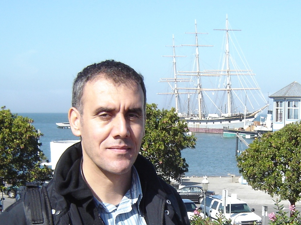
Dario Colazzo is a Professor at Université Paris-Dauphine, affiliated with the LAMSADE laboratory. His research focuses on database systems and programming languages, particularly in cloud databases, type systems for semi-structured data, and query processing optimizations. He has contributed extensively to XML and XQuery research, including parallel query execution and static analysis techniques. His teaching includes courses on programming (Java), UML, database systems, and semantic web technologies at both undergraduate and graduate levels (in French). Key research interests span XML/XQuery optimization, JSON processing, distributed systems, and type systems for safe and efficient data handling. His work emphasizes scalable cloud-based solutions and efficient query execution models. Publications highlight advancements in parallel query processing (e.g., PAXQuery), type-based optimizations for XML updates, and semantic graph analytics. He has collaborated with institutions like EDBT, WWW, and VLDB conferences.
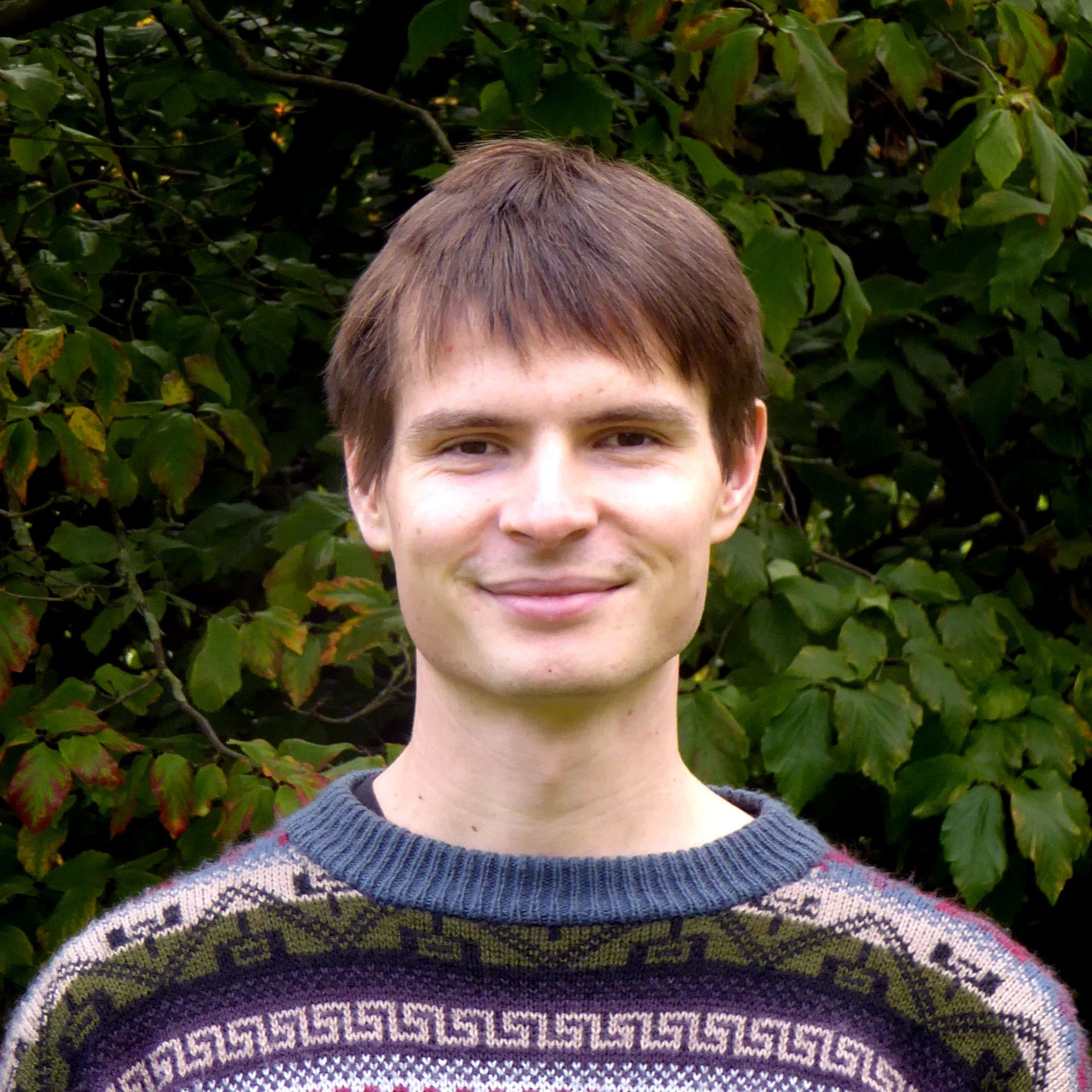
Dr. Tim Seppelt is a postdoctoral researcher at the IT University of Copenhagen , working under the mentorship of Prof. Radu Curticapean. Previously, he earned his PhD from RWTH Aachen University with supervisors Prof. Martin Grohe and Prof. Michael Schaub. His research focuses on theoretical computer science, specifically homomorphism indistinguishability , a framework connecting graph isomorphism, quantum information, and logical equivalences. Current Role: Postdoc in Theoretical Computer Science, ITU Education: PhD in Computer Science, RWTH Aachen University Tim's work addresses algorithmic meta-theorems for homomorphism indistinguishability over minor-closed and treewidth-bounded graph classes. He has extended Lovász-type results to CMSO2 logic, resolved complexity conjectures for the Lasserre hierarchy, and classified quantum group-induced indistinguishability relations. His research spans quantum computing , graph algorithms , and descriptive complexity , often intersecting with applications in machine learning and finite model theory. Recent publications include a 2025 paper on quantum group-driven homomorphism indistinguishability and a 2024 journal article on logical equivalences and forbidden minors. He presented at workshops like the Graph Learning Meets TCS (Simons Institute, 2025) and delivered tutorials on finite model theory at Finite and Algorithmic Model Theory 2025 (Les Houches, France).
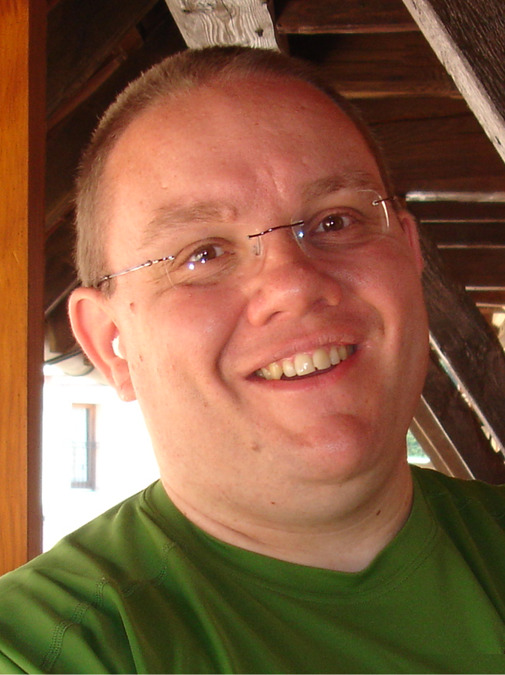
Professor Dominique Vaufreydaz holds a position in Computer Science at Grenoble Alpes University and leads the Multimodal Perception and Sociable Interaction (M-PSI) team at the LIG laboratory. His academic career includes roles as Associate Professor (2005–2023) and Head of the M-PSI team. He specializes in multimodal perception, affective computing, and sociable human-robot interaction, with projects like ARAS dataset and TokenCut object discovery. Education details are not explicitly provided, but his research spans robotics, autonomous systems, and healthcare technologies. He has published extensively in top-tier conferences (CVPR, ICMI) and journals (ACM Transactions, IEEE TPAMI). Over 30 PhD students have been supervised, with current advisees exploring activity recognition, head motion generation, and emotion analysis. Teaching roles include 300+ hours annually across computer science courses (C++, databases, mobile programming) and numerical literacy for non-specialists. He co-leads the MOSIG Master's GVR specialty and manages transversal courses at the Grenoble Faculty of Economics. His labs, notably M-PSI, focus on smart spaces, ambient assisted living, and ethical teaching analytics. Notable collaborations include EU projects (FAME, CHIL) and industry partnerships like Orange Labs. His work bridges cognitive science and machine learning, with applications in healthcare and urban autonomous systems.
Fadila Bentayeb is an Associate Professor (HDR) at the University of Lyon 2, affiliated with the ERIC Laboratory and the Department of Informatics and Statistics (DIS). She leads the Complex Data Warehousing and OLAP research team (SID) and has served as Head of the first year of the Master's degree in Computer Science at the Institute of Communication (ICOM) since 2014. Her work bridges academic research and practical applications in data-intensive systems. HDR (Habilitation to Direct Research), University of Lyon 2 (2011) Ph.D. in Computer Science, University of Orléans (1998) Her research focuses on NoSQL data warehouses, text warehousing, and personalization systems, with emphasis on scalable architectures and context-aware analytics. Recent work explores AI-driven security in IoT networks and temporal modeling for evolving data structures. Key trends in her publications include: (1) Graph-based multidimensional modeling (GAMM framework), (2) Optimization of distributed big data warehouses using machine learning, (3) Medical text classification via hybrid CNN-LSTM models, and (4) Temporal data warehouse evolution. As part of the ERIC Laboratory’s leadership team, she contributes to strategic research directions and mentors students in advanced data systems. Her technical expertise extends to Hadoop/Spark optimization, OLAP cube design, and semantic integration of heterogeneous data sources.
Marie-Dominique Van Damme is a Lecturer at the French National School of Geographic Sciences (ENSG), IGN's School of Geomatics, and is in charge of research and studies in the MEIG research team within the LASTIG research laboratory. She has been an IGN Teacher-Researcher at ENSG-Géomatique since August 2019, and from March 2025 will return to full research activities at LASTIG while continuing to teach programming with GIS, modeling, databases, and integration of heterogeneous data at ENSG. Dr. Van Damme earned her Computer Engineering degree with an information systems option from the National Conservatory of Arts and Crafts in 2010. Her professional experience includes: August 2019 – present: IGN Teacher-Researcher at ENSG-Géomatique May 2012 – July 2019: Research engineer at LASTIG, MEIG team May 2005 – April 2012: Project Manager at the National Forest Inventory June 2000 – April 2005: Web developer at Risc Group Her research focuses on semantic integration of heterogeneous geographic data, data matching, and the application of these techniques to mountain rescue scenarios. She has led and participated in several significant research projects including: CHOUCAS Project (ANR, 2017-2022): Multi-source semantic integration of landmark objects for mountain rescue LANDSENSE (H2020, 2016-2020): Crowd and community sourcing for land use monitoring UrCLIM (ERA4CS, 2017-2020): Retrieving land cover data for urban climate studies IntForOut (ANR, 2024-2027): Current project on trajectory analysis Dr. Van Damme has developed several software tools to support her research, including Tracklib (a Python library for GPS trajectory manipulation) and MultiCriteriaMatching (a Java library for multi-criteria data matching based on Belief Theory). Her recent publications show a strong focus on spatial data quality, landmark ontology development, mountain rescue applications, and the use of crowdsourced data for geographic information. The research trends indicate a progression from foundational work on data matching algorithms to applied research in emergency response scenarios, particularly mountain rescue operations. She has supervised numerous students including PhD candidate Mathieu Mehdi ZRHAL (defended 2023), research engineers, and multiple internship students working on geospatial projects related to mountain rescue, data integration, and GIS development. She has also led the pedagogical responsibility for the first-year master's degree in geomatics at Gustave Eiffel University from August 2019 to March 2025. Dr. Van Damme's work bridges theoretical research in geographic information science with practical applications in emergency response, demonstrating the real-world impact of geospatial technologies.
Thomas Devogele is a Professor at the University of Tours, France, where he serves as Head of the Computer Science Department within the Faculty of Sciences and Technology. He is also Head of the Master 2 in IT and apprenticeships program and deputy director of LIFAT (Tours Fundamental and Applied Computer Science Laboratory). His academic career spans more than two decades, having previously served as an Assistant Professor at the French Naval Academy from 1998 to 2010. His primary research focuses on Geographic Information Systems (GIS), spatio-temporal data mining, and moving object analysis. Dr. Devogele's work specializes in trajectory data-mining, similarity measures between lines or trajectories using Fréchet distance, classification and outlier detection of trajectories, and spatio-temporal database integration. He currently leads research projects DOPAN and PERSONAE. His recent publications (2021-2025) demonstrate an expansion of his research into cycling infrastructure analysis, blockchain applications for business processes, personalized web service recommendations, and health data narratives (particularly tuberculosis in Gabon), while maintaining his core expertise in trajectory analysis and spatial data. His work bridges theoretical computer science with practical applications in transportation, public health, and urban planning. Dr. Devogele has supervised numerous PhD students who have gone on to successful academic and industry careers, including Fournier Sébastien (Assistant Professor at Université de Provence), Noyon Valérie (Leader of GIS department at the city of Niort), and Etienne Laurent (Assistant Professor at Tours University). His teaching responsibilities include Software Engineering, Object-Oriented Programming (Java), Geographic Information Systems, Artificial Intelligence, and Database courses for Computer Science students at the Blois campus. He has made significant contributions to the field through his extensive publication record spanning from 1996 to the present.
Beatrice Markhoff is a Professor of Computer Science (CNU 27) at the University of Tours , affiliated with the Faculty of Science and Technology (Blois site) and the Computer Science Department . She is a member of the UMR CNRS 7324 - CITERES - Archaeology and Territories Laboratory (CITERES-LAT) and the Maison des Sciences de l'Homme Val de Loire (MSH VdL) . Her research focuses on semantic interoperability , Web of data , knowledge representation , and knowledge extraction , with significant collaborations in cultural heritage disciplines . Doctorate in Computer Science, University of Franche-Comté (1995) HDR (Habilitation to Direct Research), François Rabelais University of Tours (2013) Her research themes include semantic interoperability, knowledge engineering, and data mining, with applications in cultural heritage. She co-created the International Workshop on Semantic Web for Cultural Heritage and co-edited special issues for the Semantic Web Journal and JOCCH . She leads projects like ANR SESAMES (2018-2023), H2020 ARIADNEplus (2019-2022), and H2020 4CH (2021-2023). Her academic contributions span XML data management, semantic web technologies, and functional programming. Key projects include carto4CH for cultural heritage mapping and OpenArchaeo for knowledge graph profiling. She has co-supervised PhD theses on topics like LOD querying and knowledge extraction from Wikidata .
Isabelle Bloch is a full Professor at Télécom Paris (Institut Polytechnique de Paris) and Emeritus Professor at the University of Bordeaux . She heads the Image, Modeling, Analysis, Geometry, Synthesis (IMAGES) research team within the Information Processing and Communication Laboratory (LTCI) in the Image, Data, Signal (IDS) Department . Education & Affiliations Professor – Télécom Paris, Institut Polytechnique de Paris (current) Professeure Émérite – University of Bordeaux (honorary) Research Interests Her work lies at the intersection of computer science, applied mathematics and medicine . Core themes include mathematical morphology , fuzzy and bipolar logics , 3-D image interpretation , discrete 3-D geometry & topology , information fusion , structural pattern recognition , spatial reasoning and medical imaging . Recent projects extend these concepts to explainable AI , argumentation theory , computational musicology and robotic surgery guidance . Scientific Awards Blondel Medal (2008) – awarded by the French Electrical & Electronics Engineering Society to outstanding young scientists. Grants & Collaborative Projects While specific grant numbers are not listed in the text, Prof. Bloch coordinates and participates in large-scale interdisciplinary projects funded by national (ANR) and European programs, spanning medical AI, pediatric oncology imaging, neuro-informatics and ethical AI. Labs & Teams She leads the IMAGES team (≈ 25 researchers) inside the LTCI – a joint research unit of Télécom Paris and CNRS. The group develops theory and open-source software in mathematical morphology, deep learning and symbolic AI, and collaborates closely with clinical partners at Necker–Enfants Malades Hospital, AP-HP and Gustave Roussy.
Jiasi Shen is an Assistant Professor in the Department of Computer Science and Engineering at The Hong Kong University of Science and Technology. She leads the HKUST Automated Reasoning and Transformation of Software research group. PhD and Master's from Massachusetts Institute of Technology Bachelor's from Peking University Her research focuses on automating software development through program analysis , program transformation , and active learning . She explores how to systematically introduce safety checks, optimize performance, and enable cross-platform adaptation while maintaining core functionality. Recent work includes: Dynamic graph-based fingerprinting for cryptomining detection Benchmarking LLMs for operating system verification tasks Improving program comprehension via deimplicitization techniques She has received the Distinguished Artifact Award at SLE 2017 and serves on program committees for OOPSLA, Onward!, and SPLASH conferences. Her group supervises multiple PhD and MPhil students while developing systems like Konure (database application modeling) and KumQuat (parallel Unix command synthesis).
Adrien BOIRET is a contractual lecturer-researcher affiliated with INSA Centre Val de Loire and associated with the LIFO (Laboratoire d'Informatique Fondamentale d'Orléans). His work focuses on data privacy, semantic graph databases, and formal methods. Key Research Areas: Data Privacy, Graph Databases, Semantic Web, Differential Privacy, and Large Language Models (LLMs). His recent publications emphasize privacy-preserving data transformations , graph sanitization , and LLM-driven text anonymization . Collaborative efforts highlight interdisciplinary work in database systems and AI ethics. Contact: adrien.boiret@insa-cvl.fr
David Bruno is a Professor at the University of Burgundy, affiliated with the SAMBA research team. His work focuses on natural products discovery, metabolomics, and biodiversity conservation, with significant contributions to structural novelty identification in plant extracts and chemotaxonomic digitization. He leads initiatives like the INVENTA workflow and plantMASST community-driven projects. His research integrates computational frameworks with experimental data to address global challenges such as deep-sea mining policy, antimicrobial resistance, and pandemic emergence. Bruno has authored over 50 publications, emphasizing open science and collaborative research. He serves as a key figure in the SAMBA group, driving advancements in biogeosciences and marine biology. Research interests include chemical ecology of marine organisms, metabolomic profiling of plant biodiversity, and policy frameworks for genetic resource access (ABS). His work spans drug discovery (e.g., antiparasitics, anti-mycobacterial agents) and environmental policy, with a focus on Antarctic marine biodiversity and climate change impacts. Bruno’s interdisciplinary approach bridges chemistry, ecology, and computational biology to advance sustainable solutions. Notable contributions include the development of analytical tools for metabolite annotation, species distribution modeling in sub-Antarctic ecosystems, and leadership in international collaborations like the vERSO project. His lab’s infrastructure supports large-scale metabolomic studies and open-access data repositories.
Aiswarya Cyriac is an Associate Professor in the Theoretical Computer Science Group at Chennai Mathematical Institute (CMI), India, with active roles including program committee co-chair for FSTTCS 2025 and ICLA 2025. She is a member of ReLaX, an international research lab established by CNRS (France), fostering cross-border collaboration in foundational computer science. Her office is located at CMI's H1, SIPCOT IT Park campus in Siruseri, Chennai. Educational Background: Ph.D. from École normale supérieure de Cachan, France (2014) Her research specializes in automata theory and its applications to the verification of infinite state systems, concurrent models, and distributed algorithms. She develops formal mathematical frameworks for string constraints with subword ordering, finite state transducers, and treewidth-based verification techniques, addressing decidability and complexity challenges in system analysis. Current projects focus on verification of communicating Datalog programs and string constraint satisfiability. Publication trends (2020-2024) reveal a concentrated effort on verification methodologies for communicating systems, string constraint analysis, and transducer theory. These works consistently appear in premier venues like STACS, ICALP, LICS, and PODS, demonstrating her leadership in automata-theoretic approaches to system verification and formal language applications. Educational Leadership: Ph.D. advising: Soumodev Mal (ongoing, co-advised with Prakash Saivasan), Sahil Mhaskar (ongoing, co-advised with M. Praveen) Master's supervision: Kushal Prakash ("Unbounded Distributed Graph Automata", 2018), Adwitee Roy ("Graph Automata and Tree-Width", 2017) Short internships: Anupa Sunny (NFA learning, 2017), Rao Shrisha Shripathy (weighted automata learning, 2017), Nisarg Patel (finite state models, 2016) She maintains strong institutional ties through the Theoretical Computer Science Group at CMI and ReLaX (CNRS), driving collaborative research on formal verification and automata theory. Her work bridges theoretical foundations with practical applications in database-driven systems and distributed algorithms, supported by consistent conference participation and editorial service.
Nesma HOUMANI is a Lecturer at Telecom SudParis, part of the SAMOVAR research team. Her work focuses on biomedical signal processing, neuroimaging, and biometric authentication systems. She has contributed to Alzheimer’s disease detection via EEG analysis, gait quality measurement for neurological disorders, and neurofeedback applications for cognitive enhancement. Education: PhD in Biomedical Signal Processing (2011) from National Institute of Telecommunications (Institut National de Télécommunications) Research Interests: EEG-based diagnostics for neurological disorders Biometric systems (online signatures, gait analysis) Neurofeedback and neuromodulation Machine learning for medical signal analysis Recent Article Trends: Her recent work (2020-2025) emphasizes clinical applications of signal processing in Alzheimer’s detection, gait deviation measurement for hemiparesis patients, and neurofeedback for cognitive reserve enhancement in the elderly. Collaborations span interdisciplinary teams in neuroscience, engineering, and medicine. Patents: "Method for generating information about the production of a handwritten, hand-affixed or printed trace" (US 11989979B2, 2024) "Identity verification method using handwritten signatures on digital sensors" (EP3942442, 2022) Grants & Labs: Active in SAMOVAR’s projects on biomedical signal analysis and neurotechnology. Involved in multidisciplinary initiatives like the BV2 wellbeing project for chronic disease patients.
Ladjel Bellatreche is a Full Professor at the National Engineering School for Mechanics and Aerotechnics (ISAE-ENSMA) in Poitiers, France, where he has been a faculty member since September 2010. He leads the Data and Model Engineering Team of the Laboratory of Computer Science and Automatic Control for Systems (LIAS). Prior to his current position, he spent eight years as Assistant and then Associate Professor at Poitiers University. His academic journey includes visiting positions at Université du Québec en Outaouais (Canada), Purdue University (USA), and Hong Kong University of Science and Technology (China). Professor Bellatreche's research interests span multiple domains in data management and engineering, with a focus on Semantic Data Integration, Ontology-based Database Design, Life Cycle of Extremely Large Database Design, Big Data & Cloud Computing, Green Computing, and Database Deployment. His work bridges theoretical foundations with practical applications in data-intensive systems. His publications reflect a strong trend toward addressing challenges in big data analytics, semantic data integration, and energy-efficient database systems. The research demonstrates a progression from traditional data warehousing techniques to more advanced approaches incorporating semantic web technologies, linked open data, and green computing principles. His work increasingly focuses on scalability, efficiency, and the integration of diverse data sources. Professor Bellatreche has received recognition through his service as an Editorial Board Member for the International Journal of Reasoning-based Intelligent Systems and as subject area editor of the Scalable Computing Journal. He has also served as a reviewer for prestigious journals including IEEE TKDE and Distributed and Parallel Database Journal. His leadership extends to organizing major international conferences such as DAWAK, DOLAP, MEDI, and WISE. With over forty program committee memberships, he plays a significant role in shaping research directions in data management. Additionally, he actively promotes research in Africa and Asia through student supervision and conference organization.
Ştefania-Gabriela Dumbravă is an Associate Professor in Computer Science at the École Nationale Supérieure d'Informatique pour l'Industrie et l'Entreprise (ENSIIE), part of Institut Polytechnique de Paris. She leads the ACMES team at Samovar Laboratory (Télécom SudParis) and participates in international working groups including the Property Graph Schema Working Group and European Research Network on Formal Proofs. Education: PhD in Computer Science, Université Paris-Sud (2016) MSc in Computer Science, Jacobs University Bremen (2012) BSc in Mathematics, Jacobs University Bremen (2010) Research Focus: Her work centers on formal methods for designing and verifying graph database algorithms, with emphasis on: certified database engines, property graph schemas, threshold queries, progressive querying techniques, and knowledge graph evolution. She integrates theorem proving (Coq/Isabelle) with practical database applications. Publication Trends: Her recent works demonstrate strong focus on graph database foundations (schemas, query processing) and practical verification techniques. Publications frequently appear in top-tier venues (VLDB, SIGMOD, ICDE) and emphasize both theoretical rigor and real-world applications in areas like bioinformatics, transportation, and networking. Awards & Honors: EASST Best Software Science Paper (ICGT 2025) ICDE/SIGMOD Distinguished Reviewer Awards (2025) SIGMOD Best Paper & Research Highlight (2023) VLDB Best Paper Runner-Up (2022) Students & Grants: Supervises Master's interns on graph database applications. Leads the ANR JCJC VERDI project (2025-2029) on verified distributed graph systems. Actively recruits PhD candidates for this initiative. Labs & Service: ACMES team at Samovar Lab. Serves on editorial boards (TODS, TGDK) and program committees (VLDB, SIGMOD, ICDE). Coordinates VLDB 2026 Demonstrations Track and co-organizes multiple workshops (GRADES-NDA, TGD).