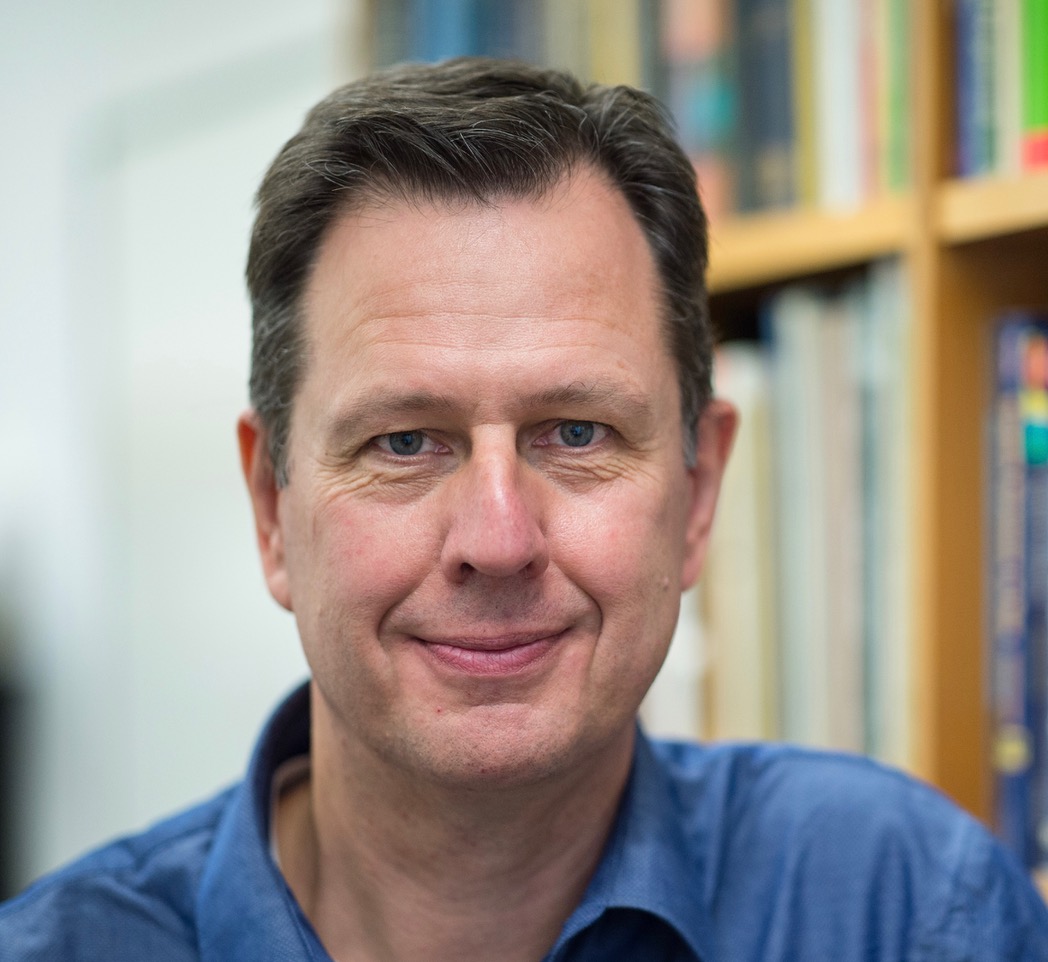
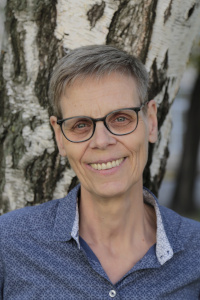
Maria Gouskova is a Professor of Linguistics at the Department of Linguistics, New York University (NYU). She is affiliated with the College of Arts and Science and holds editorial roles as an Associate Editor of Language and board member of NLLT and Phonology . Her research focuses on phonology, morphology, and lexicon, with a particular emphasis on morphophonological interactions, sublexicons, and phonotactic constraints. She earned her Ph.D. in Linguistics from the University of Massachusetts, Amherst (2003) and a B.A. in English Linguistics and German Language/Literature from Eastern Michigan University (1998). Her work bridges theoretical phonology and experimental methods, addressing questions such as how phonological patterns interact with morphology, the role of sublexical phonotactics in grammatical processes, and the learnability of complex segmental inventories. Recent research includes studies on Russian diminutive affixes, gradient phonological constraints, and the phonological properties of compounds. Her publications span topics like allomorphy, lexical phonology, and the typology of morpheme structure constraints. She frequently collaborates on projects investigating the interplay between syntax, phonology, and morphology, as seen in studies of Russian prepositions and compound stress patterns. Her contributions to phonological theory include advancing models of sublexicon theory and nonlocal constraint induction.
Florian Lionnet is an Associate Professor of Linguistics in Princeton University's Council of the Humanities and Director of Undergraduate Studies. He holds a Ph.D. from UC Berkeley (2016) and joined Princeton in 2017. His research focuses on phonetics/phonology, typology, areal and historical linguistics, and language documentation, with a focus on African and Oceanic languages. Current projects include endangered languages in Chad and New Caledonia, involving annual fieldwork collaborations with anthropologists, ethnomusicologists, and archaeologists. Research interests emphasize tonal systems, phonological representation, and language contact, particularly in Laal (an isolate language), Fanya (Bua), and Khoisan languages. His work bridges theory and practice, contributing to both linguistic theory and endangered language preservation. Articles explore tone phonology, areal patterns, and subphonemic effects, with recent emphasis on Kalahari Basin and Oceanic languages. Teaching responsibilities include directing undergraduate studies in Linguistics. No awards or grants are explicitly listed, though his fieldwork suggests active research funding. His office is located at 1-S-18 Green Hall, Princeton University.
Arto Anttila is an Associate Professor in the Department of Linguistics at Stanford University and holds an Adjunct Professor (dosentti) position in General Linguistics at the University of Helsinki. His research spans multiple linguistic subfields with particular focus on the interfaces between phonology, syntax, and prosody. Dr. Anttila's research interests include phonology, morphology, syntax, metrics, and language variation. His work often explores how phonological constraints interact with syntactic structures and how variation manifests across different linguistic domains. He has made significant contributions to Optimality Theory, MaxEnt grammar, and probabilistic approaches to phonology. His recent publications demonstrate a strong focus on metrical patterns, stress systems, syllable structure, and the relationship between prosody and syntax. Anttila frequently collaborates with researchers like Giorgio Magri, Adams Bodomo, and Ryan Heuser, examining phenomena across diverse languages including English, Finnish, and Dagaare (an African language). Anttila has developed several computational tools for linguistic research, including CoGeTo (Convex Geometry Tools for constraint-based phonology), MetricalTree (for English phrasal stress prediction), Prosodic (for automatic metrical scansion), T-Order Generator, and OTOrder. These tools reflect his interest in the mathematical and computational aspects of linguistic theory.
Dr. Anna Skałba is a Laboratory Assistant at the Faculty of English, Adam Mickiewicz University in Poznań, Poland. She is currently pursuing her PhD in Linguistics (expected 2025) and holds a Master's degree in English Philology (2020) and a BA in English Philology (2018). Her research focuses on psycholinguistics, bilingualism, mental syntax representation, eye-tracking, syntactic priming, and second/third language acquisition. PhD in Linguistics (2025, AMU) MA in English Philology (2020, AMU) BA in English Philology (2018, State University of Applied Sciences, Nowy Sącz) Her work investigates cross-linguistic influences in multilingual contexts, particularly examining tense representation (e.g., English present perfect vs. French passé composé), phonological processing, and cognitive consequences of multilingualism. She employs eye-tracking, EEG, and self-paced reading experiments to study structural priming and language processing across Polish-English-French multilinguals. Key research projects include: "Bidirectional interactions between grammatical gender systems" (2024-2027, PI: Kamil Długosz), "Multibridge" (2024-2025, PI: Magdalena Wrembel), and "Representation of grammatical tenses in the bilingual mind" (PI: herself, 2022-2023). She has presented at prestigious conferences including the International Congress of Linguists and EuroSLA. Her teaching experience spans EFL instruction, English grammar, Business English, and Cambridge exam preparation. She has contributed to academic conferences through poster presentations and oral talks, including work on L3 Norwegian acquisition, syntactic CLI, and hiatus resolution differences across languages.
Magdalena Wrembel is a Professor at the Faculty of English, Adam Mickiewicz University in Poznań (UAM), where she has held positions since 1996—progressing from Assistant Lecturer to full Professor (2017–present). She serves as Head of Bilingualism Matters@Poznań and Principal Investigator for major grants including CLIMAD (OPUS-19-HS) and ADIM (GRIEG-1 NCN/Norway Grants). Her educational background includes an MA in English (1993), Ph.D. in English (2005), and D.Litt. in Linguistics (2016), all from Poznań. Her research explores multilingual phonological acquisition, psycholinguistics, and pedagogy, with emphases on: Cross-linguistic influence in L2/L3 phonology Neurocognitive processing of speech sounds (ERP studies) Bilingual/metalinguistic awareness development Innovative pronunciation teaching methods Her publications focus on multilingual speech perception/production, corpus linguistics, and theoretical modeling (e.g., Natural Growth Theory). Recent work employs neurophysiological methods to study vowel categorization and phonological transfer across Polish-English-Norwegian multilinguals. Awards & Honors: 6× AMU Rector's Prizes for research achievements (e.g., 2013, 2016) 7× AMU Rector's Prizes for organizational/didactic work (2009–2019) Minister of Science Team Award (2015) WR Lee IATEFL Scholarship (2009) Obermann Fellowship (2010) Leadership: Former President of Societas Linguistica Europaea (2020–2023); organizer of 15+ international conferences (e.g., EuroSLA, ICPhS workshops); editorial board member for Linguistic Approaches to Bilingualism ; PhD thesis examiner at Rutgers, Barcelona, and Münster. Grants: Leads CLIMAD (2021–2024, OPUS-19-HS) on cross-domain multilingualism; co-leads ADIM (2021–2024, GRIEG) with Norwegian partners on L3 acquisition modeling; previously directed projects on bilingual phonology (NPRH) and sound-color associations.
Masae Matsuki is a Professor at Waseda University's School of Education within the Faculty of Education and Integrated Arts and Sciences. She holds concurrent appointments at the Graduate School of Education and serves as a Concurrent Researcher at the Institute for Advanced Studies in Education since 1989. Her academic career at Waseda spans from 1989 to present, progressing through roles including Assistant at the Waseda University Japanese Language Research and Education Center (1989-1993) before becoming Professor. Her educational background includes a Master of Arts in Letters from Waseda University (1993) and a Bachelor's degree from Tokyo Gakugei University's Faculty of Education (1982). Matsuki's research focuses on Japanese linguistics and language education, with particular expertise in grammatical structures, vocabulary development, teaching materials, and Japanese language studies. Her scholarly work demonstrates deep engagement with compound particles, attributive clauses, quotation structures, and the historical evolution of Japanese grammar. Her research projects include multiple Japan Society for the Promotion of Science Grants-in-Aid, notably leading a 2001-2002 project on creating expression databases for contemporary Japanese grammar analysis and co-investigating a major 2002-2004 study on compound particles in Japanese. These projects produced significant publications analyzing compound case postpositions, conjunctive postpositions, and auxiliaries. She actively contributes to academic societies including the Waseda University Japanese Language Education Society, Japanese Language Society, Japanese Grammar Society, and Japanese Language Education Society. Her teaching portfolio for 2025 includes Japanese Linguistics courses at both undergraduate and graduate levels, Educational Literacy, and specialized seminars in Japanese language teaching. Her international engagement includes research at Stanford University, Harvard University, and the University of Iowa during 2001-2002, focusing on cognitive linguistic approaches to Japanese grammar description.
Dr. Jana Häussler is a researcher and academic staff member at the University of Bielefeld, Faculty of Linguistics and Literary Studies, Department of German Linguistics. She is actively involved in teaching, research, and academic administration, with a focus on linguistic creativity, grammatical theory, and psycholinguistics. She leads key projects within the Collaborative Research Center 1646 on Linguistic Creativity in Communication and plays a central role in graduate education in German as a Foreign Language. Research Interests: Her work centers on linguistic and grammatical creativity , exploring how speakers produce and understand novel word formations. She investigates empirical foundations of grammatical theories , utilizing data-driven methodologies to analyze gradience in grammar, morphosyntax, and German word order. Her psycholinguistic research includes grammatical illusions and sentence comprehension , focusing on cognitive processing of morphological structures. The trends in her research, as reflected in her SFB 1646 projects, show a strong emphasis on interdisciplinary approaches combining theoretical linguistics with empirical and cognitive methods. Her work bridges formal grammar and real-time language processing, contributing to a deeper understanding of linguistic innovation and variability. Scientific Awards: No awards listed in available text. Advising and Grants: Dr. Häussler serves as a study advisor for Master’s students in German as a Foreign and Second Language. She is a project leader in two subprojects of the DFG-funded Collaborative Research Center 1646: A04 – Empirical Profiles of Grammatical Creativity and C01 – Production and perception of creative word formations . She is also module leader for several graduate-level courses, indicating significant curriculum development and mentoring responsibilities. Labs, Teams, and Institutional Roles: She is deputy spokesperson of the Department of Linguistics, a member of the Faculty Conference, the Habilitation Committee, the Equal Opportunities Commission, and the Commission for University Development. She contributes to the Bielefeld School of Education (BiSEd) and is involved in interdisciplinary research networks related to linguistic creativity and communication.
Bas Aarts is a Professor of English Linguistics at the University College London (UCL) since 2003, where he has been Director of the Survey of English Usage (SEU) since 1997. His work bridges theoretical syntax, corpus linguistics, and educational innovation, focusing on English verbal syntax , grammatical gradience , and corpus-driven grammar teaching . He co-founded the journal English Language and Linguistics and was its Editor until 2012. PhD and MA in English Linguistics from UCL, MA and BA from University of Utrecht Co-developer of ICE-GB and DCPSE corpora Principal investigator for major grants from AHRC, ESRC, EPSRC, and Nuffield Foundation His research on synchronic and diachronic syntax has produced seminal works including English Syntax and Argumentation (over 65,000 copies sold) and Syntactic Gradience . He pioneered Englicious , a web-based platform for school grammar teaching, with associated apps and FutureLearn courses. Recent work explores predicative constructions and adjective clause categorization . Scientific recognition includes: Election to Academia Europaea (2024) Shortlisted for UCL’s Spirit of Enterprise Award (2015, 2017)
Ida Toivonen is a Professor at Carleton University, affiliated with the Faculty of Arts and Social Sciences, and holds joint appointments in the Department of Cognitive Science and the School of Linguistics and Language Studies. She specializes in formal syntax with a focus on the syntax-semantics interface, morphosyntax, and language variation. Her work primarily engages with Swedish, Finno-Ugric languages, and the broader Germanic and Uralic language families. She earned her Ph.D. from Stanford University. Her research explores topics such as verbal particles, distributivity, evidentiality, and the argument-adjunct distinction, often employing the Lexical-Functional Grammar (LFG) framework. She has authored/co-authored influential textbooks like Lexical-Functional Syntax (2nd ed., 2016) and edited volumes such as Structures in the Mind (2016). Collaborative projects include studies on Inari Saami phonology and Romanian clitic systems. Key contributions include analyses of Swedish syntax, particularly the Åland dialect, and theoretical work on pronoun incorporation and animacy hierarchies. Her recent work examines microvariation in language change and the obligatoriness of syntactic arguments. She serves as co-editor of the LFG Conference Proceedings since 2019.
Bas Aarts is a Professor of English Linguistics at the Department of English , University College London (UCL), where he has worked since 1989. He served as Vice-Dean for Innovation and Enterprise in UCL's Faculty of Arts and Humanities (2016–2022) and as Director of the Survey of English Usage (1997–present). Professor of English Linguistics (2003–present) Director of Survey of English Usage (1997–present) International Society for Linguistics of English - Vice-President (2007–2012) Research Interests: His work spans corpus linguistics , syntax , language change , and grammar pedagogy . Recent publications focus on grammatical constructions, verbal structures, and educational interventions. Scientific Awards: Founding Editor of English Language and Linguistics (Cambridge University Press) (1997) UK Government Advisor for grammar teaching in schools (2014–2018) Member of the Council of the Philological Society (2015–2018) International Society for Linguistics of English - Vice-President (2007–2012) Publications: His 15 most recent works highlight expertise in grammatical theory, corpus-based language change, and pedagogical frameworks. Key topics include syntactic gradience, verb phrase evolution, and oblique constructions in English.
Mathilde Eveline Keizer is a Professor of English Linguistics: Variation and Cognition at the Department of English and American Studies, Faculty of Philological and Cultural Studies, University of Vienna. She serves as both Vice-Director of Studies for English and American Studies and Deputy Head of the Department of English and American Studies, demonstrating significant leadership within the institution. Professor Keizer's educational background includes: MA in English language and literature, Vrije Universiteit Amsterdam (1987) PhD in English Linguistics, Vrije Universiteit Amsterdam (1992) Her primary research focuses on the theoretical framework of Functional Discourse Grammar, with particular emphasis on the Noun Phrase in English and Dutch, possessive constructions, reference and predication, definiteness, English pronouns, apposition, information structure, linguistic categorization, and semi-fixed constructions. Professor Keizer leads the FunCog research group, which investigates the intersection of functional and cognitive approaches to language structure. Her work demonstrates how linguistic structures emerge from the interaction of cognitive processes and communicative needs, providing insights into the dynamic nature of language organization. Analysis of Professor Keizer's recent publications reveals a consistent focus on English syntax within the framework of Functional Discourse Grammar. Her work spans noun phrase structure, partitive constructions, prepositional phrases, and adverbial modification, demonstrating the versatility of FDG in addressing diverse syntactic phenomena. A notable trend is her increasing attention to cross-linguistic comparisons, particularly between English and Dutch, which enriches our understanding of language universals and specifics. Professor Keizer has made significant contributions to the field through her extensive publication record, including authored and edited books that have shaped contemporary understanding of functional-cognitive approaches to grammar. Her work has appeared in leading linguistics journals and handbooks, establishing her as a prominent voice in theoretical linguistics. As an educator, Professor Keizer teaches courses on Functional Discourse Grammar, Cognitive Grammar, Linguistic Categorization, Fuzzy grammar, Linguistic models and approaches, The English Noun Phrase, English adjectives, English idioms, and English syntax. She has supervised numerous graduate students through thesis seminars and advanced courses in linguistics, contributing significantly to the development of the next generation of linguists. Professor Keizer leads the FunCog research group, which brings together scholars interested in the intersection of functional and cognitive approaches to language. The group focuses on empirical investigations of linguistic structures through the lens of Functional Discourse Grammar, fostering interdisciplinary collaboration and innovative research methodologies that bridge theoretical linguistics with practical applications in language teaching and computational linguistics.