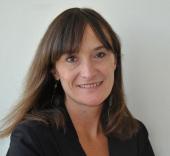
Professor Anne JENY is a Full Professor at IÉSEG School of Management, France, specializing in accounting and auditing. She holds a Ph.D. in Accounting from HEC Paris Business School (2003) and Master's degrees in Audit, Finance, and Economics from the University of Paris Dauphine (1995-1996). Her academic career includes professorships at IÉSEG (2021–present) and ESSEC Business School (2002–2020). Her research focuses on intangible assets valuation , fair value measurement , IFRS adoption dynamics , and transparency in financial reporting . She has published widely on topics such as non-audit services' impact on debt costs, innovation's interplay with accounting systems, and gender disparities in accounting professions. Her work integrates empirical analysis with policy implications, particularly in digital economy contexts and public-private partnerships. A member of the LEM (Laboratory of Economy and Management), she has authored books like Les 12 travaux de l'analyste financier (2021) and contributed to international journals such as Accounting in Europe and European Accounting Review . Her research bridges theoretical frameworks with practical insights into corporate governance and regulatory challenges.
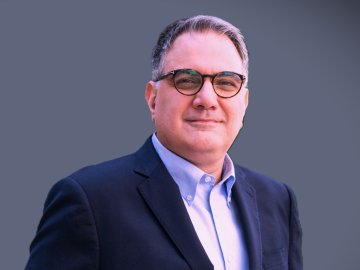
Hami Amiraslani serves as Assistant Professor of Accounting at ESMT Berlin, holding a PhD and MSc from the London School of Economics. Previously faculty at INSEAD and a Wharton School visiting scholar, he teaches Management Accounting and Sustainable Business Finance across master's and executive programs. His educational credentials include: PhD in Accounting, London School of Economics and Political Science MRes, City St George’s, University of London MSc in International Accounting and Finance, London School of Economics and Political Science Amiraslani's research investigates capital markets, corporate governance, and sustainability interfaces with financial contracting and regulation. His work critically examines how ESG integration, board oversight structures, and climate disclosure frameworks reshape market efficiency and investor behavior, blending theoretical rigor with empirical analysis of regulatory impacts. Recent publications (2023-2025) reveal three dominant research trajectories: 1) Board-level governance mechanisms for ESG risk management, 2) Regulatory consequences of climate disclosure mandates on capital allocation, and 3) Bond market valuation effects of sustainability performance. These studies consistently demonstrate how governance quality mediates the relationship between sustainability practices and financial outcomes across debt and equity markets. No scientific awards are documented in the provided materials. His teaching portfolio indicates active mentorship in accounting education though specific student advisees aren't listed. Research activities appear institutionally supported through ESMT's academic infrastructure without explicit grant mentions.
Prof. Dr. Mareike Kühne is a full-time Professor of Business Administration at the Department of Business and Management, Brandenburg University of Technology. With a unique interdisciplinary background spanning economics, business administration, philosophy, and neuroscience, she bridges affective dimensions with economic rationality to develop holistic decision-making frameworks. Doctorate in Economics, Otto von Guericke University Magdeburg (1992-1997) Fulbright Scholar, San Diego State University (1997-1998) Studies in Philosophy, Humboldt University (2007-2011) Doctoral and Master’s in Neuroscience, Berlin School of Mind and Brain (2011-2013) Her research integrates insights from psychology and neuroscience into capital market-oriented corporate reporting, corporate governance, and normative rationality frameworks. She critiques current economic models for neglecting the embodied nature of cognition, advocating for a more nuanced understanding of rationality that incorporates lived experience. Her 15 most recent works span sustainability reporting (2025), neuroeconomics (2021), M&A disputes (2017), and IFRS standard evolution (2005-2012). These publications highlight her focus on reconciling traditional accounting principles with interdisciplinary approaches to decision-making. Fulbright Scholar (1997-1998) Prof. Kühne has taught at Humboldt University, HHL Leipzig, and the Berlin School of Mind and Brain. She actively participates in professional organizations including the German Society for Philosophy, European Accounting Association, and European Financial Reporting Advisory Group. Her work emphasizes the practical impact of neuroscientific findings on economic policy and standard-setting.
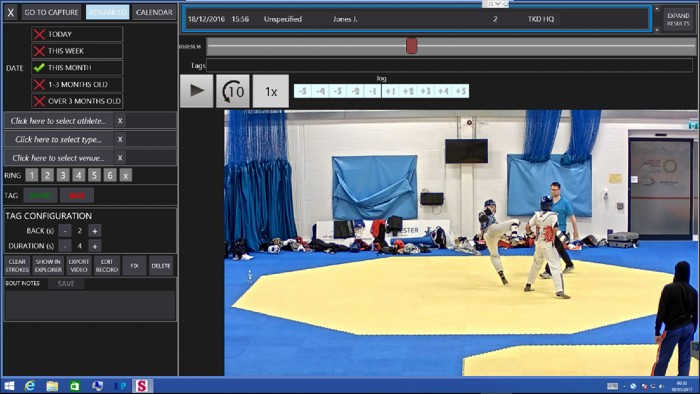
Dr. Simon Goodwill is the Head of Research in Sport and Physical Activity and Head of the Sports Engineering Research Group (SERG) at Sheffield Hallam University's Academy of Sport and Physical Activity. He holds a PhD focused on tennis ball-racket impact modeling and has collaborated with the International Tennis Federation. His expertise includes novel photogrammetry techniques, software development for athlete performance analysis, and camera calibration systems like check2d/check3d. He led projects supporting Team GB athletes in multiple Olympics, contributing to 42 medals at Rio 2016. Currently, he oversees the Advanced Wellbeing Research Centre (AWRC), applying sports performance methodologies to health research. His work integrates machine vision, data acquisition hardware, and elite athlete monitoring systems, with notable contributions to the EIS Innovation Partnership and sports tech exhibits like Le Tour Yorkshire's bike simulator. Education & Research: Simon’s PhD (modeling tennis impacts) and extensive software engineering background underpin his research. His projects span biomechanics, sports engineering, and health tech, with collaborations involving UK Sport, FIFA, and Adidas. He has developed systems used by athletes in London 2012, Rio 2016, and Glasgow 2014 Commonwealth Games. Research Themes: His work emphasizes performance analysis through photogrammetry, real-time athlete tracking, and health-related applications of sports tech. Key projects include court pace rating for the ITF, iBoxer2 boxing data tools, and the AWRC’s health innovations. Grants & Impact: The AWRC, funded by UK DoH and ESIF (£15.7M), reflects his role in translating elite athlete tech to public health. His work is cited in UK government reports on Olympic legacy and has received media attention, including BBC features on GB Boxing’s iBoxer software. Advising & Leadership: Supervised 17 PhD students on topics like machine learning in taekwondo, swimming analysis, and tennis racket dynamics. Served as External/External advisor and led 10+ Olympic cycle projects. Active in the International Sports Engineering Association as Director.
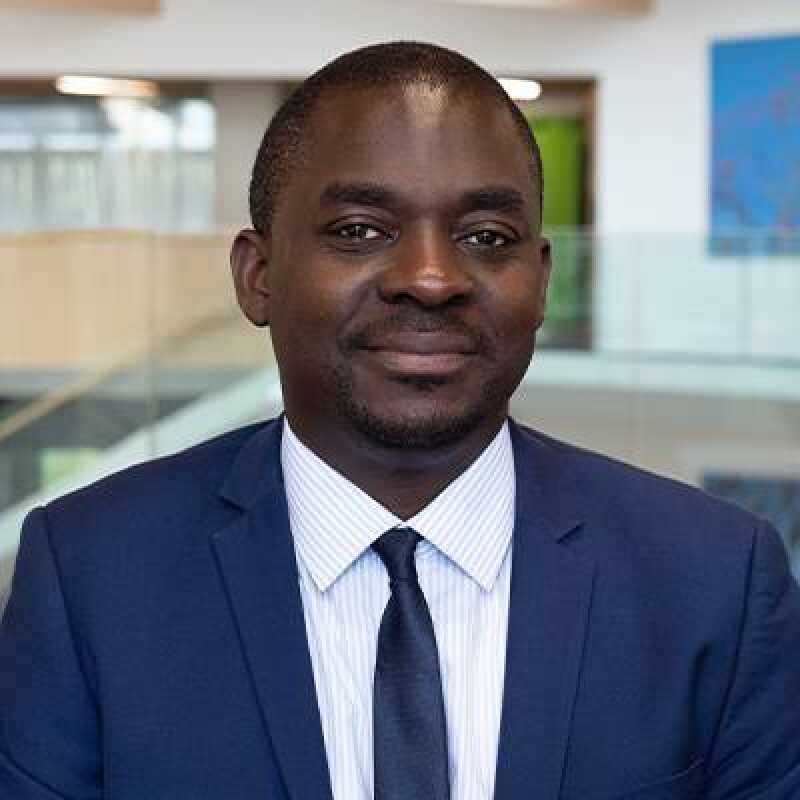
Dr. Godfred Afrifa is a Senior Lecturer in Accounting and Senior Tutor (Canterbury) at Kent Business School , University of Kent. He is also a Visiting Lecturer at IESEG School of Management (France) since 2014 and at ISCID-CO International Business School (France) since 2016. PhD in Finance and Risk (Bournemouth University, 2013) MSc in Finance (University of Leicester, 2008) BSc in Applied Accounting (Oxford Brookes University) HND in Accounting (Kumasi Polytechnic) Chartered Accountant and Certificate in Insurance (Chartered Insurance Institute) His research explores the intersection of corporate governance , working capital management , and microfinance institutions . He investigates how CSR governance affects business practices, the dynamics of trade credit in SMEs, and the role of regional development in service-sector performance. His recent work also covers linguistic influences on financial reporting and pedagogical innovations in accounting education. Dr. Afrifa's 15 most recent publications (2020–2025) span topics like CSR decoupling , firm identity changes , credit policies , and microfinance integrity , with methodologies including stochastic frontier analysis and cross-country comparisons . His work frequently addresses financial strategies in SMEs and sustainability in supply chains and development. Scientific Awards : Fellow of The Higher Education Academy (2015), Affiliate Member of ACCA (2004). Dr. Afrifa supervises Mohammad Abwen (PhD thesis: Credibility of CSR Disclosure ) and welcomes PhD candidates in SME management , working capital , and microfinance . His Visiting Lecturer roles at French institutions highlight international collaboration. The 2023 Evaluation Report on Re:Generation 2031 underscores his work in sustainable development beyond traditional finance.
Nicholas Mortimer is a Senior Lecturer in Design at Goldsmiths, University of London. He holds an MA in Design Interactions (Royal College of Art, 2013) and a BA in Fine Art Sculpture (University of Brighton, 2005). His work focuses on socially engaged design practices, reimagining historical performance traditions to address contemporary labor and societal issues. As co-founder of Post Workers Theatre (PWT), he explores workers’ theatre and creative resistance through collective writing, performance, and design. His research spans topics like gig economy critiques, housing privatization, and community activism, often blending performance, sound, and participatory methods. Education: MA Design Interactions, Royal College of Art, 2013 BA Fine Art Sculpture, University of Brighton, 2005 Research Interests: Performance as social critique Historical folk traditions and modern labor struggles Community-driven design practices Radical pedagogy and participatory methods Key Projects: Post Workers Theatre : Investigates politically engaged performance, addressing labor inequality through updated workers’ theatre forms. Autohoodening : Critiques Amazon labor practices via a reimagined midwinter ritual. Rave of the Ritualesque : Examines rave culture’s potential for collective resistance. Affiliations: Department of Design, Goldsmiths, University of London IASPIS (Swedish Arts Grants Committee) residency collaborations Labs/Teams: Post Workers Theatre collective Collaborations with institutions like Tate Liverpool, Luleå Arts and Crafts Biennale, and the Maidstone Museum
Dr. Omiros Georgiou is an Associate Professor in Accounting at the Department of Accounting, Birmingham Business School, University of Birmingham, where he also serves as the Research Lead. He has been a full-time academic since 2010, with prior appointments at the University of East Anglia, the London School of Economics, and the University of Manchester. He holds a PhD in Accounting from the University of Essex. His research focuses on the social and political dimensions of financial accounting regulation. Key themes include the use of accounting information by investment professionals, the ideological and legal influences on accounting standard development, and the role of accounting in financializing business and society. His work is published in leading journals such as Accounting, Organizations and Society , Critical Perspectives on Accounting , and Contemporary Accounting Research . Omiros has secured external funding from the Institute of Chartered Accountants of Scotland (ICAS) and the Social Sciences and Humanities Research Council of Canada (SSHRC). He contributes to the academic community through editorial board memberships at Accounting and Business Research , Accounting Forum , and Critical Perspectives on Accounting . His recent publications show a strong trend in critical accounting studies, particularly in fair value accounting, standard-setting controversies, and the socio-political legitimacy of financial reporting. The research spans both empirical and theoretical analyses, with increasing attention to emerging topics like sustainability reporting and the future of financial reporting in light of technology and global events. Omiros supervises MSc dissertations and teaches in areas such as Advanced Financial Accounting and Accounting and Finance practice. He has not received specific scientific awards mentioned in the text, but his sustained funding and publication record reflect scholarly recognition.
Wesley Ueunten is a Professor in the Asian American Studies Department within San Francisco State University's College of Ethnic Studies. Currently on a Fulbright fellowship at Meio University in Okinawa, he researches Okinawan cultural identity in diaspora contexts shaped by U.S. and Japanese colonialism. Education: Ph.D. Ethnic Studies, University of California at Berkeley M.A. Sociology, University of Hawai'i, Manoa B.A. Ethnic Studies, University of Hawai'i, Manoa His research critically examines Okinawan identity formation through cultural transmission, intergenerational trauma, and resistance against appropriation. He investigates how discrimination within Japanese immigrant communities forced Okinawan traditions into private spheres, and how these practices later emerged as public symbols of identity amid commodification trends. His work centers Okinawan women's experiences and U.S. military occupation impacts. Analysis of his publications reveals a cohesive trajectory from historical resistance movements (e.g., 1970 Koza Uprising) to contemporary identity politics, with consistent focus on diaspora communities across Hawai'i, the Americas, and Okinawa. His scholarship demonstrates evolving methodologies from oral history to critical discourse analysis, highlighting gendered dimensions of cultural survival. Scientific Awards: Community University Empowerment Grant, SFSU Cesar Chavez Institute (2010) New Uchina Goodwill Ambassador Activities Support Program Grant Professor Ueunten actively mentors through campus roles as Faculty Advisor for the Asian Student Union and Hmong Student Association. His community leadership includes Vice Presidency of the Okinawa Kenjinkai of San Francisco, founding membership in Genyukai Berkeley, and research contributions to the Japanese Peruvian Oral History Project. His current Fulbright project documents the transnational journey of a traditional Okinawan song from hidden family practice to global symbol of identity, interviewing diaspora communities in Hawai'i, California, and Okinawa including South American return migrants.
Jiyun Kang serves as an Associate Professor at Purdue University's White Lodging-J.W. Marriott, Jr. School of Hospitality and Tourism Management within the College of Health and Human Sciences. Her research examines consumer behavior, well-being, and sustainable practices across fashion, luxury, and retail sectors, with emphasis on artificial intelligence applications, crisis management, and corporate social responsibility initiatives. Her academic credentials include: PhD in Human Ecology from Louisiana State University (2010) MS in Business/Marketing from Seoul National University (2005) BA in English Language and Literature from Korea University (2002) Dr. Kang's research spans consumer psychology, sustainable consumption, and digital innovation in retail. She investigates decision fatigue in luxury contexts, AI-driven mitigation of purchase hesitation, and psychological ownership in fashion subscription models. Her work consistently employs quantitative methods including machine learning and causal modeling to analyze brand-consumer dynamics during ethical crises and sustainability transitions. Analysis of her 2022-2025 publications reveals three dominant trends: (1) blockchain/NFT applications for luxury authentication, (2) AI ethics in retail crisis management, and (3) intersectional approaches to sustainable fashion through psychological ownership frameworks. Methodologically, she increasingly integrates natural language processing with traditional consumer behavior models to examine corporate social responsibility perceptions. Scientific awards: No awards are documented in the provided materials. Advising and grants: The source text contains no information regarding graduate student mentorship or externally funded research projects.
Sarah E. Stein is an Associate Professor and Deloitte Foundation Faculty Fellow in the Department of Accounting and Information Systems at Virginia Polytechnic Institute and State University (Virginia Tech). She serves as Director of the Ph.D. Program within the Pamplin College of Business. Her academic journey includes a Ph.D. from the University of Missouri, a B.S. and M.S. in Accounting from Truman State University, and CPA licensure in Colorado. Prior to academia, she worked as an audit manager at Deloitte in Denver. Education: Ph.D., University of Missouri; B.S. and M.S., Truman State University; CPA (Colorado) Roles: Deloitte Foundation Faculty Fellow, Director of Ph.D. Program Dr. Stein’s research focuses on auditor expertise, corporate governance, auditing networks, and financial reporting challenges. Her work has been published in top journals like The Accounting Review and Auditing: A Journal of Practice & Theory . She received the 2019 Best Paper Award in Issues in Accounting Education and the 2020 Innovation in Auditing Education Award for her data visualization audit case. Her recent articles (2023–2025) highlight themes such as audit committee responsibilities, CFO-audit partner dynamics, and small accounting firm strategies. Her teaching includes graduate auditing courses and PhD seminars. Research trends in her articles emphasize audit quality, governance evaluation, and emerging technologies in auditing. She actively contributes to professional standards through commentaries on PCAOB releases. Awards: 2019 Best Paper Award, 2020 Innovation Award, Deloitte Doctoral Fellowship Dr. Stein advises the Ph.D. program and collaborates with industry on audit innovation. Her lab focuses on auditing education and case development, reflecting her commitment to bridging academic research and practical application.
Jari Huikku serves as Associate Professor and Head of the Department of Accounting at Aalto University School of Business, where he has been a faculty member since 2003. His academic journey includes a Doctoral degree in Accounting from Helsinki School of Economics (2009) and a Master's in Finance from Turku School of Economics. Prior to academia, Huikku accumulated 15 years of industry experience in multinational corporations such as Wärtsilä and Sanitec, holding financial director and general management positions. His educational qualifications are: Doctor of Philosophy (Accounting), Helsinki School of Economics, 2009 Master of Science (Finance), Turku School of Economics and Business Administration, University of Turku Huikku's research centers on Strategic Investment Decision-Making, Management Control Systems, Goodwill, and Post-Completion Auditing. He examines how organizations implement risk analysis in investment decisions and the motivational factors influencing management control practices. His work also extends to accounting education, investigating student learning approaches and gender differences in performance. This dual focus bridges theoretical accounting research with practical educational applications. Analysis of his recent publications (2021-2025) reveals consistent exploration of strategic investment processes, budgetary control systems, and accounting education methodologies. His work increasingly incorporates organizational theory perspectives like strong structuration theory and embedded agency, while maintaining empirical grounding through case studies and qualitative analysis. The interdisciplinary nature of his research connects accounting with organizational behavior, healthcare management, and educational psychology. Huikku has earned multiple scholarly accolades: Best Paper Award, Management Accounting Research Group Conference (2024) Best Paper Award, Massey University (2022) Huugo Raninen Prize, Finnish Journal of Business Economics (2008) Best Qualitative Paper Award, Massey University (2012) Best Paper Award, Massey University (2012) Best Paper Award, Lincoln University (2015) In his academic role, Huikku supervises master's and doctoral students in strategic investment and management control topics. He directs a capstone management consultancy course where students address real corporate challenges. His international scholarly engagements include visiting positions at Copenhagen Business School, University of Auckland, and Stockholm School of Economics, reflecting his global research network. While specific grant details aren't provided, his extensive publication record in top journals indicates sustained research funding. Though not explicitly stated, Huikku's leadership as Department Head and collaborative research across institutions suggests active involvement in academic communities and research groups focused on accounting and management control systems.
Carla Hayn is a Professor of Accounting and the Ernst & Young Chair in Accounting at UCLA Anderson School of Management. She serves as the Accounting Area Chair and Director of International Initiatives at the Center for Global Management. Her research focuses on financial reporting, tax disclosures, mergers and acquisitions, and the economic consequences of accounting information. Ph.D., University of Michigan (1988) Hayn's research examines the impact of accounting numbers on stock prices, analysts' forecasts, and corporate valuation. She has pioneered hybrid educational models like FEMBA Flex and EMBA Monthly sections, blending intensive classroom learning with online modules. Her work also addresses corporate governance and international business strategies. Hayn's recent publications explore measurement conservatism, goodwill impairment indicators, and earnings forecast dynamics, reflecting her expertise in financial disclosures and market responses. Her work bridges academic rigor with practical applications in taxation, M&A, and regulatory compliance. Ernst & Young Chair in Accounting Coopers & Lybrand fellowship in mergers and acquisitions Hayn consults with corporate boards on financial strategy and serves as an expert witness in securities litigation, focusing on financial reporting, valuation fraud, and damage assessment. She co-directs UCLA Anderson Executive Education’s corporate governance program.
Diogenis Baboukardos is an Associate Professor of Accounting at the Athens University of Economics and Business (AUEB), specializing in sustainability and climate change reporting. He is affiliated with the Department of Accounting and Finance and serves as a Research Affiliate at the Adam Smith Observatory of Corporate Reporting Practices (University of Glasgow) and a Visiting Research Fellow at the Essex Business School (University of Essex). Research Funding: UK Financial Reporting Council, Association of Chartered Certified Accountants, Institute of Chartered Accountants of Scotland. Academic Roles: Secretary of BAFA’s Financial Accounting & Reporting Special Interest Group, editorial board member of multiple journals. His research spans sustainability accounting, integrated reporting, audit practices, and corporate governance, with a focus on regulatory impacts and market consequences. Publications appear in journals like Journal of Accounting & Public Policy and Business Strategy and the Environment , while his work addresses carbon reporting, biodiversity disclosures, and pandemic-era accountability. Scientific awards include Fellow of the UK Higher Education Academy . He organizes conferences (e.g., Financial Reporting and Business Communication 2025) and contributes to industry reports for ACCA and FRC.
Colin Clubb is Professor of Accounting and Financial Management at King’s Business School, King’s College London, where he is a member of the Accounting, Accountability, and Financial Management research group. He has previously held academic positions as Reader in Accounting at Imperial College London and Professor of Accounting at the University of Warwick from 2004 to 2009. His educational background includes: BA (Econ) in Accounting and Business Finance from the University of Manchester MSc in Accounting and Finance from the London School of Economics (LSE) PhD in Accounting from Imperial College London Professor Clubb's research focuses on theoretical models of accounting information in equity valuation and empirical analysis of accounting use in capital markets. He has a broad interest in financial statement analysis and the socio-economic context of accounting. His work explores topics such as earnings volatility, payout policy, classification shifting, and the value relevance of accounting metrics. He has developed and extended frameworks such as the Ohlson (1995) valuation model, contributing to both theoretical and applied accounting research. His recent publications show a consistent trend toward integrating structural accounting models with capital market outcomes, particularly in estimating expected returns, payout policy, and income classification. His research bridges theory and empirical validation, often using UK and international data. He has published in top journals including Review of Accounting Studies , Abacus , and Journal of Business Finance & Accounting . While no specific scientific awards are listed in the provided texts, his work has been cited over 385 times, indicating significant academic impact. He has supervised research students and contributed to academic discourse through editorial roles, including editing the Blackwell Encyclopedia of Management Accounting . His collaborations include scholars such as Michael Walker, Dimitris Christodoulou, and Stephen McLeay. He is actively engaged in research and has no indication of retirement or part-time status. Professor Clubb is based at the Strand Campus in London and contributes to both research and teaching in financial accounting and valuation.
Sabri Boubaker is a Professor in the Department of Accounting and Finance at the School of Management , Swansea University. He holds a PhD from Université de Paris-Est and has an extensive publication record, with over 90 Scopus-indexed articles and 900+ citations. As co-founder of the Paris Financial Management Conference and the Vietnam Symposium in Banking and Finance , and President of the International Society for the Advancement of Financial Economics (ISAFE) , he is a key figure in empirical finance. He leads the Hawkes Seminar Series , attracting global speakers to engage with staff and students. His research focuses on ownership structure , control of listed companies , and the intersection of corporate governance with environmental finance . Recent work examines the impacts of climate policy , corporate carbon risk , and banking stability using advanced analytical frameworks like DEA-machine learning and MCDA . His supervision includes PhD projects in Islamic banking , though specific student names are not listed. Professor Boubaker’s publications span top-tier journals such as the Journal of Corporate Finance , Financial Management , and British Journal of Management , addressing topics like debt choice , sovereign wealth funds , and anti-corruption campaigns . He is an active member of the Hawkes Centre for Empirical Finance , contributing to global discourse on financial economics.