Kenneth David Jackson is a Professor and Director of Undergraduate Studies for Portuguese at Yale University. His academic career includes a Ph.D. from the University of Wisconsin-Madison (1973). He specializes in Portuguese and Brazilian literatures, with a focus on figures like Camões, Machado de Assis, and Fernando Pessoa, as well as modernist and vanguardist movements. His research extends to ethnomusicology and Portuguese cultural influences in Asia. Dr. Jackson has authored over a dozen books and edited numerous volumes, including Goa: A post-Colonial Society Between Cultures (2018) and Machado de Assis: A Literary Life (2015). His work often explores colonial legacies, inter-arts literature, and the intersection of culture and history in Portuguese-speaking regions. He has organized international symposia on topics such as Brazilian concrete poetry and Iberian modernisms. Jackson serves on the International Advisory Board of the Centro Interuniversitário de Estudos Camonianos at the University of Coimbra, Portugal. His interdisciplinary approach bridges literary analysis, cultural studies, and historical inquiry.
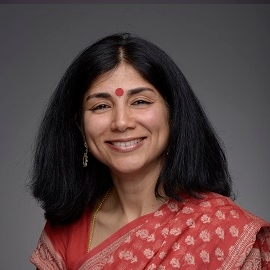
Chitralekha Zutshi is a Professor of History at the College of William & Mary, specializing in Modern South Asia and the Indian Ocean World. She holds two endowed professorships and has received prestigious awards such as the 2014 Plumeri Award for Faculty Excellence. Her research focuses on Islamicate identities, nationalism, and historical thought, with a particular emphasis on Kashmir's contested histories and political dynamics. She has authored multiple acclaimed books, including Sheikh Abdullah: The Caged Lion of Kashmir (2024) and edited volumes like Kashmir: History, Politics, Representation (2018). Her work challenges monolithic narratives of religious conflict, emphasizing the complexities of class, gender, and caste in Kashmir's socio-political landscape. Zutshi's academic contributions extend to teaching and program development. She founded the William & Mary study abroad program in Goa/Bengaluru and co-directed the Asian and Middle Eastern Studies Program. Her courses include 'Indian Ocean Worlds,' 'War and Peace in Postcolonial South Asia,' and 'Kashmir: Past, Present, and Future.' Her scholarly articles have appeared in The Journal of Asian Studies , Modern Asian Studies , and Economic and Political Weekly . She also engages with public discourse through contributions to KashmirConnected and media outlets like India Today and W&M News . Awards: Plumeri Award (2014), NEH Fellowship (2005-2006), Kluge Fellowship (2008) Grants: Senior Research Fellowship (American Institute of Indian Studies, 2014-2015) Leadership: International Advisory Board member of South Asia: Journal of South Asian Studies Zutshi’s research bridges academia and public engagement, addressing themes of historical memory, political agency, and the intersection of identity with colonial and postcolonial power structures.
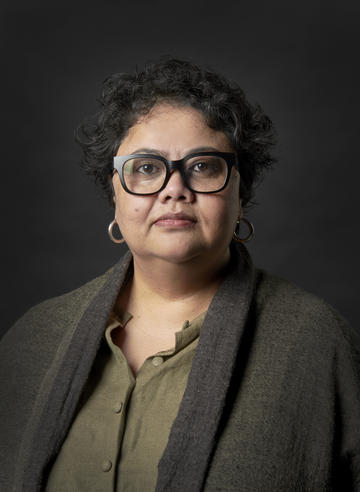
Mallica Kumbera Landrus serves as Associate Professor of Indian Art at the University of Oxford while holding dual leadership roles as Keeper of Eastern Art and Senior Curator of Indian, Himalayan and Southeast Asian Art at the Ashmolean Museum of Art and Archaeology. Her career uniquely integrates academic scholarship with museum curation, focusing on South Asian visual and material culture across five millennia of Asian artistic development. Her research centers on intersections of Indian art, architecture, religion, politics, and socio-economics, with particular expertise in cultural translation phenomena. She examines colonial-era built environments created by Portuguese powers in Goa and hybrid transnational cultures emerging from diasporic communities, frequently utilizing the Ashmolean's extensive collections for empirical analysis. Publication trends reveal consistent thematic focus on Goan architectural history under Portuguese rule, modern Indian art movements (especially Bengal School modernism), and gender representation in visual culture. Her scholarly output bridges art historical methodology with postcolonial theory, emphasizing religious conversion dynamics, diasporic identity formation, and imperial material legacies across 12 peer-reviewed works from 2003-2015. Landrus teaches specialized courses including 'Trade and Exchange in Modern South Asia' (MPhil/MSc) and 'Encountering South Asian Sculpture' (BA), supervising graduate research that leverages Oxford's collections. Professional engagements include Fellowship at St Cross College, Trustee position with the Charles Wallace India Trust, and editorial board membership for Universität Bonn's Studies in Asian Art and Culture Series.
Hugh Cagle is an Associate Professor in the Department of History at the University of Utah, where he also serves as Director of the Diplomacy and International Studies program. His research spans Latin American history, comparative colonialism (particularly Portuguese colonialism in Brazil, India, and Goa), and science and technology studies (STS). He explores how scientific knowledge shaped colonial projects and how medical concepts influenced the construction of 'the tropics' as a geopolitical category. Education: PhD in History from Rutgers University Expertise: Latin American history, Portuguese empire, STS, comparative colonialism Languages: Portuguese, Spanish, Catalan, Latin His award-winning book Assembling the Tropics (2018) redefines the history of the concept of 'tropics' through Portuguese colonial experiences. His current projects examine animal classification under Portuguese rule and Amazonian indigenous technologies. Scientific Awards: Leo Gershoy Award (2019) Rising Star in the Humanities (2018) National Endowment for the Humanities Recipient (2012) His ORCID profile documents further publications and collaborations.
Ines G. Županov is a Research Director at the Centre National de la Recherche Scientifique (CNRS) and Director of the Centre d'Etudes de l'Inde et de l'Asie du Sud (CEIAS) at the École des Hautes Études en Sciences Sociales (EHESS) in Paris. She has held academic positions at the University of California, Berkeley, Jawaharlal Nehru University in New Delhi, and regularly teaches at EHESS on mission history in the early modern world. As a Käte Hamburger Kolleg Visiting Research Fellow in 2012-13, she investigated Jesuit Missions in South Asia during the 16th-18th century. Her educational background includes a PhD in History from the University of California, Berkeley (1991), an MA in Asian Studies from the same institution (1986), and a BA in Comparative Literature and Indology from the University of Zagreb, Croatia (1979). She also held a post-doctoral fellowship at the School of Oriental and African Studies in London funded by the European Science Foundation (1996-1998). Županov's research focuses on the social and cultural history of South Asia, particularly mission history in the early modern world and the history of science in colonial contexts. Her work examines how missionaries produced, used, and disseminated scientific information across fields including medicine, botany, astronomy, philology, and ethnography. She has pioneered research on the intersection of religious conversion with knowledge production, analyzing how Jesuit missions in South Asia created complex networks of cultural exchange while simultaneously imposing European frameworks of understanding. Her extensive publication record reveals consistent themes of cultural encounter, knowledge circulation, and the politics of representation in colonial contexts. Županov's scholarship demonstrates how missionary activities served as crucial vectors for the transmission of knowledge between Europe and South Asia, while also highlighting the agency of local actors in shaping these exchanges. Her work moves beyond simplistic narratives of cultural imposition to reveal the complex negotiations that characterized early modern cross-cultural encounters. Fellow at Wissenschaftskolleg in Berlin (2003-2004) Mellon visiting scholar at PennState University (2009) Käte Hamburger Kolleg visiting fellow (2012-13) Multiple research grants from European Science Foundation Authorization to supervise research, EPHE (2010) Ecole Française de Rome research grants (1995, 1997, 2000) As Director of CEIAS, Županov leads one of Europe's premier research centers for South Asian studies, coordinating numerous international projects and workshops that bring together scholars from diverse disciplinary backgrounds. Her leadership has been instrumental in organizing significant conferences including 'The Rites Controversy in the Early Modern World' (2011) and 'L'Inde des Lumières/Indian Enlightenment' (2011-2013), fostering interdisciplinary dialogue on the complex histories of knowledge production in South Asia.
Luís Cabral de Oliveira is an Associate Professor in the Department of Legal Sciences at the Instituto Politécnico de Leiria and a researcher at the Centro de Investigação e Desenvolvimento sobre Direito e Sociedade (CEDIS) at Universidade Nova de Lisboa's Faculty of Law. He coordinates undergraduate and graduate programs in Public Administration at Politécnico de Leiria. Education: Licenciado em Direito (University of Coimbra) Advanced Studies in History (Universidad Pablo de Olavide, Seville) PhD in Law (Universidade Nova de Lisboa, 2020) Research Interests: Colonial Law, History of Law, Public Administration, Political Science, with a focus on Portuguese colonial presence in India and Goa's socio-legal dynamics. His work explores constitutional frameworks in colonial contexts, elite politics, and the interplay between law and identity. Recent Contributions: Active in international projects on colonial archives, legal history, and political representation. Authored a seminal book on 19th-century Goa legal systems and publishes in peer-reviewed journals like Kritika Kultura and RC Revista de Cultura. Awards: 2021 Gulbenkian Foundation Prize for History of Portugal's Global Presence Engagement: Participated in 42+ academic activities (2016–2023), including conferences at the Sorbonne and international workshops on colonial archives. Media contributions address legal history and public administration challenges post-pandemic.
R. Benedito Ferrão is an Assistant Professor of English and Asian & Pacific Islander American Studies at William & Mary, with affiliations in Asian and Middle Eastern Studies. His work bridges Afro-Asiatic connections across Portuguese and British post/colonial contexts, focusing on diaspora, transnational fiction, and intersections of race, gender, and sexuality. Research trends span postcolonial literature, Indian Ocean slavery studies, decolonial queer ecology, and visual culture. His scholarship interrogates Goan identity through Afro-Indian linkages, tropicality, and transoceanic narratives, often engaging diasporic art, architecture, and media. Notable awards include: Fellow, Africa Multiple Cluster of Excellence (2020-21) Fulbright-Nehru Academic and Professional Excellence Research Award (2019-20) Rotary Ambassadorial Scholar Endeavour Postdoctoral Fellow He has taught at UCLA, Birla Institute of Technology and Science (Goa), Hankuk University of Foreign Studies (Seoul), and held fellowships at William & Mary and La Trobe University. His curated exhibition Goa/Portugal/Mozambique: The Many Lives of Vamona Navelcar (2017) highlights his interdisciplinary engagement with diasporic and decolonial art.
Arun Saldanha is a Full Professor in the Department of Geography, Environment & Society at the University of Minnesota's College of Liberal Arts. His work bridges geography, continental philosophy, and critical race studies, with a focus on the materiality of race, colonial encounters, and psychedelic cultures. He maintains active research trajectories spanning historical Dutch colonialism, contemporary racial formations, and speculative futures. Ph.D. in Human Geography, The Open University (2004) Licentiate in Communication Studies, Free University of Brussels (1997) Saldanha's research interrogates race as a dynamic material process rather than fixed identity, examining phenomena from Goa's rave tourism to Prince's Minneapolis legacy. His theoretical framework draws heavily on Deleuze and Badiou while engaging Marxist, feminist, and postcolonial perspectives. Key projects include analyses of Jan Huygen van Linschoten's colonial narratives and the racial dimensions of the Anthropocene. His recent publications reveal escalating engagement with planetary-scale crises, connecting psychedelic experience to climate catastrophe and retheorizing racial capitalism through geological timeframes. Articles consistently merge empirical specificity with philosophical abstraction, particularly in examining how bodies become racialized through movement, sound, and affect. Saldanha maintains his foundational commitment to geophilosophy while expanding into environmental justice, having taught at Lancaster University (2012-2013) and authored the influential monograph Psychedelic White: Goa Trance and the Viscosity of Race (University of Minnesota Press, 2007).
Ines G. Županov is a distinguished historian and Research Director at the Centre National de la Recherche Scientifique (CNRS), serving as co-director of the Center for Indian and South Asian Studies (CEIAS) at the School for Advanced Studies in the Social Sciences (EHESS) in Paris. She has held visiting positions at prestigious institutions including the University of Pennsylvania, Duke University, Jawaharlal Nehru University, and Tokyo University. Her academic career spans teaching appointments at Jawaharlal Nehru University (Delhi), University of California at Berkeley, and EHESS where she teaches courses on colonial history, connected histories, and South Asian religious missions. Dr. Županov's research focuses on the complex interplay between religious missions, colonial power structures, and cultural exchange in early modern South Asia. Her work examines Jesuit missions within the Portuguese Empire, exploring how knowledge systems, religious practices, and power dynamics intersected during the 16th-18th centuries. She investigates themes of Orientalism, translation practices, medical knowledge transfer, and the construction of religious identities in colonial contexts. Her scholarship reveals how missionary encounters created spaces for both conflict and creative adaptation between European and South Asian knowledge systems. Analysis of her recent publications shows a consistent focus on the material dimensions of religious missions, particularly how objects, texts, and bodily practices served as sites of cultural negotiation. Her work demonstrates how Jesuit missionaries engaged with local knowledge systems while simultaneously attempting to reshape them. A recurring theme is the tension between missionary universalism and local particularities, especially regarding religious conversion, healing practices, and botanical knowledge. Her scholarship bridges religious studies, colonial history, and postcolonial theory to offer nuanced understandings of cross-cultural encounters. Throughout her career, Dr. Županov has coordinated significant research initiatives including the thematic workshop 'Histoires de soi, histoires des autres' (2014-2018), the research team 'Cultures et constructions historiques dans l'Asie du Sud' (2010-2013), and 'Guérison, remèdes et pratiques de santé' (2006-2009). Her leadership extends to editorial roles for major publications including the Oxford Handbook of the Jesuits and the journal SAMAJ (South Asia Multidisciplinary Academic Journal). Based at CEIAS, Dr. Županov works within a vibrant interdisciplinary research environment that brings together specialists in anthropology, demography, geography, history, literature, linguistics, philosophy, political science, religious studies, and sociology. The center's research approach emphasizes the interconnectedness of South Asian societies with broader global processes, aligning perfectly with Dr. Županov's expertise in transnational religious and cultural exchanges during the early modern period.
Rev. Charles Borges is an Associate Professor in the Department of History at Loyola University. He specializes in Jesuit History in Asia, Indo-Portuguese History, and the history of Goa. His research bridges religious missions, colonial dynamics, and regional socio-economic studies. Notable contributions include publications like The Economies of Goa and Jesuits 1542-1759 . He has been featured in The Economist for his expertise on St. Francis Xavier and has delivered lectures such as the 2011 Fall HS 101 Non-Western Lecture on Indian history and culture.
Prof. Dr. Pamilia Gupta is a Professor at the Wits Institute for Social and Economic Research (WiSER), University of the Witwatersrand, South Africa. Starting January 2023, she will also hold a Research Professorship at the University of the Free State, affiliated with the Centre for Gender and Africa Studies (CGAS). She earned a PhD in Anthropology from Columbia University. Her research focuses on Portuguese colonial history, Indian Ocean heritage, and visual cultures in East Africa, with a particular interest in photography archives like the Capital Art Studio in Zanzibar. Key publications include Portuguese Decolonization in the Indian Ocean World (2019) and Heritage and Design: Ten Portraits from Goa (2022). She explores themes such as colonial urban planning, affect theory, and transoceanic narratives through interdisciplinary lenses. Her current project examines Zanzibar's historical and cultural layers via the Oza family’s photographic legacy. Education: PhD in Anthropology, Columbia University Research Interests: Colonial history, visual cultures, heritage preservation, and transnational identities Her work bridges anthropology, history, and art, emphasizing sensory and archival approaches. Upcoming projects include an edited volume on planetary hinterlands (2023).
Marília dos Santos Lopes is a Researcher at the Research Centre for Communication and Culture (CECC) and the Research Centre on Peoples and Cultures (CEPCEP) at Universidade Católica Portuguesa's Faculty of Human Sciences . She holds a PhD in History from the University of Bamberg and has been a coordinator of the research project on History and Historiography in Germany and Portugal at the Interuniversity Research Centre for German Studies (CIEG). Her key roles include: Senior Fellow at Herzog August Bibliothek (2014-2017) Project Coordinator for "A História na Era da (Des)Informação" Contributor to edited books on Renaissance knowledge exchange Education: PhD in History, University of Bamberg Research Interests focus on intercultural issues , the history of knowledge , and visual culture in Early Modern Europe . She explores topics like: Circulation of knowledge between Portugal and Germany Material culture and colonial artifacts Travel literature and narrative dynamics Her recent articles emphasize maritime exploration, transcultural encounters, and the role of artifacts in shaping European perceptions. Scientific awards include a Senior Fellowship at Herzog August Bibliothek. She collaborates with international institutions and contributes to projects like "Congo" and "The Inner Sea: Maritime Literary Culture" .
Anand Murugesan is an Associate Professor of Economics at the Department of Public Policy, Central European University (CEU), and a Senior Researcher (part-time) at the University of Vienna. He specializes in combining economic insights with causal inference methods to study social issues, including conflicts in India, the legacy of Habsburg imperial history on contemporary behaviors, and democratic participation norms. Education: PhD in Economics, University of Maryland, College Park MA in Economics, Jawaharlal Nehru University, New Delhi BCom, St. Joseph's College (Bangalore University) Research Interests: Murugesan's work bridges economics and interdisciplinary methods, focusing on development, public policy, political behavior, and experimental economics. He collaborates on projects like the Horizon Europe-funded ENCODE project on democratic resilience and explores topics such as sanitation externalities, air pollution trade-offs, and electoral clientelism. Key Articles: His recent publications highlight causal inference applications in public policy, experimental evidence on environmental participation, and health implications of air pollution in Goa. His work reflects a commitment to methodological rigor and policy relevance. Affiliations: Social Mind Center at CEU CEU Democracy Institute Institute of Advanced Studies, Vienna
Andre de Souza is a Visiting Assistant Professor of Finance at the Leonard N. Stern School of Business, New York University, where he has been teaching since September 2015. He previously served as an Assistant Professor of Finance at Fordham University School of Business. Academic Background: Ph.D. in Finance, New York University, Stern School of Business M.B.A., Goa University B.A. in History and Psychology, Goa University His research centers on mutual funds, focusing on three main areas: the determinants of performance and performance persistence, mutual funds as skilled investors to understand broader investor behavior, and the impact of mutual fund trading on stock and bond prices. His work lies at the intersection of asset pricing, empirical finance, and behavioral finance, contributing to both academic and practical understanding of financial markets. Although no recent publications are listed in the provided text, his research agenda indicates a strong empirical focus on institutional investor behavior and market dynamics. Scientific Awards: Professor de Souza has advised students and contributed to academic mentoring, though specific advisees are not listed. There is no mention of research grants in the provided information. There is no information available about affiliated labs or research teams.
Janet E. Kohlhase is a Professor in the Department of Economics at the University of Houston's College of Liberal Arts and Social Sciences, holding a Ph.D. from the University of Pennsylvania. Her distinguished career spans urban, regional, and environmental economics with significant scholarly contributions and leadership roles in professional associations. Education Ph.D., University of Pennsylvania Research Interests Professor Kohlhase's research centers on Urban Economics , Regional Science , and Environmental Economics , examining spatial labor markets, urban spatial structure, environmental policy impacts, and technology's role in urban dynamics. Her empirical work analyzes polycentric cities, labor force diversity, public expenditure effects, and virtual-physical space interactions, consistently addressing policy-relevant questions in urban development. Publication Trends Her 15 most recent publications (2025-2014) reveal evolving research trajectories: increasing focus on digital economy impacts (internet, virtual space), labor market diversity effects on entrepreneurship, and fiscal policy in urban contexts. Earlier work established foundational analyses of polycentricity, toxic waste impacts, and agglomeration economies, demonstrating methodological rigor across spatial econometrics and regional science applications. Scientific Awards Fellows Award of the Regional Science Association International (2019) David E. Boyce Award from the Regional Science Association (2011) Professional Leadership As Editor of Annals of Regional Science and Treasurer of the Urban Economics Association, Professor Kohlhase shapes disciplinary discourse through editorial leadership. She has guest-edited special issues on Chinese urbanization and the Western Regional Science Association's 50th anniversary, served on multiple journal editorial boards, delivered the 2020 WRSA Presidential Address, and presented keynotes at international conferences including the 2018 RSAI World Congress in Goa. Teaching She teaches undergraduate courses including Environmental Economics (Econ 3363) and Intermediate Microeconomics (Econ 3332), and graduate courses such as Economic Analysis of Urban Areas (Econ 7387/7390) and Microeconomic Theory I (Econ 7341), maintaining active classroom engagement through Fall 2025.