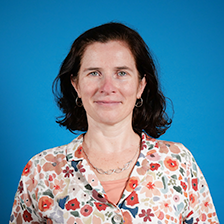
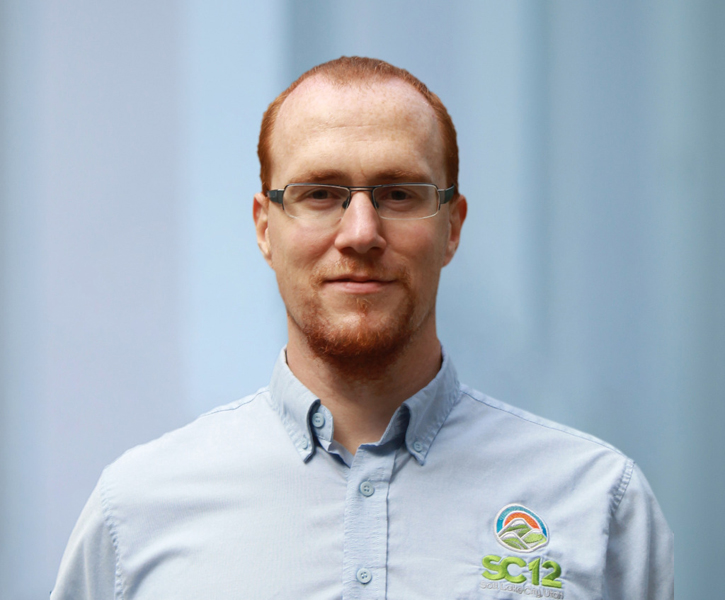
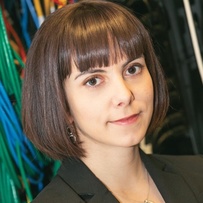
Mercè Roca i Puigvert is an Associate Professor and researcher at Universitat Pompeu Fabra (UPF) and ESCI-UPF, with affiliations to the Barcelona School of Management. She holds a PhD in Management from Leeds University Business School (2006), a Master's in Economics and Business (UPF, 2002), and dual bachelor's degrees in Business Administration (UPF, 2000) and Economics (UPF, 1999). Her research focuses on International business and market research Consumer and organizational decision-making Sustainability, CSR, and circular economy Environmental policy and waste systems Data analytics for economic decisions Recent publications analyze complementary currency impacts, sustainable tourism, opera sector eco-design, and packaging waste policies. She leads the UNESCO Chair in Life Cycle and Climate Change projects and participates in EU-funded initiatives like GREENTOUR and LIFE15/ENV/ES/000209. As director of the MSc in International Business and academic coordinator for multiple programs, she integrates research into curriculum design and industry partnerships.
Torsten Hoefler is a Full Professor of Computer Science at ETH Zurich, Switzerland, with an adjunct appointment in Electrical Engineering. He previously held roles at the National Center for Supercomputing Applications (University of Illinois at Urbana-Champaign) and Indiana University. Full Professor of Computer Science, ETH Zurich (2020–present) Adjunct Professor of Electrical Engineering, ETH Zurich (2020–present) Member at Large, ACM SIGHPC Executive Committee (2013–present) Leadership roles in the MPI Forum and Blue Waters project His research focuses on performance-centric system design , with emphasis on scalable networking, parallel programming models, and performance modeling. Key contributions include the Slim Fly network topology, Data-Centric Python framework, and innovations in parallel graph computations and RDMA-based systems. Recent publications span topics like LLM training networks , quantization geometry , chiplet interconnects , and AI-driven climate modeling , reflecting his interdisciplinary approach combining HPC, AI, and hardware-software co-design. ACM Gordon Bell Prize (2019) ERC Consolidator Grant (2020) IEEE TCSC Award for Excellence (2019) SIAM SIAG/SC Junior Scientist Prize (2012) Latsis Prize of ETH Zurich (2015) He has received multiple best paper awards at top conferences (SC10, SC13, SC14, SC19, IPDPS'15, HPDC'15, OOPSLA'16) and contributed to MPI-3 standardization.
Tom van Woensel is a Full Professor of Freight Transport and Logistics at Eindhoven University of Technology (Netherlands), affiliated with the School of Industrial Engineering and Innovation Sciences and the Department of Operations Planning Accounting & Control. He also holds roles as Academic Director of the Global Supply Chain Management program at Antwerp Management School and Director of the European Supply Chain Forum. His research focuses on freight transport, logistics systems, and operations research methodologies, with contributions to over 150 peer-reviewed publications in journals like Transportation Science and European Journal of Operational Research . Education: BSc/MSc in Applied Economic Sciences (Econometrics), University of Antwerp (Belgium) PhD: Queueing Theoretical Approaches for Traffic Flow Networks, University of Antwerp Research Interests: Optimization of transport and logistics networks using integer programming, metaheuristics, and reinforcement learning Urban freight systems, last-mile delivery, and sustainable logistics Supply chain resilience, collaboration in logistics networks, and industry-academia partnerships Applications of AI in solving stochastic transportation problems Awards and Recognition: Outstanding Professor in Supply Chain & Logistics (2021) European Journal of Operational Research Best Review Paper (2016) INFORMS Senior Member (2024) Collaborations and Projects: Leads initiatives like SYNERCIZE (zero-emission construction logistics) and Circulaire stromen (circular logistics) Editorial roles at Transportation Science , OR Spectrum , and Urban Science Active in industry partnerships through the European Supply Chain Forum (75+ multinationals) Labs/Teams: EAISI Mobility (Eindhoven AI Systems Institute) CIRRELT (Montreal, Canada) collaborating member
Kerrianne Harrington is a Researcher in the Department of Physics at the University of Bath, focusing on developing hollow core optical fibres for advanced applications. Her work contributes to the 'u-Care' interdisciplinary project, aiming to create compact UV-C light sources for medical therapies targeting drug-resistant pathogens and precision cancer surgery. She also leads the 'Robotic microscopy for globally accessible science and healthcare' project, advancing fibre-based imaging and diagnostic tools. Her research expertise spans optical fibre fabrication, splicing, and simulation, with a focus on anti-resonant fibres enabling UV light transmission below 220 nm—unachievable in traditional fibres. Key contributions include Axi-Stack manufacturing techniques and methods to minimize interconnection losses in hollow-core fibres. Collaborations involve projects funded by EPSRC and The Royal Society, addressing quantum communication, low-loss fibre integration, and biomedical applications. Her work aligns with UN SDGs, particularly in advancing health and innovation. Recent publications highlight achievements in supercontinuum generation, UV light guidance, and multi-core fibre designs. Harrington’s research bridges fundamental physics with practical innovations in healthcare, photonics, and quantum technologies.
Alex C. Snoeren is a Professor in the Department of Computer Science and Engineering at the University of California, San Diego (UCSD). He is affiliated with the Systems and Networking Research Group, the Security and Cryptography Research Group, and the Center for Networked Systems. His work focuses on distributed systems, networking, and security, with notable contributions to data center networking, optical systems, and network measurement. He has advised numerous PhD students and has been actively involved in teaching courses such as CSE 120 (Principles of Computer Operating Systems), CSE 123 (Computer Networks), and graduate-level systems and networking courses. His research has led to innovations in network architecture, including projects like RotorNet (optical data center networking) and Eden (far memory integration). Key awards include the Best Paper at ACM SIGCOMM 2023 and multiple best student paper recognitions. His work spans both theoretical and applied domains, addressing challenges in network scalability, security, and efficiency.
Benjamin GAN Kok Siew is a Full-time Faculty Associate Professor of Information Systems (Education) at the School of Computing and Information Systems (SCIS), Singapore Management University (SMU). He has held this position since 2005 and served as Academic Director of the DHL-SMU Analytics Lab (2018–2020) and NEC-SMU Solutions Lab (2016–2017). His academic journey includes a PhD in Computer Science from the University of Iowa (1995), followed by roles at the Institute of Systems Science, National University of Singapore (1997–2005), and industry experience as a software engineer in the U.S. (1990–1997). His research focuses on Human-Machine Collaborative Systems , Technology-Enhanced Learning , and Global Software Project Management . Key contributions include developing interactive learning tools like ITSS (Interactive Web-Based Programming Tutorials) and exploring climate change education through multidisciplinary approaches. He has published widely in software engineering education, capstone course design, and global teamwork pedagogy. Dr. GAN has led numerous grants, including initiatives on climate action pedagogy (2021), logistics optimization (2020), and technology-enhanced learning (2006–2019). He has received awards such as the National Day Award (2015) and Spring Singapore Merit Award (2016). His teaching spans courses like Global Software Project Management, Interaction Design, and Capstone Projects, emphasizing hands-on experience and industry alignment. Grants & Projects: DHL-SMU Analytics Lab, Vehicle Routing Problem for Cross-Docking Labs & Teams: Co-founder of DHL-SMU Analytics Lab, Collaborator in SMART (Singapore-MIT Alliance) Service Roles: Member of University Tribunal, Library Advisory Committee, and Singapore Computer Society
Prof. Dr. Werner Zorn is a renowned computer scientist and Professor of Communication Systems at the Hasso Plattner Institute (HPI) in Potsdam, Germany. With a foundational role in establishing Germany's early internet infrastructure and connecting China to the global internet, his work has been pivotal in shaping international network connectivity. His academic career spans from the University of Karlsruhe, where he was appointed Professor of Computer Science in 1979, to his current position at HPI since 2001. Education: He studied electrical engineering with a focus on communications at TH Karlsruhe (1962–1967) and earned his Dr.-Ing. with distinction in 1971. Research Focus: His research encompasses performance analysis of computing systems, computer networks, and the development of quantitative modeling methodologies such as FMC-QE (Fundamental Modeling Concepts for Quantitative Evaluation). His work bridges theoretical modeling with practical applications in network design and optimization. Publications & Articles: His publications reflect a deep engagement with internet history, network performance, and system modeling. Notable works include detailed accounts of China's first email connection and the evolution of the Chinese Academic Network (CANET), as well as innovative approaches to system performance modeling. Awards & Recognition: He has received numerous accolades, including the Order of Merit of the Federal Republic of Germany, induction into the Internet Hall of Fame, and the Chinese Government Friendship Award, underscoring his global impact. Current Projects: He leads projects like FMC-QE for hierarchical system modeling and the IT Services Atlas for implementing EU directives, alongside mentoring doctoral students in advanced network and system research.
Hanyu Gu is a Senior Lecturer in the School of Mathematical and Physical Sciences at the University of Technology Sydney (UTS), part of the Faculty of Science. He holds a PhD in Power Engineering and Automation from Shanghai Jiao Tong University (1999) and has extensive industry experience in telecommunications, airline optimization, and mining. His research focuses on combinatorial optimization, decomposition methods, stochastic programming, and machine learning applications. Notable awards include second place in the 2020 ROADEF competition. He collaborates with institutions like the UTS Transportation Research Centre and has contributed to projects such as optimisation engines for airline management and underground mining algorithms. Current research explores hybrid algorithms, Bayesian optimisation, and scheduling under uncertainty. Education: Bachelor in Industrial Automation, Shanghai Jiao Tong University (1994) Master in Control Theory and Application, Shanghai Jiao Tong University (1997) PhD in Power Engineering and Automation, Shanghai Jiao Tong University (1999) Industry Experience: ZTE (1999–2001): Senior Wireless Communication Engineer CTI, Melbourne (2007–2011): Airline Management Optimisation Researcher NICTA (2011–2013): Underground Mining Optimisation Researcher Grants: ARC Linkage Project LP0883855 (2008–2012): Developed optimisation tools for transportation crewing, valued at $840,000. Research interests span decomposition methods for large-scale problems (e.g., airline scheduling), stochastic programming for resource sharing, and hybridisation of mathematical programming with constraint programming. Recent work includes Bayesian optimisation for knapsack problems and relax-and-solve algorithms for project scheduling. His articles frequently address optimisation in logistics, healthcare, and transportation, emphasizing practical industry applications and algorithmic innovation. Awards: Second place in the ROADEF 2020 competition for maintenance planning solutions. Advising & Grants: Supervises Masters and PhD students in operations research and optimisation. Collaborates with Ausgrid, UGL, and ANC on optimisation projects (e.g., employee training timetabling, logistics). Active in the Optimisation Group of UTS Transportation Research Centre, he bridges academic research with real-world challenges in scheduling, logistics, and resource management. Ongoing efforts include advancing metaheuristics and integrating machine learning with traditional optimisation techniques.
Seyed M.R. Iravani is Professor of Industrial Engineering and Management Sciences at Northwestern University's McCormick School of Engineering, with courtesy appointment at the Kellogg School of Management. His research focuses on applications of stochastic processes, queuing theory, game theory, and social networks to design and control of manufacturing, service operations, healthcare systems, supply chains, and nonprofit systems. His research interests emphasize improving flexibility, coordination, and responsiveness in complex operations systems. Professor Iravani develops mathematical optimization models to analyze optimal system behavior, provide managerial insights, and create practical implementation strategies for real-world operations challenges. His work spans manufacturing systems, healthcare operations, supply chain management, service operations, and nonprofit operations. The analysis of Professor Iravani's publications reveals a consistent focus on operations management challenges across multiple domains. His research employs analytical methods including stochastic processes, game theory, queueing theory, and social networks to address problems in capacity allocation, resource management, supply chain coordination, and service system design. A notable trend is his increasing focus on healthcare operations and nonprofit systems in recent years, while maintaining strong contributions to fundamental operations management theory. Professor Iravani has served on editorial boards of leading journals including Operations Research, Management Science, Service Science, IIE Transactions, and Naval Research Logistics. He has collaborated with organizations such as GM, Ford, Motorola, GE, Northwestern Memorial Hospital, Chicago Food Depository, Facebook, and Roti Mediterranean Restaurants to improve operational performance. He teaches courses including Production Planning and Scheduling, Service Operations Management, Operations, and Operations Management for MBA students. He has also authored the textbook 'Operations Engineering and Management: Concepts, Analytics and Principles for Improvement' published by McGraw Hill in 2020, which has become a standard resource in operations engineering education.
Professor John Nelson is a Chair in Public Transport at the Institute of Transport and Logistics Studies (ITLS), University of Sydney. He holds a BA from Liverpool University, a PGCE from Durham, and a PhD from Newcastle University. He is a Fellow of the Institute of Highway Transport (FIHT) and the Royal Geographical Society (FRGS). Roles & Affiliations: Chair in Public Transport at ITLS, University of Sydney Member of The Net Zero Institute Series Editor for Routledge’s Transport and Mobility book series Former roles include Sixth Century Chair in Transport Studies and Director of the Centre for Transport Research at the University of Aberdeen Research Interests: Focus on applying new technologies to enhance transport systems, particularly public and shared transport solutions. His work addresses policy frameworks for sustainable mobility, funded by UK Research Councils, Innovate UK, and industry partners. Key themes include MaaS (Mobility as a Service), climate resilience, and transport equity. Grants & Projects: 2024: 'Shared micro-mobility and social inclusion' (Sydney) 2024: 'Investigation into the economy-wide implications of public transport fare trials' 2023: 'Community Self-Determination in Automated Delivery Systems' (ARC Discovery Project) Awards & Recognition: Honored as Scientific Director of the 2016 ITS European Congress and founder of MaaS Scotland. His work appears in high-impact journals like Transport Policy and Transportation Research Part A . Lab/Teams: Active in interdisciplinary teams at ITLS and collaborates with global networks like the RCUK dot.rural Hub. His research bridges academia, industry, and policy-making to advance sustainable transport systems.
Phillipa Gill is an Adjunct Associate Professor at the University of Massachusetts Amherst and a Research Scientist at Google, focusing on the Measurement Lab Project. She holds a Ph.D. in Computer Science from the University of Toronto (2012) and completed a postdoctoral fellowship at the Citizen Lab, Munk School of Global Affairs. Her research emphasizes computer networking and security, particularly network measurement techniques to study online information controls, routing security, and traffic differentiation. Education: Ph.D. in Computer Science, University of Toronto (2012) Postdoctoral Fellowship, Citizen Lab, University of Toronto (2012–2013) M.Sc. in Computer Science, University of Calgary (2007–2008) Bachelor’s Degree (not explicitly stated) Research Interests: Gill’s work addresses network interference, reliability, and security. She develops tools like the ICLab platform for measuring online censorship and collaborates across disciplines, including law and political science. Recent projects include analyzing China’s DNS censorship and evaluating domain name encryption privacy. Key Activities: General co-Chair, ACM Internet Measurement Conference (2016) Program co-Chair, USENIX FOCI (2015) and ACM CoNEXT Student Workshop (2013) Area Editor, ACM SIGCOMM Computer Communications Review (2013–2015) Awards: NSF CAREER Award, Google Research Award Best Paper Awards at IMC (2013) and PAM (2008) IBM Best Presentation Award (Cloud Computing) Anita Borg Fellowship finalist (2009–2010) Labs & Outreach: Leads the ICLab and Calipr Research Group. Co-founded the LED-Programming-Workshop to engage pre-college students in programming and STEM. Active in promoting diversity, such as hosting Women in Computer Science events.
Professor Ning Wang is a leading academic in communication systems at the University of Surrey's Institute for Communication Systems (ICS), School of Computer Science and Electronic Engineering. He holds a PhD from the University of Surrey (2004) and has expertise in 5G/6G networks, edge computing, and space-terrestrial integration. As a coordinator for the EuroMaster Programme and Communication Networks and Software (CNS) pathway, he leads research in network management, mobile video delivery, and IoT applications. His work has been featured in IEEE ComSoc Technology News three times since 2012. Current leadership roles include 5GIC Work Area 1 leader for content and network context. Research collaborations span global institutions like UCL, ETH Zurich, and industry partners like BT and InterDigital. Notable contributions include SDN-based space-terrestrial network integration (VDPA scheme) and O-RAN automation via federated DRL. Over 130 publications and active participation in standards bodies (IETF, 3GPP) reflect his impact on future network architectures. Educations: BEng in Computing (Changchun University of Science and Technology, 1996) MEng in Electronic Engineering (Nanyang Technological University, 2000) PhD in Electronic Engineering (University of Surrey, 2004) Research Focus: Future Internet design, network intelligence, content-centric networking, and satellite integration. Key projects include EU Horizon Europe SPIRIT (immersive telepresence), ESA TINA (satellite 5G functions), and EPSRC NG-CDI (converged digital infrastructures). His research emphasizes practical solutions like edge-AI for VNF splitting and holographic frame synchronisation. Grants & Projects: Over £20M in grants from EPSRC, EU Horizon, InnovateUK, and Royal Society. Active in EU-funded SAT5G (satellite-terrestrial 5G) and C-DAX (smart grid cybersecurity).
Gautam Basu is a Professor of Practice at Aalto University's Department of Information and Service Management. His research focuses on illicit supply chains, transnational smuggling, and border security strategies. He holds a prominent role in analyzing logistics vulnerabilities and criminal networks within global trade systems. His key research interests include understanding institutional corruption in illicit activities, strategic attributes of smuggling operations, and supply chain risk management frameworks. He emphasizes transaction cost analysis and operational stealth tactics used by criminal networks. Basu's articles consistently address challenges faced by customs organizations, focusing on logistics flexibility in smuggling, concealment mechanisms, and counter-smuggling strategies. His work bridges criminology with supply chain management to develop practical solutions for border security challenges. No academic awards or grants are explicitly mentioned in the provided texts. He has no listed advisees or students. His professional profile includes active involvement in research without indication of part-time status or former institutional roles.
Prof. Michael Schneider is Universitätsprofessor and Chair of Computational Logistics at RWTH Aachen University since 2016. Previously, he held positions at TU Darmstadt (2013-2016) and earned his doctoral degree from TU Kaiserslautern (2012). His research focuses on logistics optimization, including transportation routing, warehouse management, and metaheuristic methods for solving complex operational challenges. He leads the Global Challenges Lab and serves as communication chair of VeRoLog (EURO's vehicle routing group). Research interests include: quantitative modeling for supply chains, heuristic/exact optimization methods, electric vehicle routing, territory design, and production planning. Notable achievements include the INFORMS Journal on Computing Meritorious Paper Award (2021) and editorial roles in journals like Applied Mathematical Modelling. Publications span topics like vehicle routing with time windows, electric logistics networks, and warehouse automation strategies. His work integrates advanced algorithms with real-world industry applications (e.g., DHL, Picnic). The Computational Logistics group collaborates on projects addressing sustainability, autonomous systems, and modern warehousing challenges. Education: Business Admin & Computer Science (University of Mannheim), PhD (TU Kaiserslautern) Professional Roles: VeRoLog Communication Chair, EURO Working Group Key Projects: Electric vehicle routing optimization, warehouse automation, and sustainable logistics networks
Dr. Andrea Flack is an Independent Emmy Noether Group Leader at the Max Planck Institute of Animal Behavior, Konstanz, Germany, and a Junior Group Leader at the Centre for the Advanced Study of Collective Behaviour, University of Konstanz. Her research focuses on understanding how ecological, environmental, and genetic factors shape migratory behaviors in birds, particularly white storks, and their evolutionary consequences. Current Positions: Independent Emmy Noether Group Leader, Max Planck Institute of Animal Behavior (2022–present) Junior Group Leader, Centre for the Advanced Study of Collective Behaviour (2020–present) Education: DPhil in Zoology (2009), University of Oxford Diploma in Biology (2009), Freie Universität Berlin Her work integrates cutting-edge technologies such as high-resolution GPS, accelerometers, and on-board cameras with experimental approaches like delayed-releases and cross-fostering to explore behavioral variation and its implications. Recent research highlights include social learning in migration and the impact of anthropogenic habitats on stork movement patterns. Key trends across her publications emphasize collective decision-making, environmental adaptation, and technological innovations in tracking. Notable contributions appear in journals like PNAS , Current Biology , and Journal of Applied Ecology . Scientific Awards: Emmy Noether Fellowship Dr. Flack collaborates extensively, utilizing Movebank for data integration and leading studies on avian collision risks and migration phenology. Her lab team includes researchers like William Fiedler and Emily Aikens , focusing on experimental designs and ecological modeling.