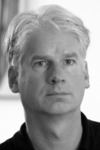
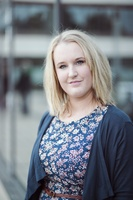
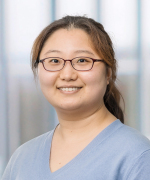
Dr. Torsten Merz is a Principal Research Engineer at CSIRO's Autonomous Systems Laboratory , focusing on technologies for dependable autonomous mobile robots in environmental applications. He holds a Dr.-Ing. (Doctor of Engineering) and a Diplom-Informatiker (Master's equivalent) from German universities. Education : Doctoral degree in Engineering (2000), Department of Computer Science, University of Erlangen-Nürnberg (Germany) Diplom-Informatiker in Applied Computer Science in the Natural Sciences (1995), University of Bielefeld (Germany) Research Interests : Enabling technologies for autonomous helicopters , underwater vehicles , and uncrewed surface vehicles with a focus on dependable systems and real-time control . Integration of computer vision , modelling languages , and evolutionary robotics into environmental monitoring and infrastructure inspection. Article Trends : Recent work emphasizes edge-AI for reef surveys, underwater imaging for habitat mapping, and multi-objective motion planning for dynamic environments. Historical contributions include control frameworks for autonomous robots, obstacle avoidance in rural areas, and autonomous landing systems for UAVs. Labs & Teams : Lead developer at CSIRO's Autonomous Systems Laboratory , where he pioneered autonomous flight technologies for helicopters and expanded into underwater/surface robotics . Previously led the Perception and Control Group at Linköping University, developing avionics for autonomous helicopters.
Professor Sam Hellmuth is a leading academic in phonology at the University of York's Department of Language and Linguistic Science within the Faculty of Arts and Humanities. She serves as Associate Dean for Teaching, Learning and Students while maintaining an active research program focused on Arabic prosody and second language phonology. Her educational background includes: BA (Hons) in Arabic and French, University of Leeds (1985-1989) MA in Linguistics (Arabic), SOAS University of London (2000-2001) PhD in Linguistics and Phonetics, SOAS University of London (2001-2006) Postdoctoral Researcher, University of Potsdam (2006-2007) Professor Hellmuth's research centers on suprasegmental phenomena in Arabic dialects, particularly intonation patterns across regional varieties. Her work bridges theoretical phonology with empirical corpus-based approaches, examining prosodic variation in both native Arabic speech and L2 English acquisition. She specializes in the syntax-phonology interface and has pioneered methodologies for documenting intonational variation through large-scale comparative projects. Her publication record reveals consistent focus on Arabic intonational typology, with recent work expanding to Northern England dialects and emergent bilinguals. The research demonstrates sophisticated integration of auditory transcription with statistical F0 modeling within the Autosegmental-Metrical framework. Professional recognition includes: Editorial Board, Al-'Arabiyya (Journal of the American Association of Teachers of Arabic) Editorial Board, Arabic Linguistics (John Benjamins) Economic and Social Research Council Peer Review College membership Professor Hellmuth actively supervises 25+ graduate students, primarily on Arabic phonology topics, and leads major funded projects including the ESRC-supported 'Generations of London English' (2023-2026). Her collaborative network spans institutions in Tunisia, Saudi Arabia, Lebanon, Pakistan, and across the UK. She directs the Phonetics and Phonology and Language Variation and Change research groups, with recent work focusing on corpus development for multidialectal Arabic teaching resources.
Timothy O'Donnell serves as Associate Professor in the Department of Linguistics at McGill University and holds a Canada CIFAR AI Chair at Mila—Québec Artificial Intelligence Institute. He co-directs the Montréal Computational and Quantitative Linguistics Laboratory (MCQLL) and directs McGill's interdisciplinary Cognitive Science Program. Additionally, he maintains affiliations as an associate member of the School of Computer Science, member of McGill NLP, and affiliate of the Reasoning and Learning Laboratory. His academic foundation includes a PhD from Harvard University, establishing expertise in quantitative and computational approaches to language. Dr. O'Donnell's research centers on computational models of language learning and processing, mathematical linguistics, and probabilistic inference. His work bridges cognitive science, natural language processing, and machine learning to model human language acquisition and processing. Key investigations include grammar induction, neural language modeling, syntactic control mechanisms, and the cognitive foundations of linguistic phenomena. His methodologies emphasize probabilistic frameworks and mathematical rigor to explain language universals and processing constraints. Analysis of his recent publications reveals dominant trends in visually-grounded grammar induction, surprisal-based processing models, and neural language model architectures. His work consistently connects computational linguistics with cognitive theory, particularly in language acquisition modeling and the explanation of linguistic patterns through probabilistic inference. Cross-cutting themes include information locality, lexical trade-offs, and the mathematical properties of language systems. His scientific recognition includes the prestigious William Dawson Scholar award and Canada CIFAR AI Chair, highlighting contributions to artificial intelligence and computational linguistics. These honors reflect leadership in advancing AI research through linguistic insights. As co-director of MCQLL, Dr. O'Donnell leads an interdisciplinary team integrating computational, quantitative, and cognitive approaches to linguistic research. The laboratory fosters collaboration between linguists, computer scientists, and cognitive scientists, driving innovation in natural language processing and language modeling while maintaining strong ties to Mila's AI research ecosystem.
Maximilian Rabe is a Postdoctoral Researcher in the Department of Experimental and Biological Psychology at the Faculty of Human Sciences, University of Potsdam, with a secondary affiliation at the University of Copenhagen. Currently on parental leave until September 22, 2025, he maintains active research involvement in computational cognitive science, with particular focus on eye-movement dynamics during reading processes and psycholinguistic modeling. His dual institutional appointments reflect his interdisciplinary research bridging German and Danish academic communities. Dr. Rabe completed his academic training with a B.Sc. in Psychology from the University of Potsdam (2016), followed by an M.Sc. in Psychology - Cognition and Brain Science from the University of Victoria, Canada (2018), and earned his Ph.D. in Cognitive Science from the University of Potsdam in 2024 under the supervision of Ralf Engbert and Shravan Vasishth. His research program centers on computational and statistical modeling of cognitive processes, with specific expertise in eye-movement control, psycholinguistics, and memory systems. Dr. Rabe develops integrated cognitive architectures that simulate how humans process language and allocate visual attention during reading. His methodological approach combines experimental psychology with advanced Bayesian statistics and dynamical systems theory to create predictive models of cognitive behavior. Analysis of his publication trajectory reveals a consistent focus on developing sophisticated computational frameworks for understanding reading processes, with increasing emphasis on integrated models that couple syntactic processing with eye-movement control. A distinctive feature of his work is the development of specialized methodological tools, particularly R packages that advance research practices in cognitive science. His publications span high-impact journals in psychology, cognitive science, and methodology, demonstrating strong interdisciplinary reach. Dr. Rabe is actively involved in multiple research projects funded by the German Research Foundation (DFG), including Project B03 of Collaborative Research Center 1287 on eye-movement control and parsing processes, and Project B03 of CRC 1294 on parameter inference in dynamical cognitive models. His work at the University of Copenhagen investigating visual attention in virtual reality environments receives support from Villum Fonden. As a methodological innovator, Dr. Rabe has developed and maintains several important R packages including hypr for hypothesis-driven contrast coding, designr for experimental design, appRiori for Bayesian analysis, and RStanTVA for visual attention modeling. His commitment to open science practices is evident in his software development and preprint sharing. Working within Ralf Engbert's research group at the University of Potsdam, Dr. Rabe contributes to a vibrant interdisciplinary environment that combines experimental psychology, computational modeling, and advanced statistical methods. His research has implications for understanding fundamental cognitive processes and developing more accurate models of human information processing during language comprehension.
Hermann Jahnke is a Full Professor and Chair for Management Accounting and Operations Management at the Faculty of Economics, Bielefeld University. He has held academic positions at the University of the German Federal Armed Forces in Hamburg and Cologne University, and served as Dean of his faculty twice (1997-1998, 2015-2023). Education: Habilitation in Operations Management (Hamburg University), PhD in Statistics and Econometrics (Hamburg University) Affiliations: Chair of Business Administration, Controlling & Production Management; Bielefeld Graduate School of Economics and Management Research Focus: His work bridges managerial accounting, decision theory, and operational challenges in modern retail and manufacturing contexts. Key contributions include: Demand forecasting frameworks for e-grocery retailers using distributional regression Complexity analysis of discrete lot-sizing and scheduling problems Integration of internal/external accounting under IFRS for SMEs Strategic cost modeling and service operations management Investigations into crowd logistics and fast fashion supply chains Publications: Over 30 peer-reviewed articles in journals like Decision Sciences , European Journal of Operational Research , and International Journal of Forecasting , plus 3 German-language books on cluster analysis and operations management.
Markus Vorauer is a Lecturer and Head of the German Department at the Institute for Secondary School Education, University of Teacher Education Upper Austria, where he has been affiliated since 1998. Previously teaching at academic secondary schools (AHS) until 2012 and serving as a university lecturer at the University of Linz (1988-2005), his work bridges academic research and practical education with a focus on literary/media analysis and didactics. Education Mag.phil. in German and Romance Studies (Italian), University of Salzburg (1987) Dissertation in Italian (Regional and Cultural Studies, Film Studies) Rigorosum: Regional and Cultural Studies (Italian), New German Literature (German) Research Focus Vorauer's scholarship spans Literary Studies (Modern Austrian literature, literary/cultural history, paratexts, comparative literature, children's/young adult literature) and Media Studies (film/TV analysis, advertisement/trailer analysis, graphic novels, film history, intermediality). His signature research examines images of teachers in literature and film , analyzing portrayals across cultural contexts through frameworks of gender, power dynamics, and educational philosophy. This work integrates intermedial approaches to explore how narrative forms translate between literature and cinema. Publication Trends His 2011-2017 publications reveal sustained exploration of teacher representation in contemporary European cinema (particularly Austrian/Italian), intermedial adaptation processes, and critical applications of film in education. Recurring themes include classroom dynamics, cultural critique of capitalism, and Holocaust representation. His editorial work on the 'Europäischer Film' and 'Europäische Kinder- und Jugendliteratur' series demonstrates commitment to expanding academic resources in these fields. Professional Leadership Co-coordinator of 'DER NEUE HEIMATFILM' festival (Freistadt, since 1994) Vice-chairman of Verein zur Förderung kommunikativer Kinokultur in Linz Chairman of Verein Filmring der Jugend in Linz These roles underscore his active engagement in shaping film culture and educational practices beyond traditional academic boundaries.
Dr. Hermann Tempel, Acting Department Head of Functional Materials and Components at Jülich Research Centre, Germany, is a leading researcher in advanced electrochemical energy systems. Affiliated with the Institute of Energy Technologies (IET) , specifically the Fundamentals of Electrochemistry (IET-1) department, he focuses on next-generation battery and electrolysis technologies. His research explores solid-state batteries post-lithium chemistries (sodium-, aluminum-ion) CO2, wastewater, and alkaline water electrolysis nanoscale material properties with emphasis on industrial scalability and technoeconomic viability. Recent publications highlight trends in 3D carbon fiber interlayers for metal anodes high-entropy halide battery materials CO2 electroreduction catalysts and systems solid-state electrolyte microstructural optimization via advanced electrochemical modeling, operando microscopy, and industrial process engineering. His work addresses critical challenges in energy storage and conversion, particularly through in situ characterization techniques double-layer capacitance analysis solid electrolyte interphase (SEI) engineering electrochemical system design to enable sustainable energy technologies.
Katharina Rohlfing is a Professor of Psycholinguistics at Paderborn University, working within the Faculty of Arts and Humanities in the Institute of German Studies and Comparative Literary Science. She serves as Speaker for the Transregional Collaborative Research Centre 318 and is the Scientific Director of the SprachSpielLabor. Her office is located at Technologiepark 6 in Paderborn. Her research focuses on language acquisition, cognitive development, multimodal interaction, gesture and learning, and developmental robotics. Her work bridges linguistics, psychology, and human-robot interaction, with particular emphasis on how children develop language skills and how technology can support inclusive education. Her recent publications demonstrate increasing interdisciplinary work spanning linguistics, cognitive science, education, and human-robot interaction. She has been actively publishing in both theoretical linguistics journals and interdisciplinary venues focused on technology-enhanced learning. Her research increasingly incorporates robotics and digital media as tools for understanding and enhancing language development. Honorable mention at the IDC (Interaction Design and Children) (2021) Best Paper Award IEEE Transactions on Autonomous Mental Development (2016) Best Paper Award ICDL 2009 (2009) Dilthey Fellow, VolkswagenStiftung (2006) Emmy Noether-Fellow, Phase 1 (DFG) (2002) Professor Rohlfing has served in various academic leadership roles including as Specialty Chief Editor for Frontiers in Psychology: Developmental Psychology (2020-2022), Member of the Senate of Paderborn University (2018-2021), and Chair of Education for the IEEE Transactions on Cognitive and Developmental Systems Technical Committee (2012-2018). She is actively involved in multiple research projects including SAYL, SAIL, TRR 318, and merits, which focus on language development, inclusive education, and human-robot interaction. She directs the SprachSpielLabor and oversees research projects examining early language development with digital media and social robots. Her work increasingly focuses on how technology can promote inclusion opportunities in digital society, particularly for young children.
Sandra Debreslioska is a postdoctoral researcher at the Centre for Languages and Literature, Lund University, specializing in General Linguistics. She leads a Swedish Research Council-funded project comparing gesture production in German (spoken language) and German Sign Language (DGS) to investigate multimodal language structures at the discourse level. Current project: 'Gestures in spoken and signed discourse' (2020-2024) Key research areas: Multimodal communication, discourse analysis, gesture studies, language acquisition Active collaborator in international gesture research Her research reveals that language modality significantly affects gesture patterns, particularly in information structure encoding and referent tracking. Gestures show systematic alignment with topic-comment structures and information status markers in both spoken and signed languages. Scientific recognition includes: Swedish Research Council funding Peer-reviewed conference presentations (2022-2024) Active participation in 18 academic activities She has published 14 research outputs including 6 peer-reviewed articles, 2 abstracts, and 2 book chapters, focusing on the relationship between gestures and language in multimodal contexts.
Prof. Dr. Axel Hutter is Professor of Theoretical Philosophy at the Ludwig-Maximilian University Munich's Faculty of Philosophy, Philosophy of Science and the Study of Religion. He also directs the Master's program in Theoretical Philosophy and co-edits academic series at Mohr Siebeck and Alber Verlag. Research Focus : Modern theoretical philosophy Philosophy of language, epistemology, rationality theory, and metaphysics Classical German philosophy (Kant, Hegel, Schelling) Classical analytical philosophy (Frege, Wittgenstein) Quantum theories and narrative ontology Publications and Projects : Recent works include Narrative Ontology (Polity Press, 2022) and Sprachanalyse und Metaphysik (Beck Verlag, 2025). Current research projects span topics like quantum nonlocality, AI ethics, and causality in physics. Scientific Awards : Preis für gute Lehre (2023, 2019) Justus Hartnack Lecture, Aarhus (2006)
Dr. Julia Dillmann is an Academic Councillor in the Department of Developmental Psychology at Justus Liebig University Giessen, Germany. She specializes in studying motor-cognitive development in infants with developmental conditions and cross-modal perception in monolingual/bilingual infants, particularly examining pandemic impacts on social-emotional development. B.Sc. and M.Sc. in Psychology from Justus Liebig University Giessen Doctorate (Dr. rer. nat.) with summa cum laude distinction (2019) Her research focuses on developmental psychology, with emphasis on: Motor and cognitive outcomes in children treated for idiopathic clubfoot Visual-spatial abilities in infants with internal strabismus Multimodal perception (face/speech integration) Parental stress effects during the COVID-19 pandemic Longitudinal developmental assessments Early childhood intervention efficacy Recent publications analyze gaze cue utilization in uncertain situations, pandemic-related developmental disruptions, and cross-racial perception in infants. She has presented findings at major conferences like Society for Research in Child Development (SRCD) and German Psychological Society (DGPs) meetings. Scientific recognition includes: Summa cum laude doctorate Active member of German Society for Psychology (DGPs) Participant in the Division of Developmental Psychology of the DGPs Membership in Center for Mind, Brain and Behavior (CMBB) Teaching responsibilities include: Seminar 'Basics of developmental psychology' (winter/summer) Lecture 'Introduction to Psychology' for minor students Lecture 'Basics of developmental psychology part 1' She collaborates with Prof. Gudrun Schwarzer's team in studying developmental trajectories and participates in the doctoral committee for natural sciences.
Grzegorz Krynicki is a Senior Researcher at the Faculty of English , Adam Mickiewicz University, Poznań, Poland. He leads the Speech and Language Processing Laboratory , focusing on experimental phonetics, machine translation, and computer-assisted language learning. With a Ph.D. in English (2006) and MA in English (2000) from Adam Mickiewicz University, he has contributed extensively to articulatory phonetics and Polish-English corpus linguistics. Education MA in English, Poznań (2000) Ph.D. in English, Poznań (2006) His research interests bridge Articulatory Phonetics and Machine Learning , with applications in Computer Assisted Pronunciation Teaching , Automatic Speech Recognition , and Corpus Linguistics . He has developed tools like Wordbuilder for corpus-based exercises and IPA2Polglish for phonetic transcription conversion. The articles reflect his expertise in electropalatography (EPG) for L2 pronunciation teaching, phonetic error detection in Polish learners of English, and machine translation systems like POLENG. His work spans Multilingualism , Speech Technology , and Polish-English Contrastive Analysis . Scientific Awards University of Bielefeld scholarship (1999) Professional Activities include participation in the International Society of Phonetic Sciences and development of the Speech and Language Processing Laboratory . He has presented at conferences such as the International Congress of Phonetic Sciences (2019) and Societas Linguistica Europaea meetings, often collaborating with institutions like the University of Colorado and Linköping University.
Yuning Ding is a PhD Student and Research Assistant in the junior research group 'EduNLP' at the Research Center CATALPA (Center of Advanced Technology for Assisted Learning and Predictive Analytics), FernUniversität in Hagen, since January 2022. Her work focuses on Natural Language Processing applications for educational technology, specifically developing systems for automatic essay scoring and generating formative feedback for learners and summative feedback for teachers. Her educational background includes: M.Sc. in Applied Cognitive and Media Science with Specialization in Cognition & Artificial Intelligence at University of Duisburg-Essen (2017-2019) B.Sc. in Applied Cognitive and Media Science at University of Duisburg-Essen (2014-2017) B.A. in Communications at University of International Relations, Beijing (2009-2013) Ding's research centers on leveraging NLP to enhance writing education through AI-driven assessment and feedback systems. Her work bridges computational linguistics and pedagogy, with particular emphasis on argument mining, cohesion analysis, and cross-lingual content scoring. She investigates how transformer models and multi-task learning can improve the reliability and educational value of automated writing evaluation, while addressing critical issues like fairness and adversarial vulnerability in scoring systems. Her research demonstrates how NLP can provide actionable insights for both students and educators in writing development. Analysis of her publication trends reveals a strategic progression from foundational work on content scoring and error analysis toward sophisticated integrated systems. Recent work emphasizes multimodal feedback generation, argument-cohesion integration, and cross-lingual transfer, with increasing focus on real-world implementation challenges including fairness, robustness, and user experience. Her research spans multiple languages and educational contexts, reflecting a commitment to globally applicable educational technology. Within CATALPA, Ding actively collaborates across disciplines through the center's vibrant knowledge-sharing culture. She participates in project presentations and colloquia that facilitate cross-pollination of ideas between computer science, linguistics, and educational theory. Her work on the DARIUS corpus and FEAT-writing system demonstrates tangible contributions to educational resource development and interactive learning environments.
Carlos Valcarcel Riveiro is a full-time Professor of French Didactics at the Faculty of Education and Sport Sciences of the University of Vigo, specializing in Romance Philology with particular expertise in French linguistics. His academic appointments include teaching positions in the Erasmus Mundus Master's Degree in Lexicography (EMLex) and membership in multiple research networks including RELEX Lexicography Network, PORTLEX, MultiGenera, and MultiComb projects. His educational background features a Doctorate from the University of Santiago de Compostela (2007) with his thesis Geolinguistics of the Atlantic Romance Periphery: Languages and Places , supervised by Dr. Elvira Fidalgo Francisco and Dr. Xosé Manuel Santos Solla. Valcarcel Riveiro's research spans multiple interconnected domains including Sociolinguistics , Natural Language Processing , Lexicography , and Foreign Language Teaching . He is particularly known for advocating the implementation of computational tools in linguistic research and education, with significant contributions to collaborative lexicography through initiatives like HACKFEST: Edita pa' diante (2018) and Dicionariando (2019). His scholarly work demonstrates a consistent focus on the intersection of traditional philological methods with digital humanities approaches. His publication record shows a clear trajectory from geolinguistic studies of Romance languages in the late 1990s toward increasingly computational and collaborative lexicographic approaches in the 2010s. While his early work focused on regional language variation in Galicia, his more recent publications emphasize multilingual lexicography and computational linguistics applications. Valcarcel Riveiro actively participates in research teams including the LITEX Language and Text research group and contributes to PortLex, a multilingual lexicographic portal covering Spanish, German, French, Galician, and Italian. He also serves as a digital content creator and is the composer and vocalist for the electronic music group Projecto Mourente, demonstrating interdisciplinary engagement beyond traditional academic boundaries.
Christian Wolff serves as a Researcher at the Photovoltaics and Thin Film Electronics Laboratory (PV-LAB) within the Institute of Microengineering at EPFL's School of Engineering. He leads a research group pioneering advancements in perovskite-based photovoltaics, specializing in tandem solar cell architectures that achieve record efficiencies while addressing stability challenges for commercial deployment. His academic foundation includes a Physics doctorate from the University of Potsdam focused on halide perovskite solar cells, preceded by undergraduate studies at Ludwig-Maximilians-Universität München investigating nanoparticulate photocatalysts for water splitting. This was followed by EPFL postdoctoral research funded by a Marie Skłodowska-Curie fellowship. Wolff's research program centers on pushing the boundaries of photovoltaic efficiency through innovative materials engineering. Key thrusts include developing stable perovskite-silicon tandem configurations, mastering degradation mechanisms in halide perovskites, and creating scalable fabrication techniques for industrial translation. His work integrates advanced spectroscopy with device physics to optimize carrier management and photon harvesting. Analysis of his 2025 publications reveals a concentrated focus on perovskite-silicon tandem systems, with dominant themes in large-area manufacturing (60 cm 2 modules), interface engineering for stability, and novel light management strategies. The research demonstrates strong industrial relevance through solutions addressing scalability, UV degradation, and economic viability while maintaining scientific rigor in materials characterization. Recognition for his contributions includes: Marie Skłodowska-Curie Actions individual fellowship Carl-Ramsauer-Price from the Physical Society of Berlin Multiple publication and conference awards Wolff actively mentors the next generation of photovoltaic researchers, currently supervising six PhD candidates while having successfully graduated Guesnay Quentin Jean-Marie Armand. His group operates within EPFL's PV-LAB, which maintains strategic partnerships with semiconductor manufacturers to accelerate technology transfer. Current projects focus on exceeding 30% efficiency in commercial-scale tandem modules while solving operational stability challenges through advanced encapsulation and material design. The PV-LAB under Wolff's leadership combines fundamental materials research with applied engineering, utilizing state-of-the-art thin-film deposition and characterization facilities. The team's collaborative approach bridges academic discovery and industrial implementation, with recent work emphasizing manufacturable solutions for next-generation solar technologies.