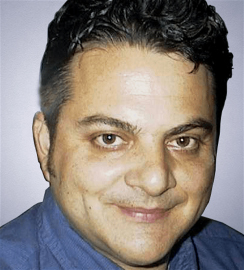
René Westerholt is an Assistant Professor (Juniorprofessor) in Spatial Modelling at the Department of Spatial Planning at Technische Universität Dortmund, Germany. He also leads the Spatial Modelling Lab (RAM) and is affiliated with the GIScience research group at Heidelberg University. His academic background includes a PhD in Geography from Heidelberg University and an M.Sc. in Geoinformatics from Osnabrück University. His research focuses on spatial analysis methodologies, particularly integrating social dimensions into quantitative analysis. Key areas include geosocial media data analysis, spatial autocorrelation, and urban analytics. He has interdisciplinary experience in software development for nature conservation and agricultural projects, and is active in professional societies like the Royal Geographical Society and DGPF. Teaching responsibilities include leading the M.Sc. Urban Analytics and Visualisation programme at the University of Warwick and courses such as IM913 Spatial Methods and IM927 Digital Cities. His work bridges theoretical GIScience with practical applications in urban planning and environmental studies.
Vanessa Rojas is an Associate Professor in the Department of Sustainable Resources Management at the State University of New York College of Environmental Science and Forestry (ESF), based at the Wanakena Campus. Her work bridges wildlife ecology and geospatial technologies, with a focus on bat conservation and habitat assessment in forested landscapes. Her educational background includes: Ph.D. in Biology (Ecology) from Indiana State University (2018) MSc in Biology (Wildlife) from University of Michigan-Flint (2010) BSc in Environmental Studies and Applications from Michigan State University (2004) Dr. Rojas specializes in bat ecology , employing acoustic surveys and geospatial science to study bat habitat use and conservation. Her research integrates occupancy modeling to address challenges in monitoring rare and elusive species, particularly in the context of threats like white-nose syndrome. She is also active in remote sensing and GIS applications for ecological monitoring and biodiversity assessment. Her recent publications (2017-2024) reveal a strong focus on bat conservation, with increasing emphasis on technological solutions (e.g., mobile acoustic surveys, EchoMap initiative) and large-scale monitoring networks (e.g., Adirondack Inventory & Monitoring). Her work spans field ecology, statistical modeling, and applied conservation across northeastern and Appalachian forests. Her scientific recognition includes: TRELIS Fellow (2019) in Geospatial Sciences for Training and Retaining Leaders in STEM Dr. Rojas teaches courses such as Remote Sensing and GIS Technology, Wildlife Techniques, and Ecological Monitoring. While specific grant details are not provided, her involvement in networked projects like AIM and EchoMap suggests collaborative, interdisciplinary funding. She contributes to capacity-building in bat acoustic monitoring globally through initiatives like EchoMap. She is associated with the Adirondack Inventory & Monitoring (AIM) Network and the EchoMap global initiative, which focus on long-term ecological research and bat conservation technology, respectively.
Lia C. Scott is an Assistant Professor of Epidemiology at the University of California, Berkeley School of Public Health's Division of Epidemiology. Her research focuses on structural and social determinants of breast cancer, particularly in Black women, emphasizing the role of structural racism and geospatial epidemiology in health equity. She holds a PhD and MPH from Georgia State University and a BS from Elizabeth City State University. Dr. Scott has been recognized with the NIH Ruth L. Kirschstein National Research Service Award and the Steven M. Teutsch Prevention Effectiveness Fellowship. Her work integrates spatial analysis to address health disparities, including studies on breast cancer subtypes, geographic accessibility of cancer services, and the impact of socioeconomic factors on health outcomes. Notable projects include evaluating the distribution of breast and cervical cancer screening programs in high-burden areas and analyzing racial disparities in triple-negative breast cancer diagnosis through multilevel frameworks. Dr. Scott’s recent research spans the intersection of public health crises, such as pandemic responses to COVID-19, and long-term cancer surveillance. Her studies highlight innovative methodologies to visualize cancer incidence patterns and assess health literacy’s role in vaccination uptake during pandemics. Her contributions have been recognized through prestigious fellowships and grants, and she actively engages in translational research to bridge epidemiologic findings with actionable public health policies aimed at reducing disparities.
Dimitris N. Politis is a Distinguished Professor in the Department of Mathematics and the Halicioglu Data Science Institute at the University of California, San Diego. He holds the prestigious Halicioglu Data Science Institute Chancellor's Endowed Chair II position and has been affiliated with UCSD since 1997, progressing from Associate Professor to his current distinguished position. His educational background includes a Ph.D. in Statistics from Stanford University (1990), along with multiple master's degrees in Statistics, Mathematics, and Computer and Systems Engineering from Stanford and Rensselaer Polytechnic Institute. Professor Politis's research focuses on advanced statistical methodologies, with particular expertise in: Time Series and Random Fields analysis Computer-Intensive Methods in Statistics Resampling and Subsampling for Dependent Observations Spatial Statistics and Point Processes Nonparametric Spectral and Probability Density Estimation Model-free Prediction and Regression Information Theory and Signal Processing Econometric Analysis of Financial Time Series His scholarly output includes over 100 journal papers and several influential books, most notably "SUBSAMPLING" (1999), "MODEL-FREE PREDICTION AND REGRESSION" (2015), and "TIME SERIES: A FIRST COURSE WITH BOOTSTRAP STARTER" (2020), which has become a key educational resource in the field. Professor Politis has received numerous prestigious awards and honors: Guggenheim Fellowship (2011) Fellow of the American Statistical Association (2011) Fellow of the Institute of Mathematical Statistics (2004) Distinguished Author Award from the Journal of Time Series Analysis (2020) Econometric Theory Multa Scripsit Award (2013) Tjalling C. Koopmans Econometric Theory Prize (2012) He has been principal investigator on numerous NSF and NIH grants, including current funding for "Computer-intensive methods for dependent and complex data" (NSF DMS 24-13718, 2024). Professor Politis has held significant leadership roles, including serving as Chair of the Faculty Council of the Halicioglu Data Science Institute (2019-2023) and Associate Director (Founding) of the Institute (2018-2024). As a co-founder of the International Society for NonParametric Statistics, Professor Politis has made substantial contributions to the organization of major conferences and workshops in his field, including the First Conference of the International Society for NonParametric Statistics in 2012. His editorial work includes serving as Co-Editor of the Journal of Time Series Analysis since 2013 and Senior Editor for the ACM/IMS Journal of Data Science since 2022.
Prof. Derek Karssenberg is a Professor of Computational Geography at Utrecht University's Department of Physical Geography within the Faculty of Geosciences. His research focuses on spatio-temporal modeling of Earth surface systems, including hydrology, geomorphology, ecology, and environmental health. He develops software frameworks like PCRaster, LUE, and Campo to enhance model scalability and usability. Current roles include coordinating the Computational Geography group and leading the AI & Sustainability Lab. His work integrates geocomputation with applied data science, addressing sustainability challenges and health-environment linkages. Research interests emphasize model development for complex systems, such as air pollution exposure assessment, land-use change impacts, and global hydrological modeling. Collaborations span environmental epidemiology, remote sensing, and machine learning. He co-initiated the Applied Data Science Master's program and innovates teaching methods using blended learning. Publications (2024–2020) highlight advancements in air pollution modeling, streamflow prediction via machine learning, and scalable hydrological frameworks. Activities include editorial roles for Environmental Modelling & Software and steering committees for Utrecht's Applied Data Science initiatives.
Professor Sarah L Dance is a Professor of Data Assimilation and EPSRC Senior Fellow in Digital Technology for Living With Environmental Change at the University of Reading's Department of Mathematics and Statistics, part of the School of Mathematical, Physical and Computational Sciences. She leads the Data Assimilation Research Centre (DARC) and focuses on advancing data assimilation techniques in weather forecasting, hydrology, and environmental monitoring. Her work integrates cutting-edge computational methods with real-world applications, particularly in improving flood prediction and soil moisture estimation through innovative modeling approaches. Her research interests span data assimilation algorithms, remote sensing applications, and numerical modeling of environmental systems. Recent work emphasizes the use of satellite data, radar observations, and deep learning for environmental monitoring and disaster management. She collaborates extensively with international institutions on projects like Hydro-JULES and the Transatlantic Data Science Academy, advancing both theoretical and applied aspects of environmental data science. Professor Dance has contributed to operational systems such as the Met Office's data assimilation frameworks and has pioneered methods to handle observation uncertainty in high-resolution models. Her projects often bridge academia and industry, addressing challenges in flood forecasting, climate modeling, and sensor data integration.
Pablo Luis López Espí is a Professor at the University of Alcalá, affiliated with the Signal Theory and Communications Department. He leads the Radiation and Sensing Group (RSG) and specializes in electromagnetic field analysis, antenna design, optimization algorithms, and biomedical engineering applications. His research integrates theoretical models with practical systems engineering approaches. He earned his Ph.D. in 2008 with a thesis on optimizing algorithms for water quality indicators, developing associated measurement and communication systems. His academic career includes contributions to wireless power transfer, environmental monitoring, and medical sensing technologies. Key research areas include electromagnetic exposure mapping, miniaturized antennas, and systems engineering for biomedical devices. Notable projects involve smartphone-based EMF assessment and wireless energy harvesting for medical implants. His work bridges telecommunications, environmental science, and healthcare through interdisciplinary approaches. Publications span over 15 years, focusing on antenna optimization, EMF safety, and biomimetic techniques. Awards and grants are not explicitly mentioned in the provided data.
Xiao Hui Tai is an Assistant Professor in the Department of Statistics at the University of California, Davis, within the College of Letters and Science. Her research sits at the intersection of statistics, data science, and social science, with a focus on global public health, conflict dynamics, and socioeconomic development. She leverages large-scale, granular data sources such as mobile phone records, satellite imagery, and geospatial datasets to study the impacts of violence, displacement, and environmental hazards. Her research interests include statistical and machine learning methods for causal inference, spatiotemporal modeling, and interdisciplinary applications in public policy and development economics. She is particularly interested in how data science can inform decision-making in humanitarian and low-resource settings. Her work bridges technical rigor with real-world impact, often involving collaboration across disciplines such as political science, economics, public health, and environmental science. The recent publications reflect a strong trend in using novel data sources to address pressing global challenges. Themes include conflict and education, air pollution and mortality, displacement due to violence, and illicit crop monitoring. Her methodological expertise spans record linkage, hierarchical clustering, natural language processing, and satellite-based environmental monitoring. These works demonstrate a consistent focus on both methodological innovation and policy-relevant applications. Hellman Fellow (2024–25) Tai advises students through her research and teaching, having developed and taught courses such as STA 35A (Introductory Statistical Data Science), STA 160 (Capstone in Data Science), and STA 250 (Data Science for International Development). She has mentored student-led research, including a project on air pollution in Chile that led to a publication in Communications Earth & Environment . Her current projects involve interdisciplinary collaborations funded by the L&S Unites Initiative, including automated text analysis of lobbying influence on global health policy. She is actively engaged in the academic community, presenting her work at major conferences such as the Households in Conflict Network, WNAR/IMS, and the Australasian Development Economics Workshop. Tai leads research that integrates data-intensive methods with social science questions, often in collaboration with labs and centers such as the UC Davis DataLab. She previously worked with the Global Policy Lab at UC Berkeley and CyLab at Carnegie Mellon University, maintaining connections to interdisciplinary research teams focused on data for development and security.
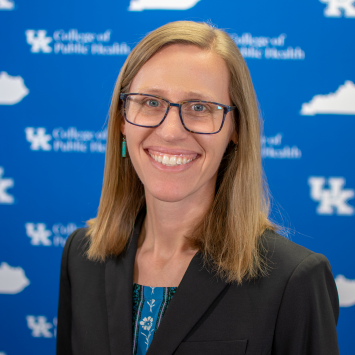
Dr. Kathleen Winter is an Assistant Professor in the Department of Epidemiology at the University of Kentucky's College of Public Health. She concurrently serves as the State Epidemiologist for Kentucky and Director of the Division of Epidemiology and Health Planning at the Kentucky Department for Public Health. Her expertise spans communicable disease control, immunization strategies, and pandemic response, with a focus on vaccine-preventable diseases and public health policy. Dr. Winter previously spent 11 years in California’s Immunization Branch and led epidemiological efforts during Kentucky’s 2021 COVID-19 surge. She teaches graduate courses in infectious disease epidemiology and has published extensively on topics including mpox, hepatitis C, pertussis, and healthcare-associated infections. Her work emphasizes reducing health disparities through evidence-based interventions and improving vaccination compliance in vulnerable populations. Her research portfolio includes groundbreaking studies on mpox transmission dynamics, barriers to hepatitis C treatment among pregnant mothers, and the impact of vaccination timing on infant mortality. She has collaborated with federal public health agencies and contributed to policy recommendations addressing opioid-related hepatitis C outbreaks and pediatric pertussis prevention. While no formal awards are listed, her leadership roles and high-impact publications reflect her significant contributions to public health practice and academic research.
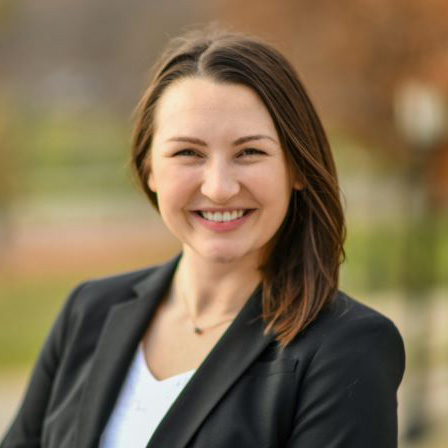
Jennifer Richmond-Bryant is an Associate Professor of the Practice in the Department of Forestry and Environmental Resources at North Carolina State University. Her work focuses on geospatial analytics to study human exposure to ambient air pollution, particularly in marginalized communities. She develops modeling approaches to characterize air pollution dynamics in built environments and explores how environmental, social, and personal factors influence health outcomes. Her research includes field data collection to study pollutant exposure across space and time, such as phytoremediation of ammonia from hog waste lagoons. Her research interests emphasize environmental justice, community-based monitoring, and empowering communities through data-driven advocacy. Notable projects include studies on particulate matter (PM2.5) in North Carolina, soil contamination following industrial accidents, and the health impacts of air pollution during the COVID-19 pandemic. She collaborates with students and community partners to address disparities in environmental health burdens. Jen has been involved in developing tools like the community environmental health reporting platform and has led cross-institutional initiatives promoting diversity in STEM education. Her work bridges academic research with actionable solutions for public health equity, often involving participatory methods and interdisciplinary collaboration. Her grants and awards include funding for projects analyzing air quality sensors, disaster-related environmental contamination, and community oral history studies. She is affiliated with research groups focused on environmental justice and public health, contributing to both policy and community engagement efforts.
Hans Wolfgang Weinmeister is a Full Professor at the Institute of Alpine Natural Hazards , Department of Agricultural Sciences, University of Natural Resources and Life Sciences, Vienna (BOKU). His career spans over two decades at BOKU, focusing on natural hazard mitigation in alpine regions. Research Interests include natural hazards, environmental engineering, and geographic information systems (GIS) for hazard zone planning. He has contributed extensively to understanding sediment disasters, torrent control, and forest hydrology in alpine ecosystems. Publications highlight his work on sediment dynamics, flood risk assessment, and sustainable hazard mitigation strategies. His projects often integrate GIS and climate data for improved disaster planning. Advising includes supervising numerous Master's and PhD theses on topics like glacier lake outburst floods, sediment transport, and avalanche dynamics. He has also delivered lectures internationally, including in France. Community Engagement extends to roles in professional forums such as the Alpen-Forum and SABO, emphasizing practical applications of his research in alpine hazard management.
Alan Marshall is a Professor of Social Research on Inequality at the School of Social and Political Science , University of Edinburgh. He is seconded 50% to the Scottish Graduate School for Social Sciences , focusing on studentships and partnerships. Research Focus: His work bridges social statistics and health inequalities, using longitudinal survey data to explore social and biological determinants of health and well-being in later life. Key areas include frailty, multimorbidity, neighborhood effects, and small-area demographic estimation. Projects: Marshall leads and collaborates on initiatives like Harnessing multiparametric biobank data to develop novel predictive models of frailty and REALITIES in Health Disparities , emphasizing interdisciplinary approaches to health equity. Collaborations: Active in partnerships with UK national statistical agencies, local authorities, and institutions like the University of Strathclyde.
Maria Antonia Brovelli is a Professor of GIS at Politecnico di Milano (PoliMI) in the Department of Civil and Environmental Engineering and a member of the School of Doctoral Studies in Data Science at Roma La Sapienza University. Formerly Vice-Rector of PoliMI for the Como Campus (2011-2016), she currently leads the GEOLab (Geomatics and Earth Observation Lab) and holds influential roles including Deputy Chair of the ISPRS TC on Spatial Information Science, co-chair of the United Nations Open GIS Initiative, and Chair of the UN-GGIM Academic Network. Her research spans geomatics with evolving expertise from geodesy and radar-altimetry to GIS, webGIS, geospatial web platforms, Volunteered Geographic Information (VGI), Citizen Science, Big Geo Data, and geospatial AI. A global leader in Open-Source GIS advocacy, her work emphasizes open data ecosystems, collaborative mapping, and AI-driven geospatial solutions for environmental challenges. Key methodologies include open-source software frameworks and citizen science integration. Recent publications (2025) demonstrate convergence of AI and geospatial analysis, featuring satellite-ground sensor fusion for urban air quality, high-resolution land cover mapping, zero-shot learning for remote sensing imagery, landslide prediction models, and climate-agriculture impact studies. Dominant themes include open geospatial platforms, transferable AI architectures, and multi-scale environmental monitoring using open data principles. Honors include: Sol Katz Award for Geospatial Free and Open Source Software (OSGeo) As mentor of PoliMI's YouthMappers chapter (PoliMappers), she guides student-led open mapping initiatives. Her editorial leadership as Associate Editor of ISPRS International Journal of Geo-Information shapes discourse in geospatial AI and open science. Research grants span ESA Earth Observation programs, UN initiatives, and international collaborative projects focused on open geospatial infrastructure. Brovelli directs GEOLab at Politecnico di Milano, a hub for geospatial innovation developing open-source tools for earth observation, citizen science platforms, and AI-driven spatial analytics. The lab collaborates with UN-GGIM, ISPRS networks, and ESA projects, driving open standards adoption globally while advancing geospatial AI applications in climate resilience and urban sustainability.
Sabine Henry is a Professor in Geography at the University of Namur (Faculty of Science). Her research focuses on the intersection of environment and migration , particularly at the household/individual level in Africa, Southeast Asia, and Latin America. She leads projects on climate-induced migration, social vulnerability assessments, and participatory approaches to disaster risk reduction. Key projects: FNRS PDR on environmental perception and migration in Sub-Saharan Africa; PRD-ARES collaborations on earthquake/hazard assessments in Haiti, Rwanda, and Burundi Methodological innovations: board games , structured timeline mapping , participatory land-use surveys Her work contributes to UN Sustainable Development Goals related to climate action , zero hunger , and reduced inequalities . Awards include multiple Best Poster Awards from Population Association of America and UISSP.
Caitlin Ward, PhD is an Assistant Professor at the University of Minnesota's Division of Biostatistics & Health Data Science. Her work bridges methodological development and interdisciplinary collaboration. Education : PhD/MSc in Biostatistics (University of Iowa), BS in Statistics (Iowa State) Methodologically, she specializes in Bayesian modeling for complex systems, particularly infectious disease dynamics , spatio-temporal analysis , and multiplex imaging data . Collaboratively, she engages with: Nursing (dementia care communication) Neuroradiology (brain tumor classification) Veterinary medicine (Mycoplasma bovis transmission) Public health (vaccine hesitancy) Education (open educational resources) Her 15 most recent publications span epidemiological modeling , healthcare communication , and machine learning applications . Key contributions include: Bayesian SEIR models for behavioral change Network analysis of care coalitions Evaluation of elderspeak communication impacts Development of open-source BayesSEIR R package Statistical methods for imperfect diagnostics Recognitions include the CANSSI Distinguished Postdoctoral Fellowship and Outstanding Teaching Assistant Award . Current projects focus on making biostatistics education more accessible through open resources.