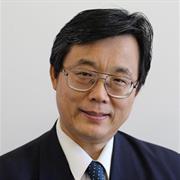
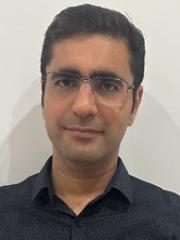
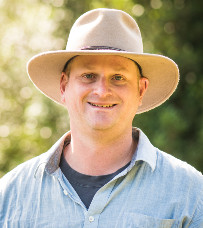
Abhaya Nayak is an Associate Professor in the School of Computing at Macquarie University, Australia. He is a member of the Frontier AI Research Centre and has been active in research since 1994. His work focuses on belief revision, machine ethics, knowledge representation, and causal modeling. He has led 11 research projects including the ongoing Dynamics of Causal Knowledge and the Trust, Belief and their Interaction initiative. Research Interests: Formal methods for belief change and epistemic reasoning Machine ethics and AI governance frameworks Causal modeling in medical and IoT systems Non-monotonic reasoning and logical foundations Trust assessment in multi-agent systems Notable Achievements: Marco Cadoli Best Student Paper Award (2018) Interdisciplinary Collaboration Excellence Award (2023) Over 89 published research outputs with an h-index of 12 Professional Contributions: Edited conference proceedings for PRICAI 2019 and AI 2013 Developed the BIET tool for biomarker information extraction Contributed to geospatial database systems for NSW government
Dr. Alan Woodley is a Senior Lecturer in the School of Computer Science at Queensland University of Technology (QUT) and leads the Spatial Informatics Laboratory. He holds a PhD in Computer Science from QUT and a Certificate in New Ventures Leadership from MIT. His roles include Associate Investigator at the Centre for Agriculture and the Bioeconomy, Australian Data Science Centre, and ARC Centre of Excellence for Mathematical & Statistical Frontiers. Education: PhD (2008), B.IT (Hons) (2003), B.IT (2003) from QUT; MIT Innovation Bootcamp (2018). Research focuses on applying big data solutions to environmental and mining domains, emphasizing data analytics, computational modeling, and visualization. Key areas include industrial sustainability, social-technical integration, and flood monitoring using remote sensing and social media. His work has attracted over $4M in funding and produced over 70 publications. Recent articles highlight innovations like flood mapping via spectral indices, social media-based disaster detection, and parallel clustering algorithms. Notable grants include projects with the US Department of Energy, Food Agility CRC, and CRC for Spatial Information. Awards: Vice Chancellor's Research Fellowship (2018), Bonneville Power Administration grants for salmon monitoring and fish density tools, and Food Agility CRC funding for circular economy frameworks. Teaching: Courses include Programming Principles, Web Development, and Large Scale Data Mining (encompassing 100–600 students annually). Collaborations: Partnerships with Lendlease, Bonneville Power Association, Queensland Government, and mining industry representatives to develop tools like community compost apps and land change systems. His Spatial Informatics Lab drives interdisciplinary projects in environmental informatics and geospatial data science.
Ashir Ahmed is a Senior Lecturer in Media and Communication at Swinburne University of Technology, Australia. He holds a PhD in Information Systems from Monash University. His teaching focuses on Database Management Systems, Data Visualization, and Systems Acquisition. His research explores technologies like Web 2.0/3.0 for social impact, including data visualization for nonprofits, suicide prevention via social media, and disaster management frameworks. Notable projects include the 'Digital School in a Van' initiative in rural Pakistan and analysis of right-wing extremism prevention strategies in Victoria. Education: PhD in Information Systems, Monash University Research Interests: ICT for social impact (ICT4D) Data analytics for public health and disaster management Social media's role in radicalization and mental health Business analytics strategies for SMEs Grants & Projects: Lead investigator for 'Digital literacy in rural Pakistan' (2019) Analysis of CareRING client data for Kildonan Uniting Care (2015-2016) Mapping right-wing extremism in Victoria (2019-2020) Advising & Collaboration: Supervised 8 doctoral candidates on topics ranging from disaster governance to misinformation Collaborated with NGOs like Access Health and Community Limited His work emphasizes interdisciplinary approaches, incorporating machine learning and social network analysis to address complex societal challenges.
Dr. Gang-Jun Liu is a Senior Lecturer in the School of Science at RMIT University, with over 30 years of experience in GIS-based spatial modeling and analysis. He holds adjunct roles at Henan University, Nanjing Normal University, and the Henan Institute of Geographical Research. His research focuses on geospatial sciences, urban transport systems, and environmental modeling, particularly in the context of sustainable urban development. Dr. Liu’s current research emphasizes measuring spatial accessibility to essential services and transport optimization in urban environments, leveraging multimodal transport GIS databases and real-time data analytics. He has pioneered methods for mapping flood plains, groundwater contamination risks, and spatial disadvantage for vulnerable populations. His work integrates advanced GIS tools with big data processing to address challenges in urban planning and climate adaptation. He supervises six PhD and four Master’s students, focusing on topics like solar energy modeling, 3D urban platforms, and transport simulation. Teaching responsibilities include GIS Principles, Spatial Information Science, and Environmental Modeling courses at both undergraduate and postgraduate levels. Dr. Liu previously served as a Senior GIS and Remote Sensing Specialist at the Victorian Department of Natural Resources and Environment. His industry collaborations emphasize geospatial techniques for land use planning and environmental management.
Professor Delene Weber is a faculty member in the School of Natural and Built Environments at the University of South Australia (UniSA STEM) . Based at the Mawson Lakes Campus, she serves as a Research Degree Supervisor and is available for media commentary on environmental science topics. Her academic career spans over a decade of publications in disaster risk reduction, biodiversity conservation, and geospatial methodologies. Education: Not explicitly stated in provided texts Research interests focus on environmental science , particularly: Bushfire Risk Management through virtual reality simulations and behavioral studies Biodiversity Conservation in peri-urban areas Public Participation GIS (PPGIS) for community values mapping Indigenous Co-Design methodologies in environmental management Technology Applications like drones and infrared imaging for wildlife monitoring Her publications demonstrate expertise in integrating spatial analysis , sustainable planning , and human-environment interactions . While scientific awards aren't listed here, her work has received support from agencies like the Australian Research Council (ARC LP130100406) and Swiss institutions . She has contributed to student education through research supervision and immersive learning environment development, though specific advisees aren't named in this dataset.
Dr. Aniko Toth is a Research Fellow at the Centre for Ecosystem Science within the Faculty of Science at the University of New South Wales (UNSW), where she collaborates with Professor David Keith on Antarctic ecosystem risk assessment models. Previously, she completed her PhD at Macquarie University in 2019 and served as a research consultant at the Smithsonian US National Museum of Natural History for five years, contributing to the Evolution of Terrestrial Ecosystems program. Her research spans ecology, paleoecology, and climate change impacts, with focus areas including community assembly processes across geological timescales, ecosystem collapse risk assessment, and Antarctic/Alpine conservation. Current projects involve developing spatial risk models for ice-free Antarctic habitats and standardizing trait data for biodiversity monitoring. Recent publications reveal strong trends in Quaternary mammalian community dynamics, biotic homogenization under climate change, and methodological advances in spatial biodiversity analysis. Her work frequently employs large-scale collaborative frameworks addressing ecosystem vulnerability in polar and alpine regions. Scientific recognition includes: Science Achievement Award for Best Paper of 2019 (Smithsonian, 2020) Student Service Award for digital literacy promotion (Macquarie University, 2019) Science Achievement Award for Best Paper of 2016 (Smithsonian, 2017) Richard L. Hoffman Award for student presentation (Virginia Herpetological Society, 2010) Dr. Toth actively contributes to multiple high-impact research consortia without formal advising responsibilities documented in current sources. She co-leads the Australian Alpine Ecosystem risk assessment working group and participates in the Smithsonian's Evolution of Terrestrial Ecosystems program and iDiv's trait data initiative, focusing on translating paleoecological insights into contemporary conservation frameworks. Her laboratory collaborations span UNSW's Centre for Ecosystem Science, Macquarie University's paleoecology group, and international networks including the Antarctic Science Partnership. Current efforts prioritize operationalizing ecosystem collapse metrics for IUCN Red List of Ecosystems assessments under accelerating climate change.
Ashik Mostafa Alvi is a Part-Time Lecturer in Information Technology at the First Year College , Victoria University (Melbourne, Australia). With a PhD in Information Technology and affiliations spanning research, teaching, and industry, Alvi specializes in deep learning applications for EEG data analysis , particularly in detecting Alzheimer’s disease and mild cognitive impairment . His work bridges medical imaging , computer vision , and big data analytics . PhD in Information Technology from Victoria University Part-Time Lecturer since 2023 Former Academic Sessional (2020-2023) Researcher in Maribyrnong Smart City Project (2019-2020) His research focuses on neurological disorder detection using EEG data, with recent publications on LSTM-based frameworks , residual networks , and adaptive image processing . Alvi also contributes to urban mobility analysis, particularly in Bangladesh. Key skills include Python, MATLAB, Laravel, and IEEE publication standards. Externally, he serves as a reviewer for journals like IEEE Transactions on Big Data and participates in cricket associations.
Dr. Behzad Kiani is a Research Fellow at the UQ Centre for Clinical Research within The University of Queensland's Faculty of Health, Medicine and Behavioural Sciences. His work focuses on spatial epidemiology of infectious diseases, specializing in geoinformatics using spatial regression models and cluster analysis. Dr. Kiani holds a PhD in Medical Informatics and a Master's degree in Computer Science . He previously served as an Assistant Professor at Mashhad University of Medical Sciences in Iran and as a Postdoctoral Researcher at the University of Montreal, Canada. He is an associate editor of Geospatial Health Journal and executive member of the International Society of Geospatial Health. Research Interests : Comparative analysis of spatial epidemiology models Environmental/socioeconomic determinants of health Gentrification's public health impacts Machine learning integration in disease mapping Health resource allocation Geospatial risk assessment Notable Contributions : Over 70 high-impact publications Development of spatial vulnerability indices Pioneering work on cutaneous leishmaniasis mapping in Iran Urban vegetation inequity analysis in Canada Geospatial datasets for influenza and cardiovascular diseases Framework for spatial accessibility to health services His recent articles focus on: COVID-19 vaccine hesitancy patterns in the Dominican Republic Gentrification-disease dynamics analysis Ambient air pollution's respiratory disease impacts in Pakistan Leptospirosis cluster identification Geospatial health infrastructure assessment tools Machine learning's spatial epidemiology applications Scientific Roles : Associate Editor, Geospatial Health Journal Executive Member, International Society of Geospatial Health Dr. Kiani is available for supervision with projects like "Advancing Infectious Disease Modeling with Machine Learning and Spatial Epidemiology" currently open.
Dr. Mukesh Mohania serves as an Adjunct Professor at UNSW Canberra within the School of Business. His extensive academic career spans over three decades with continuous scholarly contributions from 1994 through 2025. His research bridges theoretical database systems with practical applications across multiple domains including educational technology, blockchain, and business intelligence. Professor Mohania's research interests demonstrate remarkable breadth and evolution over time. Beginning with foundational work in data warehousing and database systems, his research trajectory expanded into information integration, privacy management, and more recently, educational technology and blockchain applications. His scholarly work shows a consistent pattern of addressing emerging technological challenges while maintaining connections to core database principles. A distinctive characteristic of his research is the practical application of theoretical concepts to solve real-world business and educational problems. The analysis of his recent publications reveals a strong focus on educational technology applications, with approximately 40% of his 2022-2025 publications addressing AI-driven educational systems, question categorization, and learning analytics. Another significant portion (around 30%) focuses on security, privacy, and blockchain applications. The remaining publications continue his longstanding interest in database systems, data mining, and information integration. This distribution indicates a strategic pivot toward educational technology while maintaining expertise in his foundational areas. Professor Mohania has established a prolific publication record with over 100 scholarly contributions including book chapters, journal articles, and conference papers. His work appears in prestigious venues such as IEEE Transactions on Knowledge and Data Engineering, ACM conferences, and Springer publications. While specific awards aren't documented in the available information, his sustained publication record across multiple decades demonstrates significant scholarly impact. His research collaborations span numerous institutions and researchers globally, with frequent co-authorship patterns suggesting established research teams focused on educational technology and database systems. The consistent output across decades indicates successful grant funding and sustained research activity, though specific grant details aren't provided in the available information. Professor Mohania's work shows particular strength in translating database research into practical business and educational applications.
Dr. Peter Jacklyn serves as Knowledge and Adoption Coordinator at the Faculty of Science and Technology, leading the North Australia and Rangelands Fire Information (NAFI) service since 2002. His work focuses on integrating satellite data and ecological research to support fire management and carbon accounting in Australian savannas. He has collaborated extensively on projects like the CER Fire Scar Mapping initiative and the NAFI High Resolution Mapping Toolkit. Research interests span fire ecology, remote sensing applications, and termite biology. Notable contributions include developing dynamic fire management tools used nationally and internationally. His career bridges scientific research, communication, and policy implementation, particularly addressing UN SDG goals related to climate action and sustainable land management. Principal Investigator/Co-Investigator on 24+ projects (2018–2026), focusing on fire scar mapping, carbon credit systems, and land management metrics. Key outputs include peer-reviewed articles on burned area databases, invasive grass impacts, and termite ecology. His work emphasizes interdisciplinary collaboration between researchers, land managers, and policymakers.
Tristan Reed is a Lecturer in the Department of Management and Organisations at the UWA Business School, affiliated with the Centre for Business Data Analytics. He holds a BEng (Hons) and PhD in Spatial Sciences, with expertise in transport system analysis, software engineering, and business intelligence. His research focuses on applying software applications to solve real-world transport challenges, particularly through collaborations with the Planning and Transport Research Centre (PATREC) and iMOVE CRC. Education: Bachelor of Engineering (Honours) PhD in Spatial Sciences Research Interests: Transport system analysis and modeling Software applications for urban problem-solving Business intelligence (databases, visualization) Semantic web techniques for geospatial data Smart city technologies Current Projects: Transport Mode Choice using Perth Area Transport and Household Survey (PATHS) Data Impact of e-Rideables on Transport Tasks in Western Australia Grants and Collaborations: Investigator on the AI Adoption in WA Volunteering Sector project (2025–2026). Collaborations with PATREC, iMOVE CRC, and Curtin University (as a Research Associate). Labs/Teams: Centre for Business Data Analytics Planning and Transport Research Centre (PATREC)
Sarah Boyd is an Adjunct Senior Research Fellow at Monash University's Faculty of Medicine with Monash Health. She has maintained an active research career spanning over two decades with significant contributions across multiple domains of biomedical research. Her research interests encompass Systems Biology, Computational Biology, Cardiac Research, Protease Research, and Medical Informatics. Dr. Boyd has developed expertise in computational modeling of biological systems, particularly focusing on cardiac fibroblasts and protease specificity. Her work bridges computational approaches with experimental biology, creating tools and frameworks for understanding complex biological processes. She has made significant contributions to the development of computational tools for protease research and cardiac systems biology, with applications spanning from basic science to clinical applications. Her recent publications demonstrate a strong focus on cardiac biology, with particular emphasis on fibroblast function and identity. She has also maintained research interests in marine biology, specifically coral reef ecosystems and adaptation mechanisms. The trajectory of her work shows increasing integration of computational methods with biological systems across diverse domains. Dr. Boyd has secured research funding from multiple sources including the Australian Research Council (ARC) and personal donations. Her projects include 'Systems modelling of the cardiac fibroblast' (2013-2016), 'Computational techniques for protease research' (2007-2009), and 'Research of protease specificity' (2006). She has also served as Chair of the Communications Committee for the International Society for Systems Biology since 2016. Her research has been widely disseminated through 42 research outputs, including numerous high-impact publications in journals such as eLife, Frontiers in Immunology, Molecular Ecology, and PLoS ONE. Her work has garnered significant attention, with some publications receiving over 80 citations. Her research activities show consistent productivity from 1999 through 2022, demonstrating sustained scholarly engagement throughout her career.
Professor Sisi Zlatanova is a Professor at the University of New South Wales (UNSW), affiliated with the School of Arts, Design & Architecture. She holds a PhD in 3D GIS for Urban Development from Graz University of Technology and has held academic positions globally, including at ITC (Netherlands) and Delft University of Technology. Her research focuses on 3D spatial modeling, BIM/GIS integration, emergency response systems, and indoor navigation. Key projects include UNSW precinct modeling, indoor scanning for emergency response, and voxel-based visibility analysis for safety. Her research activities span over 300 publications and 23 edited books, with notable works on 3D GIS applications and disaster management. She leads international initiatives like ISPRS TC IV (Spatial Information Science) and OGC SWG IndoorGML. Her work emphasizes practical applications in urban resilience, sustainable design, and crisis management. Professor Zlatanova's contributions include developing frameworks for smart indoor models, integrating BIM with GIS for emergency response, and leveraging LiDAR and UAV technologies for urban analysis. She collaborates extensively with global organizations, advancing geospatial solutions for urban challenges.
Dr. Mehala Balamurali is a Senior Research Fellow at the University of Sydney's Australian Centre for Field Robotics within the Faculty of Engineering. She leads research initiatives at the Rio Tinto Centre for Mine Automation and serves as Network and Engagement Lead for the Sydney Early and Mid-Career Academic Network (SEMCAN). Her research contributes to developing fully autonomous mining operations through interdisciplinary approaches combining robotics, AI, and geospatial analysis. Balamurali's research bridges multiple disciplines: Machine learning applications in geological data analysis Robotics for mining automation and safety Computer vision for equipment and environmental monitoring Cross-domain applications of AI in healthcare and materials science Her work focuses on solving industrial challenges in mining through technological innovation. Publications demonstrate consistent focus on developing AI solutions for complex industrial problems. Recent work shows expansion into multimodal applications including biomedical imaging and infrastructure monitoring. Honors and Awards: Outstanding Service Award, Australasian Joint Conference on Artificial Intelligence (2023) Best Paper Award, Center for Vascular Research (2010) Promotion to Senior Research Fellow (2024) Sydney Women's Leadership Program completion (2020) Balamurali mentors students in interdisciplinary projects spanning machine learning, geological analysis, medical imaging diagnostics, and robotics. She supervises projects on: Deep Learning in Geological Analysis, Motion Tracking in Medical Imaging, Spectral Data for Structure Mapping, and Mining Operations Optimization. As SEMCAN Engagement Lead, she coordinates academic networking and professional development for early-career researchers across the university.
Dr. Andrew Thornhill is a Senior Lecturer in Plant Systematics and Director of the N.C.W. Beadle Herbarium at the University of New England, where he works within the School of Environmental and Rural Science in the Faculty of Science, Agriculture, Business and Law. With expertise spanning phylogenetics, systematics, and biogeography, Thornhill has established himself as a leading researcher in Australian plant evolution. His educational background includes a BSc (Environmental) from Monash University, an MSc from Monash University studying pitcher plants, and a PhD from the Australian National University focusing on the plant family Myrtaceae. Thornhill's career has taken him through several major herbaria including the Australian National Herbarium at CSIRO, the Australian Tropical Herbarium at James Cook University, the University and Jepson Herbaria at UC Berkeley, and the State Herbarium of South Australia. Thornhill's research focuses on spatial phylogenetics—a field combining large-scale molecular phylogenetics, geospatial information, and randomization tests to identify areas of unique diversity and endemism. His work primarily centers on native Australian plants, particularly eucalypts and Acacia, with additional interests in palynology, paleobotany, and bryology. He has developed significant species-level phylogenies for key Australian plant groups and has explored global applications through studies of California and Chilean floras. Analysis of his recent publications reveals a consistent focus on spatial phylogenetics applied to diverse geographical contexts. His work bridges theoretical evolutionary biology with practical conservation applications, particularly in identifying biodiversity hotspots and understanding climate change impacts on plant distributions. The recurring themes across his publications include the integration of molecular data with spatial patterns, the application of phylogenetic diversity metrics to conservation prioritization, and systematic studies of Myrtaceae. As Director of the N.C.W. Beadle Herbarium, Thornhill oversees a collection of over 115,000 specimens with particular strengths in northern New South Wales and southeastern Queensland flora. The herbarium serves as both a research resource and teaching facility, supporting undergraduate and graduate education in plant systematics. Thornhill coordinates several key botany courses including Plant Diversity, Field Botany, and Mushrooms and Mosses, while also teaching Evolution and Biogeography and Biological Systematics. Thornhill's extensive publication record—over 100 papers with significant citation impact—demonstrates his contributions to understanding plant evolutionary patterns across Australia and globally. His work connects fundamental botanical research with conservation applications, particularly through the development and application of spatial phylogenetic methods to identify areas of high evolutionary significance for conservation prioritization.