معرفی
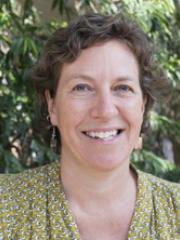
Dr. Aniko Toth is a Research Fellow at the Centre for Ecosystem Science within the Faculty of Science at the University of New South Wales (UNSW), where she collaborates with Professor David Keith on Antarctic ecosystem risk assessment models. Previously, she completed her PhD at Macquarie University in 2019 and served as a research consultant at the Smithsonian US National Museum of Natural History for five years, contributing to the Evolution of Terrestrial Ecosystems program.
Her research spans ecology, paleoecology, and climate change impacts, with focus areas including community assembly processes across geological timescales, ecosystem collapse risk assessment, and Antarctic/Alpine conservation. Current projects involve developing spatial risk models for ice-free Antarctic habitats and standardizing trait data for biodiversity monitoring.
Recent publications reveal strong trends in Quaternary mammalian community dynamics, biotic homogenization under climate change, and methodological advances in spatial biodiversity analysis. Her work frequently employs large-scale collaborative frameworks addressing ecosystem vulnerability in polar and alpine regions.
Scientific recognition includes:
- Science Achievement Award for Best Paper of 2019 (Smithsonian, 2020)
- Student Service Award for digital literacy promotion (Macquarie University, 2019)
- Science Achievement Award for Best Paper of 2016 (Smithsonian, 2017)
- Richard L. Hoffman Award for student presentation (Virginia Herpetological Society, 2010)
Dr. Toth actively contributes to multiple high-impact research consortia without formal advising responsibilities documented in current sources. She co-leads the Australian Alpine Ecosystem risk assessment working group and participates in the Smithsonian's Evolution of Terrestrial Ecosystems program and iDiv's trait data initiative, focusing on translating paleoecological insights into contemporary conservation frameworks.
Her laboratory collaborations span UNSW's Centre for Ecosystem Science, Macquarie University's paleoecology group, and international networks including the Antarctic Science Partnership. Current efforts prioritize operationalizing ecosystem collapse metrics for IUCN Red List of Ecosystems assessments under accelerating climate change.