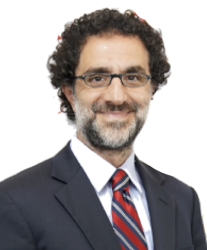
Kenan Hazirbaba is a Teaching Professor in the Department of Civil Engineering at the University of Texas at Tyler. With extensive teaching experience, he specializes in geotechnical engineering and offers courses in statics, mechanics of materials, soil mechanics, foundation design, and seismic site response. Ph.D. in Civil, Architectural, and Environmental Engineering from The University of Texas at Austin (2005) M.S. in Civil Engineering from Bogazici University (1999) B.S. in Civil Engineering (with distinction) from Istanbul Technical University (1996) Hazirbaba's research focuses on applied and experimental geotechnical engineering, particularly the behavior of saturated soils under cyclic loading and non-traditional soil stabilization techniques. His work addresses critical challenges in cold regions, including freeze-thaw effects on soil mechanics and seismic response in permafrost areas. His publications highlight expertise in geofiber-reinforced sands, synthetic fluid stabilization, and seismic design of earth-retaining structures. Research has secured over $2 million in funding from state and non-governmental agencies, emphasizing practical solutions for civil engineers. Hazirbaba is a Registered Professional Engineer in Alaska and promotes undergraduate research engagement. His certifications and applied research bridge academic theory with real-world engineering applications.
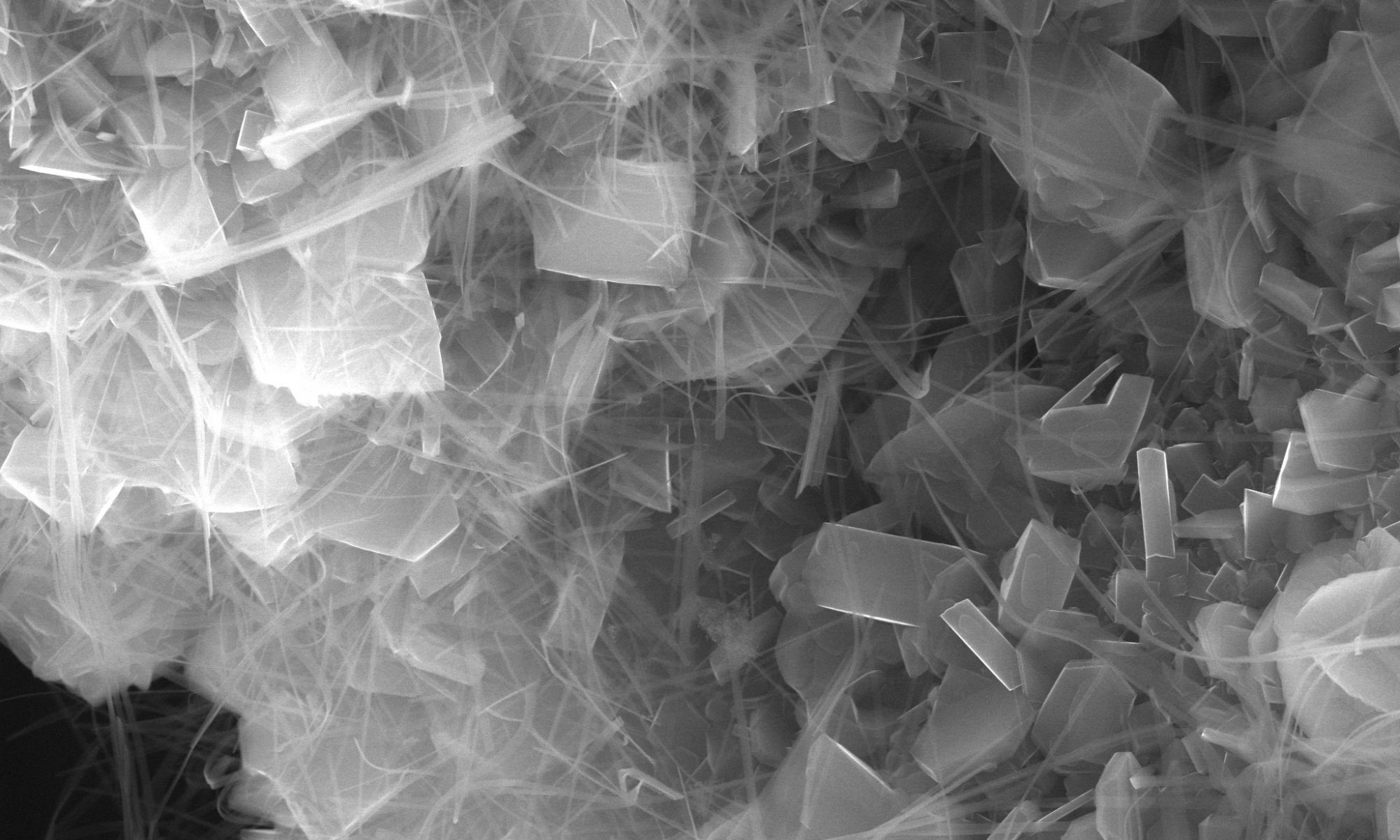
Nishant Garg is an Assistant Professor in the Department of Civil and Environmental Engineering at the University of Illinois at Urbana-Champaign. His research focuses on sustainable construction materials, particularly cement-based systems, leveraging advanced characterization techniques such as X-ray scattering, neutron diffraction, and Raman imaging. His work addresses environmental sustainability through innovations in low-carbon materials, waste utilization, and durability enhancement. Education: Ph.D. in Nanoscience, Aarhus University (2015) M.S. in Civil Engineering Materials, Iowa State University (2012) B.E. and Diploma in Civil Engineering, Thapar Institute of Engineering & Technology and Chandigarh College of Eng. & Tech. (2010, 2007) Research Interests: Sustainable cement chemistry, material characterization, carbonation processes, and development of eco-friendly construction materials. His lab, the Garg Group, emphasizes multi-scale analysis (nano-to-macro) to bridge fundamental science and practical applications. Key Contributions: Innovations include the UR2 test for cement reactivity, SorpVision for automated sorptivity assessment, and VR tools for materials education. These advances aim to reduce costs, improve material performance, and promote circular economy practices. Awards and Roles: Dean’s Award for Excellence in Research (2025) Member, Transportation Research Board AKM 50 Committee (2025–Present) Recipient of American Ceramic Society’s Stephen Brunauer Award (2021) Advising and Grants: Actively recruiting MS/Ph.D. students. Leads initiatives on low-carbon concrete, funded by NSF and industry collaborations. Serves on CEE advisory committees and graduate admissions. Labs/Teams: The Garg Group integrates interdisciplinary approaches, collaborating with materials scientists, engineers, and data scientists to tackle global infrastructure challenges.
Prof. Dr. Hakkı Polat Gülkan is a Professor at Başkent University's Civil Engineering Department. With a PhD (1971) and Master's (1968) from the University of Illinois in Civil Engineering and a Bachelor's (1966) from METU, his career spans over five decades in earthquake engineering, structural dynamics, and disaster management. PhD: University of Illinois, Civil Engineering (1971) Master's: University of Illinois, Civil Engineering (1968) Bachelor's: Middle East Technical University, Civil Engineering (1966) His research focuses on seismic risk assessment, structural behavior under extreme loads, and disaster mitigation strategies. Key contributions include earthquake simulator development, ground motion analysis, and retrofitting techniques for masonry and reinforced concrete structures. He has published extensively on deformation limits, response spectra, and historical building preservation. Recent work includes 15+ articles from 2024-2012 analyzing Istanbul's seismic hazards, Marmara region dynamics, and post-earthquake structural integrity. Conference papers address Turkey's endemic building vulnerabilities and deformation thresholds for seismic isolation systems. Scientific Achievements: Elected to U.S. National Academy of Engineering (2023) As an active journal reviewer for 13+ publications (2023-2024), he contributes to advancing earthquake engineering discourse. His teaching portfolio includes advanced structural analysis, concrete mechanics, and seismic design courses.
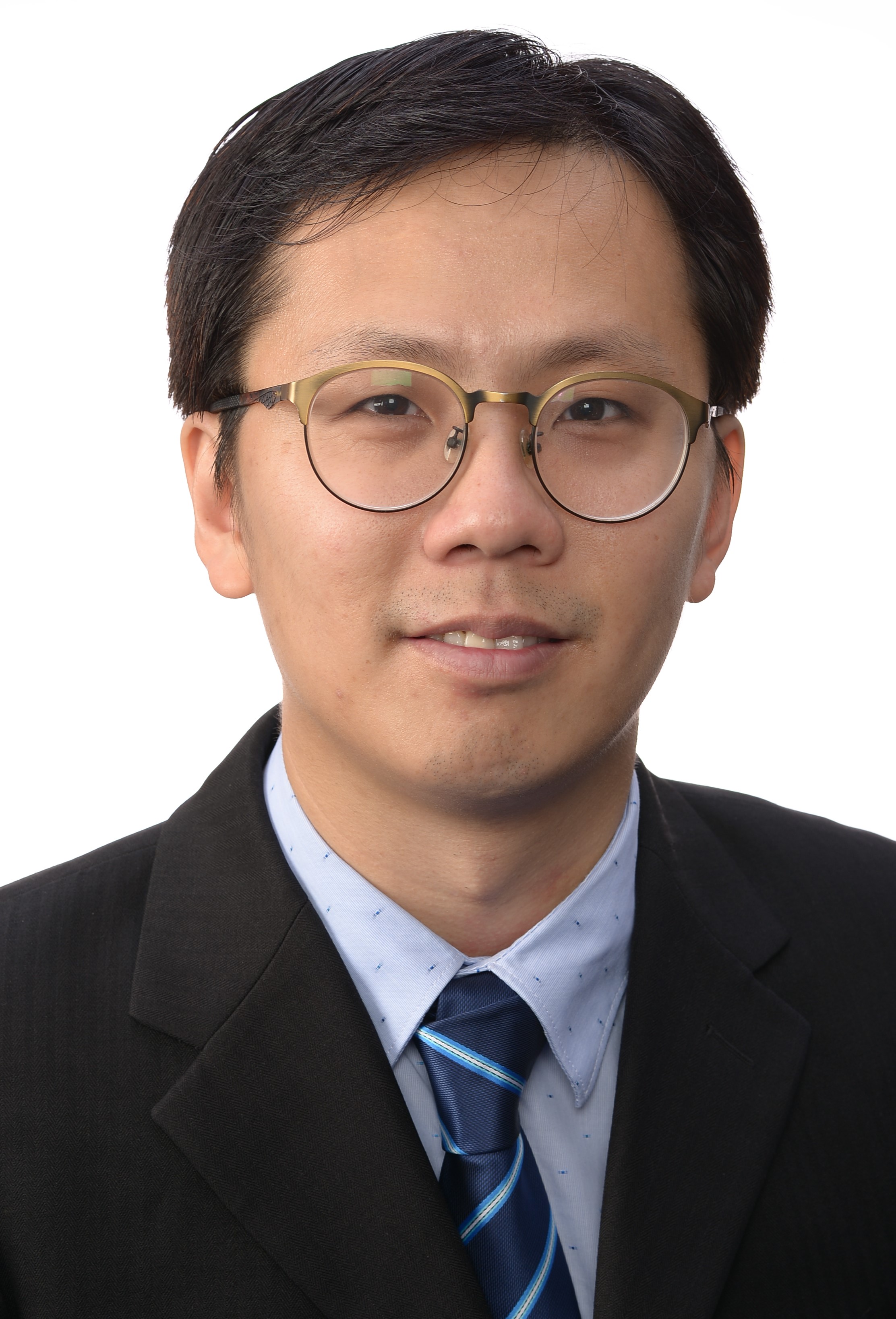
Dr. Chian Siau Chen is a Professor at the National University of Singapore (NUS), specializing in earthquake engineering and geotechnical engineering. His research focuses on soil liquefaction, land reclamation, and ground improvement. He holds leadership roles, including Vice President of the Geotechnical Society of Singapore (2016–2017) and President (2024–2025). He has been recognized with prestigious awards such as the Top 10 Innovators Under 35 in Asia (2016) and the Prominent Geotechnical Engineer Award (2022). Education: PhD in Engineering from Cambridge University (2012), B.Eng. (1st Class) from Nanyang Technological University (2006). Research Interests: Earthquake Engineering, Centrifuge Modelling, Ground Improvement, Remote Sensing, and Land Reclamation. His work bridges theoretical analysis and practical applications, including disaster risk reduction and sustainable construction. Publications: Over 50 peer-reviewed articles, focusing on seismic stability, soil mechanics, and innovative techniques for urban infrastructure. Recent trends emphasize digital tools (e.g., LiDAR, UAV) and probabilistic models for ground settlement predictions. Awards: Extensive accolades span technical excellence, teaching (ATEA 2017–2019), and professional service. He is a committee member for international geotechnical councils and editorial boards of journals. Grants & Projects: Funded by EPSRC for post-disaster reconnaissance and by Singaporean agencies for land reclamation. Leads collaborative efforts to recycle construction waste into sustainable fill materials. Labs/Teams: Active in NUS research groups and international collaborations, contributing to urban earthquake engineering and geotechnical innovation.
Hans Bihs is a Professor in the Department of Civil and Environmental Engineering, Faculty of Engineering. His research focuses on computational fluid dynamics (CFD), wave hydrodynamics, and wave-structure interaction using the open-source framework REEF3D. Key Research Areas: CFD simulations, wave modeling, floating body dynamics, ocean wave energy, aquaculture hydrodynamics, sediment transport, and high-performance computing. Projects: ERC Consolidator Grant PARTRES (2023-2028), EEA Grants Portugal SurfWave (2023), NFR KPN IPIRIS (2021-2025), EEA Baltic SolidShore (2021-2024), NTNU's MAPLE (2022-2025), and DigiCoast (2021-2024). Email: hans.bihs@ntnu.no His recent publications (2025-2020) analyze fluid-structure interaction, ship-induced waves, floating offshore wind turbines, submerged vegetation, and coastal structures using advanced CFD techniques. Topics include wave hydrodynamics, turbulence, and numerical modeling for marine and aquaculture systems.
Pengfei Wang is an Assistant Professor in the Department of Civil & Environmental Engineering at Old Dominion University (ODU). He holds a Ph.D. in Geotechnical Engineering and an M.S. in Statistics from UCLA, alongside a B.S. in Transportation Engineering from Tongji University. Prior to ODU, he conducted postdoctoral research at UCLA. His expertise focuses on Geotechnical Engineering , Engineering Seismology , and Applied Statistics , with emphasis on regional geo-hazard modeling, multi-hazards risk assessment, and statistical learning applications. Key research interests include seismic site response analysis, liquefaction susceptibility, and probabilistic risk frameworks for infrastructure resilience. Dr. Wang’s work integrates geospatial analysis and statistical methodologies to address challenges in earthquake engineering. He has developed frameworks for regional landslide and liquefaction risk assessments, particularly in vulnerable regions like California’s Sacramento-San Joaquin Delta. His contributions include advancing HVSR (Horizontal-to-Vertical Spectral Ratio) methodologies and ergodic site response modeling. He maintains active collaborations with institutions globally and contributes to open-source databases for seismic data, promoting transparency and reproducibility in geotechnical research. His educational background in transportation engineering enriches interdisciplinary approaches to civil infrastructure resilience.
Dr. Xuzhen He is a Senior Lecturer at the School of Civil and Environmental Engineering, University of Technology Sydney (UTS). He holds a BSc from Tsinghua University and a PhD from the University of Cambridge, where he received the John Winbolt Prize (2015). His research focuses on geotechnics, geomechanics, and numerical methods, with an emphasis on AI integration. Notable contributions include studies on soil erosion, particle segregation, and tunnel engineering. He leads projects funded by ARC, including DECRA (2021) and a Discovery grant (2023). His work bridges experimental and computational approaches, addressing challenges in geotechnical infrastructure and environmental stability. Education: Bachelor of Science, Tsinghua University, China PhD in Civil Engineering, University of Cambridge, UK Research Interests: AI-driven geotechnical analysis (slope stability, tunnelling) Multiscale geomechanical modelling (hypoplasticity, multiphase systems) Numerical methods (DEM, SPH, material point method) Awards: ARC DECRA (2021) John Winbolt Prize (2015) Grants: "Modernise geotechnical investigation and analysis with machine learning" (ARC DP230100678) "Multiscale modelling of fluid–particle transport in porous media" (ARC DE220100763) Labs/Teams: Member of UTS Transport Research Centre (TRC) Associate member of Centre for Advanced Modelling and Geospatial lnformation Systems (CAMGIS)
Daniel Farinotti is a Professor of Glaciology at the Department of Civil, Environmental and Geomatic Engineering at ETH Zurich and at the Swiss Federal Institute for Forest, Snow and Landscape Research (WSL). His work focuses on understanding glacier evolution and its impacts on water resources across mountainous regions globally. Dr. Farinotti's research interests center on glaciological modeling and its applications to water resource management. His expertise includes estimating glacier ice thickness from surface properties, long-term modeling of glacier mass changes, quantifying runoff contributions from glaciated catchments, and implications for water management in high mountain areas. His research integrates field observations, remote sensing data, and numerical modeling to address critical questions about glacier response to climate change. Dr. Farinotti's scientific achievements have been recognized with prestigious awards including the 2017 Nature Research Award for Outstanding Achievements in Review and the 2013 Award for Outstanding Contributions to Review from the Journal of Geophysical Research - Earth Surface. His publications demonstrate a consistent pattern of high-impact research across glaciology, hydrology, and climate science, with particular emphasis on the interactions between glacier dynamics and water resources. As a principal investigator, Dr. Farinotti has secured significant research funding from organizations including the Swiss National Foundation and German Federal Foreign Office. His work often involves international collaborations across multiple institutions, reflecting the global nature of glacier research and its implications for water security. He maintains active involvement in major scientific initiatives focused on glacier monitoring and climate change impacts. Dr. Farinotti leads the Glaciology research group at ETH Zurich's Laboratory of Hydraulics, Hydrology and Glaciology (VAW), which conducts fieldwork across multiple mountain ranges globally. The group employs advanced techniques including geophysical surveys, remote sensing, and numerical modeling to investigate glacier dynamics and their hydrological impacts.
Dr. Mauro Werder is a Lecturer at the Department of Civil, Environmental and Geomatic Engineering at ETH Zurich. His work focuses on glaciology, subglacial hydrology, and numerical modeling, combining computational methods with field measurements. He has developed widely used models such as GlaDS (Glacier Drainage System) and BITE (Bayesian Ice Thickness Estimation), and contributed to projects like SHMIP and 4D-Antarctica. Current Projects: Gladder (2025-2028), DIWING (2023-2026), LEAD (2020-2026), 4D-Antarctica (2019-2022), CORDS (2023-2024) Education: PhD in Glaciology (2009, Swiss National Science Foundation funded) His research spans subglacial drainage systems, sediment transport (SUGSET model), Bayesian inversion techniques, and field experiments involving artificial lakes and R-channels. He actively teaches courses on GPU-based PDE solving, applied glaciology, and reproducible scientific computing. Scientific Awards: Swiss National Science Foundation (SNF) Fellowship for Prospective Researchers (2010-2011) European Union (FP7) Marie Curie International Outgoing Fellowship (2011-2014) He collaborates with institutions like the Swiss Federal Institute for Forest, Snow and Landscape Research (WSL), and contributes to software development through packages like BITEmodel.jl and Parameters.jl. His fieldwork includes experiments on Greenland's Jakobshavn Isbræ and Switzerland's Plaine Morte glacier.
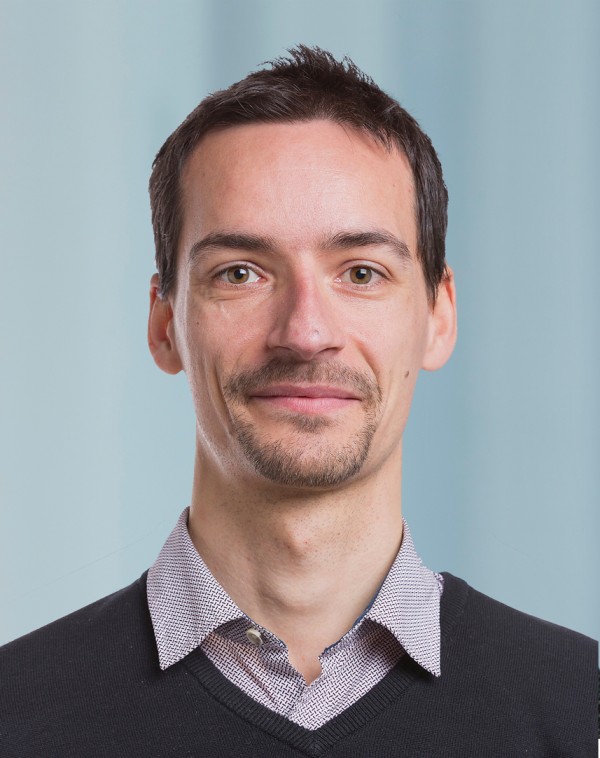
Guy G. Drijkoningen is an Associate Professor in Applied Geophysics at Delft University of Technology (TU Delft), Faculty of Civil Engineering and Geosciences. He is actively involved in teaching and research within the Department of Applied Geophysics & Petrophysics. Education: MSc, Delft University of Technology, The Netherlands PhD, Cambridge University, UK Research Focus: His work centers on Seismic Experiments & Modelling , particularly in exploration and shallow-subsurface contexts. Key areas include: Seismic data acquisition on land Continuous seismic monitoring Shallow shear-wave imaging (land and marine) Seismic wave propagation in porous media Current projects leverage advanced sensor networks (e.g., LOFAR), full-waveform inversion for tunnel-boring machines, and novel vibrator technologies. Publications Trend: Recent works (2011–2016) emphasize seismic modeling, inversion techniques, and experimental validation across marine and terrestrial environments. Topics span poroelastic wave theory, ambient-noise interferometry, and innovative seismic source design, reflecting a blend of theoretical and applied geophysics. Scientific Awards: Best-paper award Geophysics 2015 for "A seismic vertical vibrator driven by linear synchronous motors" Professional Memberships & Editorial Roles: Member: Society of Exploration Geophysicists (SEG) Member: European Association of Geoscientists and Engineers (EAGE) Associate Editor: Geophysics Teaching: He teaches undergraduate and graduate courses including Introduction to Geophysics, Reflection Seismology, and specialized PhD-level modules on seismic data analysis.
Youssef M A Hashash is the W. W. Grainger Chair and Professor in the Department of Civil and Environmental Engineering at the University of Illinois. His research focuses on geotechnical and earthquake engineering, with emphasis on seismic site response analysis, soil-structure interaction, and advanced computational methods like the Discrete Element Method (DEM). He has led projects on infrastructure resilience, including studies of buried water reservoirs, railway systems, and post-earthquake reconnaissance. Hashash has developed influential models for site amplification in Central and Eastern North America, contributing to seismic hazard assessments. His work integrates experimental centrifuge testing, numerical simulations, and field data. Notable contributions include guidelines for implementing NGA-East ground motion models and advancements in pore-water pressure generation models for liquefaction evaluation. Key Research Areas: Ground movement, seismic response, soil dynamics, and geotechnical data systems Major Projects: NGA-East Geotechnical Working Group, Beirut Explosion Analysis, and LA Metro Tunnel Projects Recipient of prestigious awards including the NAE Membership (2022), PECASE (2000), and Walter L. Huber Prize (2006), he collaborates internationally on earthquake engineering and geotechnical innovations. His lab develops tools like the DEEPSOIL software for nonlinear site response analysis and explores AI applications in geotechnical data interpretation.
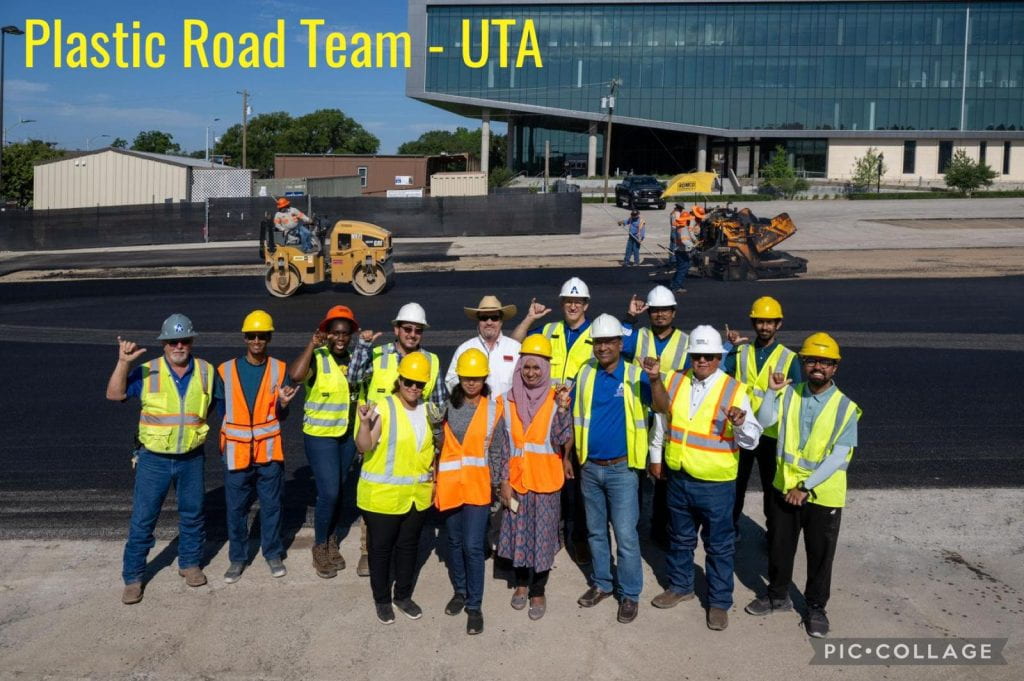
Dr. Md S Hossain is a Professor of Civil Engineering at The University of Texas at Arlington, directing the Solid Waste Institute for Sustainability (SWIS). He holds a B.S. from IIT Bombay, an M.E. from AIT Bangkok, and a Ph.D. from North Carolina State University. His research focuses on sustainable waste management, bioreactor landfills, geotechnical engineering, and slope stabilization, with notable contributions to landfill gas-to-energy and recycled materials utilization. He has over 6 years of professional experience in geotechnical and geoenvironmental projects globally. Research Interests: Sustainable waste management, landfill engineering, slope stabilization, recycled materials, geotechnical site investigations. Key Roles: Director of SWIS, Principal Investigator on numerous grants, and advisor to over 50 graduate students. Dr. Hossain has secured millions in grants from agencies like NSF, EPA, and TxDOT, focusing on waste-to-energy, landfill mining, and slope stabilization using recycled plastics. His awards include the ISWA Leadership Award and Distinguished AIT Alumni recognition. He actively collaborates with international organizations like CCAC and ISWA, advocating for sustainable waste solutions in developing countries. His work spans 50+ projects in Bangladesh, Singapore, Hong Kong, and the U.S., emphasizing practical applications like recycled plastic pins for slope stabilization and ET cover systems for landfills. SWIS, under his leadership, promotes global sustainable waste management through education, research, and policy advocacy.
Chaopeng Shen is a Professor in the Department of Civil and Environmental Engineering at Pennsylvania State University. His research bridges hydrology with state-of-the-art deep learning and differentiable modeling techniques, focusing on advancing our understanding of hydrologic cycles and their interactions with ecosystems, energy, and carbon cycles. He leads the Multi-scale Hydrology, Processes and Intelligence group (MHPI) and has developed the Process-based Adaptive Watershed Simulator (PAWS) for large-scale hydrologic modeling. Shen's work emphasizes physics-informed machine learning , where deep learning components are integrated with process-based equations through differentiable modeling. This approach enables training neural networks using big data while respecting physical laws, leading to improved generalizability and robustness. His group has demonstrated advantages of differentiable models in rainfall-runoff prediction, routing, ecosystem modeling, and water quality studies. Notably, his team's deepLDB project addresses landslide prediction using AI and big datasets. Recent publications highlight his contributions to global water modeling (grid-LSTM, differentiable Muskingum-Cunge routing), extreme flood forecasting (probabilistic diffusion models), and hydrologic uncertainty quantification . Shen actively engages in interdisciplinary collaborations through the PRISM Cooperative Institute, which aims to integrate multi-domain data for systemic risk assessment. His group has advised students including Dapeng Feng, Wen-Ping Tsai, Kuai Fang, Xinye Ji, and Tasnuva Mahjabin. Shen's research is supported by the National Science Foundation (NSF), Department of Energy (DoE), USGS, Google.org, and the Gates Foundation. He serves as Editor for the Journal of Geophysical Research - Machine Learning & Computation and Chief Editor for Frontiers in Water: Water & AI. His open-source software tools like PAWS and deepLDB are available through dedicated project websites.
Domniki Asimaki is a Professor of Mechanical and Civil Engineering at the California Institute of Technology (Caltech), part of the Division of Engineering and Applied Science. Her research focuses on geotechnical engineering, computational mechanics, and structural dynamics, with an emphasis on understanding ground motion effects on natural and engineered systems such as dams, tunnels, and urban infrastructure. She holds a Dipl. from the National Technical University of Athens (1998), an M.S. (2000) and Ph.D. (2004) from MIT, joining Caltech in 2014. Key research interests include soil dynamics, wave propagation, regional ground deformation, and soil-foundation-structure interaction. She has pioneered data-driven approaches to integrate numerical simulations with field observations for resilient infrastructure design. Notable achievements include developing the open-source Seismo-VLAB software for seismic analysis and receiving prestigious awards like the Bodossaki Award of Scientific Excellence and the Geotechnical Earthquake Engineering Award. Her work addresses seismic hazards at urban and regional scales, with recent studies on the 2023 Türkiye earthquake, the 2019 Ridgecrest earthquake, and Kathmandu Basin dynamics. She leads initiatives to enhance ground motion prediction, landslide hazard assessment, and infrastructure resilience through advanced modeling and AI-driven methods. Education: Dipl., National Technical University of Athens, 1998 M.S., Massachusetts Institute of Technology, 2000 Ph.D., Massachusetts Institute of Technology, 2004 Awards: Bodossaki Award of Scientific Excellence Geotechnical Earthquake Engineering Award Labs/Teams: Leads research groups focusing on seismic hazard modeling, open-source software development, and geotechnical data assimilation techniques.
Professor Ian Jefferson is a Professor in Geotechnical Engineering at the Department of Civil Engineering, University of Birmingham. He has held academic positions at Loughborough University (lecturer from 1992–1995) and Nottingham Trent University (Lecturer/Senior Lecturer from 1995–2001, Principal Lecturer from 2001–2002, and Reader until 2004 before joining Birmingham). His roles include teaching and research in civil engineering disciplines, with a focus on sustainability and geotechnical practices. He is affiliated with the School of Engineering at the University of Birmingham, located in Edgbaston, Birmingham, UK. Education: BEng (Hons) in Civil Engineering, Loughborough University PhD in Geotechnical Engineering Professor Jefferson’s research interests revolve around collapsible soils , particularly loess , and their geotechnical implications across Eastern Europe, Central Asia, and the UK. He explores ground improvement techniques , including chemical stabilization and vibro-stone columns, with a focus on sustainability. His work also addresses geohazards such as rising groundwater and problematic soils like glacial tills. He investigates sustainability in urban development , sustainable geotechnical processes, and the application of geophysical methods for assessing improved ground conditions. These areas highlight his commitment to integrating environmental and geotechnical challenges in engineering solutions. Professor Jefferson’s recent publications emphasize the intersection of geotechnical engineering and sustainability. His work explores sustainable infrastructure planning, emissions reduction in soil improvement techniques, and geophysical methods for ground assessment. Key themes include the mitigation of collapsible soils, optimizing ground improvement technologies, and sustainability indicators for urban redevelopment. His research frequently addresses environmental impacts, particularly in transportation and utility infrastructure contexts, alongside advancing methodologies for geotechnical practices. Fellow of the Geological Society (FGS) In terms of grants and funding, Professor Jefferson has secured over £4 million in research grants. While his role in advising students is not explicitly stated, he contributes to academic governance through his positions as a Marker/Moderator for the Postgraduate Teaching Certificate and as the Plagiarism Officer for Civil Engineering since 2013. Professor Jefferson is actively involved in several research initiatives, including Loess soil stabilisation , collapsibility in loess soils , and Ground Improvement using stone columns . He also leads projects on Assessment of improved ground using geophysics , Shear strength of glacial tills , and Sustainability Assessments in urban Development . His work contributes to the Sustainable urban redevelopment - Eastside project in Birmingham. These projects reflect his collaboration with interdisciplinary teams and his focus on practical, sustainable solutions in geotechnical engineering.